
W. Terry Whalin's Blog, page 21
January 23, 2022
A Cautionary Tale About the Media
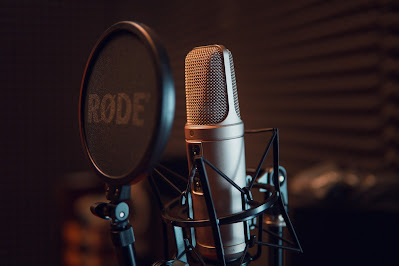
By Terry Whalin @terrywhalin The media (like Talk Radio) is an important element for authors to reach readers. As a journalist, I've interviewed many bestselling authors and published their stories. As an author, I've been interviewed on numerous radio, magazine and podcast shows. Here's one of the facts for you, I've never paid for any interview or paid to appear on any media program. If someone is charging, then your internal alarm bells or red flag should sound. Because of my years of work in publishing and my activity, I have thousands of connections on LinkedIn. Last week someone invited me to make a connection (a common practice). I looked at this person's profile and accepted the invitation. Almost immediately, this person began to email me about appearing on his radio show, the millions of listeners. He had a slot for me to appear this week and it would only cost me $250 which paid for his producer and other people involved in the broadcast. I responded that I had done numerous interviews and never paid for such an opportunity and I asked him to waive the fee. The timing (the next day) sounded suspicious because from my experience these types of opportunities are booked several weeks ahead. He responded that he could drop the price to $200 and if I returned as a guest (which according to him many people do) it would only be $100. He continued to push for payment and my internal alarm bells were sounding. After several exchanges, I wished him the best and passed on the interview. At that point, he began to belittle me and my book (more alarm bells). In the end, I blocked this person on LinkedIn so I will not interact with him again. It was a money-making scam and I wanted no part of it.
As I think about it further, anyone can create a LinkedIn profile and this one may have been fake. The person's photo was someone with sunglasses could have been anyone. I'll never know but the alarm bells in my mind were sounding with my exchanges. As authors, we have to use our common sense with such “opportunties” along with our past experience. I've hired publicists who are connected to media opportunities. These professionals read my book, create media kits and book interviews. Their role is a common one within the publishing community. Also they book me on programs where I don't pay for such opportunities to reach their audience. I'm telling you about this experience as a cautionary tale with the hope it will help someone avoid the expense and pain of being scammed. There are many working journalists who have a well-established audience and reputation. Several years ago, to promote my biography about Billy Graham I flew to Tampa, Florida and appeared on the HomeKeeper's program. You can see my interview here. (The interview begins at about 10:11.) This program reached millions of people and I didn't pay anything to the program for this opportunity. Have you had media experiences where your internal alarm bells sound? Let me know about it in the comments. Tweetable:
 Are You Missing A Key Element to Publish Your Book? Get the details here.


January 16, 2022
Facing the Mundane

By Terry Whalin @terrywhalin
 Are You Missing A Key Element to Publish Your Book? Get the details here.
January 9, 2022
The Biggest Obstacle

By Terry Whalin @terrywhalinAs writers, we face numerous obstacles. We write something that gets the attention ot the editor or agent (the gatekeepers) then gets into print. Then when in print, we must reach readers with our message (often numerous times) before they purchase the writing and read it. No one has said the journey will be easy—and it is not. In this article, I want to give you some ideas and encouragement to get over the walls in your writing life. I understand firsthand that every part of the process has some unique challenges. Yes it is hard with a variety of obstacles. The people who succeed, face these obstacles and continue forward inspite of them. Its what I am doing every day and I encourage you to do the same. A great deal of publishing is outside of your control but you can always be looking for the right opportunity and connection at the right time. From my experience is doesn't just “happen.” It takes continued effort on your part. One of my writer friends bemoaned she didn't have any current deadlines or book contracts. If you don't have a deadline or writing assignment, then you create one. Where is writing on your schedule? The world is full of opportunity but you have to take the initiative. Magazine editors are looking for articles to publish. Radio talk show hosts are looking for guests for their show. Podcasters are looking for guests for their show. Agents are looking for authors to represent and editors are looking for books to publish. Whether you are aware of it or not, each of these are open doors and opportunities—but you have to take the initative for that door to open. It doesn't come to you but you have to knock or pitch and see if it will open. Here are several things to help you in your writing life: 1. Don't blame anyone else. It's easy to blame others. The harder and more productive road is something I have written about often in these articles. Take 100% responsibility for your own success. It is the first success principle in Jack Canfield's bestselling book, The Success Principles . It is not easy but a necessary step for your attitude in my view. 2. Work on your mindset and craft. Our culture is filled with negative voices but you can have a positive mindset filled with gratitude. Keep working at your craft as you read how-to books—then apply the information to your writing life. 3. Keep going even when facing obstacles. Each of us have challenges within our lives. It may be a child or a car or your health or any number of things. Keep moving forward through and around these challenges. It's the difference between those who get it done and those who do not. The biggest obstacle in this process might be something you don't want to consider: you. I believe our world is filled with opportunity. You simply have to find the right one for you and your message. If I can help you in this process, don't hesitate to reach out to me. What are you doing today to move forward with your writing? Let me know in the comments below. Tweetable:
 Are You Missing A Key Element to Publish Your Book? Get the details here.
January 2, 2022
Wisdom In A Small Package

By Terry Whalin @terrywhalinOn the shelves in my office, I have a wide variety of books. Some of these books are lengthy reference books. Others are picture books for children. Some of these books are even pocket size. Today I want to tell you about two pocket size books which are related and have some great information for writers. While I read both of these books in the print version, I'm also going to tell you how to get each of these books for free online and why. Pocket Guide to Book Marketing Last week I read John Koehler's Pocket Guide to Book Marketing . I have known John for a number of years. (As an aside, your personal connection to an author is something I can include in this blog but it is best not to include it in a book review. If you do, your review can get pulled from places like Amazon). Through Koehler Books, John has published a number of books. I recently learned about his little Pocket Guide to Book Marketing .
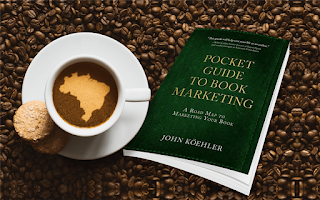
As an author, I want to learn from experienced professionals who understand the realities and complexities of publishing. Thousands of new books enter the marketplace every day and publisher John Koehler knows these realities. Pocket Guide to Book Marketing provides insights for every author. As Koehler writes in the opening chapter, “I do not pretend that this pocket guide is an exhaustive discourse on book marketing. Rather, it’s more of an overview providing enough specifics to know what to ask about and where to look….What I offer here are not specific marketing or techniques, but rather lessons we have learned in the past fifteen years of publishing books. Among those lessons is a dizzying array of prescribed solutions or approaches. Deciding what works best for your book is key.” This book is loaded with insights. For example, “There are a number of things authors can do on their own, or with some help. Others require more technical knowledge or skill. Some authors are comfortable with technology; others fear it. How much you do on your own depends on what you kknow, your willingness to learn, and how deep your pockets are.” (page 60) This sentence is an example of the practical information in these pages. Whether you are publishing your first book, or you have published many books, you will find valuable action steps in the pages of Pocket Guide to Book Marketing . I highly recommend every author get this book and not only read it but where the real value comes is when you apply it to their own books.
Pocket Guide to Publishing Several years ago, I read Pocket Guide to Publishing and gave this book a five star review on Amazon and Goodreads. In fact, as I reviewed this book today, I saw my endorsement on the first page. Publisher John Koehler co-authored this book with In this book with Joe Coccaro, vice president and executiuve editor at Koehler Books. It provides a terrific overview of publishing and the various complexities.
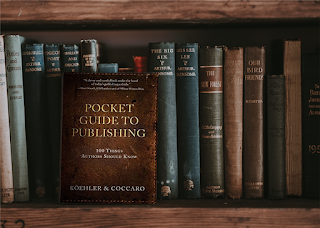
As I wrote several years ago in my revieww: When I’m going to learn on any topic, I want to get information from experts or someone who has produced hundreds of books and worked with many different authors. You gain this type of experience with Pocket Guide to Publishing . To successfully publish a book, you will need to consider and handle hundreds of details such as type of publisher, contracts, editing, production issues, distribution, understanding what a publisher does and what the author does, and marketing. John Koehler and Joe Coccaro have worked with hundreds of authors and give straight-forward easy to understand insights in small doses in this little but powerful book. As the subtitle says, “100 Things Authors Should Know.” Every author needs this tool. This book is a lasting resource and highly recommended.” How to Get Each of These Books Each of these books include templates and valuable resources outside of the book. I read the printed book but reaching these additional resources is much easier using the electronic version. John Koehler told me each of the electronic version of these books have been downloaded thousands of times. You can get them at: Pocket Guide to Book Marketing or Pocket Guide to Publishing Use the links and the PDFs come right away to your email address. Scroll down on these webpages to find where you can get each book. No matter where you are in the process of getting your book published or into the market, you can gain a great deal of wisdom from these two books that come in small packages. Have you discovered some great resources in publishing or marketing? Let me know in the comments. Tweetable:

Are You Missing A Key Element to Publish Your Book? Get the details here.
December 26, 2021
A Different End of the Year Strategy

By Terry Whalin @terrywhalinI call this time of year “the quiet time of publishing.” My email and phone grow quiet (at least much less active). People are away from their computer traveling to see family and friends plus involved in holiday activities. Because we are approaching New Year, many people are focused on setting new goals and making resolutions. After years of making resolutions, I found most of mine are broken or end in about mod-February. They don't lead to any lasting change. Instead I have a different end of the year strategy. I look at what can I do differently in the days ahead and possibly create a new habit. When I look for habits or something I will repeat over and over, I have found it increases the possibility that something will improve and change. In this article, I'm going to divide these changes into different areas: learning, reading and action. What Do I Want to Learn? First, I want to make better use of the tools I'm already using (before I acquire new ones). Over the last several months I have been using AuthorLab (which great deal of $80 for lifetime access—follow this link to check it out). Last week I noticed the internal design completely changed with additions and new tools. One of them was called Testimonial Builder. This tool allows you to use reviews and endorsements to create useful images in seconds. Then you can post these images on various social media sites or your website or any other place online.
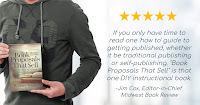
In the December issue of Midwest Book Review (follow this link), Editor-in-Chief Jim Cox reviewed my Book Proposals That Sell. You can read the full review at the link. I created this image which highlights one standout sentence: “If you only have time to read one 'how to' guide to getting published, whether it be traditional publishing or self-publishing, “Book Proposals That Sell” is that one DIY instructional book.” You can create many different images with this tool and here's a few others that I created. If you are interested in learning more about these books, just follow the link I added to each image. I'm still learning to use this tool but I believe it will be a valuable one for the days ahead.
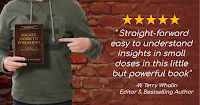
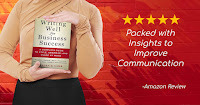
Another area that I want to learn about is the growing social media site: Tik Tok. While I have nothing on Tik Tok, I've met several people who have over a million followers on this site. Tik Tok is another innovative way to sell books. Bestselling author Mark Dawson is holding a FREE five day Tik Tok Expedition.
 You can sign up and learn more (just follow the link). I will be doing it and learning from it. What areas do you want to learn in the near future? What do I want to read? As a writer, I have a steady stream of books on my shelf that I'm reading. Recently I learned about
The Pop-up Pitch with the subtitle: The Two-Hour Creative Sprint to the Most Persuasive Presentation of Your Life
by Dan Roam. It's a book I'm reading and when I finish I will be writing a review on Amazon and Goodreads. I've written over 1,100 Amazon reviews and just follow this link to see what I've been reading. Or you can see them on Goodreads where I have 5,000 friends and my reviews get a lot of attention. I will be continuing to read and learn in the days ahead. What are you going to be reading and learning from? What actions do I want to take? Thinking about growing as a writer is one part but the critical difference maker will be the actions you take. As I think about the year ahead, I'm considering my actions as a part of my strategy. Which ones do I want to continue and which ones will I change? My approach is different than normal but one I hope which will help you with your writing life. Let me know in the comments below. Tweetable:
You can sign up and learn more (just follow the link). I will be doing it and learning from it. What areas do you want to learn in the near future? What do I want to read? As a writer, I have a steady stream of books on my shelf that I'm reading. Recently I learned about
The Pop-up Pitch with the subtitle: The Two-Hour Creative Sprint to the Most Persuasive Presentation of Your Life
by Dan Roam. It's a book I'm reading and when I finish I will be writing a review on Amazon and Goodreads. I've written over 1,100 Amazon reviews and just follow this link to see what I've been reading. Or you can see them on Goodreads where I have 5,000 friends and my reviews get a lot of attention. I will be continuing to read and learn in the days ahead. What are you going to be reading and learning from? What actions do I want to take? Thinking about growing as a writer is one part but the critical difference maker will be the actions you take. As I think about the year ahead, I'm considering my actions as a part of my strategy. Which ones do I want to continue and which ones will I change? My approach is different than normal but one I hope which will help you with your writing life. Let me know in the comments below. Tweetable:
 Are You Missing A Key Element to Publish Your Book? Get the details here.
December 19, 2021
Five Ways to Earn Your Spot

By Terry Whalin @terrywhalin
As a writer, how do you earn your spot to have others read your work? In this article I want to give you some ideas about how to acquire this skill and the action steps you need to take.
In this article, I mentioned working on getting my books into libraries. I reached out to the collection librarian. I asked what sort of check out activity a book needs. While this standard may be different for every library, here's what I learned: “We are a demand-driven collection, so everything on our shelves earns it’s spot! Our nonfiction collection has an average turnover of 5 checkouts per year per book, so circulation needs to be close to that to either stay on our shelves, or if damaged, repurchase.” From my exchange with this librarian, I've created a plan to regularly plan to market my own books which are inside my local library. In the past, I've done nothing to encourage people to use my books. But now I'm going to regularly encourage my local writer's group and others to check out and use my books from the library book shelf. Through my own marketing efforts, I want to help my books stay in the collection. My marketing of my books in the library doesn't have to be sophisticated or fancy—but it does have to happen and I will be the person doing it. This additional activity stems from my philosophy of taking 100% responsibility for my own success. How do we earn the right to be read or published as writers? I've already mentioned one way with actively working to get your books into libraries. A second way to earn your right to be read is to learn the craft of storytelling. It is a developed skill to tell interesting stories. Some of it you can pick up through extensive reading but it is also a skill which can be taught as you learn how a mixture of dialogue and narration detail can make for page turning wriiting. A third way to earn your spot is to write on a regular basis and submit your writing. Notice the second part of this point. It's good to write on a regular basis but you don't earn your spot and get published if it never reached an editor. Admittedly it takes work on your part to find the right editor but you have to be in the market to have any opportunity to be published. A fourth way to earn your spot is to reach your audience in different formats and methods. There are an endless series of methods to reach your audience such as an email list, your various social media links, reviews, magazine articles, podcasts, books and radio interviews. The fifth and final way to earn your spot is to make an action plan then keep working your plan—even in the face of failure or rejection. Each of us (yes me too) face these twins of failure and rejection. The difference between those who succeed and those who don't? The ones who succeed keep going forward even when they are rejected. Our world is full of opportunity. As a writer, you have to seize the day, keep your fingers on the keys and keep moving forward. Our lives in publishing are not easy but are possible. I hope in this article I've given you some ideas and encouragement to keep moving ahead. How do you earn your spot? Let me know in the comments below. Tweetable:
Are You Missing A Key Element to Publish Your Book? Get the details here. It makes a great Christmas gift.
December 12, 2021
Get Your Book into Libraries

By Terry Whalin @terrywhalin
Through the years, I've learned libraries have a system to acquire books for their collection. If you put your book in the donate box inside the library, from my experience, those books go into a place the library sells books to the public and not into the collection (where they are available to the public for years). There are over 119,000 libraries in the United States with over 100,000 of those school libraries. Even if you focus onthe 19,000 public libraries, that amounts to many books and I would love to have my books into those libraries. in this article I want to give you some ideas about how to make this happen.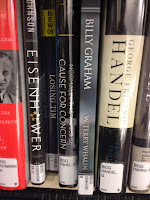 I am a regular user of my local library and I hope you are as well. Years ago when my biography of
Billy Graham
released, I checked with my local librarian about the book and they ordered the hardcover version of my book and put it into the collection. I understand libraries have limited space for books and their collection is always in motion. When I checked this morning, that book was no longer in the collection. I did find my book in a couple other Colorado libraries where people can ask for it and read it. When I searched my local library for my own name, I found one book,
10 Publishing Myths
. I noticed they have three copies and all three copies were available. The library allows patrons to rate books—so I added my rating to
10 Publishing Myths
(yes five stars). I also asked to check out my book. Then I searched for
Book Proposals That Sell
, and nothing came up and I knew my new book was not in my local library. The system offered me to use a tool called Prospector (which searches other Colorado libraries). I found my book in one library—but the book was my first edition and not my revised and current book. Recently Midwest Review, a respected publication from libraries, reviewed
Book Proposals That Sell
(follow this link to look at the review in the December issue). Jim Cox, Editor-in-Chief wrote, "If you only have time to read one 'how to' guide to getting published, whether it be traditional publishing or self-publishing, "Book Proposals That Sell" is that one DIY instructional book. " I reached out to my library reference librarian and asked her about how to get my new book into the collection. I sent this quote from Jim Cox at Midwest Review in my request and I took an additional step. I have prepared a one page library information sheet. If you check this sheet, you will see that it is targeted to libraries. Anyone can print this single page, then take it to their local library and request the book. I have several action steps for you from this article: 1.
Print my one-page sheet
(use this link) and take it to your local library and request my book for your library.
I am a regular user of my local library and I hope you are as well. Years ago when my biography of
Billy Graham
released, I checked with my local librarian about the book and they ordered the hardcover version of my book and put it into the collection. I understand libraries have limited space for books and their collection is always in motion. When I checked this morning, that book was no longer in the collection. I did find my book in a couple other Colorado libraries where people can ask for it and read it. When I searched my local library for my own name, I found one book,
10 Publishing Myths
. I noticed they have three copies and all three copies were available. The library allows patrons to rate books—so I added my rating to
10 Publishing Myths
(yes five stars). I also asked to check out my book. Then I searched for
Book Proposals That Sell
, and nothing came up and I knew my new book was not in my local library. The system offered me to use a tool called Prospector (which searches other Colorado libraries). I found my book in one library—but the book was my first edition and not my revised and current book. Recently Midwest Review, a respected publication from libraries, reviewed
Book Proposals That Sell
(follow this link to look at the review in the December issue). Jim Cox, Editor-in-Chief wrote, "If you only have time to read one 'how to' guide to getting published, whether it be traditional publishing or self-publishing, "Book Proposals That Sell" is that one DIY instructional book. " I reached out to my library reference librarian and asked her about how to get my new book into the collection. I sent this quote from Jim Cox at Midwest Review in my request and I took an additional step. I have prepared a one page library information sheet. If you check this sheet, you will see that it is targeted to libraries. Anyone can print this single page, then take it to their local library and request the book. I have several action steps for you from this article: 1.
Print my one-page sheet
(use this link) and take it to your local library and request my book for your library.
2. Use this sheet as a template for your own book and make your own book request form, then promote it to your audience and encourage them to request your book in their library.
3. After your book gets in your library, do your best to promote the library book to others, encouraging them to check it out and use the book (which will keep it in the collection). For example, I belong to a local group of writers. Now that I know our local library has my 10 Publishing Myths , I will make a regular effort to tell the group and encourage them to check out the book and use it. I belong to their local online group and I can post a little note about the group which would include a link to the exact place in the library where can can put my book on hold and use it. Libraries have budgets to purchasde books for their patrons—especially ones they have requested. As an author and a local user of your library, you can tap into this resource. What actions have you done to get your books into libraries? Let me know in the comments below. Tweetable:
 Are You Missing A Key Element to Publish Your Book? Get the details here. It makes a great Christmas gift.
December 5, 2021
Publish In Many Different Places

By Terry Whalin @terrywhalinAs an author, I encourage you to write and publish in a variety of places. As your work appears in different places, you reach new audiences with your message. In this article, I want to give you several recent examples where I've been doing this process. As you look at the various articles, I hope it will stir you to take similar action for your own writing. The world contains many opportunties for each of us—but we have to actively get our work into the market on a consistent and regular basis. Notice each of these websites have different audiences yet they are all in the area of writing and publishing. It's because the writing community is the audience for each of these articles. Who is the audience for your writing? Who are some of the leading bloggers and communicators in your area? I'm talking about people you read their material and admire their work. In some ways these people could be considered competitors to your work but can you take a different mindset and change them into someone you can cooperate and help. Do they have books you can read, review and promote to get their attention? Do they allow guest bloggers on their website or blog? Do they have guidelines for guest bloggers (be sure to follow their instructions if they do)? I've received email pitches to be a guest blogger. Many of these pitches don't even have my first name in th email and were probably spammed out to many people at the same time. I don't answer these emails but simply mark them as Spam and they are deleted. What does that tell you about successful pitching? Personalize every pitch to guest blog. Use the person's name in the opening line and say something personal about their blog—a new entry you liked or something that shows you know what they are publishing—then you make your pitch. Capture their attention so they know you are pitching only to them, then make your pitch. While I hope these questions have stirred some ideas and potential places for you to write, I'm going to show you four different places that my writing has recently appeared. As you read these articles, notice my bio and what I've done in each one to provide links to my books to purchase, free information to resources I'm giving away (if they join my newsletter) and links to my social media. I've also provided images in my bio which tie to my writing. You can follow a similar path as you write other places. You are only limited by your own creativity.
 The Challenge for Every Book Author. Every author faces an important task: deciding how they will publish their book. This process is what I wrote about in this article.
Writers on the Move: Why You Should NOT Be Making
 Publishing Assumptions. With a few keystrokes on Google or reading a few online posts, authors make decisions about publishers without actually exploring the company, speaking with the editor and their authors. It's what I wrote about in this article and caution against making these assumptions.
 Blue Ridge Mountains Christian Writer's Conference Blog: I'm Tired Of Pitching My Writing. It's a common feeling among writers—whether they verbalize it or not. They are tired of pitching. I tackle this topic head on and explain how pitching is a part of every aspect of publishing. Yes you may be tired of it but if you want to get published, you have to pitch and learn to pitch with excellence. You can read the details in this article.
 Almost An Author: Thrive In the Quiet Holidays. Every year like clockwork, email and phone calls come to a screeching hault. It's the time of year right before Thanksgiving through New Year's Day. As a writer, do you simply pause during these months? It's not what I recommend in my article. Instead I give some strategies to thrive during this quiet period. From reading these articles, you can see I'm a glass half full type of person. I believe there are many opportunities for each of us to get our writing into print online and in print. The market guides are filled with publications who are actively looking for writers and content. You simply have to pitch something they want you to write. Are you strategically trying to get published in different places. Let me know in the comments below. Tweetable:

Are You Missing A Key Element to Publish Your Book? Get the details here
November 28, 2021
Advantages to Batch Writing

By Terry Whalin @terrywhalinSince my recent move, I've been doing some batch writing. This term “batch writing” is where I will write a series of the same type of writing. For example, one of the ways I support other writers is through writing and posting book reviews on Amazon and Goodreads. It happened gradually but I've written over 1,100 reviews on Amazon and over 700 reviews on Goodreads. Because I've written so many of these reviews, I can write the review in a short amount of time. Several publishers have been sending me children's books and in particular board books—which do not have many words. I've been reviewing these books in a group or batch. One of my long-term writing friends Bob Bly is the author of THE COPYWRITER’S HANDBOOK plus over 100 other books. His COPYWRITER’S HANDBOOK originally was published in 1985 and last year Bob's publisher released the Fourth Edition. If you have not read this book, I encourage every writer to get a copy and study it. For many years, Bob has made a highly profitable career as a copywriter and this valuable skill is one every writer needs to learn. Here's what I wrote about THE COPYWRITER’S HANDBOOK:
 One of the critical skills for every writer is copywriting. I’m delighted to see this classic book from the 80s updated with a fourth edition. Years ago, I read the first edition and still have it on my bookshelf. As Bly writes in the preface, the psychology of convincing others has not changed in centuries but the details of achieving success with your words continues to change and evolve. As Bly writes, “For instance, we used to say a disgruntled customer would tell ten other people about his dissatisfaction with the merchant. Now, with online reviews and social media, some can and do tell thousands.” This new edition includes chapters on critical elements like landing pages, online ads, social media, video content and much more. Every writer needs to read and study THE COPYWRITER’S HANDBOOK. Your writing will be improved, and you will be able to profit more from your words if you have this invaluable skill. I highly recommend this book.” I believe there are advantages to writing some things like reviews in batches. You get into a frame of mind and can crank them out in a brief amount of time. While each review is distinct and different. While I've been writing reviews in batches, you can also write entries for your blog, articles, guest blog posts and many other types of writing. Do you ever write in batches or groups? Let us know your insights in the comments below. Tweetable: Do you write something in batches? Learn about the advantages of batch writing from this prolific editor and author. Get the details here. (ClickToTweet)
Are You Missing A Key Element to Publish Your Book? Get the details here
November 21, 2021
Writers Need Editors

By Terry Whalin @terrywhalinIt may surprise you to hear this statement: No writer creates a perfect first draft. Each of us have to get the stories and information out of our head and on to paper (or computer). Some of my writer friends will talk their writing into the computer then edit from that draft. They use a program like Naturally Speaking. Even when you use such a tool, your first draft will need additional work. While I've been writing for publication for decades, I still need an editor. In the writing process, I try and write enough ahead that I can let it cool for a few hours (or days) then I read through my writing and edit it. Each of us need to self-edit. Another process is to read your work aloud to yourself and edit it as you go through it. The ear is less forgiving than the eye and this process will help improve your work. Yet s writers we can only take our writing to a certain level on our own. We need editors. A good editor will ask probing questions and force you to clarify areas that don't make sense or are incomplete. A good editor will push you to do more showing in your writing than telling. The editor can also react to the structure of your piece and push you to have a stronger conclusion. These various elements are just a few of the skills an editor will bring to your writing and publishing process. There are numerous freelance editors who perform help many writers in this process. If you don't have such an editor, ask other writers and get some recommendations. Then check out that editor's references and even have them edit a portion of your book (often they will do this process without charge) to see if their work will be a good fir for what you need and are looking for with your work. Another resource some writer use for the editing process is their participation in a critique group. In the early days of my publishing work, I was active in a critique group and it was a great help to propel my writing. If you don't have a critique group (in person or online), I recommend you read this detailed article that I wrote about critique groups (follow the link). Do you believe every writer needs an editor? What tips do you have for finding a good one? Let me know in the comments below. Tweetable:
 Are You Missing A Key Element to Publish Your Book? Get the details here


