
W. Terry Whalin's Blog, page 22
November 14, 2021
You Must Do Your Part

By Terry Whalin @terrywhalin As writers, we have big dreams for our work to get into the world. During my years of writing for publication, I understand many aspects of the publishing process are outside of my control. Yet there are many things I can control and that's why I wrote 10 Publishing Myths to help every writer understand some of these aspects and ways they can take action. You may want to publish a book. To get that book published, you have to sit in your chair, put your fingers on the keyboard and write. I like what my friend bestselling novelist Bodie Thoene told me years ago: “No little elves come out at night and write my pages. I have to do it every day out of obedience to my calling.” Whether it is a book or a book proposal or any other type of writing, you have to do the work for it to possibly happen. It does not happen just because you think about it or want it to happen. For each aspect of the publishing process, there is actual work (and some of it hard) involved for it to transpire. Weeks ago before the release of Book Proposals That Sell , I had the idea of publishing a Soapbox column article in Publisher's Weekly magazine. I subscribe to this trade publication and read it every week. A missing topic in this column was something about book proposals. As an acquisitions editor, I've actually been in the pub board meetings where key decisions about books are made. I believed the readers of Publisher's Weekly (like librarians and retailers) who have never been inside this room would be interested in my words about it. While I have written for Publisher's Weekly, it has been many years with different editors now in charge of the magazine. I had to approach them like a brand new author to get my article published. I have been a magazine editor and written for more than 50 publications. While my background is helpful in this process of getting published, it does not guarantee that it will happen. Editors are the gatekeepers and make the decisions about what gets published and what gets rejected. What I'm writing about in this article is the need to do my part as a writer. I wrote my piece then pitched the editor and caught his attention. Even after I submitted it, I knew it could get rejected but last night I got notice the article is online and will be in this week's issue. You can follow the link to read my article. Why did I want to write an article for Publishers Weekly? They are the most influential publication in the publishing industry with a circulation of 68,000 copies and annual readers of 14 million. Use this link to check out their media kit and more information about the magaine. Libraries and many other places take this magazine. Your local library likely does not have Publisher's Weekly out in their magazine area but ask the reference librarian if you can read it. For many years I went to my local library every week and read the magazine before I became a subscriber. Much of the publishing world is outside of anything we can control as writers—but we must do our part—keep submitting, keep learning, keep knocking on new doors to see if they will open. Sometimes they happen and I'm celebrating that today. Are y0u doing your part as a writer to open new doors of opportuntiy? Let me know in the comments below. Tweetable:
 Are You Missing A Key Element to Publish Your Book? Get the details here


November 7, 2021
Why Write for Magazines

By Terry Whalin @terrywhalinI want to begin with a bold but true statement: anyone can publish articles or writing online . For example, these articles about the writing life come directly from me to you. There is no editor or barrier in this process. It's the same type of standard with self-publishing books. You can choose to hire an editor and proofreader then produce something of a high standard which looks professional. Or you can self-publish your book without an editor or proofreader.
Throughout my decades in publishing, I have written for print magazines because they have a higher standard of excelllence than writing online. I've written for more than 50 publications and I've been a magazine editor on several publications. While many writers want to publish books, you can enhance your publishing credibiility in the magazine area of the market. You can reach more people to spread your message and magazine articles are much shorter to write than books. I've written more detail about writing for magazines in this article.
To write for magazines, you have to learn how to pitch editors and often to write a query letter. The editors are the gatekeepers for their publication. They know their readers (target market) and hold to a high standard of what they will publish, I continue to write for magazines while writing books--and I encourage you to do this as well.
For decades I have been taking a trade magazine and reading it cover to cover. This publication has a column which is the next to last page in the publication. I knew they had never covered the topic of book proposals. Several weeks before the release of my new Book Proposals That Sell , I wrote a specific article for this publication. I've written for this magazine before but it was many years ago. I had to pitch like a brand new writer to get their attention. I understand editors get a lot of pitches and submissions so I pitched this editor several times. Finally he responded that my article was over the word limit for this column--and he gave me the correct length.
With this valuable feedback, I cut my article to the required length then submitted it again--and heard nothing. I followed up and a lengthy period of silence. Then late last week I got an email saying they were preparing to publish my piece and asking for my headshot. My persistence and follow-up looks like it will pay off. When the piece is published, I will show it to you. I hope my experience is going to encourage you to write for print magazines.
Do you write for magazines? Why? Let me know in the comments below. Tweetable:
Are You Missing A Key Element to Publish Your
Book? Get the details here
October 31, 2021
Organized Chaos

By Terry Whalin @terrywhalinFor the last several weeks, we have been planning to move. We are only going five minutes down the road to the neighborhood where we lived about five years ago. Whether you move across country or down the street, it is still a complex situation. For my writing life, most of it is fairly organized into different categories and tasks. In general I have my various writing tasks organized and tackle them in a consistent and regular basis. Our move has thrown a wrench into some of those plans and added even more complexity. It's something I'm calling organized chaos. Even while moving, I have to keep my various Morgan James Publishing authors moving forward through the publication process. I have to keep my various writing tasks (like these weekly articles) moving. My various social media posts need to continue on a regular basis. Will something get missed in this process? Probably but not for lack of planning and trying on my part. When you have a life distruption headed your direction (something like a move, an ill child, an illness, a broken down vehicle or any number of other things), how do you handle these elements? My encouragement in these articles is to have created an organized system then use that system to complete the various tasks. For example, I use hootsuite to schedule my social media posts and I have scheduled the bulk of these posts through when my move is taking place next week. I've successfully used such a system when I travel and teach at conferences. That experience is going to serve me in this situation as well. For any of us, life is filled with complexity. Each writer needs to figure out a way to handle this complexity and continue to meet deadlines and produce. Outside of these blog entries, from time to time as I have opportunity, I write other places. To end this post, I want to show you these new articles. I wrote an article about The Challenge for Every Book Author (follow the link). Also I asked the question, Do You Know Your Competition? then I answered it (again follow the link). How do you handle the chaos of life? Is it organized? I look forward to your comments. Tweetable:

Get 10 Publishing Myths for only $10 +FREE shipping + over $200 of free bonuses.
October 24, 2021
5 Steps to Getting Celebrity Book Endorsements

From the Editor: It is rare in these entries that I use a guest blogger. I found this valuable article from my friend Jordan McAuley that I'm going to publish here. Also for the BRMCWC blog, I recently published a two part series about how every writer needs connections. Just follow the link to read it.Guest Post By Jordan McAuley, Founder Contact Any Celebrity Getting a celebrity, notable VIP, or leader in your field to give your book a short testimonial or endorsement (sometimes called a “blurb”) is a great way to boost sales and garner extra publicity. Remember that this is a trade-off. You get a testimonial for your book, and the endorser gets additional exposure and/or credibility.
Below is the five-step process we teach authors and writers:
1) Choose potential endorsers based on your book’s subject.
If your book is about animals, for example, target celebrities and/or notable VIPs who have a vested personal interest in animals.
If it’s about a disease, target people who have suffered personally from it or who contribute to the disease’s cause. If it’s about kayaking, target people who like to kayak.
(Use our Celebrity Causes Database to choose your ’cause’ and get a list of celebrities who support it. (Animals, Children, etc.)
2) Ask potential endorsers to write your book’s introduction or foreword.
This technique can work really well as long as you remember the following: flattery is key. Don’t ask for an endorsement at this stage.
CONTACT 59,000+ CELEBRITIES NOW!
Instead, flatter the person by saying that because of his or her expertise on your book’s subject, you’d like to ask him or her to write the introduction or foreword.You may want to point out that this is a great opportunity for the endorser to get some additional exposure.
When the book is published, you can mention “Introduction by (Expert’s Name)” or “Foreword by (Expert’s Name)” on the cover.
3) Gather a list of names and contact information.
The reference area of your local public library is a good start, but you can find more accurate information online.
Search Google for “celebrity contacts” or “celebrity addresses” for a list of resources.
If the celebrity has an official Web site, you can usually find his or her contact information there as well.
Of course, you can use our service, Contact Any Celebrity to save time and make your research much easier. Don’t forget personal and professional connections.
Take some time to sit down and brainstorm all the people you know who could put in a good word for you or at least pass along your book and request.
4) Make it as easy as possible to get a response.
Your request should include the draft of your book, a self-addressed, pre-paid FedEx or Priority Mail envelope, an easy-to-fill out testimonial form, and a personalized letter from you.
If you’re nervous about sending a draft of the book, you can also include a Confidentiality Letter.
You may even want to mention that the better the testimonial, the more likely it will appear in your book (and possibly on the cover), resulting in additional exposure for the endorser.
5) Point out the benefits of giving an endorsement.
Potential endorsers usually won’t mind (and will probably appreciate) the extra free publicity, additional exposure, and added credibility their blurb will provide when it’s featured in (and maybe on the cover of) your book.
Let the endorser know you’ll mention his or her name, company name, and city under the testimonial as an added benefit of giving you an endorsement.
BONUS STEP: Follow Up!
If you still haven’t heard anything, send a follow-up letter or email to the celebrities you asked for an endorsement from after a few weeks have gone. Know that getting a good endorsement or testimonial can take time. Celebrities and VIPs are busy, and their mail is often screened by an assistant or representative which can delay your request getting to them.
Always remember the “Three Ps” for getting celebrity testimonial and endorsements for your books: Be Polite, Be Persistent, and Be Patient!
Bio: Jordan McAuley is an American entrepreneur. Jordan started Contact Any Celebrity in 1997.
Have you been able to get celebrity endorsements for your book? Let me know in the comments below. Tweetable: Are You Missing A Key Element to Publish Your Book? Get the details here
October 17, 2021
God Moments In Publishing
By Terry Whalin @terrywhalin I've been in publishing for decades and captured some of my experiences in these entries. While not all of the books and articles that I write are for Christian publications, many of them are for the Christian marketplace.
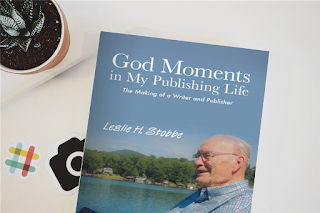
It is impossible in these short articles to cover every characteristic of a Christian writer, there are several which I want to include here. One of them is a commitment to excellence. My calling as a Christian writer is to excellence in the writing area but also to faithfully follow God's direction in my life. Some people call this type of inspiration and direction, a “God Moment.” These moments often occur in my own life when I call someone who I've not connected with for a long time—and when we speak, they say they were just thinking about me that day. As a Christian who wants to follow God's direction, as I listen to the still small voice in my life (from the Holy Spirit, then take action, then God can be involved and direct my steps. I want to tell you about a new book from one of my long-term friends in publishing, Les Stobbe. At age 91, Les has published God Moments in My Publishing Life, The Making of a Writer and Publisher . At an age when many people are slowing down, Les is living an active and vibrant life. From reading his book, I understand why. We've been roommates at different writers' conferences and known each other many years. I believe the first time I heard Les was when he was the president of Here's Life Publishers and introduced his authors at a bookseller breakfast at the Christian Bookseller Association meetings. His involvement in publishing started years before this time period.
God Moments in My Publishing Life, The Making of a Writer and Publisher is an Action Handbook for Every Christian Writer. Thousands of Christians want to have a successful career in publishing. At 91, Les Stobbe shows us the well-worn path. The stories and action items in this book show his faithful life of listening to God’s direction and then taking action to seize the God opportunity of the moment. From his early days in Canada to writing for Christian magazines to writing for general market publications to interviewing and building relationships, every Christian author can use these stories as a roadmap for their own publishing life.
 This book is packed with stories about God encounters with lasting effects on Christian publishing. Here’s one short example: “We were hanging on to the straps in a full commuter train out to the Lutzers’ suburb when Dr. Lutzer asked me, “Stobbe, what should I preach on for our next book?” Instantly the Lord gave me the topic, “Managing Your Emotions.” His quick response was, “I’ll do it.” That book became a perennial seller, partially because the local Christian television station had Dr. Lutzer deliver a series of messages on the topic.” (Page 60) [Dr. Erwin Lutzer was pastor of the Moody Bible Church for 35 years with a frequent radio and conference speaking schedule—just one of the many people tucked into the pages of this book.] In the final chapters, Les gives an overview of his many years observing Christian publishing and a series of insights for every writer who wants to be a good communicator. I found these insights invaluable and I’m sure will be a wealth of instruction. As you read,
God Moments in My Publishing Life, The Making of a Writer and Publisher
you will be inspired and also encouraged. I highly recommend a careful reading of this book.
This book is packed with stories about God encounters with lasting effects on Christian publishing. Here’s one short example: “We were hanging on to the straps in a full commuter train out to the Lutzers’ suburb when Dr. Lutzer asked me, “Stobbe, what should I preach on for our next book?” Instantly the Lord gave me the topic, “Managing Your Emotions.” His quick response was, “I’ll do it.” That book became a perennial seller, partially because the local Christian television station had Dr. Lutzer deliver a series of messages on the topic.” (Page 60) [Dr. Erwin Lutzer was pastor of the Moody Bible Church for 35 years with a frequent radio and conference speaking schedule—just one of the many people tucked into the pages of this book.] In the final chapters, Les gives an overview of his many years observing Christian publishing and a series of insights for every writer who wants to be a good communicator. I found these insights invaluable and I’m sure will be a wealth of instruction. As you read,
God Moments in My Publishing Life, The Making of a Writer and Publisher
you will be inspired and also encouraged. I highly recommend a careful reading of this book.From reading this book, I know God Moments is just a hint at all of the ways God has worked through Les' life. Just like the Gospel says it does not have all of the stories about Jesus (John 21:25)—God Moments did not capture all of the stories and ways God has used Les Stobbe.
Do you have God moments in your life as a Christian writer, let me know in the comments below. Tweetable: Are You Missing A Key Element to Publish Your Book? Get the details here
October 10, 2021
Gratitude and Subtle Changes

By Terry Whalin @terrywhalinLast week over 30 people on my launch team did remarkable work on various book review sites like Barnes & Noble, Books A Million, Goodreads and Amazon. They wrote reviews about Book Proposals That Sell, 21 Secrets to Speed Your Success (The Revised Edition) . It was an amazing experience to read reviews on Medium and other places. Through the years I've written many reviews of books for print publications, Amazon and Goodreads plus promoted those books on social media. It's one of the ways that I support other authors and tell people about worthwhile books that I've discovered. I'm full of gratitude for each of these people who last week made this sort of effort for my book. With many new books releasing each day, it's not easy for any book to get reviews or attention in the market. I understand firsthand the effort it takes to write a good review about the contents in a book, then get it posted on one of these sites. Years ago I wrote Book Proposals That Sell to help editors and agents get better submissions and also to help writers receive publishing contracts and better reactions. The reality of the publishing world is a huge volume of material is being submitted to editors and agents. When something is rejected, you often get a form rejection letter (if a response at all). These form rejections say something generic like “it wasn't a good fit for us” but do not give you any information about what you can do to improve your submission for the next time you send it out (if you send it out at all. Many people get rejected a few times, give up and stop submitting their work. Every book needs a proposal or business plan—even if you self-publish or write fiction or write children's books or write nonfiction books. I'm delighted to get the revised edition of this book back into the market to help a new generation of writers. Subtle Changes From the Launch Because of the release of Book Proposals That Sell , I also made a couple of design and image changes. First, I changed my header on the top of my Twitter profile to emphasize the new book. Also this images tells the reader how to get a free Book Proposal Checklist. I have a pop up button for it at my book website or you can go to this site and sign up for the Book Proposal Checklist. In the past I had a one page checklist but I've made this checklist into an 11–page free ebook.

My second change is something I've not done in years: I changed the image at the top of this blog on The Writing Life. I published the first entry in this blog December 31, 2004 and yes, I have been blogging each week for a long time. The original design included a book laying on the cover of a keyboard. That book was Book Proposals That Sell (the original edition). The designer built a subtle element (which I suspect no one has ever used) and I didn't call this element to anyone's attention—but I'm doing it now. If you move your mouse over the book laying on the keyboard AND click the book, it will open up a window and take you to that book location. Years ago when I published Jumpstart Your Publishing Dreams , I changed the clickable book on the design to Jumpstart Your Publishing Dreams . In celebration of the revised edition of Book Proposals That Sell , I changed the book a third time (and the book is still clickable to take the reader to the book website). Finally I changed the template header for my email subscribers. Everything matches. I've written these details today to help you see the types of changes you can also make to your own website, Twitter profile and blog, when you launch a book or have any other special event. When you publish a new book, do you make these sorts of changes? Ir maybe you change something else in this process. Let me know in the comments below. Tweetable:

Are You Missing A Key Element to Publish Your Book? Get the details here
October 3, 2021
Spread The Love
By Terry Whalin @terrywhalinA number of times in these articles about the writing life, I've written about the large volume of books (over 4,500) which are published every day. It takes a lot of effort from a village to break through the noise and get any attention for your book. As a frustrated editor, I wrote my original version of Book Proposals That Sell in 2004. When I went into my publication board meetings, I often didn't have the details from authors about their book (in their proposal or pitch) which allowed me to get them a contract. In addition, I wanted editors and agents (including myself) to receive better quality submissions from authors. Through the years, I've heard from a number of authors who have used my book to get an agent and get a publishing contract. But publishing has changed in those years. For example, one of my 21 secrets in my first book was to always include an SASE (self-addressed stamped envelope). Back then very little was sent electronically and when you submitted you wanted to receive a response (even if it was a form rejection). It would not happen if you didn't include the return postage. Today the submissions are handled electronically but you can't just send your material as an attachment because of potential virsus and bugs might be attached. You have to reach out to the editor or agent and get their permission to send your submission. It's a different process. When I wrote my original book, I was focused on nonfiction and had published nonfiction. While some fiction authors used the book, my original book was slanted toward nonfiction. The reality of today's publishing world is every author needs a book proposal—whether you write fiction, children's books, nonfiction or self-publish. Your book proposal is your business plan for your book. It's not easy to write one of these documents but they are important for the author but also for others in publishing like literary agents, editors and other publishing executives. These professionals use your book proposal to make a decision about publishing your book. It's a critical part of the publishing industry. The revised edition of Book Proposals That Sell fixed this key flaw in my original book. The revised edition will release in over 1,800 online bookstores and in the brick and mortar bookstores this coming week on October 5th. I need your help to share the news about my book. I've created a single page with promotion details. I include some images but also some prepared ClickToTweets which you can use (whether you have read the book or not) to tell others about my book. If they come to my book website, they can get a free book proposal checklist from me. In addition, you can even print a single page, then take that page to your local library and encourage them to order the book. The ideas on this page is not exhaustive but will give you some action steps you can take to share the book with anyone who wants to write a book. Thank you in advance for your help. Have you published a book? Or maybe you have written a book proposal? Have you created tools like my promotion page to help others promote your book? Let me know in the comments below. Tweetable:
 Are You Missing A Key Element to Publish Your Book? Get the details here
September 26, 2021
Pitching To Magazines

By Terry Whalin @terrywhalin This week I've been dusting off one of my old skills: writing for magazines. On a regular basis I write for some online sites but haven't been writing much for print magazines--even though my work has appeared in more than 50 print publications. These magazines have a higher standard than online publications (in general). Here's a detailed article I wrote about the basics of writing for magazines. Before you through out your pitch, you have to ask yourself a series of questions like: What does the editor want? Is my pitch something they need? Have I studied the magazine? Does my word count and topic match what they need? Is my query on target? Do I even know how to write a good query? These questions matter to the editor who is the gatekeeper for the publication. When you pitch, you want to strike on all cylinders. If you don't know how to write a query, then I encourage you to follow the links in my article and learn this skill. Like any skill, it is not something you do once but you will need to do it over and over. As I pitched this week, I've relearned some lessons on persistence. I wrote an article for a trade publication that I've been reading for years. Because attachments can contain viruses and spam, you have to pitch the editor and then get their permission before sending the article. I carefully crafted my pitch to the editor. I rewrote my pitch and sent it a second time—and heard nothing. Just crickets. I felt strongly that the article I'd written would get published in this magazine, but only if the editor asked me to send it. I rewrote my query for a third time and sent it last week. In a short time, I got a response from the editor, "send it." With his permission to send the article as an attachment, I sent it. Now I don't know if he will read it and decide to publish it (I'm hoping) but at least I have gotten closer to that happening. If my article is published, it will be a huge boost to my Book Proposals That Sell . My article opening takes the reader inside a room that many people have never been in--a pub board meeting where key decisions about books are made. I've been in this room so I have a "different" perspective on it. I'm trusting that God will honors my work on this piece and it gets published. I hope my little lesson about persistence helps you too. As editors, each of us get a lot of email. If we believe in an idea or article, sometimes we have to pitch several times before it gets published. Have you had to pitch multiple times to magazines before they consider your work? Let me know your experiences in the comments below. Tweetable:

Are You Missing A Key Element to Publish Your Book? Get the details here
September 19, 2021
A Cautious Tale About Recommendations

By Terry Whalin @terrywhalinAs a writer, I am constantly looking for tips and insights to improve my work. In this process, I read books, blogs, articles and many other things. When I find a recommendation, I will track down the recommendation and sometimes buy the book. Recently a long-term source of reviewing books strongly recommended a writing how-to book. This source said it was filled with practical tips for every writer. I went to the book's page on Amazon and ordered the book. I ignored the fact that this book was published a couple of years ago—and has zero customer reviews. The lack of reviews and customer feedback should have been a warning sign but I ignored it and purchased the book. Last week I received and read the book. It turned out to be a lengthy rant with almost no valuable tips or advice. I wasted my money on this book and didn't find anything valuable. I will not be giving the name of the book or writing a review or promoting the book. I believe my recommendations and reviews have value and I want to recommend books—and not write about books I don't recommend. It's my personal stance on reviews. My experience with this book has tarnished my respect and appreciation for the source of the recommendation. In the future, I will check and double check those recommendations before I purchase the book. When you get a recommendation for a book or an online course or a product, I encourage you to look for validation from another source. Does the book have customer reviews? How many reviews does the book have in relation to the date it was released? What is the overall ranking of those reviews? As I look back at my poor writing how-to book that I bought, I should have been clued into the poor content from the lack of Amazon customer reviews since the book has been out a couple of years. Yet I ignored this warning sign and purchased the book—a waste of my time and money. When I teach at writer's conferences (which has been limited with this pandemic), people can easily look into my background and see that I've not just written one or two books but worked with a wide variety of publishers as an author. I've also been on the inside of three publishing companies as an acquisitions editor and for a season I ran my own literary agency. Just reading those sentences, you can see that I have had a wide variety of experiences in publishing and also in the magazine area (not just books). This type of information gives weight to my recommendations. How do you validate recommendations? In particular, what adjustments do you make when you buy a recommended book or product and it doesn't meet your expectations? It's why I wrote this cautionary tale and I look forward to your comments and insights. Tweetable:
 Are You Missing A Key Part of Publishing Your Book? Get the details here
September 12, 2021
When You Miss Your Mark

By Terry Whalin @terrywhalinAs writers, we have big goals and dreams. We work at it every day and sometimes we hit it and most often not. What happens when you miss your mark or goal? Do you quit or do you find the courage to continue with new efforts? It's one of the constant tensions in our work. Mistakes happen. Things you want to do, do not get done. Interruptions spring into your day. Or you pitch your heart out and hear nothing. Crickets. Yes it happens to me as well. Your mindset and next action steps when this happens is important. Last week I mentioned the launch of Book Proposals That $ell and how you join my launch team. In this article, I'm going to tell a behind the scenes story that I don't have to tell. I include it here to illustrate an important point for every writer.
Several months ago I rushed through the printing process on this book so I could have copies for a writer's conference. Because of the audience (writers) I sold a number of copies at the event. One of the participants emailed me about some typos in the book. It turns out there were typos and missing words in the first couple of paragraphs. I was chagrined with this news but determined not to ignore it because the details matter and the book had to be right. I reached out to a proofreader who worked through the book and changed a number of things (mostly for consistency). The entire book has re-done. That means the type was completely reflowed into the book so that everything to the best of our ability was fixed before the launch and release date next month. While I was chagrined at the typos, I knew for the life of the book and the readership of the book that it had to be fixed. Yes it cost me extra time and expense. I'll be ordering the revised version of the book to autograph and send with my appreciation to the various authors, literary agents and others who endorsed the book. Revising this error was not easy and took a lot of effort from a number of people but it's important to get it right from the beginning. I wrote about this error and how it was fixed to point out the principle of extreme ownership, which is also the title of a bestselling book that I recently heard. Fixing these mistakes was a choice. I could have ignored the person who wrote me about the typos. Or I could have learned, fixed and moved forward. What happens when you miss the mark? Do you ignore it and continue or fix it? Let me know in the comments below. Tweetable:



