
W. Terry Whalin's Blog, page 29
July 19, 2020
Your Opening Stories Require Work

By Terry Whalin @terrywhalin
In the last few weeks, I've been
starting another book writing project. My co-author and I are working on the
overall structure of the book. It is coming together. This week I've started
working on the opening chapter of this book. The experience has reminded me of a
basic writing principle: the opening words are important and require thought and
effort.
Years ago I crafted a book for a
couple. As I listened to their stories for the book, I prodded around for
something with drama. This book was focused on addiction and alcoholism. The
husband admitted getting drunk then arrested and thrown into jail. He had one
phone call and called his wife who had to come and bail him out. This successful
businessman kept this arrest quiet and had never told his friends or family
about it yet the experience was a key turning point and wake up call in his life
to get on the road to recovery. I had found the opening pages of this book. This
story grabbed readers and hooked them into the rest of the book.
While that book was nonfiction, it also happens in fiction. Recently one of my authors was creating a new world
but spent over 30 pages in this process. Most readers wouldn't have the patience
to go through those pages before reaching the storytelling. Our team worked with
this author to reconfigure those introductory pages for the reader into a list
of characters, background on the world, etc. With this revision, the reader will
know this background is there but most people will jump into the
storytelling.
As writers, here's several things
you have to understand to successfully publish your work:
1. Readers are
fickle and you have to catch their attention from the opening paragraph
and beginning sentence. In publishing, your first reader will be the
acquisitions editor or literary agent. Several years ago I interviewed an
acquisitions editor and asked him how he evaluated a new submission. He said, “I
read the first sentence and if it is a good sentence, I read the next one. If it
is a good paragraph, I read the next paragraph. If it is a good page, I read the
next page.” Yes the process is subjective but that's how it works for
professionals. Don't bury your excellent writing on page 25 because the editor
may never get there.
2. A huge volume of
material being written and released into the market every day.
While it is fun to read new material, alsol consider all of the classic books
which continue to be read, studied and sell year after year. As writers, we need
to be aware of this volume when we write the opening stories. A snappy opening
story is a way to stand out and capture the reader.
3. This principle works
for every type of writing—abook, a magazine
article, a blog post, a radio script, and every other type of writing. It
will take thought, work and effort to craft the beginning pages. You may need to
write something and set it aside for a few days then take another run at it.
Opening stories do require work
from the writer—but if you gain more readers, it is worth the work you put into
it. What tips do you
have to find the opening pages of your writing? Let me know in the comments
below.
Tweetable:
Your opening stories require work. This prolific writer and editor gives important insights. Get the details here. (ClickToTweet)
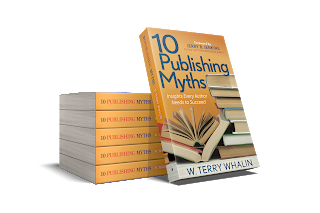
You can get my latest book for only $10 including shipping plus over $200 in bonuses. Read about it here.


July 12, 2020
Three Reasons NOT to Create a New Word

By Terry Whalin @terrywhalin
This week a submission from some new authors crossed my desk. As editors, the title is the first thing we read. These authors coined a new word in their title. For every book or magazine article, the title is a critical part of the creative process. Your title is your memorable hook for the reader—and your editor or agent is your first reader in the publishing process.
I understand these authors were trying to be creative in creating a new word in their title. While there are probably many reasons for not creating a new word, in this article I want to give you three reasons:
1. Editors and agents will roll their eyes and reject. While the author will not see this roll of the eyes or shake of the head, it will happen. As an author, you have seconds to capture the attention of the editor and you want that attention to be positive and interested. Your title needs to draw the editor to read your work—and not veer off into “Why did they use that word?”—which leads someone away from your book.
2. If you decide to self-publish with your new word (and 1.6 million books were self-published last year), now think about your readers. They will also have questions about this unfamiliar word in the title. Can they pronounce it? Does it make sense? Many people will pass on reading more—which is not what you want to have happen with your book.
3. Finally it is difficult to gain acceptance for a new word—especially as a new author. Do you have the visibility in the marketplace to coin a new word? Most new authors do not have a large audience and tribe and readers for their book. They should not go this route with their title.
A good title needs to be:
One to five words and something that draws the audience to read more. Why no more than five words? Because a title has to fit on the spine of a book. Most books are spine out on bookshelves.
Especially for nonfiction, your title will need an interesting subtitle. The subtitle needs to stress a benefit inside your book. For example, Book Proposals That Sell (Title), 21 Secrets To Speed Your Success (subtitle and reader benefit). Subtitles are not as important for fiction nor always used.
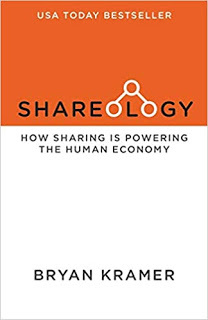
I understand I've been pretty negative in this article but please understand my motivation is for editor and reader acceptance of your title. I'm certain your intention is draw readers and interest instead of rejection. There are exceptions to these cautions. You can use a new word in a title—if you have huge visibility in the marketplace. My example is Morgan James author Bryan Kramer and his book Shareology: How Sharing Is Powering the Human Economy. Notice the little extra words at the top of the cover on this book: USA Today Bestseller. While I work at Morgan James, I do not personally know Bryan Kramer. From my knowledge of publishing, I know a book like Shareology does not reach the USA Today Bestseller list without a great deal of effort from the author. Also notice this word is easy to pronounce and use.
Your title is a critical part of your submission. I encourage you to put a great deal of thought and energy into your title. I understand publishers control the title—but repeatedly I've found a well-crafted thought-provoking title will make it through the publisher consideration process and end up on the published book.
What type of energy do you pour into the title for your book? Have you created a new word? Let me know about your experience in the comments below.
Tweetable:
Discover Three Reasons NOT to Create a New Word from this long-time editor and author. Get the details here. (ClickToTweet)

July 5, 2020
Why Authors Need to Add Goodreads Quotes

By Terry Whalin @terrywhalin
For the last several years I've been active on Goodreads. I've written over 600 reviews and have 5,000 friends on Goodreads (the maximum number of friends). I've claimed my books as a Goodreads author and my blog entries appear on Goodreads where some people read this information. If you are an author, I hope you have also handled these details at Goodreads and become a Goodreads author.
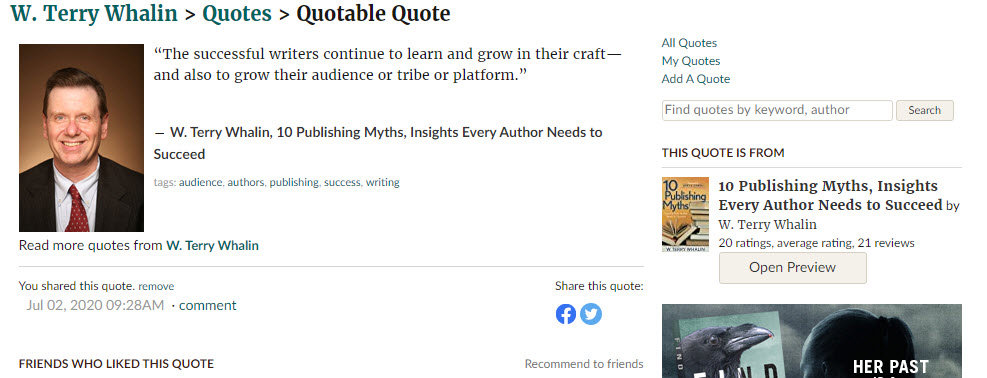
In this article, I want to call to your attention the section called Goodreads quotes. The top information bar on Goodreads has several different options. Select the Community tab which has a little arrow beside it. Click on this arrow and it will reveal a number of other features on Goodreads. One of these features is Quotes. I encourage you to highlight quotes and go to the Quotes section of Goodreads (or use this link).
Besides using other people's quotes, this section also allows you as a Goodreads author to add your own quotes. Here's the process:
1. Select a series of key quotes from your book. I found 10 quotes from 10 Publishing Myths .
2. Go to add a quote . You will include the quote, Author (you). As a Goodreads author, when you add your name in this field, it adds another field with a list of books. Select your book and add it into this field. Finally there are tags to help people find your quote when they are searching for a specific quotation. Each of these fields is important fill out correctly in this addition process.
3. Promote your new quote. You've just added this quotation to a sea of other quotations. How will anyone know about it if you don't promote it? Use this link to see the quotations I've added on Goodreads. Some of these quotes are from Book Proposals That Sell and others are from 10 Publishing Myths . To see this promotion portion (an important part of the process), let's look at one of my quotations (follow this link). You will notice buttons to share the quote on Facebook or Twitter. Below these buttons, there is a link to recommend the quotation to your friends (follow this link to see it).
In the past, I've used the friends button on Goodreads to invite people to become my friend. I have the maximum number of friends or 5,000 friends. You can share your new quotation with friends and encourage them to “like” it. If you select the button “all”, then it will highlight 100 of your Goodreads friends. This process opens up an additional field which is optional—and allows you to send a message. The first time I used this feature, I did not add a message—but I believe you will have greater interest in your new quotation if you do include a message like:
Subject: Four Ways to Use Goodreads Quotes
Hello
Thanks for being one of my Goodreads friends. I just added this quotation to Goodreads. I encourage you to please “like” my quotation. Here's four ideas how to use this quotation:
1. Cut and paste it into a Goodreads email—maybe to one of your Goodreads groups.
2. Post the quotation on Facebook
3. Post the quotation on LinkedIN
4. Post the quotation on Twitter.
Please keep my name and the link to my book when you do this process.
Bonus tip: Check out my special offer to get 10 Publishing Myths for only $10. Shipping is FREE and you get over $200 in FREE bonuses.
Thank you,
Terry
Note my email uses clickable HTML so people can click the link and go right to the page.
Will this process work to promote my book? I'm just beginning to try it so don't really know. But I do know if I do nothing, nothing will happen. It is another way to be proactive and try something to promote my new book. There are millions of registered readers on Goodreads—people who love and read books. It is a solid place to be doing this effort.
Are you using Goodreads quotes? Are you promoting them to your Goodreads friends and using the tools on Goodreads to the maximum? I encourage it. Let me know your results in the comments below.
Tweetable:
Are you adding Goodreads quotes from your book and then promoting it? Get the details here. (ClickToTweet)
June 28, 2020
Use Your Resources To Meet Needs

By Terry Whalin @terrywhalin
Last week my cassette tape recorder quit. I know many of you don't use cassette tape recorders any longer but I had developed my own technique for recording and gathering information. Now I needed to chart a new path.
1. I have ordered a replacement on ebay because I still have information on tapes that I need to be able to access. I easily found a used tape recorder. Whenever I purchase something on ebay, I always look at the reviews and feedback. I always make sure to buy from someone who has a good reputation and ratings. While it was good to get another tape recorder, I knew I needed to make additional changes.
2. I needed a new method of recording interviews on the phone and conducting interviews.
To find my new method, I could have used Google and searched through a bunch of articles and pages. Instead, I wrote a short email to several online groups to see what I would learn. I have a number of journalist and author friends. I wrote some straightforward simple questions and posted it in a couple of places.

In a short amount of time, I got some answers from experienced authors. These people also needed to record interviews and write from a transcription. Several people listed the same resource--TapeACall. I downloaded this app on my iPhone. It had a seven day free trial. I experimented with the program and recorded a couple of calls with friends.
Last week I recorded an hour session with my author and my current writing project. We recorded for an hour (and the tape worked great). Then I tried the transcription feature. It took about 20 minutes for the program to convert the tape into text. While the transcription is not perfect, I have the recording as the back up for clarification. The program has an annual fee of $59.95 or $5 a month which is well worth it in the time and energy it will save me. I am still perfecting my use of this program.
In this article, I wanted to give a practical example of how I used my resources to find a new tool for my writing work. It's the same path you can take if you need something. Asking others who have already gained the experience and done the research is one of the quickest and best ways that I have found.
When you need a resource, what do you use? Let me know in the comments below and I look forward to learning from your experiences.
Tweetable:
When you need something as a writer, how do you use your resources? Get a practical example from this prolific writer and editor. (ClickToTweet)
June 21, 2020
Don't Forget Some Marketing Basics

By Terry Whalin @terrywhalin
Last week I told you about
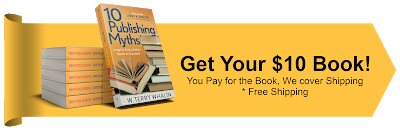
launching my special offer on my newest book, 10 Publishing
Myths . Today I want to talk about several simple marketing basics every
author can use to tell new readers about your book. As authors, we want to try
new marketing efforts yet also we don't want to forget (or neglect) some basics.
If you blog (and I hope you do),
your blog has a profile. Does this profile include clickable links to
your latest books? A while back I wrote an explanation of clickable links. Just follow this
link to get this information. I have not updated my blog profile in ages but
last weekend I dug into my settings, found the location and made some changes.
It's something I suggest you do as well for your latest offering to cover the
marketing basics.
I've mentioned in these articles
about tweeting 12–15 times a day using Hootsuite. Twitter has a feature that
I've known about for several years but never used—called pinning a tweet and
image. You can pin this tweet to the top of your various tweets. Until you
change the pinned tweet, it remain at the top. While I've tweeted thousands of
times, I had never pinned anything—until last weekend. As I pinned, it was a
process to get it to look right. Here's this tweet. At first, it did not so I deleted it and
reworked it until I got it like I wanted it. Are you pinning a tweet?
Throughout every day, each of us
send email. Do you have a signature in your email? Does this signature promote
your latest book? I changed my personal email address and my work email address
to add this promotion. Until I revise it, this promotion will be in my emails.
Why are these
signatures important? Throughout the week I write emails and adding these words
point people to my 10
Publishing Myths special offer. The receiver may not notice it the
first or third time we email—but they may eventually look at it. The marketing
is something simple and consistent.
Finally I updated the website
with my name www.terrywhalin.com I do
not drive a lot of traffic to this site but it is a common way that people will
search for me and go to it. I added my special offer right at the top of this
site. Admittedly I have not updated this site in a while—and it probably needs a
whole new make over but that will have to wait until a later date.
I've been making sure I cover the
marketing basics for my 10 Publishing Myths special offer . Have I left out
something or you have a different marketing basic? Let me know in the comments
below.
Tweetable:
Are you covering the marketing basics? Get some ideas from this prolific editor and author. (ClickToTweet)

June 14, 2020
Learning Curve and Offer
By Terry Whalin @terrywhalin
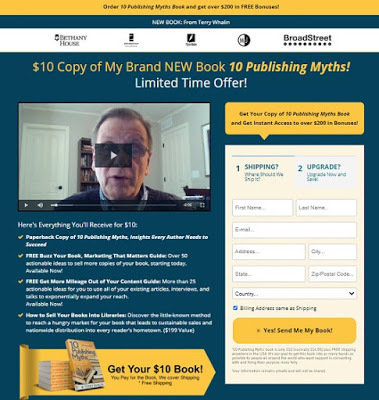
Last week I launched a book funnel promotion for my 10 Publishing Myths book. I've been working on this funnel for weeks. In late February I attended a three day intense book funnel boot camp. There was a great deal of homework before we attended the boot camp plus each day was long hours of instruction with assignments in the evening. In this process, I'm using many new tools and programs—including my email program.
Part of this training included a sequence of emails to tell people about your book. I carefully worked on this sequence, rewriting it for my book and other details. Got it loaded and checked in my new program. I was preparing to launch it. Then I goofed. Instead of sending four separate emails spaced out over days, I sent all four emails at the same time (whoops). So much for gently leading people and reminding them about my new book. With this error, I messed up the process.
My good news is the sequence of emails worked. I'm selling books (the goal) and even though not perfect, working on retooling other things behind the scenes. I'd love for you to check out my new offer. You get 10 Publishing Myths for only $10 and the shipping is FREE. As an additional bonus, you get over $200 in FREE bonuses when you buy my book. Just follow this link to learn more.
Why did I build this book funnel? I've watched other authors be successful with such a program. You sell books in this process. Some of our most successful authors at Morgan James Publishing are using this method and selling books month after month. These books are not just something the author sells but their book funnel is also driving bookstore sales (online and brick and mortar book sales). These authors have some of the top selling books from the publishing house—year after year.
Will it work for my book? I don't know but I'm trying. Each author has a learning curve and challenges in this process. I do and my encouragement to you today is to keep going. Keep trying new techniques to see if they will work for you. If they do, great. If not, then try something else. As you take action, you will move yourself way beyond the authors who do little or nothing.
In summary, if you are an author, here's the basic principles that I am doing:
* Watch and see what is successful for other authors
* Adapt that success for your own book and try it
* For every such change, there is a learning curve and mistakes
* Be forgiving of others and also with yourself, and then keep going forward.
What sort of learning curve are you experiencing? Let me know in the comments below.
Tweetable:
How are you handling the learning curve as an author? Check out this article and unique offer from prolific editor and author. Get the details here. (ClickToTweet)
June 7, 2020
The Importance of Consistency

By Terry Whalin @terrywhalin
Yesterday I took about 30 minutes and filled in most of my social media plans for the next week. If you read these articles, I've posted on Twitter thousands of times—and normally tweet 12–15 times a day. I've followed this consistent pattern for years—whether I am traveling or sick or whatever. I use the tool Hootsuite. (I use the paid version of this site and it is well worth it to me.) Over the years, I've created a pattern where the bulk of my tweets come from others. In many ways my tweets are a publishing education and if you follow them and read the articles, you will learn a tremendous amount about the writing world.
Beyond using content from others, I also intersperse my own webinars, free ebooks, these blog articles and other content (including when I review a book or see a special writing related event). It is a part of my consistent pattern. For example, every day I am promoting my biography on Billy Graham which released over six years ago. I have different radio interviews and articles and images. Some of my friends who have known me for years will react to these posts (one of the ways you know people are reading them). The consistent activity results in knowledge and awareness about my book but also book sales. It's part of the necessity of consistent activity as a writer.
What are you doing consistently? Are you…
1. Consistently learning new things. One of my consistent actions as an author is mailing books. I like to use media mail (normally $2.80) because it is dependable and inexpensive. For years, I have stood in line at my local post office with books to mail. It is not something I want to be doing now with the pandemic and social distancing. I've started using Stamps.com which has this terrific easy to use application software. You can print the label right in your home, then drop off the package at the post office. If you sign up at Stamps.com for their free trial and getting $100 value, when it is completed, behind the scenes, they will give me $20 in free postage. Here's the promo code: C-HDZ9–YNV). I encourage you to use this tool—and the promo code. You will profit and I will as well. I hope you will begin to use Stamps.com and recommend it for every author who mails books. It's much easier and time effective than standing in line at the post office.
Special Offer ($100 value) from W Terry
W Terry uses Stamps.com to print USPS postage online and wants you to try it too and get a special offer ($100 value).
Try it now!
Enter Promo Code:
C-HDZ9-YNV
2. Consistently reading new books. I regularly read new books and often write about them.
3. Consistently trying new tools. Several weeks ago I wrote about the best place to find used books online. This week I learned about another resource in this area: www.usedbooksearch.net
4. Consistently improving your writing. I am always working on learning better ways to tell stories and use better words in my writing.
5. Consistently working on your work in progress. Are you writing a new book? Are you making progress on this book on a regular basis? The writing only happens with consistent effort. One of the most effective ways to get moving is to set a particular word count you want to hit every day. For example 200 words or a single page. If you write this page consistently, it will grow until you complete your book.
6. Consistently writing these articles for my blog. If you look, I've posted something every week on this blog for a long time. It does not happen without consistent effort.
Through the consistent activity, you are able to produce a large body of work. Is it simple or easy? No but it is important. Each of us have the same 24 hours of time. Like the sand an hourglass, time will slip away if you don't use it consistently and effectively. I hope I've given you some new ideas and resources in this article.
Are you aware of the importance of consistency? How does it play out in your writing life? Let me know in the comments below.
Tweetable:
How is consistency important for writers? Get resources here from a prolific editor and author. (ClickToTweet)
May 31, 2020
A Different Type of Biography

By Terry Whalin @terrywhalin
I love biographies. As a young reader, I would get stacks of biographies from my library and read each of them, then get some more. Now as an adult, I continue to read biographies and hear biographies on audiobooks.
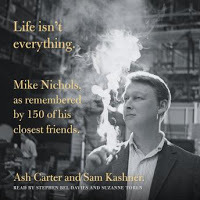
As editors look at book proposals and pitches, they are looking for different—but not too different. This week I found an example in the book, Life Isn't Everything . Well-known director Mike Nichols resisted writing a memoir or autobiography despite his remarkable life and amazing experiences. Nichols died in 2014 so the memoir opportunity disappeared. Authors Ash Carter and Sam Kashner instead wrote Life Isn't Everything with insights from 150 of his friends. The result is a book with fascinating stories and full of insights.
Jeffrey Wright gave quote with the title for the book. According to Wright, Life Isn't Everything was an expression that Mike Nichols used often. As he worked on the set of plays and movies, Nichols told stories about himself and the news and other things to guide the actors. His background in the theater helped him in film and television. From the opening pages, this book is constructed with a series of quotations from different people who knew Nichols. The result is a bunch of lessons for anyone in theater or movies or television about the behind the scenes work. The stories are filled with insights.
While I’ve read numerous biographies and written a number as well, I’ve never seen a book like Life Isn't Everything . In some ways it is like gathering 150 people in a room and recording their thoughts and words about the life of Mike Nichols then piecing those conversations together into a cohesive biography—not how I assume it was actually done. The result is listening to well-known people talk about different aspects of Nichols' life. The insights and stories are an incredible listening experience. I loved listening to Life Isn't Everything and highly recommend it.
While this book was different, it still falls into the biography category. The construction and format is unlike anything I've ever seen (read or heard). It shows me why it was published and why the editor found it engaging to bring it into the market. It's the same sort of unique work we need to do with our own pitches to editors and literary agents.
Have you read (or written) a book which is different yet still in a particular category of book? Tell me about it in the comments below.
Tweetable:
Have you read “a different type of biography?” Learn the details here from this prolific author and editor. (ClickToTweet)

May 24, 2020
Productive Writers Are Organized

By Terry Whalin @terrywhalin
During my years in publishing, I
have been through many different changes. At times, I've been a pack rat saving
all sorts of things gathered in piles in my office. I've interviewed more than
150 authors and saved interview tapes. I've written many books and saved various
versions of the manuscript and all sorts of things—many of them unnecessary.
There is a basic principle that I've learned: the more chaotic my working
space—the less productive I become. The chaos weighs on my writing.
When we move, this situation
often helps me. Especially when you use a moving van and pay for the weight, it
makes you review everything to see if it comes with you or you give it away or
toss it. Especially when we moved from eight years in Arizona a while back, I
tossed a lot of things I was keeping. Over the years I kept complete magazines
of the different articles I had written. That amounted to boxes of magazines. In
some ways, I wish I had taken the time to scan those articles (which I didn't)
so they got tossed. But to be honest, I don't need those articles.
These days I'm much better
organized in my office space and also electronically. I've discovered the
increased organization has a number of benefits:
1. You are in touch with your
priorities and meeting deadlines (large and small one). The majority of writers
miss their deadlines. I've been the editor they call for extensions with their
excuses. In book publishing when you set a deadline for a contract, it sets off
a chain of events inside the publishing house that writers never see—but are
critical to the success of the book and its release. When you ask for additional
time, you disrupt that schedule—and unknowingly affect the sales of your book
(which you will not know or experience until months later). It's not a wise step
to extend your deadline and instead set realistic ones you can achieve from the
beginning. Again it harkens back to organization—the theme of this
article.
2. You can easily find projects
and pieces of paper and bits of information. As an editor and writer, you would
be surprised at the random emails and phone calls I get from my colleagues
asking about some book or author. If I am organized, then I can often give a
quick answer. If I am not organized, then I have to take time to dig for it
(which could consume a lot of time).
3. You take a few minutes here
and there to keep things organized and you will be much more productive and
accomplish more in a single day than in the disorganization.
It is not easy to be organized in
my view and takes continual effort and work—but the payoff is worth it. I have
much more work to be done in this area but my encouragement to you with your
writing life is to continue to this organizational effort. Once everything gets
organized an in place, it takes continued vigilance and maintenance to keep it
that way. If you ignore it, the piles of paper and disorganization tends to grow
and get out of control again—or so has been my experience.
How does organization play into
your writing life? What tips can you give us? Let me know in the comments
below.
Tweetable:
Productive writers are organized says this prolific editor and author. Get the details here. (ClickToTweet)
May 17, 2020
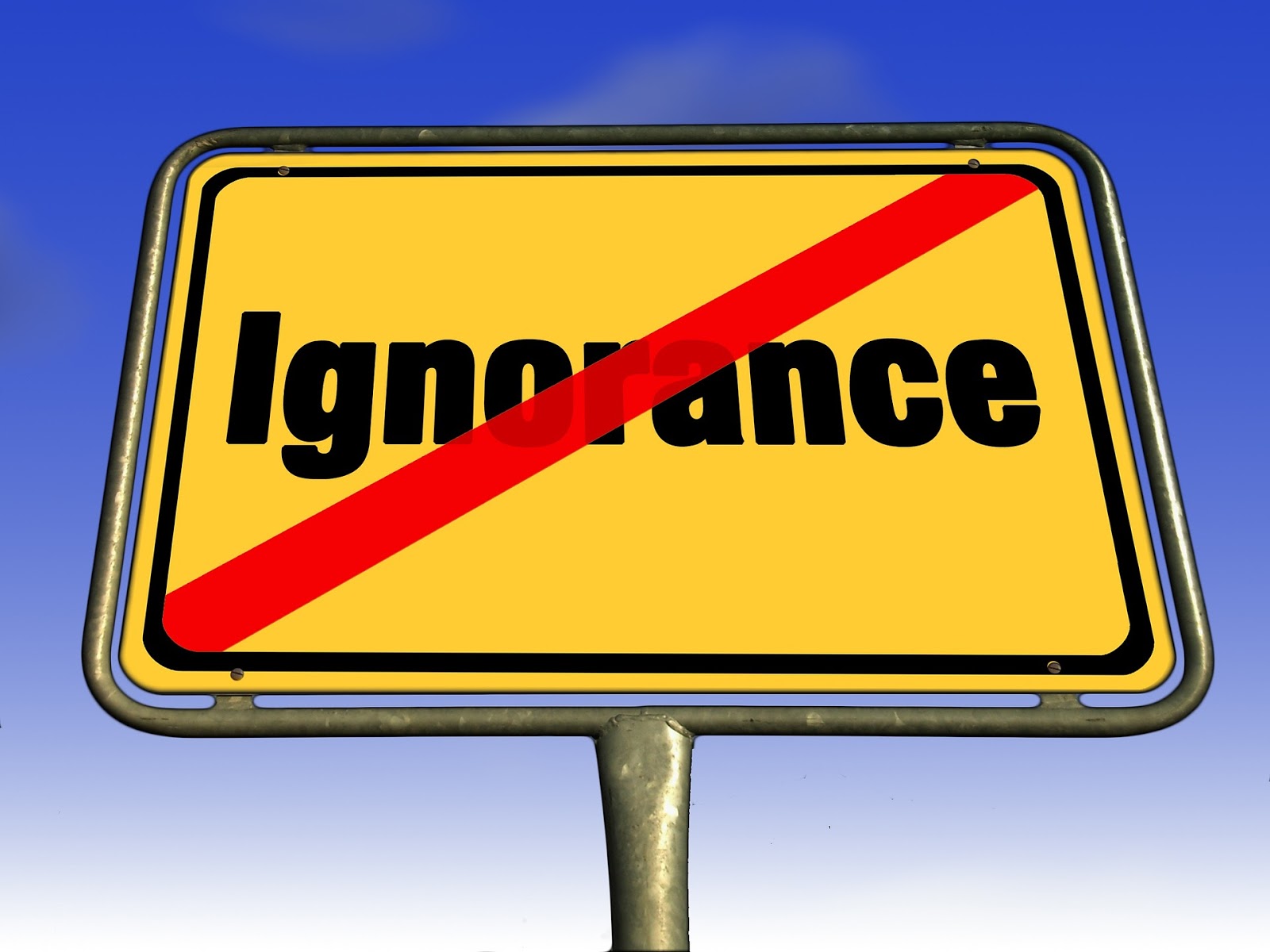
How to Fight Publishing Ignorance
By Terry Whalin @terrywhalin
Last week I turned in my judging
sheets for the Next
Generation Indie Book Awards. I've been judging this contest once a year for
at least five years. The good news is the overall quality of the books I've been
seeing are improved. The bad news is that I still receive terrible entries that
show publishing ignorance. In many ways I wonder how these books even got
produced because they are poor on many different levels. The covers are poor.
The interiors are strange. The title of the book does nothing to draw me into
the book. The writing is average. The layouts are odd. Yet someone
believed in the concept enough to publish it in the first place and then enter
it into an awards contest. Each year the judging experience makes me do a bit of
head shaking about the publishing ignorance.
Successful publishing is not
simple. While I've been in this business for many years, I understand it has
many twists and turns. Each book and author has to find their own audience and
readers. Yes there are some best practices in the process. As you learn and
execute these practices, you give your book the best opportunity to succeed and
sell in the marketplace. I continue to learn new aspects.
Here are some ways to fight
publishing ignorance:
1. Have high standards
for your writing. Excellent writing is the foundation of every
book—whether you self-publish or traditional publish. If you can't put it
together with excellence yourself, then get some training or hire an outside
editor or ghostwriter. If the writing is poor or even starts poorly, it will
affect how your book will sell in the marketplace.
2. Use an interesting
title. The author is the best person to title their book so put some
energy toward this aspect. I've titled many of my books which have been
traditionally published. If the title is boring, it will not draw
readers.
3. Have a well-done
cover. You've be shocked at the poor book covers I saw in this group of
books. We judge books all the time by their covers. It's an important aspect of
the publishing process.
4. Write an
interesting back cover. Several of these books had no back cover (zero). It's a
huge mistake because even if you self-publish and speak at an event. People will
read the back cover to see what the book is about and make a buying decision. Do
you have endorsements from someone well-known. It is work to get these
endorsements but anyone can get them with the right efforts.
5. The production details
matter. Do you have a logo for the publisher on the spine of the book
(at the bottom)? Look at the books on your shelf from Random House or Simon and
Schuster or HarperCollins—and follow every detail. Many of the barcodes in this
batch of books did not have the price of the book built into the barcode. Even
if you self-publish, these details matter.
6. Keep learning and
reading how-to books then applying them to your book. Whether you get
these books from your library or buy them used or buy them new or borrow them
from a friend, read these books and apply it to your own publishing journey.
7. Get to a writers
conference and meet professionals. Often it is who you know as much
as what you know that will make the tipping point with your publishing. Yes many
events have moved to online or been rescheduled but they are still going to
happen and are terrific resources.
I have probably missed something
in this list but it gives you an idea of some solid steps to take to fight
publishing ignorance. Let me know your thoughts in the comments below.
Tweetable:
How do you fight publishing ignorance? Get ideas from this prolific editor and writer in this article. (ClickToTweet)



