
W. Terry Whalin's Blog, page 32
December 22, 2019
Take Simple Action Steps

By Terry Whalin @terrywhalin
When I was a high school sophomore, my English teacher, Mr. Smith, saw something in my writing and encouraged me to join the newspaper staff. I started writing sports even though I was non-athletic and didn’t follow sports. I learned the jargon and began to write sports. Ultimately I was the editor of my newspaper my senior year and went on to Indiana University and majored in journalism. I thought I was going to be a newspaper reporter but instead joined Wycliffe Bible Translators and spent the next 10 years in linguistics. I began to work on the mission magazine and ultimately became the editorial director and in charge of the public face of Wycliffe in print.
My return to writing from linguistics began in the magazine world. I learned to write a query letter to pitch my idea and then got assignments and completed those assignments. Over the years, my writing has been published in more than 50 publications.
My first book was published in 1992 because an editor at David C. Cook asked me if I had any ideas for children’s books. As a company, their mission statement charged them to teach children about missions, yet they didn’t have a single book on the topic. Since I worked for Wycliffe, she asked if I had any possible children’s book manuscripts. I pitched a possibility and she said, “That’s a good idea, Terry. Write that up and send it to me.”
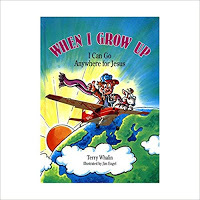
I went home and submitted my manuscript. While I went through a number of versions but ultimately it became my first book called When I Grow Up, I Can Go Anywhere for Jesus . This 32 page picture book started my work in books. Since then I’ve written over 60 books for many different publishers. I’ve been an acquisitions editor at three different publishers and for a while had a literary agency (closed). Many wonder how I’ve done it—and it’s really simple action steps.
At a conference or on the phone or on email, I pitch my ideas to editors. When they respond positively and are willing to read it, I follow up, write it and send it to them. I don’t get published each time—but I do give myself a chance to be published. From being an editor and asking writers to send me their work, I know only about 10% or less actually submit it for consideration. They miss the opportunity by not doing what the editor has asked.
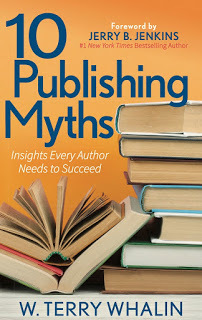
I’ve spoken with hundreds of writers and read thousands of submissions. I compiled a lot of my lessons into my new book, 10 Publishing Myths, Insights Every Author Needs to Succeed . Watch my one-minute book trailer for the book.
One of my 18 endorsers told me I was missing the 11th myth. I decided to write that chapter and give it away (looks exactly like the rest of my book). You can use this link to get the 11th Myth right away.
My journey as a writer continues with simple action steps: do what the editor asks and submit what they need.
Are you taking these simple action steps? Let me know in the comments below.
Tweetable:
Are you taking simple action steps as a writer? Gain insights from this prolific writer and editor. (ClickToTweet)


December 14, 2019
Face the Silence With Action

By Terry Whalin @terrywhalin
Are you getting silence as you reach out to literary agents or editors during the holidays? Yes you might get a little response such as holiday greetings or Merry Christmas. From my years in this business, there is often a shift in the community from right before Thanksgiving until right after New Year's Day. People put off sending manuscripts. If they have a book contract from a publisher, they often delay to sign it until after January 2nd and any number of other decisions of this nature.
My authors are Morgan James are still active and corresponding with me but little is finalizing and moving forward—so mostly silent in some ways. How do you handle this silence? Does it stop your writing and your work in the community? In this article, I want to give you some pro-active idea of what you can do to be productive and face the silence with action.
1. Read books on the craft of writing. As you read these books, use a highlighter and post-it notes to take action on what you are learning. For example, my book, 10 Publishing Myths will release on December 17th. I encourage you to go to my website—and use one of the four different ways I offer to get the book. Also you can immediately get the 11th Publishing Myth (a chapter not included in the book).
I need your help to promote and tell other people about 10 Publishing Myths . Use this page for some social media posts as well as links to the various places to write reviews and much more.
2. Plan an event for January. Maybe you want to plan a webinar or a local speaking event. Send some emails or make some phone calls or take some action for this event to get schedule and promoted.
3. Write a new book proposal or begin a new book manuscript. You can also take my Write A Book Proposal course and begin step-by-step to learn the important craft of writing a book proposal. This proposal will be your blueprint for writing and marketing your book. Do this writing work during these days in December.
4. Make plans to get to a writers' conference in the new year. Which one will you select? Who will you pitch? Take this time to plan and strategize your next publishing steps.
5. Look for new writing markets. Get the first chapter in Jumpstart Your Publishing Dreams (follow this link) and study the various writing opportunities. Pick one or two and try a new one.
6. Try some new ways to market your book. Get 1001 Ways to Market Your Book or a similar type of marketing book with proven ideas.
Each of us have the same amount of time. Let's seize the day during these silent days and move forward into the new year with great action and expectations.
How are you facing the silence in the publishing community? Let me know what actions you are taking in the comments below.
Tweetable:
How do you face the silence of the publishing community with action? Learn from a prolific author and editor. (ClickToTweet)
December 7, 2019
Get A Realistic Publishing Perspective

By Terry Whalin @terrywhalin
I've spoken with many authors about their plans and ambitions for their published book. Authors pour a lot of energy into writing their manuscript and creating a book proposal or careful pitch of their book for editors or literary agents. These authors make statements to me like:
“My book will be a bestseller.”
“My book will make a lot of money.”
“My book will sell ____ copies.”
Also over many years in publishing, I've had publishers tell me that my book would be in airport bookstores and they had plans to market and sell many copies of the book. Conventional wisdom in publishing says the larger the advance, the greater the publisher investment and the greater they will have to invest in marketing to get this investment back and more. I've been blessed to get a couple of six-figure advance—but I have lengthy stories (not good ones) about how each of these books turned out in the market.
From my years in publishing, I know and understand that much can go off course (wrong) in the publishing and marketing process. A great deal goes into publishing a book and then selling that book to readers, getting their enthusiasm about the book and telling others for even more sales. Many of the details of this process are outside of anything the author can control or do about it—a reality.
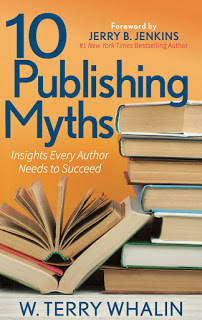
On December 17th, my next book, 10 Publishing Myths, Insights Every Author Needs to Succeed will release to bookstores nationwide. I wrote the book to give authors practical action steps they can take with their book to get it into the market.
Let me encourage you to watch the one-minute book trailer here:
Also when I was gathering 18 endorsements for this book from editors, literary agents, bestselling authors, PR experts and others, Alice Crider told me I was missing the 11th Myth: If I send my book to Oprah, she will book me on her show. When I heard this myth I laughed but then I decided to write this chapter. It is designed like the rest of my book and you can get it free here (follow this link). You will get this PDF immediately and it will have the foreword by New York Times bestselling author Jerry B. Jenkins, the various endorsements and the chapter with the 11th myth.
Help Me Promote 10 Publishing Myths
I hope you will order my book through one of the four options on my website—but even if you don't order the book, I would encourage you to tell others about it using my ClickToTweet links on this page.
As you need gifts for the writers in your life, I want to encourage you to buy a copy of 10 Publishing Myths and give it to a friend who needs the encouragement and practical advice.
I'm excited about how 10 Publishing Myths is going to help authors all over the world—whether you have a new book or want to put more life and sales back into a book that has been in the market for a while. As long as you have enthusiasm for telling others about your book, there is hope for you in the market.
Do you have a realistic publishing perspective? What myths have you fallen for? Let me know in the comments below.
Tweetable:
How to do you get a realistic publishing perspective? Get ideas and resources here from a prolific author and editor. (ClickToTweet)
November 30, 2019
Write a Review AND Promote Your Book

By Terry Whalin @terrywhalin
Through the years I've been in publishing, I've met many
different writers and they share at least one common characteristic: writers are
readers. Yes we are people who love books, buy books, tell others about
books and read books.
Often in these entries, I have talked about Amazon reviews (click this link to see some of those entries). I have a
long-standing practice where any book that I read or listen to (audiobook), I
take a few minutes a write a review then post it on Amazon and Goodreads. I have
written over 500 reviews on Goodreads where I have 5,000 friends and
my reviews get a lot of attention. On Amazon I have written almost 1,000 reviews. It only takes me a few
minutes after reading the book (where the time is involved) to write and post my
review. In the past, I've shared the details about how I promote one of my own
books with my reviews on Amazon (follow this link to read that post).
Writing reviews is one of the ways I support other authors. No
one pays me for these reviews and I do not review every book that comes into my
home because it would be impossible. Publishers, authors, and PR people send me
books almost every day. I read these books for fun and often late at night and
in my off work hours.
Amazon (like much of the rest of the world) continues to evolve
and change. In recent months, they have made it even harder for people to get
reviews (or so I read online). In the midst of these changes, I continue to
write and post reviews. My reviews sometimes take a day or two to post—and I
have no idea why it takes so long or what review process is in place behind the
scenes. Eventually the reviews do post on Amazon and when that happens I get an
email notification about my review.
In the past, Amazon made it easy to link within your reviews to
other products. This feature disappeared months ago on the review page—yet I'm
still linking to my most recent book in the final lines of my review. How am I
able to add this information? First, I create a little plain text file in
Notepad which contains my bio information which I add to the bottom of each
review. I use this little file to promote my latest book as a part of my review.
My current file says: W. Terry Whalin is an editor and the author of more than
60 books including his latest [[ASIN:164279452X 10 Publishing Myths: Insights
Every Author Needs to Succeed]].
Notice several things about this little file. It is short (one
sentence) and when it is posted includes an active Amazon link to the product.
Here's the formula which you can use with your books:
[[ASIN:THE DIGITS ARE THE TEN DIGIT ISBN ENDING WITH X TITLE OF
YOUR BOOK]]
The beauty of using this formula is it gives an active link
inside your review. An active link means the reader can click and instantly go
to the page with your Amazon product. This process is all about adding to the
discoverability of your book. Someone needs to know about your book eight to
twelve times before they will purchase the book. Each of us as authors need to
continually work so others discover our work.
Writing reviews and including a one sentence bio along with a
clickable link to your product is one more step for readers to find and discover
(and buy) your book.
Do you read books and write reviews and promote your book? Let
me know in the comments below.
Tweetable:
Write a review AND Promote Your Book. Learn the details in this article. (ClickToTweet)
November 24, 2019
Right Fit: The Search Within Publishing

By Terry Whalin @terrywhalin
For over seven years, I've been acquiring books for Morgan
James
Publishing. As an acquisitions editor, I have a lot of interesting exchanges
wtih authors, editors and literary agents about books. In this article, I'm going to
tell you a few stories related to a constant search within publishing: finding
the right fit.
If you can't find the right fit for you. You can always
self-publish. Last year over 1.6 million new books took this route of
self-publishing. One of my writer friends self-published and told me how he
spent over $10,000 in the process of creation, editing and launching his book.
When I spoke with him, he was wondering if he made the right choice for his
book. As an editor, I've heard this story many times from various authors. For
many houses if you self published, they will not consider taking it into their
publshing house—unless you have huge sales like 100,000 copies. The good news is
occasionally at Morgan James we take a self-published book and move it into our
books. It does not happen often but it is possible and something to
explore if you have gone this route with your book.
I regularly read a number of blogs and online articles. While
reading a recent article, I learned a detail buried in the article. This author
(also a book editor) was looking for a publishers for her historical novel.
Because Morgan James publishes some fiction, I used her website to reached out
and suggested she submit to Morgan James. We are looking for clean fiction (no
profanity) and 100,000 words or less. This author responded that her story was
gritty and over this word count. It was not the right publishing fit for this
author.
Recently a Christian author with an unusual proposal approached
me. While over the years I've reviewed thousands of submissions, I had never
seen a book with this particular topic. From my understanding of the publishing
world, I believe it will be a challenge for this author to find the right
publishing fit but I liked the concept and wanted to help. As an editor, I went
ahead and processed his submission and moved it forward through the process. My
colleagues agreed with me that it would be a fit for Morgan James
(doesn't always happen—yes my pitches get rejected at times) and we offered this
author a contract. He responded that he's looking for a literary agent and a
different type of fit. Will he find it? I don't know. He has an opportunity with
Morgan James but like several other authors that I've spoken with, he is looking
for the right fit.
This search for the right fit is not just something writers are
doing. Literary agents are looking for the right fit. They do not represent
every type of book but search in specific categories and types of books they
want to represent and place with publishers. Publishers are looking for the
right fit. In fact, every person in the process is looking for this right fit.
In many ways it is one of the constant factors in the publishing
search.
One of the best actions any writer can take to find the right
fit is to make sure they have a solid pitch or proposal to send to the editor or
literary agent. Often
these pitches are missing a critical element. Years ago as a frustrated
acquisitions editor, I was not getting the right pitches from writers to be able
to convince my colleagues to give them a book contract. I wrote Book Proposals That Sell,
21 Secrets to Speed Your Success .
This book has over 110 Five Star
reviews—and I have all of the remaining print copies—and I've discounted the
book from $15 to $8. No matter what you write, you will find valuable
information in these pages and be able to use it to improve your pitch and
search to find the right fit in the publishing community.
What steps are you taking to find the right fit for your
book? Let me know in the comments below.
Tweetable:
Are you searching for the right fit to publish your book? Get insights here. (ClickToTweet)

November 17, 2019
Use Reminders on Your Phone to Meet Deadlines

By Terry Whalin @terrywhalin
As a writer and editor in publishing, I have many different
deadlines and responsibilities. Years ago, I used lists and post-its to make
sure I got things done. For the last year or so, I have used another tool that I
often carry with me all the time—my iPhone. If you look in your phone, a
standard app which comes with every phone is called reminders. Are you using
this tool? From my experience, it is way better than tying a string on your finger which is an old fashion reminder.
I use reminders for my work but also personal
deadlines—basically anything I want to remember. It only takes a few minutes to
create the reminder and set a deadline for the reminder. For example, last week
I flew Southwest Airline. As a part of flying this airline, you can check-in 24
hours ahead of the departure. Of course you can pay the Early Bird check-in fee
and avoid this process but I don't. Instead I set a reminder on my phone for a
few minutes before the check-in time, then use it to recall when to check-in.
I have several publications where I send material every month on
a certain date. It's another way I use reminders to make sure I meet these
deadlines, create this material in a timely fashion then send it—and don't lose
the opportunity.
Here's some other areas where I use reminders:
—a request for something (a resource or a book). Last week I was
on the road talking with various authors and when I had an idea for a resource,
it was simple to create a reminder to get it to them.
—On the road last week, I had phone messages and calls
to return. Creating a reminder is a good place to make sure these calls are
done.
—I have a number of authors and projects that I am chasing for
different reasons. I use reminders as a tool to reach out to them again (on the
phone or email or both). I've learned through the years that follow-up is a key
part of this process. I regularly follow-up through my use of
reminders.
—other tasks to handle. I've only scratched
the surface of how to use reminders. You will have your own uses and creative
spin on this tool.
A hallmark of a professional writer is the ability to juggle
different tasks and meet the deadlines. Reminders are one of the valuable tools
I use to make sure I don't forget something and let it slip through the cracks.
Yes I'm human and occasionally some things get missed but overall reminders has
been a terrific tool to help me. I've had to learn to use this tool then take
action on a regular basis for it to be effective.
Do you use reminders on your phone? Or maybe you have a
completely different method and tool. Let me know in the comments
below.
Tweetable:
Use Reminders on Your Phone to Meet Deadlines. Get the details here. (ClickToTweet)

November 10, 2019
How to Listen to Bestselling Books (For Free)

By Terry Whalin @terrywhalin
Recently I listened to the new memoir by actress Demi Moore
called Inside
Out . About the time I finished listening to the book, the hardcover
print memoir was #1 on the nonfiction bestseller list from Publishers Weekly.
While Inside Out
was unusual listening for me, it wasn't the first time I heard a current
bestseller about the time of its release. In fact, it happens to me often. I
read or listen to many bestselling books. In this article, I want to show you
how you too can listen to the latest books about the time of their release and
when people are talking about them and you are reading about them in the
news.
1. Read about forthcoming books and use free online publications
like Publishers Weekly, Shelf Awareness, newspaper or magazines. As you read, be
watching for the information about forthcoming books and then take action. The
action that I'm encouraging you to take is to sign up to get the book coming
your direction (free).
2. If you see something of interest, search for it at your
local library on Overdrive and
get on hold list for the book. You will have to learn how to use the search tool
of Overdrive then get on the
waiting list for the book. The beauty of this process is to find the book, put a
hold on it, then get in line for when the book is available. Using the hold
process, when the book is ready for you to check out, it will automatically be
checked out to you and you will receive an email that the audiobook is ready for
you to download on your phone. I love the Overdrive process because it is free, easy and I carry the
books everywhere on my phone. It allows me to listen when I'm in my car for a
few minutes or a longer drive. I can listen to an audiobook when I exercise or
even when I travel on an airplane—because the audiobook is on my phone. After 21
days the book “expires” and returns to the library. This expiration process is
automatic and does not involve physically returning the book since it is all
done electronically.
3. If you can't find it, then make a request for it through your
local library. They can possibly buy the book and if you have requested it, you
get to be one of the first people to get the book. I've gone through this
process a number of times with books and my local library has ordered the
book.
4. From looking at the books that I've been reading and writing
about on Goodreads or Amazon (follow these links to
see the books), I hope you will see the diversity. While I'm a conservative
Christian, I do not read or listen to only conservative Christian books. I mix
into my reading books from people who are at the opposite political spectrum
from me. For example, in recent days, I listened to Susan Rice's memoir called
Tough Love . I
enjoyed this audiobook and heard it cover to cover (which I don't do with every
book).
Also I vary the types and genres of books that I consume. The diversity
builds something intangible but important in my life. It is a pattern I
recommend for you as well. Don't be in a reading rut but be open to many
different types of books. Because I'm using the library, there is a wide
spectrum of available books.
I've given you the steps and ways I learn about forthcoming
titles and then listen to them for free. Are you listening to audiobooks? Maybe
you do something completely different. Let me know in the comments
below.
Tweetable:
How can you listen to books on the current bestseller list? Get the details here. (ClickToTweet)

November 3, 2019
When Something Goes Wrong In the Writing Process

By Terry Whalin @terrywhalin
From my experience in publishing, there are many tests and
trials in the process. You plan things and then those things don't happen or go
off kilter or break or many other possibilities. As I see it, there are two
tests in this process—the one on the surface and then the real rest of how you
handle this situation.
Last week I began working with an author on writing his book. He
came into town from across the country and we spent two days together working on
gathering the stories and contents of his book. The work was interesting and I
believe a fascinating book will result from those hours of working together.
From my experience, something always goes wrong in this creative process—always.
Now I tend to forget that this happens (also part of the process) and it always
catches me by surprise.
For years when I work with someone to interview them, I record
it. I have an old fashion tape recorder and use real tapes (hard to find these
days but possible). I have used my recorder over and over in this process and
set it up. After several hours of interviewing and storytelling, I decided to
listen to the tapes. To my shock, nothing was on it. My author took ear phone
and listened to the tapes. Again he heard nothing. Hours of work was gone on
these empty tapes. We were stunned yet came up with another way to record the
stories and continued working inspite of the missing tapes. We worked through
the rest of the outline and spent about 12 hours together in this process.
Besides this recording fiasco, the local weather was also a
challenge: a snow storm dropping several inches of fresh snow. Tired from a day
of interviewing, I cleared the windows of my car and drove carefully home.
Grateful to have this time with the author for storytelling. He was flying home
early the next morning.
When I got home, the next day, I have a different tape recorder
and decided to test my recorded interview tapes (several of them). To my
surprise, two of the three tapes had recordings. Hours of work was on the tape.
I called my author to tell him and could hear the relief in his voice with this
news. We worked together on the phone later in the week to redo the missing
stories. I have the bulk of the contents and stories needed for this book
project.
I wrote these details to show you the types of challenges that
happen when you work on a writing project. Your experiences may be different but
I suspect you will have something to overcome each time in the process. Do you
let it derail and stop your work or do you figure out another means to get it
done? How you handle this choice will be the difference between getting it done
or not; completing the project or not.
When you work on a writing project, do you have these types of
things happen to you? How do you handle it? Let me know in the comments
below.
Tweetable:
Does something derail you in the writing process? How do you get around the difficulty? Get insights from this prolific writer. (ClickToTweet)

October 27, 2019
The Downside of Persistence (A Cautionary Tale)
By Terry Whalin @terrywhalin
I've written a number of times in these entries about how a key quality for every writer is persistence. People tell us “no” a lot in this
business and you have to persist to find the right place to get published. In
this article, I want to tell a cautionary tale about the downside of
persistence. Yes, persistence can be carried to far and make a negative
impression.
At Morgan James Publishing, we get a number of authors and
literary agents approaching us with material. Internally we call these leads
because they may lead to a published book (or not). There are a many books that
we are looking for and a number of books that we do not publish. The key at the
end of the day is a good fit for the author and the book to publish with Morgan
James. We receive over 5,000 submissions a year and only publish about 150
books. Despite what some people on the outside of the company say, we have a
selection process and are not a vanity publisher. If we were a vanity
publisher, then we would publish anything that comes in the door. From my years
of working at Morgan James, I know this is simply not the case.
Last week someone associated with the U.S. space program
approached Morgan
James with a book idea. This contact was sent to me because I've worked with
a couple of different astronauts on their book submissions. I reached out to
this person. It turned out they were in the film side of the business and did
not have a book
proposal or a manuscript but according to them had lots of unique
information. The email response pushed me toward lots of video links and photos.
Bottom-line this “author” had no manuscript. His idea was that a manuscript
would be created later. His vision was a coffee-table type of book with loads of
color photos. From my years of working in this business, when I see an author
has a vision for something completely different than what we publish, the best
course of action is to tell that author in a straight forward and honest manner.
It's how I handled the exchange and I wished him the best in finding the right
place for his material. I “thought” that wrapped up my exchanges with this
potential author.
Then last week I get a text from my founder at Morgan James. He
had heard from this author again and thought I had not handled the initial
exchanges (not the case). I explained how I had exchanged emails and made sure I
told him the coffee-table book vision for this author. It was confirmed that we
don't publish these types of books. To keep the communication clear, I returned
to this author and reminded him of our exchanges—and asked him not to send
something again to our founder. It would be the same as knocking on the front
door of a publisher when you are already in dialogue with someone else in the
same company on the same matter. Such duplication is not necessary and only
causes confusion.
When this author received my email, he apologized and claimed he
has “hundreds” of submissions in the works and couldn't keep track. When I read
those words, "couldn't keep track," I thought, Who wants to work with that type of author?
It's a case where his persistence had a huge downside and shows an
unprofessionalism and leading to certain rejection.
Several lessons here:
1. Keep track of your submissions and avoid duplicate
submissions to the same publisher. Publishers and literary agents keep track of
submissions—and you as an author need to keep track as well.
2. Listen to the feedback and respond rather than persisting to
submit and look unprofessional and inept.
3. Publishing looks huge but in reality we are a small
community. I hope this author finds the right place for his book (and I told him
that). Inside I know he is going about it in the wrong manner.
Hope this cautionary tale helps some of you. Have you discovered
a downside to persistence? Let me know n the comments below.
Tweetable:
Persistence is a valuable trait for writers but it does have a downside. Learn the insights in this cautionary tale. (ClickToTweet)

October 20, 2019
Boost Your Writing To A New Level

By Terry Whalin @terrywhalin
I'm heading to another conference this week and I'm looking
forward to it for a number of reasons. Our work in publishing as writers and
editors is isolated. Yes I work with my Morgan James Publishing
colleagues to get contracts, negotiate with agents and authors and
do book deals. I work for a New York publisher yet I live in Colorado. The bulk
of my work is done on the phone and email rather than face to face. It's the
same with my writing work. The work is often done on my computer or phone rather
than face to face. Yes there are some of these physical meetings but not
often. During each day, I set my own schedule for phone calls, meetings, and
many other tasks. Conferences are a chance to break the routine and do something
different.
A conference is an opportunity for me to reconnect with old
friends. I've been traveling to some of these events for years and met
remarkable editors, writers and people in other roles in this business. Follow this
link to a list of various conferences that I know firsthand and recommend.
Conferences are a chance to catch up on what they are doing—even if it is only
for a few minutes. Also at these events, I meet new writers and editors,
exchange business cards with them. From my experience, a lot of the people who
attend these conferences are coming for their first event. I know some of
these new relationships will grow to be significant in my own future work. Why?
Because I've seen this type of connection over and over in my past
trips.
While I read trade magazines and online newsletters and other
tools to keep up on publishing, conferences give me the chance to learn about
other changes in the business (maybe something that hasn't been in a
publication) or listen to others about what they need for their publication or
are looking for. These conversations move the information beyond something from
print to something practical that I could possibly do. There is a lot of this
type of give and take during a conference whether at a meal or late at night in
a hotel lobby or any number of other locations.
Also these conferences give me a chance to give back to others
and to teach. I'm teaching a couple of workshops at the conference this coming
week. I've prepared my handouts and resources for this class and believe it will
help the writing life of those in my workshop—provided they show up and take
action on the different resources I will be giving them.
Another reason I love these conferences is I meet people who are
looking for a publisher. I'm going to be having a number of one-on-one meetings
throughout the conference with writers. I will be able to listen to their
pitches and look at their work plus give them some of the distinctions about Morgan James
Publishing. I've met a number of people at these events that I've been able
to help them get their work into print—from our exchanges are the
conferences.
I understand there are challenges for every writer to get to one
of these events—whether they are large events or small events. They have
challenges in terms of:
* cost. Each of these events have a financial
cost for the conference fee, the hotel, transportation, the meals, etc.
* time. These conferences take you away from
your current work and things pile up while on the road. Some of these events are
long and others are short but they still consume time.
* effort. Some people have to arrange childcare
or petcare or other details to be able to get free and go to these
events.
From my experience of going to events and conferences for years,
I know they are worth any effort to overcome the challenges. It is important to
show up, learn then apply the information you gain into your writing life. I
know these events will boost your writing to a new level.
What do you get from going to a conference? How has it boosted
your writing? Let me know in the comments below.
Tweetable:
Want to boost your writing to a new level? Get the details here from this prolific writer and editor. (ClickToTweet)



