
W. Terry Whalin's Blog, page 35
May 26, 2019
Be a Visible Author

As authors, we need to be connected to our readers.
Last week I taught a continuing class at the Colorado Christian Writers
Conference on the topic of platform called You Can Build a
Platform! As a part of teaching this five session class, I pulled
together a 28–page handout. I'm including the link here for every reader. I encourage you to download
this resource and follow the extra links it contains for your own writing
life.
While word “platform” is often used within publishing, it is
insider language. At writers conferences, many people are attending their first
conference. They have no idea what someone is asking about their platform. Most
of these unpublished writers have been focused on getting down their book into a
manuscript. A few of them have learned about one sheets to present their idea. A
few others have learned about book proposals and worked on a proposal. But the
concept of platform is completely foreign to these writers—as I can see it in
their eyes when I mention it. I have a free ebook on this concept called Platform Building Ideas for Every
Author (follow the
link to get it right away).
Book publishers are actively looking for authors with
connections to readers (what they call platforms). Yet from my many years in
publishing. I understand this business is complicated with many twists and
turns. A seemingly “minor” issue can be a costly mistake for the publisher
and the author. If you are a writer, you need to be connected to your
readers. I understand for most writers this process can be a challenge and
outside of your comfort zone. Most writers are introverts and don't want to
interact with anyone. They prefer to sit at their keyboards and
write. Unfortunately this isolated stance does not sell books or reach
readers.
As writers, we need to be visible and connected to our readers.
To achieve visibility, we have to consistently build a platform. Your way of
building this connection will be different from my way but each author has to be
aware of this need and be consistently working at expanding their reach. As you
build your reach to readers, be aware that you can do it on “rented
media” (which you don't control like Facebook or Twitter or LinkedIn or
some other social network). The risk is if you “violate” their terms, then these
networks can terminate your account and end your reaching these readers.
Our most effective way to reach readers is through our email
list, our website and our blog (all things that we control as writers and are
our personal media sources). The numbers are important to agents and
editors so keep track and be growing it through creating lead magnets and producing valuable
content.
I encourage each of us to continue innovating and looking for
ways to expand your reach as an author. Also keep knocking on doors and take
advantage of new opportunities. Each of us (experienced or brand new) have to
pitch our ideas, our
proposals, our skills to others. From my experience, very little happens
without this pitching process. Each of us would probably like to avoid it so we
are in demand—but for most of us, that isn't our situation so we have to be
working at our own visibility.
How are you expanding your readership and visibility as an
author and writer? Let me know in the comments below.
Tweetable:
Are you a visible author? How can you increase your visibility? Get ideas here from a prolific author and editor. (ClickToTweet)


May 19, 2019
Increase Producivity. Get Organized.

As I get older, I'm more aware each of us have the
same amount of time in every day. We have a lot of information and opportunity
coming our direction. How do we harness these opportunities and increase our
effectiveness? One important aspect is to get organized and keep organized.
If I take an honest look at myself, I tend to be a bit of a pack
rat. I save magazines, articles I might write some day, books people have sent
to read and review, manuscripts and proposals I've been handed at conferences,
and the list goes on. This material can easily flood my office and pile up.
During the last few weeks, I have been vigilant about sorting, filing and
throwing most of this accumulation. At the moment, I'm much more organized than
I have been during other periods.
Take Time to Eliminate & Organize Clutter
For me, it is a matter of taking a hard look at what has
accumulated and asking if I will ever need this again. Most of the time that
answer is “no” and I can throw it. Or can I quickly store some needed
information such as an email address or phone on my computer where I can search
and easily access it in the future? You can increase your effectiveness and
productivity if you have less right in front of you to handle.
Use Your Smartphone Effectively
Often I meet writers who have a smartphone but only use it as a
phone—and little else. Whether you are aware of it or not, you have a powerful
communication device that you carry. Take the time to use various features. For
example, I use the calendar to remind me of meetings and phone calls. I use the
reminders section to call to my attention critical deadlines.
I also use my smartphone to post on social media. For example, I
use Hootsuite to time out
my posts for several social platforms. For Facebook at the moment, I post them
myself using my phone. It is not the most efficient way to do it (as I know) but
it does get done.
Also I use my smartphone to quickly answer some important emails
when I'm away from my office. Just a brief answer shows the other person you got
it and responded. Use your phone as an effective communication tool.
If you don't know how to use these aspects of your smartphone,
then take the time to learn. You can even take free classes at the Apple Store
(which I have done).
Be Aware of the Time Zappers
I regularly hear from writers who spend hours scrolling through
Facebook then wonder where they lost part of their day. Or they binge watch a television program or spend time at a bookstore browsing. None of these things
are wrong or bad in themselves but increase your awareness of how you are using
your time can help you be more effective.
Create a System to Achieve Over and
Over
If there is something you need to accomplish over and over, I
recommend you create a habit to accomplish it. Just writing 20 to 30 minutes a
day on a project can continue to move it forward toward completion. Or set a
word count for your writing then do it repeatedly. People wonder how I keep up
with my social media. It's pretty simple. I've created a system where I do the
functions over and over (with many different purposes and reasons).
I still have things slip through the cracks and doesn't get
done. For example, several days ago I got an email reminder the judging sheets
for a contest are due right away. Yes I knew I was judging this contest and had
the material for it but wasn't aware of the exact due date. I handled it and
met the deadline. Each of us have these types of things which slip into our day
and need to get done.
What steps are you taking to get organized and increase your
productivity? Let me know in the comments below.
Tweetable:
Discover four insights to get organized and increase your productivity from this prolific reader and writer. (ClickToTweet)
May 12, 2019
The Discipline of Reading

Almost every day someone approaches me about reading their book and then they want me to write a review. I get these approaches from publishers, from
publicists and from authors. Many of them I respond and appreciate the offer but
turn them down and point to a free resource such as this one. The truth is each of us
have limited time to read. Yet for writers reading is (and should be) a
consitent part of your daily life. Is it?
In this article, I'm going to give several ideas how to use the
discipline of reading. Most of us don't like the word “discipline” yet from my
experience, reading has to be in your daily plans or it simply does not happen.
I repeatedly read about how the volume of reading for many adults continues to
drop—like one book a year for men after they graduate from high school. On the
other end of the success scale (millionaires), I read these people are
continually reading for their own personal development and growth.
While my reading varies throughout the day, I do have a number
of routine times when I consitently read. the first period is in the morning. I
am an early riser and will breeze through my email then I begin to read my
Bible. Each year I select a different version and this year I'm reading The Daily Message by Eugene
Peterson. Each day includes a Bible passage along with a short reading from the
Psalms or Proverbs. After completing my Bible reading, I read the newspaper
cover to cover. As a journalist, it is a long-term habit to read a real
newspaper. Because I live in Colorado, I read the Denver Post cover to
cover.
I have a comfortable chair in my office where I read in the
evenings. Often late at night I spend an hour or more reading various books. As
I read or listen to a book, I track my progress on Goodreads (one of the tools
they provide). Because I have 5,000 friends on Goodreads, even my reading
progress gets reaction from others (and I can see their reaction and comments).
Besides reading physical books, throughout the day, I am also
reading blogs and other information which comes into my email box. Many of these
blogs are focused on publishing or books. If they have relevant information for
my social media, then I will put them into my Hootsuite feed for future social
media posting. I learn a great deal from others reading these articles as I
curate the content for my social media followers.
Besides reading in the morning and evening, I also listen to
audiobooks if I am in my car (even for a few minutes) or exercising. I've mentioned in the past that I use Overdrive for these
audiobooks (free from the public library). There is a wide selection of books
on Overdrive but I tend to gravitate toward history, self-help, how-to, personal
development, and memoir. The majority of these books are nonfiction. I do read
some fiction but my fiction reading is limited to a few titles a year. It is not
surprising that I've written many nonfiction books and continually read in the
nonfiction area. It's what I recommend to you as a writer. If you write fiction,
then you should be reading your particular genre of fiction. If you write
nonfiction, you should be reading in this area and aware of the trends,
bestselling authors and other such activity.
You can see how reading permeates my day. What happens after I
have finished reading a book? As I read the book, I will mark a couple of
passages which capture the essence of the book or I deemed significant. Shortly
after I finish the book, I will write a review in a Word file. This Word file
is where I write my rough draft of the book. In general I quote something from
the book in my review (shows I actually read the book) and my review is
typically 150 to 250 words (not just a sentence but more substantial). Over the
years, I've written hundreds of print magazine reviews. In recent years I've
written over 900 reviews on Amazon (see my profile) and over 550 reviews on Goodreads (see my profile). This volume of
reviews did not happen overnight but is something I've been doing consistently
for years. It's one of the reasons people frequently ask me to review their
books (and if I have the time and interest, I may do it).
Writers are readers. What does your reading schedule look like?
How are you practicing the discipline of reading and incorporating it into your
day? Let me know in the comments below.
Tweetable:
When do you read throughout your day? Get ideas and inspiration from this prolific reader and writer. (ClickToTweet)
May 5, 2019
How to Show Up in Different Places

As writers, we need to show up in different places. If you are
reaching the same people over and over with your message, you will not expand
your reach and audience. I believe each of us need to consistently work at
reaching new and different audiences with our message. In this article, I want
to give several specific ideas about how to reach new areas of the
market.
Before I give you the specific ideas, there are some basic steps
that every author needs to take first. The first step is to create a giveaway or
a lead magnet. It can be a free ebook or audio file but something which has
value to your target audience (something they will want). You need to set up
this giveaway on a website where you capture their first name and email address
(which adds them to your email list).
The next step after setting up this giveaway is to learn how
some simple HTML which gives a clickable link when you show up in these places.
(If you have no idea what I'm talking about, then click this link and
get a single page about creating clickable HTML that I've written). Otherwise
you put the effort into showing up—but don't gain any help for your bigger goal
(finding new subscribers to your email list). I'm encouraging you to work smart
with this larger goal in focus as you show up in these various
places.
Make Relevant Comments on Blogs
Most blogs allow you to make comments. I have the comments
turned on to monitor on my own blog because often the comments are simply not
related to my post and SPAM. When you comment, add to the article with some
additional content. As you write a relevant comment with some additional aspects
to the post, you will add value to the blog. In addition to your relevant
comment, add the HTML link to your free Ebook or some other valuable tool. Make
this link clickable and it will be kept (not marked as SPAM) and you will have
created another link on a different location where you can get sign ups for your
newsletter list. The key word is “relevant” with your comment. Do not SPAM or
that impression will also be made.
Actively Participate in Email
Discussions
I'm on some writer email lists where I contribute. If I do, as
with commenting on blogs, I do add to the content of the discussion (otherwise
you are writing spam). At the end of my post, I make a point to include a link
to my website. You can be strategic about where you send people with this single
link.
Write an article for a Guest Blog
You can also write an article for another blog. This week I
exchanged emails with the editor of a well-known writer blog and in her
response, she encouraged me to write another article for them. I seized the
opportunity and did it. Other blogs include guidelines in their blog about how
to become a guest blogger. Look for those guidelines, follow them and send in
your article. In the article include some clickable links to your free giveways
and you will add more people to your email list. A related way is to become a
regular contributor to a blog or website. For the last several years, I've been
writing an article once a month for Writers on the Move and here is the link to one of my recent posts as an
example.
Become a regular contributor to a
newsletter
I have a couple of newsletters where I am a
regular contributor. They use my complete articles in their newsletter and are
grateful to get the content. I am not paid for this work and I don't write
original material for them. Often I will lightly rework an old article from my blog. It could be something I wrote several years ago. I give it a new opening
sentence and title, then I skim the article to make sure there is nothing that
is dated in it (and if I find something I rewrite it). I have set reminders on
my phone to send this material every month to these newsletters. They are not a
huge time commitment and I make sure each one includes links to valuable content
for that reader (yet clickable links for the reader to get on my newsletter
list).
What are the ways you show up in different places? Are you using
clickable links in these places which lead people to your free resources (and
signing up on your email list)? Let me know in the comments below.
Tweetable:
Learn four ways to show up in different places and achieve some of your goals from a prolific author and editor. (ClickToTweet)
April 28, 2019
Good Choices and Good Habits Are Important

We are faced with dozens of choices every day. At times these choices are complicated because of the many possibilities. For example, when you purchase toothpaste, there are endless variations even among the same brand.
I'm keenly aware of the many choices we have as writers and editors. For example, do I answer emails from authors, do I set up phone calls with authors, do I make follow-up calls with authors who have contracts but haven't responded? Do I work on getting more conference speaking or do I write some query letters for more magazine writing? Do I create a new marketing campaign for one of my books? Do I reconnect with some agent friends to see if they have something I could contract with Morgan James? Do I send an email to my mailing list? These are only a few of a multitude of choices but you get the idea. There are many different possibilities. Which do I select and accomplish today?
Each of us are locked into time and space limitations. We only have a certain number of work hours for each day before we run out of energy. I've recently been listening to the audiobook for Atomic Habits by James Clear. If we are honest, we have bad habits that we want to lose and some good habits that we would like to acquire. James Clear is a habit expert and in this engaging audiobook helps us understand and develop habits—yet in an uncomplicated, "everybody can do it" sort of way.
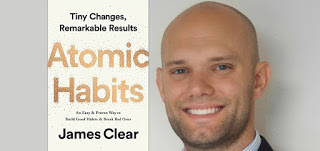
Atomic Habits opens with the story of the British cycling team who instead of huge goals decided to change things by one percent. When most of us want to change a habit like lose weight or make more money or ???, we set a major goal then most of us fail in this process. Clear advocates and teaches how to change in small increments which is much more possible. The British cycling team made incremental one percent changes in their pillow, their clothing, the massage oil, and many other elements. It transformed the team into winning Olympic gold medals.
Clear contends to make a new effective habit means developing a system. This audiobook is loaded with insights for every reader. I listened to this audiobook cover to cover and highly recommend Atomic Habits .
What do you want to achieve with your writing? If you are writing a book, are you establishing a system (habit) which will accomplish your goal? For example, you could decide to write 1,000 words (about four pages) every day until you finish a draft of your book. You create a system that will allow you to develop a writing habit which will accomplish your larger goal of completing a book manuscript.
If you want to get the attention of a literary agent to get a book deal with a publisher. What are you doing to craft an eye-catching book proposal? Are you regularly contacting agents or going to a conference where you will meet them and develop your relationship? Create a system (habit) which moves you toward your goal. The steps can be small but your consistent effort will pay off.
Do you want to develop a social media presence? What are you doing to consistently grow that presence? Are you posting on different sites on a consistent basis and growing your audience? As you post where are you leading this audience? Does it lead to exposure for your book? Or does it lead to getting sign ups for your email list? What is your system (habit)? Without consistent effort and a system (habit), it will be a good thought but not translate into reality (at least this is true from my experience).
Our habits and choices are important. I encourage you to make good ones—not just once but every day. If I can help you in this process, don't hesitate to email or reach out to me.
What habits and choices are you making with your writing life? Let me know in the comments below.
Tweetable:
How do your choices and habits grow your writing and life in publishing? Get ideas and help from this prolific editor and writer. (ClickToTweet)
-----
April 21, 2019
How to Press Forward When Stopped

As a writer, how to you move when stuck?
As writers, I've learned we are frequently told the word “no.”
“Your idea isn't a good fit for us.” (A polite
rejection)
“Not publishing this type of book.”
There are many other ways we are told no or stopped in our
tracks. For example, I've mentioned in these entries about using the tool called
Refollow every day to grow my social media presence.
Refollow helps you
follow up to 800 people in your target market—and you can also unfollow about
1,000 people a day. You can get month's FREE trial and see if you like using this program (use this link). Consistent use of Refollow is one of the reasons I
have a large Twitter
following.
I want to use this program as an example of how we as writers
need to not get stalled with “no” and instead keep pressing forward. Today I
used the program and followed 800 new people. Normally I open a window in my
browser and Refollow works along as I do other things. To make sure the program
is working, I check on it from time to time. Refollow works with Twitter and
sometimes the program will stop and flash a message saying the program stopped
not because of the program but because of Twitter's limiting the number of
people you follow.
When this happens, I suspect some people close the program
and stop using it—and return tomorrow. I do not take this path. Instead Refollow
allows you to unfollow people who have not followed you back. In some cases,
I've been following these people for years and they have not followed me back. I
use the program to unfollow people. Even using the unfollow portion of the
program, I am stopped. I get a message saying my connection between the program
and Twitter has expired and I have to restart. Some people at this message,
would probably quit the program. Instead I try it again—and often it keeps
working. The program and the process isn't perfect or straightforward because it
works with Twitter. You have to determine your next move when stopped—continue
or use a different aspect or decide to return later (even tomorrow).
This process is often the same in other parts of the writing
world. You pitch a magazine and get a rejection. (Follow this link for
a resource to help you.) Or you approach a literary agent and they don't respond or they say their
client list is full for your type of writing. Or any number of other polite ways
people say “no.” When you get this response, does it discourage you and you take
it personally or do you press forward with something else (like a different type
of writing)?
I encourage you to figure out your game plan before you get
stopped or hear no. Then keep moving forward with the next plan on your list.
Otherwise, you go into stall and don't accomplish what you wanted. The choice is
up to you. I choose to look at the world as full of opportunity and you are
searching for the right opportunity.
As writers we have many different
directions for our writing. I've written books, magazine articles, websites,
Ebooks, radio scripts, and other types of writing for many different audiences
(preschoolers, young readers, teens and adults). If you need some ideas, I
encourage you to download and read the first chapter of Jumpstart Your Publishing
Dreams (no optin and
use this link).
How do you press forward when you are stopped? What are your
strategies? Let me know in the comments below.
Tweetable:
When you are stopped, how do you press forward? Get ideas from this prolific writer and editor here. (ClickToTweet)
April 14, 2019
Five Sure-Fire Ways to Fail as a Book Author

For many years I've written on the positive
ways to succeed as a book author in these articles. Yet there is another path
which many people take on the road to publishing their book. Here's five
sure-fire ways to fail as an author:
1. Believe if I build it, they will come. These
authors pour energy and effort into building a great website for their book.
While a website is important in your book marketing, it isn't everything. You
may have the slickest well-written website but without telling people about it,
no one will come. There are millions of websites online. If the author doesn't
drive traffic and eyeballs to see your content, then it does not help you or
your book sales. There is much more to the process than simply building a
website and hoping (without action) that people will come.
2. Believe I know everything there is to know about
publishing. I've met authors (some of them even well-known bestselling
authors) who believe they know everything there is to know about publishing.
These people ooze confidence. I've spent decades in this business and read the
trade magazines and other things constantly. Things are constantly shifting in
publishing and there is always more to learn—and I do learn new things all the
time. Overconfidence can be a pitfall for authors. It is great to believe in
yourself but be balanced in that view.
3. Believe the publisher will sell my books for me
without marketing. Publishers make and release amazing books. Yet
without marketing and telling someone about that book—then no one will purchase
it. No matter how you publish your book (traditional, hybrid or
self-publishing), the bulk of the marketing effort will fall on the author.
Authors are fooling themselves if they believe their publisher will sell the
books—with or without marketing. Yes publishers can get your book into
bookstores—but it is the author's marketing efforts that get readers to purchase
the books.
4. Believe attending a writers' conference is a waste of
time. For an author to go to any event (local or far away), you will
invest time and money in this process. If you attend these events with the wrong
expectations or attitude, then you will set yourself up to not get anything out
of it. I believe every author can cut down their learning curve from attending
writers'
conferences, meeting the right people and applying the information they
learn to their book and marketing efforts. Knowledge without action is worthless
but you can certainly meet many of the right people at a conference. If you
haven't been to a conference or haven't been for some time, I encourage you to
make plans and a commitment to get to a conference (check out
this link for a list of some conferences). Attending a conference can
invigorate your writing life and success as a book author.
5. Believe the title, cover and publisher do not
matter. Each of these elements are critical in the book purchase
process. I've bought books because of a title or a cover design. I've also not
purchased books because of the publisher. Many consumers do not notice the
publisher and I admit to being a more sophisticated consumer than many people.
These elements are a critical part of the book production process and essential
for your success.
I've written about only five of many different ways a book
author can fail. The details are an important part of the process. Maybe I'm
missing a critical way for an author to fail? Let me know in the comments
below.
Tweetable:
Learn Five Sure-Fire Ways for Book Authors to Fail. (ClickToTweet)

April 7, 2019
The Missing Link for Book Reviews

Through the years, I've asked numerous people to write a short review on my books—and it has not happened. There are probably many reasons why this happens:
1. They haven't read the book.
2. They are not writers and have no idea what to write for a review.
3. They are busy and never get it done.
4. They forgot and no one reminded them about your need for the review.
These reasons are only a few of the endless possibilities. To write a review does not seem complicated to me. Of course, I've been writing reviews of books for years in print magazines and online. I've written over 900 Amazon reviews and over 500 reviews on Goodreads. Almost daily someone approaches me about reading their book and reviewing it. With limited time to read, I answer but turn down the majority of these requests.
Click this image to learn about this tool
My friend Sandra Beckwith has created a simple tool to address this problem and help writers get more book reviews for their books. A former book publicist and long-time member of the publishing community, Sandra understands authors are challenged to get reviews for their books. You can see my interview with Sandra at this link. To address this need for more book reviews, she has created a “reader book review form” or a template to help your readers write then post their review. Two types of templates were created since a nonfiction review would be different from a fiction review.
In addition to creating a well-written template for nonfiction or fiction, Sandra has included information with ideas for writers to distribute and promote the book review form. Also she includes blanket permission to give this form away with as many copies as you want.
Whether your book is brand new or has been published for a while, I believe every author can profit from the use of this simple and inexpensive tool. My strong recommendation is that you purchase this tool (follow this link) then use it over and over to stir your readers to action and write more reviews.
Will this tool help you get more book reviews? It will definitely not help if you don't get it—or if you get it and don't use it. From my years in publishing, Sandra has created a practical tool for authors. I plan to use my template over and over, then I will know if it works or not. I encourage you to take similar action and let me know in the comments below about the innovative ways you are using this tool.
Tweetable:
Are y0u struggling to get people to write reviews for your book? Learn about a new inexpensive tool which will help you get more reviews. (ClickToTweet)
March 31, 2019
Endorsements Sell Books

As a long-time reader, I have purchased a number of books
because of an endorsement on the front or back cove or just inside the book.
These brief words from someone with name recognition help you sell books.
Sometimes these endorsements are called blurbs.
From my years in publishing, the process of getting these
endorsements is often a bit mysterious to writers.
Without the author taking action during the production process,
endorsements don’t happen. Many books are published without endorsements but if
your book doesn’t have endorsements, you are missing this sales tool.
You have to ask people to endorse your book. One of the keys in
this process is to understand these high profile people are busy and do not
assume they will read your book before they send their endorsement.
What To Ask and What To Send
--Write a clear short subject line in email: like Easy Blurb Request.
These people get a lot of emails and you want to make it clear from the
beginning how your request is different and easy for them to handle.
--Attach the cover and the edited manuscript (probably not in
layout at this point). Don’t assume they will read the manuscript but you want
them to be able to read it and see the designed cover.
--Write a brief email with only a few sentences. Give them a
deadline and offer to write a “draft endorsement” if they don’t have the time to
write one themselves. As I’ve done this process, I’m always surprised at who will ask
for a draft endorsement. You have no idea of their schedule and whether they
are home or traveling or in some intense deadline. You want to make it easy so
they agree to do it.
--Ask how they want to be identified. Some of the possible options are bestselling author, editor
at ___ or president of ____ or any other way. You will get a variety of answers but want to
identify your endorsers as they want to be named. Many of us have different roles in different places.
--Use their website contact form or social media to reach them.
Some of these high profile people are hard to reach but you want to ask more
people than you will actually need. When I did this process recently, some
long-time friends did not respond. Others sent emails and said no for various
reasons.
If you can, you want to gather several pages of these endorsements.
Some will be broken into phrases and used on the inside but also on the front or
back cover.
For a couple of examples of endorsements, I encourage you to
look at the sample of my Jumpstart Your Publishing Dreams (follow this link). Notice
the variety and different types of endorsements in these pages. You can do the
same with your book. Also look in detail at the story of Jacqueline Marcell who
self-published her book about elder care and had many high profile endorsements.
She details her process and some of her resources in this article (follow this link).
After the book is in Print
When you have books in hand (often before the official release
date), send a signed print copy to the endorser with your note of appreciation.
This person helped you and your gratitude is an important step in the
process.
It does take effort to get these endorsements but they pay off
in increased book sales. Also online sites will often put the endorsements in
the editorial dection of the book—i.e. before any customer reviews for the
book—which is another opportunity for you as the author to influence and
encourage the book sale.
Some writers wonder about the integrity of this process. The
endorser didn’t read the book cover to cover before adding their name to this
process. Even though I understand how this process works, I still buy books
because of a particular endorsement on a book.
My encouragement is for you to put the effort into this process
during the book production and it will pay off for you.
How do you gather endorsements for your book? Have I missed
anything? If so, let me know in the comments below.
Tweetable:
Endorsements sell books. Learn the specifics of how to gather them here. (ClickToTweet)
March 24, 2019
Does Your Book Include Acknowledgements?
The acknowledgement section is where book authors express gratitude.
As a long-time reader and lover of books plus my involvement in
various aspects of the publishing industry, I notice fiction and nonfiction
books include an acknowledgement section. This category appears in the Table of
contents (mostly for nonfiction books).
These pages are where the author tells about the contributions
of others to the book. They can be beta readers, editors, agents, others in the
publishing house, along with friends and relatives. I have always read these
sections and learn a great deal from them. For example, who is the literary
agent for a bestselling author? The author could have included this information
in the acknowledgement section.
For many years, these acknowledgement pages appeared in the early
pages of a book. I suspect many readers skipped right over them and headed to
the first pages of the book. In recent years, these acknowledgement sections
have been tucked into the final pages of books (nonfiction and fiction). I still read them and often learn some extra
information about the author in the process.
I've found many writers are looking for a literary agent. If you
are in this category, you can use my free list of agents (follow this link) for
their mailing address, website, email address, etc. I encourage authors to use
this information not to SPAM them but for research. You are looking for the
right agent who handles your type of book when you make your submission.
One of the ways to personalize your submission is to pick up
some information about the agent from an acknowledgement page. Not every agent
lists their clients on their website and even if they do, this list may not
include all of the people they represent. Who is a similar author to the book
you are pitching? One strategy with your submissions is to pitch your book to
agents who represent this type of work. You know they are interested in this
type of book. One of the ways you can discover the bestselling author's agent is
in the acknowledgement section.
I believe the acknowledgement section of books is an important
place. As authors, it is where we can express public gratitude to others who
have helped us in the process of book creation and getting the book into the market.
Do you include an acknowledgement section in your book? How do
you decide who to include in this section? Do you put it in the front or the
back of your book? Let me know in the comments below.
Tweetable:
What can you learn from an acknowledgement section in a book? Why is it important? Learn the details here. (ClickToTweet)


