
W. Terry Whalin's Blog, page 39
August 26, 2018
My Overflowing Bookshelves Remind Me About Realistic Expectations

Throughout my years in publishing, almost daily books pour into my home. I love books and enjoy seeing the various books that I've acquired for Morgan James Publishing. Our team is making some remarkable books and getting them into the brick and mortar and online bookstores. One of the books I acquired hit several bestseller lists last week including the USA Today bestseller list. These lists measure books that are selling inside bookstores and it was a thrill to have one of my authors on the bestseller list.
Reading books is also something I do in my free time and for fun. No one is paying me to read their book and write a review but if I read the book, I take a few minutes and write an honest review on Amazon and Goodreads. It is a consistent pattern that I follow and I've written over 900 reviews on Amazon and hundreds of reviews on Goodreads.
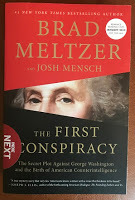
I love books and it is fun to receive Advanced Reading Copies (ARCs) of books. Most of my reading is nonfiction but I do sprinkle a few novels into my limited time for reading. I love the storytelling of Brad Meltzer and have read most of his novels. In fact, last year, Meltzer made a personal apperance at my local library. I would have been there except he came at a date when I was speaking at a conference in another state. Meltzer has a book releasing in January, The First Conspiracy, The Secret Plot Against George Washington and the Birth of American Counterintelligence (Flatiron Books, January 2019). Last week (mid-August), I pulled an uncorrected ARC of this book out of my mail. I'm eager to begin reading it soon.
Periodically I have this problem: the bookshelves in my office are full. Then I begin to stack the books on the top of a bookcase. Eventually these books gather into about three stacks with at least a dozen books in each stack. Yes too many books have poured into my office and I need to purge through my bookshelves and remove books.
When I go through this process of sorting it reminds me of several truths:
* There are way more books that I'd like to read than I can actually read
* Thousands of new books enter the market every day and I need to continue to look for ways to promote and market my own books
* Often I have unrealistic expectations about what I can actually read with my limited time
As I sort through my book shelves, I will attempt to be more realistic and narrow the books that I will actually be able to read. Eventually, the overflow stack of books will be eliminated and my books will again be contained in their bookshelves. When completed, I will have several additional boxes of books which I donate to my local library or other places.
Each of us have limits on our time—even for something we love like reading. Do you go through this purging and sorting process at your house? Tell me about it in the comments below.
Tweetable:
What is the connection between overflowing bookshelves and realistic expectations? (Click to Tweet)




August 19, 2018
Who Believes in Your Writing?

Many of the words in this image are tied to belief.
Last week I signed a contract for another book project. As an acquisitions editor, I help others with their contract but my own writing has dropped in recent years as I focus on helping others. I'm excited about this new project but the experience made me think about the concept of belief.
Throughout my publishing career, I've been blessed to sign numerous contracts. Because I've worked inside publishing companies, I know a contract is not issued without a number of people deliberating and making the decision. These publishing professionals believe that I was the best person to write this book so they issued a contract. I'm looking forward to working on this book in the days ahead.
It has been my honor to believe in a number of authors over the years as an acquisitions editor. When you are writing your book or proposal, inwardly you wonder whether anyone will want to publish this book. Yes every writer has these doubts and faces this uncertainty. Yet they continue forward to write and complete the book.
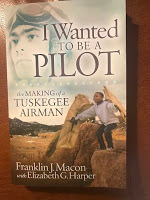
I opened a package last week with a new book which releases in November, I Wanted to Be A Pilot by Franklin J. Macon with Elizabeth G. Harper. I met Liz at the Colorado Christian Writers Conference. This middle school teacher had written an autobiography for Frank, one of the few living Tuskegee Airmen. This much decorated group of World War Two pilots is aging and Frank at 94 is one of about 100 living Tuskegee Airmen. It was a thrill to see this beautiful book and hold it in my hand. As an acquisitions editor, I was one of the first to believe in this book and the importance of it.
I spoke with another author who has one of the Morgan James contracts but hasn't signed it yet. I told this author how much I believed in her book and the importance of it. She thanked me for this affirmation and belief. I'm eager to see this book get published and get into the bookstores and help people.
Who believes in your writing and your book? It could be a spouse or a friend or someone in the publishing world. If you don't have this person, I encourage you to look for them. Maybe they are in your critique group and believe in your work.
And while you are looking for this person to believe in your writing, my encouragement is for you to believe in yourself. Continue learning and growing in your knowledge of this business and the craft of writing. Continue growing your audience and platform. Also continue to write and look for new opportunities. There is a world waiting for your book. If I can help you in this process, don't hesitate to reach out to me (my work contact information is on the bottom of the second page of this link).
Let me know in the comments below, who believes in your writing and ideas about how to connect with someone who believes.
Tweetable:
Who believes in your writing? Get ideas from this experienced publishing professional. (Click to Tweet)
August 12, 2018
Use A Writer's Work Around

In the tech world, when you run into a snag (which seems to happen with great frequency), you will find a work around. With this work around, you can achieve the same result but will have to use a different process to get there.
Often I need to find a work around when it comes to the ever-changing world of social media. As I've mentioned in these articles before, I don't spend a lot of time on my social media—but I do spend consistent time on it. Using a scheduling tool like HootSuite, I tweet about 12–15 times every day. These tweets also show up on Facebook and LinkedIn—which are other social networks where I have a lot of activity.
Whenever a social network makes changes, you have to find a work around for your activity to continue. For example, several months ago, Facebook posted my tweets but without images. Several times a day I would add the images to my posts on Facebook (which make them more attractive and read). Then without warning, Facebook began including the images with my tweets again so I didn't need to add them.
Last week, Facebook decided to stop the twitter posts from showing up on Facebook. As I understand it, this stop happened across the entire Facebook network. Suddenly twitter posts were blocked on Facebook. I had to search for a work around to get my posts on Facebook (where I get a lot of appreciation about the information I'm posting).
My current work around for this situation is to go over to Facebook several times a day. I simply cut and paste my posts from Twitter to my Facebook feed. In each case, I make sure my post and image are on Facebook. My work around is time consuming and I'm looking for some other method to get these posts on my Facebook newsfeed. Why do I care that it stopped? Because I have over 4,900 Facebook friends and I continue to get feedback that people appreciate the information. I don't want this regular marketing to stop.
My point of this article is to demonstrate each of us face road blocks to our marketing efforts or our writing efforts. These road blocks are a clear dividing line between people who get it done and others who are stopped. The persistent authors figure out a work around or way around the road block. The authors who are not persistent are thrown off with the road block and don't get it done.
This week I asked one of my writer friends about her proposal. I learned she had sent it to one publisher (two months ago) and gotten rejected. She hit a road block but it stopped her and she had not sent it to another publisher. Some of my friends have established a rule where if they get rejected, they take 24 hours to mourn that rejection, then they fire their article or proposal or query to another place. See their work around? These authors understand rejection is a part of our writing life—yet they do not let rejection stop them. Instead, they are committed to getting their submission back into the market.
What is holding you back? Is it rejection? Is it a tech glitch? Is it something with social media? What active steps are you taking to find your work around instead of letting it stop you? Let me know in the comments below.
Tweetable:
What situation is holding back your writing life? Learn to use your writer's work around. (Click to Tweet)
August 5, 2018
Why Every Author Needs Amazon Reviews (Including Me)

Book reviews is one of my on-going concerns with authors. Maybe they don’t care about book reviews and never put any effort into getting them. Their book has been available for months or years yet they have zero or one or two reviews.
Other authors put effort into getting reviews when their book is first launched (which is admirable). Yet after the initial launch, they press on to other areas and never do anything additional about book reviews.
My focus in this article is helping you understand the on-going importance of book reviews. Whether your book is just launching or has been out for years, you still need reviews. A new review whenever it is posted is something you can tout and promote on social media.
I encourage every author to get at least 25 reviews when their book launches. It will take work from the author for you to get these reviews. Ask people if they are willing to read your book and write an honest review. Send them the electronic or print book, then keep track to follow-up and see if they have completed the review. From my experience you need twice the number of people to reach your goal for reviews. For example, if you want 25 reviews, then you will need to get commitments from 50 people. Why?
Life is busy and full of interruptions and many people don’t carry out on their commitment to review your book—unless you follow-up and ask about it—and even with follow-up some people will not do it.
At first, you should have a goal of 25 reviews on Amazon. Then when you achieve that mark, your goal should shift to 50 reviews. Why?
When your book has 50 or more reviews, Amazon let’s the author (or your publisher) do some special advertising that was not available with less reviews. And when your book reaches 50 or more reviews? Then you have a new goal of 100 or more reviews.
Last week in Nashville I talking with David Hancock the founder of Morgan James Publishing, I learned when your book reaches 100 or more reviews, Amazon begins to do some behind-the-scenes advertising to promote and sell more books. The benchmark made sense to me since many books never reach that 100 or more reviews but the ones who do, indicate books which are actively selling.
Have You Read My Book?
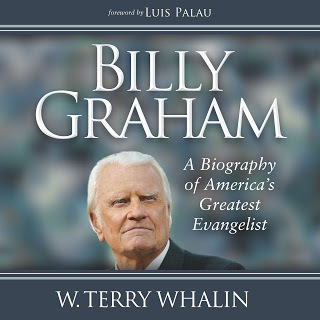
The Audiobook is also available.
As of this writing, my biography, Billy Graham, A Biography of America’s Greatest Evangelist , has 83 Amazon reviews. I’m 17 reviews short of reaching 100. If you have read my book, I’d appreciate an honest review (hopefully four or five stars but honest is important).
When I learned about this 100 review benchmark, I wrote several friends and asked them to review the book. I’ve also been working to find more people to read or hear my book and write a review. If you are interested and don’t have my book, reach out to me and I’ll be happy to get you a copy in exchange for the review.
If You Get a One or Two Star Review
Sometimes an author will ask me what can be done when they get a one star review. I tell them to rejoice and they look at me like I’m crazy. You rejoice because that one star review has just validated your other reviews. If you see a book with all five star reviews, then it is like the author is orchestrating all of the reviews. If thre are one star reviews, then you know the reviews are real.
Don’t reach out to those people because it only feeds the trolls. Instead let it go.
Getting Reviews Is On-Going
My key point of this article is the process of getting reviews for Amazon or Goodreads or Barnes & Noble is ongoing for every author. It is not a seasonal or one-time type of process. I would compare it to any type of marketing for your book. The process is on-going rather than hit or miss.
There is no single path to make your book a bestseller. If we had a formula then every book would be a bestseller. Instead each author has to try many different things to see which actions bear the greatest sales or results. It is much more of a marathon effort than a sprint. My intention is to help every author see the on-going necessity to encourage others to write reviews about their book.
Several times a week, authors reach out to me and ask me to review their book. I’ve written over 900 Amazon reviews and over 500 reviews on Goodreads. This experience makes me one of their top reviewers. People know if I say I will read the book, there is a higher probability that it will actually happen. To be honest, I receive stacks of books every day and can’t read all of the books I receive. It would be impossible. I do write reviews on any book that I read or hear. Sometimes it takes me a day or two to get the review written but it does eventually happen.
Are you continually working to get reviews of your books? Do you have other resources to get reviews? Then let me know in the comments below.
Tweetable:
Discover why every author needs book reviews and what steps you can take in this article. (Click to Tweet)
July 29, 2018
3 Ways to Read More Books
Thousands of new books are published every
day. No one can keep up. Yes, you can take speed-reading courses and other
things but even then, the sheer volume of new books makes it impossible. In this
article, I want to give three ways that I'm using to add more focused reading
into my life. I'm always learning about books. I use these methods to acquire
and read books.
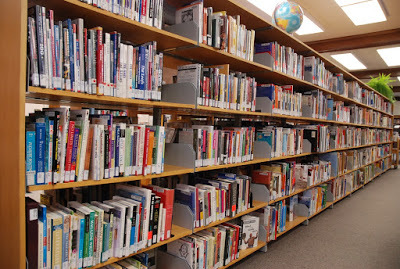
1. Learn to Use Your Public
Library
It is not practical to purchase every new book. I
find many people forget about or don't use their public library. Get a library
card then when you see an interesting book, get on your library website and see
if that book is available. In my area, I often find the library has acquired the
book and I can ask them to hold a copy for me. When I put a “hold” the library
sends me an email when the book is available to check out. Also my library sends
me an email when my book is about due to be returned (and possibly I can renew
if I haven't read it).
Also ask questions to the librarians about using
the library or locating a book you can't find, then listen to the answers. These
professionals are helpful and knowledgeable about books. Check out the services
of your library and begin to use them.
2. Listen to Audio Books in Your
Car
My library has an extensive collection of audio
books on CD. Browse the section and select a couple of different titles. Try
the book and if it isn't exactly what you wanted, then try another one. I've
heard incredible audio books using this method in my car.
In the last few weeks, I've learned to listen to
audio books on my car's speaker system that originate on my smartphone. My car
has bluetooth so I'm able to continue listening on my car speaker system to the
same audio book that I'm hearing on my smartphone. Listening in my car as well
as on my phone, helps me move through the audio book even quicker than normal.
For example, recently I got on the hold list for Elon Musk: Tesla, SpaceX, and the
Quest for a Fantastic Future. I only had 21
days to hear this audio book but using my car and my phone, I finished it in
less than a week. The book was fascinating but uses the F-word throughout so use
caution if you get it.

3. Learn to Use Hoopla or Overdrive on Your
Smartphone
Hoopla or Overdrive are are free services from your library. Download
the apps on your smartphone and learn about these opportunities. There is a bit
of a learning curve to use them. Throughout my day I have some time at my
computer when I'm setting up my social media. I've found I can be listening to
an audio book on my phone as I do some of this busywork. In the process, I'm
consuming more books. I also listen to the book while I'm exercising.

I've written about this before (follow this link). After I read (or hear) an interesting book,
I add a review to Amazon, then paste the same review
on Goodreads. And often (not always) I
tell my social media connections about the review. This entire process takes
only a few minutes but it is my way of supporting and telling others (quickly)
about what I'm reading and learning from good books. Every author needs this
type of support—and you will build goodwill with other authors—and help the
entire community with this simple and consistent action.
I hope you will use these three ways to read more
books. If you have other ideas or methods, I'd love to hear it in the comment
section. May the days ahead be filled with more reading and learning from time
well-spent.
Tweetable:
Out of time but want to read more books? Use these three ideas: (Click to Tweet)
day. No one can keep up. Yes, you can take speed-reading courses and other
things but even then, the sheer volume of new books makes it impossible. In this
article, I want to give three ways that I'm using to add more focused reading
into my life. I'm always learning about books. I use these methods to acquire
and read books.

1. Learn to Use Your Public
Library
It is not practical to purchase every new book. I
find many people forget about or don't use their public library. Get a library
card then when you see an interesting book, get on your library website and see
if that book is available. In my area, I often find the library has acquired the
book and I can ask them to hold a copy for me. When I put a “hold” the library
sends me an email when the book is available to check out. Also my library sends
me an email when my book is about due to be returned (and possibly I can renew
if I haven't read it).
Also ask questions to the librarians about using
the library or locating a book you can't find, then listen to the answers. These
professionals are helpful and knowledgeable about books. Check out the services
of your library and begin to use them.
2. Listen to Audio Books in Your
Car
My library has an extensive collection of audio
books on CD. Browse the section and select a couple of different titles. Try
the book and if it isn't exactly what you wanted, then try another one. I've
heard incredible audio books using this method in my car.
In the last few weeks, I've learned to listen to
audio books on my car's speaker system that originate on my smartphone. My car
has bluetooth so I'm able to continue listening on my car speaker system to the
same audio book that I'm hearing on my smartphone. Listening in my car as well
as on my phone, helps me move through the audio book even quicker than normal.
For example, recently I got on the hold list for Elon Musk: Tesla, SpaceX, and the
Quest for a Fantastic Future. I only had 21
days to hear this audio book but using my car and my phone, I finished it in
less than a week. The book was fascinating but uses the F-word throughout so use
caution if you get it.

3. Learn to Use Hoopla or Overdrive on Your
Smartphone
Hoopla or Overdrive are are free services from your library. Download
the apps on your smartphone and learn about these opportunities. There is a bit
of a learning curve to use them. Throughout my day I have some time at my
computer when I'm setting up my social media. I've found I can be listening to
an audio book on my phone as I do some of this busywork. In the process, I'm
consuming more books. I also listen to the book while I'm exercising.

I've written about this before (follow this link). After I read (or hear) an interesting book,
I add a review to Amazon, then paste the same review
on Goodreads. And often (not always) I
tell my social media connections about the review. This entire process takes
only a few minutes but it is my way of supporting and telling others (quickly)
about what I'm reading and learning from good books. Every author needs this
type of support—and you will build goodwill with other authors—and help the
entire community with this simple and consistent action.
I hope you will use these three ways to read more
books. If you have other ideas or methods, I'd love to hear it in the comment
section. May the days ahead be filled with more reading and learning from time
well-spent.
Tweetable:
Out of time but want to read more books? Use these three ideas: (Click to Tweet)
July 22, 2018
What Fills Your Daily Schedule?

There is one resource in the possession of everyone: time. Also
everyone spends time doing some activity. As you take control of your schedule
or time, you can increase (or waste) your day.
As a writer, how to you fill your days? Do you have a plan or
schedule? Or is it random and uncontrolled? I work as an acquisitions editor and
a writer. I'm grateful for the flexibility of my daily schedule. Yet to some,
this empty calendar can be a concern. How do you fill your time?
As an acquisitions editor, I have some writers and literary agents who reach out to me and want to schedule time on the phone or a meeting
in person. Other times I attend or speak at a conference and travel away from my
office. Yet overall these types of events or meetings are rare to fill my daily
schedule.
In this article, I want to give you some of the tools and action
steps I take on a regular basis with my life in publishing. The steps you take
will be different but I hope these words will give you some new ideas for your
own writing life.
For years I've been active on Twitter and every day I grow my audience on this
social media platform with five actions (detailed here and still being done). There has been admittedly
hours of time spent in small chunks to achieve this following. It is a regular
part of my day whether I am at home or traveling.
Here's some basic principles to help you:
1. Create a system to handle any action you
take on regular basis and keep moving forward. For example, if you are writing a
book, set a word count goal. This goal can be for the week or even daily. Then
consistently write enough words to meet or exceed your goal and you will keep
the project moving forward toward completion.
2. Be aware or actively look for tools
to help you automate and meet your goals. For example, with my Morgan James Publishing phone calls to authors, I use an application called DialPad. When I call someone
using this program, my direct dial New York phone number shows on the
recipient's caller ID—even though I live in Colorado. It is a company branding
tool that immediately says New York publisher. This tool also keeps a running
list of any of my phone calls listing the date and length. It give me a
systematic place to keep track of my phone calls. You may or may not use DialPad
but find a way to keep track of such information (if it is important to your
work).
3. Consistently work on different stages of the
work. For example, some of my work is calling authors who have a contract and
answering their question. Another part of my work is processing new submissions
to see if they are the right fit for Morgan James and if so, then I champion
these authors to my publication board and colleagues. I'm regularly working on
brand new authors and also answering email and phone calls from current authors.
My phone has a feature called Reminders. When I have a deadline
for my writing or anything else that I need to accomplish, I will often create a
reminder. As I use these tools and check off my tasks, I move forward with a
productive day.
Your process of filling your schedule with productive activity
will be different from mine. Hopefully I have given you some ideas. If you have
another tool or tip, please comment below.
Tweetable:
Become more productive. Use three principles from a prolific writer and editor. (Click to Tweet)
July 15, 2018
Why I Lost 15,000 followers in 24 hours

Last week I lost 15,000 Twitter followers in 24 hours. For many
people that loss would have been devistating and possibly wiped out their
following. I went from
220,000 to 205,000 followers. I've been on Twitter since 2008 and actively
working every day to increase my following.
What happened? An article in the New York Times explained Twitter is
battling fake accounts and has slashed millions of these accounts. As the
article explains, “Twitter’s decision will have an immediate impact: Beginning
on Thursday, many users, including those who have bought fake followers and any
others who are followed by suspicious accounts, will see their follower numbers
fall.”
I applaud Twitter's actions in this area but it has had impact
on many users. At one point years ago as an experiment, I did buy some followers
and my followers increased over a 24-hour period. Now those followers were fake
accounts and I would not expect them to engage with me or be interested in any
of my tweets.
Last year one of my writer friends launched a book with a New
York publisher (in fact one of the big five). She had a modest Twitter following
but in a short amount of time her followers increased to over 100,000–-which
looks suspiciously like she purchased those followers rather than growing the
following (as I have done). I just checked her followers and now she has 14,500
followers for a dramatic drop.
I want to make several key points from this experience to help
you:
1. While Twitter continues to be an important social network,
do not try and game the system with buying fake followers. I
have written about the five
actions I take every day on Twitter. There are good reasons I have
a large Twitter following.
2. Don't forget Twitter is “rented” space. I
don't own or have any connection to the Twitter company. They could cancel or
block my account at any time eliminating my presence. I don't expect this
elimination to happen and to my knowledge have been obeying their rules (key for
everyone).
If you don't understand this concept of rented media, I
encourage you to study Mastering the New Media Landscape by Barbara
Cave Henricks and Rusty Shelton. I regularly speak with authors who have built
their entire platform on
Facebook or Instagram or LinkedIn or Twitter. Yet these authors have never
considered the risk of such efforts.
3. Diversification is important as you plan
your presence in the marketplace. Henricks and Shelton talk about this in the
final chapter of their book giving six ways to “futureproof” your media
presence. The advise is wise and worth your following it. Make sure you have
media that you own: your websites, your blog and your email list. If you
haven't read my free ebook, Platform Building Ideas for Every Author,
I encourage you to get it
here.
There is one safe prediction I can make about the social media
landscape: it will continue to shift and change.
What steps are you taking to master the new media landscape?
Let me know in the comments below.
Tweetable:
Have you suddenly lost Twitter followers? Learn the proactive steps you can take. (Click to Tweet)
July 8, 2018
Your Submission Must Be Electronic and Easily Readable

Every editor needs an electronic submission.
Every writer should have the need to keep growing and looking for
new avenues and ways to market. As an acquisitions
editor at Morgan
James Publishing, we receive many submissions—over 5,000 a year for only 150
books that are published. Yes that is high volume but as editors, we are always
looking for the right authors and right material.
About a month ago, I received an author contact from one of my
colleagues. That day, I sent an email to this author letting her know exactly
what I needed and how to submit her material. A few days ago, I got a text from
my colleague asking about this author. I said she had never responded to my
email. Something many people forget is email sometimes does not get
through. I reached out to this author again on email and picked up the phone to
call her (rare for an editor or agent to call).
Later that day I began to receive her submission in hard copy on
my phone—which I could not read. It was pages of a manuscript texted to my
phone. I asked her to email it to me. The email came one page at a time with the
hard copy attached—-many emails. I went back to this author and explained I
needed a single file in an electronic form as an attachment.
In conversation, I
learned this author had an electronic file for her manuscript and then her
computer crashed. She lost the electronic files with her computer crash. She
only had a hard copy of her manuscript. With this explanation, I understood why
she was trying to get me the hard copy.
I told this author how for years, every publisher requires the
author to send an electronic version of their manuscript or proposal. It is the
only way to get your material into the consideration process with an editor or
agent. Your computer crash and the fact you don't have the file is a barrier to
getting your submission considered. If you have this problem, you
can:
1. Retype your manuscript into a Microsoft Word file.
2. Hire a student or transcription service to type your
submission into Word.
3. Forget about this book and start another one. This last point
is not what I would recommend since the author has invested hours into creating
her book.
I have no idea what this author is writing and whether it has
any merit or not—since I did not receive it in a form where I could read it.
I've reviewed thousands of submissions during my years in publishing and never
seen this particular situation. I point out several lessons from it:
1. Get your manuscript to the editor or agent in a format they
can read. I've met authors who do not type. If you don't type, then take a
typing course or get a book or figure out your way around this
barrier.
2. Before you complain to the company or editor, make
sure the format of your submission is not the issue. The reality is every editor
and agent receives many submissions. Sometimes things do get missed and we are
not perfect in this process. Just make sure it is not your issue before
you reach out to someone else.
3. Follow the editor's or agent's guidelines. If you don't follow directions, then you
can't get considered.
4. Follow-up to make sure you are giving the editor what they
need. We receive volumes of material and want to help but have limitations on
our own time and resources.
As a writer, you are searching for the right fit for your
submission. It will take effort on your part to find this fit. Good
communication is important every step of the way. It took some digging on my
part to figure out why I was not connecting with this author and her manuscript.
I'm encouraging her to retype her lost manuscript and get it into the market for
consideration.
Have you been skipping a publishing basic as an explanation why
your submission is not hitting the mark? Let me know in the comments
below.
Tweetable:
Learn why must your submission be electronic and follow the guidelines from an experienced editor. (Click to Tweet)
July 1, 2018
Two Ways to Write A Magazine Article

Two types of Leaves & Two Types of Articles
If you want to reach readers with your writing, one of the most
effective methods is to write magazine articles. As your articles are published, you
will reach thousands (if not millions) of readers. Through my years in
publishing, I've written many different types of articles on all sorts of people
and topics. The variety is endless in the print magazine world.
In the beginning of my magazine writing, I would be inspired to
write a personal experience article or a how-to article. I would sit down and
write the article with no magazine or market in mind. After I wrote this article
to the best of my ability, I opened up my writers' market guide and searched for
some place to send the article or write a query. The process took a lot of
searching and energy—and often involved getting rejected because I didn't send
it to the right editor or right publication.
This type of writing is known as inspirational writing. You are
inspired to write something so you sit down, put your fingers on the keyboard
and write the complete article. It is one way that many people write and
eventually with enough persistence, find the right publication or editor and get
into print.
There is a second way to write a magazine article: write for a
particular publication and what the editor wants or needs. As a writer, you learn about these needs as you read and
study the submission guidelines. Almost every magazine has a set of editorial
guidelines on their website. Some of these guidelines are more detailed than
others. Sometimes the guidelines will say the percentage of freelance work they
publish. The higher this percentage, the stronger the need of the publication
for freelance writing (as opposed to something they write with their staff).
In addition to their guidelines, some
publications include a “theme list.” These publications have planned specific
themes they want to publish and they are solid indicator of what the editor
believes their readers want to know. To get published, you can either write a
query letter or write the entire article and send it to the editor (follow their
guidelines). The second way to write a magazine article is a more targeted yet
also involves meeting the needs of the editor and reader. Because it is
targeted, it has a higher probability of publication and less time for the
writer to search for a market and then get rejected and search for another
market.
Inspirational writing is fun and
something I still encourage you to do—particularly with personal experience
articles. Each of us have unusual personal experiences in life but the successful
published writers will take these personal experiences and use them as grist for
their writing and craft their article. Almost every magazine uses personal
experience stories (large circulation and small circulation).
My purpose in writing this article was to
show you a more targeted (and potentially successful) method to get your writing
into print publications. Writing for magazines is a solid way to build your
platform or presence in the market, reach readers and build your reputation as a
writer. After many years in publishing, I continue to write for
magazines.
What tips do you have for writing for
magazines? Let me know in the comments below.
Tweetable:
There are generally two ways to write a magazine article. Get the details here. (Click To Tweet)

June 24, 2018
The Ever-Changing World of Publishing

Last week I learned one of my regular writing assignments was
disappearing. For every issue of the publication, I've been writing a column for
the last six years. It was sad to receive such news but in some ways it was not
unexpected. One of my key relationships at the magazine was
leaving. With this change, the staff took the opportunity to revamp their
publication through this revision my column was no longer needed. I responded to
the editor with a gracious and understanding way with the hopes I can write
articles in future issues. My response was well-received and possibly I will be
able to write more in the future.
This experience reminded me that the world of publishing is
always changing. During my years of writing, I've seen publications start and
fold (cease to exist). Publishing companies are sold to other entities and as a
writer I get a letter saying my book is going out of print. These are only a few
of the variety of changes. Sometimes your work is a part of that decision and
other times, the decision has nothing to do with you or the work and everything
rests within that company.
In the ever-changing world of publishing, here's several key
principles to keep in mind:
1. Change is always a part of this business.
Some of the changes you can control but many of them you can't. Your attitude
in the middle of change is critical.
2. Never assume
your writing opportunity will continue. As you submit your material and
it is accepted, each time express gratitude and flexibility. These attitudes
will go a long way with your publishing colleagues.
3. Diversify your writing and your income
streams. Look for other opportunities and be knocking on doors. Your
skills have many different possibilities. If you need to explore other
possibilities I have a free list in the first chapter of Jumpstart Your Publishing
Dreams . You can download this chapter here (follow the link).
4. Persevere with your writing. I've watched
many people give up on their writing over the years. The ones who get a
publisher and continue in this business are the writers who persevere with the
work. Admittedly some days it is hard but each of us need to keep our fingers on
the keyboard and keep writing.
What are your tips for handling and thriving in the
ever-changing world of publishing? Let me know in the comments below and I look
forward to hearing from you.
Tweetable:
How do you survive and thrive in the ever-changing world of publishing? Get insights here. (Click to Tweet)


