
W. Terry Whalin's Blog, page 41
April 8, 2018
The Importance of Multiple Follow-up

My Billy Graham biography has been released for three and a half years. I'm still working on increasing the number of book reviews. As of this writing, I have 73 Amazon reviews, which are mostly four and five stars from readers. I've had others promise to review the book. I've written these people to follow-up and confirm they received the book (which they have) and are still working on reading and writing their reviews.
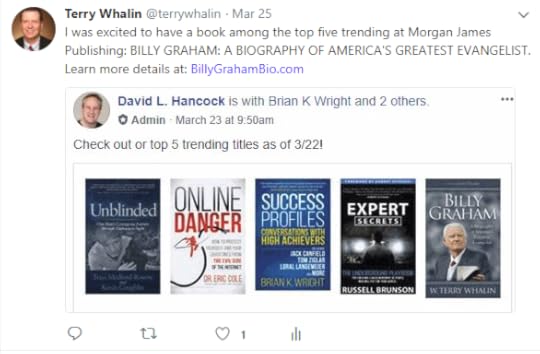
With the passing of Billy Graham, my book has garnered attention from the media and I've been able to do a number of interviews. In late March, I was surprised to learn from the founder of Morgan James that my book was trending in the top five books from the publishing house. See this link for the details. When you receive this type of news, some authors would believe they can coast instead of continuing to promote their book—which would be wrong in my view. Instead of coasting, I've been working even harder at my promotion.
As people agreed to write a review, I have kept a list. A couple of times, I've used this list to follow-up with these individuals and stir more of them to write their reviews. I understand the challenges with writing reviews. Because I've written over 850 Amazon reviews and I have 5,000 friends on Goodreads, several times a day, I'm approached to review books. I answer these emails but the majority of these requests, I turn down because of my limited reading time and I'm already committed to write reviews on other books.
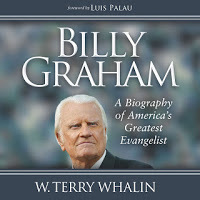
Why should I care about adding new reviews for my Billy Graham book? The book has been in the market several years but there are new things to talk about. On November 1st, the audiobook of Billy Graham released. While I have a number of reviews, few of these reviews relate to the audiobook (like this one). I continue to promote this audiobook and look for people to listen and write an honest review.
Each new review gives me something else to promote and talk about the book. Book promotion activity will stir more book promotion activity.
As the author, I have the greatest passion for my own book. If I've given up, why wouldn't others (like my publisher) give up on the promotion of the book? My advice is to keep going on the promotion of your book—despite the amount of time your book is on the market, how it was published (traditionally or self-published) or when it released.
If you are not happy with your book sales, then it is never too late to change and take action to promote your book. The consistent promotion is an important aspect. If you don't try, it will not fly. Not everything that you attempt will succeed but I applaud your continued efforts.
Are you continuing to promote a book which you published and are in it for the long-term? Tell us your experience in the comments below.
Tweetable:
Why is it necessary to follow-up multiple times? According to this prolific author, it's part of the process. (ClickToTweet)




April 1, 2018
Escape the Catch-22 of Publishing

For many years, I've known about the Catch-22 of publishing. The Merrian-Webster dictionary defines Catch-22 as “a problematic situation for which the only solution is denied by a circumstance inherent in the problem or by a rule.” Last week in Spokane, I taught a workshop on 12 Ways to Jumpstart Your Publishing Dreams and the details are in my Jumpstart Your Publishing Dreams book.
Here's the problematic situation for every new writer: they want to get published yet professionals (editors and literary agents) are looking for people with publishing experience. It's the same sort of situation you face when you enter the job market and need to create a resume which lists your job experience (yet you have nothing to list). What is the best way for writers to gain publishing experience? It is not in book publishing. Books are lengthy writing projects and sometimes reach a limited number of readers (yes even when traditionally published). The easiest way for a writer to escape the Catch-22 of Publishing is to write magazine articles.
I have an ebook called How to Succeed As An Article Writer. Also I've gathered a series of articles about writing for magazines at this link. Every month, I write a new article for A3 on different aspects of writing for magazines. I began my writing career in the magazine area and continue to often write for magazines. For the last several years, I've written a column for Southern Writer Magazine about book proposals called Book Proposal Boot Camp.
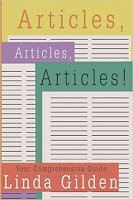
In this article, I want to tell you about a new resource to help you succeed in the magazine writing world. My long-term friend, Linda Gilden, has recently published ARTICLES, ARTICLES, ARTICLES! Subtitled, “A Comprehensive Guide.” This book is an excellent resource and Gilden has done a great service to the writing community publishing this book. In the introduction, Gilden tells how as a stay-at-home mom with small children, writing articles seemed her best option to get published, “My children were small and still required a lot of hands-on attention. So, my writing sessions were short, very short or nonexistent. Much of what I wrote took place in my head until naptime, then I wrote furiously hoping the children were exhausted and would sleep a long time.” (Page 11)
This book contains a cornucopia of information for every writer. Here’s some of the topics covered: where to get started, how to break in, types of articles, elements of articles, the rights to sell, marketing your articles and even how articles are a great way to market books and build an author’s presence in the marketplace (commonly called a platform—and follow this link to get my free ebook on the topic).
In addition to Gilden’s own depth of experience writing for magazines, throughout the book, she includes tips from other editors, authors and professionals called “Expert Word.” Also key phrases are scattered throughout the book to remind reader of key lessons such as, “A kill fee is a fee that is paid when a contracted article is never published.”
Whether you are brand new to the writing world or an experienced professional, you will gain insights and ideas and action steps from ARTICLES, ARTICLES, ARTICLES! I highly recommend this well-crafted book.
Are you actively writing for magazines? If so, let us know about how you are escaping the Catch-22 of publishing in the comments below. I look forward to your feedback.
Tweetable:
How can writers escape the Catch-22 of publishing? Explore the possibilities here. (ClickToTweet)
March 25, 2018
Don’t Believe The Internet Lies

As a part of my job as an acquisitions editor at Morgan James Publishing, I interact with a number of authors. Occasionally a literary agent will pass or reject a submission and in the process of sending that email, recommend the author reach out to me and will copy me on the email.
When I get one of these emails, I reach out to the author, give them my background and encourage them to send their submission to me. I need the full proposal or manuscript, their mailing address and phone.
Recently one of these authors and I corresponded. He was looking for an agent (and I used to be an agent—no longer and clear on my website). I told this author that Morgan James published a limited number of novels and that we had a novel on the New York Times list last January (broad distribution to achieve that success).
The author sent the manuscript and synopsis but not the mailing address. Morgan James acknowledges every submission with a letter in the mail—and we receive over 5,000 submissions a year. If we get to issue a contract, we use the same mailing address (one of the reasons we collect this data from authors). I wrote this author asking for the missing address information.
A day or two later, I got an email withdrawing the submission. No explanation just a withdrawal.
Why the strange interaction? I suspect this author used “google” to learn more about Morgan James. You can learn a lot looking at the publisher website—but it does not give all of the details – especially about novels.
With a simple search, you can find other sites that will give you objections and complaints about Morgan James. Yet I’ve also searched for these sites and have several observations:
11. Not everything you read is true. Even false material is on the Internet forever.
2. Much of these complaints are years old and inaccurate from my investigation.
3. As an author you deserve to learn the true story—something I do with authors all the time, send them a real sample contract after our call, etc. The exploration process costs nothing (FREE) and gives me an opportunity to talk and interact with the author.
4. Publishing is constantly changing and there is no one way to succeed in this business. The Morgan James model isn’t right for every author—but it is right for many authors. Unless you explore it with me, you will never know.
I suspect this author who withdrew the submission is still looking for a literary agent and the path to publication. There is not one path but many paths.I tried to encourage this author to explore the open door.
Morgan James is not a self-publisher and we have a publication board and a consideration process. As an editor, I do champion my authors to my colleagues but I also attempt to set realistic expectations. I can’t outright promise that Morgan James will publish a book because I get rejected too in the process of championing authors.
The reality is until I get the news of a contract from my publication board, I don’t know that a contract will be issued. Yes I have been in publishing for years and attempt each time to mount a strong case for my authors with my colleagues—but those attempts sometimes fail.

Recently I worked with an author who proposed a 400 page devotional book. I learned we have published a couple of those books and they have “crashed and burned” (the term from my colleague). I assume this means the actual bookstore sales for those 400 page books have been dismal or poor. It makes our team reluctant to take on another one—unless the author has a huge sales potential or platform. My author did not have a huge platform. You can follow this link to get my free Ebook ( Platform Building Ideas for Every Author ).
The good news is I returned to this author with this information and she was willing to do a smaller and better sales potential book. This type of interaction and adjustment is from my experience how good books get created and enter the market. Often they do not come in isolation from a solo author but are through the interaction with another professional.
The first author who withdrew her submission will never know or experience this interaction from the Morgan James Publishing team—unless they return in the months ahead (which does happen but rarely from my experience).
As an author you have a responsibility to learn the truth—which is much more involved than a simple search on the internet. Don’t believe the Internet Lies but move beyond the surface information. It’s the responsible way to work in my view.
Tweetable:
Are you following Internet Lies or using other means (like talking with editors) to learn the real story. Learn more here. (ClickToTweet)
March 18, 2018
Can You Follow The Editor’s Directions?

As a long-time member of the publishing community, I
interact with a number of authors. In fact, I have my personal email address onmy Twitter profile. It generates a number of emails that I answer. I do love to
help writers which is one of the reasons I write these articles each week.
Recently I got an email from “Tom” (not his real name). He
told about sending his novel out to numerous literary agents and not finding one. He
sent me his phone number and asked to “schedule a time to chat.”
From my experience, this author’s suggestion was a big
mistake. My time is as limited as the next person and I’ve “chatted” with
plenty of authors who have wasted my time.
Because Morgan James publishes about 25 to 30 novels a year,
and I work for them, I quickly transferred this discussion to my work email. I
wrote Tom and asked for several specifics—true for any novel submission:
1. I need the full manuscript
2. I need a synopsis
3. I need the author’s mailing address
Tom responded that he would be sending it to me and
appreciated the quick response.
About a week later Tom sent the preface to his novel and the
first chapter. He acknowledged in his cover note that I asked for the full
manuscript but he wanted to send what he wanted to send.
I quickly responded and asked for the full manuscript,
synopsis and address. It was several weeks ago—and to date I’ve not heard from Tom. I believe Tom is going to struggle to find an agent or a
publisher. Why? He has refused to send what is requested.
Possibly he is a
talented writer with a great novel but unless you follow the directions, you
will never be read and published (other than self-published—and the average
self-published book sells less than 100 copies during the lifetime of
the book.). These details matter and are part of the evaluation process as I
meet authors. Are they coachable and teachable?
Like I often hear from our Morgan James founder, David
Hancock, we can always fix the manuscript but sometimes we can’t fix a poor or
bad author.
Are the lack of attention or following the details holding
you back from achieving your publishing dreams? If you are struggling to find
the right connection with a literary agent or a publisher. I encourage you to consider if your material is in the requested format and if you are following the directions in the guidelines. Not delivering what is requested can prevent you from achieving your dreams as a writer. It can be something simple but important to the editor or agent which blocks you from moving forward.
Have you ever discovered that when you added something which was missing, it changed how it was received and opened a new opportunity? Let me know in the comments below.
Tweetable:
It is important to follow the editor's directions. Learn the details here. (ClickToTweet)
March 11, 2018
My Oscar Surprise

The Oscars aired last Sunday night. While the audience has been slipping for this event and they often highlight “different” films (ones we never see), I still watch it. This year, I could not watch it live because my wife and I were traveling home from Kentucky where a few days before my mother celebrated her 90th birthday. Prior to leaving, I set my DVR to record the program and we've been watching it this week.
Over the years, I've watched hours of this event and never seen a single person that I've personally met—until this year. Imagine my surprise when they called out the winner in the Short Film category and called Glen Keane and Kobe Bryant. Here's the two-minute clip:
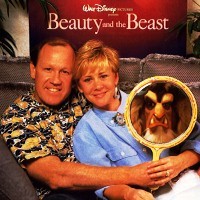
Many years ago I wrote a story about Glen and Linda Keane which was published in Marriage Partnership magazine (which no longer is publishing). Glen worked at Disney animation for many years and was the lead animator of The Little Mermaid, Beast from Beauty and the Beast and many other films. You can follow this link to read my article from 1992. It has been years since I thought about Glen and his work on some children's books. It made me wonder what happened to those books and reach out to Glen to see if I can reconnect with him. It has not happened at this writing but I'm hopeful.
Last week, literary agent Bob Hostetler wrote a terrific article: It's Not What You Know But Who You Know. Yes it is important to have skill in writing and storytelling but I agree with Bob, that who you know is a key part of the process.
How do you kindle or rekindle the various relationships you have in the writing world? Sometimes it is from an occasional phone call or an email. Or maybe you are both on each other's newsletter list or read each other's blogs. There are many different ways to establish and reestablish these connections. Part of my regular practice as a writer and editor is to reach out to new people—but also to reconnect with old friends. Last week I made a number of these phone calls and emails to others. In some cases, I get zero response from it but in others, it reconnects me to these people and we are able to work together again.
As you read this story, who comes into your mind that you need to reconnect or reach out to them? Make some concrete plans to do so and tell me about it in the comments below.
Tweetable:
Even Watching the Oscars Can Lead to Valuable Ideas. Find out more here. (ClickToTweet)
March 4, 2018
Why You Want to Learn From Experts

As we move into spring, there are a number of upcoming writers conferences. I've been going to conferences for many years and I enjoy learning from different workshops. Yet from experience, I have learned the necessity to check out the credentials of the workshop leaders or speakers. What type of expertise do they have in the topic they are teaching?
There is an old saying in the public speaking arena, if you really want to learn a topic, you need to teach it. While there is some level of truth in this saying (you learn a great deal as you prepare to teach it), there is also the necessity of having a certain level of expertise before you teach a topic.
For example, I often find people who have written one or two novels, will be leading a workshop on a particular aspect of writing fiction. These workshops are the ones I would avoid because of the lack of qualifications of the instructor. Or in the area of social media, I often see people who call themselves "a social media expert" then I look at their twitter following and see they have less than 500 followers (almost beginners). I want to learn from many different people, but I also want to learn from people who have exhibited their expertise in the area where they are teaching.
Here's how to check out this expertise:
1. Read the background of the instructors and keynote speakers.
2. Use Google to search for their names and background
3. Make decisions ahead of the conference based on your research
From my years of attending workshops, I've walked out of a few workshops where the speaker has been unprepared or under qualified. Also I've grown to be more discerning of this issue when I sign up for an online course or take writing training from someone.
Are you discerning about who you learn from with your writing life? What are other qualifications that are important to you when you attend a workshop? Let me know in the comments below.
Tweetable:
Why you want to learn from experts? Get insights from this prolific editor and writer. (ClickToTweet)
February 25, 2018
An Amazing Legacy Built One Day At A Time

Early in the morning last Wednesday, I learned about the passing of Billy Graham. Because of my biography about Mr. Graham, my phone and email have been intense with contacts from media.
For example, I did three interviews with the BBC in the UK on Wednesday. On Thursday, I began radio interviews with East Coast stations at 5 am in Colorado and it continued throughout the day. I'm thankful for each opportunity to talk about the remarkable life of Billy Graham. Here's an example of one of these interviews with Keith Alan at 57th Street Media in Tampa, Florida (just follow the link to listen).
Mr. Graham preached the Gospel Message of Jesus Christ face to face to more than 215 million people (more than anyone else on the planet). Countless others heard Billy Graham through television and radio while others read his books and his articles in newspapers and magazines. The impact of his life work can't be explained. Mr. Graham has left an amazing legacy. His ministry will continue through his son, Franklin and his grandson, Will plus others at the Billy Graham Evangelistic Association.
Many in the media have been asking me about the legacy of Billy Graham. The concept of legacy boils down to his impact on the world and his singular message: that each person has to make a personal commitment to Jesus Christ. From my personal experience and writing about Billy Graham, I saw his life as focused on service to others. Mr. Graham was humble man and lived each day with integrity. Some of the basic principles of Mr. Graham's life and the Billy Graham Evangelistic Association were formed in 1948 in Modesto, California and a document they created called “The Modesto Manifesto.” If you want to know more about the Legacy of Billy Graham, I encourage you to watch these short videos and celebrate a life well-lived.
Writing and publishing has been the consistent focus of these articles about The Writing Life. Each of us need to consider our own reputation and legacy. Our reputation or legacy is built one day at a time. As I get older time seems to pass more quickly and as Mr. Graham often spoke about, each of us will one day die. Day by day, what are you writing that will last? What is the purpose of your writing? Is it to entertain or to instruct or to help others? It is valuable for each of us to take some time to consider these questions about our writing.
What lasting legacy are you building with your writing? Let me know in the comments below.
Tweetable:
Writers build their legacy one day at a time. Learn more details here. (ClickToTweet)
----
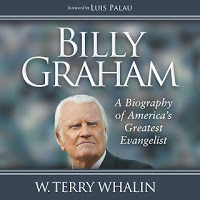
Do you listen to audiobooks on Audible? Are you willing to listen to the audiobook for Billy Graham, A Biography of America's Greatest Evangelist , then write an honest review on Amazon? If so, please email me and I can get you a review copy of this new audiobook.
February 18, 2018
Tap Into the Power of Asking

Mega-promoter P.T. Barnum said, “Without promotion, something terrible happens. Nothing.” This statement is true for promotion and marketing but it is also true for almost every aspect of the publishing business. If you are not tapping into the power of asking, you are not having opportunities for your writing to be published and sold.
For example, if you want more reviews on Amazon for your books, are you consistently asking people if they are willing to read your book and write a review? It's been proven that a steady stream of reviews on Amazon (even if your book has been out a while) helps your book to sell even more copies. I understand it is important to get over 20 Amazon reviews (if possible) and 50 reviews is another benchmark. And when it comes to these reviews, I've often found willing people—but they haven't posted their review. Part of the process is to return to these individuals and make sure they have the book and remind them about the review. I understand there is a lot to read and write about since new books are being released into the market every day.
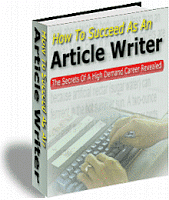
If you want to do more publishing in the world of print magazines, are you creating article ideas and pitching them to editors? I'm not talking about doing it once but over and over on a regular basis. You need to learn how to write a query letter then write your ideas and send them out to editors. I'd love for more editors to approach me with their ideas—but that is not my reality—even though I've written for over 50 magazines. Instead I have to ask editors to write for their publication.
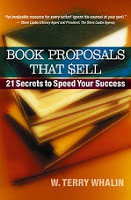
If you want to get a literary agent, are you crafting your proposals then consistently pitching agents? Every agent receives numerous pitches every day and you have to be part of those pitches. As another strategy, are you going to conferences to meet agents and editors face to face and make your pitches? As editors (and a former literary agent), we work with people that we know, like and trust. Nothing happens if you sit back and do not actively pitch editors and agent.
Are you writing a book and need someone with a high profile to write the foreword for the book? Or does your book need some endorsements? Readers buy books every day because of endorsements and the foreword for the book—even if behind the scenes you had to write these endorsements. You will have to ask others for these endorsements, then probably give them a deadline, follow-up and even offer to write them a “draft” endorsement for it to happen. See how you have to be actively involved in this process and be asking for something to transpire?
While we depend on email, know that email can often not deliver—so make sure your pitch is reaching the right person and they are able to read it—even with a quick follow-up call or follow-up email to see if they got it.
If you don't have enough writing work or your books aren't selling, then I encourage you to become more active in asking others to buy your book or publish your work. Every writer (including me) would love to not have to ask others and have editors and agents clamor for their writing and work. In an extreme few cases, these writers exist—but for the bulk of us, we have to continue to pitch our work, promote our writing and get in front of new audiences.
How are you tapping into the power of asking in your writing work? Let me know in the comments below.
Tweetable:
How can writers tap into the power of asking? Here's ideas from a prolific writer and editor. (ClickToTweet)
February 11, 2018
Writers Study their Craft

One of the ways we can grow as a writer in the knowledge of our craft is to read how-to books. Even though I have an undergraduate degree in journalism and have shelves of how-to write books, I continue to read books on the craft of writing. For years I've read at least one of these types of books every month. New how-to books continue to be created and published—and I learn something from each of them.
In fact, I'm on the lookout for notices about new how-to books and I enjoy reading them and writing reviews about the books. In this article, I want to highlight two new books that I've recently read and reviewed. I don't recall where I found out about these books but in each case, I looked the book on Amazon and noticed the book had one or no reviews. From my experience I know other readers are making buying decisions all the time based on these reviews. I know they are important to the author. Most authors are easy to find their website and contact information. I reached out to each of these two authors, Ann Byle and Carolyn Scheidies. I expressed my interest in reading and reviewing their book.
As a way to support other writers, I encourage you to take similar action. Reach out to these writers and offer to read their book if they will send you a review copy. Yes you get a book but this book comes with some responsibility: that you read the book and write your review.
First, CHRISTIAN PUBLISHING 101 by Ann Byle:
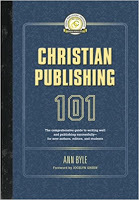
Journalist Ann Byle has compiled and edited a wide-ranging look at Christian Publishing from her years in this business. As she explains in the opening pages of the book, “Most chapters are based on interviews I did with the professional or about his or her area of expertise.” The 45 chapters are broken into seven sections: Creating a Writing Life, The Craft of Writing, Exploring the Depths of Nonfiction, Discovering the Breath of Fiction, Writing for Children, Tweens, and Teens, Reaching Your Readers, and the Business of Writing. Each chapter includes an “Assignments” section with a series of questions for the reader to dig deeper into that particular topic. Some chapters include sidebars with additional resources and insight.
For a couple of the chapters, Byle writes from her detailed experience in the Christian market such as Chapter 16 Contents Is King: Article Writing for Magazines, Websites, and More or Chapter 42 Book Proposals: Whys and Hows of Creating a Great Overview of Your Book.
For almost any area of the field, reading CHRISTIAN PUBLISHING 101 will give you the basics and insights you need to start in this area. Byle has compiled a book of experts in each area that the book explores for example: Jerry B. Jenkins, Nancy Rue, Bill Myers, or James Scott Bell. Many will want to read this book over and over as a valuable resource. I highly recommend it.
Second, ESPECIALLY FOR THE CHRISTIAN WRITER by Carolyn R. Scheidies
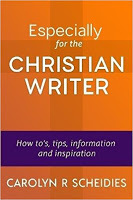
Whenever I learn from another writer or editor, I want to learn from someone with experience in what they are teaching. Carolyn Scheidies is just such a person. In ESPECIALLY FOR THE CHRISTIAN WRITER, Scheidies teaches about writing letters to the editor, queries to magazines, articles, news releases and much more. You will gain insights for your own writing as you study the pages of this well-written book.
In the opening pages, Scheidies gives critical information saying, “Want to get published? Then you need three things in great abundance: passion, persistence and patience. Without these, you will never persevere as a published writer. If you don’t care about your subject, how will you make your reader care? And if you give up, you’ll never know how far you could have gone.” (Page 10)
ESPECIALLY FOR THE CHRISTIAN WRITER is full of practical insights for every writers. I recommend this book.
I hope you will check out these two books about the craft of writing and they will help your writing life. Do you regularly read books about the craft of writing? Let me know in the comments below.
Tweetable:
Writers study the craft of writing. Learn here about two recent titles. (ClickToTweet)
February 4, 2018
How to Move When Feeling Overwhelmed

Whether we acknowledge it or not, it is easy to feel overwhelmed
as an author. The realities of the publishing world can be daunting.
Every day
thousands of new books enter the market. In addition, authors and publishers are
promoting existing books to consumers. Every consumer has to hear about your
book seven or eight or more times before they reach into their wallet and
purchase your book. The average self-published book sells less than 100 copies
and the average traditional book sells about 1,000 copies.
Yet as an author you have a much bigger vision than selling 100
or 1000 books. When it comes to book marketing, there are dozens of books—and
each is filled with great ideas. Maybe you have read a few of these books and
are stuck in the “shiny object” syndrome where you are buying the latest and
greatest tool for marketing your book. While it may be good to purchase that
tool, are you using it and then measuring to see if it is working for
you?
If you are feeling overwhelmed (and everyone has these feelings
from time to time), here's several ideas for you:
1. Change gears to a different type of writing
project. If you have been writing a
novel, switch to a nonfiction magazine article or writing a blog post or an Ebook or some other type of
writing. The experience can get you moving again.
2. Plan a series of social media posts using Hootsuite or some other schedule
tool. When you put these posts into your tool, you are doing something active—building your platform and
presence in the marketplace.
3. Follow some new people on Twitter or
Facebook. Why? With the idea that some of those people will follow you
back and you will grow your social media following—a good thing to do if
overwhelmed.
4. Get more friends on Goodreads. There are 55
million registered readers on Goodreads. As an author, you need to be spending a
little time there on a regular basis. Use the friends section (see this link) to get
more friends. Many authors only have a few hundred friends. I used these tools
and built up to the maximum (which I learned when I hit it) of 5,000 friends.
Now everytime I write a review on Goodreads (for a book that I've read or
heard), it shows up on all these pages. You can have many friends if you
faithfully use the tools from Goodreads.
5. Look for someone to review your latest book.
Maybe it is someone you are corresponding with on email.Ask them if they are
interested or willing to write an honest review and get their commitment. Then mail
them your book. It's part of the publishing world to continually look for new
reviews and feedback about your book.
6. Write a query
letter to a magazine editor and pitch an article idea.
7. Read a marketing book like Online Marketing for
Busy Authors and take one idea from the book and put it
into practice.
My key point with this article is to take a small yet measured
step in the direction of action. The worst thing you can do when feeling
overwhelmed is nothing.
Tweetable:
Why writers need to do what they don't want to do. (ClickToTweet)


