
W. Terry Whalin's Blog, page 43
November 19, 2017
Beyond Thanksgiving: Writers Need Gratitude

About this time of year we find many articles about thankfulness
and gratitude. Yet I contend writers need gratitude or thankfulness throughout
the year and not just around Thanksgiving.
The world of writing is full of challenges. You craft a query
letter or book
proposal and fire it off to a editor who has asked for it—and then you hear
nothing. You wonder if they got it or if they hated it or what happened? Then
you get a letter from a reader complaining about the typos in your most recent
book. Or your phone seems to be acting strange.
Let’s face it: every writer faces problems and things that they
try which don't work—for many different reasons. In the midst of these
situations there is one constant that the writer can control: your attitude. Do
you lean into the challenges and work on something different. Or do you face the
day with gratitude and thankfulness.
I’ve not always been a proponent of gratitude and looking at the
glass as half full instead of half empty. As I have been in publishing many
years, I’ve been working on my attitude and trying to center on gratitude every
day.
A
couple of months ago, Darren Hardy challenged listeners to his Darren Daily program that
there were only 90 days until Thanksgiving. He suggested we keep a Thankful
Journal about a friend or spouse. He asked us to write in that journal every day
until Thanksgiving and then give it to the person on the holiday.
I’m not much of a journal keeper. I know many writers who
journal but I've never developed this habit. At the encouragement of Darren
Hardy, I tried this Thanks Journal and have been faithfully writing in it every
day. The results have been fascinating to me. Every day I’ve focused on
gratitude and something I appreciate then wrote into this journal. If nothing
else, it has spun my thoughts and attitude in the direction of gratitude. In a
few days, I’m going to this journal to the person. I plan to continue this
pattern with a gratitude journal because I’ve found this process has been a
significant help to my gratitude attitude.
Within the publishing world, there is much outside of the
writer’s control. The one area you can control is your attitude. If you are
grateful and thankful, that attitude will shine through to others. You will
become someone who is attractive to others rather than someone always grumbling
about this or that.
From my years in publishing, I’ve seen how the grumbler and
complainers are perceived. The editors and agents may smile, treat you kindly
and answer your complaints, but behind the scenes they are talking with their
colleagues about how these complaints simply spread the poison to others. When
these writers do not get encouraged to do another book, they wonder why. I would
contend it comes down to attitude. Is your attitude attractive to others or
repelling? If you are grumbling and repelling, then I encourage you to turn to
gratitude and thankfulness and let it carry you all year long—not just on one
day called Thanksgiving.
Let me know the steps you are taking in the comments below.
Tweetable:
Gratitude is important for writers every day. Read this article to learn the reasons. (ClickToTweet)




November 12, 2017
Why You Should NOT Be Making Publishing Assumptions

We live in a hurry up world with limited time and
resources. Are you making publishing assumptions which are limiting your
publishing options? Admittedly there are many different ways to get published
and thousands of new books released into the market every day.
For over five years, I've been an acquisitions
editor at Morgan
James Publishing. As an acquisitions editor, I work with authors and literary agents to find
the right books for us to publish. From my 25+ years in publishing and working
with many types of publishers and authors, I know firsthand our model at Morgan
James is different. In many ways, it is author-driven yet it has the team and
consensus-building elements that comprise what makes traditional publishing work.
I've had the negative experiences in publishing. For example, a book proposal that
I wrote received a six-figure advance. My co-author nor I saw the book cover or
title before the book was published. In fact, there was a different title in the
publisher's catalog than the printed book. The cover had a photo of my co-author
that he didn't like. He didn't get behind the book in promotion and talking
about the book—which every book needs if it is going to succeed. With the poor
sales, the publisher took our book out of print in about six months. The stock
was destroyed and I have some of the few remaining copies of this book.
While you may think this story is unique, I've often hear such
experiences from others who have followed the traditional path. In this path,
the publisher is in charge of the title, cover, interior, etc. They may show the
author the information but at the end of the day, they feel like they have more
publishing experience than the author so they make the decisions. The lack of
author involvement from my experience leads to less author promotion and less
sales. Some of these actions explain why 90% of nonfiction books never earn back
their advance (a little talked about fact in the publishing
community).
Recently a
literary agent (that I had not worked with before) submitted a novel to
Morgan James. As a professional courtesy when receiving an offer, he reached out
to me to see if we were interested in the book. With my recent travel to
conferences, I had not spoken with this agent—the next step in the process of
getting a Morgan James book contract. I tried to set up a phone meeting with the
agent that day—and we arranged a time. At first, he downplayed the need for us
to take the time to talk because he heard the model was a hybrid. Even the term
“hybrid” means many different things in publishing. I was grateful this agent
took the time to hear the details about Morgan James. Whether the agent does a
deal with us or not, at least I got the chance to talk about the unique aspects.
He did not discount the opportunity and assume he understood it.
At an event, I met an author who gave me her partial manuscript.
I reached out to her to get the electronic version. She responded that she was
chatting with her agent and had produced a couple of books with Tate Publishing
and if Morgan James was like them, she wasn't interested. I told her that the leaders of Tate are
in jail and Morgan James wasn't like them at all. I encouraged her to
explore the possibilities instead of instantly discounting them.
Until an author submits their material and goes through the
process, I don't know if they will receive a publishing offer from Morgan James. We
receive over 5,000 submissions and only publish about 150 books a year—and of
those books only about 25 to 30 are Christian books. We publish about 25 to 30
novels a year and about 25 to 30 children's books. The system is strong but not
right for every author—and that is why there is a process.
The basic principle: don't make assumptions. Instead take the
time to listen and read and explore. You may be surprised with the
opportunities. Behind the scenes, I've seen great integrity and transparency
with Morgan James Publishing. If I can help you, don't hesitate to reach out to
me. My email and work contact information is on the bottom of the second page of
this information
sheet.
Are you publishing assumptions as you look at options? Tell me
in the comments below.
Tweetable:
Why writers should NOT be making publishing assumptions. Get the details here from an experienced editor. (ClickToTweet)
November 5, 2017
A New Format for My Billy Graham book
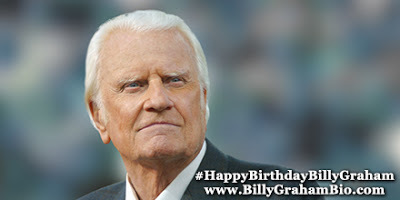
From my years in publishing, I understand that readers consume books in different ways. Some people prefer to read a print book. Others have gone electronic and read on their iPad or Kindle or Nook or another electronic type of device. Other readers find reading hard and prefer audiobooks. I encourage you to create your books in all of the different formats so any of these readers can access your book.
I’ve been eager to get my biography of Billy Graham into audiobook format. At first I was going to read it myself but in March I decided that I didn’t have the time or the skill to produce my own book. Morgan James put the book out for audition and normally they get about half a dozen responses. We had 28 people try out for my Graham book. I listened to all these auditions and selected an experienced audiobook person Andrew L. Barnes.
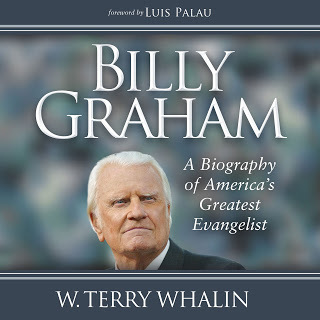
How could I make my audiobook different? For example, Billy Crystal started his audiobook in front of a live audience and other audiobooks included some music between the chapters.
One of the most iconic songs related to Billy Graham is the hymn Just As I Am which is played at crusades when people are coming forward to accept Christ. Billy Graham’s autobiography is called Just As I Am. I searched online and found a version of the song from the Gaithers. I wanted to use a short clip of the instrumental and a short clip of the hymn. Then I had to get permission.
About eight years ago when I worked at Howard Publishing, I met Gloria Gaither and exchanged emails with her. I had not reached out to her in years. I wrote a short email reminding her of when we met and explaining about my audiobook of my Billy Graham project. I asked for permission and within 24 hours they granted it.
Each chapter in my audiobook begins with the chapter name then the music clip. The addition makes the audiobook different and special. Here's the retail sample.
I listened to my audiobook while carefully watching the words. I had to note each error and ended up with eight and a half pages. Andrew fixed the errors and sent another version. I listened again and found four and a half pages of errors. Finally I heard the book a third time and everything was perfect and fixed.
The audiobook version is now available. If you use audible, I encourage you to get copy. If you use Overdrive (like I do), I encourage you to reach out to your library and ask them to purchase and carry the book. After you hear the book, please write an honest review on Amazon and Goodreads. As I’ve written in the past, reviews are important for books.
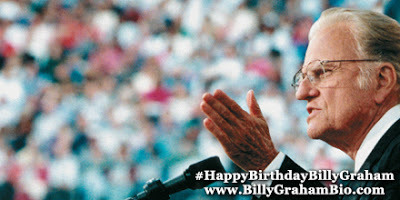
The timing for the arrival of my audiobook is perfect. Mr. Graham turns 99 on November 7th. Happy Birthday, Billy Graham. Let’s celebrate another step in the process and the ministry of this new audiobook.
Tell me in the comments below if you listen to audiobooks and if you are actively working to get your books into the different methods that books are consumed.
Tweetable:
Do you consume books in different formats? Get insights here. (ClickToTweet)
October 29, 2017
Are You A Rule Breaker?

Some writers intentionally want to rebel and break the rules to produce something different which stands out in the market. I understand this feeling but to break the rules, you have to know and understand them in the first place.
From my many years in publishing, I've worked hard to continually grow and learn about the market—and give the reader (and the editor or agent), what they want. Every magazine and publishing company has expectations and a target market. For example, last night a publishing colleague introduced me to a published author who has written his first novel. I learned this novel is edited and completed yet I haven't seen it yet (but I did request that the author to send it to me). From the beginning I spotted something outside of the lines. The novel is 134,000 words—and our fiction guidelines say we have a 100,000 word limit. Until I see the novel and speak with the author, I have no idea if it will be a fit or not.
Maybe our publishing team will love the concept and publish a little larger novel. Or possibly the author will know how he can cut it to the 100,000 limit. Anything and everything is possible in the publishing process but first things first, the author has to send me his material.
Last week another author sent me her nonfiction book manuscript. She told me the bulk of this book had been sitting on her computer for three years and she finally got it out to someone. I'm honored with these submissions and will be exploring if it is the right book for Morgan James to publish. So how do you learn the rules and where to send your material? In this article, I want to give you several methods of learning these rules.
First, get the guidelines for the magazine or the book publisher—and carefully study these instructions. if you follow these guidelines, you will gain a “reading” or “hearing” from the editor or literary agent. It increases the possibilities if you follow these rules.
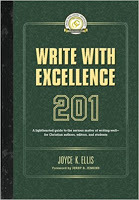
A second way to learn the rules is through studying how-to-write books. For years I've read and studied a how-to-write book every month (often more than one per month). Last week I finished reading Write With Excellence 201, A lighthearted guide to the serious matter of writing well—for Christian authors, editors and students by Joyce K. Ellis. For many years I've known Joyce as a magazine editor. Originally we met through our involvement in the Evangelical Press Association. What I didn't know about Joyce is that she has written a column about grammar for years for The Christian Communicator magazine and she has a passion for excellent writing. Write With Excellence 201 is a detailed examination of grammar rules.
How do you write strong engaging sentences? Some of that comes from experience but also understanding the difference between active and passive tense. Write With Excellence is a clarion call for writers to learn the rules then use them to improve their writing. Ellis engages her readers with vivid examples and insights. The chapters are short and each ends with a quiz to help you absorb the details on adverbs or the use of hyphens or italics versus quotation marks. The book has three main sections: Grammar and Related Matters, Punctuation and Related Matters, and Style, Usage and Other Considerations.
As Ellis writes, “Writers have a responsibility to communicate clearly. And excellent Christian writers strive for clarity, especially in the spiritual realm. We enrich the reader's takeaway value—if we vigilantly guard against being jargonauts.” (Page 246–-the chapter cautioning about use of jargon). Write With Excellence 201 is realistic and doesn't pull punches: “Yes, all this is a lot of work. No one said it was easy (How many times have I written that in this book?) But if you take the time to “sweat” your titles and subheads, you'll show editors you're a professional, right from the start.” (Page 264) I've given you a small sample of the wisdom packed into these pages. I highly recommend this book.
Are you learning the rules before you break them? Let me know in the comments below.
Tweetable:
Are you a rule breaker with your writing? You must first know the rules to break them. Get insights here. (ClickToTweet)
October 22, 2017
Help Me Celebrate a Milestone
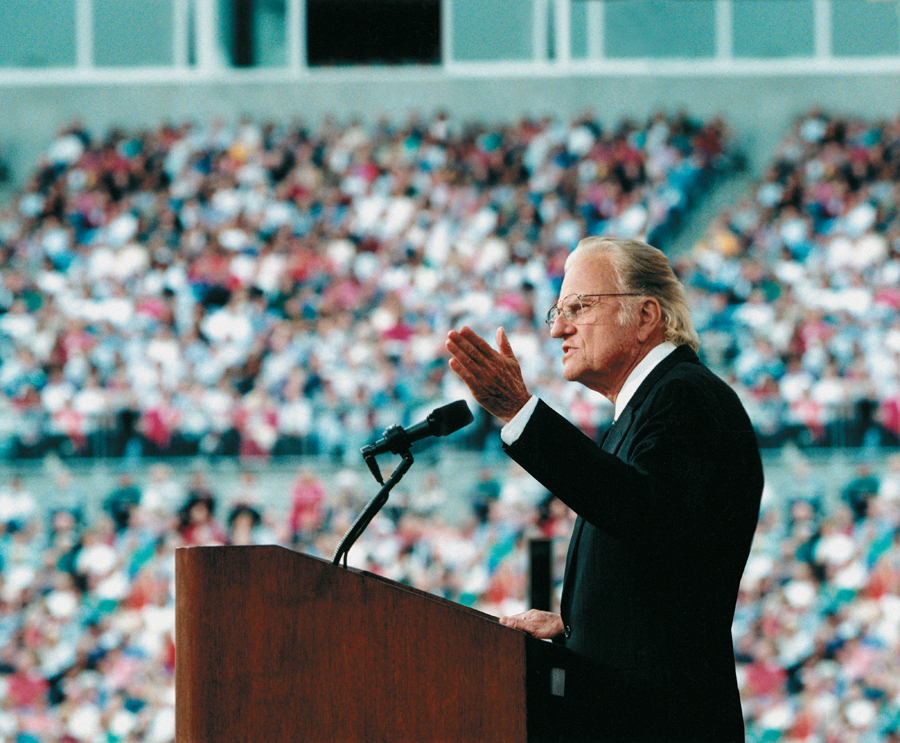
Years ago I worked for Billy Graham and the Billy Graham
Evangelistic Association as the Associate Editor at Decision magazine. I
learned a great deal from my years with Mr. Graham. After I left I had the
opportunity to write a biography about Mr. Graham as a part of the Men of Faith
series of books from Bethany House. Yet that book is long out of print (a sad
fact that happens in book publishing).
A couple of years ago, I updated my old book and added new
stories and brought out a new book, Billy Graham, A Biography of America’sGreatest Evangelist . I built a book website, gathered endorsements and Luis
Palau wrote the foreword for my new book. I’ve received great feedback about my
book which currently has over 60 reviews on Amazon and Goodreads.
For the last six decades, Mr Graham has been on the list of the most admired men in America. He has mostly disappeared from the public eye except for rare occasions. I’m encouraging you to wish Mr. Graham a Happy Birthday and I want to give you some tools and ideas for those wishes. I’ve prepared a series of social media posts and some images that you can use at:
http://BillyGrahamBio.com/HappyBirthday.html
Besides this advanced planning to celebrate Mr. Graham’s birthday. I’ve been working on the audiobook version of my book. You can hear the retail sample of the book here and even use this link to encourage your local library to order the book.
If you hear this sample, you will know that it is not my voice but Andrew L Barnes, an experienced audiobook specialist. As I wrote about recently here, audiobooks continue to explode in the book world and I’m happy to announce my book’s availability in audio.
What is the milestone that I need your help to celebrate?
November 7th Mr. Graham turns 99. No one has preached the Gospel of
Jesus Christ face to face more than Billy Graham through over 70 years of
faithful ministry. In preparation of Mr. Graham’s 99th birthday,
I’ve created a means for you to add to the celebration.


1 1. Use social media like twitter and Facebook to
wish Mr. Graham a Happy Birthday.
2.
Schedule your greetings using a tool like
Hootsuite.
3.
Social media gets more attention when it
includes an image. I’ve created four images of Mr. Graham that you can use with
your greetings.
Let’s start a movement of celebration for this milestone
birthday. Each of us can wish Mr. Graham a Happy Birthday with our actions.
Please pass this information along to your church or small group Bible study. I
suspect many people would like to help me mark this celebration.
Tell me what actions you are taking in the comments below.
Tweetable:
Want to Wish Billy Graham a Happy 99th Birthday?Get the details here. (ClickToTweet)
October 15, 2017
When You Can't Locate an Individual's Phone Number...

With the proliferation of smartphones, most of us carry one of
the most powerful communication devices in our pockets—our phone. As an acquisitions
editor, I get a lot of email—and I regularly send a lot of email. While I
love the convenience of email, I also know email is easy to ignore and not answer.
You can put it off for another time and another day.
The phone is a completely different communication device. It is
immediate and if we reach the person, we can have a short conversation with
them. We can leave messages into their voicemail (something I do a great deal as
an editor). Each time I leave a message, I try to think about the person getting
that message—so I leave something upbeat and to the point with my phone number
and email so they can respond.
The Internet has given us tools where we can guard and protect
our actual phone number. For example, I've got a New York phone number through
my work at Morgan
James. When I call authors or literary agents related to my work, I use this
tool and it shows up on their phone as a New York phone number—even though I
live in Colorado and work remote. Sometimes authors will answer because
it is a New York phone number.
What if you can't locate the phone number for someone? The other
day I wanted to have a short conversation with an author. I looked in my contact
information. I had his email and mailing address but not his phone number. I
checked the author's website to see if it contained a phone number—and it did
not. It had a contact form but no email and no phone number. See how this author
is limiting the people who have his number? How was I supposed to find
it?
To find a phone number, one of the tools I often use is Godaddy WhoIS Database.
You can use Google to look up “WhoIs” and see there are a number of
these databases. As the first place I turn, I use this one from
Godaddy. With the author's website, you put that into the search engine and
in a matter of seconds, you get the contact information for that
author—including their phone number. I wrote down the number then called it.
Immediately I was speaking with the author I needed to reach—on his cell phone.
Also I saved the cell phone number I had located for if I need to use it in the
future. This system is not perfect. Sometimes authors have paid for an extra
service called Domain Privacy Protection—and their real phone number is not in
this WhoIs record—but from my experience, many times you can locate their phone
number.
Maybe you have other tools and websites that you use to gather this
information. Please let me know in the comments section. I look forward to
learning from your experiences.
Tweetable:
Missing someone's phone number? How do you find it? Get some new tools here. (ClickToTweet)
October 8, 2017
How to Engage & Connect for Greater Profits

Editor's Note: I rarely have guest bloggers but loved what MaryEllen Tribby wrote about how to reach an audience and wanted to make sure you saw it—and learned about her new free special report.
By MaryEllen Tribby
“Here is a simple but powerful rule: always give people more than what they expect to get.”
~ Nelson Boswell
Have you ever noticed that a lot of writing in your niche is actually fairly boring or not in the least bit helpful?
Well that’s actually good news for you. Because if everyone else in your niche is creating dry, mediocre content, then you’ll stand out if you create something entertaining, educational and enriching.
And if you really connect with your audience, you can bet they’ll want to read every word you publish. And over time consider you a trusted resource and once that happens you have a bona fide fan base!
That was exactly what happened to me almost six years ago when I started Working Moms Only. I noticed that the market was sooooo under-served. All the other newsletters and products were tedious and quite frankly not practical.
So how did I create this connection between words and the heart and souls of the audience?
Well just like this...
1) Tell Stories
Stories are good ways to connect with your readers, because a story tends to help you form that emotional connection. It helps the reader identify with you. And a story is much more memorable than simply telling a reader what to do.
You can write this story either about you or someone else. Either way, however, the story will be more impactful if the main character is very similar to your readers.
So if your readers are moms who are looking for an opportunity to make incremental money or money from home, then you’ll connect to these readers if your story is about a real mom who overcame this same problem.
Another thing a story can do is help demonstrate to your readers that you really understand them and their problems.
And when a reader feels like the author understands him, you can bet they will keep reading.
2) Create “Reader Oriented” Writing
Your readers have no doubt read plenty of articles, reports and ebooks on the same topic as the one you’re writing about. However, a lot of this content is “author oriented.” That means that it seems to be more about the author rather than the readers.
Example: You might read a book about dog training in which the author seems to boast repeatedly about his credentials or delve into personal stories that actually aren’t of interest or relevant to the reader.
One way to quickly check if your writing is author-oriented is to see how many times you’ve used words like “I” or “me” versus how often you use words like “you” and “yours.” You want to use more “you” writing, since this is reader-oriented writing.
Here’s a great example:
• Author-oriented writing: “I’m going to tell you about how I lost weight.”
• Reader-oriented writing: “You’re going to discover a weight-loss trick that’s worked for me – and it will work for you, too.”
3) Engage the Audience
If you’re writing a “how to” article, then it’s easy to fall into the familiar pattern of writing a straightforward article: “This
is step 1... this is step 2...”
Basically, it’s the same kind of article everyone else publishes. Instead, engage your audience by freshening up your writing.
This includes:
• Adding in your own tips. In particular, include unique tips and tricks not found anywhere else.
• Using stories to illustrate points. Be sure to engage all five of your reader’s senses to really bring him into your story.
• Inserting examples to make things more clear. Just look at the way I gave an example of reader versus author-oriented writing above.
• Including “spiced up” writing. For example, instead of merely describing someone as nervous, you could say “He was more nervous than a long-tailed cat in a room full of rocking chairs.”
That’s much more memorable, impactful and fun – don’t ya think?
You’re writing with a purpose, whether it’s to presell your readers, teach them something, solve a problem, overcome a challenge or just develop a good relationship with them.
However, these goals are not possible if your writing doesn’t engage and connect with your audience.
That’s why you’ll want to use the tips above to improve your ability to engage and connect with your readers!
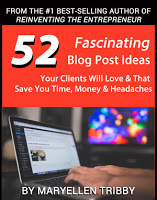
And here’s the best news – you can start today. You can be among the first to check out this extraordinary new report.
I have just put the finishing touches on a brand-new, hot off the presses, special report with 52 Essay and Blog Posts Ideas to save you hours and hours of writing time.
----

MaryEllen Tribby is the premiere business consultant and coach to some of today’s most successful entrepreneurs in the information publishing and digital marketing arena. She also works with a number of the largest most lucrative traditional corporate publishing organizations in the world. Her quarter century experience includes but not limited to successfully running multi-million dollar divisions of companies such as Forbes, Crain’s New York Business and Times Mirror Magazines.
Later taking the entrepreneurial world by storm as Publisher and CEO of Early To Rise where she was responsible for growing the business from 8 million dollars in sales to 26 million dollars in just 15 months. In 2008, she founded and remains the proud CEO of Working Moms Only, the world’s leading Media Company for the empowerment of the working moms.
Tweetable:
Engage & Connect with Your Audience for Greater Profits. Get the details here. (ClickToTweet)
October 3, 2017
Continual Experimentation

While editors, agents and other publishing executives would like to proclaim they know what makes a successful book, the real story is the process involves continual experimentation. If there was one formula or path, then every book would be a bestseller—and that is certainly not the case.
No matter where you are in the writing process, every writer needs to be reaching their audience with their website, social media, email list, physical events and more. Some people fall into the “shiny object syndrome” where they are chasing the latest and greatest tool. Every week there is a new social network or a new tool or program. Each of us must find the right path for our writing and our audience.
In the last few years, one of the growing areas is video with the explosion of YouTube and other ways of adding video to your website. I've had limited participation with videos. I've watched other writer friends launch a YouTube channel and incorporate more video into their websites but I have not.
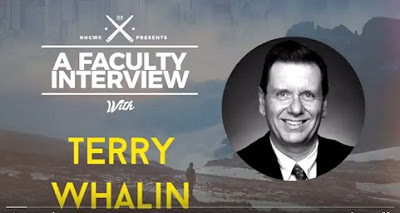
In the last few months, I was invited to attend the Ohio Christian Writers Conference and will be there in early November. You can see a short interview here with some tips for writers:
These writers have also launched Serious Writer Academy and invited me to be a part of their faculty. For my first class, I taught one of my most popular writer's workshops: Editors Read Proposals Not Manuscripts. This video format is available 24/7 and I broke my teaching into four sessions:
1. Five Questions Every Book Editor Asks
2. Six Reasons Book Ideas Are Rejected
3. Book Proposal Check List
4. Six Ways for Your Proposal to Stand Out
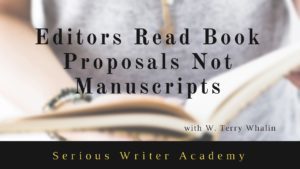
I've reviewed hundreds of book proposals and the teaching in this video session can be a game changer for your submissions. Because the session is on video, you can watch it multiple times and capture all of the details and information to build your submissions to editors.
This class is hopefully the first of several which I will be teaching ate the Serious Writer Academy. I look forward to your feedback as you take this workshop.
This class shows how I'm continuing to experiment and look for new audiences—as well as provide new products for people who have been in my audience for some time. I hope you are continually experimenting as a writer with new opportunities—testing to see which ones will work, then stopping those which do not work. Tell me about your experimentation in the comment section.
Tweetable:
As a writer are you continuing to experiment? Learn more details here. (ClickToTweet)
September 25, 2017
Move Beyond Bleeding on the Page

Within the writing community, I've often read, “There is nothing to writing. All you do is sit down at a typewriter and bleed.”
According to Ryan Holiday in his book, The Perennial Seller , this statement is attributed to Ernest Hemingway. Then Holiday continues saying, “This is a wonderful, seductive line as we consider sitting down at our proverbial typewriters. The problem is that it is preposterous and untrue. It is directly contradicted by Hemingway's own meticulously edited, often handwritten manuscript pages. The John F. Kennedy Presidential Library has some forty-seven alternative endings for Hemingway's A Farewell to Arms. He rewrite the first part of the book, by his own count, more than fifty times. He wrote all of them, trying them like pieces of a puzzle until one finally fit.” (Page 37-38--and the italic emphasis is from Holiday)
From my study of writing, this aspect of the writing life is rarely discussed: there is hard work involved to practice the craft of storytelling and write something which sells well and continues selling year after year. The successful writers continue to learn and grow in their craft—and also grow their audience or tribe or platform. You can pick your term because different people interchange these terms. The work of writing is way more than bleeding on the page.
As a writer, I encourage you to continue to grow in your craft and your skills. You need to be practicing your writing craft with continuing to work on longer work like books but also writing shorter articles for magazines and blogs and other places. I've been publishing for many years but I continue to read a book about writing every month—and grow from reading those books.
In addition to studying about writing, I continue to try new programs and learn new skills. As I look at the various types of media that I have online, I have one area which is lacking—video. I do not have a YouTube channel nor have I recorded many videos.
Last week, I made some progress in this area. I've joined the faculty of the Serious Writer Academy. As a part of this faculty, I learned to record on video one of my writing workshops: Editors Read Book Proposals Not Manuscripts. Over the years, I've taught this workshop at numerous writers conferences—but it has never been recorded—until now. Just use the link in this paragraph and you can learn about the video and the cost details about accessing and taking this workshop. In the days ahead, I plan to record and launch additional workshops as a part of Serious Writer Academy.
As a writer, make sure you plan to attend a writer's conference. Follow this link to see a list of several conferences. Also make sure you check my speaking schedule and see where I'll be teaching in the weeks ahead. I'd love to meet with you face to face during one of these events.
If you want to keep up with what I'm learning, one of the best ways is to regularly read my posts on twitter. A second way would become an email subscriber to this blog on the Writing Life. Use this link. It has over 1400 entries and I add new entries every week.
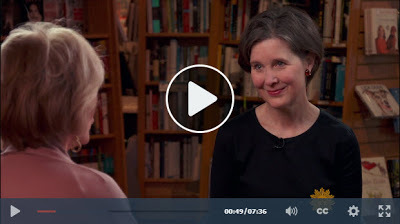
As a conclusion to this article, I want to show you a short video about bestselling author Ann Patchett who also owns an independent bookstore. The video contains a lot of current information and insight about what is going on in the ever-changing world of publishing.
With my work for Morgan James Publishing, I'm working with authors to get them a book contract all the time. Sometime people will ask what I'm looking for. My answer is always “good stuff.” We publish many different types of books at Morgan James. I understand “good stuff” is subjective but I also know that I recognize quality work when I see it. When you are ready to pitch your book, reach out to me and let me know how I can help you. My work contact information is on the bottom of the second page of this link.
In the comments below, let me know what active steps you are taking to move beyond bleeding on the page.
Tweetable:
Writers need to do more than bleed on the page. Learn the details here. (ClickToTweet)
September 18, 2017
How To Keep Moving When Stopped

Recently I was driving into downtown Denver for breakfast with a Morgan James author. There are many one-way streets in this section of the city. Suddenly the street where I was going was blocked off and had a detour. Without even a second thought, I turned and followed the detour and soon was back on track heading toward my meeting place. I did not let the detour throw me off from my destination. I did not get put off and quit and return home but found the way forward. My response comes from years of driving experience and understanding that sometimes roads are blocked and you have to locate the way around the roadblock.
Just like driving and finding roadblocks to get around, the writing world often has roadblocks and detours. Maybe you pitch an editor who requested your manuscript and you don't get a response. I've been working with an author who has a children's book and she has been promising to send it to me. It has never come. A few weeks ago when I saw this author in person, she asked me if I had received it. My conversation with her was the first I had known she had even finished it and tried to send it. No, I had not received it. She promised to resend it—and that still has not happened. We depend on things like email when sometimes even email breaks down and doesn't reach the intended editor.
From my years in publishing, I find every step of the process has pitfalls and potential breaks in communication. Editors don't respond to your magazine pitches or a program which you use often isn't working or someone promises to review your book and doesn't follow through. These types of roadblocks happen all the time.
How do you respond to a roadblock? Do you stop and say to yourself, “Guess no one wanted that idea.” “Or “it wasn't meant to be.” Or do you persevere and look for another way to move around the roadblock? The writers who succeed (and that measure of success is different for each of us)—find their way around the barriers.
Earlier this year, I wrote about listening to Lauren Graham's memoir, Talking As Fast As I Can . She sat next to best-selling author, James Patterson and ask him, “How do you do it?”
Patterson responded, “Keep going, keep going, keep going.” As writers, each of us get rejected. Our plans get interrupted and changed. My encouragement is to continue looking and find the path forward. If you are struggling with an area, then create a new habit or new system to help with this area. Your goals and dreams as a writer are important.
The stories of persistent and perseverance in the face of challenges is often a theme in different biographies and how-to books that I've heard recently (check my list of books here). In Robert Greene's Mastery , he told the story of Henry Ford and his early failures and persistence to ultimately form the Ford Motor Corporation.
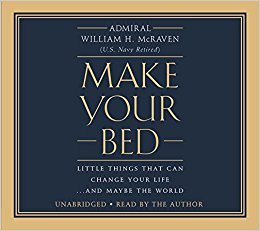
Admiral William H. McRaven told about his persistence in his Navy seal training in Make Your Bed . Historian David McCullough told about the early failures of Harry S. Truman in Truman . While he had no college education, Truman became the 33rd President of the United States. I learned valuable lessons from each of these successful people. Persistence and perseverance is an important quality for every writer.
Tell me in the comments below, what actions you take to continue and move forward with your writing.
Tweetable:
Hitting a barrier? Get ideas here how to keep moving forward. (ClickToTweet)


