
W. Terry Whalin's Blog, page 45
July 10, 2017
Steal This Book Marketing Idea

Imitation is one of the greatest forms of flattery. I've been observing different book marketing ideas for years and never seen this idea. I wanted to write about it and give you the details so you can use it (or improve it and use a variation) with launch your book.
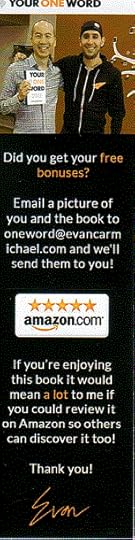
Evan Carmichael is a brilliant entrepreneur and marketer. His first book is called Your One Word . It includes an interesting subtitle which stresses a benefit to the reader: “The Powerful Secret to Creating a Business and Life That Matter.” Notice several actions with this bookmark:
First, he asks, “Did you get your free bonuses?” The answer is “no” and you keep reading. Every author needs to offer some sort of bonus that ties to your book. Then Carmichael explains how to get the bonuses: “Email a picture of you and the book to oneword@evancarmichael.com and we'll send them to you!” He has set up a special email address for receiving these photos.
Many people are using a smartphone so taking a self-photo with the book is easy then emailing it to this address. In this process, Carmichael captures the email addresses of his readers—which is something every author should be doing—and adding to his email list in this process. I'm unsure what he is going to be doing with the photos, but I guess I will learn because I emailed my photo.
Second, he includes a little Amazon logo with five stars (clearly suggesting readers to give him a five star review). Then he asks for the review saying, “If you're enjoying this book it would mean a lot to me if you could review it on Amazon so others can discover it too!” Evan is following a key principle: if you don't ask, you don't get. Also with a color, he emphasized the words “a lot.” Followed with gratitude of “Thank you!” and his signature.
The overall effect is to touch his readers, get an email address and encourage them to write a book review. This little bookmark certainly caught my attention and I suspect will be effective for other readers. Carmichael's book released on December 6, 2016 and as of this writing has 76 Amazon reviews (way more than your typical nonfiction book). It looks like this strategy is effective.
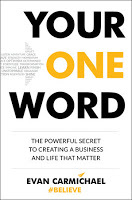
One other key if you use this idea: write an excellent book. Carmichael has a well-crafted book with solid insights, stories and great interior design (use of bold and sub-heads for example). The foundation of every book is exceptional writing. The book is a hardcover business book with an attractive cover design—and published by Tarcher (an imprint of Penguin Random House). The publisher tells me that lots of energy has been poured into the creation of this book with excellent endorsements and broad bookstore distribution. Your One Word is a well-made book.
In my years in publishing, I've never seen such a bookmark but believe many others can replicate this idea with success. It's why I wanted to show it to you.
What do you think about this bookmark and idea? Is it something you could use? Tell me in the comment section.
Tweetable:
Read the details of a brilliant book marketing idea. (ClickToTweet)


t


July 3, 2017
What Writers Can Do With Bestseller Lists

There are many different types of bestseller
lists— New York Times , USA
Today , Publishers Weekly then every major newspaper has a
bestseller list. Also the bestseller lists are often broken into different
categories like nonfiction (hardcover and paperback), fiction (hardcover and
paperback), children's books (hardcover and paperback), etc.
Book authors need to be reading these bestseller
lists and keeping mental track of the books on them. Some authors are put off
with bestsellers. When they read them, they don't resonate with the writing and
wonder how it got on the list. There are many different ways that books get on
the list. Whether you "like" the book or not, I believe authors need to be aware of what is on the list for several
reasons:
First, these list show you what
the reading public is buying and reading. It also shows what publishers are
creating and launching into the world.
Second, I encourage you to read or
listen to these bestselling books. You can learn from them. You don't have to
purchase these books but can often get them from your public library. If the
book is not available, then learn how to get on the hold list for the book. Even
if the book is very popular, eventually you will get the book.
Third, every writer needs to be
aware of their competition and what is going on in your area of publishing. As
an editor, I will speak with many authors. Some of these authors want to publish
a romance novel while others are working on nonfiction and yet others are writing a children's
book. Often during the conversation I will ask if they read in their genre
or area of the market. Their response is revealing whether they are in tune with
their market or not. Some authors don't want to be “tainted” by the work of
others so they are not reading. My contention is that you can learn a great deal
about the reading public as you read and study your competition. This
information will also feed into the competition section of your book proposal ,
your marketing plans and much more.
One of my bestselling author friends reads other
books on the bestseller lists. It has been a part of his reading habit for many
years.
Do you read bestseller lists and track on this
information? Why or why not? How do you use them in your writing life? Tell us
in the comment section.
Tweetable:
What can writers do with a bestseller list? Get some ideas here. (ClickToTweet)
t
June 26, 2017
Understand the Role of a Book Publicist

Whether a traditional and recognized publisher launches your book or a self-publisher, the author has to be engaged in the promotion and marketing of their book. One of the key players in this process is the book publicist. Many of these publicists have valuable connections and relationships with media and others to help you promote your book.
This past weekend, I finished reading a new book from publicist Claire McKinney, who has worked in publicity for major publishers for over 20 years and is a recognized expert in self-publishing appearing on The Today Show for example. DO YOU KNOW WHAT A BOOK PUBLICIST DOES? is the name of McKinney's book with the subtitle, “A Guide for Creating Your Own Campaigns.” As the number of new books entering the market increases every day, authors need to understand the role of a book publicist and how to work with them in the process of book promotion. Managing expectations about what a publicist can do for a writer is great information and woven into the fiber of this book.
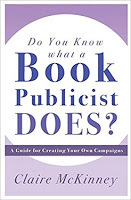
The promotion or sale of any book is tied to key connections and relationships—for example to the media. Book publicists like Claire McKinney have been building these relationships for years. Every author needs to understand their role in publishing. DO YOU KNOW WHAT A BOOK PUBLICIST DOES? fills a critical role in this process with pointed insights throughout.
McKinney answers common author questions like what is a press release and what is a book launch and the best time to launch a book? The answers are packed with her years of experience in such tasks.
In the section on Reaching the Media, McKinney writes, “I’ve found that “fear” is the one thing that holds most people back from reaching out and from developing good pitches. Of course, you don’t want to be insulting, use the words “extraordinary” or “dynamic” just to create hype doesn’t help either. If you are honest about your intentions and what you are looking for, you are more likely to get a response. It takes extra effort, but that is also how you will build a relationship with the contact that could benefit another book, or could enrich your experience in another way. If you don’t ask, you don’t get. I’m sure you know that expression. If you get a snappy response, chalk it up to a bad day. What is the worst that can happen?” (Page 100-101)
Every book author can profit from the details in DO YOU KNOW WHAT A BOOK PUBLICIST DOES?—whether it is your first book or many books. I highly recommend this book. Also I recommend you follow this link to McKinney's website and download her Guide to Social Media 101. Each of us can learn something and get some new ideas from this free resource.
With increased understanding from reading DO YOU KNOW WHAT A BOOK PUBLICIST DOES?, you can apply this information to your own writing life. One of my reasons for occasionally including reviews of books for authors in these articles about the writing life is to showcase the importance of reading and applying books to your life. While I've been in publishing many years, I learn new insights and tools from these resources. I hope you are taking action for your own writing life.
Have you used a book publicist like Claire McKinney in the promotion of your books? Tell me about in the comments section.
Tweetable:
Writers need to understand the role of a Book Publicist. (ClickToTweet)
t
June 19, 2017
Writers and AudioBooks

June is AudioBook Month. This area of publishing continues to expand and explode from everything that I read in the trades.
Check out this article from the recent Book Expo America and mega-bestselling author, James Patterson. “Patterson (Crazy House, Hachette Audio) opened his presentation with a declaration: “Listening to an audio is reading. A lot of gatekeepers don't buy into that, but I do.” Noting the audiobook “is only scratching the surface of its potential importance and its audience,” he offered a pair of recommendations. “The first suggestion is that some audiobook people have to go out to Silicon Valley. We need to redesign audiobooks so they can be sold at a better price.” He also advocated for offering an irresistible audiobook package, which “could include, just for example, a John Grisham, a Patterson, Hillbilly Elegy, a Wimpy Kid novel, Alan's new book,” to automobile makers at close to cost if they would agree to put it in every new car they sell.” I found this idea interesting and will be watching the publishing world to see if someone takes James Patterson up on such an idea.
If you are wondering about the viability of audiobooks, just look at these recent statistics “In 2016, Audiobook Sales Up 18.2%, Unit Sales Jump 33.9% Audiobook sales in 2016 rose 18.2%, to $2.1 billion, and unit sales jumped 33.9%, according to the Audio Publishers Association's annual sales and consumer studies, conducted respectively by Management Practice and Edison Research. This marks the third year in a row that audiobooks sales have grown by nearly 20%. The APA attributed audio growth to an expanding listening audience: 24% of Americans (more than 67 million people) have completed at least one audiobook in the last year, a 22% increase over the 2015.”
“Among other findings:
More listeners use smartphones most often to listen to audiobooks than ever before (29% in 2017 vs. 22% in 2015).
Nearly half (48%) of frequent audiobook listeners are under 35.
Audiobook listeners read or listened to an average of 15 books in the last year.
More than a quarter (27% of respondents) said borrowing from a library/library website was very important for discovering new audiobooks.
A majority of audiobook listening is done at home (57%), followed by in the car (32%).
68% of frequent listeners do housework while listening to audiobooks, followed by baking (65%), exercise (56%) and crafting (36%).
The top three reasons people enjoy listening to audiobooks are: 1) they can do other things while listening; 2) audiobooks are portable so people can listen wherever they are; and 3) they enjoy being read to.
The most popular genres last year were mysteries/thrillers/suspense, science fiction/fantasy and romance.
19% of all listeners used voice-enabled wireless speakers (such as Amazon Echo or Google Home) to listen to an audiobook in the last year, and for frequent listeners, that rises to 30%.”
I hope some of these statistics caught your attention about the importance of audiobooks. Here's several ways you can get involved with audiobooks:
1. Listen to audiobooks on a regular basis. The first way for any of us to get active in an area is as a participant. I have written about audio books in past articles.
2. Use your activity to promote and encourage others to listen to audiobooks. As you complete an audio, book, write a review. If you look at my Goodreads book list, you will see many of these books are audio books.
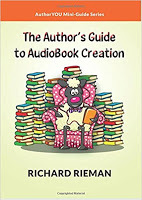
3. Get active creating audiobooks. If you have no idea where to begin, I encourage you to pick up a copy of Richard Rieman's book, The Author's Guide to AudioBook Creation. This little book will help you learn more about the audio book industry and give you resources for launching your own audio products. If you live in the Denver area, I encourage you to come to the South Denver Chapter meeting of the Nonfiction Authors Association on Wednesday, June 21st. Richard is speaking about audio books. The first meeting is free and you can hear Richard and ask questions.
Are you using and creating audio books? Let me know in the comment section.
Tweetable:
Is your book available in audio? Read this article to take action. (ClickToTweet)
June 12, 2017
Daily Word Count: A Key to Consistent Writing

It’s not profound but true: writers
write. A common bit of writing advice is to write every day.
Some people fill this daily need with a journal
practice. They consistently write every day about their activities. I understand
such a practice but I’ve never created or written such a journal.
I’ve interviewed over 150 bestselling authors about
how they practice their craft of writing. It is rare but I found one writer who
used a timer in his writing process. He set a timer and sat at his computer
until the timer sounded. To me, this process did not make sense. Anyone can
spend time staring a screen but that does not mean you are creating words or
telling stories during that time. You could be simply staring off into
space.
A much more productive and common practice among
writers is to have a daily word count. The amount of this word count will be
different for each writer. Some writers are on deadline and to meet their
deadline, they have to produce a certain amount of words each day. Other writers
have created a personal goal and the word count keeps them on track. If the
writing comes quickly, then they achieve the goal in short amount of time. If
the words do not come, then they spent much more time and energy at their
keyboard or computer.
Like prolific
novelist Bodie Thoene told me, “No little elves come out of my closet to
write 650 pages. Some mornings I don't feel like writing but I do it out
of obedience to God.” Severely dyslexic, Bodie could not read her own name in
the Third Grade yet she writes riveting 500 page historical novels. Her talent
and importantly her discipline as a writer are an example to each of
us.
A daily word count goal is a way for you as a
writer to move your project forward. For example, I have a book manuscript under
contract that I need to finalize and get off to my editor (yes every writer has
an editor—even one as experienced as I am). Currently this manuscript has not
been happening but I’m committed to working on it little by little and moving it
forward. Without consistent effort, it will not happen.
You have to do the same sort of effort for your own
writing. I have busy authors who struggle to complete their manuscripts. I
encourage them to set even small daily word count goals and keep moving forward.
Even if they commit to writing 500 words or two double-spaced pages, with
consistent effort, a month will yield pages of results. Notice the word
consistent and regular. That constant effort is what helps you complete the
work. Thinking about it without action doesn’t do it.
Where are you stalled in your writing? Would
a daily word count writing goal help you move forward? Let me know in the
comment section.
Tweetable:
Writing Consistently? A daily word count can help. Learn details here: (ClickToTweet)
June 5, 2017
5 Ways Writers Profit from a Conference

I know it is June. I took this photo on May 19, 2017 in Estes Park, Colorado at a conference.
For many years I’ve been attending conferences. My time at the recent
Colorado Christian Writers Conference
was unusual because in mid-May, we had over three feet of snow. It snowed for
almost two solid days after we arrived at the event. Some faculty members who
arrived late were stuck at the Denver airport. The snow made for an unusual and
memorable event.
Some people wonder how I’ve published such a range
of magazine articles and books. I’m not the best writer in the room but I am one
of the most consistent. If I pitch an idea and an editor says, sounds good, send
it to me. I make a little note, then go home, write the article or book and send
it. Yes you have to write what the editor wants but overall I’ve found such a
simple strategy works.
Just attending conferences is a financial
investment of money, time and energy. In this article, I want to highlight five
ways to profit from a conference.
First, listen for opportunities then
take action. For example, one editor I met told me about a forthcoming
series of Bible studies that his publisher will be doing. I’ve written Bible
studies in the past and enjoy this type of writing. I noticed the opportunity so
I made a point to email this editor and affirm in writing my interest in the
project. The editor was grateful for my interest and said at the right time he
would be in touch. This type of follow-up work leads to additional writing
opportunities. You have to be listening for them.
Another editor at the conference has worked on a
publication that I’ve never written for. It has a large circulation and I wanted
to write for this publication for the exposure as much as a new writing credit.
I’ve emailed the editor and we are corresponding about some ideas which I
believe will lead to an assignment and eventually publication. You have to
listen for the opportunities, then take action.
Advanced preparation before the event
is a second way to profit from the conference. Study the faculty and
see what they publish and then write pitches and book proposals. Most
publications have writer’s guidelines and other information easily available
online. Several writers at the recent conference brought flash drives with the
electronic copy of their material. I appreciated the effort of these writers and
it moved their submission to the top of my stack. I put their material into our
internal system and moved it forward through the consideration process. In one
case I’ve already turned in a writer’s project to my publication board and I’m
hoping to get a contract for this author in a few weeks. The germ of this
activity was her arrival at the conference prepared for her meetings. You can
learn and mirror such actions when you attend an event.
Most conferences have a freebie table with
magazines and writers guidelines. These publications are looking for freelance
writers. You have to pick up the publications, read the guidelines then
make your pitch or query or follow-through. This consistent
action of follow-up is the third way to profit from a conference. When
someone mentions an interest in your material, make sure you exchange business
cards with them. Then when you get home, send them an email and
follow-up.
At the conference, I met many people and came
home with a large stack of business cards. I’ve been following up with writers
and encouraging them to send me their proposal and/or manuscript. Yet few
of them have reached out to me—and this type of situation is typical from my
experience. If you reach out to the editor and take action, your actions
will receive positive attention and you will get publishing opportunities. This
is the fourth way to profit from a conference.
One of the reasons to attend a conference is
to learn a new skill or a new area of the writing world. The fifth
method to profit from a conference is to take action on these new
skills. Are you learning how to write fiction or a magazine article or tap a new social
network? A variety of skills are taught at conferences.
It’s easy to put away the notes and never look at
them again. The writers who get published take a different course of action.
They review the notes and apply it to their writing life. At the Colorado event, I taught an early bird
workshop about Jumpstart Your Publishing Dreams (my
book). I worked hard on my handout which had many additional resources and links
for those who used it. Here’s my handout for your reference: http://terrylinks.com/js I encourage
you to download the handout, print it and follow the extra material to profit
for your own writing life. I'll be at the Philadelphia Christian Writers Conference next month and other events this year. Check my speaking schedule link to connect and
I hope our paths cross later this year and I can help you one on
one.
As writers we are continually learning and growing
in our craft. A conference can be a huge growth area if you take action and
follow-up.
Have I given you some ideas? If so, let me know in
the comments below.
Tweetable:
Here’s Five Ways to Profit from a Writers' Conference. (Click to Tweet)
May 29, 2017
Why Trade Shows Are Important

This week the largest book trade show in the United
States will take place in New York City called Book Expo America.
I'm looking forward to attending this event. While I've been going to trade
shows for many years, I know many writers have never been to one nor understand
why they are important. In this article I'm going to cover some of these
basics.
Almost every field has trade shows which are closed
to the public but draw thousands of participants. Librarians, booksellers,
retailers, publishers and many others attend these closed events. The first step
is to make sure you can get into the event. By closed, I mean it is not open to
the public.
Last week one of my Morgan James authors
from California, planned to meet at Book Expo, had
booked his plane ticket and hotel, then emailed me that he wasn't sure how to
get into the event. We worked out the details to get him into the event but you
should take care of first things, first. Can you get into the event? Publishers,
exhibitors, vendors and media are all ways you can get into the closed event.
Often in years past, I've registered as a journalist, writing for a particular
publication.
When I arrive at the event, I find the media or
press room to get my credentials to get into the show. When I say the event is closed, there is someone standing at every
entrance checking badges and credentials. If you don't have the credential, then
you can't enter the event. The registration place is different for different
categories of participants.
Ok, so you know it is difficult to get into this
event but why do you want to get inside this closed trade show?
Book publishers and others related to the
publishing industry exhibit their latest products at Book Expo America. There
are miles (no exaggeration) of exhibits. The publishers are giving out books
which will not release to the public until the fall. Most of these books are
marked as “advanced reading copies” and not for sale. It is a way for you to
read books before their actual entrance or launch into the marketplace.
Publishers give away bags so you can carry these giveaways.
Over the years, I've learned the hard way to
execute some common sense with these giveaways. Why? The exhibit hall is a long
way from your hotel room. You have to figure out what to do with these bags of
free books and whether you want to lug them all over the event with you.
Literary agents and editors are attending Book Expo. I've
reached out to a number of people and scheduled meetings during the event. Also
from my planning, I have learned about agents who are not attending and I will
have to meet with them in another way (phone, email, etc). These face to face
meetings can be a productive aspect of attending the trade show.
During the event, I will bring lots of business
cards and exchange them freely to form new relationships. Also I've learned to
keep my eyes open because you never know who you will see at such an event. I've
seen editors and publishers who I've known many years. I've seen celebrities and
well-known authors at this event.
Your activities after attending a trade show are
also important. I'm talking about the follow-up on ideas and connections and new
projects. I've formed many important relationships at trade shows and understand
the importance of them for my writing life. There are several keys:
1. Work it out so you can attend — i.e. get
inside.
2. Form new relationships and
connections
3. Follow-up on the opportunities.
One of the reasons I enjoy Book Expo is the
entire trade show is focused on books. For many years I attended the Christian
Booksellers Trade Show which was renamed the International Christian
Retail Show (ICRS). With the name change, ICRS grew their gift (non-book)
aspects until it is almost 50% of the exhibit floor space. ICRS has grown
smaller each year and for the last two years been held in Cincinnati, Ohio or a
venue which it could not have done years ago. I haven't been to the ICRS event
for at least seven years.
Trade shows can be valuable to writers but it takes
careful planning and follow-up. Let me know in the comments if you have been to
a trade show and what you have gained from it.
Tweetable:
Why should writers go to trade shows? Get the details here. (ClickToTweet)
May 22, 2017
Insights about Getting Book Reviews

Often I see books launch into the market with zero reviews or only a few reviews. With over 4500 new books entering the marketplace every day, it is a challenge for any author to find readers—and to find readers who will write a few sentences of honest review and post it on Amazon and Goodreads and other sites.
In this article, I want to encourage authors to take an active role at getting book reviews and give you some resources and insights.
First, take your own responsibility for getting book reviews. Whether your book is brand new or has been out for a while, continually work at getting reviews. When you get a review—especially a positive one—promote or tout that review on your social media connections (Facebook, Twitter, LinkedIn, etc). Go to this article from Tim Grahl about Amazon reviews, scroll down to the bottom and get his free download because of the tools you will get to help you gather reviews.
Second, study this article from Jim Cox, editor-in-chief at Midwest Book Review. Notice the article is 16 pages of information and I encourage you to print it and study it. I am on Jim's email list and found this interview with Shelby Londyn-Heath was filled with insights. Jim has been in his position for 40 years and provides an amazing free service to help people discover books. I want to make several points from this article:
* They receive an average of 2,000 titles a month to review and select 600 to 700 a month to actually review.
* Books are rejected for possible review for several reasons including not following their submission guidelines, poor covers and serious production problems.
*Midwest Book Review emphasizes self-published books and books from small presses. Cox explains his reasons in this article. He also encourages authors to produce excellent books—edited and designed well. These foundational elements are missing in many books and some of the reasons for books not to be reviewed (rejected in this process).
Third, learn about how to get book reviews. I interviewed Dana Lynn Smith on this topic and have a free teleseminar teaching authors about how to get book reviews.
With the sheer volume of books entering the marketplace every day, it is a challenge for authors to get book reviews. Write a great book. Produce a great book (design and production is important) then finally take action to get your book reviewed. I've seen a number of books that have well-done production, great endorsements and zero or few reviews. The details are important and I encourage you to take an active role on this process of getting book reviews.
Tweetable:
How do you get reviews for your book? Get these insights. (ClickToTweet)
May 15, 2017
The Value of Consistent Book Marketing

From my years in publishing, I find many writers expect to have instant success. While they may not say it verbally, they show this expectation in other ways. It makes sense since we live in a fast-moving, instant message world. One of the ways I see this expectation is in contract negotiations with new authors. In the details of the contract sometimes writers try and narrow the length of the contract to two or three years. I understand their desire but I often end up explaining that books sometimes take several years to take off and reach the public. At Morgan James Publishing, we've had a number of books with modest sales in the beginning, but the author consistently works at marketing and spreading the word about their book. These authors try multiple approaches to reach their audience. Then almost without explanation, their book begins to consistently sell in large numbers—month after month.
It is one of the truths in publishing that consistent regular action is the path to success. Whether it is trying to write a 100,000 word novel or a 60,000 word nonfiction book or a book proposal or sell a magazine article. The process of taking consistent action will eventually pay off. You will complete the novel. You will finish writing the nonfiction book or book proposal. You will find an editor who wants to publish your magazine article.
Marketing a book is not a sprint but more of a marathon where slow and steady rules the day. Penny Sansevieri is a marketing expert who runs a book marketing company. 5-MINUTE BOOK MARKETING FOR AUTHORS is filled with practical, easy to apply information. Sansevieri gives the straight scoop in the opening page, “With more than 4500 books published every day, unless you’re a big name, you can’t afford to set it and forget it. It’s true that the success of a book doesn’t happen overnight; the biggest constant in the publishing industry is that consistent, regular exposure of your books is the best way to reach your book marketing goals.”
Each chapter of this book is designed to encourage authors to take action. As Sansevieri writes, “You only fail if you fail to try! So dig in with me, and learn some great marketing efforts that you can begin in around five minutes!” (Page 11). There is a wide range of action in this book from Goodreads to Amazon to ebook pricing to website to newsletters to social media (Facebook, twitter and Pinterest). Whether you are a brand new author or an experienced author, you can gain valuable insights from 5-MINUTE BOOK MARKETING FOR AUTHORS.
Author insights are embedded into each chapter. For example, the chapter on how to get the best Amazon reviews begins, “Reviews can really help to drive the sale of a book. In fact, several marketing survey companies have cited that 61% of online purchases were made after reading a review.” (Page 45)
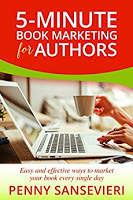
Sansevieri is an author but also works with authors all the time. She designed this book with short chapters and each one concludes with a “5-Minute Marketing Action Item” For example, “Join a Giveaway Group (on Goodreads). Groups are quick and easy to join. You can see what members are excited about and get them excited about your title. The more you engage with potential fans, especially in your genre, the better!” (page 21)
Why are a variety of actions and strategies included? Sansevieri explains, “It’s important for you to remember that there’s no one marketing strategy that will help attract and retain fans. Instead, marketing is a series of actions and consistent engagement over time that will help you to grow your following and keep them engaged.” (Page 88).
As a long-time member of the publishing community as an author and editor, I learned a great deal from reading 5-MINUTE BOOK MARKETING FOR AUTHORS. I highly recommend every author get this book then start applying it to their own book marketing.
I want to return to where I started this article: consistent, steady action will pay off. Remember the parable of the race between the tortoise and the hare. It was the slow and steady tortoise that beat the hare. From my experience, it is the same in publishing. Too many writers quit too soon and never get their work published or achieve the book sales that they dream about. It is critical to keep going and not give up.
Have you had this experience ? If so, tell me in the comment section.
Tweetable:
Do you need a quick book marketing idea? Check out this resource. (ClickToTweet)
May 8, 2017
In Praise of the Educated Writer

While I've been in the publishing community many
years, I continue to learn new information all the time. I'm committed to a
life-time learning process. I've watched several of my writing friends who stop
learning and figure they have reached their level in the market.
From my experience, this attitude of arrival is self-fulfilling for them as I also watch the stall of
their careers. Authors with this attitude only get to workshops when they are
teaching and don't read how-to magazines or books. I encourage you not to fall
into this attitude trap—no matter where you are on the spectrum of published
authors.
There are many ways for writers to get educated and
here's a few of them:
--conferences
--online groups
--writer's
groups
--critique
groups
--books
--magazines
--one on one mentoring or coaching
--blogs and other online articles
--online courses like my Write A Book Proposal
course
From my experience, I know a great deal of
publishing is about being in the right place, at the right time, with the right
material—timing is crucial. As someone who has reviewed thousands of manuscripts
and book proposals, I can read a few paragraphs and know whether the writer is
educated about the market and publishing.
The opposite is also true. I can tell whether the
writer has sprayed their proposal far and wide without any thought about what
our publishing house is producing. Recently an author mailed a self-published
book to the Morgan
James office in New York City. A little online research would tell you
quickly that I work remote and live in Colorado. Our office forwarded the book
to me and I opened it. First, I was amazed at the size (over 700 pages) then I
looked at the title and the contents (targeted to the New Age market). While
Morgan James publishes some Christian books (about 30 each year), they are not a
“Christian” publisher yet this view is across the board in the published books
(i.e. our fiction has no sex or curse words and the publisher would not publish
a New Age book). While I admire the enthusiasm of this writer, he had not taken
the few minutes to get educated and targeted with his submission. I read numerous books outside of what I do at Morgan James
and often write book reviews. Yet this book would not be one that I would
even read a few pages.
What steps are you taking to get educated as a
writer?
Literary agents
and publishers receive thousands of submissions. The standout ones that get
published come from thoughtful, educated writers.
Tweetable:
Are your submissions targeted? How do you locate your right audience? Ideas are here. (ClickToTweet)


