
W. Terry Whalin's Blog, page 44
September 11, 2017
Celebrate the Writing Journey

I often meet writers with big dreams: writing and selling a bestseller for example. They want to win contests or writing awards or speak at large events. I applaud these dreams and encourage them yet today I want to celebrate and write about a different aspect of the writing life—the journey.
The writing journey is filled with many different twists and turns in the road. The process of getting the ideas and stories in your head down on paper takes hours of work and creativity. It's not easy but involves sweat and hard work. Beth Vogt recently included this quotation from Colin Powell: “ A dream doesn't become reality through magic, it takes sweat, determination and hard work.”
I encourage you to understand the process and enjoy the journey.
Did you check your book on Amazon and find a new review? Celebrate.
Did you get an email from someone telling you about how your book helped them? Did you ask them to write a review on Amazon and send them a little link to that page? Celebrate.
Did you meet a new editor who can publish your material in their magazine? Celebrate.
Did you complete a magazine query letter that you sent out to a number of publications at the same time? Celebrate.
Did you have a literary agent interested in your work? Celebrate.
Did you read a new book which gave you insight into your own writing? Celebrate.
Did you write a review of a book you read on Amazon and Goodreads? Celebrate.
Did you meet your word count goal for writing your current work in progress? Celebrate.
Did you get out of your chair and walk around the block or exercise to help your health and physical health? Celebrate.
Did you reach out to an old friend when you read their article (or newsletter) and it touched your life? Celebrate.

I was listening to Darren Hardy in one of his Darren Daily recordings discuss the successful people that he's interviewed. His fascination (and learning) is not their particular achievement or way they were made famous. His keen interest is in the lessons and process they went through to achieve that success. His focus is what I'm driving at in this particular article: the writing journey.
The road is not easy. At times you fail (get rejected). Other times you publish a beautiful book that you promote and market—yet few people buy it. Yes these situations happen. When it happens to you, what do you do? Keep moving forward or quit. I hope you keep moving forward because from my experience the people who succeed in publishing understand that rejection and failure is part of the journey.
The publishing journey is full of twists and turns. Not everything goes smoothly. Almost daily I face some technical glitch. Do I let that glitch completely throw my day or do I press on to something else that I can accomplish, then work on that later? The longer I'm in this business, I try and take the second action. It's a process to learn to do what you can do and be grateful for those action—and to let the rest go.
Is celebration a part of your writing journey? I hope so. Tell me in the comments below.
Tweetable:
Are you including celebration in your writing journey? Get ideas here. (ClickToTweet)




September 4, 2017
Why I Give Away Books -- And You Should Too

If you have a published book, you have a powerful tool in your arsenal. I hate to admit it but when I entered publishing years ago, I was tight (cheap) with my books. Each time I gave away a book, I was thinking about what that book cost for me to purchase it. As the years have passed, I've become less cautious about the actual cost and more aware of the way books can help others. In this article, I want to give you some reasons to give away your books.
At a recent Morgan James author event in Nashville, I asked one of the authors for her business card. She didn't have one. Immediately she said, “Why don't I give you a book and I will write my website into my book?” Your book can be the perfect business card in that situation. This author has been around publishing many years. I'm certain she had no idea that I've written over 800 Amazon reviews. I gratefully received her book and carried the book home. A week or so later, I read the book cover to cover. It was excellent and I wrote a short book review on Amazon and Goodreads. While this author had recently launched her book, she only had eight book reviews. My short review helped her add to this number and I told others about my review through a short tweet with the book on twitter.
To be realistic, I understand that my response to the gift of a book is not your normal response—but you can suggest readers post a review on Amazon and Goodreads as you hand them your book. Simply from the power of your suggestion, some people will do it.
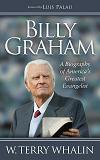
At the same event, another Morgan James author asked for a copy of my Billy Graham book. I pulled it out, autographed it and handed it to her. She promised to read it and write a review. Each time I discover a new review, gives me an opportunity to tell others about this review on social media (Twitter, Facebook, LinkedIn, etc.). Marketing people understand a reader has to hear about your book seven or eight times (at least) before they decide to purchase your book. With each new review, you should seize the opportunity on social media to tell others. That exposure is building and adding to the time when that reader will purchase your book.
Here's several reasons to give away your books:
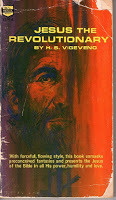
1. Books change lives of readers. I know books change lives because years ago, I read a book called Jesus the Revolutionary and it changed my life. You can watch me tell my story about the book in this short video. Or you can read my story in this magazine article called Two Words That Changed My Life.
2. Books in the right hands can help you promote your book. Be watching for other readers and others who write reviews of books and give them a book. Also be generous with people who are in the media to give them copies of your book.
Be prepared to give away your books. Carry the books in your car or briefcase and use them as you have the opportunity.
Finally, follow up with the individuals after you have given away your book. In your follow-up note, tell them what you would like them to do and make it easy for them to do it. If you aren't telling them (asking), they may not think of the idea on their own. Your follow-up note can be simple saying something like:
“I’d appreciate it if you could leave your honest review of my Billy Graham book in three places:
Amazon: http://amzn.to/1gYtzbx
Barnes & Noble.com: http://bit.ly/1zLviz6
Goodreads: http://bit.ly/1rTDzYB Your review will be a huge help.”
Notice several details about my follow-up note. It was short, specific and I gave them the actual links to go to the right location online to leave their review. You can use my follow-up note as a template for your own actions with others.
If you are generous with your books (give them away) and tell people what you need from them, many of them will be glad to help you. Are you continually giving away your books and then following up with these people? Let me know what you are doing in the comments below.
Tweetable:
Find out why this author regularly gives away books—and you should too. (ClickToTweet)
August 28, 2017
Have You Written a Perennial Seller?

In the last ten years, the publishing world has changed. In the past, self-publishing was the poor step-sister to traditional publishing. These self-made titles often looked poor and were not accepted in libraries or bookstores. As book production has improved, this attitude is shifting. There are still poorly made self-published books and the average self-published title sells less than 200 copies during the lifetime of the book.
My bent in this area is for you to get the largest distribution and produce the best book you can produce. It's why I continue to encourage authors to create a book proposal and work with traditional publishers as well as explore other models like Morgan James Publishing (where I've worked for over five years).
While there are many ways and companies to help you create your book, at the end of the day, the key question relates to sales of that book. Is it selling? Are people buying it on a consistent basis? Are you as the author promoting your book consistently? After all, as the author, you have the greatest passion for your book—whether you went with one of the big five publishing houses or a small publisher or self-published.
One of the best ways to learn about publishing is to consistently read how-to books about writing or marketing. As you read these books and take action from the information, you will grow as a writer. I've got stacks of these types of books that I read.
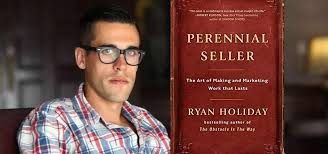
Recently I learned about a new book from Ryan Holiday called Perennial Seller, The Art of Making and Marketing Work that Lasts . Books that last and continue to sell in the market are rare. Traditional publishers are known to be fickle in this area. I have seen it when I've worked inside publishing houses (not Morgan James). You work hard to get a book published and into the market, then for whatever reason it does not sell, then a publishing executive writes a letter to the author or literary agent and takes the book out of print.
Every day thousands of new books enter the market. Which books become continual sellers? Bestselling author Ryan Holiday has studied these details with his own books and with other books. Perennial Seller is loaded with the details for every author or would-be author to read. Ryan has a keen sense of what it takes to create an excellent book and each of his sections includes gems of information for the writer.
While many writers believe their key failure is in the marketing areas, Ryan writes in the opening pages, “Promotion is not how things are made great—only how they are heard about. Which is why this book will not start with marketing, but with the mindset and effort that must go into the creative process—the most important part of creating a perennial seller.” (Page 19)
Also for those writers who believe they can quickly crank out such a book, Ryan cautions, “Creating something that lives—that can change the world and continue doing so for decades—requires not just a reverence for the craft and a respect for the medium, but real patience for the process itself. (Page 29-30)
No matter who you are working with to get the book out there, Ryan is realistic in Perennial Seller encouraging the writer to take their own responsibility rather than feel like they can delegate it to someone else. In the section on positioning, he writes a section called “You’re the CEO” saying, “If the first step in the process is coming to terms with the fact that no one is coming to save you—there’s no one to take this thing off your hands and champion it the rest of the way home—then the second is realizing that the person who is going to need to step up is you.” (Page 67)
Wherever you are in the publishing process, you will gain insights reading Perennial Seller . I found the book engaging and valuable—in fact, maybe a book that I will read multiple times (unusual for me). I highly recommend this title.
Whether you read Perennial Seller or not, I recommend you get the free gift from the back of this book. You subscribe and confirm to be on Holiday's email list, then you get a series of case studies which were not included in the book—yet from experienced publishing people.
Are you writing or dreaming of writing a perennial seller? What steps are you taking as a writer to make that happen? Let me know in the comments below.
Tweetable:
Get this Resource to Make Your Book a Perennial Seller. (ClickToTweet)
August 21, 2017
A New Way to Locate Book Reviewers

With thousands of new books launching every day, it is a challenge for any author to get book reviews.If you read my blog, you know that I'm an advocate for writing book reviews--like these recent posts: http://bit.ly/2rIE2of or http://bit.ly/2mXsM86
Because I've written over 800 customer reviews on Amazon, I've been regularly getting emails from authors saying something like, “You reviewed ___ book and I hope you will be interested in reviewing my book, ____.”

Until the last few weeks, I had no idea how these emails were being generated--but I do now. I learned about a company called Book Razor. As an experiment, I tried their $30 package. As a part of the process, you give them links to books similar to your book which have lots of reviews (over 4,000 total is their request)--and part of the key process where you control the results picking these similar titles. They have some program that collects email addresses of these reviewers and they send you a spreadsheet of this information (in a day or two after the submission). They give you a little email template then you write each of these people offering them the ebook version of your book and seeing if they are interested in reviewing your book.
Because these people are active reviewers, you will get a response from some of them. Now to be honest, it is a lot of work to enter their emails into your address book and write each of them. I did this experiment with my Billy Graham biography which has been out over two years and has pretty much been stuck at 48 reviews with no new reviews for at least six or eight months.
From my reading, fifty reviews is some sort of benchmark for Amazon--i.e. they do more behind the scenes if you reach this level. I'm trying Book Razor to push and get beyond 50 reviews. I've had several people ask for the ebook version. Also in my email, I offered the print version--and several people took me up on this offer so I mailed them a print version of the book.
So far, I've added eleven so I'm up to 59 Amazon reviews and I expect to see several more added soon. With each review, I tout it on social media and it gives me something else to use and promote my book. I did not get a response from many of the people that I emailed and Book Razor suggests you wait a week or so then write them again. Email is not always reliable and not everyone answers their email.
Have any of you tried Book Razor? Tell us about your experience in the comments below.
Tweetable:
Need more book reviews? Here's another resource to use. (ClickToTweet)
t
August 17, 2017
Serve Libraries With Your Books - Time Sensitive

If you follow the publishing news, you are aware the physical bookstores are shrinking. This year over 240 Family Christian bookstores closed their doors. One of the wide open areas for authors is the public library.
Libraries have:
• People who love authors and books
• Budgets to buy books
• Hold events for authors to sell books
• And much more
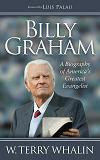
Yet how to you sell your book to these librarians who are buying books? In the last week, I have purchased the Real Fast Library Marketing program and I’ve been working through the various lessons. I’m about to begin actively selling my Billy Graham book to libraries using this system. I marked this post as Time Sensitive because the two-hour webinar and discounted program will only be available for a limited time (as shown through the countdown timer on the site). Use this link to watch the webinar.
Whether your book is brand new or has been out a couple of years (like my biography, Billy Graham ) you can actively use this library program. It is not a quick fix and will take work. Every author can use this system and the training for their book. I encourage you to check it out.
Also, I have one more request. Two years ago I wrote a biography of Billy Graham. The book has been well-received and has over 50 reviews on Amazon and Goodreads. You can learn more about the book at: http://BillyGrahamBio.com Also I’m working on the audiobook which will soon be released.
Using the Real Fast Library Marketing program, I’ve learned how to create this single page about my Billy Graham book: http://terrylinks.com/BGLibrary
Can you please:
1. Look at the document and print it. http://terrylinks.com/BGLibrary
2. Take it to your local librarian and ask them to consider buying the book.
The Bible says in James 4:2, “You have not because you ask not.” I’m asking for you to touch your library and ask them to order my book. Thank you in advance for your help.
Whether you have published traditionally or self-published your book, you have the greatest passion for your book. This two–hour webinar about marketing to libraries is only available for a few more days. Also use the link and scroll down to the middle of the page. You will find a 24-page FREE PDF about libraries to learn about this market. As you can see, I’m learning a lot from the course and recommend it.
Throughout this program on a repeated basis, one of the keys to successful selling into libraries is the attitude of the author. Authors need to serve the librarians and prepare materials to show they are actively marketing their books and encouraging people to go to libraries. It is the attitude of service to libraries which will catch the attention of librarians.
What are you doing to get your books into libraries? Let me know in the comments below.
Note: Normally I only post once a week but this week I'm making an exception because of the time sensitive webinar.
Tweetable:
Learn to Serve Libraries with Your Books. Details are here. (ClickToTweet)
August 14, 2017
What's Your Nonfiction Hook?

Every writer (book author or not; fiction or nonfiction author) needs a nonfiction hook--the enticement you use for media and readers. You need to carefully consider your hook because it is what you will use to build your platform, gather your tribe, get interest and interviews from the media and much more.
I have seen many fiction novelists struggling with this area and it's partially why I'm writing this article. These writers have crafted a great page-turning novel and gotten a publisher. Each of these steps are terrific and to be applauded. Yet when you get your book published, you are only part of the way in the publishing journey. The next step is to attract readers and media and sell your book (marketing). It's where many fiction authors struggle. No journalist in the media cares that you've written a brand new novel. You have to take the nonfiction hook in your novel and use that expertise to attract readers and media and generate excitement for your book.
To catch a fish, every fisherman uses some type of bait on their hook. It's the same process with writers. You need to think about your bait that you use with your hook to catch the attention of readers and media. As a novelist, in the process of writing your book, you have focused on a particular nonfiction topic or subject. What is that topic? Write it down because this topic is your nonfiction hook to interest readers and media. Because you have completed a novel, you have become an expert in this area. Now use this expertise to build your platform, attract readers and media. Each novelist will have a different and unique area of expertise.

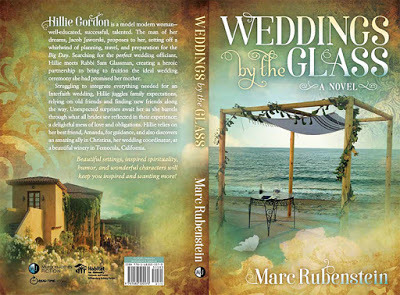
For example, Rabbi Marc Rubenstein has completed a new novel from Morgan James Publishing called Weddings By The Glass . The novel releases in February 2018 but follow this link and you can order an advanced copy from Rabbi Rubenstein. I love the beautiful cover on this book. Rabbi Marc has conducted over 3,000 Jewish weddings and is an expert in this area. Also he lives in wine country of Temecula, California and has trademarked the term “kosher wine.” Each of these areas of expertise are hooks for readers and the media. His novel is excellent (and yes I was the acquisitions editor for this novel so I'm a bit bias in my endorsement).
As a novelist, you have poured great creativity into writing your story through making unique characters and plot twists. Now that your book is completed and published, I encourage you to pour some of this creative energy toward determining then exploiting your nonfiction hook. It will help you build your audience and get attention from the media so you can tell others about your novel.

If you like this article and want to learn more, I encourage you to get my free Ebook, Platform-Building Ideas for Every Author . Just use this link and you will get immediate access.
In the comments, let me know if this article was helpful and what sort of action you are taking with your nonfiction hook.
Tweetable:
Every writer needs to know their nonfiction hook (fiction or nonfiction). Get the details here. (ClickToTweet)
t
August 7, 2017
Several Ideas to Face the Daily Challenge

I've been in a reflective mood and maybe it
comes from passing another birthday this coming week. As I grow older, I begin
to understand why the Bible calls that our days are fleeting. Each of us have
the same 24 hours in each day. The key detail is how we use this
time.
As I think about the challenges of each day, I
understand several facts:
1. Everyone has interruptions.
Yesterday I spent several hours at the Apple Store because my wife's iPhone 5C
was having screen problems. At the store, we upgraded her phone to an iPhone 7
Plus and it took several hours that I was not planning on spending. These types
of unexpected situations are part of our life. Yet do you wisely use the time
which you do have available to you?
2. Not everything gets done. Yes
on the surface I may look like I get a lot done. I do tweet almost 14 times a
day with great content. Also I have over 100 new followers a day on Twitter. Yet the bulk
of my day is spent as an acquisitions
editor at Morgan
James Publishing, talking with authors, emailing authors and others about
their books. Despite the things I accomplish in a day, I know and understand
that not every email is answered. Not every phone call gets made or returned.
As an editor, I work hard at customer service, answering key concerns and
returning calls—but there is still more to do.
I have magazine
articles to write and books to finish and websites to update. If I paused to
make a list, it would be endless and to be honest I'm assuming that you have a
lengthy list of things to do as well which and while you chip away at it,
everything does not get done.We have to live with this fact.
3. Use the right tools to have the best
results. Through trial and error, I've learned to use different tools
on my phone, different computer programs and other ways to cut down on time and
get things done. For example, when I travel, I continue to write on my AlphaSmart 3000 which I purchased years ago on
Ebay for about $30. The AlphaSmart is not connected to the Internet, runs on
batteries and holds large volumes of information with a full size keyboard. This
tool is not right for every writer but it is one that I've used repeatedly to
get my writing done.
Are you experimenting with different tools and
programs to see if they help you get more done in a shorter amount of
time?
4. Balance is important. Every one
of us need to have a certain level of balance in our daily lives. Have you
listed your key goals and priorities? Just the act of writing these goals can be
a great first step. Then have you broken those goals into small steps that you
can accomplish?
As I think about the big picture of my own life, I have a number
of things which are a key part of my day. I need Time for Faith
(reading the Bible and prayer each day). I need Time for Family
(the connection to my wife and children—even if they are grown children). I
need Time for Work. I also need Time for
Health ( and I build exercise into almost every day). I need
Time for Relaxation (yes some of you may find it hard to
believe but I go to movies, I read for fun and I watch television). Finally I
make Time for Friends. Admittedly some of my days are out of balance but it's part of the
way I'm wired and working to attempt to have some level of balance in my life
and work.
These are my ideas to help you face the daily
challenges of life. Are they helpful? I hope so. Do you have other ideas? Tell
me in the comments below.
Tweetable:
Get Some Ideas to Face the Daily Challenges called Life. (ClickToTweet)
July 31, 2017
Realistic Book Publishing Information

If I want to learn about publishing, I want to turn to an expert. Amy Collins has been in book marketing and distribution for over 20 years. She started her career as a book buyer in 1996. I found THE WRITE WAY to be loaded with insights. Read this book with your yellow highlighter and be prepared to use it often.

In the introduction, Collins writes, “As a writer on the verge of publishing, you are enthusiastic about your work and determined to see it through to book form. While these are certainly helpful qualities in battling the challenges ahead, there is one tool to help you overcome the obstacles and push forward during the final stretch: That one key tool is knowledge.” (Page 6) This title is packed with such knowledge.
Whether you want to produce an excellent book, sell it to bookstores or simply sell many copies (broad distribution), then you need this information.
As an example of the insider information, Collins writes, “Here are some sobering statistics from Nielsen Bookscan, a company that tracks the sales of more than 6 million books in the United States:
• Each year, only two to five books sell more than a million copies each.
• Less than 1 percent of the books published this year sold more than 500 copies. That’s it.
• This year, major TV stars went on daytime talk shows, hawked their wares, showed up on NPR and still sold less than a few thousand books. The vast majority of books published by major publishing houses lose money. Far more books published by small presses lose money. More than 80 percent of books published lose money. This isn’t meant to make you change your mind or discourage you in any way. I just want you to get a grasp on the book industry and realize how unpredictable it can be. Knowledge is power, remember? The more realistic your goals, the better able you will be to achieve those goals. Besides, once you have invested in this project, you are going to be looking for results. If your goals are in line with a realistic idea of success, then you are going to be much happier with yourself and your accomplishments.” (Page 50-51)
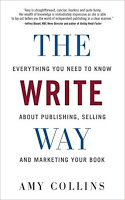
From reading stacks of books on publishing and writing, you never find this type of realistic information in a book. Never. Collins includes timetables about what authors need to do when to make an excellent book then push it into the market.There is specific contact information for authors (even if they self-publish, to explore distribution and marketing channels for their book.
Whether you are working on your first book or you have written many books, you will gain important information in THE WRITE WAY. I highly recommend this book.
Let me know if you've found realistic publishing information like this book in the comments below.
Tweetable:
The Write Way by Amy Collins provides realistic publishing information. Learn more here. (ClickToTweet)
July 24, 2017
Review Your Business Card for Key Basics

I've become an expert at skimming business cards on
the spot with writers. My actions spring from my own frustration with missing
information. Over the years, I've exchanged thousands of cards with people at
writer's conferences. When I did not glance at the card on the spot, I would
tuck it into my pocket, take it home, then discover missing information like a
phone number or email or mailing address. As an editor, it would force me to
email this person and gather the missing information (wasting time and energy).
The best time to gather this missing information is
when you are meeting face to face with this person. Recently I was in Nashville
for a Morgan James
Publishing author event. I met a number of authors at this event and
exchanged business cards. One of these authors, a medical
doctor-turned-writer-podcaster, lived nearby in Boulder, Colorado. When we
exchanged cards, I glanced at the information and it only contained his
website. There was no email address nor phone number. He said, “My email address
is on my website and I want people to go to my website.” It was good to know he
had a rationale for the missing information—but I still collected it on the spot
and wrote his email and phone on his business card. Others might not have his
information from his business card but I gathered this important data on the
spot.
When I attend events, my business card is one of
the key tools that I use. Some of my long-term friends are amused at the changes
in my business card over the years. I've added and improved my cards. Each time
I reprint, I evaluate the information to see if it contains what I need. Because
I work for a New York publisher, I have a business card which contains my photo,
direct dial phone number, work email, and other information. Here's my Morgan James business card:

Whalin Morgan James business card - Front
Whalin Morgan James business card - back
Yet I live in Colorado and I'm also an author with
my own blog, local mailing
address and books. In recent
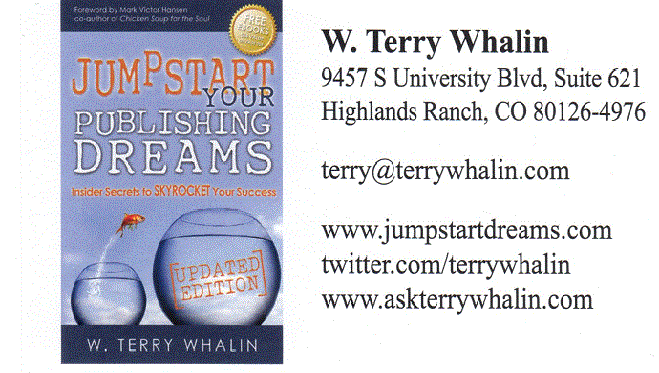
years, I've been carrying two business cards. The local card shows off this
information. Here's the front and back of my personal business card:
Whalin Personal Business Card - Front

Whalin Personal Business Card - Back
Since I've shown you what I'm using for my business
card. Now take a minute to review your card and make sure it includes the
basics:
*a current photo
*your phone and email address
*your physical address (or at least your city to
give the receiver your time zone)
*twitter name
*blog website
*giveaway to build your email list (one of the most important
author tools)
How did you do on the basics? Are you missing
something? The most difficult element to proofread is something that is missing.
That's why we need a checklist to make sure you cover everything. If you are
missing some element maybe it's time to reprint your business cards.
Let me know your experience with business cards in
the comments below.
Tweetable:
Is Your Business Card Missing An Important Element? Review the basics here. (ClickToTweet)
Blog Milestone:
With this article, I've gone over 1400 entries
in the Writing Life. I've
been writing this blog since 2009 and posting only one article a week, takes time to
reach such a mark. There is a massive amount of information in these entries. If
you have never used it, I have a search tool in the right hand column of the
blog (scroll down to locate it). You can use it to find information on different topics—and I often use this tool to find past entries.
July 17, 2017
Beyond the Radio Interview

Last week I was in Nashville with some of our Morgan James authors for another great event. It was similar to the event I detailed in March (follow the link if you didn’t read it). It was another distinct event to help and train our authors (a scarce activity across publishing from my experience).
I met a number of authors that I’ve brought to Morgan James for the first time which was fun after speaking with them on the phone and email for months.
One of these authors had done over 40 radio interviews—which is fantastic and to be commended. There are thousands of radio stations which are eager to interview authors and it is another terrific way to promote your book and give it exposure. If you don't know or use radio, follow the insights in this article about radio.
This author was saying the interviews barely made any impact with his book sales. I asked if he had saved the audio recording of his interview for on-going promotion. He looked at me with a blank stare and said no. It showed me that I’m taking an additional step with my radio interviews that some authors are missing. In this article, I want to show you how to preserve the interview for on-going promotion. You've invested your time and energy into the radio interview. How can you maximize and repurpose the interview for even more use than the single station?
The first step is to book an interview and give a solid interview. When you speak to the radio host, you need to pour a lot of effort into the interview. Stand up and walk around your office if this helps you have more energy. Answer every question with enthusiasm as though you are hearing it for the first time.
Radio hosts are busy and often work from a list of questions that the author or the publicist provide them. I’ve answered the same questions over and over yet each time I act as though it is the first time I’m hearing the question. It is a basic that you need to provide a great interview.
To move beyond the interview, ask for a recording of the interview. Sometimes the radio station will put it on their site after the interview. Other times if you ask, they will email the audio file to you. You have to ask for it or search for it and preserve this audio file.
With this audio file in your possession the next step is to listen to it. Is it a solid recording? Do you need to cut out local commercials or anything to make it universal and just your interview?
I use an audio program called SoundForge for this editing process. Just like Microsoft Word edits words, you can use SoundForge to edit audio files.
I create or check to make sure I have a solid recording of my interview. Next I upload the audio file to my own hosting site. If I just link to the interview from someone else's site, they are in control and I've had these links disappear. When I put it on my own site, I know the interview is always going to be available online and never disappear. You have to make sure you preserve the interview on a site that you control.
The final step is to incorporate this interview into your on-going social media efforts (Twitter, Facebook and LinkedIn). Here’s an example from one of my radio interviews about my Billy Graham book (click on the photo to see the real links in this tweet and try out the interview):
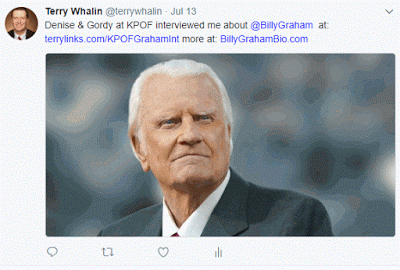
The interview was recorded months ago, yet because it was a morning radio show, it sounds like it happened yesterday. The listener doesn’t need to know the real date.
Because I reuse these interviews, people will regularly email me saying they heard my interview and compliment me. I respond with gratitude and never say when it actually happened (not relevant information for that listener). These recordings continue to promote and drive book sales and exposure for my book—long after the interview.
It does not happen without the author taking control and action. Are you preserving your radio interviews for on-going promotion?
Tell me about it in the comments section below.
Tweetable:
Doing Radio Interviews? How can you use them more than once? Get details here. (ClickToTweet)


