
W. Terry Whalin's Blog, page 48
December 14, 2016
Change is Hard. You Go First.

We are creatures of habit and like to keep doing the same things over and over. It's how I operate and assume you do as well. Yet the world around us continues to change and if we want to succeed as writers, we need to change with it. The weather changes all the time and is outside of our control yet we change what we wear and other details to keep up with these changes.
My iPhone will often have apps that need to be updated. Other times the entire operating system will be updated and many of the standard programs suddenly look different and have different features. Change is all around us and involves taking some calculated risks and experimentation and always learning new things. It's not easy for any of us but it's a part of our world and culture. As I've mentioned in these entries in the past, the definition of insanity is doing the same thing over and over expecting a different result. If you want a different result, you need to make some changes.
As writers and publishing professionals, we spend a lot of time sitting in front of our computer. Over the last few years, I had not been exercising and eating the wrong things. My weight ballooned and my waist size grew. About a year ago, I decided to change my eating habits—in particular carbs and sugar. Yes I was exercising several times a week but it was not the exercise which made a difference in my weight. It was my change in eating habits. I went from a size 46 waist to 38 and people could see a difference in my appearance. It was not easy to change my eating habits and is a constant struggle but the results have been amazing. This week I went to the doctor for a physical. I'm supposed to do this every year but had not done it for several years and hasn't even been to see my doctor since August 2014. They pulled my medical chart and noticed a substantial difference in my weight—in fact, I was down 38 pounds from my previous visit.
As we approach the end of 2016 and look toward 2017, it's a good time to take a few minutes and reflect on your publishing life. Are you selling enough books or magazine articles? Are you pitching the editors on a regular basis and looking for new opportunities? If you aren't satisfied with the current results, what changes can you make to have different results in the days ahead?
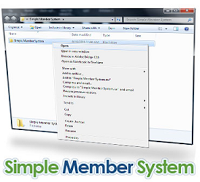
Is there a new training program that you need to go through like my Write A Book Proposal course or even creating your own course and selling it? I encourage you to get my Simple Membership System (which is a complete self-contained training package) and create your own training program. Or can you plan to attend a writer's conference in 2017 to meet some new editors and publishing professionals?
You do not have to remain in a rut or in the same place next year as you are today. You can change and move forward. As I said in the title of this piece, change is hard. You go first. If I can help you, reach out to me and ask. My work contact information including my phone number is on the bottom of the second page. In the comments below,let me know about the changes you are planning for the days ahead. We are surrounded with all types of opportunities. Which one will you seize and move ahead?
Tweetable:
For everyone, change is hard. You go first. Here's some fresh ideas. (ClickToTweet)




December 6, 2016
Twitter Tips: Who to Follow & Who to Block

I've been active on Twitter since
2008. When I meet people, they are often surprised at
my large twitter following (currently over 192,000 and growing at about 100 new
followers a day). If you want this type of audience, it does not happen organically (doing nothing).
I've been transparent about my
five every day actions that I take on Twitter. Years after creating it, I'm
still taking these actions every day and encourage you to do so as well.
Several of my authors from Morgan James are following these actions and growing their
followers on Twitter. It doesn't consume lots of of my time but it takes
consistent effort.
Years ago, I made a decision to follow everyone who
follow me—which is a basic of twitter. Some of my friends are amazed that I
follow thousands of people—and they can direct message me. Also I include my
personal email address in my twitter profile. It makes me easy to reach and I answer my
email. Why? I want to be accessible to people and I want to help as many people
as I can with the volumes of information that I have online.
I use the tool Refollow to follow other people's followers—yet I'm not just
following anyone. I'm following people who are in my target market (publishing,
writing, etc.). This tool only takes a few minutes to use. Yet sometimes I find
I'm following people who I don't want to be following. In this article, I'm
going to give the details of how I check my followers and then who I
block.
Usually about once a day, I click the “home” button
on my twitter page and scroll through my twitter feed. As I take a few seconds
to scroll through this feed (with hundreds of posts and images), I'm looking for
several things. First I'm looking for people who are not tweeting in English. If
they are using a different script or language, then I right click, open a new
tab for this person. Next I block this person from my twitter feed.
Also I'm looking for porn and foul language (either
in text or in images). When I find this type of material, again I right click
the name of the person that I'm following (even if it is something they have
retweeted), open a new tab for the person, then block them.
If you are not taking these actions, then you are
sending a subtle message to others (who you don't want as followers) that they
should follow you. I'm looking to continue to grow my followers but I want those
followers to be the right type.
My system for social media isn't perfect but I have
created a system or a regular pattern of behavior. I'm always open to learning
something different and making modifications. If you have some idea for me,
feel free to comment below or reach out to me and let me know. It is important
for everyone to develop your own system and process for handling these details
of social media.
I don't waste a lot of time on social media because
I don't have that time. The bulk of my day is being an acquisitions
editor at Morgan
James Publishing. Notice the link on Morgan James which takes you to a two-page
information brochure—and notice my work contact information including my
phone number is on the second page. Many authors are struggling to find
their way in the publishing world and if I can help you, don't hesitate to reach
out to me.
Tweetable:
For Twitter, how do you know who to follow and who to block? Insights here from @terrywhalin. (Click to Tweet)
November 29, 2016
Four Reasons Book Reviews Make A Difference

Last week I noticed a short video from one of my author friends. She was headed to a bookstore for an event and book signing. As I watched her video, it was news for me the author even had a book. I went over to Amazon, the largest online bookstore on the planet, and typed her name into the search tool. In an instant, I found several new books which had a release date of mid-September (or about two months ago).
Immediately I noticed the incomplete Amazon listing. The page had no book cover, no detailed information about the book and no book reviews. I hope this author had gathered a good crowd at her book signing (which can be lonely experiences). I'm still amazed at the lack of reviews because this person “should” have known the importance of book reviews on Amazon but had zero reviews. It sends out the wrong message when people view the book on Amazon. In this article, I'm going to highlight four reasons book reviews make a difference.
1. Show Others Are Reading Your Book. When I go to the book page on Amazon and it has no reviews (or only three or four), it makes me wonder if others are buying and reading the book.
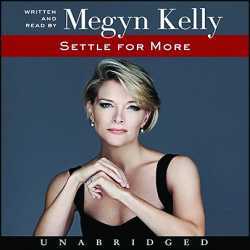
Sometimes there are many reviews on the Amazon page for another reason. For example, Fox News journalist Megyn Kelly recently released her book, Settle for More . I listened to the audio book. Two or three days after the book released, I went to the Amazon page, there were over 200 reviews. Many of the reviews were one or two stars and obviously from people who disliked Kelly and had not read or heard any of her book. Amazon has recently cracked down on these reviews. I reviewed the audio book and posted it on Amazon but my review was not “a verified purchase” since I didn't buy the book on Amazon. I looked for my Five Star review of Kelly's book and Amazon has removed it—the first time this has happened to me that I know about. With all of the controversy tied to this book, I can see how removing reviews which were not purchased directly on Amazon was a way to thin out the reviews. You can still see my review on Goodreads. I've written over 700 customer reviews on Amazon. In general, reviews on Amazon are proof that your book is being read and bought.
2. Prove You are Promoting Your Book. It's one step to publish your book (traditional or self-published). Every author needs to be promoting your book and if you have reviews (positive and negative but honest), it is proof of your marketing efforts.
3. Encourage Additional Book Sales. Millions of customers are buying books every day on Amazon, Barnes & Noble,Christian Book.com and other websites. Reviews help those customer's buying decisions.
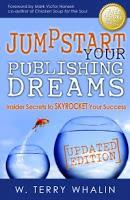
4. Show You Have On-going Readers. Maybe your book has been out for a while. Is it getting new book reviews? If so, these reviews are proof that people continue to gain value from your book. A few weeks ago,Brent Sampson reviewed my Jumpstart Your Publishing Dreams . While Jumpstart Your Publishing Dreams has been out for several years, a new review shows readers the book is continuing to help others.
Reviews make a huge difference and every author needs to be gathering these reviews. How do you get reviews? I have a free teleseminar about getting book reviews (follow the link). Here's some simple yet effective ideas for you:
1. Ask others to review your book. Tim Grahl has terrific insight on this issue in this article. Scroll down to the bottom of this article and you will find a free download. Yes you have to give your first name and email address but it is well-worth this effort. These tools will help you gather reviews for your book.
Whenever a reader emails you with praise for a book, respond to their email with appreciation—and simple request, “Will you cut and paste those words over on Amazon with a Five Star review?” Tell them what you need. Notice how I suggested the star rating—but also send them a short link to the actual page on Amazon. If you make it easy for them to do it, you will be surprised how often people will do it.
2. As you read or listen to books, write reviews on Amazon and Goodreads. It's a simple way you can support others through writing honest reviews.
Do you write book reviews and gather reviews for your books? Tell me about your experiences in the comment section.
Tweetable:
Discover Four Reasons Book Reviews Make a Difference. (ClickToTweet)
November 22, 2016
Five Ways to Increase Your Holiday Writing

Book publishing is more of a marathon than a sprint. The publishing world often moves slowly and deliberately to produce excellent product and launch them into the marketplace. This deliberate pace slows even more during November and December of each year.
As we go through the holiday season of Thanksgiving then Christmas and New Year's Day, the internal activities in a publishing business take a different focus. This shift means you hear even less from editors and literary agents. The holidays can be a time to turn away from your writing and be involved in other activities. In this article, I want to suggest five actions to increase your holiday writing.
1. Write personal experience stories. Everyone has “different” personal experiences during the holidays. I encourage you to be sensitive to the value of these stories. Decide to write them into your computer shortly after they occur. When you write include the sensory details like the objects, smells, taste and dialogue. Why? Almost every print magazine uses personal experience stories and plans pages for the holidays. Thanksgiving and the Christmas season give you opportunities that do not happen any other time of year. Writing this material near when it happens gives you the raw material to craft and submit stories which can be published. If you wait, the memories and details fade. Write these stories right away.
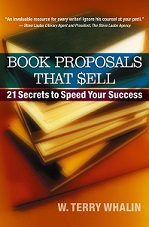
2. Create new proposals and query letters. It takes time to craft new pitches and proposals. Even if you are going to self-publish, you still need to create the business plan for your book or proposal. If you don't know how to write a query letter or proposal. Take this time to learn this valuable publishing skill. Get my Book Proposals That $ell and read it. Use this time wisely to grow your writing life.
3. Schedule time to write on a new project. Maybe you would like to write a new book or new ebook or create something to give to your email list. If you don't have an email list, now is a great time to learn to create one. Consider getting my List Building Tycoon ebook. When the publishing world slows down, it is a great time to move full-speed ahead on your creative time. Write the time into your calendar and keep those commitments to move forward on the new effort.
4. Read magazines and books. During the holidays is an ideal time to read trade magazines and learn more about how publishing works. Or read that novel you've been wanting to tackle. The reading process will fill up your creative well so you have the overflow to draw on for your writing.
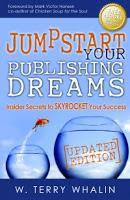
5. Tackle a new skill. Maybe you know you need to improve in copywriting or Internet marketing or figure out how to be better and consistent with your social media. While you can't expect to be skilled at every aspect of publishing, you can take small steps to improve your skills during the holidays. Get a new software program and learn how to use it. As I point out in the first chapter of Jumpstart Your Publishing Dreams , there are many different types of writing opportunties. Keep growing as a writer and use this time. Download the free sample of Jumpstart Your Publishing Dreams and study the possibilities.
If you take active steps with your writing, you will use the holidays as a boost to your writing life. As you write throughout the holiday season, you will be way ahead of those people who shift into a different gear and leave their writing out of their life. If you have other ideas, leave them in the comments below and if I can help you in that journey, reach out to me.
Tweetable:
Even during the holidays, Five Ideas To Propel Your Writing. (ClickToTweet)
November 16, 2016
How Authors Can Use the Power of Radio

Authors need to explore many different ways to tell people about their books. Well-known PR Expert Rick Frishman describes the promotion process as a stool with three legs. One leg is Internet promotion and another leg is print media and a final leg is radio. A stool doesn't stand upright without all three legs. Click this link to explore Rick's publicity teaching in a free teleseminar. Are you using radio to promote your book?
Some authors have self-published and they know about radio but believe that only authors who publish with well-known traditional houses are able to get on the radio. Other authors believe they have to hire a publicist or someone to book these interviews. Yes, publicists do an excellent job at booking radio interviews (more details will be below) but as an author, you can also learn to pitch yourself to producers and radio shows. The key is to learn the details and then be consistently using the powerful tool of radio. While you personally may not listen to much radio, millions of people drive to work every day and listen to these radio shows. Radio is a key way to get exposure for your book (so it can be discovered then purchased).

Alex Carroll exhibits the power of radio to sell books. He self-published his book on how to beat speeding tickets called Beat the Cops. Alex has sold 250,000 copies of Beat the Cops on the radio. Not only has Alex succeeded with his own book but he has developed a detailed training course called Radio Publicity. I encourage you to go to his website, watch the videos and learn about this important resource. He gives away from free tools to get you started learning about radio.
For many years, I've known Alex Carroll and numerous authors have profited from his teaching.

If your book is Christian, I encourage you to look into working with Don Otis at Veritas Communications. I've known Don for over 20 years and I've been working with Don on the promotion of my Billy Graham book. Because of his connections to radio, Don has booked me on a number of radio programs to talk about Billy Graham. If you follow this link, you can listen to several of my interviews. To learn more about radio, I encourage you to explore the various links on Don's website.

Recently Don has started a free email newsletter with great tips from his experience. Here is the first issue: Five Ways To Maximize Your Media Interviews. Follow this link to read Don's insights—but also subscribe to his email list and learn from his years in this business.
There is not one path to begin using radio in your work to tell people about your book. Whether you use a publicist or pitch on your own, it is important to do it consistently and regularly. Practice makes perfect.
Are you using radio in your work as an author? Let me know in the comments below.
Tweetable:
How Can Authors Harness the Power of Radio? Learn about these resources. (ClickToTweet)
November 10, 2016
Five Fascinating Insights About The Writing Life
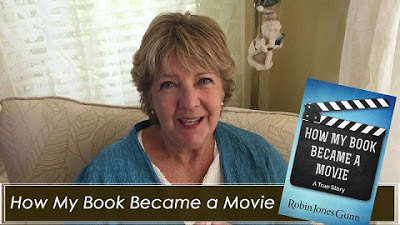
Recently I was thrilled to learn about How My Book Became A Movie from Robin Jones Gunn. While Robin has written over 90 novels, many authors dream of making their book into a movie. Do you realize what a long odds you have to overcome for such a possibility to happen?
Dr. Ted Baehr, the Founder and Publisher of Movieguide, wrote How to Succeed in Hollywood (Without Losing Your Soul) he said, “Remember that the average movie takes nine years from start to finish. The Passion of the Christ took ten years. Evita took twenty-three years. Batman took seventeen years. There are several reasons why it takes so long. First, there are 300,000 scripts submitted every year to the Writers guild of America and many more are written that are never submitted, aside from the flood of novels every year, but less than three hundred movies open in theaters every year. Thus, most scripts never make it into production.” (Page 150)

Now that you understand the huge obstacles to making a book into a movie, I want to tell you about why you need to read How My Book Became A Movie . Robin writes about her journey in a riveting, page-turning way that will keep your attention. You learn how a novella called Finding Father Christmas will be a Hallmark channel movie. In fact, the Hallmark Channel will air the movie Finding Father Christmas on Sunday, November 13th.

One of the novellas, Robin rewrote several times in the process of getting it accepted for print—an effort that would have made many writers with less courage and persistence give up. As she writes, “Have you noticed, fellow dreamers, that the way up is down? The higher the mountain before you, the longer and deeper and wider is the valley you must slog through in order to reach your desired haven.” (Page 34)

Valuable lessons and insights for every writer are scattered throughout this well-crafted nonfiction book. Some of those lessons are in chapter titles like: Ask for the Moon, Put Your Whole Heart into Your Work, Humble Yourself, Do the Hard Work and Show Up. I loved the encouragement and honesty in these pages. I highly recommend How My Book Became A Movie . Amazon is selling only the Kindle version of this terrific book. If you want a paperback, you can get the book directly from Robin Gunn (follow this link).
Also watch this short video from Robin (use this link if you can't see the video) about why she wrote this book:
This article on The Writing Life is more than a review of the book. I want to highlight several insights from this book for every writer:
1. Publishing is a long game. If you don't read Christian romance, you may have never heard of Robin Jones Gunn. I've known Robin for at least 20 years. She started her book publishing career with some nonfiction children's books yet now writes novels. Overnight success stories are rare and Robin has been faithfully writing for years. Book publishing is more of a marathon than a sprint.
2. Writers need to be consistent and faithful. If you read How My Book Became A Movie , you will see the consistent effort that Robin puts into her writing. Yes there are struggles (see my next point), yet in obedience and faithful action, she writes the stories and gets them out of her head onto paper.
3. Writers need to do what their editor's ask them to do. When an editor directs a writer, many writers resist. If I'm honest, I mutter a bit (to myself), then I do what the editor asked me to do. The editor understands the focus of their publishing efforts and their audience. It's true in books and in the magazine world as well. As I read How My Book Became A Movie , I learned Robin had to rewrite one of her novellas several times before the book was accepted and published. Some authors would have not done this hard work that Robin did with her editor. Her actions provide a shining example for each of us to do whatever is needed for the book to get written with excellence.
4. Persistence will pay off—but not instantly. For years, Robin had this dream of one of her stories becoming a movie. It took years of persistent and hard work but finally happened. All too often in our culture, we are looking for the instant success or the instant fix. Every writer who succeeds needs a healthy dose of persistence.
5. Writers need to have big dreams and goals. As you write and move toward accomplishing your dreams, I encourage you to have big dreams. As Robin Gunn writes toward the end of her book, “Ask for anything. Be Extravagant. Ask for the moon.” (page 99)
As you ask for the moon and work toward your dreams, you might just get it.
Tweetable:
@RobinGunn encourages authors with How My Book Became A Movie. Get insights here. (ClickToTweet)

Once again in November I made the list of the top 100 Marketers to Follow on Twitter. I'm #63 this month. Check it out at: http://bit.ly/2el7FJj
November 4, 2016
Make Monday November 7th Special
The airwaves are full of Election news pointing for
Tuesday, November 8th. You may be wondering what is special about the day before
the election—November 7th. Monday is special because it will mark the
98th birthday of one of the most admired men in America—Billy Graham.
Because Mr. Graham isn't in the public eye these
days I regularly find people who believe he has passed away—but he is alive.
Known to some as the spiritual adviser to every president of the United States
since Dwight D. Eisenhower, Billy Graham has been an influential person for the
political and spiritual life of our country. Ironically he was born the day
before the election of our next president.
In celebration of Mr. Graham's birthday, I have
been doing several radio interviews about Billy Graham. On Wednesday, I drove to
North Denver and was LIVE in the studios of KPOF for the breakfast table with
Denise and Gordy talking about Billy Graham for an hour. Our interview
was recorded and you can hear the entire interview (just follow this
link). I downloaded the interview and stored it on my own website to
preserve it.
How can you honor and celebrate Billy Graham's
birthday? I normally write these articles for Tuesday but it will be too late
for Mr. Graham's birthday. I want to give you several ideas of something
practical you can do for this celebration.
1. Retweet this article on your various social
media sites like Facebook, LinkedIn, Twitter, Tumbler, Instagram and others.
When you post, make sure you use the hashtag
#HappyBirthdayBillyGraham.
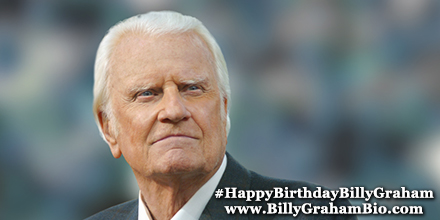
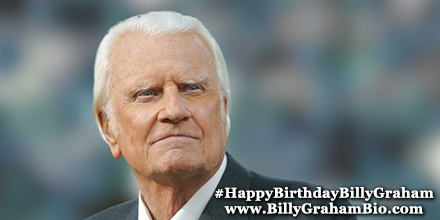
2. Use the images which I have prepared for you.
Studies have shown that a post with an image is more likely to be read and used.
It's one of the reasons that I include an image when I post on social media.
I've prepared four different images and use them with your posts.


3. Use my sample posts to wish Mr. Graham a Happy
Birthday. Often it is harder to create something original than to modify
something that someone else has created. I encourage you to use these samples
and put your own twist on them:
I’m celebrating @BillyGraham’s 98th Birthday
#HappyBirthdayBillyGraham
Congratulations @BillyGraham on Your 98th Birthday
#HappyBirthdayBillyGraham
#HappyBirthdayBillyGraham Thank you for a life
committed to serving others. Congratulations on your 98th birthday
Your 98 years have changed many lives. Thank you,
@BillyGraham #HappyBirthdayBillyGraham
4. Encourage others to go to this website where I
have the images and samples: http://billygrahambio.com/HappyBirthday.html
None of us this side of Heaven will know about the
impact of Billy Graham on our world. I encourage you to take a few minutes to
wish Mr. Graham a Happy Birthday but also to pass this information on to others
so they too can join in the celebration. As you take action, it will make
Monday, November 7th, a special day of celebration.
#HappyBirthdayBillyGraham
Tweetable:
Join the 98th Birthday Celebration for Billy Graham. Get the details here. (ClickToTweet)
Monday, November 7th marks the 98th birthday for Billy Graham. Join the celebration. (ClickToTweet)
Tired of the Election News? Focus on something positive. (ClickToTweet)
November 1, 2016
The Unknown Impact of Writing
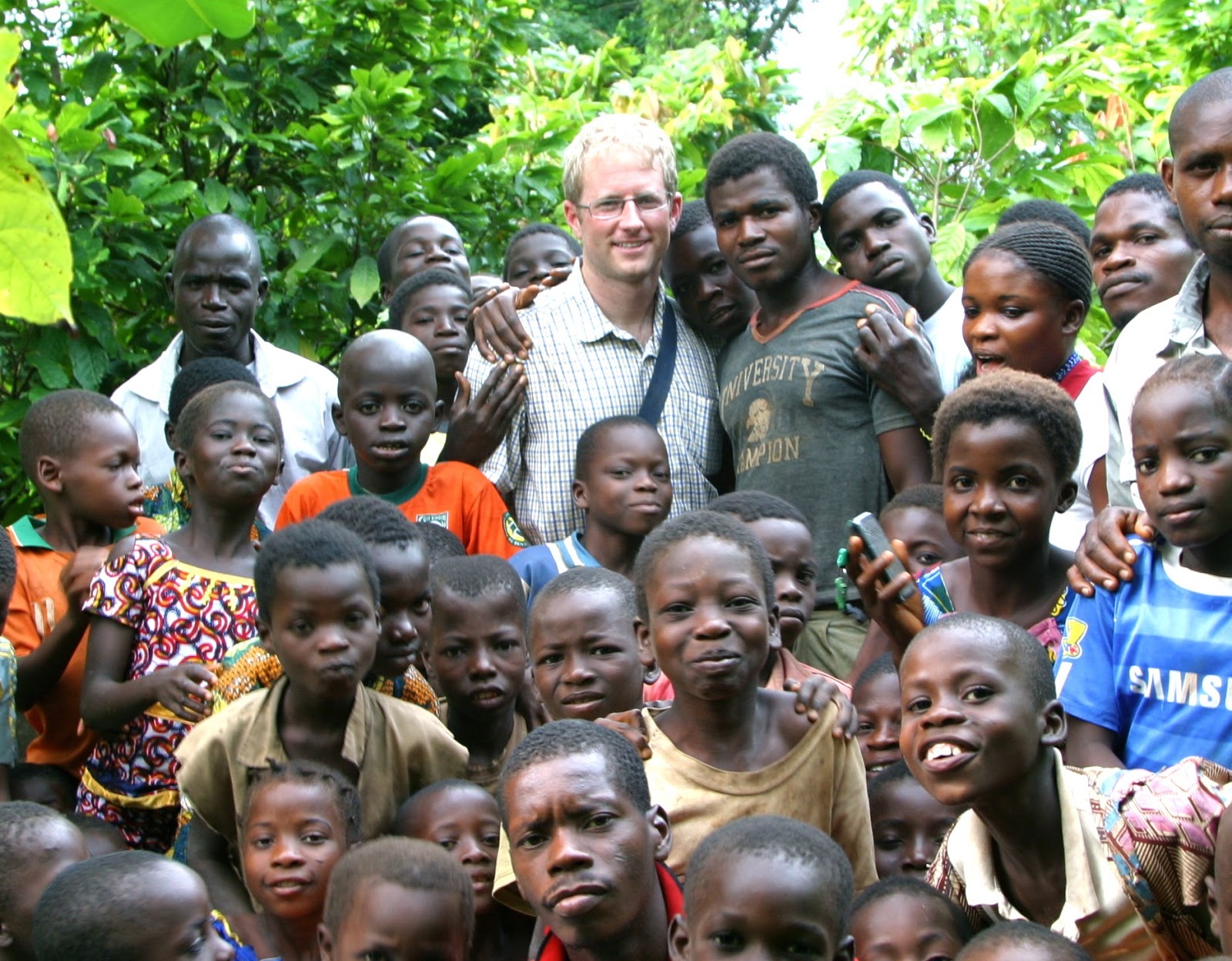
For years I have been writing stories. Some stories are from other people and I tell them in magazine articles or books or blog posts or Ebooks. Other stories are my own personal experiences which I relate in different forms of print or online.
It is hard to measure or know the impact of your words or writing. Yes we get hints when others review our work in print or on Amazon.
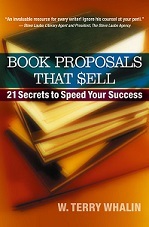
Over 12 years ago as a frustrated acquisitions editor, I wrote Book Proposals That Sell . My goal was to help writers be more successful in getting their books published. I also wanted editors and agents to receive better pitches and manuscripts and proposals from the teaching in my book. Many of these goals have been realized because the book has over 130 Five Star Amazon reviews and I’ve received all sorts of great feedback from writers, agents and editors.
I’ve also had my share of detractors or people who have not liked the book and given me one star reviews saying, “I threw your book in the subway trash.” Each of us should understand not everyone will like our work and there will be negative feedback.
When my authors from Morgan James contact me about what to do with a negative review (one or two stars), I tell them to rejoice. They should not complain to Amazon or try and get those reviews removed. These lower reviews actually validate all of the other reviews on the book. They show readers that you are getting real feedback on your book. The stars are averaged together so if you only have a few Five Star reviews then get a one star review, it will skew your reviews toward the negative. It means you have more work to do to get others to give you five star reviews on your book.
This weekend, I was on the faculty of the Indiana Faith & Writing Conference at Anderson University. I taught on book proposals. I heard a new story about the impact of my Book Proposals That Sell which I wanted to tell you about in this blog.

I met Kelsey Timmerman who was also on the faculty of the conference. He told me that he used my book (along with one from Michael Hyatt) to write his original book proposal for Where Am I Wearing?, A Global Tour to Countries, Factories, and People that Make Our Clothes . After Kelsey wrote his proposal, a literary agent picked up the book an sold it to John Wiley & Sons. Where Am I Wearing? was published in 2012.
As I’ve written before in these articles, the marketing for any book is on-going, Kelsey told me that five years after his book was published Where Am I Wearing? made the New York Times bestseller list. It was not the top twenty nonfiction books but made the extended list in the fashion category—but it still made the list. Because Where Am I Wearing? was on the New York Times list, he can use the title New York Times bestselling author in his biography, website and other promotional materials.
From Kelsey’s story, I gained a new insight into the impact of my own writing on the community.I had never heard that one of my books led to a New York Times bestseller. Getting on the New York Times list is rare and hard in this competitive business. From my understanding a book has to sell over 11,000 copies in a seven day period through that secret list of bookstores which report to the New York Times. It is almost like winning an Oscar in the book business—very hard to do but is rarely accomplished.
What is the impact of your writing? How do you measure it and know? Do you treasure the feedback of others? Let me now in the comments below.
Tweetable:
Most of us don't know the impact of our writing. Here's the details. (ClickToTweet)
October 25, 2016
Three Ways to Get Your Writing Moving

Are you stalled with your writing? I understand how it can happen. One of my Morgan James authors wants to write her book but is crazy busy with her occupation. She asked me for some ideas and strategies to get the book written. Many writers have this challenge of a full-time occupation but dreams of other things in their life. Yet without action, those dreams stay just ideas and do not turn into anything concrete for their writing—like magazine articles or books or information products or ebooks or anything. Their writing is in stall and not moving ahead.
Whatever you want to create or write—including for my book author who can't seem to get her book finished—is to figure out what you can do. Then make an action plan to do that action over and over until the writing is completed. I know these words sounds simple but it is how any goal is accomplished. You do it in bite-sized pieces. No one sets out to write a 50,000 word nonfiction book or a 100,000 word novel. The thought can overwhelm you and throw you into a stall so you don’t get it done.
How do you accomplish your goals? The first step is to break the task into a smaller size. Can you write a page a day? A manuscript page contains about 200 to 250 words. Or can you write two pages a day? That would be 500 words. Create a plan to write consistently. If you are consistent, you will be shocked how much material you can accomplish in a week or a month or two months.
The next part of the goal setting is to figure out when you can consistently write and set a time in your schedule. Maybe your best writing is early in the morning or you have a few minutes at lunch time or maybe it is late in the day. Block this writing time into your schedule and do it over and over. Eventually one session turns into more words and you finish the book manuscript from the beginning to the end.
What is something you want to accomplish in the next few months? Here’s some of the steps:
1. Write down your goal and put it on a post-it or note card where you can refer to it. This concrete action will show your intention.
2. Plan your action steps and break your goal into bite-size pieces.
3. Take regular action and move forward to accomplish your goal.
No one likes or enjoys the discipline of working on your book. Yes, some of the storytelling and work is fun but most of it involves simple obedience and doing the work. For example, The Writing Life contains over 1300 entries and I’m moving toward 1400 entries.This volume of material did not happen in a single day or week or month. It was done bit by bit and consistently over days, months and years. I began writing these articles in 2009 so it has taken some consistent time and energy to accomplish.
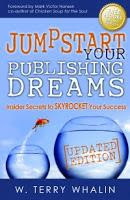
I have more details about goal setting and how to accomplish your dreams in Jumpstart Your Publishing Dreams . It contains several dozen ideas about how to accomplish your publishing goals.
Be encouraged and you can do it too. Take action and write your book and accomplish your dreams. If I can help you in this process, don’t hesitate to reach out to me.
Tweetable:
Is Your Writing Stalled? Here's Three Steps from a Prolific Author. (ClickToTweet)
October 18, 2016
Keep Yourself "In Sight" and "In Mind"

“Out of sight. Out of mind” is a common saying. When you are a writer or an author, you want to continually work at the complete opposite of this saying. You want to keep yourself “in sight and in mind”. You take these actions for your readers, for booksellers, for librarians, for members of the media, for leaders of book clubs and many other segments of the population. How do you accomplish this simple goal of being visible in the marketplace?
In this article, I want to give you several strategies that I use on a regular basis. I confess that I'm still learning new insights and work every day at increasing my visibility. I understand being visible is a challenge for everyone. To be honest, there is a lot of noise in the marketplace and you have to continually work at visibility.
Here's some actions to take:
1. Follow-up with your connections. That follow-up is critical and can be through email or phone or the mail but you have to create a regular connection with people. I've written about this issue in the past so check this link for more information.
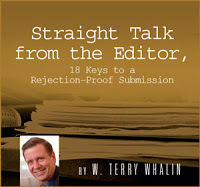
2. Create an email list and use that list on a regular basis. There are easy to use tools but every author needs to select one then faithfully use that tool. If you don't have a list check out this resource. For example, I have a number of free ebooks that I give away online. The back of my business card has a small cover of my ebook, Straight Talk from the Editor and says, “Free Ebook: www.straighttalkeditor.com” I'm inviting anyone who receives my business card to get this resource. When they request it, they give me their first name and email address. They join my email list in this process. What types of free giveaways are you using to collect this information and touch your audience?
3. Use social media and continually expand your network and presence. Being on Twitter, Facebook, LinkedIn and other social networks is important to remind others about your expertise and books. I've written about the steps I take every day here.
4. Always be trying new ideas to reach more people. I encourage you to set up your own online press room or create infographics or bookmarks. You can also reach out to booksellers with a specific reason.
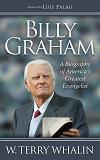
For example, Billy Graham turns 98 on November 7th. I've reached out to a local bookstore to see if I can set up a signing around that date. Also look at this press release related to this event (which has already garnered several more forthcoming radio interviews about Billy Graham). There are an endless range of ideas you can take to get in front of more people. My key point is to be taking regular and continual action.
This weekend in church I met someone new. We exchanged business cards. It wasn't until later in the day, that I read the information on the business card and focused on this person's background. I learned he was a retired Brigadier General in the United States Air Force. I imagine someone with this background has incredible personal stories (if he can tell them). I took a couple of minutes and sent him a follow-up email. Will something come from it? I have no idea. I'm certain if I fall off his radar and out of his immediate sight, then I know exactly what will happen—nothing.
For every writer, it is your responsibility to keep yourself in front of other people. Are you using the tried and true methods or something new? Tell me in the comments below.
Tweetable:
As an author, how do you keep yourself “In Sight” and “In Mind?” Get specifics here. (ClickToTweet)


