
W. Terry Whalin's Blog, page 31
March 1, 2020
Your Persistence Matters

By Terry Whalin @terrywhalin
What is the topic or subjects
where you have the greatest passion? How are you translating this passion into
your writing? What persistent and consistent steps are you taking with this
passion to be telling people about it?
I hope these questions stir some
ideas and thoughts for you. From my years in publishing, persistence is a key
quality for every writer. I encourage you to take a few minutes every day and
spend time on this topic of your passion. Maybe you write an article for a
magazine. Or you work on a plan for a membership course. Or you pitch someone on
doing a workshop on this topic. Or you write a chapter in your book on the
topic. Take some steps (even if small ones) every day to move forward and be
persistent.
Several months ago, a magazine
editor approached me to write an article about essentials for a book proposal.
When I got the request, I wanted to do it but with my current writing projects,
I could not see how I could get it written. I had written for this publication
in my past and wanted to meet the editor's deadline. Yet it came and
disappeared. To my fault, I never communicated with the editor about needing
more time and extending the deadline. I was not a good communicator with my
editor (something every writer should attempt to be in this business). If you
need more time, ask for it—but I didn't.
Several months later I interacted
with this editor about another matter. In our email exchange, she said something
about the book proposal article. To my surprise, she still wanted me to write it
for her publication—even though my deadline had come and disappeared. This
editor was persistent in her pursuit of the article. We negotiated a
new deadline for the piece. Thankfully with this new deadline, I found a little
time to brainstorm how I would write this article. Besides my bestselling book,
Book
Proposals That Sell , I've written a number of articles about different
aspects of a proposal.

Can you take something you wrote
for another publication (and hopefully saved on your computer in a place easy
for you to locate), then use this writing as a springboard for the new
assignment? Hopefully when you write for magazines, you are selling “first
rights” which means when the article is published, those rights return to you
for you to use again. As I thought about other articles I had written, I
recalled a series of articles I had published on proposals. In a few minutes, I
pulled those articles into the longer requested article for this publication.
Last week I reworked the article so it flowed correctly and sent it off to the
editor. I met her deadline and her persistence paid off with getting what she
wanted for her audience.
Several lessons for you from my
experience:
1. Maintain your
relationship with the editor, agent or other publishing professional.
2. If you need more time,
ask for it and renegotiate a new deadline. Don't fall silent like I did
and let it pass.
3. Reuse material you
have written in the past. Preserve it on your computer in files and
folders you can easily locate. Then get more mileage from your previously
published work with new publications and new readers.
4. You will reach more
readers with your magazine work than most books. I've long been an
advocate for writing for magazines as a way to spread your message.
How are you practicing
persistence in your own writing life? Are you continuing to build new
relationships with publications and editors? Let me know in the comments
below.
Tweetable:
For writers, your persistence matters. Get some ideas for your writing in this article from a prolific writer and editor. (ClickToTweet)



February 23, 2020
Three Actions When You Hit a Tech Snag

By Terry Whalin @terrywhalin
It happens to me daily and sometimes several times a day: I hit
some snag with a technical issue. I don't like it when this happens to
me. Sometimes getting through the tech issue can consume hours of time and
energy. Yet it is a reality of our world and culture—whether we like it or not.
In this article, I want to give you several illustrations of tech snags and then
several actions to take when it happens.
This coming week for several days I'm attending a bootcamp (an
intensive conference). As a part of the preparation, the leaders asked us to
survey our target market with a specific question. I crafted my question but
then needed to figure out which online tool to use for collecting the input. I
know about several of these tools but each tool I tried, I ran into technical
snags where when testing it, I could not get it to work properly. It
was frustrating and time consuming to resolve. To resolve it, I reached out to
one of the leaders of this bootcamp and asked for help. In a short time, I got a
response and worked through the issue and made my survey.
One of my relatives struggles with technology issues—like when I
want to send this person some photos from my phone. Each time when I speak with
her, she claims, “I'm dumb with _____.” When I hear these types of statements, I
explain to her that everyone struggles with these issues and it has nothing to
do with being dumb or smart. It is a part of our world and culture. I hope my
explanation helped her work through the tech snag. My caution to you is not to
speak such things to yourself because they become self-fulfilling. There is a
solution to whatever issue you are facing, you just need to persevere and find
it.
This week I found a charging device for my phone. I had
purchased this device months ago but never used it and the charge had worn out
so it wasn't working. As I looked at this device, I could not figure out how to
charge it. I was inclined to throw it away—yes that frustrated with it.
Eventually my wife found a connection on the device (which was not immediately
obvious to me). This connection was different from anything I had seen before.
Instead ot throwing it away, I looked to see where I could possibly plug this
connection. With a couple of attempts, I found a place to start recharging this
device and got it to where it is a useable tool again. I'm glad I didn't throw
it away.
My hope is you learned some insights with each of these three
recent tech snags. The overriding principle I want to emphasize is: there is an
answer to your tech snag. You have to use different resources and persist to
resolve it. Here's three possible actions when you hit a tech snag:
1. Ask Google to help you. Yes this one is
obvious but many of us forget to use the obvious tool called Google with tons
of technical help for you.
2. Go to YouTube and search for videos that
will help give you the answer. Whether basic or advanced, there are often
resources here to help you with your tech issue.
3. Ask someone for help. Is there an online
help tool? Can you fill out an online form and write support to resolve it? Is
there a friend you can email or call and ask for help? I pay an annual fee to
the Geek Squad and don't use them often but when I need them, they readily come
to my help on some technical issues. Also use inexpensive tools like
Fiverr.com. I have a designer with a good rating that I use for some small
design issues occasionally. Maybe Fiverr would be a route to help you through
your technical issue.
4. (Bonus Action) Keep working at it until you
find the solution. It may not be something you can resolve in a day or two, but
keep chipping away at it and you will find the answer. You can't be the only
person who is having such an issue that needs resolution. You have to be
persistent with these tech snags to get them resolved.
These tech issues are going to continue. We live in a technology
driven world. Do you have another resource or maybe another action item? Let me
know in the comments below.
Tweetable:
What actions do you take when you hit a tech snag? Get ideas and insights from this prolific editor and writer. (ClickToTweet)

February 15, 2020
Get Inspiration from Quotations
By Terry Whalin @terrywhalin
Early on in my journalism training, I was taught to look for key
quotations. Often these statements would be in the lead of my story or they
would drive home the point of my story.
As writers interviewing other people
for the content of a chapter of a book or a magazine
article, I encourage you to be looking for these key quotations. They will
help you as you craft your stories.
When I read inspirational quotes, I get insights and encouragement. I look for them from many different sources like my own reading of books
or blogs or articles online. When I find them, I will often cut and paste them
into my social media plans for the future. It's been my pattern for years with
my social media feeds for the day: I begin every day with an inspirational
quotation and an image.
In the social media world, you can attract more attention, retweets and responses if you include an image. Through the years of my using
social media, I have collected images of different people into a file labeled
“Twitter Images.” These images are stored alphabetically so when I need one
again, it is easy to locate and use again.
Here's an example I saw today:
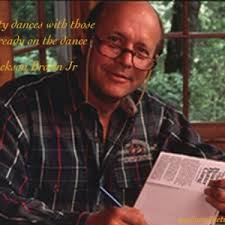
“Remember that the happiest people are not those getting more,
but those giving more.”
-- H. Jackson Brown, Jr.
I add the image and then save it into my HootSuite. It will begin my
day of social media postings on Sunday, May 3, 2020 at 6:05 am. Yes on
inspirational quotations, I am way ahead on my postings. I use Hootsuite (the
paid version with unlimited posts to schedule—and I take full advantage of this
feature and schedule my posts way ahead of time—at least some of them).
I have another reason I'm way ahead on my inspirational quotes. Several
weeks ago, I was behind on gathering these inspirational quotations. I learned to use another feature of HootSuite which I had not before. This program stores all my
old tweets which number in the thousands. I went back and took the inspirational quotes for a month (at least
one year ago so no one would remember) and worked them into my future schedule.
I created a pattern of beginning every day with this inspirational quotation. Do
you have a pattern or grid for your tweets? I do and it makes it simple to
schedule with this grid for certain types of tweets in mind.
Do you get inspiration from quotes? Do you use them and see them
on a regular basis in your writing life? Let me know the details in the comments
below.
Tweetable:
Inspirational quotes are often seen in articles and online. What do you do with them? Get some ideas from this prolific editor and author. (ClickToTweet)

February 8, 2020
Simple Truths for Writers

By Terry Whalin @terrywhalin
More than a dozen years ago, as a frustrated acquisitions
editor, I wrote Book Proposals That $ell, 21 Secrets To Speed Your
Success . In the back of that book, I included a series of simple
statements for writers that I called Maxims.
Today I'm returning to these truths as reminders for every
writer (including me). I hope they will be something important to you and help
guide your writing life:
1. Never forget the impact of your words—positive or
negative. Most days, I feel the pressure of motivation to make money as
a freelancer. I’ve got bills and obligations which demand payment. Yet if you
are so money-driven that you never make any decisions about your writing except
ones which are motivated from finances, it will be difficult for you to advance
in nonfiction or whatever category you choose. Don’t get me wrong. I want to be
fairly compensated for my work but I also want to enjoy my work and what I do
day in and day out. You need to be conscious of your motivation behind your
writing and let that drive your daily efforts.
2. Never forget your writing is a privilege and a
business—so seek to maintain balance. Too many writers hesitate to ask
for their materials or for a decision about a query or proposal. They send it
out once or twice, then it’s rejected and they don’t properly market.
3. Celebrate your writing successes. Never lose
the wonder of the opportunity. At another conference I attended—a secular
writing conference in Southern California—I was fascinated by a secular novelist
and his message. While waiting to ask him a question after the session, I turned
to another person and asked if she had taken this instructor’s writing class.
The woman puffed up her face in disgust and replied, “No, I’m a published
author.” Just because our material is printed in magazines or books, it should
not build us up in pride. Believe me, sometimes it’s difficult but as writers we
need to keep things in balance, especially when it comes to nonfiction books.
4. Believe in the quality of your work and the value of
your message. Surprises always happen. I work hard at my craft and
perseverance is a key factor. Don’t get me wrong but I love to receive my
material in print. It’s a surprise and a special blessing. It’s the new box of
books hot off the press or the magazine article in a missionary publication. I
marvel at the grace in my life. I’d encourage you to absorb the same attitude no
matter how many books you publish.
5. Expect to serve an apprenticeship. It’s a
false expectation to go from nothing to book contracts. Everyone is expected to
move through the ranks of this business. It takes diligence and perseverance to
succeed.
6. Learn all you can from every possible
source. If you approach life in this fashion, you will find that you
can learn from a multitude of sources.
7. Act wisely and thoughtfully. Haste usually
makes waste.
8. Never resist rewriting. Your words are not
etched in stone.
9. Never resist editing. Again, your words are
not etched in stone.
10. When you receive advice about your writing, learn to
evaluate it critically. Sometimes you will get advice from a fellow
writer or a family member and it doesn’t “feel” like something you should take.
Follow that instinct.
11. Treat editors as the coach on your team.
They know their audience, so respect their counsel and only reject it with good
reason.
12. Never rest on your laurels. Be looking for your next
opportunity. I’ve discovered that writing opportunities
abound—particularly when I’m actively looking for them.
As I read through these truths which I wrote many years ago,
they still ring true. In fact, I've based much of my writing career on following
these statements. I hope they will encourage you and help your writing
life.
If you haven't read Book Proposals That
$ell , let me give you several reasons to get a copy: First, the book
has over 130 Five Star reviews on Amazon. Second, many people have used this
information to get an agent or snag a traditional book deal. Third, I have
all of the remaining print copies (so don't buy it from Amazon). Finally
I've reduced the price from $15 to $8 and added bonuses and other elements. I
hope you will check it out and order a copy.
As you read through this article, which principles are important
to you? Am I missing something? I look forward to your comments and feedback in
the comments below.
Tweetable:
Read this article about Simple Truths for Writers from this prolific writer and editor. (ClickToTweet)

February 1, 2020
Do Whatever The Task Takes

By Terry Whalin @terrywhalin
Last month, my latest book, 10 Publishing
Myths , released into the bookstores (online plus brick and mortar).
Even though I've published many books, every book is exciting and a fresh
opportunity. It never grows old to me. If you have a new book (or even one that
has been out a while), one of the most important things you can do to market
your book is to get others to review your book. Why?
Thousands of new books are released into the market every
day—and there are already many other books already in the market. Your book
has to stand out and get attention (whatever it is about) for others to see it
and purchase it. Someone has to hear about your book probably eight to a dozen
times before they actually decide to purchase it (a well-known sales statistic).
In this article, I want to give you some ideas how to get reviews and encourage
you to do whatever it takes to get those reviews.
1. Ask others. If you are active in an email
group (as I am), tell others about your need for reviews and ask them to help
you. I'm in a couple of groups and encouraged people to private message me about
reading my new book. A number of people have responded and I've gotten a few
reviews from taking this action.
2. As people respond to your request,
ask them what they need for the review. Do they prefer an ebook
or a print book? If it is a print book do they want it to be signed or not? Sign
it to them or to someone else? Everyone is different what they want and will
use. For example, one friend did not want the PDF version of my book but wanted
the MOBi version. I didn't have this version so had to return to my publisher
and ask for it. The process took a few days but eventually I got the MOBi
version for this friend. In the process, I saved the MOBi version and will send
it to others who need this version. I've already had a second person ask for the
MOBi version and because I had it, was able to send it right away.
Other people prefer a print version of the book. To send this
version, you need their mailing address and whether they want the book signed or
not. Some people do not prefer signed books while others do. As with the ebook,
it is a choice and you have to ask to make sure you are giving your readers what
they want and need to write the review.
3. Give them some additional help. While I have
written many reviews over the years, other people have no idea how to write a
review. Sandra Beckwith created this inexpensive yet important tool (follow
this link to purchase). If it is a print book, then I print a couple of
pages and tuck it into the back of the book when I mail it. If it is an ebook, I
send it along withi the ebook. Also I created a promotion page for my book. This page
includes links to three spots in particular where I need reviews (Goodreads,
Barnes & Noble and Amazon).
Most authors just focus on Amazon (which is a
huge player in the book business—but not the only player). My advice is
to include all these companies. I give the exact page or link where they can go
to write their review. My purpose is to make it easy for them to write and post
their review.
Does it work? Not always. People are busy and have good
intentions but don't always get the book read and your review written. Or it may
be months down the road they will actually do it. I mention this fact because
you will need to enlist way more people to do this process than will actually
get it done. For example, if you want 25 reviews, you will need to ask and get
commitments from at least 50 people. Yes half of them will not do it but the
other half will do it and you will get your review. My key point in this article
is to do whatever it takes to get the reviews. And—keep asking people to help
you. Otherwise they forget that you need their reviews.
Take action today. Make a list of the people and steps you are
going to take.
Am I missing an action idea you can take? Or maybe you have
other feedback. Let me know in the comments below.
Tweetable:
Do you do whatever the task takes to complete it? Learn some insights from this editor and author. (ClickToTweet)
January 25, 2020
What Is Your Writer's Legacy

By Terry Whalin @terrywhalin

This week I learned one of my long-time writer friends, Mark Littleton, died. Mark has written over 98 books that have collectively sold over a million copies. It's just one of the many contributions Mark made to our world. As I look through the listing of his books on Amazon, I noticed the diversity in Mark's books: nonfiction for adults, nonfiction for children, Bible related books, novels and much more. Some of the books are Christian while others are general market books. He also wrote for a wide range of magazines including Reader's Digest and many others.
For over 30 years, Mark and his wife, Jeanette, were the early leaders of the Heart of America Christian Writers Network, a community of writers in and near Kansas City. Also this group has held an annual writers conference. I have been honored to teach at this event several times over the years. It's another part of Mark's legacy: training other writers in the craft of writing. Mark had been ill for months and I had been a part of the multitude praying for him and his family. He was only a few years older than me.
This experience got me thinking about our legacy as writers. It's a truth most of us don't want to think about: every one of us will eventually die. It's a part of our humanity. After we are gone, what are we leaving for others?
Books. Since 1992, I've written over 60 books with many different publishers. A number of these titles are out of print but still in libraries and sold on the used market around the world. They are a part of the legacy you are creating as an author and will continue after you are no longer on the planet.
Magazine Articles. While not as permanent as books, magazines are not just for that particular issue in print. Many magazines are online and these articles continue to be available and read—long after printed.
Blogs and other Website Information. My blog on The Writing Life has over 1500 searchable entries. It amounts to pages and pages of information which will be available online forever. From the beginning I've been aware of this aspect. Also I have a number of products and domains. Some of these are depend on the renewal of the domain (by hand and not automated) so if not handled they will eventually disappear but are another part of our legacy as writers.
Social Media Feeds. Some of my author friends have no social media presence. Others (like me) have a large and growing social media presence. I have tweeted 51.8 thousand times since 2008 (as of today). Now that is a lot of information. Don't forget (as some people do), these posts are around forever and never disappear. They show up on search engines. People read them and respond to them—often long after you have posted them. If you are active on social media (and I hope you are), then this is also part of a writer's legacy.
Personal Teaching at Workshops. For many years, I've been teaching at conferences. While not always, often these workshops are recorded. People purchase the CDs or cassette tapes and listen to them later. Some people listen to these recordings over and over to glean information and insights. I'll be teaching at several conferences this year. I maintain my speaking schedule at this link. For example, I learned this week that I will be teaching a continuing class at the Blue Ridge Mountains Christian Writers Conference in May (the largest Christian writers Conference in the US) and also
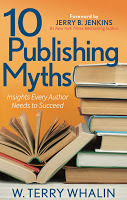 doing a single workshop tied to my new book,
10 Publishing Myths
and a workshop with the same name. Each of these workshops is a part of a writer's legacy and will be around for many years. When I teach at these workshops, I work hard at having excellent handouts which contain online resources and links. This information lasts for years.
doing a single workshop tied to my new book,
10 Publishing Myths
and a workshop with the same name. Each of these workshops is a part of a writer's legacy and will be around for many years. When I teach at these workshops, I work hard at having excellent handouts which contain online resources and links. This information lasts for years.Each of us have the same amount of time in a day but different times on the planet. I encourage you to live with intention and be taking consistent action in your writing life. Whether you are aware of it or not, you are building a writer's legacy.
Am I missing something which will last longer than your lifetime? Or maybe you have other feedback? Let me know in the comments below.
Tweetable:
Are you creating a writer's legacy? Get ideas from this prolific writer and editor. (ClickToTweet)
January 18, 2020
Why It's Never Too Late To Promote

By Terry Whalin @terrywhalin
As an acquisitions editor at Morgan James Publishing, I've worked with many different authors on launching and promoting their books. As a reader, I've been on a number of launch teams, received, read and reviewed advance reader copies (ARCs) of many books. As a writer, I've taken classes on launch plans, seen the checklists from others and much more. While I've written more than 60 books for traditional publishers, it's been a few years since I launched a new book.
Last spring, I finished my manuscript for 10 Publishing Myths , gathered a foreword from New York Times bestselling author and long-time friend Jerry B. Jenkins and endorsements from 18 authors, editors, agents and publicity experts. The Morgan James team designed a beautiful cover and I had some advanced copies to take to a couple of conferences. While everything looked to be moving forward, suddenly there were some glitches.
First as a part of the process, Morgan James showed my cover to the sales team. Normally they get little feedback but in my case, the sales team suggested changes. It was a good thing in some ways to have their engagement and interest. The feedback changed some significant details on my book cover.
I took my book to a couple of conferences and sold a few advanced copies. One reader asked if I would like some feedback. I responded yes I'd love your feedback. It turned out she was a proofreader and sent a lengthy list of over 50 errors (missing words, wrong words, typos, etc.). Grateful for such detailed feedback, I worked through each suggestion and made all these changes before it released to the bookstores (print and ebook).
Also I worked with Misty Taggart from Trailer to the Stars on a one-minute book trailer and I ordered business cards with my first cover. Yet now my book trailer and business cards needed to be changed for everything to match and work properly. Also I built my book website but the clock has continued moving and my December 17th launch date arrived--and I was not ready and only did a small percentage of my launch plans.
.
I've learned several lessons from this experience:
1. It is never too late to promote or tell others about your book. If you missed launching your book, begin today to tell others.
2. Take the long view of your book and make a personal commitment to continually look for new ways to tell others about your book. There are over 4,500 new books published every day (includes the self-published books). The book trailer for my Billy Graham biography has been viewed over 11,000 times in the last five years.
3. Your passion for your book and toipic will last much longer than anyone else. Understand that you will drive the promotion and continued sales of your own work—no matter how you have published.
4. Ask others to help you in the promotion process. Ask others but in your asking make it easy for them to say yes. Just look at this page I wrote and prepared for my new book, 1o Publishing Myths. This page has links to the exact pages on Amazon, Goodreads and Barnes & Noble where I need reviews. Also I included a link to a two page PDF where they can fill in the blanks and write their review. Also this promotion page includes several ClickToTweet posts they can share about the book on social media (whether they have read my book or not).
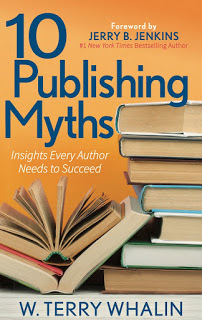
5. Create an interesting and inviting giveaway with your book. When I was gathering endorsements for 10 Publishing Myths, Alice Crider told me I was missing the 11th Publishing Myth. I listened and decided to write this chapter. It is designed exactly like the rest of my book but not inside the book. You can get it right away at this link. What type of inviting giveaway can you create for your book?
No matter what happens with the launch of your book my simple advice is: keep moving forward.
What glitches or challenges have you found in launching a book? Let me know in the comments below.
Tweetable:
Discover Five Reasons Why It is Never Too Late to Promote from a prolific author and editor. (ClickToTweet)
January 11, 2020
How to Recover from a Launch Disaster

By Terry Whalin @terrywhalin
How do you recover from a book launch disaster? Over 4,500 new books are published every day. As someone who has been in publishing for years, I understand without the author's active role, little happens.
In recent years, I've watched authors launch books and participate in their launch teams. I've gotten advance reading copies of the book, read it then posted my reviews on Amazon, Goodreads, and Barnes & Noble. I've taken online courses on launching books. As an acquisitions editor for a New York publisher, Morgan James Publishing, I've watched many other authors launch their books. Like many things in publishing, I've found not everything will go according to your plans.
While I've written more than 60 books, I haven't published a new book in several years. My newest book, 10 Publishing Myths released to the bookstores on December 17th. Last year, I asked New York Times bestselling author, Jerry B. Jenkins to write my foreword. Also I gathered 18 endorsements from other bestselling authors, publishers, editors, literary agents and publicity experts.
When editor and writing coach Alice Crider sent her endorsement, she told me I was missing the 11th publishing myth: “If I send my book to Oprah, she will book me on her show.” I laughed then I decided to write this chapter and have it designed exactly like the rest of the book. You can get it immediately at this link.
Plans were moving forward. The cover was designed and went to the sales team. Often they never respond but for my book, they suggested some changes to my cover. Simultaneously I worked with a former Hollywood screenwriter to create a one-minute book trailer (watch it here) and printed business cards (with my first book cover).
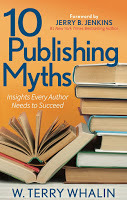
Months ago, I had Advanced Reader Copies. took them to a couple of writers' conferences and sold a few books. A reader emailed asking if I wanted feedback. I said of course. This reader turned out to be a proofreader and sent a detailed email with over 50 typos, missing words, wrong words and other errors. I fixed everything—thankfully before the print or ebooks were released in the bookstores.
My book launch didn't happen as planned. Maybe your published book isn't selling as you expected. I've got good news: it is never too late to promote your book.
Here's some things you can do for your book—no matter when it releases:
1. Do what you can every day to tell more people about your book. It doesn't have to be a lot but be consistent in your efforts.
2. Gather your own resources and use them. They can be simple like use your email list, write a blog, write a guest blog posts, or ask friends to read and review your book.
3. Make your own promotion page. For 10 Publishing Myths, I created a page to help others promote my book. Look at the diversity and see if you can do something similar.
4. Make an excellent and short book trailer. People need to hear about your book over and over before they buy it. A good good trailer helps in this effort. Follow this link to see my one-minute trailer.
Your passion for your topic and book will carry beyond a launch date. You can continue no matter what happens—part of being a writer is to have such persistence and perseverance. In spite of any glitches along the way, you can keep going.
Have you had a similar experience? Or even different with a book launch? Let me know in the comments below.
Tweetable:
How do you recover from a Launch Disaster? Get ideas and resources from a prolific author and editor, @terrywhalin. #writingtip #pubtip (ClickToTweet)
January 4, 2020
4 Reasons I wrote 10 Publishing Myths

By Terry Whalin @terrywhalin
An acquisitions editor at a New York publisher, I spent many hours speaking with authors about their manuscripts and their own expectations for their book. Often they will tell me, “I want my book to be a bestseller.”
In part, I love to hear those words because as an editor, I'm looking for bestsellers or books that will actively sell into the market. As someone who has been in publishing many years, I understand over 4,500 new books are published every day and 1.6 million books were self-published. The additional bit of information about self-publishing is on average these books sell 100–200 copies during the lifetime of the book. To beat those odds, every author needs to have a plan and strategy for selling their book.
I've seen many plans get changed as books get published. Years ago one of my books which received a large advance, had a different title in the publisher's catalog than when the book was published. This publisher never showed the cover to the high profile author—and he strongly disliked it. As a result, he never promoted the book and the sales were dismal. The book was taken out of print after six months. I was disappointed for all of the effort I put into writing and creating this book but many critical factors in the success of a book are outside of my control.
From other authors, I've heard many of these types of stories about their books. The process of publishing and promoting a book is filled with pitfalls and possible errors. I took my years in publishing and poured it into writing 10 Publishing Myths, Insights Every Author Needs to Succeed .
I want to give you four reasons I wrote 10 Publishing Myths :
1. To give authors a realistic picture of publishing. Many authors have written a manuscript but do not have any idea of the details of publishing. I've written about these details in my book.
2. To help authors understand much of the process is outside of their control. There are many things that can prevent your book from successfully selling in the marketplace.
3. To give authors practical advice they can do to sell books and be successful. While much is outside of the author's control, there are numerous practical actions every author can take in the process. It's the focus of each chapter.
4. To understand there is not a bestselling formula but there are bestselling practices. Many authors are looking for a magic formula to make a bestseller. If such a formula existed every book would be a bestseller because each of us would follow that formula. It does not exist but there are active steps every author can take which is my emphasis. For example, I have worked with other professionals to create a short book trailer. Book trailers are all about exposure. Someone has to hear about your book a number of times before they purchase it. My trailer helps in this process.
5. To take the long view and not look for short term success. (A Bonus Reason) Many authors are looking for a way to rocket to the top of a bestseller list and a short-term gain instead of taking the long view for their book and continuing to tell people about it. From my experience it is the long view that will eventually bear fruit or get you book sales.
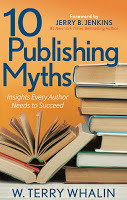
My book released last month and can be ordered in four different ways on my website. I encourage you to get a copy for yourself and another one to give it to another writer.
Have you fallen for a publishing myth? Let me know in the comments below.
Tweetable:
Learn four reasons for 10 Publishing Myths from this prolific writer and editor. Get insights here. (ClickToTweet)
------
In addition to 10 Publishing Myths , I created a bonus chapter on the 11th Publishing Myth. It is free and you can get it today. Just use this link.
December 28, 2019
When Your Book Isn't Selling

By Terry Whalin @terrywhalin
I used to cringe when I saw the mail or email from one of my publishers. It probably contained a royalty statement and experience told me many of those numbers would begin with a minus (negative balance). I’ve written for many different traditional publishers and have had this experience from a broad spectrum of types of books including how-to, self-help, biographies, gift books and children’s books.
When your book sales are off, it’s a natural tendency to want to blame someone. Maybe my editor has left and my book was orphaned inside the publisher with no champion or advocate. Maybe my publisher didn’t market the book to bookstores. Maybe they changed the title between what was printed in the catalog and what was published. Or _______(fill in the blank). I’ve had all of these things happen to my published books.
Good publishing involves a cooperative process and working with many different people. Much of this process is outside of the author’s control. I’ve also learned there are many pro-active steps authors can take to change their situation.
1. Take 100% responsibility for your own success. In The Success Principles, Jack Canfield makes this the first principle. Over ten years ago, I heard this principle and adopted it in my publishing efforts.
2. Be active in the promotion and marketing of your book. As the author, you have the greatest passion for your book—way beyond anyone else including your publisher. The great promoter, PT Barnum said, “Without promotion, something terrible happens—nothing.” Consistent promotion of your book is important.
3. Be Generous with your book. Reviews sell books but many authors have few reviews for their book on Amazon or Goodreads or Barnes & Noble. Give books to people who are willing to write a review. If they’ve never written a review, give them a tool to help them like with this form.
4. Ask for others for help. In the New Testament, James 4:2-3 says, “You do not have because you do not ask.” If you need endorsements, ask but make it easy for them to say yes (offer to draft it). If you need social media promotion, ask but create possible posts. Here’s an example of a page, I created to help others help me spread the word on my latest book. Use this page as an example of something you can create for your own book.
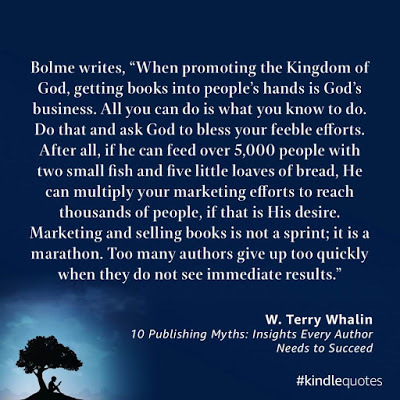
5. Take the long view of publishing. Publishing and promoting a book is more like a marathon than a sprint. With the huge volume of published books, someone has to hear about your book seven to twelve times before they purchase it. What actions can you take every day to give your book this exposure? My Billy Graham book trailer has been seen over 11,500 times in the last five years.
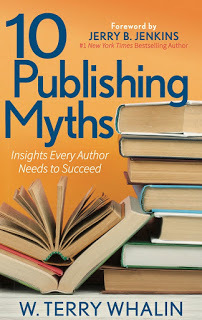
6. No matter what happens in your life, keep going. In Perennial Seller , New York Times bestselling author Ryan Holiday writes, “The hard part is not the dream or the idea, it’s the doing.” If there were a simple formula to create a bestseller, every book would be a bestseller. There are practical actions every author can take. Each part of the publishing process has challenges and as writers your persistence and consistency is critical. As #1 New York Times bestselling author Jerry B. Jenkins wrote in the foreword of my book, 10 Publishing Myths , “Only one of a hundred writers literally make their deadlines.” If you meet deadlines with quality writing, it’s an easy way to stand out from the crowd. I wrote 10 Publishing Myths (released December 17th) to give writers realistic expectations and practical steps every author can take to succeed. Today, you can get the 11th Publishing Myth as a free ebook (which is not in the book).
When you point a finger at others because your book is not selling, just remember: when you extend your pointer finger, four more fingers are bent back toward you. Take action today.
Am I missing an action idea you can take? Or maybe you have other feedback. Let me know in the comments below.
Tweetable:
What action steps can you take when your book isn't selling? Get some ideas from this prolific writer and editor. (ClickToTweet)


