
W. Terry Whalin's Blog, page 34
August 4, 2019
The Ministry of Your Book

By Terry Whalin @terrywhalin
There are many reasons to write books. Some people write to make money. Others write for a business card to lead to more business and speaking engagements. Others write to teach others and get their message into the market. Each of these reasons is a valid one but not the focus of this article.
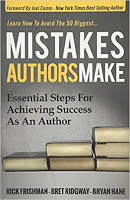
First I want to mention a great resource. From my years in publishing, every author needs to read and learn from experts who know publishing intimately and learn from their insights. This type of wisdom fills the pages of MISTAKES AUTHORS MAKE. Authors Rick Frishman, Bret Ridgway and Bryan Hane have worked with thousands of authors on marketing, promoting and selling books. Their combined experience is poured into the contents of MISTAKES AUTHORS MAKE. Here’s one brief example of the information packed into this book: “Your book is a door opener. It’s an introduction to you and your message. It’s a marketing weapoin in your arsenal as you look ato build your platform and increase your reach to the world. If you happen to make some money on the direct sales side of your book that is wonderful. You should consider that a bonus. The smart book marketer recognizes that the real money is in what the book can do for you in terms of opening doors and making opportunities available.” (Page 8-9)
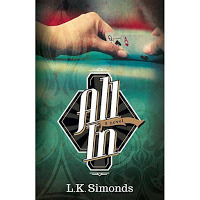
In this article I want to help you see how your book can have a broad ministry and touch readers in unexpected ways. Next month, one of my Morgan James Publishing fiction authors, L.K. Simonds will launch her novel All In. The story is about Cami Taylor, a blackjack dealer, bestselling author and a fraud. I was the acquisitions editor for this novel and have been watching and reading about Simonds marketing activity.
I watched this four-minute video where Simonds tells about learning about Bookmates4Inmates.com and how she has ministered in prison and knows about life in that world. After corresponding with the director, she decided to donate half of the books which she had at the time—130 books. It turns out they have over 400 women that have requested books and did not have books for 127 of them—or funds to get the books. Simonds' donation was an answer to a need and their prayers. To receive the books, the reader is required to write an honest review. In the video, Simonds reads some of these reviews and the feedback about her book. The way these books are touching and influencing lives is incredible and moving.
Can your novel or nonfiction book have an unexpected ministry? What steps are you taking today to open these doors of opportunity? It doesn't just happen naturally but as an author you have to be seeding the market and knocking on doors to see which ones will open for your book. I hope this story gives you some ideas and encouragement. Let me know in the comments below.
Tweetable:
Does your book have a ministry? Could it? Get ideas from this editor and author. (ClickToTweet)


July 28, 2019
Good Customer Service Is Important

By Terry Whalin @terrywhalin
Good customer service is something important to me. In my own
work in publishing, I try hard to deliver some basics of good customer service
in my responses through email or on the phone or in the mail. It is important to
be timely and thorough in this process.
There are countless examples of companies that don't practice
good customer service and I wanted to point out a recent example. For the last
several years I get my internet connection, landline and television bundled
through CenturyLink. Overall I've been pleased with their service and
responsiveness. My wife and I enjoy using our DVR to record television programs
then watch them together. We watch a variety of different types of programs.
Last Sunday I went to one of the standard stations— CBS and
found a message from DirectTV (the television arm of CenturyLink). Apparently
DirectTV and CBS are in “negotiations” for service and that service is now
disrupted—i.e. you can't get it. No one knows how long these “negotiations” are
going to be going on. I called the billing area of CenturyLink and learned this
disruption was a complete surprise to them as well. DirectTV did nothing
proactive to warn their customers. They simply put up a screen on the
disruption.
In this article from the Wall Street Journal, I
discovered I was one of 6.6 million people having this experience with DirectTV.
Someone at DirectTV knew this was going to happen and they did nothing
proactive to help their customers. Apparently there is some local cable where
you can still get the channels when you attachment. I've been trying for the
last few days to get one of these local connectors from DirectTV but they are
“back ordered” (little surprise here). The package finally came but it is not a
simple fix with pages of instructions and various wires and connections (not
hooked up at my place yet).
I'm certain with the millions of customers involved and missing
a standard network channel, someone at CBS and DirectTV are doing some
consistent work to resolve this customer service nightmare. My key point in this
article is some of these people knew this was going to happen and they did
nothing to warn their customers or partners like CenturyLink (at least that is
obvious).

Here are some basics for good customer service:
1. Answer your phone and return your phone calls.
2. Answer and respond to email.
3. In your answers, attempt to resolve the issues if possible. I
can think of several emails from Morgan James authors this past week where I
wasn't the right person to answer the author's question. I still responded and
pointed them to other people on the team who could provide the answers. At least
they heard a response from me—even if not the response they wanted.
How important is good customer service to you? How do you handle
it in your own writing life? Let me know in the comments below.
Tweetable:
Good customer service is important. Get several tips and insights from the editor and writer. (ClickToTweet)
July 21, 2019
The Anatomy of a Book Review
By Terry Whalin @terrywhalin
I've been writing reviews on books for many years. My first book
review appeared in a magazine that no longer exists. I've written hundreds of
print book reviews and for two publications, I was their book review columnist
which meant I had regular deadlines to deliver my columns which contained
multiple reviews. In recent years, I still write some reviews for print
magazines but in general, my reviews appear online.
I read many different types of books then write these reviews.
Often as I read the book, I open a file in Microsoft Word and begin to write
some of my thoughts about the book. When I finish the book, I will craft my
review. Sometimes I will post the review right away on Goodreads
and Amazon and my social
media—but not always.You can follow these links for Amazon and Goodreads
to see the various types of books that I read and review. Notice not all of them
are print books but I also write reviews about the audiobooks that I hear.
Sometimes I will write reviews in batches or one review after another. Do you
ever handle a certain type of writing in batches?
The majority of the books that I read are nonfiction—and this
has been my pattern for years and explains why I have written mostly nonfiction
for years (a few short stories are mixed into that writing). I do read several
fiction authors and look forward to these books.
In the last few days, I've finalized a number of book reviews—in
a batch. When I write a review, it is not just a sentence or two—like some
people do. Instead, I write at least a paragraph which summarizes the content of
the book. What are the major sections in the book and is this something
worth writing about in your review? I do sometimes and sometimes not. Normally I
as I read the book, I am looking for a quotation or two from the book. Often it
is several sentences that I locate from the book. I like to use quotations
because it shows readers that I actually read the book and pulled out something
important for me from the book. At the end of my quotation, I include a specific
page number from the book.
As I read a book, I will take little post-its and
flag a particular passage or section so it will stand out—and I can use it for
my review. I use these flags to highlight possible quotations or content that I
want to highlight in my review.
While many of my reviews are five star reviews and positive, I
write honest reviews so not all of them are five stars. If I didn't finish the
book or something else, I try and write about it in my review. It is important
for reviewers to write their honest feedback about the book. My reviews are much more than a sentence or two. Normally they range from
about 120 to 220 words in length.
I hope this article gives you some ideas to write your own
reviews. The key is to jump in and write reviews over and over for the books
that you read or hear. It is a solid way you can support other writers with your
reviews. For more information and insights, I recommend you
get this free interview
and ebook from Dana Lynn Smith. It is a resource I created to help other
book authors with reviews.
Do you write book reviews? If so, let me know about your tips
and insights in the comments below.
Tweetable:
Some people have no idea what to write for a book review. Get the details from a prolific editor a reviewer in this article. (ClickToTweet)
July 14, 2019
Writers Must Look in Two Directions

By Terry Whalin @terrywhalin
When I was a child, my parents sternly warned me, “Look both
ways before you cross the street.” It was wise counsel then and is also relevant
today. As writers, we have immediate deadlines and long-range plans. Are you
working on both? These actions are important for every writer and it is
something that I do every day—work on both types of deadlines.
Immediate Plans
As an acquisitions editor at Morgan James, I am
processing submissions and talking with authors about the details of Morgan
James to see if it is a fit for their book. If so, then I need to champion the
book to my colleagues with relevant details to see if they will agree—and then
send an official publishing contract. When the contract comes, I need to send it
to the author (or their literary
agent) and then answer questions and negotiate and finalize the contract.
There are numerous steps in this process yet it is important to keep moving on
these submissions and contracts. It is a continual part of my immediate
work.
Also as an editor, I make follow-up calls and send follow-up
emails to authors about their contract to see if they have questions and
encourage them to move forward. Authors have many choices about their books and
sometimes it takes many of these follow-up calls before they sign and move
forward. It is a continual process and often with many twists and
turns.
As a writer, I'm sending magazine editors and online editors
requested articles on their deadlines. I have a number of these deadlines and
use reminders on my phone to make sure I meet their needs. As my friend New York Times bestselling author Jerry B. Jenkins says only one in a hundred writers will hit their deadline. As you meet
deadlines, it is one of the simple ways you can distinguish yourself from
others.
Another immediate deadline is to prepare for upcoming
conferences. For example, next month I will be teaching a continuing class on
Jumpstart Your Publishing Dreams at the Greater Philadelphia Christian Writers. The conference
gives the faculty deadlines for their handouts. I have taught this class other
places so I have a prepared handou—yet I need to check this handout and make
sure everything is working on it (all the resources, etc.). My class will be
teaching related but distinct material from my book, Jumpstart Your Publishing
Dreams .
Another immediate deadline is working on growing and feeding my
own social media connections as well as my own network and platform. The growth
process is continual for every author. These immediate deadlines are just
examples of immediate deadlines—and not a comprehensive list.
Long-range Plans
Besides these immediate plans, I am constantly initiating
long-range plans as well. I'm in discussion with some authors and publishers
about writing projects. I'm blocking time and regularly writing on my current
book project. I'm initiating and making marketing plans for the launch of my
next book. I'm pitching myself as a speaker at forthcoming conferences and
events. Some of these plans are for events in a few months and some of them
extend into next year. Long-range plans are also mixed into my
schedule.
As you think about your own writing life, are you looking in
both directions? How are you mixing short term plans and long-term plans into
your day? Let me know in the comments below.
Tweetable:
Are you making immediate and long range plans for your writing?Get insights here from this prolific reader and writer. (ClickToTweet)
July 7, 2019
How To Handle Criticism

By Terry Whalin @terrywhalin
The old expression is true: everyone's a critic (or can be). In this world
of social media, multiple ways to reach people with your ideas and thoughts, how
do you handle criticism?
Several weeks ago, I received a short email asking me if one of my websites
was actually my site. The email continued and said she wondered about it because
of some typos on the site for some common words. I thanked her for the email and
said I would look into the errors.
If you follow my work, you know that I have a number of domains and products
online that I've developed over a period of years. I fill the orders from these
sites (sometimes automatically if they are an Ebook) but in general they
operated without the need for me to go and check out the site.
A few hours
later, when I checked this site, I learned this person was right. The website
had some basic words misspelled and these words made her wonder if it was really
my website or was something fake. In a short amount of time, I printed the
entire website and reviewed it carefully line by line looking and marking any
typographic errors. Because I handle my own website design, I loaded my design
program and fixed the various errors. A few hours later, I wrote this author,
expressed appreciation for her feedback and let her know I had fixed the errors.
Also in my email, I briefly touted some of the benefits others had achieved from
the product on this site. She responded that she appreciated how quickly I had
fixed the issues.
I have a second recent story to tell you about this area. In recent months,
I've been working on a new book whcih will release late this year. Behind the
scenes, I've been working on this book—and in fact, I was able to take some
early copies to a recent conference and sell some of them. A new author bought
the book and wrote an email saying she had noticed some typos in the book. I
wrote back and asked for the specifics. A day or two later, this writer sent
pages with the details. I have worked through these details and fixed the
various issues. Does that mean everything is perfect now? The book creation
process is not one time but an ongoing activity. The proof will be in future
feedback from readers.
As writers, everyone receives criticism. When it happens, each of us have a
choice how we respond. Some people choose not to read their critics and not to
respond. Admittedly you have to use wisdom and discretion because you don't want
to set off a firestorm (as we see sometimes on social media in particular).
One of the best ways for writers to learn about handling criticism is to join a critique group. Follow this link if you want more details.
Here's four basic principles about how to handle criticism:
1. Listen to the feedback. If you can't stand to read it, ask a
spouse or friend to read it and see if the criticism is valid and something
needs to change.
2. Be even handed and matter of fact about your response. Don't
show the other person your irritation or emotion—even if you actually feel
it. Possibly craft your response on an email or written letter rather than on
the phone because you can respond with more care and deliberation.
3. Thank them for their feedback. This response is often an
unexpected one but everyone likes gratitude and appreciation.
4. Take action to make the necessary changes. Maybe it is a
behavior you will have to change but maybe it is something in print or online
that can be fixed.
From my years in publishing, I understand it's best to have a
team for the process. If you are self-publishing, then create your own team of
readers and colleagues. Your overall goal should be an excellent writing to put
into the world. Yes there will be critics but listen to your critics and handle
them with care.
How do you handle criticism? Let me know in the comments
below.
Tweetable:
How do you handle criticism? Here's several ideas from a prolific editor and writer. (ClickToTweet)
June 30, 2019
What Writers Can Learn From Songland

By Terry Whalin @terrywhalin
Some of my friends have grown tired of television and rarely watch it. While I'm involved in reading and many types of publishing, I continue to watch television. In the last few weeks, NBC has launched a show called Songland. The premise is to find a hit song for a top recording artist. Each week the artist changes and have included John Legend, will.i.am, Kelsea Ballerini and the Jonas Brothers. Four song writers come into the studio where they sing their new song in front of the artist and three legendary music producers. Then the artist narrows the four songs to three and these songs are improved with the producers. At the end of the show, the artist picks one of the three songs to record and include on their next album (the prize for the song writers).
Here's a short video clip from the program:
I know almost nothing about the music industry but I've been fascinated to compare the process for Songland with book publishing. I've been aware of several lessons:
1. The best music like publishing is a collaborative process. Yes a self-published book can become a hit but from my experience the ones that do had a sharp professionally designed cover (not from Fiverr.com), used a professional editor to create an excellent manuscript and used a launch team process to get the book attention and out into the market (among other things). Can you come up with a hit by yourself and your own resources? Yes it is possible but very unlikely because of the benefits of working with a team and the great things that happen from this collaborative process. It's why the best agents from my experience work over their proposals and greatly improve them before pitching them to publishers.
2. The artist selects the winner for their listeners—just like a publisher selects which books they will invest and publish. You might not agree with the song they seleft but the final decision is in the hands of the artist. I hope the national exposure for these song writers opens some great doors of opportunity beyond the television program—but I have no idea if this is happening.
3. You are only seeing one piece of the process. Like with book publishing, I suspect with song writing there is a great deal to the process. You have to write a great book proposal and pitch to get into the pub board room where your book is pitched to publishing executives. I assume the process is similar with song writing. Each song writer has to work hard on lyrics and melody to get selected to be one of these four possibilities for the artist.
Have you watched Songland? What lessons have you learned about song writing and other types of writing? Let me know in the comments below.
Tweetable:
Discover Three Lessons for Writers from the TV Show Songland. (ClickToTweet)
June 23, 2019
Three Reasons to Write Devotions

By Terry Whalin @terrywhalin
Recently at the Colorado Christian Writers
Conference I spent some time speaking with Susan King, who for many
years has been an editor at The Upper
Room. If you don't know about this devotional publication (a bi-monthly), it
reaches six million readers. Each devotion has a particular format and are less
than 300 words. I have been published in The Upper Room but it was years ago. In
the early days of my writing for publication, I often wrote devotionals. Susan
told me they continue to need more devotions from men and in particular from the
Old Testament (except Psalms). These pieces of advice are important so I write
something that meets their publication needs. As a writer, you can go in many
different directions so this focus was very helpful.
After speaking with Susan, I decided I would
write some devotions and submit them for consideration. During the conference, I
went to the freebie table and collected a sample magazine and their
guidelines. Whenever you want to write for a magazine, studying their
publication and guidelines is always the first step to getting
published.
With a publication and writing target in sight, I began to think
about writing some devotions. It is a different type of writing than I have done
in a while. I decided to write several devotions for the same publication to
increase my possibilities for getting published.
Here's three reasons to write devotions:
1. Different can be good for your writing. Sometimes we get in a
rut with our writing. Devotional writing is a connection to the spiritual and
applying these lessons to your writing. For me, writing a devotional is
different from writing a chapter in a book or a book proposal or other types of
magazine writing. As a writer, you still get to practice your storytelling craft
with devotionals.
2. Devotions are short. They are often 300 words or less. This
type of writing can be a challenge to say something meaningful with only a few
words. The Upper Room guidelines give insight into this area encouraging you to
look at snapshots of life in the stories that you include.
3. Looking for devotions to write puts you in touch with the
“God moments” in your life. It is easy for life to drift past if you aren't in
touch with these spiritual moments in your life (at least it is for me). I began
to consciously look for these moments and grew more aware of them in my
life.
Bonus reason 4. Devotion writing is another way to serve others with
your writing and also a way to gain your own exposure. If my devotion gets
published in The Upper Room, I will reach millions of readers.
Do you write devotions? What are your reasons for writing them?
Let me know in the comments below.
Tweetable:
Learn Three Reasons to Write Devotions from this prolific reader and writer. (ClickToTweet)
June 16, 2019
Interview Others to Grow as a Writer

By Terry Whalin @terrywhalin
For many years, I interviewed authors about their books and the craft of writing for magazine articles. Sitting with these bestselling authors and asking them about writing taught me much more than I could pour into a 1500 word or even a 1,000 word magazine article. Interviewing others is a critical skill for any writer.
If you don't interview others for your magazine articles, I recommend you write some query letters and pitch writing personality profiles. These profiles are magazine articles focused on a single person and many publications love these types of stories. After you get the assignment from an editor, you can secure your interview with the person. If they are well-known and you don't know how to reach them, go to someone in the publicity section of their book publisher. These publicity people book interviews for journalists to reach their authors.
These publicity people will track down the author, nail down a time for your interview. I always ask for 45 minutes to an hour for the interview to make sure I get what I need for my profile. Also these publicity people will send you review copies of any books and background that you need. Gather all of this information from the publisher ahead of time. Then read the books and look for unique insights and questions you can ask the personality.
If the person you are interviewing is well-known or has been interviewed often, your preparation and creating unique questions is a critical part of your preparation. If you don't prepare, you will not gather unique stories and information from your interview. Instead the person will tell you their “stock stories” or material that they always tell journalists during their interviews. For your article, you are looking for stories which have not been told or are rarely told.
As a part of your preparation, write down a list of specific questions. Take time to imagine yourself doing the interview and how you are going to ask different questions. As you specifically write them down, it will help your preparation for the interview. Then during the interview, use your questions but also be flexible to ask other questions as they happen. At the end of the interview, ask if there is something else you should have asked. It gives the individual a chance to sell you something they wanted to tell you.
Whether the interview is on the phone or in person, I tell the other person that I'm making a recording of our conversation and get their permission on the tape. As a practice, in general, I do not transcribe this tape (which from experience seems like a waste of time and energy). Instead I write from my notes but use the tape as a back up tool—and for expansion of information. I can't write fast enough to get down everything (at least in a format so I can read it after the interview). I have found this method of recording and using the tape for additional information as the most effective way for me to use the recording.
Also as a part of the interview, I ask the person how I can check the facts of my story with them before I send it to my editor. The editor may edit and change around the story—but I can protect the accuracy and integrity of what I'm sending. Most journalists never take this step in the interview process. Then if you publish something inaccurate, it will potentially ruin your relationship with the individual. If on the other hand, you check the details with the person, then you are taking steps to preserve your relationship with the person—and can easily return to them for something else in the future (even the distant future).
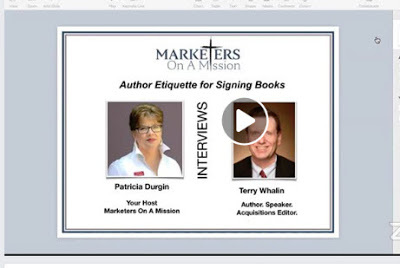
Last week instead of interviewing another person, Patricia Durgin interviewed me on Facebook Live. I loved Patricia's preparation and questions for this hour-long interview. You can follow this link to watch the interview.
Do you interview others? Has it helped you grow as a writer? Let me know your experiences and tips in the comments below.
Tweetable:
Discover interviewing others is a way to grow as a writer. Get insights from this prolific journalist and author. (ClickToTweet)

June 9, 2019
What Is Your Publishing Agenda?

By Terry Whalin @terrywhalin
In the early days of my writing life, I wanted to be published
in as many
magazines and other places as I could publish. I met editors, studied their
guidelines and wrote for their readers. I didn't always succeed and get
published but it happened frequently and I grew as a writer (still learning). I
wasn't focused on the financial rewards from publishing back then but I was
focused on writing credits and getting into many different publications.
Through the years, I've seen many magazines begin and
many magazines close their doors. There is still great opportunity for writers
to publish in magazines. It is a stance that I encourage others to do and
something I actively do as well.
At a recent conference, I picked up some of the free magazines
and took them home to study them. As I looked at these magazines, I was thinking
about their audience and focus. Did they use freelance material? What
information was included in the author bio? Did they even mention any details
about the author such as a new book or point to an author's website?
As you ask and answer these specific questions, you will learn
more about the focus of the publication and their agenda. I noticed several of
these publications had material that I “could” be a possible writer. Yet as I
studied the author bio section, I noticed several didn't even have a single line
about the author. Others included some information but nothing about an author's
book or website. I figured out the agenda of the publication (which the editor's
establish) was not a match for my own publishing agenda. My agenda is to reach
new readers and point toward my recent books or a website. Your agenda has to
match the agenda of the publication otherwise you are wasting your limited
writing time and energy.
One local editor has been teasing me about writing for her
publication. At my encouragement, she sent me a few issues of the magazine. I
studied it and noticed this differing agenda (the magazine's agenda and my
goals). Instead of blindly crossing them off my writing possibilities, I wrote
this friend about what I observed. She can correct my misunderstanding or
confirm it. It's the type of communication work we need to do as writers and
something I've not written about in these articles. I hope it helps
you.
In the comments below, let me know if you have a publishing
agenda? What steps to you take to see if your agenda matches a new publication
for your work? I look forward to your thoughts.
Tweetable:
Do you have a publishing agenda for your writing? Get some ideas from this prolific writer. (ClickToTweet)
--

June 2, 2019
Control Your Social Media

By Terry Whalin @terrywhalin
In recent years, I've gained a large social media following with
over 200,000 on
Twitter, over
4,900 Facebook friends and over 12,000
connections on LinkedIn. In other articles, I've provided details about what
I am doing and how I am doing it. Today I want to talk about a different aspect
of social media: control.
All of these social posts are something I personally do. I don't
have an assistant or someone else doing it. I realize several things:
--consistency is important
--people are reading this information and at times responding to
it
--the information will be online FOREVER (yes I understand that
all CAPS is shouting but I want to make sure you see these posts are around for
a very long time)
The words matter. I begin each day with an inspirational
quotation and an image of this person. Today on one of these social networks,
someone added a comment about the person I quoted and flamed this person because
of other actions they have taken. The comment was inappropriate and very
public—and I've watched these types of things escalate on social media to move
in a strange direction. I immediately deleted the comment. Then I took further
action: I blocked this person from this network so they can never again make
such a comment on my posts. I'm in control of my own social media so I took
immediate action. Yes I believe in free speech but I also understand that I can
control my own social media.
When you read something you don't agree with, you can post a
comment or you can move on in silence or you can write the person directly (not
public). Each of us have choices in this area. The person who puts out the
social media post has a choice and the person who responds (or doesn't) also has
a choice.
Several points in this area:
1. Take control of your social media
2. Monitor the comments so you can respond and engage with it.
Engagement is a huge reason for being active in social media and the more your
audience is engaging, the better in my view.
3. Use tools like Hootsuite and others to help you easily monitor the responses
to your social posts. For example, people try to send me direct messages often
on Twitter and I don't read those on Twitter because of the time involved (mine
is limited for social media because of other things I do throughout the day—a
choice). Instead I read these messages and at times respond through Hootsuite.
Find your own way to handle this aspect of social media.
4. Always look for ways to expand your readership and grow your
social networks. I'm not talking about doing it artificially where you buy
Twitter followers but organically where you connect with more and more people.
As you increase your reach, you will increase your interest from editors and
literary agents and others in the publishing community.
OK, that's my view on the necessity for us to take control of
our social media. Do you agree or not? Let me know in the comments
below.
Tweetable:
Are you in control of your social media? Get insights here from a prolific editor and author. (ClickToTweet)


