
W. Terry Whalin's Blog, page 28
September 27, 2020
Six Keys to Consistent Social Media
 By Terry Whalin @terrywhalin
If you follow me on Twitter or
LinkedIn or Facebook, you may wonder how I manage to post such focused content
12–18 times a day. Since 2008, I have posted over 55,000 times (yes a lot of
posts). In this article, I want to give you some basic principles I use week
after week.
1. My Mindset is to
act like I'm running a writing magazine. Your attitude is critical in
this process. In my mind, my Twitter feed is like I am running a writing
magazine about various types of publishing. My posts are targeted to my readers.
If you read these posts, it's like getting an education in publishing. I've told
you what my attitude and mindset is about my social media posts. What is yours?
Your mindset is important to get the right mindset for this
process.
2. Collect and read blogs
from others—but not randomly—with a plan. I subscribe to a number of
blogs about writing and publishing that come into my email box. I don't have to
search for them and use these article in my social media plans. I have a plan
and in general, I know where I'm going to put a particular type of article on my
plan. I've made these choices to make it almost automatic and take little
time.
3. Work ahead using
Hootsuite (or some other schedule program).
Throughout the week in focused times, I am working on my social media plans.
Hootsuite allows me to schedule my posts. It has been a valuable tool in this
process for me. Other people use buffer but use a scheduling program in this
process. In general, I am filling out the bulk of my scheduled posts ahead of
time.
4. Once
a week, I fill out the remainder of my schedule plan. I keep a text
file with various posts that I've used in the past. Some of them are in
categories while others are random. It often takes me about 30 minutes once a
week to fill in the remainder of my social media plans. Every day I take a few
minutes to double-check my Hootsuite and make sure everything is going to work
properly.
5. Always add the
unexpected or current content. I read through my various posts and make
sure they are relevant for where I am scheduling them. Often my current spot for
posting them is weeks in the future. Sometimes an article will not be timeless
and have information which needs to get out to my readers now—instead of weeks
in the future. I add those posts to my scheduled plans. It is flexible—but I
have a plan.
6. Consistency counts and
people are reading these posts. I intentionally do not spend a lot of
time reading social media posts. Through my Hootsuite, I engage with people who do respond to my various
posts. Without focus and a plan, social media can be a huge time waster. Your
consistency will pay off and I can tell from the reactions that people are
reading my posts and I know it has value for these readers.
Admittedly this process takes
work, time, focus and planning to successfully execute. In my view it has been
well worth it. In the comments below, let us know what I'm missing or other ways
you achieve consistency with your social media. I look forward to reading your
comments.
T weetable:
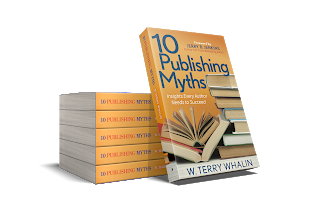
Get 10 Publishing Myths for only $10 +FREE shipping + over $200 of free bonuses.


September 20, 2020
Interview Insights When The Roles Are Reversed
By Terry
Whalin @terrywhalin
Over the years
I've interviewed New York Times bestselling author Jerry B.
Jenkins a number of times for different magazine
articles. When we met at least three decades ago, both of us were magazine
editors and attending the Evangelical Press Association convention. One evening
at EPA, three of us (all editors) played scrabble against Jerry—and Jerry won.
He is a world-class scrabble player and knows all of the strange three letter
words.
When Jerry and
Tim LaHaye wrote the first Left Behind novel, Jerry sent me a review copy. I read it
while on a trip and was skeptical about the plot. The opening scene where half
of the people in a 747 are raptured (disappear) seemed unbelievable (even though
I understood this concept from the Bible). Then I got hooked with the characters
and read every one of those books (which have sold over 60 million copies).
Jerry
graciously agreed to write the foreword for my newest book, 10 Publishing Myths.
Both of us have appeared on the same stages at various writers' conferences
yet Jerry had never interviewed me—until recently. Jerry runs the Jenkins
Writers Guild and each month has a Master Class interview (follow this link to see a
sample and even sign up.) Several months ago, the
Jenkins Guild released our interview. I asked (and received) permission to
post this 36-minute interview here. Either click the link to open the video in a new window or use the video below.
We covered a wide range of questions including:
the legacy of Billy Graham
advice from 10 Publishing Myths
how writers can get a literary agent
why go to a writers' conference
how to turn off the critic when writing my first draft
key mistakes I've seen writers make in their submissions
the details of Morgan James Publishing (some people will be surprised to hear Jerry's endorsement)
the importance of blogging and The Writing Life
what makes a book proposal standout
and much more.
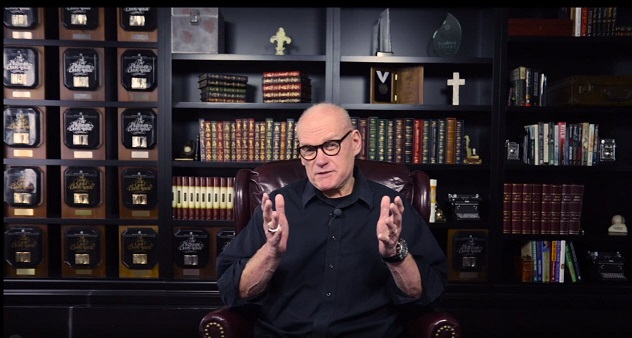
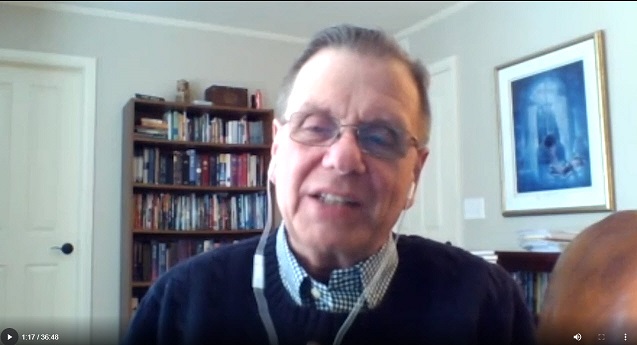
Yes there is a great deal of valuable content packed into this video. I had fun answering Jerry's questions and I hope each of you will enjoy and gain value from this video. It was a different experience for us to reverse roles for this interview and Jerry interviewed me instead of my interviewing him.
Have you experienced this interview reversal? Tell us about your experience in the comments below.
T weetable:
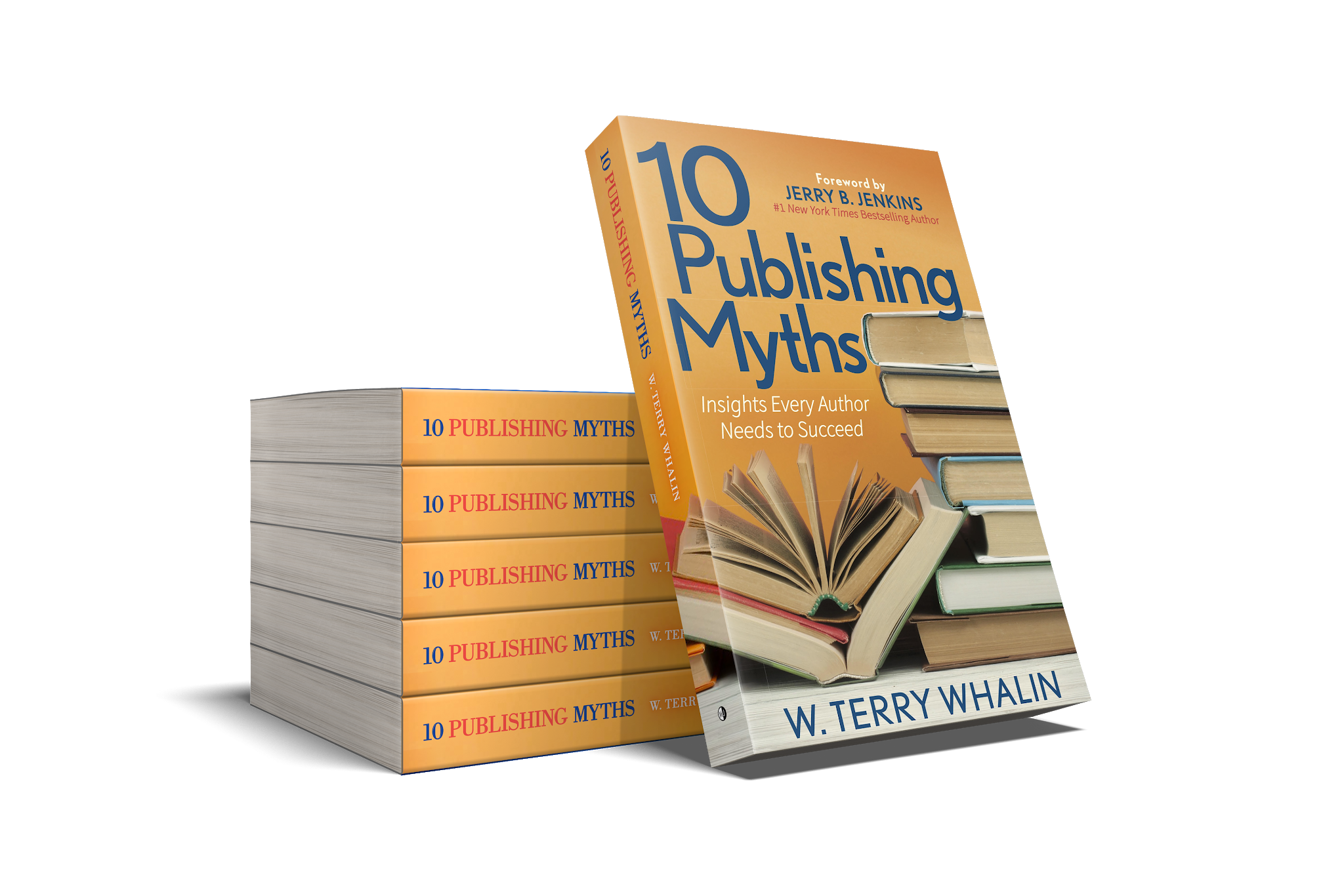 Get 10 Publishing Myths for only $10 +FREE shipping + over $200 of free bonuses.
September 12, 2020
A Simple Way For Writers To Stand Out

By Terry Whalin @terrywhalin
The publishing world is
competitive. Thousands of new books are released into the world every
day. Yet there is a simple way for writers to standout. While this method is
simple, it is not easy: do what you say you will do.
Years ago when I was an
acquisitions editor at another publisher, a colleague needed me to connect with
a contracted bestselling author who was late on his manuscript—a year late. As
someone who has stayed up writing all night to meet a publisher deadline, I was
surprised this author could be so late. At this publsher, we had weekly schedule
meetings where we talked about our contracted books and where they were in the
publishing process. I learned a lot just listening to the details about these
various books.
As a writer I have all sorts of
deadlines. Some of them are self-imposed and some are from my editors. Last week
I received an email from a friend about her new children's board book. She was
looking for reviews. I reached out, asked for a copy and the marketing director
at her publisher sent it to me. I loved the creativity in this little book,
wrote my review and posted it on Amazon and Goodreads. There was no money
exchanged in this process. I read books and write reviews for fun. I receive
many books and don't get all of them read and reviewed but in this case a board
book only has a few pages the process was easy to do.
As the Bible says in Matthew
5:37a, “All you need to say is simply 'Yes' or 'No'.” It is a simple way to
stand out as a writer. If you meet your deadlines with high quality material, if
you promise to write something, and then do it, you will separate yourself from
other writers.
How do you stand out as a writer?
Do you have other ideas? Let me know in the comments below.
Tweetable:
Get 10 Publishing Myths for only $10 + FREE shipping + Over $200 in bonus items.
September 6, 2020
A Critical Writer's Help

By Terry Whalin @terrywhalin
With the worldwide pandemic, our
days as writers have been different than any other time in history. People are
working at home instead of offices. Children are learning online instead of in
the classroom and many other things have changed in our world. There is good
news for writers in that books continue to sell (in fact book sales are up in
many areas), publishers continue to offer book contracts then produce and
distriubte books.
These changes have been hard on
many writers (including myself). For some people spending this intense time has
disrupted their marriages. I've read where the high divorce rate has even
increased during this pandemic. In this article, I want to talk about a rarely
discussed but one of my most critical writer's helps: my wife. Do you have a
supportive spouse? If not, can you find a supportive writer friend?
Recently I was contacted
about updating a book that I wrote over 20 years ago. This book is out of print
and an organization continues to use this book in their work. Some of the
stories in this book are dated because we no longer have phone booths. As I
talked over the updating project with my wife, it called to my
attention something that I “knew” but didn't focus on: she has not read the
majority of my publshed books. She had not read this book and offered to go
through and mark some things that needed revision. Her efforts on this project
were a huge help to me.
This year marked my
25th year of marriage. My journey as a writer has not been simple
but involved multiple moves, job changes and much more. Christine has supported
me throughout this entire journey. I'm talking primarily about emotional
support. She has given me support in these critical areas that every writer
needs:
1. A Sounding Board for
New Ideas and Directions. As writers there are many different
possibilities for our work. It's good to have someone to bounce around ideas. If
you need some possibilities, check out the first chapter of my Jumpstart Your
Publishing Dreams (no opt-in).
2. Someone to talk about
books and publishing (sometimes too much). Just so you know our
conversations are not just one-sided. Yes she listens to my publishing stories
but she has her topics that she discusses with me. For example, she loves plants
(indoors and on our porch).
3. Accountability to keep
me on task. Yes we talk about this important area as well even though
I've been meeting deadlines for many years before we even met.
These factors are only a few of
the critical ways I've been blessed with her support. On the fun front, one fo
the activities that we've done together for years is go to the movies once a
week (normally on Saturday). With the pandemic, movies have not been possible.
Last week we purchased an Amazon fire stick and installed it on our television. I've
known about this option but never used it until last week. The fire stick has
opened up another large range of original movies and television series. It has
added something else we do together.
Where are you getting this
critical writer's help? Let me know in the comments below.
Tweetable:
What is a critical writer's help? Get the
details and insights in this article. (ClickToTweet)
Get 10 Publishing Myths for only $10 + FREE shipping + Over $200 in bonus items.
August 30, 2020
Five Reasons to Write Work-Made-For-Hire

By Terry Whalin @terrywhalin
Last week I mentioned writing the
study guide for the bestselling book, Halftime . What I did not say in that
article is I wrote this study guide as a work made for hire project. Over the years I've written several articles about Work
Made for Hire contracts (follow
this link to see some of them). Many writers run away from such work and
refuse it. These people believe they are protecting their rights and want to
publish royalty projects instead of selling all their rights to someone
else.
My
literary attorney has told me that I've signed more Work Made for Hire
agreements than anyone she knows. I've also been a working writer in the
publishing community for decades. The truth is sometimes it is better to earn
the money upfront from a publisher rather than hope for royalties (which may or
may not happen).
In
this article, I want to give five reasons to write Work Made For Hire projects.
I call them projects because they are not always books. Sometimes they are
articles or white papers or any number of other types of writing.
1. You Get Immediate
Work. Often in the publishing world, you have to write your article or
book with the hope that you will find someone to publish it. With Work Made For
Hire, you have found paying writing work which you can do right away—and get
payment.
2. You Get Paid for Your
Work. Depending on what you negotiate in a Work Made For Hire
agreement, often you get half of the money upfront. This fact helps your cash
flow as a writer—especially those of us who write full-time.
3. You Can Build Your Reputation and Get a Writing
Credit. Some Work Made For Hire is ghostwriting (no credit). On other
occasions, my writing is credited. Sometimes this work appears in the tiny print
on the copyright page. Other times my name appears on the title page of the book
and not the cover. On other books where I've co-authored the book for someone
else, my name appears on the cover as “with W. Terry Whalin.” To the publishing
world, this “with” credit indicates I wrote the book. If you are new in the
publishing world, this credit can be an important part of building your
reputation in the publishing world.
Several of the children's books that I have published
were Work Made For Hire. The finished children's books had high quality
illustrations and were a beautiful finished product. In some cases my name only
appears on the copyright line (small print) but in other cases, my name appears
on the cover. How it turns out for you is all about watching the details of the
agreement. Several of my devotional books which I wrote as a Work Made For Hire
have sold over 60,000 copies (which is a great credit for any writer—and
something I use from time to time).
4. Provides A Way to Work for a
Publisher. For many new writers, it's a challenge to publish
with traditional publishers for your own work. Sometimes publishers need a
writer to complete a manuscript in a short amount of time. Years ago I wrote a
book for a publisher in a short amount of time and exceeded their deadline. My
name is in the small print on the cover of this book and it continues to sell.
When I checked a few years ago, this book had sold over 100,000 copies. As the
other examples in this article, I wrote this book as a work made for hire and
haven't been paid anything additional but it is a great credit for a
writer.
5. In a hard enviroment,
provides a way to seize an opportunity. I know some publishers are
making cautious decisions about what to publish (for a number of reasons
including the pandemic). This caution has made it hard for writers. Work Made
For Hire is writing that will always be needed and is a way for you to seize the
opportunity, get published and get paid. If you find it, my encouragement is for
you to seize the opportunity.
Do you write Work Made For Hire
or have you avoided it? Let me know in the comments
below.
Tweetable:

August 23, 2020
What Is Your Second Act?
By Terry
Whalin @terrywhalin
Recently I
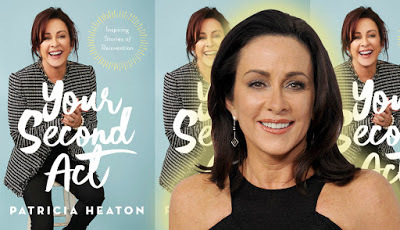
listened to the audiobook version of Patricia Heaton's Your
Second Act . The book is well-done
with interesting stories. The theme of the book is reinvention or discovering
what you are going to be doing during the second part of your life (or the
second act).
I know for in my life, I have reinvented myself a number of times
and filled different roles in the marketplace. For example, I've been a writer,
a magazine editor, an acquisitions editor (now at my third publisher), a literary
agent, a ghostwriter, a collaborator and probably
a few other roles. Different roles come at different periods in my life. I
stopped writing books for others for about ten years then almost two years ago I
began again to write for others (something which is a firm part of my current
writing life).
Before
listening to the Your Second
Act audiobook, I knew very little about the life of Patricia
Heaton. Yes I had watched her on Everyone Loves Raymond but knew little else. It
was fascinating that her father was a journalist and both of her brothers. It
makes sense she studied journalism at Ohio State before switching her major to
theater. I loved how the center of Heaton’s life is not the theater or acting
but her faith—and she makes this clear in the first chapter. Heaton is a
spokesperson for World
Vision and has made overseas trips with the organization.
The audiobook cover says read by
the author and the “full cast.” Until listening to the book, I didn’t understand
“full cast.” Other than the first couple of chapters where Heaton tells her
personal stories, each chapter is focused on a single person. That person reads
part of their own story in the book. After telling their story they include a Q
& A section with Heaton asking questions and the person answering. Then each
chapter includes Patty’s Points which gives readers action points from that
particular chapter. Finally there are “Reflection Questions” for the
reader.
Your Second
Act includes important details for every person in their own
second career. For example, professional golfer Betsy King tells about forming a
nonprofit GolfForeAfrica.org and how she found a partner, made her 501(c)3 and many other important details. It doesn't have to
be creating a separate organization. Your Second Act includes information about
volunteerism which can take many forms such as BigSunday.org. The stories are excellent but have universal
application to readers trying to figure out their own second act. Each one is
well-done and interesting. Each chapter includes “Reflection Question” for the
reader to apply the material to their own life. The result is a well-done
thoughtful book with application for every reader about reinvention. I highly
recommend Your
Second Act .
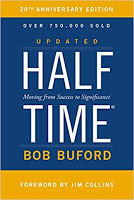 Listening to this book, reminded
 me of another book about reinvention, Halftime by Bob
Buford. Several decades ago I wrote the study guide for Halftime . Originally it was
published as a separate booklet but then at some point, Zondervan added it
into final pages of the bestselling book. I'm certain many people have forgotten
I worked on Halftime . This book continues to be a
significant book on this topic of reinvention or transitioning into your second
act or career.
What are you doing for
your second act? Or maybe it is your third or fourth career? Let me know in the
comments below.
Tweetable:
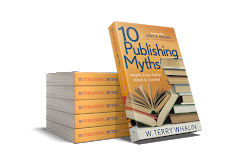
Get My latest book for only $10, FREE shipping + $200 in bonus gifts.
August 16, 2020
Use A Book Review Template
By Terry Whalin @terrywhalin
I do not like to reinvent the
wheel. If someone else has already created a pattern that I can follow, then
that is easier than making an original. I have written over 1,000 book reviews on Amazon and over 600 reviews on Goodreads. I've written about these
reviews in the past—but never this particular aspect of my reviews. In this
process, I use almost the same pattern for my reviews every time.
I've written about how I add my
bio and a link to my latest book in a previous article (follow this link if you
haven't seen it). As I read or listen to a book, I will open a Word file on my
computer and even before completing it, I will add some thoughts about the book.
Often these “thoughts” become the outline of what will eventually become my
review. I use the previous review as my template. Every review needs a headline,
then an opening paragraph and possibly a middle paragraph with a quotation from
the book (optional) and a concluding paragraph.
I've also written about how I often listen to bestselling
books. Part of my stance in publishing is to always be learning and
listening to what the current public is reading. It comes from reading the
trades and following the publishing market. Recently I heard the bestselling
books from Chris Wallace about the making of the first atomic bomb called
Countdown
1945 . While this book released in early June, I got on the
Overdrive list for the book and just recently was able to listen to it.
Ironically I was listening to the final portion of this book on August
6th or exactly 75 years since the first atomic bomb was dropped on
Hiroshima, Japan. Listening to the details of these stories exactly 75 years
since they occurred gave me chills about the timing. I post the same review on
Goodreads as I post on Amazon (follow the links if you want to see how the
review appears on these sites).
Last year I wrote about the missing link for writing book reviews. I pointed to an
inexpensive template my friend Sandra Beckwith has created. Here's the link
to her product (and it is not an affiliate link from me). Many
people who are not writers, have no idea what to write for a review. Sandra has
a fiction and a nonfiction template for writing a book review. In this article
I'm recommending that you create your own little template. For example, each of
my recent reviews on Amazon include an active link to one of my books. Currently
I am promoting my latest book, 10 Publishing Myths, using this feature. You can learn how I do it in this article.
One of the keys from my
experience is having a plan, creating a simple system that works for you, and
then executing that system every time. For example, almost every book that I
read or hear, I write and post a review. Over the years, that amount of
reviewing has added up to be substantial. It is not anything fancy but happens
through taking consistent action. Whether you create your own book review
template, as I have done, or use one from Sandra Beckwith, I recommend you use a
template to speed up the writing process and get it done.
Do you use a template when you
write a book review? Let me know your tips in the commends below.
Tweetable:
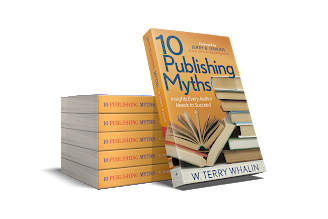 Get my latest book 10 Publishing Myths for only $10, FREE shipping + over $200 in FREE bonuses
August 9, 2020
The Challenge for Every Learner

By Terry Whalin @terrywhalin
Several weeks ago, a reader
contacted me about my book, Jumpstart Your Publishing Dreams. He had read the
book and marked different pages in the book for additional study and action.
Sometimes a picture is worth 1,000 words and this reader sent an
image.
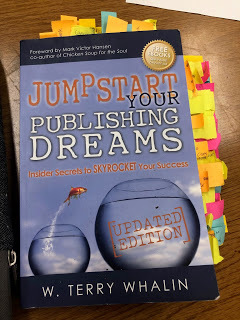
I smiled at his use of post-its
in books because when I read books, I often use the same system. I mark
different passages with a highlighter and post-its. Then I return to these
places and apply the material to my writing life and work. It is a system that
I've been using successfully in my own life for years to keep growing as a
writer.
While I've been in publishing
many years, have a college degree in journalism from a top university, and have
been attending writers conferences and classes for years, here's the key: I
still have much more to learn as a writer.
Are you continuing to grow as a
writer or have you arrived? I've interviewed more than 150 bestselling authors.
In this process, I've met a few authors who have acted like they have “arrived”
at the pinnacle of their profession. It is not an attractive attitude to witness
and in fact a turn off for me. As I have watched what happened to people with
this arrival attitude, I've noticed they have faded from the bestseller lists
and are now in relative obscurity. Yes still around the community but not
currently producing bestselling books. If you have that “arrival” attitude, I
would challenge you to change it. Make sure you have others in your life who
will give you honest feedback. With this honest feedback, you can continue to
grow and learn as a writer.
As writers we need to keep
learning and growing. In this process of growing, there is a tricky balance
between continuing to learn and taking action. To move forward as a learner, you
have to be doing more than learning, , you need to apply that learning to your
work. Recently I was speaking with a writer colleague about this
issue: many people
take courses—but don't take action (implemention—where the rubber meets the
road).
There is an old saying,
“Knowledge is Power.” This statement is true—but only if you act on the
information in your head. For example, I know about Goodreads and how every
author can select quotes from their book and add them into Goodreads quotes. You
give other people automatic permission to use your quotes—and promote your book.
It's good to know that fact—but worthless if you don't take action, choose the
quotes and them put them on Goodreads. Several weeks ago I wrote about the
details of this process (follow this link to see this article.) This is just one
example of dozens of things authors need to do to take action.

Recently I learned about the free online courses from the
Muck Rack Academy. One course is on social media and the other is on
pitching to journalists. I've completed the course on social media and learned a
number of valuable insights which I implemented into my social media. The second
course on pitching to journalists, I'm about to finish but have yet to implement
it into my own writing life. I am a learner but have the same challenges of
every writer—finding balance between learning and implementation (taking
action).
How do you find the balance
between learning and taking action in your writing life? Let me know in the
comments below.
Tweetable:
Every learner has a challenge between continuing to grow in knowledge yet also implement and take action. Get insights in this article from a prolific editor and author. (ClickToTweet)

August 2, 2020
The Power of Words

By Terry Whalin @terrywhalin
I live near Denver, Colorado and
watch some local news on Channel 9. Countless times I've watched Marty Coniglio
give his weather forecast. He has been with the station for 16 years. Like many
in journalism, Coniglio is active on Twitter. Last week, he sent out a tweet
comparing federal troops to Nazis. Here's the details in the Denver Post article. He is no longer
employed at the station. As I read the story, it reminded me that our words
have power.
The
Danger of A Habit
As a reader, I have been reading
and listening to books for years. Each time I write a short review (normally
less than 150 words) and post my review on Amazon and Goodreads. I've written
over 1,000 Amazon reviews
and over 600 reviews on Goodreads (where I have 5,000 friends and my
reviews get a lot of attention and reading). I read and listen to many different
types of books. Recently I listened to part of a bestselling book—which was
filled with hatred (in my view every sentence). As an editor, I often evaluate a
book based on a short portion. In this case, I decided not to listen to the rest
of the book and wrote that information into my short review. I followed my habit
and posted the review on Amazon and Goodreads. There are hundreds of reviews for
this book and my review joined those reviews.
The final portion of my habit is
to post my review with the cover on social media. I have over 200,000 Twitter
followers, over 18,900 connections on LinkedIn and over 4900 Facebook friends. I
didn't think about my posting because it is a habit. The reaction
surprised me but I should have known when I did it. I spent about 48 hours on
Facebook monitoring, deleting and even blocking some people (when you have 4,900
“friends” it is no big personal loss to block some people). My short post was
consuming way too much energy and time. I deleted the post on all of my social
media platforms. In a few minutes, it was gone. Did lots of people see it? Yes
and I learned even with a habit to think about each post.
I temporarily forgot some
critical things about the Internet and social media. While you may be writing
the material for yourself, other people read it. part of the social media
process is other people are going to respond and react to whatever you said.
Also these words are often out online forever. In this volatile, on-edge world,
common sense reminds of the small talk advice: “avoid religion and politics.” It
also applies to our social media. From this experience, I was reminded our words
matter. In fact, our words have power and people read them. It's good to use
caution and wisdom with what you put online.
As you write today, be aware your
words have power to heal or to harm. Let me know your thoughts about this subject in the comments
below.
Tweetable:
When you write, are you aware your words have power? Get the details of what this prolific editor and writer is learning about the power of words. (ClickToTweet)
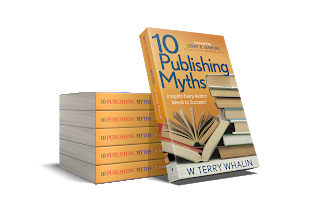
Get 10 Publishing Myths for only $10 with FREE shipping and over $200 in bonus gifts. Details here.
July 26, 2020
Lessons from A Spilled Coffee Pot

By Terry Whalin @terrywhalin
In my home office, one of my
first actions of the day is to turn on my coffee pot and brew some coffee. Yet
today it bubbled and gurgled and spilled. My coffee pot was a little off kilter
and not in the place to catch the coffee so it backed up, spilt and made a
general mess.
To prepare for the moment I'll
turn on my coffee pot, the day before I add the water, put
in the filter and the grounds so it is ready for me to turn it on and brew the
coffee. It has rarely happened but this morning, I had a mess on my hands—and a
choice. I could react with anger and disappointment or calmness and just clean
the mess. I cleaned up the mess.
I'm writing this story because I
see comparisons to my life as a writer and editor. Sometimes there are
messes:
-authors don't deliver what they
are supposed to deliver to publishers.
-authors deliver late—many
authors miss their deadlines and are notoriously date with their
manuscript.
-authors that I expect to sign
their contract, go in a different direction.
-the books are not selling. If
you have purchased books and they are not selling, then this situation can be a
mess and disappointing for authors.
-the writing is not working and
storytelling is not good and needs rewriting. Yes you are putting words on your
page but they are not the right words and basically create a mess.
-your computer isn't working
right or you have some other website glitch.
The potential list is
endless. Each time I have choices how I respond—disappointment or calmness and
acceptance. I recommend calmness because the results and outcome are much
better.
These days are strange with hard
economic times for some, sickness and even death for others. Yet our lives as
writers and storytellers are important and vital to keep going. It is a choice
to stop and do something else. For my life, I know I am called to this work and
continue it—the good and the bad.
The Details
Matter
Yesterday I needed to call one of
my authors and talk about an editorial issue. I took her phone number from her
signature—and it did not connect. I double checked the number in other
emails—same. I finally looked at her proposal which had a different number. When
I tried that number I got an answering machine and left a message. Two numbers
were reversed. When I spoke with this author later in the day, I told her about
the error in her email signature (which goes out in every email). She
appreciated my telling her about this detail. In her next email, it was
fixed.
I'm learning every day —important
lessons about life and publishing. I hope you are as well. In the comments, let
me know some of your lessons.
Tweetable:
This prolific editor and author found lessons from a spilled coffee pot. Get the details here. (ClickToTweet)



