
Find & Share Quotes with Friends
Dostoevsky Quotes
Quotes tagged as "dostoevsky"
Showing 1-30 of 124

“You're not Dostoevsky,' said the citizeness, who was getting muddled by Koroviev. Well, who knows, who knows,' he replied.
'Dostoevsky's dead,' said the citizeness, but somehow not very confidently.
'I protest!' Behemoth exclaimed hotly. 'Dostoevsky is immortal!”
― The Master and Margarita
'Dostoevsky's dead,' said the citizeness, but somehow not very confidently.
'I protest!' Behemoth exclaimed hotly. 'Dostoevsky is immortal!”
― The Master and Margarita
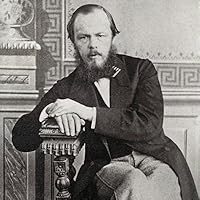
“Nature doesn't ask your permission; it doesn't care about your wishes, or whether you like its laws or not. You're obliged to accept it as it is, and consequently all its results as well.”
― Notes from Underground, White Nights, The Dream of a Ridiculous Man, and Selections from The House of the Dead
― Notes from Underground, White Nights, The Dream of a Ridiculous Man, and Selections from The House of the Dead


“Great writers, I discovered, were not to be bowed down before and worshipped, but embraced and befriended. Their names resounded through history not because they had massive brows and thought deep incomprehensible thoughts, but because they opened windows in the mind, they put their arms round you and showed you things you always knew but never dared to believe. Even if their names were terrifyingly foreign and intellectual sounding, Dostoevsky, Baudelaire or Cavafy, they turned out to be charming and wonderful and quite unalarming after all.”
― The Library Book
― The Library Book

“If Darwin had seen in life what Dostoevsky saw, he would not have talked of the law of the preservation of species, but of its destruction.”
― In Job's Balances: On the Sources of the Eternal Truths
― In Job's Balances: On the Sources of the Eternal Truths

“Reading Dostoevsky's The Brothers Karamazov is comparable to pushing a beautiful grand piano up a very steep hill.”
―
―
“The Idiot. I have read it once, and find that I don't remember the events of the book very well--or even all the principal characters. But mostly the 'portrait of a truly beautiful person' that dostoevsky supposedly set out to write in that book. And I remember how Myshkin seemed so simple when I began the book, but by the end, I realized how I didn't understand him at all. the things he did. Maybe when I read it again it will be different. But the plot of these dostoevsky books can hold such twists and turns for the first-time reader-- I guess that's b/c he was writing most of these books as serials that had to have cliffhangers and such.
But I make marks in my books, mostly at parts where I see the author's philosophical points standing in the most stark relief. My copy of Moby Dick is positively full of these marks. The Idiot, I find has a few...
Part 3, Section 5. The sickly Ippolit is reading from his 'Explanation' or whatever its called. He says his convictions are not tied to him being condemned to death. It's important for him to describe, of happiness: "you may be sure that Columbus was happy not when he had discovered America, but when he was discovering it." That it's the process of life--not the end or accomplished goals in it--that matter. Well. Easier said than lived!
Part 3, Section 6. more of Ippolit talking--about a christian mindset. He references Jesus's parable of The Word as seeds that grow in men, couched in a description of how people are interrelated over time; its a picture of a multiplicity.
Later in this section, he relates looking at a painting of Christ being taken down from the cross, at Rogozhin's house. The painting produced in him an intricate metaphor of despair over death "in the form of a huge machine of the most modern construction which, dull and insensible, has aimlessly clutched, crushed, and swallowed up a great priceless Being, a Being worth all nature and its laws, worth the whole earth, which was created perhaps solely for the sake of the advent of this Being." The way Ippolit's ideas are configured, here, reminds me of the writings of Gilles Deleuze. And the phrasing just sort of remidns me of the way everyone feels--many people feel crushed by the incomprehensible machine, in life. Many people feel martyred in their very minor ways. And it makes me think of the concept that a narrative religion like Christianity uniquely allows for a kind of socialized or externalized, shared experience of subjectivity. Like, we all know the story of this man--and it feels like our own stories at the same time.
Part 4, Section 7. Myshkin's excitement (leading to a seizure) among the Epanchin's dignitary guests when he talks about what the nobility needs to become ("servants in order to be leaders"). I'm drawn to things like this because it's affirming, I guess, for me: "it really is true that we're absurd, that we're shallow, have bad habits, that we're bored, that we don't know how to look at things, that we can't understand; we're all like that." And of course he finds a way to make that into a good thing. which, it's pointed out by scholars, is very important to Dostoevsky philosophy--don't deny the earthly passions and problems in yourself, but accept them and incorporate them into your whole person. Me, I'm still working on that one.”
―
But I make marks in my books, mostly at parts where I see the author's philosophical points standing in the most stark relief. My copy of Moby Dick is positively full of these marks. The Idiot, I find has a few...
Part 3, Section 5. The sickly Ippolit is reading from his 'Explanation' or whatever its called. He says his convictions are not tied to him being condemned to death. It's important for him to describe, of happiness: "you may be sure that Columbus was happy not when he had discovered America, but when he was discovering it." That it's the process of life--not the end or accomplished goals in it--that matter. Well. Easier said than lived!
Part 3, Section 6. more of Ippolit talking--about a christian mindset. He references Jesus's parable of The Word as seeds that grow in men, couched in a description of how people are interrelated over time; its a picture of a multiplicity.
Later in this section, he relates looking at a painting of Christ being taken down from the cross, at Rogozhin's house. The painting produced in him an intricate metaphor of despair over death "in the form of a huge machine of the most modern construction which, dull and insensible, has aimlessly clutched, crushed, and swallowed up a great priceless Being, a Being worth all nature and its laws, worth the whole earth, which was created perhaps solely for the sake of the advent of this Being." The way Ippolit's ideas are configured, here, reminds me of the writings of Gilles Deleuze. And the phrasing just sort of remidns me of the way everyone feels--many people feel crushed by the incomprehensible machine, in life. Many people feel martyred in their very minor ways. And it makes me think of the concept that a narrative religion like Christianity uniquely allows for a kind of socialized or externalized, shared experience of subjectivity. Like, we all know the story of this man--and it feels like our own stories at the same time.
Part 4, Section 7. Myshkin's excitement (leading to a seizure) among the Epanchin's dignitary guests when he talks about what the nobility needs to become ("servants in order to be leaders"). I'm drawn to things like this because it's affirming, I guess, for me: "it really is true that we're absurd, that we're shallow, have bad habits, that we're bored, that we don't know how to look at things, that we can't understand; we're all like that." And of course he finds a way to make that into a good thing. which, it's pointed out by scholars, is very important to Dostoevsky philosophy--don't deny the earthly passions and problems in yourself, but accept them and incorporate them into your whole person. Me, I'm still working on that one.”
―

“Dostoyevsky described hell as perhaps nothing more than a room with a chair in it. This room has several chairs. A young man sits in one.”
― Withnail and I: the Original Screenplay
― Withnail and I: the Original Screenplay
“St. Augustine hated the Stoics, Dostoevsky hated the Russian Liberals. At first sight this seems a quite inexplicable peculiarity. Both were convinced Christians, both spoke so much of love, and suddenly - such hate! And against whom? Against the Stoics, who preached self-abnegation, who esteemed virtue above all things in the world, and against the Liberals who also exalted virtue above all things! But the fact remains: Dostoevsky spoke in rage of Stassyulevitch and Gradovsky; Augustine could not be calm when he spoke the names of those pre-Stoic Stoics, Regulus and Mutius Scaevola, and even Socrates, the idol of the ancient world, appeared to him a bogey. Obviously Augustine and Dostoevsky were terrified and appalled by the mere thought of the possibility of such men as Scaevola and Gradovsky - men capable of loving virtue for its own sake, of seeing virtue as an end in itself. Dostoevsky says openly in the Diary of a Writer that the only idea capable of inspiring a man is that of the immortality of the soul.”
― In Job's Balances: On the Sources of the Eternal Truths
― In Job's Balances: On the Sources of the Eternal Truths
“Dostoevsky does not believe his own words, and he is trying to replace a lack of faith with "feeling" and eloquence.”
― Dostoevsky, Tolstoy and Nietzsche: The Good in the Teaching of Tolstoy and Nietzsche: Philosophy and Preaching, & Dostoevsky and Nietzsche: The Philosophy of Tragedy
― Dostoevsky, Tolstoy and Nietzsche: The Good in the Teaching of Tolstoy and Nietzsche: Philosophy and Preaching, & Dostoevsky and Nietzsche: The Philosophy of Tragedy

“Dostoevsky, too, had lived a dismal and hard life. The czar sent him to a prison camp in Siberia in 1849. Dostoevsky was accused of writing socialist propaganda. He was eventually pardoned and wrote stories to ward off his creditors. Just like in the early '70s I wrote albums to ward off mine.”
― Chronicles, Volume One
― Chronicles, Volume One
“The Dream of a Queer Fellow I write the words again and they appear doubly pregnant with meaning. It is a true and terrible phrase : true, because we are all queer fellows dreaming ; and we are queer just because we dream ; terrible, because of the vastness of the unknown which it carries within itself, because it sets loose the tremendous and awful question : What if we are only queer fellows dreaming ? What if behind the veil the truth is leering and jeering at our queerness and our dreams? What if the queer fellow of the story were right, before he dreamed ? What if it were really all the same?
What if it were all the same not once but a million times, life after life, world after world, the same pain, the same doubt, the same dreams? The queer fellow went but one day's journey along the eternal recurrence which threatens human minds and human destinies. When he returned he was queer. There was another man went the same journey. Friedrich Nietzsche dreamed this very dream in the mountains of the Engadine. When he returned he too was queer.”
― Fyodor Dostoevsky: a Critical Study
What if it were all the same not once but a million times, life after life, world after world, the same pain, the same doubt, the same dreams? The queer fellow went but one day's journey along the eternal recurrence which threatens human minds and human destinies. When he returned he was queer. There was another man went the same journey. Friedrich Nietzsche dreamed this very dream in the mountains of the Engadine. When he returned he too was queer.”
― Fyodor Dostoevsky: a Critical Study
“And where there is love, you can live even without happiness. Life is good even in sorrow; it is good to live in the world. However you live.”
―
―

“Just as his sentimentalism is profoundly middle-class and plebeian, but his irrationalism reactionary, so his moral philosophy also contains an inner contradiction: on the one hand, it is saturated with strongly plebeian characteristics, but on the other, it contains the germ of a new aristocratism. The concept of the ‘beautiful soul’ presupposes the complete dissolution of kalo-kagathia and implies the perfect spiritualization of all human values, but it also implies an application of aesthetic criteria to morality and is bound up with the view that moral values are the gift of nature. It means the recognition of a nobility of soul to which everyone has a right by nature, but in which the place of irrational birthrights is taken by an equally irrational quality of moral genius. The way of Rousseau’s ‘spiritual beauty’ leads, on the one hand, to characters like Dostoevsky’s Myshkin, who is a saint in the guise of an epilectic and an idiot, on the other, to the ideal of individual moral perfection which knows no social responsibility and does not aspire to be socially useful. Goethe, the Olympian, who thinks of nothing but his own spiritual perfection, is a disciple of Rousseau just as much as the young freethinker who wrote Werther.”
― The Social History of Art Volume 3: Rococo, Classicism and Romanticism
― The Social History of Art Volume 3: Rococo, Classicism and Romanticism
“I must let myself flow in a river of words, or I shall choke”
― White Nights: And Other Stories
― White Nights: And Other Stories
“Today I feel nothing but anguish, tedium, and sadness. It is simply that kind of day.”
― Poor Folk and Other Stories
― Poor Folk and Other Stories
“O Nastenka, Nastenka ! Savez-vous que vous m'avez, et pour longtemps, réconcilié avec moi-même? Savez-vous que, dorénavant, je ne penserai plus autant de mal de moi, comme cela m'arrivait de le faire ? Savez-vous que, peut-être, je cesserai de souffrir d'avoir commis un crime, un péché dans ma vie, parce qu'une vie comme la mienne est un crime, un péché ? Et ne croyez pas que j'exagère quoi que ce soit, au nom du ciel, ne croyez pas cela, Nastenka, parce que je vis parfois des minutes d'une souffrance telle, oh, d'une souffrance... Parce que je commence à croire dans ces minutes que je ne serai jamais capable de commencer à vivre une vraie vie [...]”
― Les Nuits blanches / Le Sous-sol
― Les Nuits blanches / Le Sous-sol

“It would need the pen of a Dostoyevsky to do justice to their dreadful lives,”
― Less Than Angels
― Less Than Angels

“Dostoyevsky knew a lot but not everything. He, for instance, thought that if you kill a human you’ll turn into Raskolnikov. But we know now that one can kill five – ten, one hundred people – and go to the theatre in the evening.”
―
―
“À présent que je suis assis auprès de vous et que je vous parle, j'ai même peur de penser à l'avenir, parce que, dans l'avenir, je retrouverai la solitude, cette vie renfermée, inutile; et à quoi donc pourrai-je rêver si, près de vous, dans le réel, j'ai été si heureux !”
― Les Nuits blanches / Le Sous-sol
― Les Nuits blanches / Le Sous-sol
“Le jour d'aujourd'hui fut triste, pluvieux, sans éclaircie, un peu comme ma vieillesse future. Des pensées si étranges m'oppressent, des sensations si sombres, des questions qui me restent encore si obscures s'amassent dans ma tête, et, je ne sais pas, je n'ai pas la force, pas le désir de les résoudre. Ce n'est pas à moi de résoudre tout cela!
Aujourd'hui, nous ne nous verrons pas. Hier, quand nous nous sommes quittés, les nuages commençaient à recouvrir le ciel, et le brouillard montait. Je lui dis qu'il allait faire mauvais le lendemain; elle ne répondit rien; elle ne voulait rien dire contre elle-même; pour elle, ce jour était brillant et clair, pas un nuage ne devait voiler son bonheur.”
― Les Nuits blanches / Le Sous-sol
Aujourd'hui, nous ne nous verrons pas. Hier, quand nous nous sommes quittés, les nuages commençaient à recouvrir le ciel, et le brouillard montait. Je lui dis qu'il allait faire mauvais le lendemain; elle ne répondit rien; elle ne voulait rien dire contre elle-même; pour elle, ce jour était brillant et clair, pas un nuage ne devait voiler son bonheur.”
― Les Nuits blanches / Le Sous-sol
“— Attendre quoi ? Comment ?
— Je l'aime; mais ça passera, ça doit passer, ça ne peut pas ne pas passer; ça passe déjà, je le sens... Comment savoir ? Peut-être ce sera fini aujourd'hui même, parce que je le déteste, parce qu'il s'est moqué de moi, alors que vous, vous avez pleuré avec moi, ici, parce que vous ne m'avez pas rejetée, comme lui, parce que vous m'aimez, et lui, il ne m'aime pas, parce que, moi aussi, à la fin, je vous aime... Oui ! je vous aime ! je vous aime comme vous m'aimez; et je vous l'ai dit moi-même, la première, vous l'avez entendu - et si je vous aime, c'est que vous êtes mieux que lui, que vous êtes plus honnête que lui, c'est parce que lui, lui, lui...
La pauvre petite était tellement émue qu'elle ne ter- mina pas sa phrase, elle posa sa tête sur mon épaule, puis sur ma poitrine, et elle pleura amèrement. Je la consolais, j'essayais de lui parler, mais elle n'arrivait pas à s'arrêter; elle ne faisait que me serrer la main et me disait, au milieu de ses sanglots: "Attendez, attendez; je vais arrêter, tout de suite ! Je veux vous dire.. ne croyez pas que ces larmes... ce n'est rien, une faiblesse, attendez, ça va passer..." A la fin, elle cessa, sécha ses larmes et nous nous remîmes à marcher. Je voulais parler, mais elle me demanda encore longtemps d'attendre. Nous nous tûmes... A la fin, elle rassembla tout son courage et se mit à parler...”
― Les Nuits blanches / Le Sous-sol
— Je l'aime; mais ça passera, ça doit passer, ça ne peut pas ne pas passer; ça passe déjà, je le sens... Comment savoir ? Peut-être ce sera fini aujourd'hui même, parce que je le déteste, parce qu'il s'est moqué de moi, alors que vous, vous avez pleuré avec moi, ici, parce que vous ne m'avez pas rejetée, comme lui, parce que vous m'aimez, et lui, il ne m'aime pas, parce que, moi aussi, à la fin, je vous aime... Oui ! je vous aime ! je vous aime comme vous m'aimez; et je vous l'ai dit moi-même, la première, vous l'avez entendu - et si je vous aime, c'est que vous êtes mieux que lui, que vous êtes plus honnête que lui, c'est parce que lui, lui, lui...
La pauvre petite était tellement émue qu'elle ne ter- mina pas sa phrase, elle posa sa tête sur mon épaule, puis sur ma poitrine, et elle pleura amèrement. Je la consolais, j'essayais de lui parler, mais elle n'arrivait pas à s'arrêter; elle ne faisait que me serrer la main et me disait, au milieu de ses sanglots: "Attendez, attendez; je vais arrêter, tout de suite ! Je veux vous dire.. ne croyez pas que ces larmes... ce n'est rien, une faiblesse, attendez, ça va passer..." A la fin, elle cessa, sécha ses larmes et nous nous remîmes à marcher. Je voulais parler, mais elle me demanda encore longtemps d'attendre. Nous nous tûmes... A la fin, elle rassembla tout son courage et se mit à parler...”
― Les Nuits blanches / Le Sous-sol
“Mes nuits s'achevèrent ce matin. Un jour sinistre. La pluie tombait, elle battait tristement mes carreaux; il faisait sombre dans ma chambre ; gris dehors. J'avais mal à la tête, le vertige; la fièvre me parcourait le corps.
— Une lettre pour toi, mon bon monsieur, par la poste urbaine, le facteur vient de passer, murmura Matriona au-dessus de moi.
— Une lettre ! de qui ? m'écriai-je, bondissant de ma chaise.
— Ben j'en sais rien, mon bon monsieur, peut-être que c'est écrit dessus...
Je brisai le cachet. Une lettre d'elle !”
― Les Nuits blanches / Le Sous-sol
— Une lettre pour toi, mon bon monsieur, par la poste urbaine, le facteur vient de passer, murmura Matriona au-dessus de moi.
— Une lettre ! de qui ? m'écriai-je, bondissant de ma chaise.
— Ben j'en sais rien, mon bon monsieur, peut-être que c'est écrit dessus...
Je brisai le cachet. Une lettre d'elle !”
― Les Nuits blanches / Le Sous-sol
“Il me revient un bon mot espagnol, à l'époque où les Français, il y a deux siècles et demi, ont construit chez eux le premier asile de fous : « Ils ont enfermé tous leurs imbé- ciles dans une maison spéciale, pour être sûrs qu'ils étaient eux-mêmes des gens intelligents. »”
― Bobok
― Bobok

“There can no longer be any good a priori, since there is no infinite and perfect consciousness to think it. It is nowhere written that "the good" exists, that one must be honest or must not lie, since we are now upon the plane where there are only men. Dostoevsky once wrote: "If God did not exist, everything would be permitted"' and that, for existentialism, is the starting point.”
― Existentialism is a Humanism
― Existentialism is a Humanism

“Sonia, tell me no or yes. Do you have a life?
Ha! she said. If you really want to know, read Dostoevsky. Then they all laughed and laughed.”
― Later the Same Day
Ha! she said. If you really want to know, read Dostoevsky. Then they all laughed and laughed.”
― Later the Same Day
All Quotes
|
My Quotes
|
Add A Quote
Browse By Tag
- Love Quotes 102.5k
- Life Quotes 81k
- Inspirational Quotes 77.5k
- Humor Quotes 45.5k
- Philosophy Quotes 32k
- Inspirational Quotes Quotes 28.5k
- God Quotes 27k
- Wisdom Quotes 25.5k
- Romance Quotes 25k
- Truth Quotes 25k
- Poetry Quotes 24.5k
- Life Lessons Quotes 23k
- Quotes Quotes 21.5k
- Death Quotes 21k
- Happiness Quotes 19k
- Hope Quotes 19k
- Faith Quotes 18.5k
- Inspiration Quotes 18k
- Relationships Quotes 16k
- Spirituality Quotes 16k
- Motivational Quotes 16k
- Religion Quotes 15.5k
- Life Quotes Quotes 15.5k
- Writing Quotes 15k
- Love Quotes Quotes 15k
- Success Quotes 14.5k
- Motivation Quotes 14k
- Time Quotes 13k
- Science Quotes 12.5k
- Motivational Quotes Quotes 12k