Pooja K. Agarwal's Blog, page 8
November 18, 2019
Make flashcards more powerful with these 3 tips
Lots of students use flashcards. But using flashcards doesn't guarantee they're using retrieval practice. In fact, students could be wasting their time.
This week, we share three research-based tips to make flashcards more powerful. Help students study smarter, not harder. (You can also share this 20-minute podcast episode from NPR where we discuss these three tips!)
P.S. Bring your Powerful Teaching book to the Learning & the Brain conference this week for a free laptop sticker or door hanger! Click here for more info.
We'd wager that millions of students use flashcards every day. In survey research of student study strategies, more than 20% of K-12 students and more than 50% of college students report using flashcards. But do students use flashcards effectively? Not necessarily.
Many students use flashcards. That’s great! But here’s a surprise: it’s not always retrieval practice. Researchers at Kent State University have demonstrated that students actually “cheat” themselves by flipping cards over too early and dropping cards out of their deck too quickly.
In laboratory experiments by Jeff Karpicke, when students used a flashcard program and made their own decisions (e.g., they could decide when to drop cards from the deck), there was no benefit on exam performance. Similarly, in a classroom study led by Katherine Rawson, students did not remember as much when they could make their own decisions, compared to a flashcard program preset by researchers.
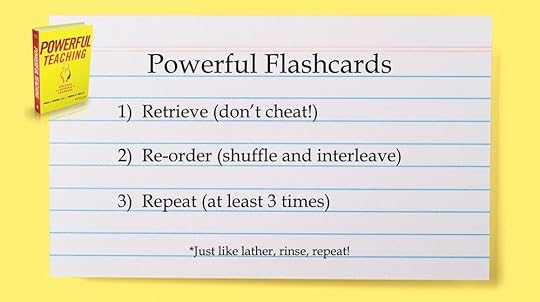
Here are three tips from Powerful Teaching to make flashcards more powerful (use the mnemonic "lather, rinse, repeat" to help you remember).
1) Retrieve: Students should make sure they are retrieving the answer. Write down the answer or say it out loud before flipping the card over. This holds students accountable and ensures they retrieve, rather than falling for the illusion of confidence – thinking “of course I know it” and flipping the card over prematurely. As demonstrated in a recent laboratory study, students’ learning after two days was greater after overt retrieval practice compared to covert retrieval practice.
2) Re-order: Students should shuffle their deck each time they go through it to challenge themselves with spacing and interleaving, instead of going through their flashcard deck in the same order again and again.
3) Repeat: Students should keep cards in their deck until they’ve correctly retrieved it three times. Just because a student has retrieved an item once doesn’t mean they “get it.” We know from research that students have a tendency to remove their cards too early, so by ensuring students keep a card in their deck three times, students are accountable for making sure they really know it, rather than simply thinking they do. This also helps add space between cards in the deck (what scientists call “lag”), further increasing learning.
Many students are turning to tech tools for flashcards, like Kahoot, Quizlet, and Anki. Check out our rundown of flashcard apps and which ones are best for retrieval, spacing, interleaving, and more.
Lastly, in case you missed it, there’s a popular tweet about flashcards going around right now. This is quite impressive for a high school student! That being said, having those flashcards displayed on a board – rather than being retrieved overtly and shuffled as a deck – makes us wonder whether the student is studying harder or smarter. What do you think? Comment below or let us know on Twitter @RetrieveLearn!
I know I'm biased but I have never met anyone with the work ethic my daughter has. She embraced the whole knowledge retrieval/flashcard approach throughout her GCSEs; she's now in Year 13 and these are her A Level Biology flashcards. This strategy is tried and tested! pic.twitter.com/NSBMaxJ18p
— Andy Byers (@Framheadteacher) November 17, 2019
Get More Resources for Students


November 11, 2019
Watch students Flash Forward with retrieval practice
Want a quick retrieval practice activity? Ask your students to Flash Forward! Simply ask them one thing they want to remember 10 years from now.
Watch my students share their Flash Forwards about psychology. I've featured Flash Forward before. This week, see it in action in less than 2 minutes.
P.S. ICYMI, Powerful Teaching is book of the year! Learn more during a free webinar this Friday and at the Learning & the Brain conference in Boston next week.
Watch Students Flash Forward!Here's a quick no-prep, no-grading retrieval practice activity: Flash Forward!
Ask your students, "If you could remember one thing about [insert topic or class name] 10 years from now, what would it be and why?"
How: Ask students to Flash Forward on a written entry or exit ticket, via FlipGrid (a personal favorite) in 30 seconds or less, or during think-pair-share (make sure you give students time to think!).
Why: Flash Forward engages students in retrieval practice, spacing, and metacognition.
Next steps: Flash Forward is so flexible – build on it with additional discussion questions and explore even more Flash Forward ideas in our book Powerful Teaching.
It's never too early or too late to Flash Forward. As we near the end of the semester, now is a perfect time to reflect on the weeks (months!) you've already spent with your students learning and remembering.
Visit our YouTube channel or click below to watch my students Flash Forward about psychology. What do your students want to remember? Share their Flash Forwards with us on Twitter, in our Facebook group, and comment below!
Watch Students Flash Forward
November 4, 2019
Powerful Teaching named Book of the Year!
Powerful Teaching: Unleash the Science of Learning, has been named Book of the Year! I am so honored by Barbara Oakley's endorsement and dedication to sharing the science of learning with the world.
Powerful Teaching is 43% off on Amazon right now (the biggest discount I've ever seen). Download a list of my favorite strategies from the book, too.
Powerful Teaching has been named Book of the Year by Barbara Oakley, author of numerous books, including A Mind for Numbers and Mindshift!
As Professor Oakley put it, "If we had to select a single book to recommend to instructors of any kind, it would be this masterpiece—Powerful Teaching is the best book on teaching that we’ve ever read."
You may be familiar with Professor Oakley's book and massive open online course (MOOC), both entitled Learning How To Learn. She is the keynote speaker at the upcoming Learning & the Brain Conference in Boston, November 22-24, where she'll be sharing research at the intersection of engineering and neuroscience (I'll be presenting at Learning & the Brain, too).

Powerful Teaching is currently 43% off on Amazon. Looking for a gift for a teacher? Or not sure yet? Read excerpts from Powerful Teaching!
Read More About Book of the Year
Download Strategies from Powerful Teaching
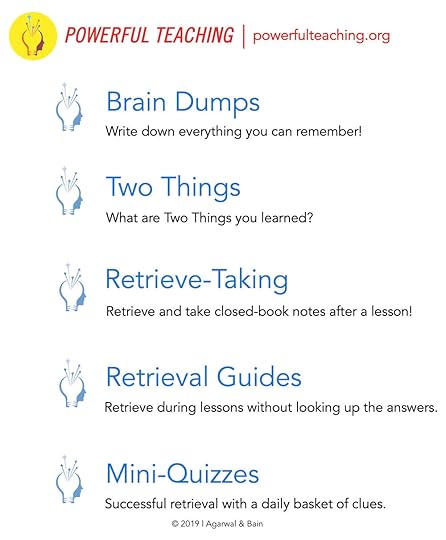
One of my favorite things about Powerful Teaching is how we've condensed the science of learning into key, actionable strategies for the classroom. You can download our list of 5 strategies for retrieval practice directly from our website, powerfulteaching.org. One of our most popular strategies is how to swap study guides for Retrieval Guides. We also have free downloadable templates!
Learn more about how teachers are applying retrieval practice in their classrooms with this new podcast series from the Pew Charitable Trusts.
As Professor Oakley shares in her book review, "In Powerful Teaching, Agarwal and Bain provide a tour de force of practical ideas and explanations involving retrieval practice, explaining how this vital topic is related to concepts such as interleaving, deliberate practice, and formative assessments."
Download Resources from Powerful Teaching
October 28, 2019
Access our database of retrieval practice research in classrooms!
We are thrilled to announce and share our new database of retrieval practice research conducted in classrooms! Click here to access the database and download our project summary.
In this systematic review of the literature, cognitive scientists have organized 50 classroom experiments on retrieval practice, all in one place.
In celebration of our 100th update today (2 years!), we would love for you to share this research with educators on Twitter. Thank you for unleashing the science of learning!
Access Our Research Database
Photo by Jesse Orrico on Unsplash
Want a quick way to access classroom research on retrieval practice? We have a new database of 50 experiments sorted by grade level, content area, type of retrieval practice, and more.
This is much more than a spreadsheet. With this literature review, we:
Share and provide access to valuable research in cognitive science
Compare apples to apples by carefully defining classroom research
Identify trends and research-based recommendations for teachers
Highlight future directions for applied research on retrieval practice
The project summary includes an overview of inclusion criteria, the procedure for the literature review, key findings, and links to the 37 studies included in the review. This project, including the database and literature review, is so new – it’s literally a work in progress! This project as been pre-registered on the Open Science Framework (OSF) and updates will be posted at https://osf.io/mz2ks/.
Note that this project has not yet undergone the peer review process. We value the feedback and input from leaders in the field. At the same time, the peer review process and publication production can take a year or more. In order to make this review of the literature on retrieval practice relevant immediately, we have decided to release these documents in advance of peer review to facilitate rapid dissemination of research.
Access the Database
Download the Project Summary
Learn More About the Literature Review

Cognitive scientists Pooja K. Agarwal, Ludmila D. Nunes, and Janell R. Blunt scoured the literature on retrieval practice, narrowing down nearly 2,000 publications to 37 key studies and 50 experiments.
Pooja K. Agarwal, Ph.D., Founder of RetrievalPractice.org and Assistant Professor, Berklee College of Music
Ludmila D. Nunes, Ph.D., Researcher and Science Writer, Association for Psychological Science
Janell R. Blunt, Ph.D., Assistant Professor, Anderson University
Studies included in the literature review ranged across a number of factors:
Delays between retrieval practice and final assessment ranged from one day to the end of the semester (e.g., McDaniel et al., 2013 and Tu et al., 2017, respectively)
Assignment of participants to conditions included random assignment and quasi-experimental designs (e.g., Kromann et al., 2011 and Foss & Pirozzolo, 2017)
Samples included students from a range of countries, including the Netherlands (Bekkink et al., 2012), Pakistan (Ayyub & Mahboob, 2017), Sweden (Stenlund et al., 2017), Taiwan (Tu et al., 2017), Turkey (Yigit et al., 2014), and the United States (Agarwal, 2019)
Education levels ranged from elementary school to medical school (e.g., Goossens et al., 2016 and Larsen et al., 2013a)
Sample sizes after attrition ranged from fewer than 20 students to nearly 400 students (Jones et al., 2016 and Bjork et al., 2014)
Of 59 effect sizes measured by Cohen’s d (some experiments included more than one comparison), the majority of effect sizes were greater than d = 0.50 (36 total). Read the project summary for more details and access the database to view all effect sizes (including both Cohen’s d and partial eta squared).
Flowchart of the procedure followed for the literature reviewDownload the project summary for more information.

Access our new database of retrieval practice research in classrooms!
We are thrilled to announce and share our new database of retrieval practice research conducted in classrooms! Click here to access the database and download our project summary.
In this systematic review of the literature, cognitive scientists have organized 50 classroom experiments on retrieval practice, all in one place.
In celebration of our 100th update today (2 years!), we would love for you to share this research with educators on Twitter. Thank you for unleashing the science of learning!
Access Our New Research DatabasePhoto by Jesse Orrico on Unsplash
Want a quick way to access classroom research on retrieval practice? We have a new database of 50 experiments sorted by grade level, content area, type of retrieval practice, and more.
This is much more than a spreadsheet. With this literature review, we:
Share and provide access to valuable research in cognitive science
Compare apples to apples by carefully defining classroom research
Identify trends and research-based recommendations for teachers
Highlight future directions for applied research on retrieval practice
The project summary includes an overview of inclusion criteria, the procedure for the literature review, key findings, and links to the 37 studies included in the review. This project, including the database and literature review, is so new – it’s literally a work in progress! This project as been pre-registered on the Open Science Framework (OSF) and updates will be posted at https://osf.io/mz2ks/.
Note that this project has not yet undergone the peer review process. We value the feedback and input from leaders in the field. At the same time, the peer review process and publication production can take a year or more. In order to make this review of the literature on retrieval practice relevant immediately, we have decided to release these documents in advance of peer review to facilitate rapid dissemination of research.
Access the Database
Download the Project Summary
Learn More About the Literature Review
Cognitive scientists Pooja K. Agarwal, Ludmila D. Nunes, and Janell R. Blunt scoured the literature on retrieval practice, narrowing down nearly 2,000 publications to 37 key studies and 50 experiments.
Pooja K. Agarwal, Ph.D., Founder of RetrievalPractice.org and Assistant Professor, Berklee College of Music
Ludmila D. Nunes, Ph.D., Researcher and Science Writer, Association for Psychological Science
Janell R. Blunt, Ph.D., Assistant Professor, Anderson University
Studies included in the literature review ranged across a number of factors:
Delays between retrieval practice and final assessment ranged from one day to the end of the semester (e.g., McDaniel et al., 2013 and Tu et al., 2017, respectively)
Assignment of participants to conditions included random assignment and quasi-experimental designs (e.g., Kromann et al., 2011 and Foss & Pirozzolo, 2017)
Samples included students from a range of countries, including the Netherlands (Bekkink et al., 2012), Pakistan (Ayyub & Mahboob, 2017), Sweden (Stenlund et al., 2017), Taiwan (Tu et al., 2017), Turkey (Yigit et al., 2014), and the United States (Agarwal, 2019)
Education levels ranged from elementary school to medical school (e.g., Goossens et al., 2016 and Larsen et al., 2013a)
Sample sizes after attrition ranged from fewer than 20 students to nearly 400 students (Jones et al., 2016 and Bjork et al., 2014)
Of 59 effect sizes measured by Cohen’s d (some experiments included more than one comparison), the majority of effect sizes were greater than d = 0.50 (36 total). Read the project summary for more details and access the database to view all effect sizes (including both Cohen’s d and partial eta squared).
Flowchart of the procedure followed for the literature reviewDownload the project summary for more information.
October 21, 2019
High five for our top five teaching strategies!
This week is short and sweet: Our five most popular teaching strategies!
Many of us are halfway through the semester. It's never too late to incorporate more retrieval practice, spacing, interleaving, and feedback. With our no-prep and no-grading strategies, you can unleash the science of learning.
P.S. Powerful Teaching will be released on audiobook this week!
Our Top Five Teaching Strategies
Photo by Camylla Battani on Unsplash
High five for our top five research-based teaching strategies!
Retrieval Guides (Download our free template!)
October 14, 2019
Listen, watch, and explore three new resources on the science of learning
We love sharing the science of learning. This week, listen, watch, and explore three new resources! These resources are the result of collaborations between cognitive scientists and educators. When it comes to transforming teaching and learning, it can't get better than that.
Listen to Powerful Teaching on Audiobook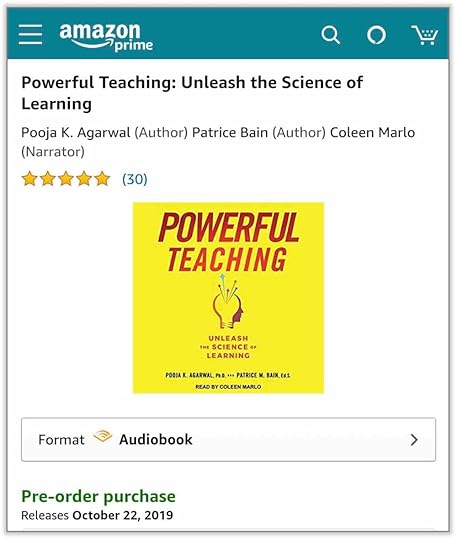
NEW: The audiobook version of Powerful Teaching will be released in one week! Pre-order it now on Amazon. Narrated by Coleen Marlo, learn about the science of learning and powerful teaching strategies on the go.
Pre-Order the Powerful Teaching Audiobook
New Videos on the Science of Learning
NEW: In this series of videos by The Learning Agency, learn about retrieval practice, dual coding, spacing, interleaving, metacognition, and elaboration. In just 6-10 minutes, watch these research-based strategies in action and hear how teachers are using them in their classrooms on a daily basis. Check out more than 20 videos from The Learning Agency on YouTube, too.
Watch New Videos on the Science of Learning
Explore the Research Map
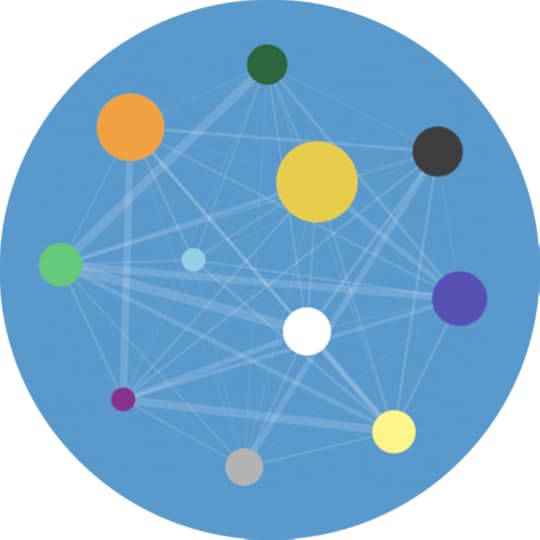
NEW: Digital Promise has updated their Research Map! Navigate the new visualization, explore research summaries (like the one on retrieval practice), and download their free poster of 10 key principles from the learning sciences.
Explore Digital Promise's Research Map
October 7, 2019
Forget about study guides. Use Retrieval Guides instead.
Do you use study guides in your classroom, where students are presented with key information in outline form and students fill in the blanks during a lesson?
A quick tip from Powerful Teaching co-author, Patrice Bain: turn study guides into Retrieval Guides. No prep and no grading with our free Retrieval Guide Template. Just powerful retrieval practice for successful long-term learning.
P.S. Listen and learn about more strategies from Powerful Teaching at the Cult of Pedagogy.
Turn Study Guides Into Retrieval Guides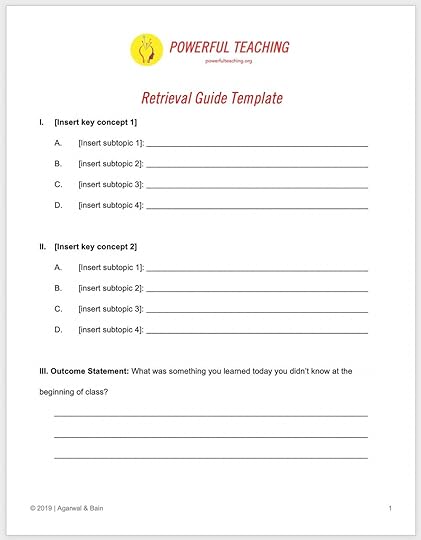
Typically, "study guides" are outlines of key concepts created by the teacher and handed out to students to fill in during a lesson or while reading for class. But with a simple twist, turn study guides into powerful Retrieval Guides.
Here's how: In Patrice Bain's classroom, veteran K-12 teacher and co-author of Powerful Teaching, students read from a social studies textbook aloud. Critically, during the read aloud, all pencils are down. After reading a few paragraphs, Patrice pauses her lesson and gives students time to retrieve, filling in the blanks from what they just learned. This is followed by a brief pause or discussion for feedback, and the class moves on.
By switching the timing from filling in a study guide during the read aloud to retrieving after the read aloud, Patrice offers students a no-stakes opportunity and models retrieval practice – without any additional prep or grading. Download our free Retrieval Guide template and comment below to share how it’s going in your classroom.
Download Our Retrieval Guide Template
Featuring Patrice M. Bain, Ed.S.

If you're familiar with the IES Practice Guide, Organizing Instruction and Study to Improve Student Learning, then you already know veteran K-12 teacher Patrice M. Bain, Ed.S. Patrice was the only classroom teacher on the panel that created the IES Practice Guide. For more than 15 years, she has been actively sharing the science of learning with educators and also sharing her powerful teaching strategies with researchers.
Patrice co-authored Powerful Teaching: Unleash the Science of Learning and she speaks with educators, students, and parents around the world. In Powerful Teaching, Patrice shares her research-based strategies including Retrieval Guides, Four Steps of Metacognition, and Power Tickets.
As a finalist for Illinois Teacher of the Year and a Fulbright Scholar in Russia, Patrice has been featured in podcasts and popular press, including NOVA and Scientific American. Watch how Patrice sets up her students for success, read how she leads conversations about learning with her students, and follow her on Twitter @PatriceBain1.
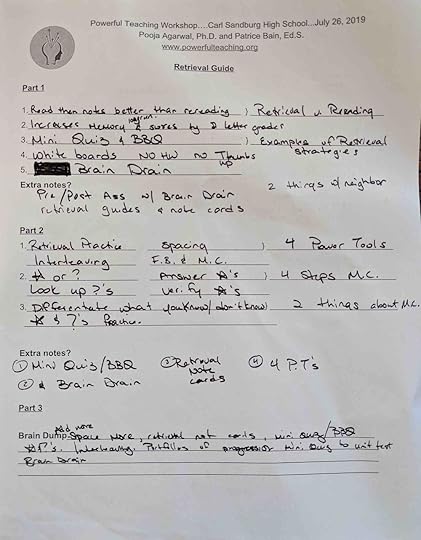
At a recent workshop at Carl Sandburg High School near Chicago, Illinois, Patrice modeled Retrieval Guides for teachers. Attendees received a printed Retrieval Guide with blanks and throughout the workshop, Patrice paused, provided question prompts, and gave teachers the opportunity to reflect and retrieve. That’s Powerful Teaching!
Learn More About Patrice M. Bain, Ed.S.
Join Our Powerful Teaching Facebook Group
Join our Powerful Teaching Facebook Group! More than 600 educators from around the world are sharing their strategies, insights, and questions about the science of learning on Facebook. Download free templates directly from our Facebook group (including Retrieval Guides) and get exclusive access to announcements about Powerful Teaching.
Join Powerful Teaching on Facebook
September 30, 2019
This is what a cognitive scientist looks like
In this update, I have a simple goal: To share the research and initiatives by women in cognitive science. They are leading the charge in communicating the science of learning for educators and the public around the world.
All scientists in our field of learning and memory are valued. By highlighting women specifically, I aim to raise awareness of their efforts and highlight our diverse field. In other words, this is what a cognitive scientist looks like.
Consider this recent tweet by Sue Cowley about female researchers in cognitive science:
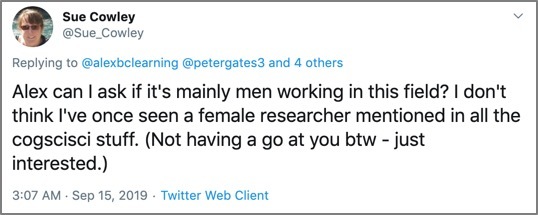
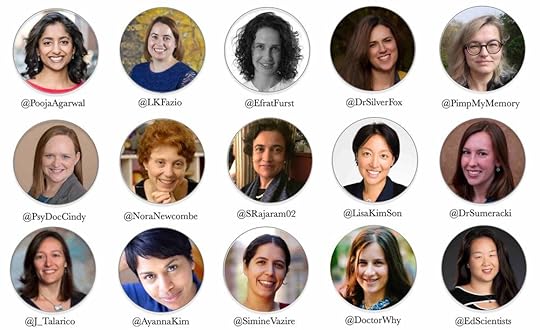
In response to this tweet, we've put together a Twitter list of women in cognitive science, who are leading the charge in communicating research on learning and memory. There is a growing community on Twitter supporting #WomenInSTEM and many who are literally putting faces to names with the hashtag #ThisIsWhataScientistLooksLike. Organizations such as Women in Cognitive Science, Women in Cognitive Science Canada, and the Spark Society are also increasing diversity specifically in cognitive science.
With our Twitter list, we want to share what a cognitive scientist looks like.
Of scientists enrolled in cognitive psychology doctoral programs, 54% are women. In education, nearly 80% are women. Meanwhile, there is a disconnect when it comes to recognizing female cognitive scientists who are transforming teaching and learning. Our field has a long way to go, but we're also more diverse than you might think.
Here's how you can help address this disconnect:
Improve the visibility of women in cognitive science by following them and sharing their research with educators
Encourage young women to pursue STEM fields and emphasize that many leaders in the field of cognitive science are women
Reach out to women in cognitive science when requesting panelists, workshops, media/podcast interviews, journal editors, and mentors
Download our guides written by cognitive scientists, featuring Lisa Fazio (early childhood education), Shana Carpenter (spacing), and a new one coming soon!
By demonstrating the diversity of cognitive scientists, you can make an impact. When we come together, we can truly unleash the science of learning for diverse students, teachers, and educators around the world.
Follow Women in Cognitive Science on Twitter
Learn More About the Learning Scientists
An all-female organization that is paving the way for cognitive scientists to share the science of learning with educators is the Learning Scientists. They have made a substantial impact on science communication through their blog, podcasts, resources, and workshops.
Fun fact: The Learning Scientists, the cognitive scientists pictured above, and I (Pooja) all have ties to the Department of Psychological & Brain Sciences at Washington University in St. Louis. Whether receiving bachelors, masters, Ph.D.s, and post-doctoral fellowships, or serving as researchers, lecturers, and professors, we continue to collaborate on research, science communication, and improving education in K-12, higher education, and psychology.

Megan Sumeracki, Ph.D. is a Co-Founder of the Learning Scientists and an Assistant Professor at Rhode Island College. One of her favorite blogs to write was about infusing teaching with retrieval practice, similar to "hiding broccoli in brownies."
Dr. Sumeracki’s teaching approach: “I do a lot of low-stakes quizzes that students are required to complete at home, and I encourage students to practice retrieval in the classroom as I'm teaching. I love when students do the little things throughout the semester and then exclaim how prepared they feel when test time comes around; it really shows that retrieval works. I recently ran into one of our alumnus students at Whole Foods and she told me that she's excited to use retrieval as a graduate student soon.”

Carolina Kuepper-Tetzel, Ph.D. is a Learning Scientist and an Assistant Professor at at the University of Dundee in Scotland, UK. One of her favorite blogs to write was about laptop vs. longhand note-taking.
Dr. Kuepper-Tetzel’s teaching approach: “I use lots of spaced retrieval practice in my teaching. In-class quizzes with clickers are an all-time favourite for my 2-hour lectures in Cognition. Students love clicker questions. In addition, I introduce my students to effective note-taking techniques and hope it helps them pay attention during the lectures. I pledge to try out one new teaching activity each year.”
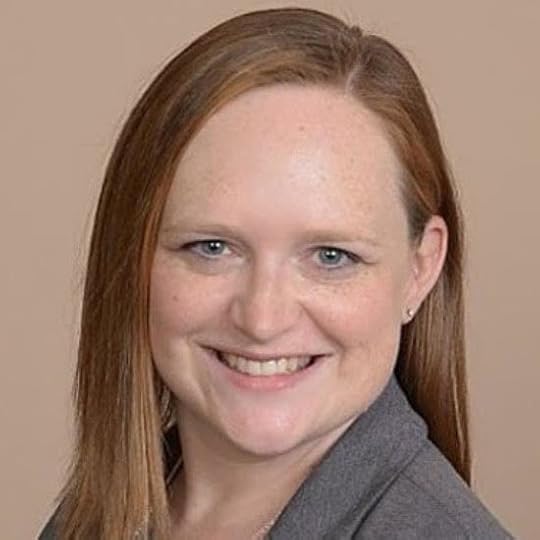
Cindy Nebel, Ph.D. is a Learning Scientist and a Lecturer at Vanderbilt University. One of her favorite blogs to write was about the need for more applied research in classrooms and the challenges that come along with it.
Dr. Nebel’s teaching approach: “While I try to incorporate evidence-based practices in all my courses, I think one of the most important messages that we try to send educators is to take small steps, and this is one area in which I’ve learned the hard way to practice what I preach. Making small changes from class to class or semester to semester allows me to see if a new method is effective (and preserve my own sanity). For example, I changed every other homework assignment in my statistics classes to be ‘cumulative’ assignments, allowing me to incorporate more spacing into the time outside of class.”

Althea Need Kaminske, Ph.D. is a Learning Scientist and an Assistant Professor at St. Bonaventure University. One of her favorite blogs to write was about the intersection between memory in the game Dungeons & Dragons.
Dr. Kaminske’s teaching approach: “The most obvious thing I do in my classes is frequent low-stakes quizzing. Most of my courses have a quiz every class period. But I’m constantly tweaking, updating, and refining my classes as I learn about more research. It’s hard, but I try to follow my own advice and only make one or two changes at a time so I don’t get overwhelmed with course prep.”

Yana Weinstein-Jones, Ph.D. is a Co-Founder of the Learning Scientists and an independent researcher.
Learn more about Dr. Weinstein-Jones and her self-care communities for academics at yanaweinsteinjones.com/communities.
Learn More About the Learning Scientists
September 23, 2019
Powerful Teaching is unlike any book available. Here's why.
It's been 3 months since our book Powerful Teaching: Unleash the Science of Learning launched. It's been such a whirlwind summer! Here are highlights:
Media features by Edutopia and NPR
Podcasts with Cult of Pedagogy, ISTE, Teacher Toolkit, and more
More than 10 workshops around the country, with Tacoma, Denver, Philadelphia, and Boston coming this fall
Stellar Amazon reviews (4.9 out of 5 stars) and Goodreads reviews
Nearly 600 educators from around the world in our Facebook group
Book reviews by Learning & the Brain and Teachers College Record
More than 5,000 downloads of our free resources and templates
Will you unleash the science of learning? Share on Twitter and tell a teacher to subscribe for our updates! Turn your teaching into powerful teaching.
Make Your Teaching Powerful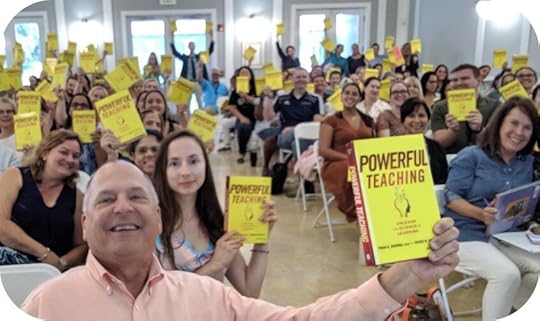
Here's why you should read Powerful Teaching:
Practical teaching strategies based on research, not fads or anecdotes
Four Power Tools that are simple, intuitive, and effective
Insights from leaders in cognitive science and education
Two chapters on how to empower students and parents
Two chapters on how to lead your own professional development
Here's why Powerful Teaching is unlike any book available:
Unique partnership by a cognitive scientist and a veteran K-12 teacher
The authors have 40+ years of teaching in K-12 and higher ed
The authors are diverse women with diverse perspectives on education
Includes up-to-date research that's digestible and actionable
100% new content, examples, and lesson plans
Directly addresses frequent challenges in the classroom
Retrieval practice to improve your learning; no chapter summaries
Here's how to get involved and unleash learning:
Share Powerful Teaching on Twitter
Post your review on Amazon and Goodreads
Download free templates, including Power Tickets and Retrieval Cards
Join our Facebook group and follow on Twitter
Host a workshop at your school or university
Read excerpts from Powerful Teaching
Watch the video and learn more about the authors
Comment below and share one thing you’ve learned from Powerful Teaching!
Buy Powerful Teaching and unleash learning!