Pooja K. Agarwal's Blog, page 2
April 8, 2025
My NEW book: Smart Teaching Stronger Learning
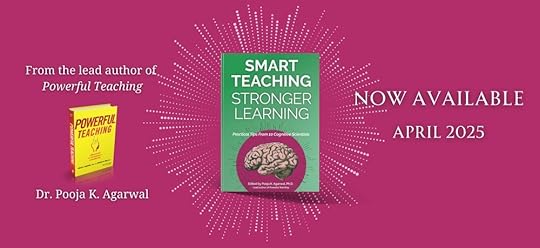
I am thrilled to announce the publication of my new book, Smart Teaching Stronger Learning: Practical Tips From 10 Cognitive Scientists.
What I love about it: It’s short, practical, and full of ideas to make teaching memorable.
Why the book exists: To bring together a team of cognitive scientists, who are all teachers(!), to share a variety of tips from their own classrooms.
Why I hope you’ll read it: It isn’t science-y at all. No jargon, no statistics. Just teachers talking about teaching, with legit evidence-based classroom strategies straight from the (scientific) source.
Plus…
We’ll be donating $1 for every book purchased on launch day (April 8) by 11:59pm ET to a non-profit, FriendshipWorks. Help make a difference in the lives of elders!
We’re hosting a book launch party via Zoom on Tuesday, April 15 at 5:00pm ET. Click here to register.
I want to thank you, my newsletter readers, for continuing to give me energy and encouragement to keep going on this path of improving education. I truly can’t do it without you and I am grateful for your support.


 Smart Teaching Stronger Learning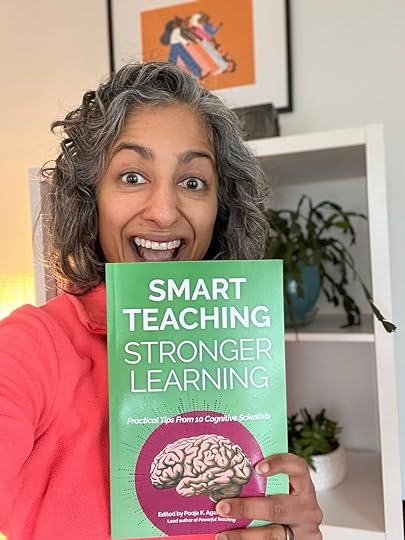
Smart Teaching Stronger Learning is (I hope) going to move the needle on improving teaching, learning, and education. And with unique classroom perspectives from 10 experts on learning, this is the kind of book I wish I had when I started teaching.
Written for K–12 and college/university teachers and administrators, this book is short. Seriously short: 10 chapters, only 10 pages each. We know what it’s like to be busy: juggling lesson plans, emails, and meetings — and of course, the actual teaching.
Luckily, the contributors have done the heavy lifting for you by translating research, developing class activities, and testing them out in their own classrooms. They’re representative of today’s educators and they know what it’s like to teach in the real world.
Click here to read an excerpt from the introduction, view the table of contents, and learn more about the authors. Topics include retrieval practice, spacing, and interleaving, with more tips on how to motivate students, support their transfer of learning, and combat neuromyths.
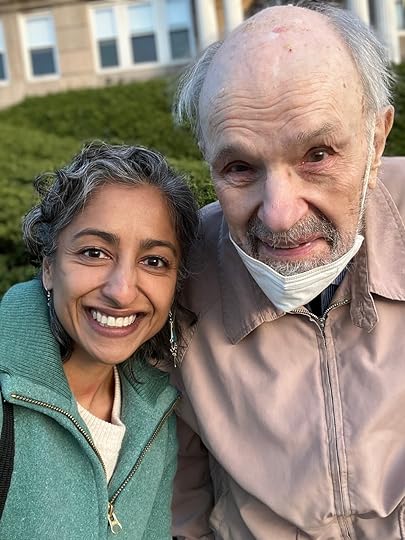
We’ll be donating $1 for every book purchased on launch day (April 8, 2025) by 11:59pm ET to a non-profit, FriendshipWorks. Located in Boston, their mission is to end social isolation for older adults. On a near weekly basis, my elder buddy Peter and I get together, and I feel so fortunate to spend time with him. I hope you’ll join me in this fundraising effort.
Smart Teaching Stronger Learning is available in paperback and Kindle/e-book from major retailers, including Amazon, Bookshop, and Barnes & Noble. Please support your local independent bookstore by making purchase through Bookshop.org (it’s currently cheaper than Amazon!).
Whether you teach K–12 students or graduate students, or you’re new to teaching or a long-time educator: If you want to improve student learning, this book is for you.
Read an excerpt Meet the authors at our Zoom party on April 15, 2025
The 10 cognitive scientists featured in Smart Teaching Stronger Learning are amazing teachers, researchers, and human beings. We’re a close-knit community of friends (the stories I could tell…) and I feel so fortunate that they’ve all gone along with my zany idea to put together this book.
Meet the authors at our book launch via Zoom on Tuesday, April 15 from 5-6pm ET (eastern time zone). Join the informal conversation and walk away with some teaching tips you can implement immediately.
Click here to register for our Zoom Party. It will be recorded, but you must register to access the recording. I look forward to seeing you there!
Register for the Zoom Party

My NEW book, a fundraiser, and a Zoom party!
I am thrilled to announce the publication of my new book, Smart Teaching Stronger Learning: Practical Tips From 10 Cognitive Scientists.
What I love about it: It’s short, practical, and full of ideas to make teaching memorable.
Why the book exists: To bring together a team of cognitive scientists, who are all teachers(!), to share a variety of tips from their own classrooms.
Why I hope you’ll read it: It isn’t science-y at all. No jargon, no statistics. Just teachers talking about teaching, with legit evidence-based classroom strategies straight from the (scientific) source.
Plus…
We’ll be donating $1 for every book purchased on launch day (April 8) by 11:59pm ET to a non-profit, FriendshipWorks. Help make a difference in the lives of elders!
We’re hosting a book launch party via Zoom on Tuesday, April 15 at 5:00pm ET. Click here to register.
I want to thank you, my newsletter readers, for continuing to give me energy and encouragement to keep going on this path of improving education. I truly can’t do it without you and I am grateful for your support.
Smart Teaching Stronger Learning Smart Teaching Stronger Learning is (I hope) going to move the needle on improving teaching, learning, and education. And with unique classroom perspectives from 10 experts on learning, this is the kind of book I wish I had when I started teaching.
Written for K–12 and college/university teachers and administrators, this book is short. Seriously short: 10 chapters, only 10 pages each. We know what it’s like to be busy: juggling lesson plans, emails, and meetings — and of course, the actual teaching.
Luckily, the contributors have done the heavy lifting for you by translating research, developing class activities, and testing them out in their own classrooms. They’re representative of today’s educators and they know what it’s like to teach in the real world.
Click here to read an excerpt from the introduction, view the table of contents, and learn more about the authors. Topics include retrieval practice, spacing, and interleaving, with more tips on how to motivate students, support their transfer of learning, and combat neuromyths.
We’ll be donating $1 for every book purchased on launch day (April 8, 2025) by 11:59pm ET to a non-profit, FriendshipWorks. Located in Boston, their mission is to end social isolation for older adults. On a near weekly basis, my elder buddy Peter and I get together, and I feel so fortunate to spend time with him. I hope you’ll join me in this fundraising effort.
Smart Teaching Stronger Learning is available in paperback and Kindle/e-book from major retailers, including Amazon, Bookshop, and Barnes & Noble. Please support your local independent bookstore by making purchase through Bookshop.org (it’s currently cheaper than Amazon!).
Whether you teach K–12 students or graduate students, or you’re new to teaching or a long-time educator: If you want to improve student learning, this book is for you.
Read an excerpt Meet the authors at our Zoom party on April 15, 2025 The 10 cognitive scientists featured in Smart Teaching Stronger Learning are amazing teachers, researchers, and human beings. We’re a close-knit community of friends (the stories I could tell…) and I feel so fortunate that they’ve all gone along with my zany idea to put together this book.
Meet the authors at our book launch via Zoom on Tuesday, April 15 from 5-6pm ET (eastern time zone). Join the informal conversation and walk away with some teaching tips you can implement immediately.
Click here to register for our Zoom Party. It will be recorded, but you must register to access the recording. I look forward to seeing you there!
Register for the Zoom PartyApril 2, 2025
No time to prep? Use a brain dump (not a movie)
Recently, I was talking with a first year teacher who was behind on lesson prep and burned out. This happens to the best of us. What do we do in this situation — myself included? We revisit a past lesson or play a movie (sad, but true).
In hopes of being helpful to the teacher, I blurted out, “Do you know what the best no-prep, time-filling activity is? A brain dump.”
Frankly, I surprised myself when I said this — it sounds like an easy way out. But the more I thought about it, the more it clicked:
A brain dump takes little to no prep
It can be stretched into a 30-minute activity
It’s class time well spent because students actually learn
If you need a lesson fast, or just something to keep in your back pocket, read below for my brain dump tips — no filler movie needed.
Also, my newsletter has been quiet this spring because I’ve been working on a big (huge!) project. I’ll be sharing the big reveal next week, and here’s a sneak peek. (hint: it has a front, a back, and pages in between) 🥳 📖
My big reveal is next week!
On Tuesday, April 8, I’ll be sharing some exciting news with you. Click here for a sneak peek and tell your friends to subscribe for my newsletter at retrievalpractice.org/subscribe for first access to the big reveal.
Don’t miss out! Follow me @RetrieveLearn to stay in the loop on upcoming events and more big announcements.
Get a sneak peek Need a last minute lesson?
If you don’t have time to prep in advance, or you’re just not feeling up for teaching a full-scale lesson you’ve planned, try a brain dump. Seriously. It’s been a game changer for me and my students. Here’s how to do it:
Prep before class (1 to 5 minutes)
Bring blank paper and writing utensils to class (so students aren’t digging around in their backpacks)
Instead of paper, you could also create a simple Google Form with just one open form field (but beware of students using ChatGPT)
You could take a minute to embed a radial timer on YouTube into your slides (mute the audio)
Decide how long you’d like to give students for the brain dump. With my college students, I start with 3 minutes. If they’re still writing, I give them another 3 minutes. During professional development with teachers, I allot 6 to 10 minutes.
Explain the activity (2 minutes)
Start by saying you’re doing to do something called a brain dump (I have alternate phrases in my book Powerful Teaching).
Tell students why you’re doing this: because research shows that retrieval practice boosts long-term learning
Explain that they will be writing down everything they can remember. It can be at least one sentence per concept, but bullet points and concept maps are also okay. Spelling doesn’t matter.
Explain that a brain dump is not a test. It is anonymous and not graded.
Explain that this activity is silent for approximately 3 to 5 minutes. No talking.
Hand out the paper or give students access to the Google Form.
Brain dump (3 to 10 minutes)
Ask students to write down everything they can remember (about a lesson, a unit or reading, from the semester, etc.)
Play the radial timer on the projector (if using)
Give students a gentle heads up when they have 1 minute remaining (this is not a race and students should not feel pressured by the time limit)
If students seem stuck, encourage them to keep trying
Gently tell them when time has concluded
If students are still writing, give them another few minutes
Discussion options (5 to 20 minutes)
Whole class: How did it go? Did you remember more or less than you expected? (I recommend starting with this to get the conversation going)
Think-pair-share: Talk to a buddy about what you wrote down. With the whole class, share what someone else put on their paper that you thought was cool.
Second round: Challenge students to continue. Give them retrieval cues with the name of a concept, textbook chapter, or unit.
Third round: Turn the brain dump into Leave One Add One. Collect papers (they “leave” it), hand them out to different students, and have students write down something not already on the paper (they “add” to it).
Try this out a few times throughout the school year and students will actually enjoy it. Keep in mind that the silence during a brain dump will feel awkward. Even though students aren’t engaging socially, they are engaging their learning — and that’s a good thing.
Read more about retrieval practiceJanuary 31, 2025
My two favorite back-to-school activities
Hello everyone and welcome back to the school year. I want to share two of my favorite back-to-school activities, which are a huge hit in my classroom.
Whether you have new students in your classes or returning students from the fall, K–12 students or graduate students, try these activities:
Use a trivia question to introduce students to retrieval practice (a really fun *drop mic* kind of moment)
(I’m Pooja-Pepperoni. What would you pick?)
Why I love these activities: they’re quick, they’re easy, they’re interactive, and they boost learning!
Follow me @RetrieveLearn
Want to keep up with my class activities, teaching tips, research digests, and webinars? I have a big announcement coming soon…
Follow me @RetrieveLearn on most social media platforms: Bluesky, LinkedIn, Facebook, Instagram, and YouTube (I am no longer on Twitter). Join our Powerful Teaching Facebook group, too.
Follow me on social media Start class with a trivia question
Convincing students that retrieval practice improves their learning can take some norm setting. How do you get students on board?
Start and end your course with a trivia question. Sprinkle in the trivia question during lessons throughout the semester or school year, too. I’ve found this works wonders in my classroom.
Why a trivia question?
It’s unexpected, quick, and engaging
It’s a no-stakes demo where students are successful
It normalizes forgetting as a shared experience
It’s a simple example of how spaced retrieval practice increases learning
I have more tips and tricks on my website, including how to choose the perfect trivia fact for your class. You can incorporate a trivia fact during faculty professional development and parents’ nights, too.
(Do you love trivia? Quiz yourself on these 10 trivia facts from Powerful Teaching, see how 600+ teachers responded, and boost your own learning.)
Read more trivia fact tips Build community with mnemonicsNames are important, but they’re SO hard to remember (I’m a memory expert and I forget names all the time).
Here’s a simple strategy to remember names and build class community: Have everyone come up with .
Encourage students to get creative. For example, Alex-Aardvark, Jess-Jackfruit, and Taylor-Tiger (or in my case, Pooja-Pepperoni).
Next steps:
Each time students introduce themselves, have them include their word pair
During class discussion, aim to use a student’s word pair (“thanks for sharing, Ava-Avocado”)
If you or your students can’t remember someone’s name, ask for a hint with the animal or food, not their name
A week or two later, play what I call “Name Tag” (way more fun than ever-fashionable name tag stickers). In popcorn style, have one student say the word pair of another student and continue to play “tag” until everyone has been called on.
I have a lot more online. You can also try this out for yourself at conferences and parties! Mentally create a word pair when you meet someone new and retrieve it periodically.
December 18, 2024
Success stories from around the world
I am humbled and inspired by emails from teachers around the world who share their success stories with me. And I want to share their stories with you.
Join me in recognizing trailblazers who are transforming teaching, and keep reading to gain inspiration on how you can contribute to this collective effort. (I’ve included my favorite end-of-year classroom activities below, too.)
I want to thank you for all you do empower teachers, schools, and most importantly, students.
P.S. Do you have a success story with the science of learning? Email me at ask@retrievalpractice.org or let me know via social media to be featured in an upcoming newsletter. Here are all my social media handles!
Success stories from around the world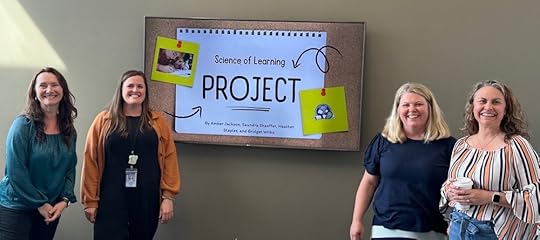
Teachers from St. Vrain Valley Shool District
Every email I receive from teachers makes my day and the interactions I have with schools gives me the energy to continue my journey to share the science of learning with you.
Here are some 2024 highlights from educators and scientists around the world. How are you unleashing the science of learning? Let me know!
👏 Fleur, a middle school teacher in Latvia, conducted retrieval practice research in her classroom and just published her first journal article.
👏 Liza, a high school teacher in Pennsylvania, completed the Powerful Teaching bingo challenge. She also shares the science of learning with pre-service teachers at a local university and she has developed a course on the science of learning for students at her high school.
👏 Andrew and Justin, educators at The Episcopal Academy, implemented Retrieve-Taking in the classroom and boosted students’ test scores by 13 points.
👏 Meg Lee, director of organizational development at Frederick County Public Schools, led an initiative to integrate the science of learning in 69 schools with nearly 50,000 students.
👏 Julia Maurer, associate head of school at Mercersburg Academy, spearheaded a year-long intensive professional development program on the science of learning, which she shares in her Meaning & Mastery Musings newsletter (and stay tuned for the upcoming Mercersburg Summer Institute).
👏 My colleagues Dr. Faria Sana and Dr. Bridgid Finn had their classroom research publications designated as the most significant education studies in 2024.
👏 Jinhui, a teacher in China, applies spacing in the classroom by taking her 45-minute period and breaking it into three 15-minute chunks with retrieval practice, which has boosted students’ energy for learning.
👏 Thousands of educators at the St. Vrain Valley School District are continuing their district-wide multi-year initiative to infuse the science of learning across all grade levels and subject areas.
Email me your success story Join communities around the world
Photo Credit: Mika Baumeister via Unsplash
Do you want to find like-minded educators who are unleashing the science of learning? Here are some ideas:
💻 Ditch Summit: a free interactive online conference from December 16, 2024 – January 10, 2025, full of teaching ideas, including AI and tech tools.
📖 Powerful Classrooms: a book by Patrice Bain with even more success stories from educators who are implementing the science of learning.
✏️ Substack: subscribe for 10 Substack newsletters on the science of learning. Here’s a list via Google.
✈️ Upcoming events: I’ll be speaking around the world in 2025. Introduce yourself and form collaborations with really cool people.
🦋 Bluesky: I recently joined Bluesky! Follow me @RetrieveLearn and the hashtag #EduSky. If you’re new to Bluesky, here are three handy “starter packs” of people in cognitive psychology you should follow: this one, this one, and this one.
👍 Facebook group: We have more than 3,000 educators in our Powerful Teaching Facebook group. Join us for announcements, discussion, tips, and more. Click here for a list of all my social media handles.
And make sure to check out Evergreen Education, Arkansas State University, Duchesne Academy, Mercersburg Academy, Transfr, The Episcopal Academy, and the Virginia Association of Independent Schools. I am grateful for each of these organizations’ support of my research and resources on the science of learning. If you would like to connect with these organizations, email me at ask@retrievalpractice.org and it would be my pleasure to introduce you. Thank you again for making a difference in the world of education!
Follow me on BlueskyNovember 20, 2024
Retrieval practice improves learning for neurodiverse students
Recently, I had the pleasure of speaking with educators in Virginia about the science of learning (see below for info about upcoming events). We had a Q&A session and one question in particular stood out:
Does retrieval practice improve learning for neurodiverse learners and students with learning disabilities?
I dug into retrieval practice research with neurodiverse students and I can say (with some certainty) that the answer is “yes.” Keep reading to learn more about how retrieval practice improves learning for students with developmental language disorders, Down syndrome, dyslexia, and ADHD.
Research with neurodiverse students
Photo Credit: Cliff Booth via Pexels
In my 15+ years of teaching, I have had students with autism spectrum disorder, ADHD, dyslexia, and a range of learning disabilities. I have grown in my understanding of inclusive teaching practices and I strive to incorporate universal design principles in my teaching.
From my classroom experience, I know that retrieval practice improves learning for all of my students, including those who are neurodiverse. But what have researchers found about retrieval practice with neurodiverse learners?
I scoured Google Scholar (here are my tips on how to find new research) and looked through more than 30 research articles. The gist of what I found: Retrieval practice improves learning for neurodiverse students.
(Side note: If you’d like an intro on neurodiversity and what it means in the classroom, I recommend this podcast episode from The Learning Scientists and this podcast episode from Teaching in Higher Ed. For teaching tips, I recommend this article from the University of Illinois CITL.)
Most of the research I found demonstrated that retrieval practice benefits neurodiverse learners compared to re-reading or re-studying material. One aspect of this research I find encouraging is that researchers implemented retrieval practice using different methods, in different classrooms, and in different countries around the world — and there was still a consistent benefit of retrieval practice for neurodiverse learners (see also my literature review of 50 classroom experiments with neurotypical students).
What does this mean for you? Here’s my teaching recommendation: When implementing retrieval practice with neurodiverse students, there’s no “right” way to do it. You know your students best. Experiment with different forms of retrieval practice and see what works for you, your students, and your classroom.
A few personal caveats about my approach:
My goal here was to find an answer to an important question. I didn’t do a thorough systematic review of the literature, the list below is not comprehensive, and I skimmed the articles I found.
I tried to not cherry pick articles. I intentionally focused on research published within the past 10 years, but I’m also subject to confirmation bias.
My colleagues and I published research on the benefits of retrieval practice for students with lower working memory capacity, but that was with college students at a private elite university. I am not an expert on neurodiversity, autism, ADHD, or learning disabilities.
A few caveats about research:
When it comes to drawing conclusions from research, the more accurate response is “it depends.” So, it depends and you don’t have to take my word for it. I encourage you to read the articles that interest you to learn more about the nuances of the researchers’ findings.
Most of the research articles I found had small sample sizes (fewer than 50 participants), but they spanned a wide range of participant ages (ranging from 4-year-olds to 40-year-olds).
I was glad to find research from around the world — including Brazil, Israel, the US, the UK, and Germany — but that also means that the results may or may not generalize to your school or classroom.
The diagnosis criteria varied depending on the neurodiverse student population of interest. I was surprised to find very little retrieval practice research on autism and dyslexia. There are always opportunities for more research!
While I tried to provide links below to open access articles, some of the publications are paywalled (here are my tips on how to access articles for free). I hope that this digest of research articles is helpful for you if you’d like to go down a rabbit hole, or simply to pique your interest.
ADHD research: Knouse et al. (2016); Knouse et al. (2020); Minear et al. (2023); Stern et al. (2023)
Developmental language disorder research: Leonard et al. (2020); Levlin et al. (2022); Leonard et al. (2023); Leonard et al. (2024)
Down syndrome research: Starling et al. (2019); Boundy et al. (2025)
Additional research on retrieval practice: dyslexia, a special needs school, individual differences, and traumatic brain injury
Read more research See you in 2025!
That’s me on stage in Spain!
I have my fingers crossed that I’ll send a newsletter in December (click here to subscribe), but just in case I don’t, I hope I’ll see you in person or on Zoom next year. Here’s where I’ll be speaking:
January 8, 2025: Teach Meet in Vellinge, Sweden
February 26, 2025: The Haverford School in Philadelphia, PA
March 19, 2025: SLD Support Project in Springfield, IL
April 25, 2025: Teachers of Intro Psych Northwest in Seattle, WA
April 27, 2025: Learning & the Brain in New York City, NY
May 22, 2025: Association for Psych Science in Washington, DC
Email me for more informationOctober 23, 2024
New to the science of learning? Get started in an hour or less
I am elated and thrilled that research and resources on the science of learning have become quite popular in recent years. That also means that there’s so much out there and if you’re new to the science of learning, where do you start?
Your time is valuable! Keep reading for links to get you started learning about the science of learning as quickly as possible.
Learn about learning quick!
If you’re new to the science of learning, including research-based teaching strategies like retrieval practice, spacing, and interleaving, it might feel like there’s a buffet of resources with too many options. Decision fatigue is real, especially at this point in the school year.
Here are my recommendations for the easiest ways to get started:
Got 1 minute? Check out this quick overview on my website about retrieval practice
Got 2 minutes? Encourage a teacher-friend to get started by subscribing for my newsletter
Got 3 minutes? Join my Facebook group and follow me on Twitter
Got 5 minutes? Read my interview with ASCD
Got 15 minutes? Explore my library of hundreds of free resources, with everything in a Google Drive folder you can download
Got 30 minutes? Watch my SXSW EDU keynote on YouTube
Got 60 minutes? Listen to my podcast interview with the Cult of Pedagogy
If you have more time to dig in, my book Powerful Teaching is available in hardback, paperback, Kindle, and audio book. Here’s my list of book recommendations and here’s my list of podcast recommendations, too.
FAQs about retrieval practiceShort on time? Get started in an hour or less
I am elated and thrilled that research and resources on the science of learning have become quite popular in recent years. That also means that there’s so much out there and if you’re new to the science of learning, where do you start?
Your time is valuable! Keep reading for links to get you started learning about the science of learning as quickly as possible.
Learn about learning quick! If you’re new to the science of learning, including research-based teaching strategies like retrieval practice, spacing, and interleaving, it might feel like there’s a buffet of resources with too many options. Decision fatigue is real, especially at this point in the school year.
Here are my recommendations for the easiest ways to get started:
Got 1 minute? Check out this quick overview on my website about retrieval practice
Got 2 minutes? Encourage a teacher-friend to get started by subscribing for my newsletter
Got 3 minutes? Join my Facebook group and follow me on Twitter
Got 5 minutes? Read my interview with ASCD
Got 15 minutes? Explore my library of hundreds of free resources, with everything in a Google Drive folder you can download
Got 30 minutes? Watch my SXSW EDU keynote on YouTube
Got 60 minutes? Listen to my podcast interview with the Cult of Pedagogy
If you have more time to dig in, my book Powerful Teaching is available in hardback, paperback, Kindle, and audio book. Here’s my list of book recommendations and here’s my list of podcast recommendations, too.
FAQs about retrieval practiceOctober 16, 2024
Practical tips to reduce student test anxiety
It’s exam season – eek. When I think about my exams in high school and college, I remember cramming, writing last-minute papers, and pulling all nighters to meet deadlines. All that cramming paid off in the short-term (I got pretty good grades), but I retained very little knowledge for the long-term.
How can we support our students during stressful times and reduce their test anxiety? Retrieval practice! It might sound counterintuitive, but think about it this way: the more musicians practice, the better prepared they become for performances. This approach is backed by research: the more students practice retrieval, the more comfortable they become with high-stakes tests.
Continue reading to:
Learn more about my research on student test anxiety
Get quick lesson ideas and resources to reduce anxiety
Find out more about my exclusive webinars for newsletter subscribers
Take a deep breath, watch a puppy cam, and good luck to you and your students!
P.S. Listen to this new podcast episode about retrieval practice that I “created” using AI with two non-human hosts. It’s pretty cool!
Retrieval practice reduces test anxiety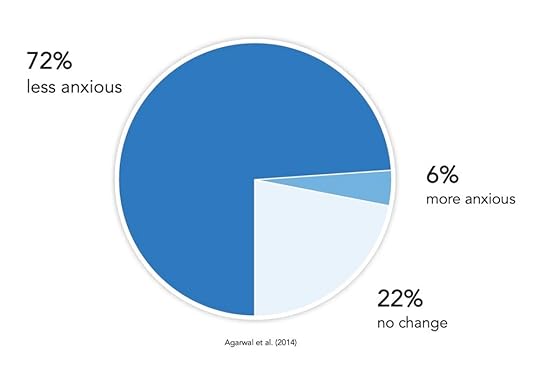
Over the course of 10 years of research in a public school district near St. Louis, Missouri, my colleagues and I surveyed a thousand students about their study habits and test anxiety. We were interested in two key questions:
Do middle school and high school use the same study strategies as college students?
Does retrieval practice increase or decrease student test anxiety?
TL;DR
Yes, 6–12th students use the same study strategies
Retrieval practice decreased student test anxiety
For our first question about study habits, a lot of research had already been published about how college students study, but there hadn’t been much research looking at when and how those study strategies develop. It was revealing to know that typical study strategies (rereading, highlighting, and cramming) develop much earlier in students’ educational experience. These strategies work in the short-term — research shows it and students know it — but then students forget everything. They have to re-study and we have to re-teach. We recently replicated this finding with students in Brazil, confirming that typical study strategies are universal.
For our second question about test anxiety, our survey was inspired by an understandable concern from teachers: All this retrieval practice sounds like more testing, so doesn’t that increase students’ test anxiety? Actually, no. In our survey of 1,500 students, the vast majority of students (72%) reported that weekly retrieval practice decreased test anxiety.
Why did retrieval practice reduce test anxiety? Because students were better prepared for their exams in terms of their knowledge and they had opportunities to improve their metacognition (thinking about their own thinking). When students use short-term study strategies, like re-reading and highlighting, it creates an “illusion of confidence,” where students think they know more than they actually do. As demonstrated in many peer-reviewed research articles, with retrieval practice, students bring their confidence in line with their accuracy (what we call calibration in the scientific literature). Check out this interview on Instagram with cognitive scientist Dr. Lisa Son and click here to download our PDF guide on metacognition.
Key takeaway: The first time students retrieve shouldn’t be on the midterm or final exam. Give students the opportunity to practice their knowledge before the high-stakes exam, reduce their test anxiety, improve their metacognition, and boost their long-term learning.
DOWNLOAD MY RESEARCH ARTICLE Lesson ideas to reduce test anxiety
We’re all short on classroom time. Here are quick activities you can use to engage students in retrieval practice and reduce their test anxiety:
Add a picture of a golden retriever in your lesson slides! Dogs are cute and everyone can use a moment to smile. Plus, the picture serves as a cue to you and your students to do a quick retrieval (get it?) with a brain dump or two things. (A big thanks to Spanish teacher Andrew S. at Episcopal Academy for this idea.)
Change your review sessions to retrieve sessions in 5 minutes or less
Change your study guides to retrieval guides and download our free template from Powerful Teaching
Have students do a brain dump about their test anxiety and write down their worries
Provide 3 minutes for deep breathing to boost learning (click here for a YouTube video I use in my classes and click here for a research article on mindfulness and cognition)
Validate students when they forget or can’t retrieve anything
For students:
Here’s my list of recommended resources for students, including blogs and podcasts
Here’s a list of resources and an article about research on test anxiety from The Learning Scientists
I also recommend the books Choke by Dr. Sian Beilock and Happiness 101 by Dr. Timothy Bono for students
explore resources for students Exclusive webinars for newsletter subscribers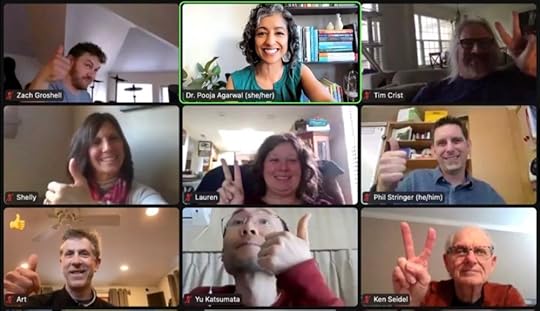
Did you know that I host free webinars for my newsletter subscribers?
If you’re new to retrieval practice, looking for ideas to explore in your classroom, or have some questions, join me and educators from around the world for practical tips. Make sure to subscribe for my newsletter so you don’t miss out.
Subscribe for the newsletterPractical tips and class activities to reduce student test anxiety
It’s midterm season – eek. When I think about my midterms in high school and college, I remember cramming for high stakes exams, writing last-minute papers, and pulling all nighters to meet deadlines. All that cramming paid off in the short-term (I got pretty good grades), but I retained very little knowledge for the long-term.
How can we support our students during this stressful time and reduce test anxiety? Retrieval practice! It might sound counterintuitive, but think about it this way: the more musicians practice, the better prepared they become for performances. This approach is backed by research: the more students practice retrieval, the more comfortable they become with high-stakes tests.
Continue reading to:
Learn more about my research on student test anxiety
Get quick lesson ideas and resources to reduce anxiety
Find out more about my subscriber-only webinar on October 23, 2024 at 5pm ET
Take a deep breath, watch a puppy cam, and good luck to you and your students!
P.S. Listen to this new podcast episode about retrieval practice that I “created” using AI with two non-human hosts. It’s pretty cool!
SUBSCRIBE FOR THE WEBINAR LINK Retrieval practice reduces test anxiety Over the course of 10 years of research in a public school district near St. Louis, Missouri, my colleagues and I surveyed a thousand students about their study habits and test anxiety. We were interested in two key questions:
Do middle school and high school use the same study strategies as college students?
Does retrieval practice increase or decrease student test anxiety?
TL;DR
Yes, 6–12th students use the same study strategies
Retrieval practice decreased student test anxiety
For our first question about study habits, a lot of research had already been published about how college students study, but there hadn’t been much research looking at when and how those study strategies develop. It was revealing to know that typical study strategies (rereading, highlighting, and cramming) develop much earlier in students’ educational experience. These strategies work in the short-term – research shows it and students know it – but then students forget everything. They have to re-study and we have to re-teach. We recently replicated this finding with students in Brazil, confirming that typical study strategies are universal.
For our second question about test anxiety, our survey was inspired by an understandable concern from teachers: All this retrieval practice sounds like more testing, so doesn’t that increase students’ test anxiety? Actually, no. In our survey of 1,500 students, the vast majority of students (72%) reported that weekly retrieval practice decreased test anxiety.
Why did retrieval practice reduce test anxiety? Because students were better prepared for their exams in terms of their knowledge and they had opportunities to improve their metacognition (thinking about their own thinking). When students use short-term study strategies, like re-reading and highlighting, it creates an “illusion of confidence,” where students think they know more than they actually do. As demonstrated in many peer-reviewed research articles, with retrieval practice, students bring their confidence in line with their accuracy (what we call calibration in the scientific literature). Check out this interview on Instagram with cognitive scientist Dr. Lisa Son and click here to download our PDF guide on metacognition.
Key takeaway: The first time students retrieve shouldn’t be on the midterm or final exam. Give students the opportunity to practice their knowledge before the high-stakes exam, reduce their test anxiety, improve their metacognition, and boost their long-term learning.
DOWNLOAD MY RESEARCH ARTICLE Lesson ideas to reduce test anxiety We’re all short on classroom time. Here are quick activities you can use to engage students in retrieval practice and reduce their test anxiety:
Add a picture of a golden retriever in your lesson slides! Dogs are cute and everyone can use a moment to smile. Plus, the picture serves as a cue to you and your students to do a quick retrieval (get it?) with a brain dump or two things. (A big thanks to Spanish teacher Andrew S. at Episcopal Academy for this idea.)
Change your review sessions to retrieve sessions in 5 minutes or less
Change your study guides to retrieval guides and download our free template from Powerful Teaching
Have students do a brain dump about their test anxiety and write down their worries
Provide 3 minutes for deep breathing to boost learning (click here for a YouTube video I use in my classes and click here for a research article on mindfulness and cognition)
Validate students when they forget or can’t retrieve anything
For students:
Here’s my list of recommended resources, including blogs and podcasts
Here’s a list of resources and an article about research on test anxiety from The Learning Scientists
I also recommend the books Choke by Dr. Sian Beilock and Happiness 101 by Dr. Timothy Bono for students
explore resources for students Exclusive webinar on October 23, 2024 On Wednesday, October 23, 2024 from 5:00 - 6:00pm ET (eastern time zone), I’ll be hosting a free subscriber-only webinar!
New to retrieval practice? Looking for ideas to explore this school year? Have some questions? Join me and educators from around the world for practical tips. The webinar will be recorded, but it’ll be shared exclusively with newsletter subscribers. Click here to subscribe!
Subscribe to access the webinar