Pooja K. Agarwal's Blog, page 6
March 5, 2022
Download 5 new resources to unleash learning
The world has changed and teaching has changed. But here’s one thing hasn't changed: The importance of learning and the frustration of forgetting. Here are 5 new resources and downloads, all free, all by cognitive scientists, all to empower you to unleash the science of learning.
Save the date! On Friday, April 8, Dr. Agarwal will be hosting a virtual office hour on Zoom (time TBA). Pop in, ask her anything, and stay as long or as little as you'd like. Stay tuned for more details and share the news on Twitter.
New resources to unleash learning
Photo credit: Gratisography
We've been working hard behind the scenes to bring you 5 new resources:
Powerful Teaching updates, including a Parent's Guide, a Spanish translation, free templates, and a Facebook group with 2,000 members
Practice guides by cognitive scientists, including our new guide on effect sizes (ever wondered what John Hattie's effect sizes really are?)
Free slides for your professional development (yes, please use them!)
A downloadable database of retrieval practice research in authentic classrooms, with a recently published literature review
A new FAQ as a quick reference for all things retrieval practice
Download Our New Guide on Effect Sizes Free chapter from Powerful Teaching
Dr. Agarwal is the opening keynote speaker at SXSW EDU in Austin, TX on March 7. Can't attend? Visit retrievalpractice.org/sxsw to read key takeaways and download a free chapter from Powerful Teaching.
Download the Powerful Teaching chapter

March 4, 2022
Here are 5 free resources to create your own professional development
Our mission is to empower you to unleash the science of learning. Here are five resources to create your own professional development – all developed by cognitive scientists, all free, all here to make your life easier.
#1: Free slides you can useDownload our slides for presentations and workshops. Available for Google Slides and Powerpoint, all we ask is that you provide credit to retrievalpractice.org. We have more slides in our library, including warm ups, key phrases, and slides in Spanish.
 Download Slides #2: Free practice guides you can share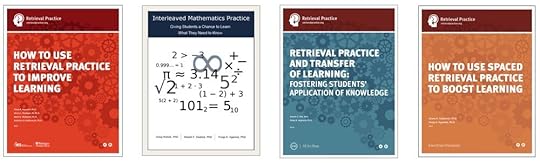
We have free Practice Guides, including guides on retrieval practice, interleaving, transfer of knowledge, and spacing – all written by cognitive scientists. Download them, print them, and share them during your professional development.
Download Practice Guides #3: Free YouTube videos you can watchExplore our YouTube channel and host a watch party. We have videos ranging from 5 minutes to one hour, including formal keynotes and informal Q&As.
Watch on YouTube #4: Free resources for your book club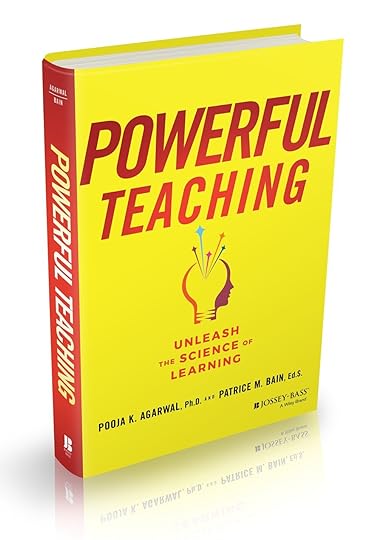
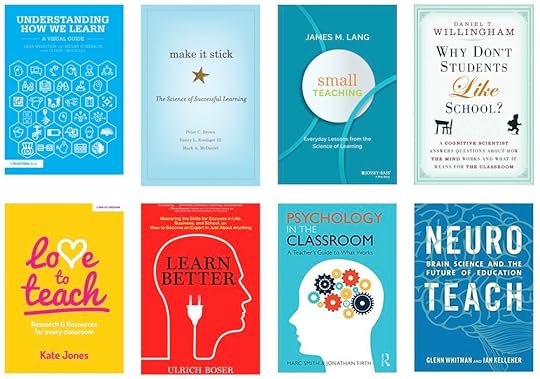
Join our Powerful Teaching book club on Facebook, download our discussion questions for Make it Stick, and browse our list of recommended books on the science of learning. Plus, Powerful Teaching includes two entire chapters dedicated to creating your own professional development. Don't forget to retrieve after you read each chapter!
Read Our Recommended Books #5: Free activities to model research-based strategies
Model retrieval practice during your professional development. Get beyond sit-and-get, develop a richer understanding of what this feels like for your students, and boost your colleagues’ learning, too. Three ways to model retrieval practice:
Start by asking everyone to put their notes away. Pause throughout your presentation to provide time for Retrieve-Taking.
Midway through, pause for a 2-5 minute Brain Dump of everything learned so far.
At the end, ask everyone to write down Two Things they want to remember.
Activities to model retrieval practice Want more? Email us to request a workshop
Interested in a customized workshop? Learn more about our professional development offerings, including in person and online keynotes, workshops, and Q&As, and email us for more information.
Request a Customized WorkshopCreating your own professional development? Start here!
Our mission is to empower you to unleash the science of learning. Here are five resources to create your own professional development – all developed by cognitive scientists, all free, all here to make your life easier.
#1: Free slides you can useDownload our slides for presentations and workshops. Available for Google Slides and Powerpoint, all we ask is that you provide credit to retrievalpractice.org. We have more slides in our library, including warm ups, key phrases, and slides in Spanish.
Download Slides #2: Free practice guides you can share We have free Practice Guides, including guides on retrieval practice, interleaving, transfer of knowledge, and spacing – all written by cognitive scientists. Download them, print them, and share them during your professional development.
Download Practice Guides #3: Free YouTube videos you can watchExplore our YouTube channel and host a watch party. We have videos ranging from 5 minutes to one hour, including formal keynotes and informal Q&As.
Watch on YouTube #4: Free resources for your book club Join our Powerful Teaching book club on Facebook, download our discussion questions for Make it Stick, and browse our list of recommended books on the science of learning. Plus, Powerful Teaching includes two entire chapters dedicated to creating your own professional development. Don't forget to retrieve after you read each chapter!
Read Our Recommended Books #5: Model research-based strategies Model retrieval practice during your professional development. Get beyond sit-and-get, develop a richer understanding of what this feels like for your students, and boost your colleagues’ learning, too. Three ways to model retrieval practice:
Start by asking everyone to put their notes away. Pause throughout your presentation to provide time for Retrieve-Taking.
Midway through, pause for a 2-5 minute Brain Dump of everything learned so far.
At the end, ask everyone to write down Two Things they want to remember.
Model More strategies Want more? Email us to request a workshop Interested in a customized workshop? Learn more about our professional development offerings, including in person and online keynotes, workshops, and Q&As, and email us for more information.
Request a Customized WorkshopAugust 5, 2021
Download our database of retrieval practice research in real classrooms
We are thrilled to share our literature review and a comprehensive database of retrieval practice research conducted in real schools and classrooms.
Punchline: Yes, retrieval practice consistently benefits learning in real classrooms, from K-12 to medical school, across 50 experiments and more than 5,000 students.
Get involved and share this research on Twitter. Thank you for unleashing the science of learning.
Access Our Research Database
Photo by Jesse Orrico on Unsplash
Want a quick way to access classroom research on retrieval practice? We have a database of 50 experiments from the literature review, sorted by grade level, content area, type of retrieval practice, and more.
This is much more than a literature review or database. In order to advance both research and practice, we:
Share and provide access to valuable research in cognitive science
Compare apples to apples by carefully defining classroom research
Identify trends and research-based recommendations for teachers
Highlight future directions for applied research on retrieval practice
Access the Database Read the Publication Learn More About the Literature Review
Click here to read the literature review
Published in Educational Psychology Review, authored by:
Pooja K. Agarwal, Ph.D., Founder of RetrievalPractice.org and Assistant Professor, Berklee College of Music
Ludmila D. Nunes, Ph.D., Researcher and Science Writer, Association for Psychological Science
Janell R. Blunt, Ph.D., Assistant Professor, Anderson University
Given the growing interest in retrieval practice among educators, it is valuable to know when retrieval practice does and does not improve student learning—particularly for educators who have limited classroom time and resources.
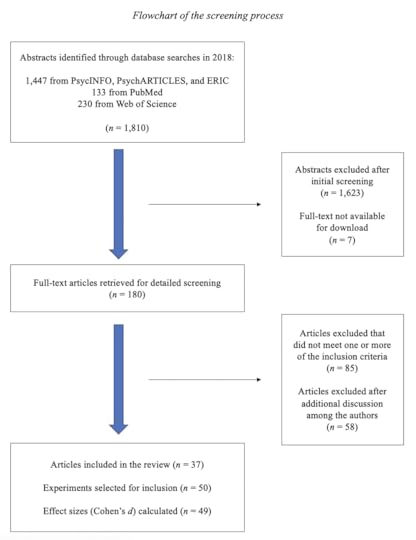
In this literature review, we developed a narrow operational definition for “classroom research” compared to previous reviews of the literature. We screened nearly 2,000 abstracts and systematically coded 50 experiments to establish a clearer picture of benefits from retrieval practice in real world educational settings.
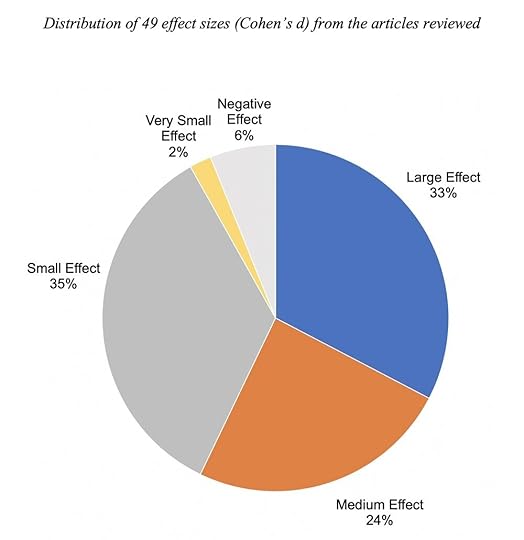
The literature review yielded 49 effect sizes and a total sample population of more than 5,000 students. The majority of effect sizes (57%) revealed medium or large benefits from retrieval practice (see pie chart below). We found that retrieval practice improved learning for a variety of education levels, content areas, experimental designs, final test delays, retrieval and final test formats, and timing of retrieval practice and feedback.
The vast majority of experiments reviewed (94%) were conducted in the United States and Western Europe, consistent with prior findings that the majority of published studies in psychology are conducted in WEIRD countries (western, educated, industrialized, rich, democratic countries). Only 3 out of 50 experiments (6%) drew samples from schools located outside the United States and Western Europe.
Based on this review of the literature, we make eight recommendations for future research and provide educators with a better understanding of the robust benefits of retrieval practice across a range of school and classroom settings.
Read the publication for more details and access the database to view all effect sizes.
Key Figures from the Literature ReviewClick here to read the literature review
Recommended citation:
Agarwal, P. K., Nunes, L. D., & Blunt, J. R. (2021). Retrieval practice consistently benefits student learning: A systematic review of applied research in schools and classrooms. Educational Psychology Review. doi.org/10.1007/s10648-021-09595-9
This project is registered on the Open Science Framework (OSF) at http://osf.io/mz2ks. This post was updated on August 5, 2021, based on a previous version that was published in October 2019.
May 8, 2020
Download our guides in multiple languages!
Our mission is to increase access to powerful teaching strategies–based on the science of learning–to transform education worldwide. That’s why we’re excited to announce that our free practice guides have been translated into multiple languages!
Download and share our free practice guide translations, including Spanish, Portuguese, Dutch, Traditional Mandarin, and Simplified Mandarin.
Our guides, all written by cognitive scientists, cover 6 evidence-based strategies: Retrieval Practice, Spacing, Interleaving, Transfer of Knowledge, Early Childhood Retrieval Strategies, and Metacognition.
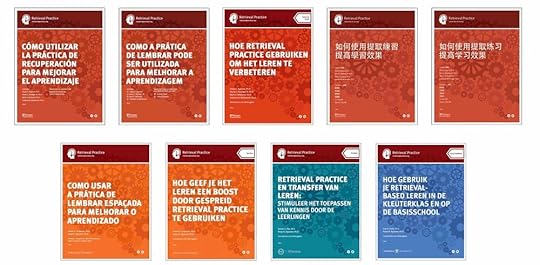
A very big thank you to all of our translators for donating their time and expertise: Lauren Edinborough, Roberta Ekuni, Rogelio Hernández M., Li J. Pan, Steven C. Pan, Fábio Theoto Rocha, Sabine Pompeia, and Gert Verbrugghen.
Download Our Practice Guide Translations Download our professional development slides in Spanish
Did you know that we have free Google/Powerpoint slides for professional development? Download and share them in English and also in Spanish! Thanks to our translator, Juan Fernandez.
Download PD Slides in English and Spanish Metacognition Practice Guide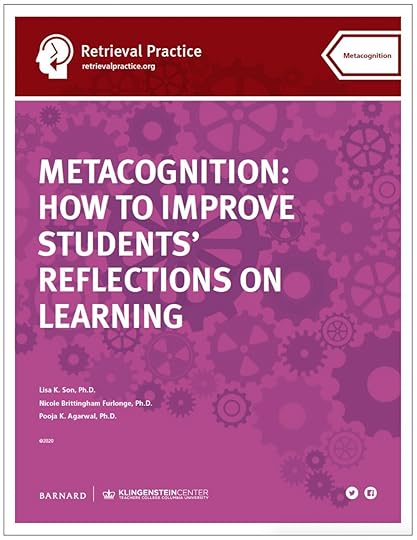
In case you missed it, download our newest guide about metacognition. Written by cognitive scientists and a pedagogy expert, metacognition is “thinking about your own thinking.” Decades of cognitive science research demonstrates that when students reflect on their learning, it increases their future learning, memory, and transfer of knowledge.
Download Our Metacognition GuideDownload our guides in 6 languages!
Our mission is to increase access to powerful teaching strategies–based on the science of learning–to transform education worldwide. That’s why we’re excited to announce that our free practice guides are available in 6 languages!
Download and share our free practice guides in English, Spanish, Portuguese, Dutch, Traditional Mandarin, and Simplified Mandarin.
Our guides, all written by cognitive scientists, cover 6 evidence-based strategies: Retrieval Practice, Spacing, Interleaving, Transfer of Knowledge, Early Childhood Retrieval Strategies, and Metacognition.
A very big thank you to all of our translators for donating their time and expertise: Lauren Edinborough, Roberta Ekuni, Rogelio Hernández M., Li J. Pan, Steven C. Pan, Fábio Theoto Rocha, Sabine Pompeia, and Gert Verbrugghen.
Download Our Practice Guide Translations Download Our Professional Development Slides in Spanish Did you know that we have free Google/Powerpoint slides for professional development? Download and share them in English and also in Spanish! Thanks to our translator, Juan Fernandez.
Download PD Slides in English and Spanish Metacognition Practice Guide In case you missed it, download our newest guide about metacognition. Written by cognitive scientists and a pedagogy expert, metacognition is “thinking about your own thinking.” Decades of cognitive science research demonstrates that when students reflect on their learning, it increases their future learning, memory, and transfer of knowledge.
Download Our Metacognition GuideDownload our 6 guides in 6 languages!
Our mission is to increase access to powerful teaching strategies–based on the science of learning–to transform education worldwide. That’s why we’re excited to announce that our 6 free practice guides are available in 6 languages!
Download and share our free practice guides in English, Spanish, Portuguese, Dutch, Traditional Mandarin, and Simplified Mandarin.
Our guides, all written by cognitive scientists, cover 6 evidence-based strategies: Retrieval Practice, Spacing, Interleaving, Transfer of Knowledge, Early Childhood Retrieval Strategies, and Metacognition.
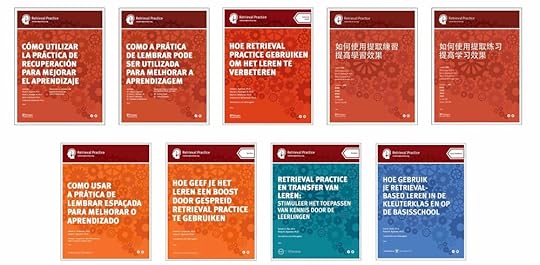
A very big thank you to all of our translators for donating their time and expertise: Lauren Edinborough, Roberta Ekuni, Rogelio Hernández M., Li J. Pan, Steven C. Pan, Fábio Theoto Rocha, Sabine Pompeia, and Gert Verbrugghen.
Download Our Practice Guide Translations
Download Our Professional Development Slides in Spanish
Did you know that we have free Google/Powerpoint slides for professional development? Download and share them in English and also in Spanish! Thanks to our translator, Juan Fernandez.
Download PD Slides in English and Spanish
Metacognition Practice Guide
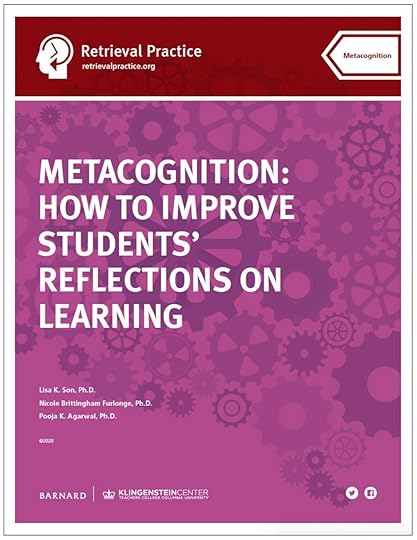
In case you missed it, download our newest guide about metacognition. Written by cognitive scientists and a pedagogy expert, metacognition is “thinking about your own thinking.” Decades of cognitive science research demonstrates that when students reflect on their learning, it increases their future learning, memory, and transfer of knowledge.
Download Our Metacognition Guide
April 24, 2020
Download our Metacognition Guide
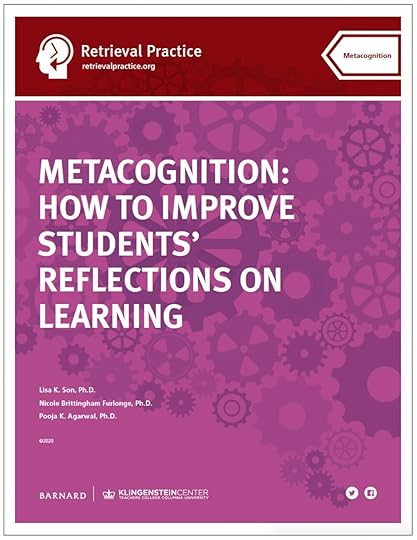
Our Metacognition Guide is now available. Download it for free, read, and share.
Metacognition is “thinking about your own thinking.” Decades of cognitive science research demonstrates that when students reflect on their learning, it increases their future learning, memory, and transfer of knowledge.
For example, you can ask students, “On a scale of 1-4, how confident are you that you got the answer correct?” Students are engaging in retrieval practice, but then this next step of reflection and metacognition provides an additional boost.
Download Our Metacognition GuideWritten by cognitive scientists and a pedagogy expert, our Metacognition Guide is only 9 pages. In just 15 minutes, learn about metacognition, access research, and get some quick ideas for your classroom. We have even more classroom activities and resources for encouraging students’ metacognition, as well as an entire chapter on metacognition in our book, Powerful Teaching. Visit our library to download all of our guides.
Authors: Lisa K. Son, Ph.D., Nicole Brittingham Furlonge, Ph.D., & Pooja K. Agarwal, Ph.D.
Lisa K. Son, Ph.D. is a Cognitive Scientist and Associate Professor at Barnard College. She examines the complexities of metacognition, particularly where and why people often fail to learn successfully. She recently published a book in Korean, Metacognition: The Thinking Parent Makes the Thinking Child (메타인지 학습법), which focuses on addressing illusions and biases that occur during learning. Follow her on Twitter @LisaKimSon.
Nicole Brittingham Furlonge, Ph.D. is Professor and Director of the Klingenstein Center, Teachers College, Columbia University. The Klingenstein Center provides programs to enhance the leadership and learning of teachers and administrators in independent schools. Follow her on Twitter @NicoleFurlonge.
Pooja K. Agarwal, Ph.D. is a Cognitive Scientist and Founder of RetrievalPractice.org. She is the author of the book Powerful Teaching: Unleash the Science of Learning and an Assistant Professor at the Berklee College of Music in Boston, teaching psychological science to exceptional undergraduate musicians. Follow her on Twitter @RetrieveLearn.
Click here to learn more about women leaders in the field of cognitive science.
Download our Metacognition Guide!
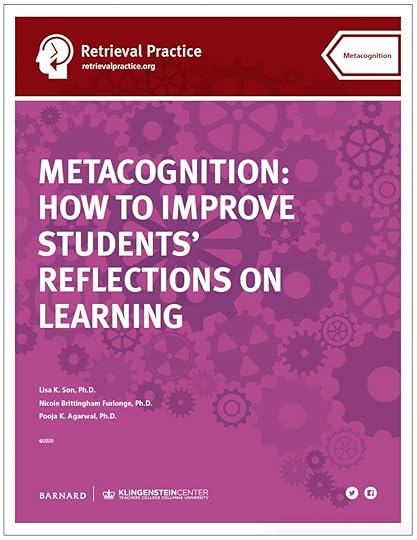
Announcing our brand new Metacognition Guide! Download it for free, read, and share.
Metacognition is “thinking about your own thinking.” Decades of cognitive science research demonstrates that when students reflect on their learning, it increases their future learning, memory, and transfer of knowledge.
For example, you can ask students, “On a scale of 1-4, how confident are you that you got the answer correct?” Students are engaging in retrieval practice, but then this next step of reflection and metacognition provides an additional boost.
Visit our library and download all 6 of our guides!
Download Our Metacognition Guide
Download All 6 Guides
Written by cognitive scientists and a pedagogy expert, our Metacognition Guide is only 9 pages. In just 15 minutes, learn about metacognition, access research, and get some quick ideas for your classroom. We have even more classroom activities and resources for encouraging students’ metacognition, as well as an entire chapter on metacognition in our book, Powerful Teaching.
Authors: Lisa K. Son, Ph.D., Nicole Brittingham Furlonge, Ph.D., & Pooja K. Agarwal, Ph.D.

Lisa K. Son, Ph.D. is a Cognitive Scientist and Associate Professor at Barnard College. She examines the complexities of metacognition, particularly where and why people often fail to learn successfully. She recently published a book in Korean, Metacognition: The Thinking Parent Makes the Thinking Child (메타인지 학습법), which focuses on addressing illusions and biases that occur during learning. Follow her on Twitter @LisaKimSon.
Nicole Brittingham Furlonge, Ph.D. is Professor and Director of the Klingenstein Center, Teachers College, Columbia University. The Klingenstein Center provides programs to enhance the leadership and learning of teachers and administrators in independent schools. Follow her on Twitter @NicoleFurlonge.
Pooja K. Agarwal, Ph.D. is a Cognitive Scientist and Founder of RetrievalPractice.org. She is the author of the book Powerful Teaching: Unleash the Science of Learning and an Assistant Professor at the Berklee College of Music in Boston, teaching psychological science to exceptional undergraduate musicians. Follow her on Twitter @RetrieveLearn.
Click here to learn more about women leaders in the field of cognitive science.
February 13, 2020
We're recharging our batteries to focus on teaching and learning
This is a quick update to let you know that we're recharging our batteries. As a fellow educator, you know the importance of taking time to focus on teaching and learning–and it's time for us to take some time.
We'll be back soon. Don't fret; there's tons of cognitive science to read, download, and unleash in the meantime. Join us on Twitter and Facebook, too.
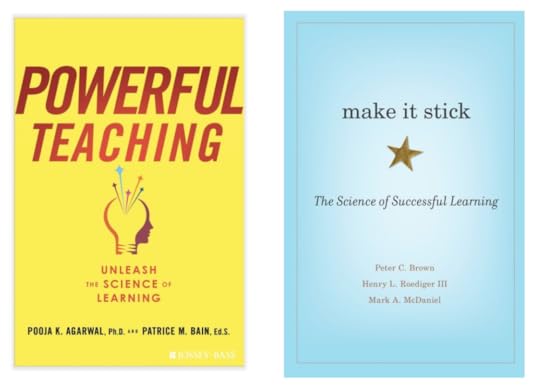
If you want to transform teaching and learning with cognitive science, then get it straight from the source: cognitive scientists. We have a list of recommended books by scientists, including Powerful Teaching and Make it Stick.
We also have professional development slides, discussion questions, and recommended podcasts. We've done the work for you, so your book club and professional learning communities can jump right in.
Explore Our Recommended Books
Download Our Free Practice Guides
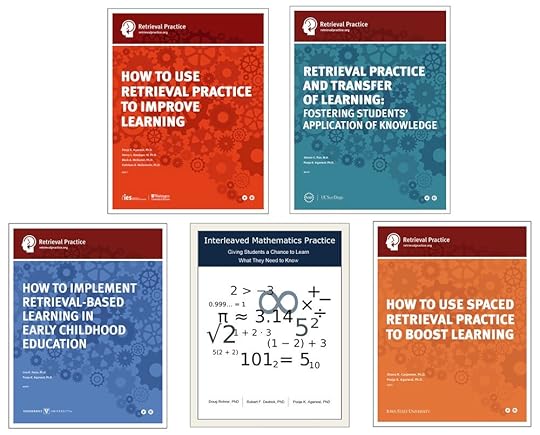
Download our free practice guides, all written by cognitive scientists and all actionable in the classroom (more coming soon). Our Retrieval Practice Guide is also available in Spanish, Portuguese, and Mandarin, with more translations on the way. All the research and strategies in one place, just for you.
Download Our Free Practice Guides
Download Free Research Reports
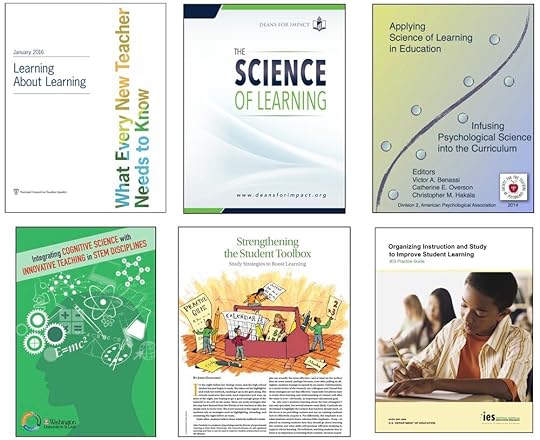
Download free research reports, brought to you by leaders in cognitive science and education. We've tracked down the best research on the science of learning currently available – all for educators, all free!
Download Free Research Reports