Pooja K. Agarwal's Blog, page 10
July 3, 2019
Can't access a research article? Here's what you should do.
Give science away.
This is what a cognitive scientist told me more than a decade ago and it still rings true: "As scientists, it's our responsibility to give science away."
And this is why retrievalpractice.org exists. To give away the science of learning, empower educators, and transform classrooms by unleashing evidence-based strategies.
But science isn't always accessible. What can you do? Read below for a quick tip to access research and download new templates and resources from the book Powerful Teaching.
The science of learning has been under lock and key. Until now.
P.S. We'll be unleashing the science of learning in Chicago on July 26! Will you join us?

Found a fascinating research article, but having trouble accessing it?
Here's a quick and easy way to access research articles when you hit a pesky paywall. Try it out, share it with teachers, and tell your students, too!
Copy the title of the article you want to read
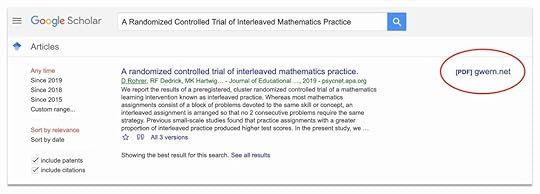
Paste it into scholar.google.com
Click on the PDF link on the right side of the page
Voila! This can take a little practice, but soon, you'll be a Google Scholar pro.
Here's an example from a brand new research study on interleaving:
Doug Rohrer and colleagues (authors of our Interleaving Guide) just published a new study demonstrating large benefits of interleaving on mathematics learning for nearly 800 7th grade students across Florida. Wow!
Here's the abstract from the Journal of Ed. Psychology. The article costs $12.
Here are the Google Scholar results when you search for the article title.
Click on the [PDF] link on the right and voila!
This isn't guaranteed to work, but it comes in handy most of the time. If it doesn't work, search "regular" Google for the title and you might happen upon a blog post or news article summarizing the research.
Lucky for us, Andrew Watson at Learning & the Brain wrote a detailed blog post all about the new study on interleaving!
Want to stay on top of the latest research by cognitive scientists? Follow us on Twitter, like us on Facebook, and read more tips and tricks on our website.
Read Our Top 5 Tips for Accessing Research
Download NEW Templates from Powerful Teaching
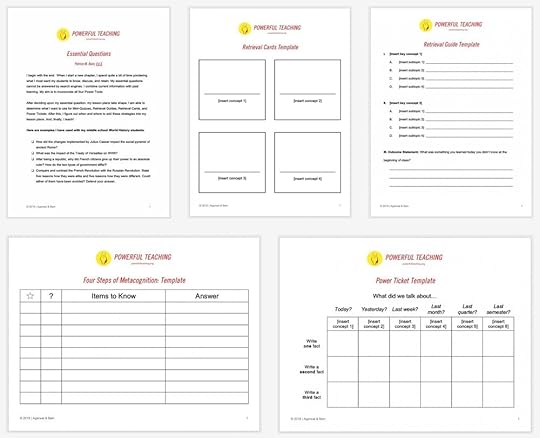
In Powerful Teaching, we're dedicated to giving science away. That's why we have brand new, free templates available for download!
Create essential questions for lesson plans
Create your own Retrieval Cards (our take on flashcards)
Create your own Retrieval Guides (our take on study guides)
Create your own Power Tickets
Support students with the Four Steps of Metacognition
Share figures from the book with teachers and students
Read excerpts from Powerful Teaching, join our book club on Facebook (now with more than 300 teachers!), follow #powerfulteaching on Twitter, download our free templates, and unleash learning in your classroom!
Download NEW Templates from Powerful Teaching


June 26, 2019
Two no-prep strategies to crowdsource student learning in your classroom
When it comes to boosting long-term learning, give students ownership.
This week, we share two strategies you can use in your classroom that engage students in "crowdsourcing" learning via retrieval practice.
Also, registration is now available for two workshops with the authors of Powerful Teaching, taking place in Chicago and St. Louis this summer!

Here’s are two quick strategies to help students retrieve and "crowsource" what they've learned. No prep or grading required because students take charge!
The Big Picture, created by high school students in South Africa:
Each student retrieves and draws a picture of what they've learned about a particular topic.
When students are done, paste all individual drawings onto a wall or a big sheet of paper to create The Big Picture.
Students discuss what they forgot, why they forgot it, and similarities/differences to examine connections in learning.
Beat the Clock, a strategy by a high school teacher in Omaha, Nebraska:
The class is divided into three (or more) groups.
Place three (or more) pieces of poster paper around the classroom. Each poster asks students to recall all they know/learned about a particular topic or concept that they recently learned. Each group begins at a particular station, or poster.
Students have 30 seconds to write everything they know about that topic or concept.
After 30 seconds, groups rotate to the next piece of paper. They add information to the sheet that a different group began.
After 30 seconds, groups rotate one more time until all groups have been to each "station" and had an opportunity to add content to each poster.
For both of these activities, you and your students have a crowdsourced evidence of retrieval practice in action. Do this for multiple classrooms, course sections, or your entire school for even more retrieval practice!
Download Our Retrieval Practice Guide
Powerful Teaching in STL and Chicago!

Register now for workshops with the authors of Powerful Teaching: Unleash the Science of Learning in Chicago and St. Louis this summer!
Friday, July 26, 2019 in Chicago, Illinois
Saturday, August 3, 2019 in St. Louis, Missouri
Can't wait? In the meantime, do this!
Download a sample of Powerful Teaching on Kindle
Follow #powerfulteaching on Twitter
Join our Facebook group

Register for Powerful Teaching in Chicago
June 19, 2019
Recommended tech tools to make retrieval practice quick and easy
There are lots of tech tools that make retrieval practice, spacing, interleaving, and feedback quick and easy. How can you sort through all of them? We've done the work for you. Check out our recommendations below!
Which tech tools do you use? What did we leave out? Comment below and let us know.
Also, join the Powerful Teaching book tour in a city near you! Details below.
P.S. We also love Google Forms! Quiz yourself on trivia facts from Powerful Teaching.

Here’s a roundup of tech tools that harness retrieval practice and provide features in line with the science of learning. Each tech tool has free options, can be used during and outside of class, and includes instant feedback.
FlipGrid is platform where students respond to brief prompts via informal videos. Powerful for both K-12 and higher education, students engage in retrieval practice without even knowing it. Bonus: Students can respond to each other's videos for interactive and elaborative feedback.
Kahoot has a “Remind” feature for spaced practice, providing a desirable difficulty in a low-stakes environment. Bonus: Instead of worksheets, assign Kahoots for homework and even more retrieval practice at home.
Plickers have a “Live View” feature that provides instant feedback for teachers and students, promoting metacognition and transfer of knowledge. Bonus: Students don't use cell phones during class! Students hold up cards with QR-like codes that you can scan using only your device. Perfect for large classes.
PollEverywhere includes many question formats, including open ended polls and Q&A formats. Bonus: PollEverywhere integrates well with PowerPoint, Google Slides, and Keynote. You don't have to launch a separate app.
Quizlet has a feature where students view questions until they’ve correctly answered twice. This is supported by research on successive relearning, or the importance of retrieving multiple times, not just once. Bonus: Quizlet is a great tool for students to create and use flashcards outside of class, too.
Quizizz has a “Jumble” feature that mixes up content – perfect for interleaving. Bonus: The random order makes it tough for students to cheat.
Socrative includes multiple-choice and short answer questions for retrieval practice. Research demonstrates that both types of questions boost learning. Bonus: Socrative works well on the fly and also for exit tickets.
A few things to keep in mind:
We have not been paid to recommend or endorse these tech tools. We like them because they boost learning with research-based features!
Tech tools promote engagement and motivation, but make sure you emphasize the benefits for learning, too.
Research demonstrates that tech tools can decrease anxiety and increase anxiety. Avoid competitive activities and focus on retrieval.
These tech tools work great for teachers, and more are available for students, including Anki, TrueLearn, and StudyBlue.
For more recommendations on harnessing tech tools for retrieval practice, check out the podcast/blog Teaching in Higher Ed and the blog by Matt Miller.
Explore More Tech Tools at Teaching in Higher Ed
Powerful Teaching in a city near you!
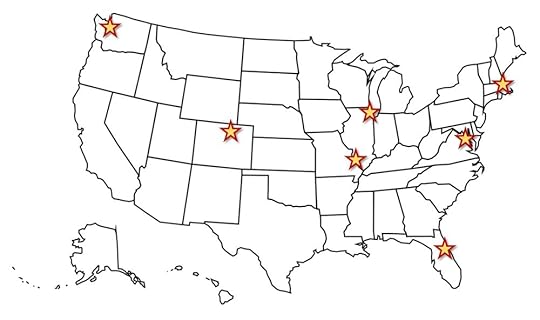
Authors of the new book, Powerful Teaching: Unleash the Science of Learning, are launching their book tour! Join Pooja K. Agarwal, Ph.D. (cognitive scientist) and Patrice M. Bain, Ed.S. (veteran K-12 teacher) in a city near you.
July 10-12: Orlando, FL (registration now available)
July 22-24: Washington, DC (registration now available)
July 26: Chicago, IL (save the date!)
August 3: St. Louis, MO (registration now available)
September 17: Belleville, IL
September 27: St. Louis, MO
October 10-12: Tacoma, WA (registration now available)
October 17-19: Denver, CO (registration now available)
November 22-24: Boston, MA (registration now available)
Can't attend? Join our Powerful Teaching book club on Facebook! The conversation has already started and we'll begin discussing Chapter 1 from Powerful Teaching starting Monday, July 8.
Read excerpts from Powerful Teaching. The book is also available on Kindle! Want an audiobook or translation? Email us and let us know.
Register for Powerful Teaching Book Events
June 12, 2019
Put yourself in your students' shoes. What will you learn this week?
How often do you put yourself in your students' shoes?
This week:
Read a teacher's reflection on the discomfort of being a student
Get caught up on news about the new book, Powerful Teaching
A friend recently told us this: If people can be good at only one thing, it should be learning. And to get good at learning, the first step is being a student.
What will you learn this week? Comment below and let us know!

When was the last time you were a student? When was the last time you signed up for a class, started a hobby, or simply stopped to ponder a new question and seek the answer?
A literature professor, Jan, recently shared her experience in the classroom as a student when she was learning a new language:
"It has been important to me to put myself in challenging situations and see where I land. I have been inspired to keep trying—watching Spanish speaking TV, using apps, and exploring a Spanish YouTube channel.
"It has been really good to feel that uncomfortable. It makes me understand more fully how some of our students feel when they are learning a language—it makes me understand that I can be really smart and feel really stupid all at once. I don’t mean that in a negative way—it has been a great lesson."
Here's your challenge: Close your eyes (for just a minute!) and think about one thing you want to learn this week. As Jan did, put yourself in a situation where you feel both smart and stupid all at once. (I'm going to learn how to fish!)
We often think about how rewarding it is to be a teacher. But don't forget how rewarding it is to be a student, too. Put yourself in their shoes!
Explore Strategies to Put Yourself in Students' Shoes
Podcasts, endorsements, and reviews – oh my!
We're humbled and thrilled by all the support this past week for the new book, Powerful Teaching: Unleash the Science of Learning. A few highlights:
Featured on the newest podcast episode from the Cult of Pedagogy
"The best teaching book to read" from the Learning & the Brain blog
Five 5-star reviews on Amazon in just one week!
Nearly 200 powerful teachers in our Facebook group
Book selfies galore on Twitter at #powerfulteaching
Get involved! Listen, read, review, and join. We can spread the word, but only you have the power to unleash the science of learning in your classroom.
Listen to the Cult of Pedagogy Podcast
June 5, 2019
It's here! Powerful Teaching: Unleash the Science of Learning is now available!
Powerful Teaching: Unleash the Science of Learning is now available in hardback and e-book (Kindle, Nook), online and in stores near you!
Our book is filled with evidence-based strategies that are implemented in less than a minute—without additional prepping or grading. Take a peek at our brand new launch video!
Watch the Powerful Teaching Launch Video
Unleash Learning and Quiz Yourself!

Don't you love the feeling when you get a trivia fact correct? We do!
In our book Powerful Teaching, we don't have chapter summaries; we don't rehash content; and we don't get information "in" to your head.
We practice what we preach! We focus on getting information "out" of your head with frequent retrieval practice activities (we call them Power Ups!). With Powerful Teaching, it's time to unleash your learning, too.
Quiz yourself on 10 trivia facts from Powerful Teaching! Learn some fun facts, and enjoy retrieving, spacing, and feedback. Can you get them all correct?
Quiz yourself! Do you know these 10 trivia facts?
May 29, 2019
One week to go! Will you unleash the science of learning?
It's getting real! Just one week to go before my book, Powerful Teaching: Unleash the Science of Learning, is released. Holy cow.
I am inspired by all the support and encouragement I've received. From the deepest part of my heart (and my brain), I thank you.
To borrow some words I received from a friend yesterday, "I am striving to do the same for you." I support and encourage you to put research into practice. But only you can unleash the science of learning in your classroom. Are you up for the challenge?
P.S. Powerful Teaching is currently 35% on Amazon. That could all change next week on June 5. We have no control over Amazon-robots, but that sure would be fun.

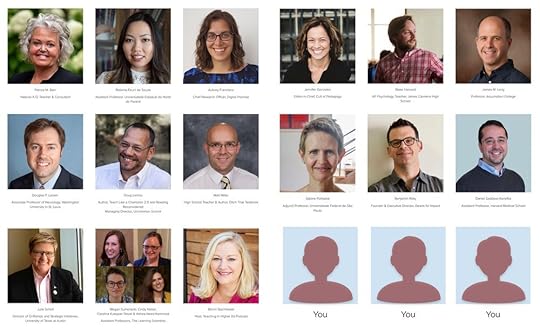
Do you recognize these faces? Each of these scientists and collaborators are featured in Powerful Teaching. Explore and harness their research, their teaching, their stories, and their insights.
Noted scientists, including Dan Willingham and Henry L. Roediger, III, and renowned educators, including Jennifer Gonzalez and Doug Lemov, generously share their expertise in our new book. There are many more scientists and educators we feature in Powerful Teaching, too. Simply put, Powerful Teaching would not exist without their wealth of knowledge and dedication to learning about learning. We cannot thank them enough.
Did you notice the last three "faces?" That's you! Get involved and reach out. How are you unleashing the science of learning?
Learn About Cognitive Scientists & Collaborators
Make Professional Development Powerful

In Powerful Teaching, there's an entire chapter empowering you to develop and lead professional development in your school and organization.
Based on a survey by Education Week, teachers are hungry for more evidence-based strategies. And who better to create powerful, research-based, teacher-led professional development for your team, school, and beyond? You!
We present research and strategies to unleash the science of learning. It’s up to you to pass the torch. Empower teachers and make teaching powerful.
Read Strategies for Teacher-Led Professional Development
May 22, 2019
Read an excerpt from Powerful Teaching and join our book clubs!
We just sent our loyal subscribers the second release of excerpts from our book Powerful Teaching! This week's subscriber-only excerpt is from a chapter we call Keeping it Real, and we also included the full Table of Contents.
Did you miss it? Make sure to subscribe!
Powerful Teaching is released exactly 2 weeks from today (hooray!). In the meantime, join our book clubs and pre-order on Amazon.
P.S. Interested in a bulk order? Simply email us for info about an additional discount!
We’re educators. And we know what it’s like to throw the baby out with the bathwater. That’s why, in Chapter 7 of Powerful Teaching, we’re keeping it real.
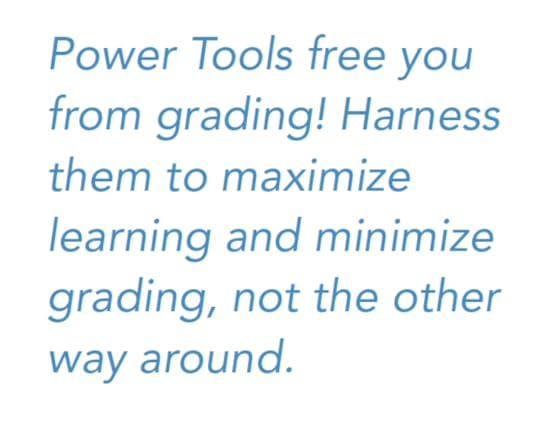
We address nine challenges when implementing Power Tools, including retrieval practice, spacing, interleaving, and feedback-driven metacognition. Concerned about prep time, class time, grading time, and where to start?
We've got you covered! By keeping it real with small tweaks to what you're already doing, we make powerful teaching even easier for you.
Make sure to subscribe for updates and don’t miss out on next week’s excerpt!
Subscribe for Updates
What’s new about Powerful Teaching?

If you've been a long-time subscriber (thank you!), you may be wondering what's new about Powerful Teaching.
The majority of the book is brand new. From a rare scientist-teacher perspective, explore new strategies, new classroom examples, new insights from educators around the world.
We talk about research, Brain Dumps, Retrieve-Taking, and Metacognition Sheets. But you'll also learn new strategies you can unleash in your classroom with sample lesson plans, conversation starters, and practical tips.
Another big difference: We've intentionally embedded retrieval, spacing, interleaving, and feedback in Powerful Teaching. No chapter summaries and no rehashing. We practice what we preach, we model these strategies in each chapter, and we boost your learning, too!
Want to start retrieving what you know about the science of learning? Join our summer book clubs on Facebook and FlipGrid!
Join Our Summer Book Clubs
New excerpt and don't forget to join our book clubs!
We just sent our loyal subscribers the second release of excerpts from our book Powerful Teaching! This week's subscriber-only excerpt is from a chapter we call Keeping it Real, and we also included the full Table of Contents.
Did you miss it? Make sure to subscribe!
Powerful Teaching is released exactly 2 weeks from today (hooray!). In the meantime, join our book clubs and pre-order on Amazon.
P.S. Interested in a bulk order? Simply email us for info about an additional discount!
We’re educators. And we know what it’s like to throw the baby out with the bathwater. That’s why, in Chapter 7 of Powerful Teaching, we’re keeping it real.
We address nine challenges when implementing Power Tools, including retrieval practice, spacing, interleaving, and feedback-driven metacognition. Concerned about prep time, class time, grading time, and where to start?
We've got you covered! By keeping it real with small tweaks to what you're already doing, we make powerful teaching even easier for you.
Make sure to subscribe for updates and don’t miss out on next week’s excerpt!
Subscribe for Updates
What’s new about Powerful Teaching?
If you've been a long-time subscriber (thank you!), you may be wondering what's new about Powerful Teaching.
The majority of the book is brand new. From a rare scientist-teacher perspective, explore new strategies, new classroom examples, new insights from educators around the world.
We talk about research, Brain Dumps, Retrieve-Taking, and Metacognition Sheets. But you'll also learn new strategies you can unleash in your classroom with sample lesson plans, conversation starters, and practical tips.
Another big difference: We've intentionally embedded retrieval, spacing, interleaving, and feedback in Powerful Teaching. No chapter summaries and no rehashing. We practice what we preach, we model these strategies in each chapter, and we boost your learning, too!
Want to start retrieving what you know about the science of learning? Join our summer book clubs on Facebook and FlipGrid!
Join Our Summer Book Clubs
May 15, 2019
Subscriber-only access to excerpts from Powerful Teaching!
Pssst.... keep this a secret.
For our avid email subscribers, we sent a direct link to exclusive excerpts from our soon-to-be-released book, Powerful Teaching!
You can’t find these excerpts on Twitter, Facebook, or even on our website. The direct link was available only in today’s email to subscribers.
But don’t despair! Read on for more about Powerful Teaching and join our virtual summer book clubs. Learn from teachers around the world. Very powerful.
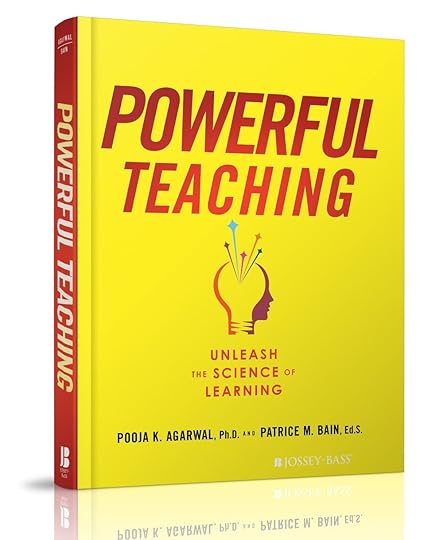
Our book, Powerful Teaching, will be released in just 3 weeks!
Want to know what it's all about before you order? Make sure to subscribe for our email updates!
We'll be releasing more excerpts until the release, so stay tuned. In the meantime, pre-order Powerful Teaching. It's 35% off on Amazon!
That's literally the cheapest we've seen it. We can't predict whether the price will change after the release (Amazon keeps secrets, too), so don't delay.
Subscribe for Updates
Question of the Week: Why do students cram?
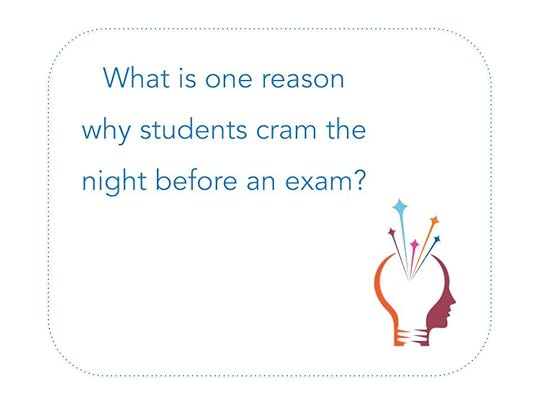
It's week 3 of our summer book club! A pretty straightforward, yet complex, question: Why do students cram the night before an exam?
What do you think? Share with us on Facebook, FlipGrid, and Twitter!
Join Our Summer Book Clubs
May 8, 2019
Boost student presentations with student-led retrieval practice
It's the end of the school year! That means a lot of student presentations.
Take this opportunity for some student-led retrieval practice! We added this quick activity to final presentations this semester and students loved it. (Of course, they learned more, too!)
P.S. See below for our favorite book club response this week.
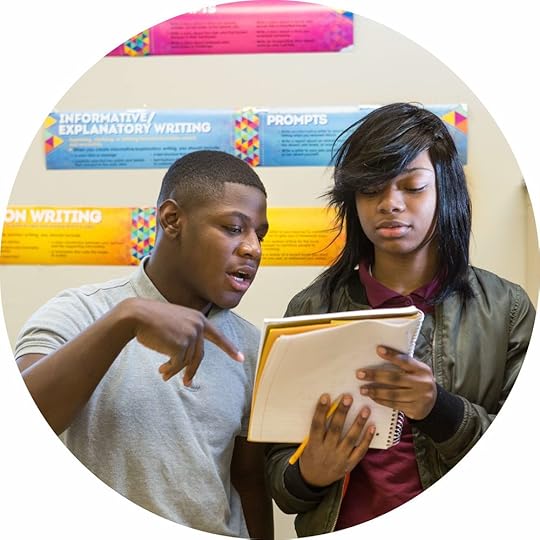
Student presentations are valuable. Students can demonstrate what they have learned and share it with others. But often, student presentations go in one ear and out the other. The presenters are retrieving, but everyone else in the room is simply getting information "in," just like re-reading or cramming.
Instead, have students lead a retrieval activity during their presentations.
Here are activity guidelines for students:
Focus on retrieval practice! Retrieval is for learning, not assessment.
Keep it no-stakes. Don't give students grades or points, and avoid competitive games that increase anxiety.
Please, don't throw candy. (Really. Don't.)
Keep it brief. The retrieval activity can be 5 minutes or less.
Use a variety of formats. The retrieval activity can include oral questions, a writing prompt, multiple-choice questions, short answer questions, using a tech tool or app, etc. Get creative!
Use spacing! Ask questions about information from earlier in the semester that's related to your presentation. And aim to increase retrieval throughout your presentation, not just at the end.
If your students look at you dumbfounded, remind them that you've been using retrieval practice the entire semester. Is there a particular retrieval activity they enjoy that you (the teacher) created? They can model and build from it. Besides, when everyone retrieves, everyone succeeds! (We couldn't resist.)
As one example, Retrieval Tic-Tac-Toe is a fantastic activity created by college students from Indiana. Engaging, quick, and powerful for long-term learning.
Put students in the driver's seat when presenting – and retrieving!
Read About a Student-Led Retrieval Activity
What are five words about learning?

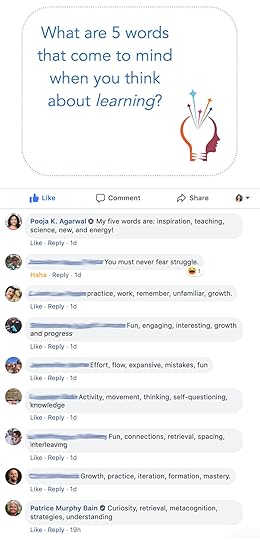
We've already started our summer book clubs for Powerful Teaching: Unleash the Science of Learning! This week, we asked: What are 5 words that come to mind when you think about learning?
Here's what teachers on Facebook shared. What are your 5 words?
Join Our Summer Book Clubs