Pooja K. Agarwal's Blog, page 12
February 20, 2019
Want to know what interleaving feels like? Try these quick math problems!
It's been awhile since we've talked about interleaving!
Years of cognitive science research have established that interleaving – simply rearranging the order of retrieval opportunities – can increase (and even double) student learning.
But what does interleaving actually look like? This week, try it for yourself!
Research by Doug Rohrer and colleagues demonstrates that the simple approach of interleaving and mixing up concepts to be learned can result in a large benefit for student learning – whether it's songs, math, science, vocabulary words, art history, and even baseball.
For example, when students complete four addition, four subtraction, and four division problems (e.g., AAAA BBBB CCCC), they can go through them without thinking about which strategy is appropriate. They don’t even have to read the words.
But when the math problems are interleaved (ACB BAC CAB), students have to choose and retrieve the appropriate strategy for each problem. Same exact problems – just simply rearranged! A critical key to interleaving: mix similar concepts to promote students' discrimination (like a fruit salad!).
Try these math problems and submit your answers on our Google Form:
A bug flies 48 miles east and then 20 miles south. How far is the bug from where it started?
A bug flies 48 miles east and then 14 miles north. How far is the bug from where it started?
A bug flies 48 miles east and then 6 miles west. How far is the bug from where it started?
These word problems appear to be similar and you may have applied the Pythagorean Theorem. But did you notice that the last problem requires a different strategy to solve it correctly (answers here)? Welcome to interleaving!
Sometimes concepts look alike, but they can require different strategies. And we want our students to recognize up from down, addition from subtraction. Note that this is a very simple example of interleaving. Of course, you'd want to mix up similar concepts (Pythagorean Theorem with other geometry concepts) to encourage students to discriminate. Click here for more examples of math problems by Doug Rohrer and colleagues.
If problems are mixed up and interleaved, students need to choose a strategy, not just use a strategy without thinking. It's not about tricking students; interleaving is a low-stakes desirable difficulty to improve understanding.
Take the content you already have, interleave it, and boost learning!
Take Our Interleaving Quiz


February 13, 2019
Are you facilitating professional development? Start here!
We've seen lots of activity on Twitter and social media about teachers facilitating professional development on the science of learning. Fantastic!
Our mission is to empower you to teach with the science of learning. Students are learners and teachers are learners, too.
Who says the science of learning is only for students? Take advantage of our resources and make your professional development memorable.
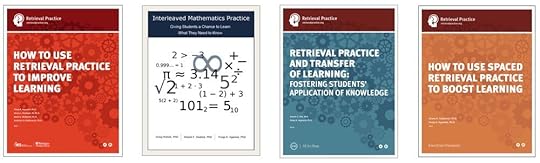
We have four free Practice Guides: Retrieval Practice, Interleaving, Transfer of Knowledge, and Spacing. When you include our translations, our Practice Guides have been downloaded by more than 100,000 educators.
Download them, print them, and share them during professional development. Here's what Derrick Smith, an Associate Principal at Carl Sandburg High School in Orland Park, IL had to say:
"The Transfer of Knowledge Guide has been a game changer. It's an awesome resource for framing our conversations and linking instruction to the science of learning. The Transfer Guide offers strategies for infusing these ideas into practice and it will undoubtedly inform our future workshops and collective work."
Frame your conversations with our brief, research-based Practice Guides.
Download Our Practice Guides for Professional Development
#2: Model Research-Based Strategies
Have you been implementing our research-based strategies in your classroom? Model them and use them in your professional development, too!
Not only will this move your professional development beyond sit-and-get; your colleagues will learn and retain more, too. Win-win.
Our strategies like Brain Dumps, Two Things, and Retrieve-Taking work well for students and teachers. For example:
Start by asking colleagues to put their notes away! You can pause throughout your presentation to give them the opportunity to engage in Retrieve-Taking to boost their learning.
Midway through your professional development, pause for a 2-5 minute Brain Dump of everything colleagues have learned so far.
At the end of your presentation or workshop, ask everyone to write down Two Things they want to remember – and go beyond one-and-done.
Model Strategies During Professional Development
#3: Read Our Recommended Books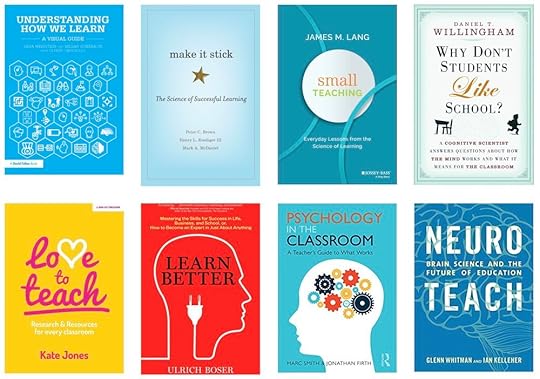
Do you love learning from books – and books about learning? We do!
Check out our list of more than 10 recommended books and e-books. Each one has been vetted to make sure the research presented is true to the science of learning.
Use these books to start book clubs, lead a professional learning community, and connect with educators via Twitter and Facebook. Don't forget to retrieve after each chapter, too!
Last summer (2018), we lead book clubs around the world on Make it Stick: The Science of Successful Learning. This upcoming summer (2019), stay tuned for book clubs featuring Powerful Teaching: Unleash the Science of Learning! Written by a cognitive scientist-teacher combo, Powerful Teaching includes two entire chapters dedicated to professional development.
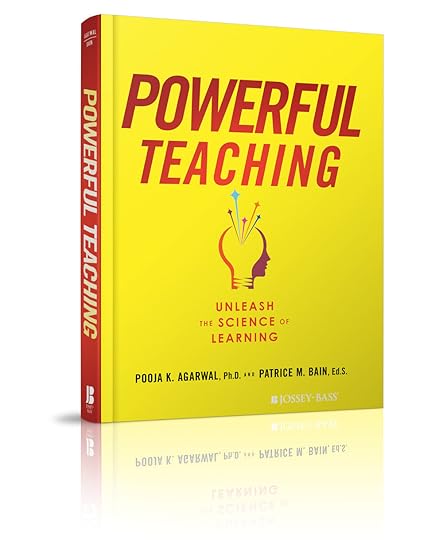
Devour our recommended books! We promise you'll learn – a lot.
Read Our Recommended Books
#4: Contact Us For More!
Would you like to connect with cognitive scientists and teacher-leaders? Don't be shy – email us! We love building collaborations with educators and scientists. Let's brainstorm opportunities for webinars, in-person professional development, and more. Get in touch via Twitter and Facebook, too.
Let's unleash the science of learning with more teachers, in more classrooms, for more students, worldwide. There's a lot to do – let's do it together.
Contact Us for Professional Development
February 6, 2019
Want to improve students' study strategies? Do this first.
How often do students come to you and exclaim, "But I studied for hours!" Of course, we don't want to see our students study for hours on end, only to forget everything or fail a test. They don't want to get stuck in this cycle, either.
How can we help students improve their study habits? Before you give them strategies, there's one thing you have to do first: have a conversation.
Read on for three vital questions to ask students before diving into study strategies. You – and your students – will be surprised by the conversation.

We know that students don't study effectively. Plenty of research confirms that students cram, re-read, and highlight. Research also demonstrates that students can study less and learn more with retrieval practice, spacing, interleaving, and metacognition.
How can we help? Calendars and study plans are good, but telling or showing students how to use effective strategies is like driving a car that accelerates from 0 to 70 mph – in 60 seconds flat.
Slow down! Ask students these three simple questions:
How do you study?
Why do you study this way?
Does it work?
Your students will be mystified! Many students have never reflected on their study habits before and even fewer have been taught how to study effectively.
Share some of your own study experiences, too! Chances are you crammed at some point in your life. You should also tell your students they aren't alone – students from K-12 to college and medical school use the same ineffective strategies and get the same frustrating results.
What next? Check out our strategy called Retrieve-Taking to model effective study strategies in class before students try them on their own. Check out the Learning Scientists and this superb guide by cognitive scientists, too.
What's the most powerful strategy to improve students' study habits? It's the opportunity to have a conversation about how they study – first.
Read More About Retrieve-Taking
January 30, 2019
Retrieval Tic Tac Toe: A no stakes, no anxiety game for retrieval practice
Classroom games – like Jeopardy, trivia, or apps – encourage retrieval. But they can also raise student anxiety when they're competitive or time limited.
This week, we present a no anxiety strategy: Retrieval Tic Tac Toe. Created by college students, adaptable for any classroom or content area. Have fun!
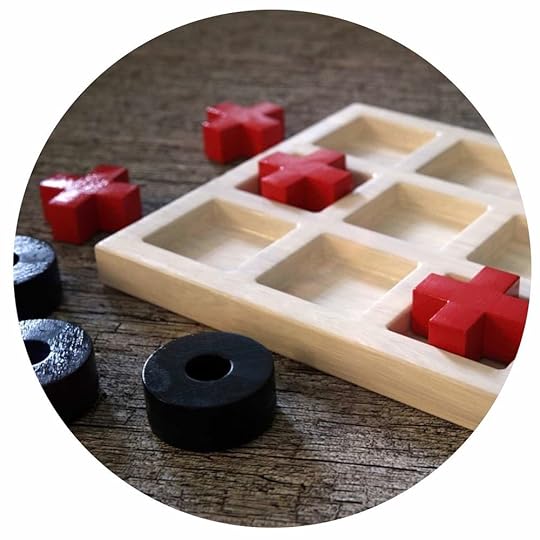
The research is clear: Retrieval practice boosts learning. To get students on board, it's critical to emphasize that retrieval practice is a learning opportunity, not an assessment opportunity.
Classroom games, like Jeopardy and various apps (e.g., Kahoot, Quizlet, etc.) are engaging and low stakes – perfect for retrieval practice. But they can increase anxiety, too. When you were a student, did you ever feel pressured to come up with a correct answer to a question, as soon as possible, without disappointing your teammates? Talk about anxiety!
Retrieval Tic Tac Toe is a no stakes, no tech, no anxiety activity created by Alana, Emily, and J., college students in a psychology class with cognitive scientist Janell Blunt from Anderson University.
Write a tic tac toe grid on the board or project a grid on a screen
Split your class into two teams
Each team writes 5 questions for retrieval practice
One team stands at the front of the class and asks a question. The other team collaborates to come up with the correct answer.
If the seated team gets the question correct, they can put an X on the grid wherever they like.
The teams switch. Now, the team that originally presented collaborates, answers a question, and adds an O if they are correct.
Continue alternating teams for Retrieval Tic Tac Toe, anxiety free!
Quick tips:
Students can create questions about previously learned content to incorporate spacing in Retrieval Tic Tac Toe
Questions can be short answer or multiple-choice
You can create a few smaller teams (e.g., 3-4 students each) and have multiple games going at once
Play Retrieval Tic Tac Toe at the beginning, middle, or end of class
No prep or grading required!
How will you use Retrieval Tic Tac Toe in your classroom? Comment below and share!
Read More Anxiety-Free Retrieval Strategies
January 23, 2019
Want free downloads? We've got 'em!
Do you like free downloads, especially when they're based on cognitive science and practical for today's classrooms?
We do! Download all our goodies from our library and check out our guides, book club resources, templates, and more.
We have a favor to ask: Could you share our library with one friend who would also love our downloads? The direct link is retrievalpractice.org/library. Follow us on Twitter and Facebook, too!
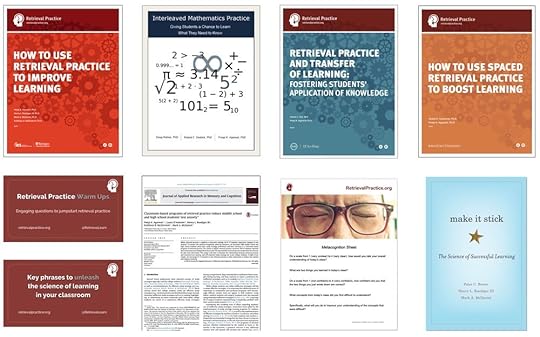
Two weeks ago, we released our Spacing Guide – full of research and practical tips on harnessing it in your classroom. We wrote it in collaboration with Professor Shana Carpenter, an expert on how spacing can be used to transform learning. (Don't know what spacing is? Download the guide!)
We now have four guides, written by cognitive scientists and actionable in the classroom. But did you know we have so much more?
Visit our library for our free resources:
Practice Guides: Retrieval, Interleaving, Transfer, and Spacing
Discussion questions and sketchnotes for the book Make it Stick
Retrieval Practice Warm Ups
Key phrases for conversations with students
A Metacognition Sheet template
Recommended research articles
All of our downloads are also available on Teachers Pay Teachers and Google Drive.
Do you have an idea for a research-based resource you'd love to see? Let us know! We're here to give science away and we'd love your help.
Download Our Free Resources
January 16, 2019
Top 5 ways to learn about new research (have you heard of number 4?)
Do you enjoy putting research into action and staying on top of cutting edge research?
Read on for our top 5 tips for finding, accessing, and reading bona fide research from the science of learning!
There's a lot of research to sift through. It's often intimidating and tough to access. Don't despair. You can access science straight from the source – scientists, academic journals, and professional organizations – it just takes a little know-how. Quench your thirst for scientific knowledge and transform your classrooms with rigorous research. Here's to science!
P.S. We hope you downloaded our new Spacing Guide last week. We've included hyperlinks to top notch research and scientific articles – straight from the source. Read, click, and share!
Hungry for rigorous scientific research on learning, as soon as it's published? Here are our top 5 tips for getting started:
Follow us on Twitter (@RetrieveLearn) and Facebook (/retrievalpractice)! Yes, this is a shameless plug, but anytime we come across rigorous and actionable research by cognitive scientists, we share it. We want it in your hands. We follow the research and we hope you'll follow us.
Follow cognitive scientists on Twitter. We put together a list. More and more scientists are sharing their newest publications online. So easy!
Set up a few alerts at alerts.google.com. Create a daily or weekly alert for research keywords ("metacognition"), scientists ("Katherine Rawson"), teaching strategies ("brain dumps"), or anything you'd like!
Use Google Scholar (scholar.google.com) to search for research. Type in a keyword, scientist, etc. and happy surfing. You can filter by publication date, directly download free PDFs, and more. So many people don't know about this wonderful resource! Highly recommended.
Subscribe to table of contents announcements from cognitive science and psychology journals. This takes more leg work, but if you dedicate an hour or two, you'll be good to go. You do not need to subscribe to the journal. You can receive table of contents for free. There are too many journals to list here, so check out our website for our recommended list.
Recommended List of JournalsOur recommended list of journals (just a few of many!): Journal of Educational Psychology, Scholarship of Teaching and Learning in Psychology, Journal of Applied Research in Memory and Cognition, Psychological Science, and Psychological Science in the Public Interest.
How do you stay current with research and the science of learning? Comment below and share!
Read our Research Spotlights!
Did you know that we've got a range of Research Spotlights that are digestible, quick, and actionable? They're perfect for a quick read, and also a resource you can share with parents, colleagues, and even students.
We've covered everything from multiple-choice questions and metacognition, to student anxiety and STEM learning. How do strategies including retrieval, spacing, interleaving, and feedback compare to other teaching strategies? Find out from our Research Snapshots: retrievalpractice.org/research
Read Our Research Snapshots
January 9, 2019
Download our NEW Spacing Guide with practical strategies and research!
It's a brand new year. That means a brand new Spacing Guide to improve students' long-term learning! We're pretty excited.
Written by cognitive scientists, take a moment and download our free Spacing Guide, full of practical spacing strategies – and the research to back it up.
Could you spread the word about our new Spacing Guide? Let's get cognitive science into the hands of teachers – share it on Twitter and Facebook. Enjoy!
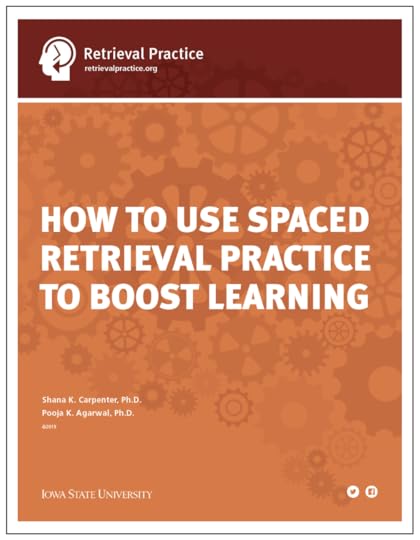
Spacing is a powerful strategy that boosts learning by spreading lessons and retrieval opportunities out over time so learning is not crammed all at once. By returning to content every so often, students’ knowledge has had time to rest and be refreshed.
When we teach and students study, we often focus on short-term learning. But with spacing, students' long-term learning dramatically increases. Spacing also comes with more than 100 years of research to back it up. We love it because it's not only effective, it's practical and easy to implement.
In our new Spacing Guide, learn about what spacing is, why it works, and how to implement it in the classroom. In just 12 pages (and free!), it's a resource we hope you'll read, share, and put into action for you and your students.
Did you know we have 4 guides (plus translations), with more on the way? Download them from our library, Teachers Pay Teachers, and Google Drive. Do you have an idea or topic you'd love to see us cover? Let us know! We're passionate about getting rigorous research into the hands of educators and we need your help to make it happen. Don't be shy – email us, follow, and like.
Download our NEW Spacing Guide
Lead Author: Shana K. Carpenter, Ph.D.
Associate Professor, Iowa State University

Shana K. Carpenter, an associate professor at Iowa State University, is the lead author of our new Spacing Guide, co-written with our founder, Pooja K. Agarwal, Ph.D. As a worldwide expert on the benefits of spacing for learning, Professor Carpenter has dedicated her research to the use of evidence-based techniques that enhance student learning.
She has published numerous articles on retrieval practice and spaced practice, along with other effective techniques that enhance learning and transfer of a wide variety of information in educationally-relevant settings.
Professor Carpenter earned her Ph.D. at Colorado State University. Her research has been supported by the National Science Foundation and the James S. McDonnell Foundation. She currently serves as Associate Editor for the Journal of Applied Research in Memory & Cognition.
Learn more about Professor Shana K. Carpenter
December 19, 2018
Powerful Teaching is now available for pre-order!
We are excited to announce that our book, Powerful Teaching: Unleash the Science of Learning, is now available for pre-order!
Looking to catch up on some reading over the holidays? Check out our 10+ recommended books, all about the science of learning. Happy reading!
P.S. We're going to take some time for resting, relaxing, and reading, too. See you on January 9!
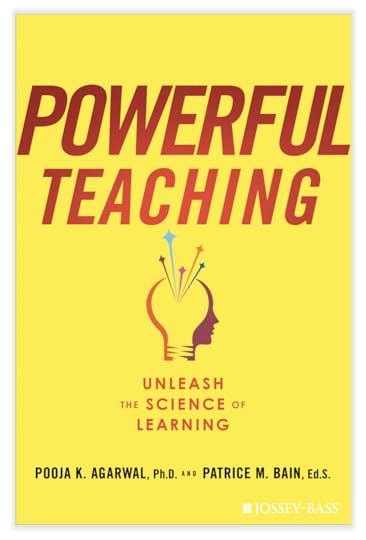
Powerful Teaching: Unleash the Science of Learning is the culmination of a 15-year collaboration between a cognitive scientist and a veteran K-12 teacher. Yes, you read that right! An essential power duo of a scientist and a teacher.
In this book, Pooja and Patrice empower educators with evidence-based strategies that are easily implemented in less than a minute—without additional prepping, grading, or funding.
Even if you've followed us for awhile, Powerful Teaching includes a ton of brand new content never released before! Real-life examples, brand new research snapshots, more classroom strategies, and tips to tackle challenges.
Join the excitement and spread the word. Thank you for your support!
Pre-Order Powerful Teaching on Amazon
Recommended Books on the Science of Learning
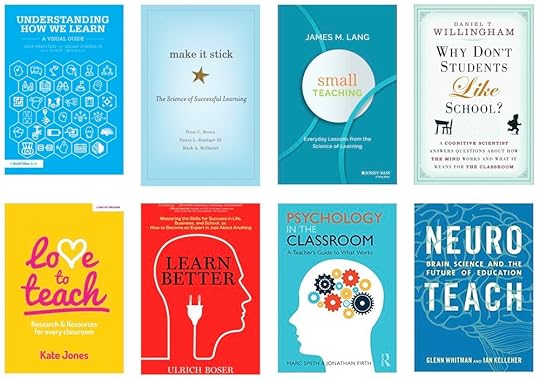
We're thrilled to see a growing wealth of books dedicated to the science of learning, especially for educators, schools, colleges, and universities!
Check out our list of 10+ recommended books and downloadable e-books. Each book tackles learning from a variety of perspectives and experiences. Some present key principles from research, while others address misconceptions about how learning works. Many include tips for everyday life and our favorites make the science of learning actionable in the classroom.
Want a book full of helpful course design tips? Or a book that's a little more broad for a parent? We've included brief descriptions to give you an idea of who wrote the book, what the book is about, and who might find it the most useful. While you're reading, don't forget to write down Two Things you learned along the way. Enjoy!
Check Out Our Recommended Books
December 12, 2018
Yes, retrieval practice improves more than just memorization
This week, we want to address the single most frequent question we're asked: "Do these strategies improve more than just memorization?" Read on for our answer, based on years of cognitive science research and classroom practice. (Sneak peek: Download our free Transfer Guide for more info!)
Are you using retrieval practice, spacing, and feedback in your teaching? How's it going? Any questions we can help out with? Comment below and let us know!
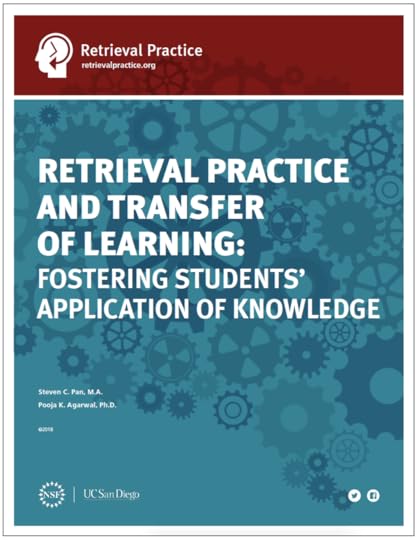
We've said it before and we'll say it again: Yes, strategies like retrieval practice, spacing, interleaving, and feedback improve more than just memorization!
Whether you're new to retrievalpractice.org or just joining us, you may be wondering, “Retrieval practice sounds great, but it still sounds pretty basic.” Over the years, we’ve had the same concerns, too. Fortunately, in the lab and in the classroom, research demonstrates that these strategies improve students’ transfer of knowledge, ranging from a deep understanding of mitosis to effectively resuscitating someone using CPR. Simply bringing information to mind helps solidify knowledge and transfer it to new content and situations.
Transfer happens when students take something familiar and apply it to something unfamiliar. In the same way, what students learn inside the classroom should be applied outside the classroom – the hallmark of deep understanding and flexible knowledge.
As educators, we know that boosting learning beyond the memorization of facts is critical. And that’s why we advocate for the use of these strategies – because decades of research demonstrate that they improve more than just memorization – much more.
Download our free Transfer Guide, written by cognitive scientists, for key research and teaching strategies to boost students' transfer of knowledge. Getting students to transfer what they know isn't always easy. Check out our Transfer Guide and unleash our research-based tips in your classroom.
Download Our Transfer of Learning Guide
December 5, 2018
Flash Forward follow up: Two more strategies!
Did you read about our end-of-semester activity from last week, Flash Forward? This week, we have two strategies to take Flash Forward to the next level – by readers like you!
We love learning from your tips, ideas, and activities. To share, simply reply to this email, comment below, and join us on Facebook and Twitter.
What is something you've learned this year that you want to remember 10 years from now? Take this opportunity to Flash Forward for yourself!

Last week, we talked about an activity we love, called Flash Forward. Simply ask your students this question:
"Now that you've taken this class, what is one thing you want to remember 10 years from now (and why)?"
Flash Forward sparks retrieval, spacing, and metacognition – in 5 minutes or less. But what should you do next? Here are two fantastic recommendations from our readers:
Janell Blunt, a cognitive scientist and professor at Anderson University in Indiana, used Flash Forward with her college students last week:
Students think about or write down their Flash Forward
Students line up facing another student
Students share their Flash Forwards with their partner across from them
Students switch to a new partner (you can have one of the lines move down a spot and pair the two students on the end)
Students engage in class discussion of themes and reactions
After an activity like Janell's, another reader suggested taking Flash Forward to the next level by asking students:
"How will you remember that one thing? What will you do to make sure you don't forget?"
Don't be surprised if your students say they'll use retrieval practice!
Have you tried Flash Forward in your classroom? What did your students say? Do you have a tip to share? Let us know and comment below!
Read More About Flash Forward