Pooja K. Agarwal's Blog, page 11
May 2, 2019
Announcing our summer book clubs!
Our book, Powerful Teaching, will be released in June!
Only a month away. Full of research and powerful teaching strategies, co-author Patrice Bain and I are thrilled to share the science of learning with you.
Starting today, join our summer book clubs, read a newly released excerpt, and explore endorsements from leaders in education and cognitive science.
The science of learning exists. Now, it's time to unleash it.
P.S. Get a jump start and pre-order Powerful Teaching from Amazon. It's 35% off!
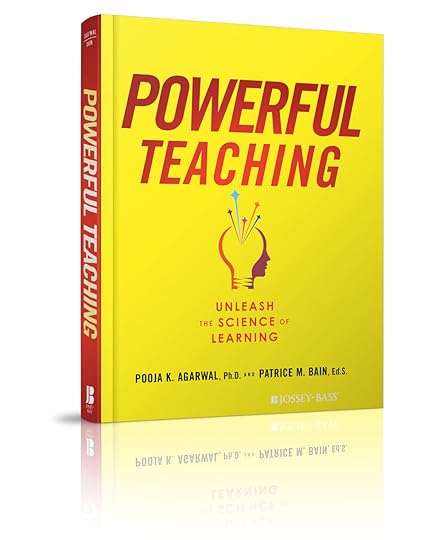
Transform your teaching with our summer book clubs for Powerful Teaching: Unleash the Science of Learning. Join the conversation around the world on Facebook, FlipGrid, and Twitter – even before the book is released!
We’re sharing weekly discussion questions beginning today! Powerful Teaching is available June 5 and we’ll begin discussing Chapter 1 on July 8.

Our summer book clubs are:
Engaging and informative. Contribute or simply read/watch.
Virtual and asynchronous. Post when it's convenient.
We know time is precious. Join us as often as you like.
Collaborate with a colleague or "Power Partner" for even more learning!
Not familiar with FlipGrid? It's an amazing teaching tool where students post asynchronous and informal videos. In other words, retrieval practice! The summer is the perfect opportunity to try it for yourself. You'll love it.
Last summer, our book clubs for Make it Stick were a huge success! Hundreds of educators shared ideas, strategies, and more. Let's get beyond "one and done" and unleash the science of learning this summer – together.
Join Our Powerful Teaching Book Clubs
Powerful Teaching in a city near you
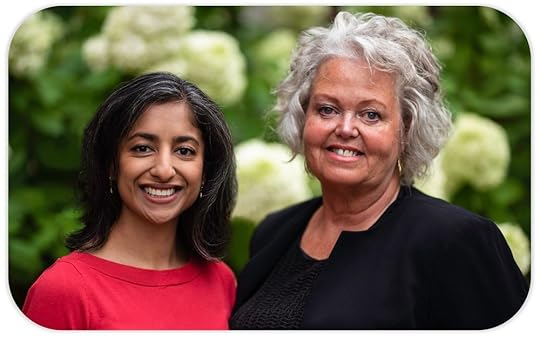
Join the authors for these upcoming events, with more U.S. and international events announced soon. Want to host a visit at your school? Simply reply to this email and let us know!
May 2-3: Portland, ME
May 13: West Point, NY
June 6-9: Cape Cod, MA
June 19-20: Tampa, FL
July 10-12: Orlando, FL
July 21-25: Washington, DC
August: St. Louis, MO
(official book launch, more info soon!)
September 17: Belleville, IL
September 27: St. Louis, MO
October 10-12: Tacoma, WA
October 17-19: Denver, CO
Join the Authors at Events Near You


April 24, 2019
How are you? No, really. How are you?
This week's update is a little different than usual.
I'd like to share one way I build relationships with students. Inspired by my students, read on for an essential question you must ask your students.
It's one small step for us, one giant leap for supporting learning.

How often do you have this conversation with a student?
You: "Nice to see you! How are you?"
Student: "I'm okay. How are you?"
You: "I'm good. See you later!"
Woosh! There goes a missed opportunity. Do this instead: Ask twice.
You: "Nice to see you! How are you?"
Student: "I'm okay. How are you?"
You: "I'm good. But really. How are you doing?"
That's it: Just ask "how are you?" a second time. Take a moment, pause, make eye contact, and ask this essential question. It's simple, but powerful.
There might be an awkward silence. Smile in return. Whether a student shares a little more or doesn't, you asked. You see them. You care.
You can even do this via email! Rather than beginning an email with "how are you?" as a greeting, end your email with "how are you?"
A colleague sent me an email like this long ago and it really made an impression on me. A genuine question! In an email! And I spent just one extra minute sharing how I was doing. How often do we do that? Not often enough.
As teachers, let's model this for our students. Ask twice. By the end of the semester or school year, your students will pause and ask you, too.
So, how are you? Comment below and let me know!
Read More Tips to Build Relationships
Savor the first and last minutes of class

Want more tips for building rapport with students? We highly recommend Professor James Lang's series in the Chronicle of Higher Education on how to make the most of:
We love his book, Small Teaching. It's full of practical teaching strategies and the science behind them.
For example, combine retrieval, spacing, feedback, and more with quick and easy Connection Notebooks!
Learn More About Small Teaching
April 17, 2019
This is THE podcast for the science of learning, tech tools, and more
How do we reflect on our own teaching? One of our favorite resources is the Teaching in Higher Ed podcast. This week, we’re thrilled to share it with you.
Bonni Stachowiak, host of Teaching in Higher Ed, faithfully shares the science of learning. She's had a big impact on our teaching, and she will on yours, too.
Listen, learn, and enjoy!
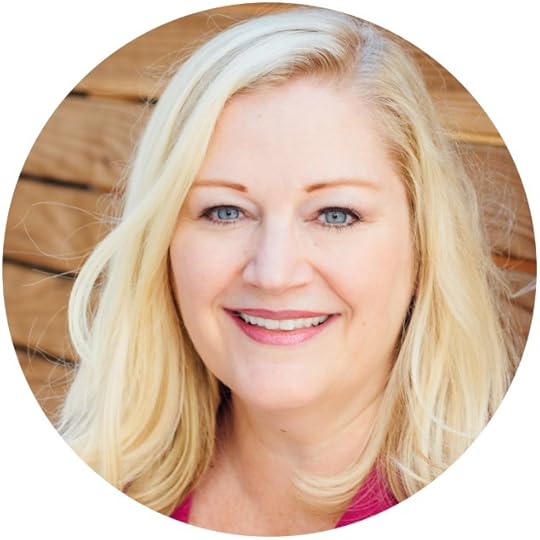
Meet Bonni Stachowiak, an educator, podcaster, and champion of cognitive science in the higher ed world. (Fun fact: Bonni was our very first subscriber.)
Her podcast, Teaching in Higher Ed, is a must-listen. We mean it. Seriously.
Her podcast episodes are full of:
Practical teaching tips
Applications of the science of learning
Tech tools
Insights for online teaching
Recommended books and resources
Warmth and laughter (such a delight!)
Not in higher ed? No worries! The engaging conversations apply in any learning setting, whether for children, adults, or in everyday life for yourself.
Also, the Teaching in Higher Ed podcast is celebrating 1,000,000 downloads! Start by listening to the "one in a million" episode and celebrate along.
Here's a small selection of the many episodes on the science of learning:
The science of retrieval practice (episode 184)
Learning and assessing with multiple-choice questions (episode 155)
Retrieval practice tools (episode 127)
Small Teaching with James Lang (episode 92)
Check out her blog for the inside scoop on tech tools for retrieval practice, including PollEverywhere, Quizlet, Kahoot, too.
Want more? Join Bonni for her "office hours" at EdSurge and keep your eyes peeled for her upcoming book, The Productive Online Professor.
We love Bonni's podcast, Teaching in Higher Ed. You will, too.

Listen to the Teaching in Higher Ed Podcast
Even more podcasts and teaching tips!
We've shared Bonni's teaching tips before! Learn more about how she uses Quizlet in her classroom to boost retrieval practice, engagement, and learning.
Bonni has been a long-time collaborator, since day one. Check out more podcasts and websites by our collaborators, including podcasts by the Cult of Pedagogy and the Learning Scientists, and resources by Deans for Impact.
Learn More About Our Collaborators
April 10, 2019
Want to be an insider? Here's what the "science of learning" really means
We love the science of learning. It's fascinating to think about and critical in the classroom. But what does the "science of learning" really mean?
Read on for the inside scoop! (Need a refresher? Quiz yourself!)
P.S. How do you define the "science of learning?" Share with us on Twitter and Facebook, and comment below!

Learning is an incredibly complex behavior! But don't let that intimidate you.
The "science of learning" is actually an umbrella term that spans many research fields including psychology, computer science, and neuroscience.
The research we share at retrievalpractice.org comes from the field of cognitive psychology. Cognitive scientists examine behaviors that are “behind the scenes” or inside our heads:
How people pay attention (don't text while driving!)
How people make decisions (good ones and bad ones)
How people remember and learn (facts, stories, and more)
In contrast, research on social-emotional learning (e.g., growth mindsets and character development) comes from the fields of social and personality psychology. These scientists examine behaviors outside our heads:
How people develop relationships
How people are affected by culture
How and why people form stereotypes
At retrievalpractice.org, we use the “science of learning” to refer to inside learning. Learning doesn’t happen in a vacuum. But to transform it, we have to start somewhere. That's why we're dedicated to just one aspect of learning (remembering) and one environment where people learn (the classroom).
So, the next time you're chatting with someone about the science of learning, cognitive science, or retrieval practice, be sure to tell them, "I'm an insider!"
Go Behind the Scenes With Two Cognitive Scientists
Be an insider: Try it for yourself!
We practice what we preach. That's why we have retrieval practices about retrieval practice! Check out our no-stakes quizzes on retrieval, spacing, interleaving, feedback, multiple-choice questions, brain dumps, and more.
The best way to learn about the science of learning? Try it for yourself!
Quiz Yourself With Our Retrieval Practices
April 3, 2019
Just because you're practicing an instrument doesn't mean you're learning
Are you learning to play an instrument? "Practice makes perfect," right?
There's a catch: Just because you're practicing an instrument, a language, or even CPR resuscitation, it doesn't mean you're learning.
What can you do? Research demonstrates interleaving boosts learning for both content (e.g., math) and skills. Download our Interleaving Practice Guide and read below for tips from an orchestra director. The key: Mix it up!
P.S. Before critical thinking, do facts come first? Read last week's update on Bloom's Taxonomy!
When practicing an instrument, completing math problems, and acquiring other skills-based content (surgery, anyone?), we assume students are learning because they're retrieving. But that's not always the case.
Let’s say you’re learning to play the guitar. You could:
Practice your instrument over and over. (Retrieval practice!)
Concentrate your practice a few days before a performance. (Spacing!)
A teacher says, “Great job.” or “Keep practicing." (Feedback!)
You would be combining retrieval practice, spacing, and feedback – congrats! Except the small amount of spacing and correct answer feedback might help you in the short term, but not in the long term. Challenges ("desirable difficulties") improve learning, and you and your students can do more.
How can you take skill learning to the next level?
Incorporate interleaving. Interleaving boosts learning by mixing up closely related topics, encouraging discrimination between similarities and differences. For example,
Mix up the order of a song instead of playing the song start to finish.
Mix up math problems covering similar concepts (multiplication and division of fractions) instead of practicing one concept at a time.
Interleaving doesn't require advance planning or course restructuring! Download our Interleaving Practice Guide and check out our flexible strategies.
Learn More About Interleaving Strategies
David Schurger, Orchestra Director
David Schurger, an Orchestra Director for Zionsville Community High School in Indiana, loves to use interleaving in his teaching. Here's his 5-step process:
1) Start with the fundamentals. I teach orchestra and my four areas are Posture/Body, Right Hand, Left Hand, and Musical Elements.
2) Identify sub-categories. I broke down the Right Hand to include bow hand shape, bow strokes, and bow management.
3) Rate the difficulty of each sub-category. Within each category you’ll have an idea of which bits of material will be more difficult to learn or conceptualize.
4) Create material based on sub-categories. Create activities that relate, but approach material from a different angle each time. Interleaving has begun!
5) Schedule your fundamentals throughout the week. Focus on one fundamental a day. Help students synthesize how the previous day relates to the current day and forecast the next day’s fundamental.
As David puts it, "Interleaving is one of the ultimate means to a more flexible learner. Start small with one concept and experiment with yourself or your students. Get out there and mix it up!"
Learn More About David's Approach to Interleaving
March 27, 2019
Chicken, eggs, and Bloom’s Taxonomy: Fact knowledge before higher order learning?
Chances are you're familiar with Bloom's Taxonomy, the triangle diagram that's in most teacher training programs, classrooms, and teaching centers.
But here's an age-old debate: Do we have to build students’ fact knowledge before engaging them in higher order learning? Or is it the other way around?
According to new research, students can reach the top of Bloom's Taxonomy without starting at the bottom. Pretty surprising! Keep reading.
P.S. We'll be at the University of Notre Dame tomorrow (Thursday, March 28)! Info here.

click here and download this image!
Bloom's Taxonomy, originally published in 1956, is a framework commonly used to classify "lower order" and "higher order" learning.
It has contributed to the collective notion that foundational knowledge (literally the foundation or base of the pyramid) precedes higher order learning (higher in the pyramid). But where's the evidence?
Question: Which comes first: The chicken or the egg?
Answer: Engaging students in higher order retrieval practice, without building fact knowledge first, improves their higher order learning on a final test.
We get good at what we practice. Want students to engage in higher order thinking? Give them the opportunity during retrieval practice and learning.
Transfer is hard. We know that. Download our Transfer Guide full of strategies to boost students’ application and transfer of knowledge and concepts.
Give students a mix of fact-based and higher order retrieval practice. Fact learning may not be a pre-requisite, but it doesn’t hurt, and students get the best of both worlds.
More research details!In two experiments in a college laboratory and one experiment in an authentic 6th grade classroom,
Fact-based retrieval practice improved performance on a final fact test
Higher order retrieval improved performance on a higher order test
A mix of questions benefitted performance on both types of tests (Experiments 2 and 3)
Read the full journal article by Pooja K. Agarwal, Ph.D., published in the Journal of Educational Psychology.
Here are three graphs from each experiment. Reader beware: We hope they’re helpful, but these graphs are out of context without reading the article. Be sure to download the article for the full story!

click here and download this image!

click here and download this image!

click here and download this image!
Which do you think comes first? What's your evidence? Share with us and comment below!
Download the Full Article by Professor Pooja K. Agarwal
March 20, 2019
Download these six must-read reports from our collaborators!
Last week, we announced our new Early Childhood Guide. It's awesome.
But you don't have to take our word for it. This week, download six recommended reports from our collaborators. Happy reading!
P.S. We'll be at the University of Notre Dame next week on March 28! Details below.
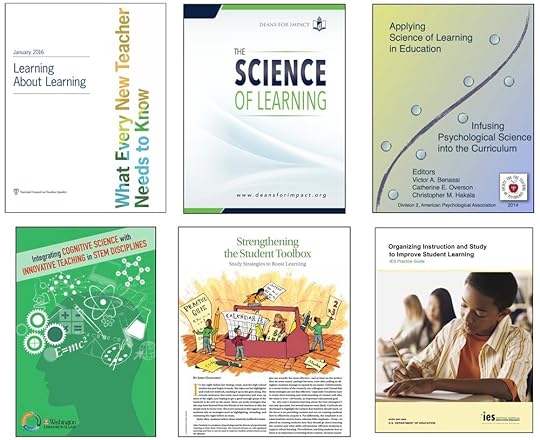
As you've probably noticed, applications of the science of learning in the classroom are booming right now. That's why we've tracked down the best reports and e-books available – all for educators, all free!
Download these six reports, brought to you by:
National Council on Teacher Quality
Deans for Impact
APA Society for the Teaching of Psychology
Washington University in St. Louis and the James S. McDonnell Foundation
American Educator
Institute of Education Sciences
While you're there, stop by our library and download our five Practice Guides. Did we miss a report you love? Comment below and let us know!
Download Our Recommended Reports
Join Us at Notre Dame on March 28

Founder of RetrievalPractice.org, cognitive scientist Pooja K. Agarwal, Ph.D. will be speaking at the University of Notre Dame next week!
Please join us for this interactive presentation that goes beyond "sit and get" and "one and done." This event is free and open to the public.
Thursday, March 28 at 4:00pm
1030 Jenkins-Nanovic Hall
University of Notre Dame
South Bend, Indiana
Get a sneak peak of Pooja's forthcoming book, Powerful Teaching. Learn how to conquer everyday challenges with evidence-based strategies in not just any classroom, but your classroom – without more prep time or grading.
No need to RSVP, but feel free to email us with any questions. Presented in collaboration with the Provost's Learning Initiative, and hosted by the Office of the Provost and the Department of Psychology. Please spread the word!
Learn More About Professor Pooja K. Agarwal
March 13, 2019
Download our NEW Early Childhood Guide!
It's no secret that retrieval practice – thinking back and pulling information out of your head – boosts long-term learning. But do younger children benefit from retrieval practice?
YES! Download our new Early Childhood Guide, where we present evidence that retrieval practice improves learning in infants and young children.
Share on Twitter and Facebook, and let's get this into the hands of teachers.
Early childhood education is critical. Retrieval practice is powerful.
P.S. Did you get here via Twitter or our Facebook page? Subscribe for our weekly updates and get first access to new guides!
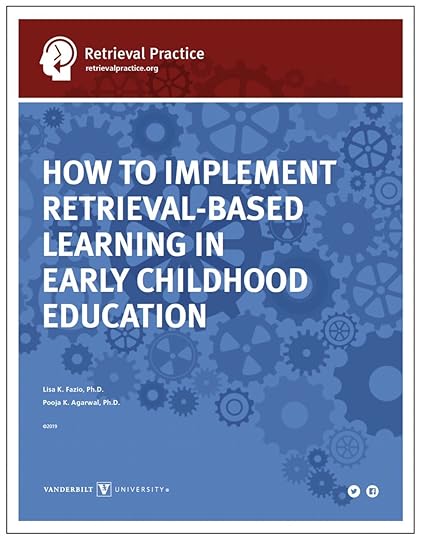
In our new Early Childhood Guide, learn about how to adapt retrieval practice for younger children. At only 8 pages and completely free, put cognitive science research into action with just a few simple steps: scaffolding, feedback, desirable difficulties, and language that fosters thinking and learning.
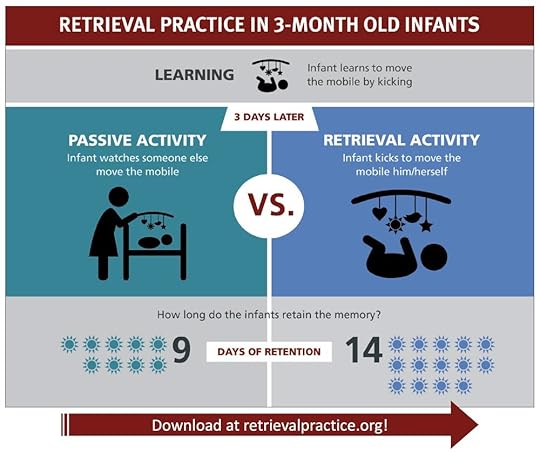
In one research study, 3-month olds learned how to make a mobile move by kicking their legs. When the infants got to retrieve and practice the activity, they remembered the action after 14 days. But, when the infants simply watched someone else move the mobile, they remembered the action for only 9 days. Pretty simple – but powerful – use of retrieval practice in infants!
Did you know: This is our 5th guide! Download all our guides and translations from our library, Teachers Pay Teachers, and Google Drive.
Would your organization like to produce our next guide? We've reached more than 100,000 educators worldwide and with your help, we can transform education with even more resources and powerful strategies. Help us!
Download our NEW Early Childhood Guide
Lead Author: Lisa K. Fazio, Ph.D.
Assistant Professor, Vanderbilt University

Lisa K. Fazio, an Assistant Professor at Vanderbilt University, is the lead author of our new Early Childhood Guide, co-written with our founder, Pooja K. Agarwal, Ph.D. Professor Fazio earned her Ph.D. at Duke University.
Professor Fazio studies how children and adults learn new information, both true and false, and how to correct errors in people’s knowledge. Her research informs basic theories about learning and memory, while also having clear applications for practitioners, such as journalists and teachers.
Her lab at Vanderbilt University answers questions such as:
How do people learn simple facts, such as "the Pacific is the largest ocean on earth," and complex knowledge such as math procedures?
What can teachers and students do to improve learning within and outside the classroom?
How do students learn incorrect information and how can those errors be corrected?
Learn More About Professor Lisa K. Fazio
March 6, 2019
Got a few minutes between classes? Take a walk down memory lane.
When you run into a student on campus, or walk from one classroom to the next, don't let those few minutes pass you by.
Instead, take your students on a walk down memory lane.
Check out this quick strategy for retrieval practice–by design. As always, no prep, no grading. We love it so much, it's a walk in the park!
P.S. Have you pre-ordered our book Powerful Teaching? It has even more no prep, no grading strategies!

Recently, we heard from a literacy tutor, Robert. He read last week's update on saving time with retrieval practice and shared his quick strategy for retrieval.
We call it Taking a Walk Down Memory Lane.
"I work with young struggling readers and writers, and here's how I save time with retrieval practice:
When I pick up a student I'm tutoring from a classroom, I use the walk back to the Learning Center as a chance for retrieval practice by asking questions:
What did we work on last time? What is a closed syllable? What is a phoneme? What is the difference between a phoneme and a digraph?"
It's that simple! When you Take a Walk Down Memory Lane with students, you are using those precious few minutes to improve their learning. Students enjoy sharing their knowledge in this no-stakes environment and you'd be surprised how much rapport Taking a Walk builds, too. As we write about often, retrieval practice builds a positive classroom culture and decreases anxiety.
Can't think of questions to ask? Start with our Retrieval Warm Ups! A question as simple as "What's your favorite ice cream flavor?" helps students become comfortable with retrieving what they know, without the pressure of grades.
The next time you run into a student, Take a Walk Down Memory Lane!
Download Our Retrieval Warm Ups
February 27, 2019
Do you ask yourself, "How can I find time for retrieval practice?" If so, you're asking the wrong question.
When you read our email updates (thank you!), do you sometimes wonder how you'll ever find the time for retrieval practice during your lessons?
You're not alone. Balancing retrieval practice with the amount of content you have to cover is tricky – and unfortunately, all too common.
That being said, you're asking the wrong question. Read on and learn how to use retrieval practice to save class time, not spend it.
P.S. Did you take our interleaving quiz last week? Try it for yourself!

Earlier today, a history teacher from Canada asked us this question:
"How do I balance retrieval practice with new content? Our curriculum is just so heavy in terms of scope, but very broad with little support. I am struggling."
We know! This is tough. There's so much we need and want to cover, but we also want students to remember that content, too. How can we implement retrieval practice, spacing, interleaving, and metacognition strategies in our classrooms, but cover all our course content, too?
This question pops up frequently when we give professional development, but it's the wrong question to be asking. Here's what you should be asking instead:
How can retrieval practice save me time, not spend it?
Here's how: Make sure that time spent teaching is time spent learning. Take what you're already doing and find opportunities to swap reviewing for retrieval practice. For example, instead of telling students, "Here's what we did yesterday," simply ask them, "What did we do yesterday?" Same amount of time, same amount of content, but way more learning.
How does this save you time? You can stop re-teaching. You can spend less time reviewing past content because students will remember more. You and your students can look forward to new content, not behind. Hurray!
As cognitive scientist Joseph Kim put it, ask yourself this question, too:
Am I giving lessons to be remembered or lessons to be forgotten?
The punchline: Retrieval practice saves time. Research in middle school, college, and medical school classrooms demonstrates that students remember more and forget less with retrieval practice. Yes, you can cover the same amount of content and make it more memorable for students, too.
How are you saving time with retrieval practice? Let us know via email, Twitter, and Facebook!
Read Our Frequently Asked Questions