Jennifer Bohnhoff's Blog, page 20
February 2, 2022
Real People in Where Duty Calls
Where Duty Calls, the Civil War Novel set in New Mexico Territory that's scheduled to be released this summer is historical fiction. As such, it's populated with a mix of fictitious and real people. All of the important events and dates are historical, the information gleaned from diaries, newspaper and internet accounts, and secondary sources.
If I could have found real people who were always in the middle of the action that I wanted to depict, I would have made them my main characters. Unfortunately, real people can't be everywhere, so limiting myself to real people would have limited the scenes that I could include in my story. I created Jemmy and Raul so that I could show the more personal side of the story and not worry about putting words and emotions into the mouths and minds of real people who might not have said or thought what I wanted them to. The small, personal scenes depicting their family life are entirely made up.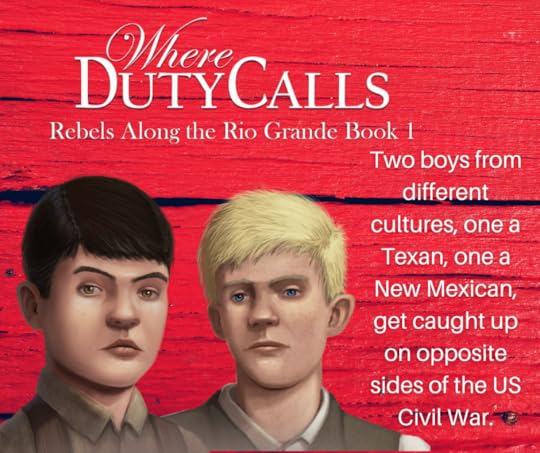 Other characters in Where Duty Calls are well known historical figures.
Christopher :Kit" Carson (December 24, 1809 – May 23, 1868) is perhaps the most famous Indian Scout, mountain man, and frontiersman of all time. Carson left his home in rural Missouri when he was only 16 to become a mountain man and trapper in the rugged Rocky Mountains. By the time of the Civil War, he had added wilderness guide, Indian agent, and U.S. Army officer to his resume. Carson was a legend in his own lifetime, and his exploits, although greatly exaggerated, appeared in dime novels.
Carson was a quiet man, short in stature, and uncomfortable with his own celebrity In Where Duty Calls , he is mending his own clothes when he meets Raul for the first time at Fort Craig. Carson was then leading a division of New Mexico Volunteers who had been called to Fort Craig to repel the invading Confederate Army.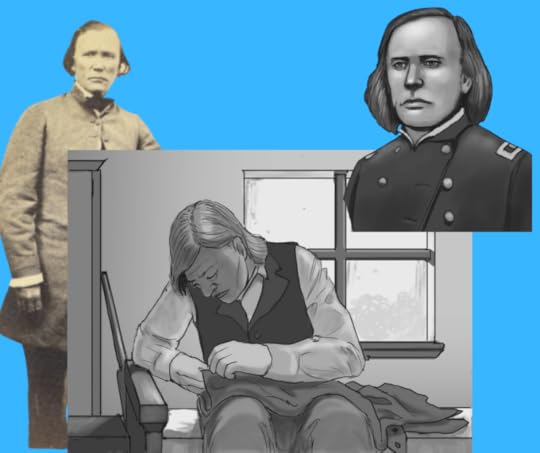 Illustrations by Ian Bristow. These appear in Where Duty Calls.
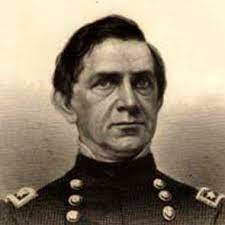 Edward R.S.Canby (November 9, 1817 – April 11, 1873) was a West Point graduate who was in command of New Mexico territory's Fort Defiance when the Civil War broke out. He was appointed colonel of the 19th Infantry on May 14, 1861 and made commander of the Department of New Mexico after the man who had been commander left to join the Confederacy.
More an administrator than a fighter, Canby was a cautious and careful leader. He realized that defending the entire territory from every possible attack would stretch his forces too thinly, so he amassed his troops at Fort Craig, to guard the route up the Rio Grande. He was defeated at the Battle of Valverde, but managed to retain the fort and keep its precious stores of food and arms out of enemy hands. Eventually, this forced the Confederates to abandon their campaign and return to Texas.
Canby made no secret of his distain for the New Mexico Volunteers. His reports blamed them for more cowardice and incompetence than they deserved.
Canby was killed in 1873 while attending peace talks with the Modoc in the Pacific Northwest. He was the only United States general to be killed during the Indian Wars.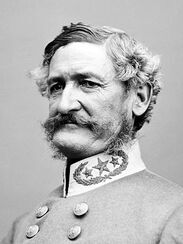 Henry Hopkins Sibley (May 25, 1816 – August 23, 1886) was also a West Point graduate who was serving in New Mexico territory at the outbreak of the Civil War. He resigned his commission on May 13, 1861, the day of his promotion to major in the 1st Dragoons and joined the Confederate Army. Sibley convinced Confederate President Jefferson Davis to put him in command of a brigade of volunteer cavalry in West Texas, which he named the Army of New Mexico. Sibley's intention for the New Mexico Campaign was to capture Fort Union on the Santa Fe Trail and make it a forward base of supply. He would then capture the gold and silver mines of Colorado and the warm-water ports of California. Sibley was accused of alcoholism during his time in New Mexico. Before the war ended, he had been court martialed and censured. After the war, he served as an advisor for the Egyptian Army, but continued to struggle with alcoholism. He died in poverty.
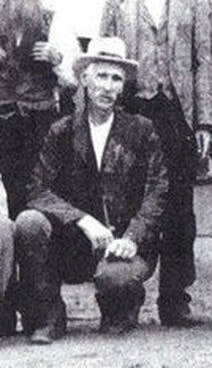 Frederick Wade in later years. Some of the other characters in Where Duty Calls are real people, but they are not famous. Many of these characters made it into the novel because I used their diaries and letters to flesh out my story. Some of these people had wonderful stories that did not make it into my novel.
One of these is a story by Frederick S. Wade. Wade was a teacher before he enlisted as a private in Sibley's the Army of New Mexico. His obituary, in the June 27, 1925 edition of the San Antonio Express, says that he told Abraham Lincoln that Texas would secede from the Union. The story goes that he was visiting his parents in Illinois when Lincoln asked him about Texan opinion. Supposedly, Lincoln tried to get Wade to tour Texas and urge it to remain with the Union, but Wade declined.
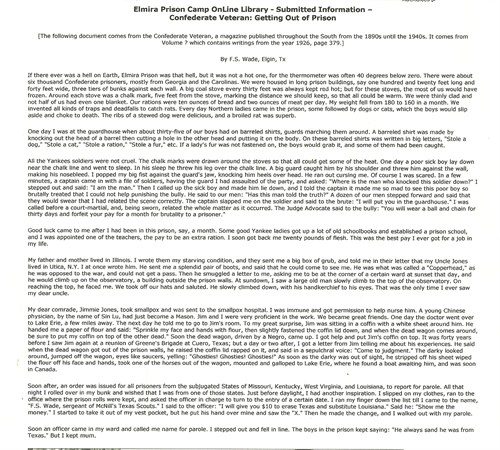
In 1862, Wade became a POW and was put in the Elmira Prison Camp.While there, he helped a friend escape. His friend had contracted smallpox and was in the hospital. Wade sprinkled the man’s face and hands with flour, then sealed him into a coffin that was loaded on the top of the other coffins in the dead wagon. After the wagon had left the prison, the man raised the lid of the coffin and called “Come to judgement” in his spookiest voice. The frightened driver ran away yelling “Ghosties! Ghosties!” Wade’s friend then stole one of the horses and escaped to Canada. You can read this story, plus some other remembrances here.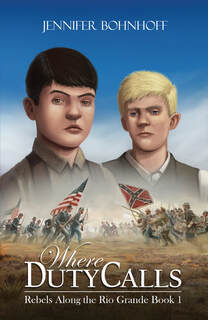 Jennifer Bohnhoff is a former History and English teacher, who now writes and lives in the mountains of central New Mexico. Her middle grade novel, Where Duty Calls, is scheduled for release by Kinkajou Press, a division of Artemesia Publishing, in June 2022. It is the first in a trilogy of novels set in New Mexico during the Civil War.
If I could have found real people who were always in the middle of the action that I wanted to depict, I would have made them my main characters. Unfortunately, real people can't be everywhere, so limiting myself to real people would have limited the scenes that I could include in my story. I created Jemmy and Raul so that I could show the more personal side of the story and not worry about putting words and emotions into the mouths and minds of real people who might not have said or thought what I wanted them to. The small, personal scenes depicting their family life are entirely made up.
Other characters in Where Duty Calls are well known historical figures. Christopher :Kit" Carson (December 24, 1809 – May 23, 1868) is perhaps the most famous Indian Scout, mountain man, and frontiersman of all time. Carson left his home in rural Missouri when he was only 16 to become a mountain man and trapper in the rugged Rocky Mountains. By the time of the Civil War, he had added wilderness guide, Indian agent, and U.S. Army officer to his resume. Carson was a legend in his own lifetime, and his exploits, although greatly exaggerated, appeared in dime novels.
Carson was a quiet man, short in stature, and uncomfortable with his own celebrity In Where Duty Calls , he is mending his own clothes when he meets Raul for the first time at Fort Craig. Carson was then leading a division of New Mexico Volunteers who had been called to Fort Craig to repel the invading Confederate Army.
Illustrations by Ian Bristow. These appear in Where Duty Calls.
Edward R.S.Canby (November 9, 1817 – April 11, 1873) was a West Point graduate who was in command of New Mexico territory's Fort Defiance when the Civil War broke out. He was appointed colonel of the 19th Infantry on May 14, 1861 and made commander of the Department of New Mexico after the man who had been commander left to join the Confederacy.
More an administrator than a fighter, Canby was a cautious and careful leader. He realized that defending the entire territory from every possible attack would stretch his forces too thinly, so he amassed his troops at Fort Craig, to guard the route up the Rio Grande. He was defeated at the Battle of Valverde, but managed to retain the fort and keep its precious stores of food and arms out of enemy hands. Eventually, this forced the Confederates to abandon their campaign and return to Texas.
Canby made no secret of his distain for the New Mexico Volunteers. His reports blamed them for more cowardice and incompetence than they deserved.
Canby was killed in 1873 while attending peace talks with the Modoc in the Pacific Northwest. He was the only United States general to be killed during the Indian Wars.
Henry Hopkins Sibley (May 25, 1816 – August 23, 1886) was also a West Point graduate who was serving in New Mexico territory at the outbreak of the Civil War. He resigned his commission on May 13, 1861, the day of his promotion to major in the 1st Dragoons and joined the Confederate Army. Sibley convinced Confederate President Jefferson Davis to put him in command of a brigade of volunteer cavalry in West Texas, which he named the Army of New Mexico. Sibley's intention for the New Mexico Campaign was to capture Fort Union on the Santa Fe Trail and make it a forward base of supply. He would then capture the gold and silver mines of Colorado and the warm-water ports of California. Sibley was accused of alcoholism during his time in New Mexico. Before the war ended, he had been court martialed and censured. After the war, he served as an advisor for the Egyptian Army, but continued to struggle with alcoholism. He died in poverty.
Frederick Wade in later years. Some of the other characters in Where Duty Calls are real people, but they are not famous. Many of these characters made it into the novel because I used their diaries and letters to flesh out my story. Some of these people had wonderful stories that did not make it into my novel.One of these is a story by Frederick S. Wade. Wade was a teacher before he enlisted as a private in Sibley's the Army of New Mexico. His obituary, in the June 27, 1925 edition of the San Antonio Express, says that he told Abraham Lincoln that Texas would secede from the Union. The story goes that he was visiting his parents in Illinois when Lincoln asked him about Texan opinion. Supposedly, Lincoln tried to get Wade to tour Texas and urge it to remain with the Union, but Wade declined.
In 1862, Wade became a POW and was put in the Elmira Prison Camp.While there, he helped a friend escape. His friend had contracted smallpox and was in the hospital. Wade sprinkled the man’s face and hands with flour, then sealed him into a coffin that was loaded on the top of the other coffins in the dead wagon. After the wagon had left the prison, the man raised the lid of the coffin and called “Come to judgement” in his spookiest voice. The frightened driver ran away yelling “Ghosties! Ghosties!” Wade’s friend then stole one of the horses and escaped to Canada. You can read this story, plus some other remembrances here.
Jennifer Bohnhoff is a former History and English teacher, who now writes and lives in the mountains of central New Mexico. Her middle grade novel, Where Duty Calls, is scheduled for release by Kinkajou Press, a division of Artemesia Publishing, in June 2022. It is the first in a trilogy of novels set in New Mexico during the Civil War.


January 29, 2022
Henry Connelly: NM Governor during the Civil War
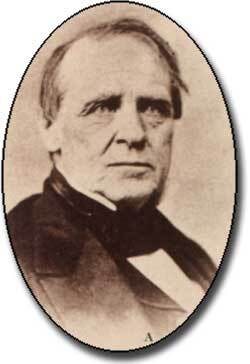
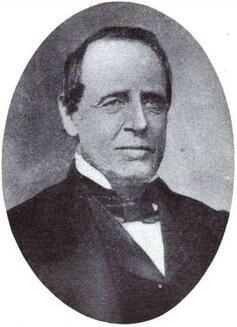 In the 1820s, a number of young men took to the newly opened Santa Fe Trail in search of fame or fortune. Henry Connelly was one of those men, and his contributions to New Mexico were significant.
Henry Connelly was born in 1800 in what is now Spencer County, Kentucky. An Irish Roman Catholic, he received a medical degree from Transylvania University in Lexington, Kentucky, then practiced medicine and ran a store in Liberty, Clay County, Missouri beginning in 1820. In 1824, he left both his store and his medical practice behind to join a trading party bound for Santa Fe. From there, he went south and took a job as a clerk in a store in Chihuahua, Mexico. By 1830, he had bought out the owner of the store. He married a local woman and began a family. He frequently traveled on business between Chihuahua, Missouri, and New Orleans.
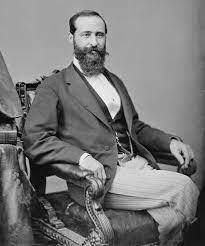 José Francisco Chaves Sometime in the late 1840s, Connelly’s wife died. He started over by moving north to Peralta, a village about 17 miles south of Albuquerque, New Mexico. There, he operated an extremely successful trading business. He also integrated himself into the ruling class by marrying his second wife. Delores Perea was the widow of Don Mariano Chaves, one of the governors of New Mexico under Mexican rule. Her son, José Francisco Chaves, would grow up to serve as delegate from the New Mexico Territory in the United States House of Representatives during 1865 to 1871.
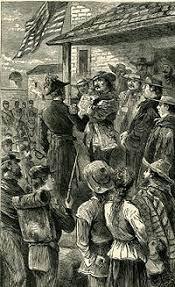 In August 1846, as part of the Mexican-American War, General Stephen Watts Kearney invaded New Mexico. Connelly served as an intermediary between Kearny’s emissary, James W. Magoffin, and New Mexico’s Mexican-appointed Governor, Manuel Armijo. Magoffin, an American trader who traded along the Santa Fe trail, was brother-in-law to the famous diarist Susan Shelby Magoffin. Together, Magoffin and Connelly helped prepare the way for Kearny’s bloodless capture of Santa Fe, which led to New Mexico acquiring territorial status.
In May of 1850, New Mexico attempted to attain statehood. A constitutional assembly convened and ratified a state constitution by and overwhelming 6,771 votes to 39. The constitution was adopted in June, and Henry Connelly, who was absent from New Mexico at the time, was elected governor. However, the military governor, Colonel John Munroe, forbade the elected officials to assume power. Then, on September 9th, U.S. Senate passed the Compromise of 1850, which included an act to organize New Mexico as a territorial government, making null the vote of the constitutional convention. Not becoming Governor did not stop Connelly, however. In the following year he was elected to the upper house, the Territorial Council, an office he continued to hold through 1859. He was also part of the partnership in the New Mexican Railway Company, which planned to build a transcontinental railroad through the southern portion of New Mexico in 1860. The start of the Civil War put the railroad plans on hold. When the railroad finally entered New Mexico in 1880, it followed a more northerly route.
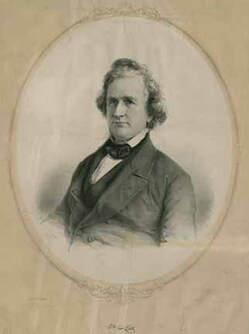 William Carr Lane New Mexico was a territory whose loyalties were in question during the Civil War. The Compromise of 1850 had allowed New Mexico Territory to choose its own stance on slavery by popular sovereignty. In 1859, New Mexico passed the Act for the Protection of Slave Property. The Federal and Army officers in the Territory had been appointed by President Buchanan and were often openly sympathetic to the Southern Cause. The Territorial Governor, William Carr Lane, and Chief Justice of the New Mexico Supreme Court, Grafton Baker, both owned black slaves. By July 1861, the 2nd Texas Mounted Rifles under Lieutenant Colonel John R. Baylor had already captured the southern New Mexico town of Mesilla and proclaimed the lower half of New Mexico was now the Confederate Territory of Arizona. When Abraham Lincoln became president, he had to move quickly to secure the territory for the North. One of the things he did was to name Henry Connelly as governor of New Mexico on September 4, 1861. Connelly was chosen because of his strong Republican sympathies and because of his long-standing ties with native New Mexicans: being Roman Catholic and married to a Hispanic from a prominent local family gave him enough acceptance that he was reappointed in 1864.
One of Connelly’s first acts was to begin working to repeal the 1859 Act for the Protection of Slave Property. He also began working to help the territory protect itself. Within the first week after his inauguration, Connelly contacted every county in the territory, urging the establishment of a militia, or home guard. Connelly knew that the enemy, Texans serving in the Confederate Army under Brigadier General H.H. Sibley, were intent on continuing up the Rio. Unfortunately, too little time to train and the fact that many New Mexicans did not speak English made integrating them into the army a difficult proposition.
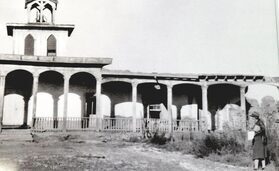 Of the 4,000 men Colonel R.H.S. Canby, the Commander of the Military Department of New Mexico, had at Fort Craig, only 1,200 were regular army troops. The rest were part of the volunteers that Connelly had organized. At the February 1862 Battle of Valverde, Confederate Colonel Tom Green ordered his men to charge the battery of guns commanded by Captain Alexander McRae, the Union regulars broke and ran, which caused the volunteers to flee in panic. They took refuge in the fort, where Governor Connelly witnessed the rout. Concerned that Albuquerque was defenseless and would soon be taken by rebels, he slipped quietly out of Fort Craig and rode north, advising ranchers and small farmers to gather their sheep and cattle and conceal them in the mountains. By March he had abandoned Santa Fe and moved the territorial capital north, to Las Vegas, New Mexico. After their defeat at Glorieta Pass, the Confederates retreated south, pausing at Connelly’s ranch in Peralta to drink up the contents of his wine cellar and eat much of his herd. The artillery battle between the occupying Confederates and Canby’s Army destroyed much of the property.
 When the Confederate threat ended in April 1862, Connelly turned his attention to the threat of raiding Native Americans. He supported General Carleton’s round up of Apaches and Navajos, who were given the choice of moving to the Bosque Redondo Reservation or death. Ultimately, this plan failed, but not before many Navajo, Gila Apache, and Mescalero Apache sent to the reservation at Bosque Redondo died during the bad harvest year of 1865.
Henry Connelly was ill during a good part of his governorship. He was absent from the territory from the fall of 1862 until May 1863 as he tried to recuperate. In his absence, Territorial Secretary William F.M. Arny served as Acting Governor. Connelly finally retired as chief executive on July 16, 1866, then died of an opium overdose less than a month later. He is buried in the San Rosario Cemetery in Santa Fe.
 Jennifer Bohnhoff is a former educator who lives and writes in the mountains of central New Mexico. Where Duty Calls, the first in Rebels Along the Rio Grande, a trilogy of middle grade historical fiction novels set in New Mexico during the Civil War, is scheduled for publication on June 14 from Kinkajou Press.
January 26, 2022
New Mexico Forts in the Civil War: Fort Craig
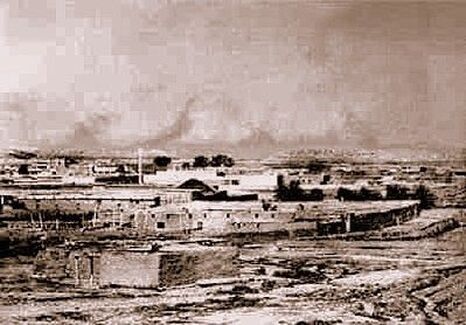 One of the largest forts constructed in the West, Fort Craig was built in 1853. It was garrisoned a year later. The fort was strategically situated to protect travelers on the Camino Real de Tierra Adentro. The Camino, or Royal Road to the Interior, had been the primary road between New Mexico and Mexico for centuries. Fort Craig was built on the northern end of the Camino’s most dangerous segment, the section called the Jornada del Muerto, or Journey of Death. The Fort guarded travelers from Navajo and Apache attack and helped those who needed support in this barren and arid segment of trail.
 The fort was named in honor of Captain Louis S. Craig, who had been murdered by deserters in California in 1852 during the Mexican–American War.
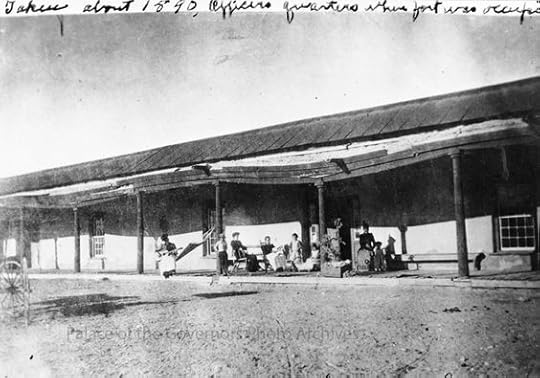 Crawford family at Officers Quarters, Fort Craig, New Mexico Date: 1890 Negative Number 014511
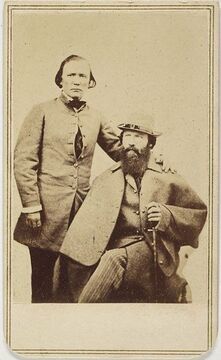 Kit Carson & Civil War Government Expediter, Edwin Perrin in New Mexico Territory. (c. 1862). Life at Fort Craig was uncomfortable. The fort was remote and isolated. Soldiers complained that the adobe walls were crumbling, the roofs leaked, and the floors were nothing but mud. It became even more unbearable during the summer and fall of 1861, when Colonel Edward Canby, the Union Commander of the Department of New Mexico determined that Fort Craig was the best place to head off the invading Confederate Army. Canby packed the fort with more than 2,000 soldiers, including all five regiments of the New Mexico Volunteers. One of those regiments, the First New Mexico Volunteer Infantry Regiment, was led by the famed Indian scout Christopher “Kit” Carson. The Governor of New Mexico, Henry Connelly, was also there.
Even with so many men jammed into the fort, Canby did not feel he held a comfortable advantage over the Confederates. He directed "Quaker guns," fake cannons made from painting logs black, along Fort Craig's massive ramparts, and placed empty soldiers' caps alongside the fake guns to convince the Rebels that the fort was even more heavily fortified than it was. The trick worked, and Confederate Brigadier General Henry Hopkins Sibley marched his Army of New Mexico around the fort instead of trying to take it.
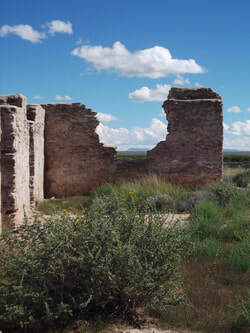 The guardhouse, the only building at the fort built with brick, is the tallest remaining structure. Even after the Confederate threat was over, Fort Craig continued to be important. It was headquarters for U.S. Army campaigns against the Gila and Mimbres Apaches between 1863 and 1865. By 1885, when the Indians were no longer a threat along this portion of the trail, Fort Craig was permanently abandoned.
Today, Fort Craig is in ruins. The mighty ramparts are nothing but long, low mounds. The adobe walls have melted back into the desert soils from which they had been formed. The last time I visited, the Visitor’s Center was closed. A call to the National Park Service let me know that they were having trouble hiring someone to man the office because it is so remote and isolated. The grounds, however, were open so that I could walk the among the ruined walls and read the interpretive plaques. I was completely alone. The only sounds were the whistling of the wind over the broken stones, the chirp of crickets, and the crunch of gravel beneath my feet. It was hard to believe that the site had once bustled with life.
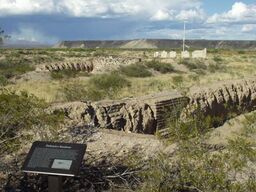 But it had. As I stood among the dry and silent ruins, I thought about how the fort would have looked when its buildings were roofed and occupied. I tried to conjure the tramp of drilling men, the neighing of horses, the cacophony of parade bands, the thunder of artillery and the crackle of small arms. How did the parade grounds look when the marching boots of seventeen companies of men kept the weeds at bay? I sniffed the air and though how it would have smelled when filled with the tang of horse dung and kitchen smoke and gunpowder.
 Good history and good historical fiction can breathe life into events long past. It can resurrect people long dead and places that have moldered into dust. It can make that which has faded away become vivid again.
I don't know how much will be left of the old western forts in another decade or two. Perhaps there will be nothing for my grandchildren to see when they are old enough to care about what happened in New Mexico in the nineteenth century. But my hope is that those who follow will be able to resurrect the forts and the people who occupied them through the power of the written word.
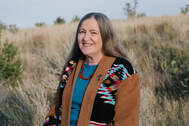 Many of the scenes in Where Duty Calls take place in and around Fort Craig. Where Duty Calls is Volume 1 of a trilogy entitled Rebels Along the Rio Grande. Kinkajou Press will publish this historical novel for middle grade readers in June of 2022.
Jennifer Bohnhoff is a former New Mexico history teacher who lives and writes in the mountains of central New Mexico. Contrary to her student's assumptions, she never dated Kit Carson.
January 22, 2022
Great Reads for Horse-Crazy Girls
Young girls and horses are a special duo. Like many young girls, I was enamored with horses when I was young. I was lucky enough to have a friend who had one. She let me muck stables and pick hooves to my heart's content. I rode nearly every summer while attending Girl Scout Camp, and when I was old enough, I became a camp counselor. I spent two summers leading trail rides and teaching younger girls all about horses.
Here are two books for girls who are as horse-crazy as I was. It's interesting (and completely coincidental!) that both involve cases of mistaken identity.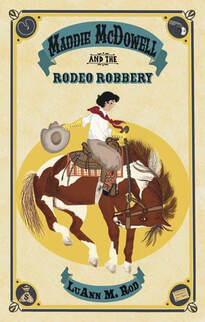 Yee ha! Middle Grade Readers will love LuAnn M. Rod's Maddie McDowell and the Rodeo Robbery! (Chicken Scratch Books, June 2021)
After her mother's death, Maddie is sent to a strict school for young ladies. A lady Maddie is not. She's a cowgirl who wants to join the rodeo! Fortunately for her, she's mistaken for a rodeo star, and gets a chance to prove herself. Unfortunately, someone else riding with the rodeo is a thief. Maddie must gather her courage and her wits to solve the mystery, earn her own spot in the rodeo, and reconcile herself with her family.
Set right after the close of World War I, this book has few historical references, but the clothing, the technology and some of the customs firmly set it in its period. This book lopes along at a good pace. It has some fun characters that readers will really want to cheer for, including a pugnacious dog who always shows up and the right time. Maddie learns some valuable life lessons in this sweet and fun read.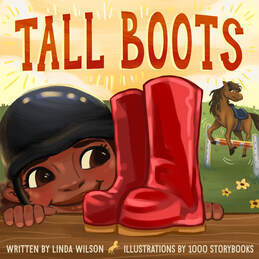 Linda Wilson's Tall Boots is for a slightly younger reader. In it, Ashley is a beginning rider who wants to earn a blue ribbon at the 4-H show and convince her mother that she is serious enough about riding to deserve a pair of tall riding boots. When her too-big helmet slips over her face, Ashley is mistaken for someone else and ends up competing in a more experienced class of riders. Luckily for her, Lacy, her spunky Welsh Mountain pony, knows just what to do. This picture book is filled with colorful and sweet illustrations and includes information on how readers can join the 4-H.
 Jennifer Bohnhoff was a middle school teacher for years. Now she's staying home to write and walk her enormous dog in the mountains outside her house. Her novel Code: Elephants on the Moon is also the story of a girl and her horse. Set in Normandy just prior to the D-Day Invasion, Eponine Lambaol and Galopin, her stocky Brittany, must avoid tangling with the Nazis that run her village as she helps the French Resistance and tries to come to grips with the secrets in her own past. This, too, is a middle grade book about a spunky girl with a mistaken identity.
Here are two books for girls who are as horse-crazy as I was. It's interesting (and completely coincidental!) that both involve cases of mistaken identity.
Yee ha! Middle Grade Readers will love LuAnn M. Rod's Maddie McDowell and the Rodeo Robbery! (Chicken Scratch Books, June 2021)After her mother's death, Maddie is sent to a strict school for young ladies. A lady Maddie is not. She's a cowgirl who wants to join the rodeo! Fortunately for her, she's mistaken for a rodeo star, and gets a chance to prove herself. Unfortunately, someone else riding with the rodeo is a thief. Maddie must gather her courage and her wits to solve the mystery, earn her own spot in the rodeo, and reconcile herself with her family.
Set right after the close of World War I, this book has few historical references, but the clothing, the technology and some of the customs firmly set it in its period. This book lopes along at a good pace. It has some fun characters that readers will really want to cheer for, including a pugnacious dog who always shows up and the right time. Maddie learns some valuable life lessons in this sweet and fun read.
Linda Wilson's Tall Boots is for a slightly younger reader. In it, Ashley is a beginning rider who wants to earn a blue ribbon at the 4-H show and convince her mother that she is serious enough about riding to deserve a pair of tall riding boots. When her too-big helmet slips over her face, Ashley is mistaken for someone else and ends up competing in a more experienced class of riders. Luckily for her, Lacy, her spunky Welsh Mountain pony, knows just what to do. This picture book is filled with colorful and sweet illustrations and includes information on how readers can join the 4-H.
Jennifer Bohnhoff was a middle school teacher for years. Now she's staying home to write and walk her enormous dog in the mountains outside her house. Her novel Code: Elephants on the Moon is also the story of a girl and her horse. Set in Normandy just prior to the D-Day Invasion, Eponine Lambaol and Galopin, her stocky Brittany, must avoid tangling with the Nazis that run her village as she helps the French Resistance and tries to come to grips with the secrets in her own past. This, too, is a middle grade book about a spunky girl with a mistaken identity.
January 18, 2022
War on the Border: A nonfiction Book Review
 If you've read my novel
A Blaze of Poppies
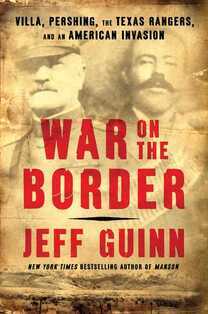
, you'll know a little about Black Jack Pershing, Pancho Villa, the raid on Columbus, and the American response. If you'd like to know more, Jeff Guinn's
War on the Border: Willa, Pershing, the Texas Rangers, and an American Invasion
(Simon & Schuster; May 18, 2021) would be a good place to start.
If you've read my novel
A Blaze of Poppies
, you'll know a little about Black Jack Pershing, Pancho Villa, the raid on Columbus, and the American response. If you'd like to know more, Jeff Guinn's
War on the Border: Willa, Pershing, the Texas Rangers, and an American Invasion
(Simon & Schuster; May 18, 2021) would be a good place to start. Guinn does a good job of explaining the turmoil in Mexico in the first few decades of the 20th century. and how a Mexican general named José Doroteo Arango Arámbula, but who went by the name of Pancho Villa, was a key figure in it. Guinn analyzes the nature and temperament of each man in this battle of wills and does a good job of explaining the ebb and flow of power. While most men in positions of power in the goverment sided with the rich and landed aristocracy, Villa championed the poor and landless. He helped force out President Porfirio Díaz when Diaz did not do enough to promote land reform, led forces that outsted the right-wing General Victoriano Huerta, then after helping him attain the presidency, turned against Venustiano Carranza when the new president dragged his feet over promised social reforms.
Villa, who had been a supporter of the United States, changed his mind when the US continued to back Carranza.
On March 9, 1916, Villa led about 600 of his soldiers across the border and raided the town of Columbus, New Mexico, about 3 miles into American territory. There are many theories why Villa did this, but Guinn asserts that he wanted to provoke the United States Army into chasing him back across the border to prove to the Mexican people that Carranza was too weak to oppose their neighbor to the north. He expected an American invasion to lead to Carranza's overthrow.
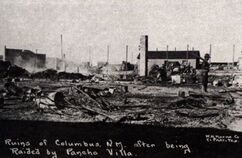 Villa expected the raid on the little border town would be quick and easy, and he would come away with much needed ammunition, horses, and supplies. The spies he had sent into town earlier reported that Camp Funsten, the small Army facility charged with protecting the border, was only sparsely manned. The spies were wrong, and the raid turned into into a full battle that resulted in the deaths of 8 American soldiers, 67 Mexican soldiers, and 10 civilians. Guinn does a good job of detailing the raid. He questions the report of Colonel Herbert Jermain Slocum, the commander of the 13th Cavalry who was in charge of the installation. Villa was right about what the raid would do. President Woodrow Wilson, egged on by angry Americans, ordered General John "Black Jack" Pershing to organize a Punitive Expedition into Mexico. Pershing was to defeat Villa's troops, but soon found that the Mexican people, and the Mexican Government did not support his mission. After a year of attempting to avoid confrontation with Federal Mexican Troops, Pershing declared the mission a success and complete and returned home.
 Guinn's narrative goes beyond the Punitive Expedition. He details violence all along the border, including the frequent and bloody clashes in Texas. Guinn is particularly damning of the imperiousness of an American foreign policy that looked down on Mexico as a poor and illiterate neighbor, and of Texas Rangers who looked more like members of the Ku Klux Klan than protectors of the innocent.
I was particularly interested in what Guinn had to say about the relations between Japan and Germany during this period. I thought I knew the contents of the Zimmerman telegram fairly well but didn't know about the overtures Germany had made to Japan, including offering them California while Mexico took back the remaining border states.
I wish Guinn had said more about Villa's death, which is covered in a single sentence in the epilogue of this book. The last chapter also explains how Columbus remains divided about the Raid and its meaning even today.
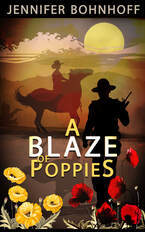 Jennifer Bohnhoff was born in Las Cruces, New Mexico, not far from the border with Mexico. She now lives near Albuquerque, where she taught High School and Middle School History and English. Her novel, A Blaze of Poppies, is the story of a female rancher in Southern New Mexico who is caught up in the Pancho Villa Raid and goes overseas as a nurse when America enters World War I.
January 15, 2022
Poet’s Corner and the Poets of WWI
Because over 100 poets, playwrights and writers are buried there, the South Transept of Westminster Abbey in London, England is known as Poets' Corner.
Geoffrey Chaucer, author of 'The Canterbury Tales,” was the first poet interred in Poets' Corner. When he was buried there in 1400, it was not because he was a poet, but because he was Clerk of the King's Works. 198 years later, Edmund Spenser, author of 'The Faerie Queene,' asked to be buried near Chaucer. This began the tradition of either interring famous writers there or erecting memorials for those buried elsewhere. William Shakespeare, Jane Austen, the Bronte sisters and Charles Dickens, Rudyard Kipling and Thomas Hardy are all represented in this area of Westminster. More recent memorials acknowledge Ted Hughes, C.S. Lewis and Philip Larkin. Not everyone buried or memorialized in the South Transept are poets. Musician George Frederic Handel is also buried there, as are several prominent clergymen and actors.
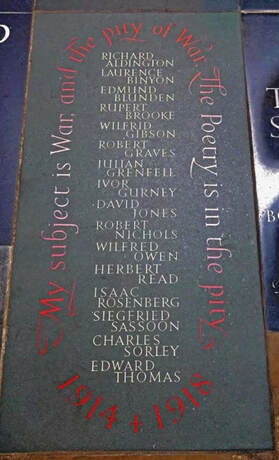 On November 11, 1985 a memorial stone was laid in Poets Corner recognizing the poets of World War I. This stone has the name of 16 British poets who also served as soldiers during the Great War. Some had died during the war. Others went on to live full lives. All seemed tormented by their experiences. At the time of its dedication, only Robert Graves was alive to see his name etched in the stone.
In 2021, as part of my promotion for my World War I book, A Blaze of Poppies, I wrote a series of blogs on World War I poets. I included all of the poets whose names are on the Westminster stone, plus a few who were American or Canadian. Links to each of these blogs is listed below. The names in red are on the stone. The names in green are not. Names in purple did not serve in the war, but wrote about it. May all of these names continue to be remembered both for their service on the battlefield and their contributions to our literary heritage. Edward Thomas https://jenniferbohnhoff.com/thin-air-my-blog-about-writing-and-my-books/october-14th-2021
Richard Aldington https://jenniferbohnhoff.com/thin-air-my-blog-about-writing-and-my-books/trench-idyll-of-richard-aldington
Siegfried Sassoon https://jenniferbohnhoff.com/thin-air-my-blog-about-writing-and-my-books/siegfried-sassoon
Robert Graves https://jenniferbohnhoff.com/thin-air-my-blog-about-writing-and-my-books/two-fusiliers-and-two-poets
Laurence Binyon https://jenniferbohnhoff.com/thin-air-my-blog-about-writing-and-my-books/for-the-fallen
Isaac Rosenberg https://jenniferbohnhoff.com/thin-air-my-blog-about-writing-and-my-books/break-of-day-in-the-trenches
Julian Grenfell https://jenniferbohnhoff.com/thin-air-my-blog-about-writing-and-my-books/a-poem-to-lead-men-into-battle
Henry Chappell https://jenniferbohnhoff.com/thin-air-my-blog-about-writing-and-my-books/a-poem-for-a-horse
Wilfred Owen https://jenniferbohnhoff.com/thin-air-my-blog-about-writing-and-my-books/dulce-et-decorum-est
John McCrae https://jenniferbohnhoff.com/thin-air-my-blog-about-writing-and-my-books/in-flanders-fields
Ivor Gurney https://jenniferbohnhoff.com/thin-air-my-blog-about-writing-and-my-books/on-somme-by-ivor-gurney
Alan Seeger https://jenniferbohnhoff.com/thin-air-my-blog-about-writing-and-my-books/a-rendevous-with-death
Edmund Blunden https://jenniferbohnhoff.com/thin-air-my-blog-about-writing-and-my-books/a-poet-looks-back-at-world-war-i
Rupert Brooke https://jenniferbohnhoff.com/thin-air-my-blog-about-writing-and-my-books/rupert-brooke-the-golden-boy-of-wwi-poets
Wilfrid Gibson https://jenniferbohnhoff.com/thin-air-my-blog-about-writing-and-my-books/two-poems-by-wilfrid-wilson-gibson
David Jones https://jenniferbohnhoff.com/thin-air-my-blog-about-writing-and-my-books/david-jones-wwi-poet-and-painter
Robert Nichols https://jenniferbohnhoff.com/thin-air-my-blog-about-writing-and-my-books/robert-nichols-wwi-poet
Charles Sorley https://jenniferbohnhoff.com/thin-air-my-blog-about-writing-and-my-books/charles-hamilton-sorley-world-war-i-poet
Herbert Read https://jenniferbohnhoff.com/thin-air-my-blog-about-writing-and-my-books/herbert-read-world-war-i-poet
Edgar Albert Guest https://jenniferbohnhoff.com/thin-air-my-blog-about-writing-and-my-books/the-wrist-watch-man
 Jennifer Bohnhoff's novel A Blaze of Poppies was published in October 2021, and tells the story of a ranching woman from Southern New Mexico during the turbulent years of World War !. It is on sale on Amazon for .99 from January 15-20, 2022.
Geoffrey Chaucer, author of 'The Canterbury Tales,” was the first poet interred in Poets' Corner. When he was buried there in 1400, it was not because he was a poet, but because he was Clerk of the King's Works. 198 years later, Edmund Spenser, author of 'The Faerie Queene,' asked to be buried near Chaucer. This began the tradition of either interring famous writers there or erecting memorials for those buried elsewhere. William Shakespeare, Jane Austen, the Bronte sisters and Charles Dickens, Rudyard Kipling and Thomas Hardy are all represented in this area of Westminster. More recent memorials acknowledge Ted Hughes, C.S. Lewis and Philip Larkin. Not everyone buried or memorialized in the South Transept are poets. Musician George Frederic Handel is also buried there, as are several prominent clergymen and actors.
On November 11, 1985 a memorial stone was laid in Poets Corner recognizing the poets of World War I. This stone has the name of 16 British poets who also served as soldiers during the Great War. Some had died during the war. Others went on to live full lives. All seemed tormented by their experiences. At the time of its dedication, only Robert Graves was alive to see his name etched in the stone.
In 2021, as part of my promotion for my World War I book, A Blaze of Poppies, I wrote a series of blogs on World War I poets. I included all of the poets whose names are on the Westminster stone, plus a few who were American or Canadian. Links to each of these blogs is listed below. The names in red are on the stone. The names in green are not. Names in purple did not serve in the war, but wrote about it. May all of these names continue to be remembered both for their service on the battlefield and their contributions to our literary heritage. Edward Thomas https://jenniferbohnhoff.com/thin-air-my-blog-about-writing-and-my-books/october-14th-2021
Richard Aldington https://jenniferbohnhoff.com/thin-air-my-blog-about-writing-and-my-books/trench-idyll-of-richard-aldington
Siegfried Sassoon https://jenniferbohnhoff.com/thin-air-my-blog-about-writing-and-my-books/siegfried-sassoon
Robert Graves https://jenniferbohnhoff.com/thin-air-my-blog-about-writing-and-my-books/two-fusiliers-and-two-poets
Laurence Binyon https://jenniferbohnhoff.com/thin-air-my-blog-about-writing-and-my-books/for-the-fallen
Isaac Rosenberg https://jenniferbohnhoff.com/thin-air-my-blog-about-writing-and-my-books/break-of-day-in-the-trenches
Julian Grenfell https://jenniferbohnhoff.com/thin-air-my-blog-about-writing-and-my-books/a-poem-to-lead-men-into-battle
Henry Chappell https://jenniferbohnhoff.com/thin-air-my-blog-about-writing-and-my-books/a-poem-for-a-horse
Wilfred Owen https://jenniferbohnhoff.com/thin-air-my-blog-about-writing-and-my-books/dulce-et-decorum-est
John McCrae https://jenniferbohnhoff.com/thin-air-my-blog-about-writing-and-my-books/in-flanders-fields
Ivor Gurney https://jenniferbohnhoff.com/thin-air-my-blog-about-writing-and-my-books/on-somme-by-ivor-gurney
Alan Seeger https://jenniferbohnhoff.com/thin-air-my-blog-about-writing-and-my-books/a-rendevous-with-death
Edmund Blunden https://jenniferbohnhoff.com/thin-air-my-blog-about-writing-and-my-books/a-poet-looks-back-at-world-war-i
Rupert Brooke https://jenniferbohnhoff.com/thin-air-my-blog-about-writing-and-my-books/rupert-brooke-the-golden-boy-of-wwi-poets
Wilfrid Gibson https://jenniferbohnhoff.com/thin-air-my-blog-about-writing-and-my-books/two-poems-by-wilfrid-wilson-gibson
David Jones https://jenniferbohnhoff.com/thin-air-my-blog-about-writing-and-my-books/david-jones-wwi-poet-and-painter
Robert Nichols https://jenniferbohnhoff.com/thin-air-my-blog-about-writing-and-my-books/robert-nichols-wwi-poet
Charles Sorley https://jenniferbohnhoff.com/thin-air-my-blog-about-writing-and-my-books/charles-hamilton-sorley-world-war-i-poet
Herbert Read https://jenniferbohnhoff.com/thin-air-my-blog-about-writing-and-my-books/herbert-read-world-war-i-poet
Edgar Albert Guest https://jenniferbohnhoff.com/thin-air-my-blog-about-writing-and-my-books/the-wrist-watch-man
Jennifer Bohnhoff's novel A Blaze of Poppies was published in October 2021, and tells the story of a ranching woman from Southern New Mexico during the turbulent years of World War !. It is on sale on Amazon for .99 from January 15-20, 2022.
January 11, 2022
How a Children's book Sparked an Adult idea
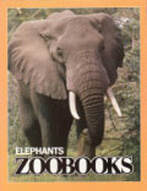 Sometime in the early 1990s, I was reading a children's book to one of my sons. The book was on elephants, and was part of a series of books that we got in the mail. My boys were fascinated by them, and we read them over and over.
 One double-page spread in the book presented an idea that intrigued my son. It asked, "did you know that the story of the cyclops was probably started by an elephant skull?"
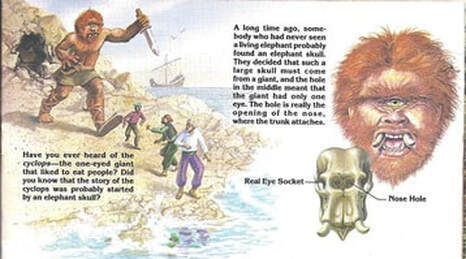 from Zoobooks: Elephants, copyright 1986 by Wildlife Education, Ltd.
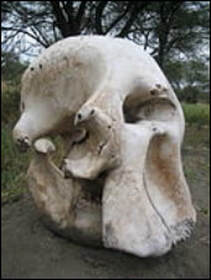 It went on to explain that the concept of a one-eyed giant was probably conceived by someone who had never seen a live elephant, but found an elephant skull. Looking at the skull at the beginning of this blog, it's easy to see how the giant nasal hole that is where an elephant's trunk attaches could be misconstrued to be an optical socket.
So, how would an ancient Greek stumble across an elephant skull? Perhaps it wasn't an elephant at all, but a mammoth. Believe it or not, there were mammoths in the region, even on the islands. It may be possible that many Greek myths originated from an attempt to explain these fossils.
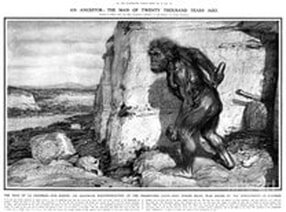 The question then arises: Did ancient Greeks find a mammoth skull and invent the story of the cyclops to explain it? Or did the story of the cyclops begin as a story of hunting mammoths, which changed over time as people forgot what mammoths looked like? Could it be that the story of the cyclops is a very, very old story that adapted to the time in which it was told?
 If a mammoth, or at least its skull, could become a cyclops, what other monsters from myths and legends had actually begun as real creatures?
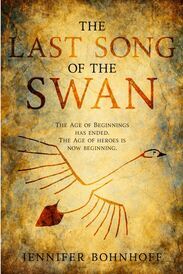 Beowulf is an old story, written in Old English sometimes in the 11th century. The monster in Beowulf is described as a fallen son of Cain, which makes it evident that a Christian, and probably a monk, copied out the text. However, some of the characters in the story appear to be historical figures from the 5th century, before this area had been Christianized. Could it be that Beowulf, like the Greek myth of the cyclops, tells an even earlier story? If so, how old could it be? And what creature could people back then have thought resembled fallen men?
 This was a big question, and one I mused on for over a decade before the ideas fell into place and became the basis for Last Song of the Swan. Jennifer Bohnhoff lives and writes in the mountains of central New Mexico. The Last Song of the Swan is available on Amazon.
January 8, 2022
When Life Gives you Lemons, Make Peach Pie: Middle Grade Book Review
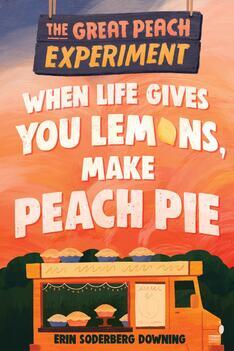 12 year old Lucy Peach has been the surrogate mother for 10 year old Freddy and 8 year old Herb since their mother died two year ago. Her father, a university geology professor, has dealt with grief by submerging himself in his research, abandoning the family emotionally and, most of the time, physically. When one of mom’s inventions sell for over a million dollars, dad decides to use some of it to pursue one of her dreams and buys a used food truck. He bundles the three kids into it, and together they spend a summer traveling the Midwest while selling pies, bonding with each other, and moving through their grief and into the future.
Erin Soderberg Downing does a good job of presenting her characters to the reader. Lucy wants to believe the trip might unite the family, but isn't sure - and with good reason - that she can trust her father to follow through on his hairbrained plans. An avid reader, Lucy's personal goal on the trip is to read every book on a very impressive seventh grade summer reading list. Freddy, who feels like a plum in a family of Peaches, is artistic, creative, and can spout fun facts like a walking Ripley's Believe it or Not. By the end of the book, he's shown himself a natural and astute businessman. But it's Herb, whose big heart overflows with love for animals and lost things, including stuffed animals, mittens and toilet paper rolls, who steals my heart.
The father in the Peach family is sometimes a little harsh. Although he says he's taken a sabbatical and bought the food truck to bring the family together, his dogged determination to win top honors at the Ohio Food Truck Festival takes precedence over everything, leaving Lucy, Freddy, and Herb frustrated and often overwhelmed with the responsibilities of making pies, selling them, keeping the food truck working and the plan on schedule. Eventually, he relents, and by the end of the book he has realized that his children are a greater prize.
This book is the first of a new series entitled The Great Peach Experiment. I'm thinking a lot of middle grade readers will want to be part of the experiment as the three Peach kids and their dad continue to find ways to connect with each other and build their own, individual skill sets. Jennifer Bohnhoff is a former Middle School English and History teacher who is now staying home to bake pies of her own and to write for middle grade, YA and adult readers. Her Anderson Chronicles is a series of 3 (so far!) books about the adventures of a Middle School boy named Hector Anderson and his eccentric family.
January 1, 2022
The Dreaded Cliff: Middle Grade Book Review
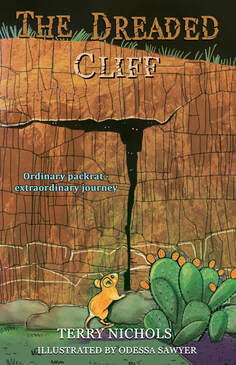 Flora is a plump little packrat who thinks, in her own little packratty way, that she is a goddess. Like all of her species, she collects treasures: shiny things and prickly things and soft things to decorate her nest, which is under the floorboards of what we could call a Volkswagen van, but she calls a jangly-crate. That's one of the joys of this book: the reader sees the story through the eyes of a rodent who does not always know the human words for the things around her.
 Another joy is that Flora loves words, but also mangles them. This teeny Mrs. Malaprop is at her finest when she is addressing his muskiness, errr, manliness, errr mushiness, King Cyrus, a kangaroo rat with an outsized sense of self worth.
Flora lives a perfect packrat life. She snuggles in her treasure-packed nest and 'snibbes' snacks from the munch mound with her packrat pal, Gertrude. The only thing that threatens her serenity is the dreaded cliff, a frightening and fabled place that she has been warned to stay away from since she was a wee pup. When old Grandma Mimi tells Flora about that it was their ancestral home until a mysterious killer wiped out a litter of pups and took over, Flora feels called to reclaim the cliff. However, her plans are thwarted by an inadvertent trip in which she loses her home in the jangly-crate but finds some allies and discovers her own pluck. In the end, Flora must find her way home, and find the courage to face her own fears.
Each chapter in this book begins with a charming black and white illustration by Odessa Sawyer. At the back of the book is a short but informative section on the real animals behind the characters in this book. It is a fine and entertaining book for young readers who are interested in the flora and fauna of the American southwest.
Author: Terry Nichols
ISBN: 9781951122126 (paperback)
ISBN: 9781951122171 (ebook)
Publication Date: March 2, 2021
Price: $12.95
Pages: 250
The Dread Cliff: Middle Grade Book Review
Flora is a plump little packrat who thinks, in her own little packratty way, that she is a goddess. Like all of her species, she collects treasures: shiny things and prickly things and soft things to decorate her nest, which is under the floorboards of what we could call a Volkswagen van, but she calls a jangly-crate. That's one of the joys of this book: the reader sees the story through the eyes of a rodent who does not always know the human words for the things around her. Another joy is that Flora loves words, but also mangles them. This teeny Mrs. Malaprop is at her finest when she is addressing his muskiness, errr, manliness, errr mushiness, King Cyrus, a kangaroo rat with an outsized sense of self worth.
Flora lives a perfect packrat life. She snuggles in her treasure-packed nest and 'snibbes' snacks from the munch mound with her packrat pal, Gertrude. The only thing that threatens her serenity is the dreaded cliff, a frightening and fabled place that she has been warned to stay away from since she was a wee pup. When old Grandma Mimi tells Flora about that it was their ancestral home until a mysterious killer wiped out a litter of pups and took over, Flora feels called to reclaim the cliff. However, her plans are thwarted by an inadvertent trip in which she loses her home in the jangly-crate but finds some allies and discovers her own pluck. In the end, Flora must find her way home, and find the courage to face her own fears.
Each chapter in this book begins with a charming black and white illustration by Odessa Sawyer. At the back of the book is a short but informative section on the real animals behind the characters in this book. It is a fine and entertaining book for young readers who are interested in the flora and fauna of the American southwest.
Author: Terry Nichols
ISBN: 9781951122126 (paperback)
ISBN: 9781951122171 (ebook)
Publication Date: March 2, 2021
Price: $12.95
Pages: 250