
Jennifer Bohnhoff's Blog, page 19
March 2, 2022
Why the Confederacy Couldn't Capture New Mexico
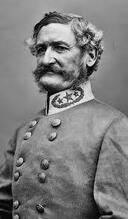 At the beginning of Where Duty Calls, a young Texan named Jemmy Martin, sees Major General Henry Hopkins Sibley riding into San Antonio with his adjutants:
"At their center was a fine looking man with silver hair that caught the morning sun and made him look as if a halo circled his head. He had a great, bushy mustache, sideburns, and sad, drooping eyes that made Jemmy feel as if this man had seen all the sorrow the world had to offer and had learned how to push through it. Jemmy instantly felt as if he could follow the man anywhere."
Many young men of the Confederacy were awestruck by Sibley. Many contemporary records attest to his natural charisma and ability to inspire people with his words.
Sibley had just come back from talking Jefferson Davis, the President of the Confederate States, into commissioning him as a brigadier general and authorizing him to recruit a brigade of volunteers in central and south Texas. Sibley’s plan was to march to El Paso, then occupy New Mexico, seize the rich mines of Colorado Territory, turn west through Salt Lake City, and capture the seaports of Los Angeles and San Diego and the California goldfields, all while living off the land. His battle cry, “On to San Francisco!” inspired 2,000 men to join his campaign. By early fall of 1861, Sibley had three regiments of what he named The Army of New Mexico, plus artillery and supply units, camped on the outskirts of San Antonio.
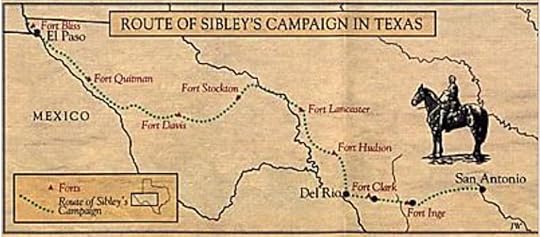 But Sibley’s plan did not go as well as he had hoped. One reason is that the population did not respond to his invasion the way he had hoped. During his Army service in New Mexico, he had seen that both indigenous New Mexicans and Hispanic New Mexicans disliked the presence of the American Army in their territory. He therefore expected them to support him with food for both his troops and his pack animals and horses. He was convinced that recent immigrants from the southern states would join his ranks. He also forecast that the Union troops in New Mexico would desert to his banner.
 He was right to an extent on two of these three groups. Sibley was not the only Union soldier with ties to the south who had abandon their posts to join the south, and some did join Sibley's army. And particularly in the southern part of the state, which had seen an influx of settlers from Texas after the Gadsden Purchase, many citizens were Confederate sympathizers. However, most white settlers in the northern part of the state were allied with the North, and while most Hispanics and Indians didn’t like the Americans, they hated Texans even more. These people considered Sibley’s Army Texan, not Confederate. So with the exception of settlers in the southern part of the state, the citizens of New Mexico had no intention of supporting Sibley's troops.
Without the support of the local populace, Sibley had to rely of capturing supplies from the Union Army. This, too, proved more difficult than he had anticipated. Sibley was not able to capture Fort Craig and its supplies. By the time he arrived in Albuquerque, he found that the Union garrison had burned all its supplies before retreating north. What had escaped the fire had been squirreled away by a local population that wasn't inclined to share with an invading army.
 Furthermore, Sibley had a little personal problem; Sibley drank. He drank so much that one of his officers later called him “a walking whiskey keg.” By the time the Army of New Mexico had reached El Paso, Sibley’s once brilliant speeches had become rambling, confused rants, and even the common soldiers knew that their leader was affected with a severe and recurring case of “barleycorn fever.” Halfway through the Battle of Valverde, Sibley turned the field over to his second in command and crawled into an ambulance, too incapacitated to lead. Sibley was not even present at the Battle of Glorieta Pass. While this battle, often called the Gettysburg of the West, was being fought, the General was nursing a hangover back in Santa Fe.
 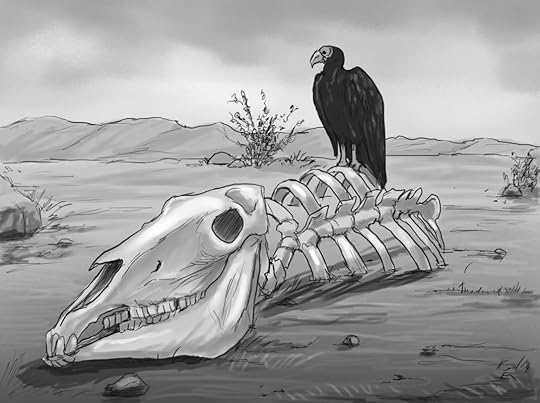 Illustration from Where Duty Calls by Ian Bristow. By the time the ragged remains of the Army of New Mexico had limped its way back to Texas, none of its embittered soldiers felt like Jemmy had on that first day he’d seen the General ride his horse through San Antonio. They had followed him into the wilderness, only to find that his grandiose dreams were nothing but a mirage. The Confederate dream of gold, deep water ports, and territory stretching to the Pacific had been shattered by the arid land, unhelpful citizens, and flawed leadership.
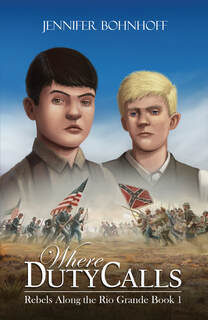 Where Duty Calls is the first in a trilogy of historical novels about the Civil War in New Mexico. It will be published by Artemisia Press this June, and is available to preorder here. Its author, Jennifer Bohnhoff, is a New Mexico native who taught New Mexico History at the middle school level.


February 26, 2022
Super Parks! Yellowstone A middle grade book review
 The world is beginning to open up again after two years of isolation and quarantine. It's time for families to get out and see the world again!
I recently got a copy of Super Parks! Yellowstone National Park, from Arcadia Children's Books, and if a trip to this National Park is on your family's bucket list, I highly recommend getting a copy for yourself.
Sure to engage any reader with its text boxes full of fun facts, this heavily illustrated book includes information about the history, culture, animals, weather, and activities in the park and surrounding areas. The bright colors and short chapters make it an easy book for reluctant or beginning readers, and the index in the back makes the information more accessible.
Super Parks! Yellowstone National Park has chapters on the flora and fauna of the park, plus chapters on where to stay and what to do while in the park. I think that it would be an immense help to planning a kid-friendly trip. Allowing kids to help plan the agenda based on this book would make them super interested even before they arrived.
This book would also be a great resource for any child who is writing a report about the park and needs interesting tidbits of information.
I'd be happy to pass on my lightly-used copy to a family interested in making a trip to Yellowstone part of their summer plans. Leave a comment, and I will choose one commenter at random.
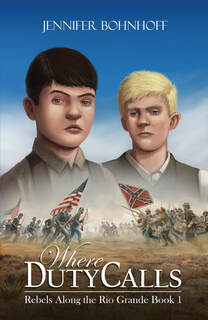 Jennifer Bohnhoff is a retired middle school teacher who is now concentrating on writing. Her next book for middle grade readers is Where Duty Calls, an historical novel about the Civil War in New Mexico. It is coming out June 14, 2022 from Kinkajou Press, a division of Artemesia Publishing, and is available for preorder.
February 23, 2022
The Battle for the Valverde Guns
 Not many people know about the Civil War Battle of Valverde these days. Most people assume that all the battles in the Civil War happened east of the Mississippi. Some might include Kansas. But there were battles out here in the Southwest, and one of the biggest and most important was the Battle of Valverde Ford, fought on February 21, 1862.
The Battle of Valverde, fought a few miles north of Fort Craig, along the Rio Grande in New Mexico Territory, was a victory for the Confederates, who were trying to fulfill a manifest destiny for the south that would stretch all the way to California. Like all battles, its story is made up of many smaller, poignant stories. One of the most dramatic is the taking of the Federal guns.
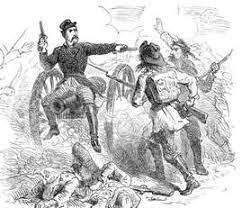
This etching, from a Harper’s Weekly that came out soon after the battle, shows a Union soldier perched atop of cannon while Confederate soldiers threaten him. It’s a fanciful and dramatic picture, and it fevered the minds of Northerners throughout the Union, but it’s factually untrue. The man depicted on the cannon is Captain Alexander McRae, and though he did not actually sit on his artillery piece, his story is compelling.
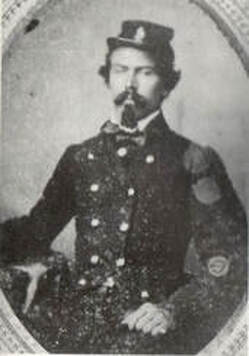 Alexander McRae was born in Fayetteville, North Carolina on September 4, 1829, and he was educated at the United States Military Academy at West Point. After graduating, he served in Missouri and Texas.. In 1856, he was posted to New Mexico in 1856. McRae spent some time at Bent's Fort, in what is now Colorado, then was moved south to Fort Union, Fort Stanton, and finally, Fort Craig. He steadily rose up the promotion ladder, becoming Captain of Company I, 3rd Cavalry Regiment in August of 1861.
When the Civil War broke out, McRae's father wrote to him, urging him to change sides. Captain McRae retained his commission and stayed faithful to his country. His four brothers, James, Thomas, John, and Robert, served the Confederacy.
As reports began to trickle into New Mexico of a Southern invasion, Colonel Edward R.S. Canby, the commander of forces in New Mexico Territory, hastily formed an artillery battery. He placed six pieces at Fort Craig, the most southerly of the forts held by the Union Army, and gave Captain McRae charge of this unit.
On the day of the battle, McRae's battery was dragged out of the fort and up toward the small town of Valverde, where a low spot in the Rio Grande created a natural crossing point which the Confederates wished to cross in their march north. McRae’s battery was placed on the western side of the river, and for the morning hours managed to keep the Confederates pinned down behind a sandy berm 800 hundred feet east of the river. During the afternoon, Colonel E.R.S. Canby, the commander of Union forces in New Mexico Territory, ordered the battery to cross the river. Soon after, the Confederates charged the guns.
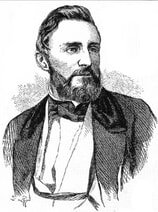 One of the men leading the charge was Samuel A. Lockridge. Lockridge had been a Colonel in the private army of William Walker, an American physician, lawyer, journalist and mercenary, who was trying to establish an English-speaking colony in Nicaragua, but he and Walker had parted ways before Walker was defeated by a coalition of Central American armies and executed. He was also part of the Knights of the Golden Circle, a secret Southern society that advocated the extension of Southern institutions into new territory. When the Civil War broke out, Lockridge joined the Fifth Texas Cavalry, one of the divisions in Sibley’s Army of New Mexico. He was given the rank of Major.
 At the Battle of Valverde, Lockridge led one of the in three separate waves that stormed the Union battery. Screaming the Rebel yell, the nearly 750 man force advanced on the guns. Athough they were armed with only short-range shotguns, pistols, muskets, and bowie knives, the Confederates had been told to dive to the ground whenever they saw a flash from the artillery. This strategy made them appear to be suffering a high casualty rate even though they avoided being hit. This spooked the men manning the Union guns, particularly the inexperienced and ill-trained New Mexico Volunteers. Both Volunteers and regular Army broke and splashed across the Rio Grande in a disorganized retreat.
Once the Texans reached the battery, fierce hand-to-hand fighting ensued among the remaining Union soldiers and the advancing Confederates. According to eyewitness accounts, Samuel Lockridge shouted, "Surrender McRae, we don't want to kill you!" McRae supposedly replied, "I shall never forsake my guns!" Soon after, McRae was shot. Some sources suggest that Lockridge himself shot him. Supposedly, Lockridge then laid his hand on the muzzle of one of the cannons and shouted “This one is mine!” He was shot dead soon after, perhaps by McRae.
The captured guns went to San Antonio when the Confederate forces retreated. They became known as the Valverde Battery and were used against Union troops for the remainder of the war.
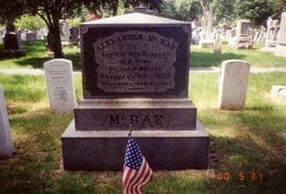 Because he fought for the Union, McRae's service record went unrecognized in his home state. In their story on the battle at Valverde, the Fayetteville Observer did not even report his death. However, McRae became an honored figure in New Mexico history. There are streets named after him in the New Mexican towns of Las Cruces and Las Vegas, and a canyon named for him in Sierra County. The remains of Fort McRae, a late Civil War and Indian War Army post named for him, now lay beneath the waters of Elephant Butte Lake. I could find some earlier reports of it being a destination for scuba divers, but the adobe walls have probably succumbed to time and water by now.
 Alexander McRae's body was exhumed in 1867 and transported to West Point for burial. McRae’s large black tombstone is only four markers away from the one dedicated to George Armstrong Custer. Guides frequently note it as the resting place of one who stayed with the Union.
Lockridge was buried on the battlefield. The whereabouts of the grave is unknown.
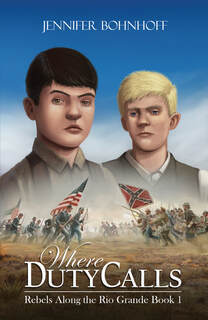 The story of McRae and Lockridge meeting at the battery is told in Jennifer Bohnhoff's historical novel Where Duty Calls. This book is written for middle grade readers and will be published by Kinkajou Press, a division of Artemesia Publishing, in June 2022. It is available for preorder here.
February 22, 2022
Of Palaces and Drummer boys
 An old post card of the Palace of the Governors, It has looked similar throughout its 400 year history. I don’t think any other state in the United States has a history museum that’s quite as storied as the one in New Mexico. Housed in a building called The Palace of the Governors, it is the oldest continuously occupied public building in the United States.
The Palace of the Governors was built in 1610, soon after the King of Spain appointed Pedro de Peralta to be the governor of New Mexico. The territory covered most of the American Southwest. Including what is now the states of Texas, Arizona, Utah, Colorado, Nevada, and New Mexico.
In 1821, Mexico won its independence from Spain and the Palace became the center of administration for the province of Santa Fe de Nuevo México.
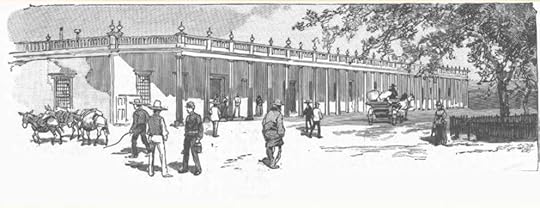
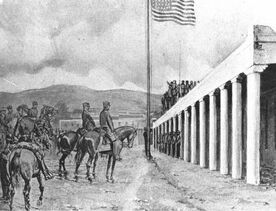 It became New Mexico's first territorial capitol on August 14,1846, when General Stephen W. Kearny rode his troops into Santa Fe during the Mexican American War. He claimed the New Mexico Territory for the United States without a shot being fired.
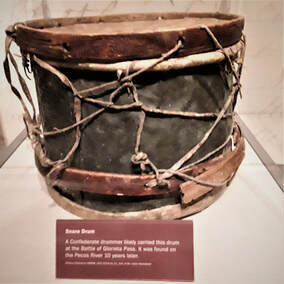 The museum houses artifacts dating back to man’s first entrance into the land, thousands of years ago, and it houses artifacts from recent history. These artifacts inspire museum goers to think about what New Mexico was like in the past. One of the artifacts on display, this snare drum, helps inform viewers about the Civil War in New Mexico. During the Civil War, drums were important for giving commands on the battlefield, and drummers were required to learn a standardized system of marches and signals. As the label indicates, this one was found in the Pecos River about a decade after the Battle of Glorieta Pass.
 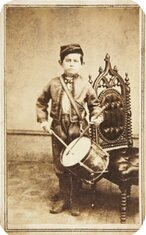 Willie, the Confederate Drummer Boy in my novel Where Duty Calls, would have carried a drum similar to this one. Willie is a fictional character, but this is exactly what I think he looked like: small and dark eyed, with a pale, round face. He drummed (at least in my story) during the charge at the Battle of Valverde in which the Confederate forces overtook the Union artillery position commanded by Captain Alexander McRae.
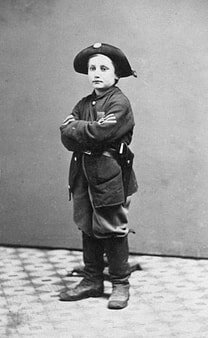 Although most drummers were actually adult men, some drummers were children. Some, like John Lincoln Clem, known by the nickname of Johnny Shiloh, ran away to join the army. Clem was only nine years old when he became a drummer boy. He continued in the Army, coming the youngest noncomissioned officer in history and retiring in 1915 as a brigadier general.
 Other boys who served as drummer boys were the sons of soldiers serving in the same unit. Still others, like my Willie, were orphans. An orphan from Louisianna, Willie would have joined the army to be fed and clothed, and to have a sense of belonging. Like many of the boys who joined young, Willie became a kind of mascot for the men, who made sure that he was taken care of.
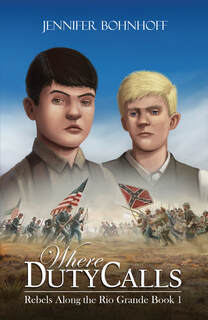 We Willie the drummer is one of the characters in Jennifer Bohnhoff's novel Where Duty Calls, an historical novel for middle grade readers which is scheduled to be released in June 2022 by Kinkajou Press, a division of Artemesia Publishing.
 To commemorate the 160th anniversary of the battle, Ms. Bohnhoff is having a Preorder Party for Where Duty Calls from February 20-26th. Anyone who preorders a copy of the book and lets Ms. Bohnhoff know will be entered into drawings for prizes and book bling.
You can contact Ms. Bohnhoff at jennifer.bohnhoff@gmail.com
Click here to preorder the book.
February 21, 2022
A General with a Plan
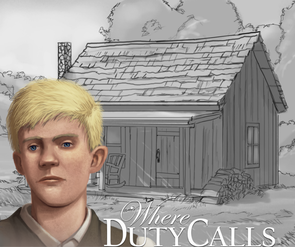 Jemmy and his home, as depicted by illustrator Ian Barstow The main character Where Duty Calls, my Civil War novel set in New Mexico, is Jemmy Martin, a gentle farm boy from San Antonio, Texas. Jemmy loves his humble home and his family, but has a very special relationship with the farm animals, especially the two mules.
 Jemmy's brother, Drew, is a little flightier. When Drew sneaks into town to join the Confederate army, Jemmy is tasked with finding him and bringing him back. While he is in town, a group of riders passes, and Jemmy is impressed:
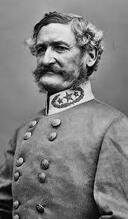 "At their center was a fine-looking man with silver hair that caught the morning sun and made him look as if a halo circled his head. He had a great, bushy mustache, sideburns, and sad, drooping eyes that made Jemmy feel as if this man had seen all the sorrow the world had to offer and had learned how to push through it. Jemmy instantly felt as if he could follow the man anywhere." The fine-looking man that had impressed Jemmy so well was Confederate Brigadier General Henry H. Sibley, and while Jemmy Martin is a figment of my imagination, General Sibley was a real person who impressed many. Several contemporary records attest to his natural charisma and ability to inspire people with his words.
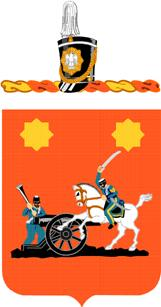 The coat of arms of the 2nd Dragoons Henry Hopkins Sibley' came from a family that had served the United States since its inception. His grandfather, Dr. John Sibley, was a medical assistant in the Revolutionary War. When the war was over, he continued his training and became a surgeon. In 1803, after the United States bought the Louisiana Purchase, he left his native Massachusetts and joined an expedition to the Red River country of western Louisiana. He liked the new territory so well that he moved to Natchitoches, Louisiana, where he worked as a contract surgeon and was an Indian Agent for New Orleans. John Sibley also served as a Senator in the Louisiana State Senate, and was a colonel in the local militia, a cattle farmer, a cotton planter, and a salt manufacturer. His son Samuel Sibley served as a parish clerk.
Henry Hopkins Sibley was born in Natchitoches in 1816. His father, Samuel, died when he was only seven years old, after which lived with an uncle and aunt in Missouri. He was admitted to West Point when he was seventeen, and when he graduated in 1838, he was commissioned as second lieutenant in the 2nd U.S. Dragoons. Between 1840 and 1860 he fought Seminole Indians in Florida, served on the Texas frontier, fought in the Mexican–American War, was involved in trying to control conflict in Bleeding Kansas and quelling a Mormon uprising in Utah. In 1857, Sibley was assigned active service protecting settlers from Navajo and Apache attacks in New Mexico.
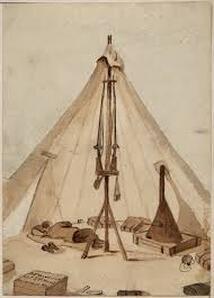 During the 1850s, Sibley invented and patented a tent and stove for military purposes. The "Sibley tent", which was inspired by the teepees of Native American Plains Indians, was widely used by both the Union Army and Confederate Armies during the Civil War. The conical Sibley tent stove, pictured on the right side of this tent, was used by the Army into the early years of the second World War. Despite the popularity of both of these inventions, Sibley received little remuneration for them.
 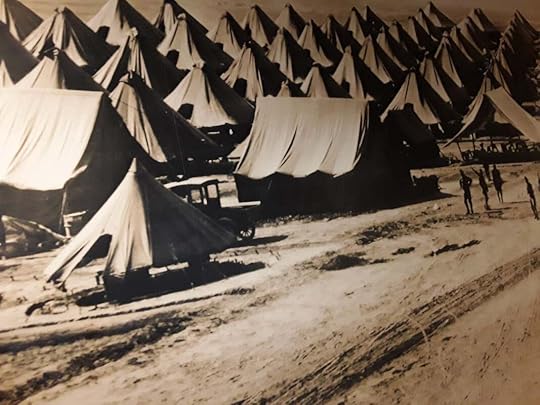 Sibley tents in Camp Columbus, NM in 1916 during the build-up to the Punitive Expedition. The lower skirts have been removed from the one in the foreground to keep the air inside cool. At the time that the Civil War began, Sibley was stations at Fort Union, in northern New Mexico. Like many soldiers who had been raised in the south, he resigned his commission to join the Confederate Army. Sibley resigned on May 13, 1861, the same day he was promoted to major in the 1st Dragoons. Had he not left, he would have been offered the command of the military department of New Mexico, since the man who had held that position, Colonel William Wing Loring, had also left to take a southern commission.
 Sibley took a stagecoach out of New Mexico. A diary of a Union soldier stationed in Albuquerque says that, while passing through in a stagecoach, Sibley stuck his head out the window and shouted “Boys, I'm the worst enemy you have!”
He passed through Texas and Louisiana on his way to Richmond, Virginia, where he talked Jefferson Davis, the President of the Confederate States, into commissioning him as a brigadier general. Davis authorized him to recruit a brigade of volunteers in central and south Texas. Sibley’s plan was to march to El Paso, then occupy New Mexico. From there, he would seize the rich mines of Colorado Territory, turn west through Salt Lake City, and capture the seaports of Los Angeles and San Diego and the California goldfields.
Sibley's battle cry, “On to California!” inspired 2,000 men to join his campaign. By early fall of 1861, Sibley had three regiments of what he named The Army of New Mexico, plus artillery and supply units, camped on the outskirts of San Antonio. One of them, at least in my story, was Jemmy Martin.
 Where Duty Calls is the first in a trilogy of novels set in New Mexico during the Civil War and written for middle grade readers. It is scheduled to be published by Kinkajou Press, a division of Artemesia Publishing, on June 14, 2022.
It is available for preorder here.
Jennifer Bohnhoff is a former New Mexico history teacher. She is a native New Mexican and lives in the mountains east of Albuquerque.
February 20, 2022
160th Anniversary of a Significant Battle
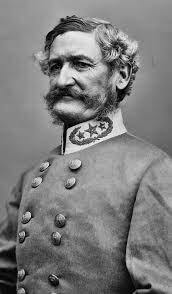 Brig. Gen H.H. Sibley February 21, 2022 is the 160th anniversary of the Battle of Valverde, the first major battle of the American Civil War fought in New Mexico territory. It was a Confederate success, but did not give the invading southern army the advantages it had hoped to attain with such a victory.
On January 3, 1862, Confederate brigadier general, Henry Hopkins Sibley left El Paso with a little more than three regiments of mounted Texans. This brigade, which he called the Confederate Army of New Mexico, totaled 2,510 officers and men. He headed north, with the intention of defeating the Union forces at Fort Craig, capturing the capital city of Santa Fe, taking the heavily provisioned Fort Union, and then marching into Colorado to take control of the gold and silver mines before finally heading westward to conquer California. If his plan had succeeded, Sibley would have fulfilled the Confederacy’s dreams of Manifest Destiny while giving the south warm water ports on the Pacific and a huge boost to its treasury.
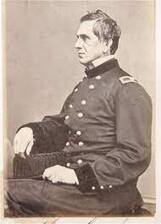 Col. E.R.S. Canby Fort Craig, 140 miles north of El Paso, was the first obstacle in Sibley’s path, and taking it was an important objective. Sibley’s army traveled light, with the hope of acquiring food, arms, ammunition, and other supplies as they went. He needed the provisions within Fort Craig to replenish his already dwindling supplies. However, Colonel Edmund R.S. Canby, the commander of Federal troops in New Mexico, was hunkered down in the fort, waiting with 3,800 men. Only 1,200 of Canby's men were professional soldiers. The remainder were militia and volunteers from New Mexico and Colorado. Kit Carson, the famous Indian fighter, mountain man and scout, commanded the largely Hispanic First Regiment of New Mexican volunteers.
Sibley arrived at Fort Craig in the middle of February. Scouts, fooled by Canby’s use of “Quaker cannons,” logs painted black to imitate artillery pieces, reported that the fort was too heavily fortified to be taken. Hoping to lure the Federals into the open, Sibley moved his men into an arroyo south of the fort. The cautious Canby refused to be provoked.
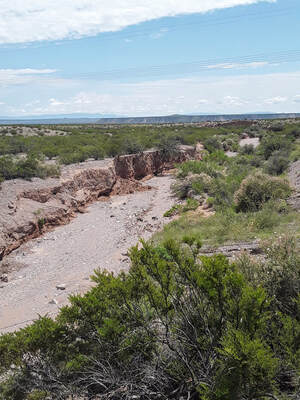 The black line on the horizon is Contadoria Mesa. The battle happened just to the left of it. When the Confederate supplies could only hold out for a few more days, Sibley decided to abandon his plan to take the fort. Instead, he decided upon a “roundance on Yankeedom,” in which he would cross to the east side of the Rio Grande, flank the fort under cover from surrounding hills, including Contadoria Mesa, then recross the Rio Grande at Valverde ford, six miles north of Fort Craig and continue on to the town of Socorro. Sibley planned to be able to cut Union communications between the fort and their headquarters in Santa Fe this way, making further conquests more achievable.
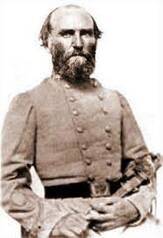 Lt. Colonel William Read Scurry On the morning of February 21, Sibley sent an advance party consisting of four companies of the Major Charles Pyron’s 2nd Texas Mounted Rifles and Lieutenant Colonel William Read Scurry’s 4th Texas Mounted Rifles to scout the ford at Valverde. To their surprise, Canby had anticipated their move and had secured the ford with cavalry commanded by Major Thomas Duncan. The Texans took cover in an old river bed, which served as an excellent defensive position, with Scurry to Pyron's right, and their artillery on their left. The Confederates possessed numerical superiority, but were armed with short range shotguns and pistols which could not reach the Union positions three hundred yards away. The Confederate howitzers also could not reach the Union artillery, which had remained on the western bank of the river.
As the day progressed, more soldiers arrived on both sides of the battle line. Colonel Benjamin S. Roberts reinforced the Union cavalry with the 5th New Mexico Infantry. When Colonel Canby arrived with most of Fort Craig’s remaining garrison, he ordered all but First New Mexico Volunteers under Carson and the Second New Mexico Volunteers under Colonel Miguel Piño to cross to the eastern side of the river.
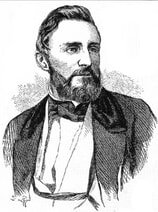 Maj Lockridge The remainder of the Confederate force, the 5th Texas Mounted Rifles under Colonel Thomas Green and a battalion of the 7th Texas Mounted Rifles under Lieutenant Colonel John Sutton, arrived at the battlefield early that afternoon. Sibley, who had fallen ill, most likely from drinking too much, relinquished command of the brigade to Green, who then handed over command of the 5th Texas over to Major Samuel Lockridge.
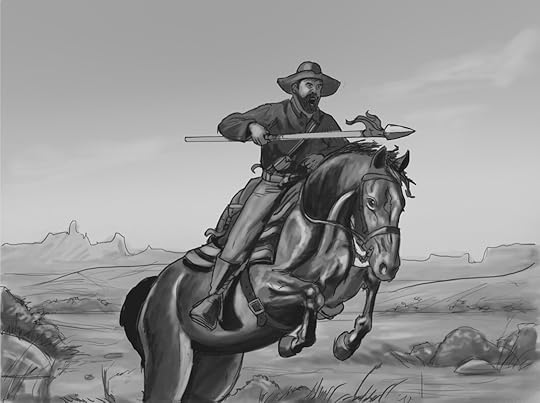 Illustration by Ian Bristow in Where Duty Leads. Around 2:00 pm, Green authorized the first and last lancer charge of the American Civil War. Using lances they had captured from Mexico during the Mexican-American war, the lancers charged what they thought was an inexperienced company of New Mexico volunteers on the Union extreme right. They expected the New Mexicans to break and run. However, the Union soldiers were actually a company of rough and tumble Colorado miners, who withstood the charge. Twenty of the lancers and almost all of the horses were killed or wounded.
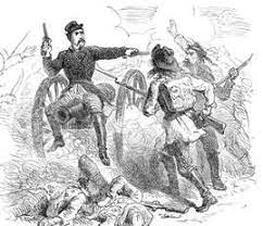 An etching from a Harper's Weekly showing McRae defending his guns. By 4:00 p.m., when the Union appeared to have the advantage, Canby shifted his lines in order to attack the Confederate left. He ordered one of his batteries and several of his companies, including Carson's First New Mexico Regiment, to cross the river on his right. Unfortunately, weakened the center of the Union line, which Green then attacked with three successive waves which managed to overwhelm the Union guns. Samuel Lockridge, who led the charge and Alexander McRae, who commanded the guns, were both killed, and six Union artillery pieces were captured as the Union battle line crumbled into a panic-stricken retreat across the river. Canby then sent out a white flag, asking for time to remove the dead and wounded from the battlefield, and moved his forces back into Fort Craig.
 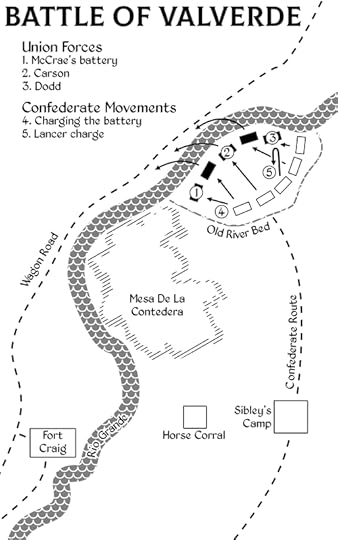 Map by Matt Bohnhoff. A similar one will appear in Where Duty Calls.
 Illustration by Ian Bristow, from Where Duty Calls. Since the Union left the Confederate forces in possession of the battlefield, the Battle of Valverde is technically a Confederate victory. However, it was a Pyrrhic victory at best. The Confederates suffered sizable casualties: 36 killed, 150 wounded, and one missing out of their 2,590 men. They did not capture the fort’s supplies, which they desperately needed. And although they did cut Fort Craig off from their forces in the north, the Confederate supply chain to El Paso was also severed. Finally, the Texans had lost so many horses and mules in the battle and the days preceeding it that the 4th Texas cavalry had to dismount and become infantry and some of the Confederate supply wagons had to be abandoned. These loses, plus those which were to occur in the mountains east of Santa Fe a month later caused the Army of New Mexico to turn back to Texas before they fulfilled their goal. Sibley’s army had won the battle, but lost their war.
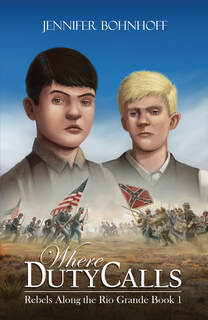 The climax of Jennifer Bohnhoff’s novel Where Duty Calls occurs at the Battle of Valverde. Where Duty Calls is the first in a trilogy of novels set in New Mexico during the Civil War and written for middle grade readers. It is scheduled to be published by Kinkajou Press, a division of Artemesia Publishing, on June 14, 2022. It is available for preorder here. Jennifer Bohnhoff is a former New Mexico history teacher. The native New Mexican lives in the mountains east of Albuquerque.
February 19, 2022
The First Song of the Civil War
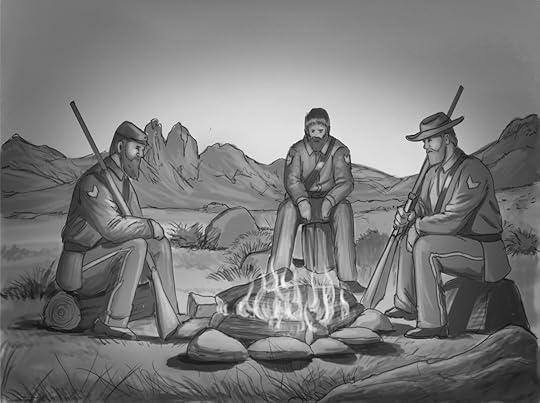 Soldiers sang a lot while sitting around their campfires. Illustration from Where Duty Calls by Ian Bristow People sang a lot more at the time of the Civil War than they do now. There were no i-pods, no portable boom boxes, no radios to entertain soldiers as they traveled from place to place or sat around the campfire. Instead, they sang together. Singing helped boost morale and united the soldiers. Robert E. Lee, the greatest general on the Confederate side, said, "I don't think we could have an army without music."
In my middle grade historical novel Where Duty Calls, both the Confederate soldiers and the Union ones, as well as the Spanish-speaking residents of the town of Socorro, sing songs that are authentic to the period.
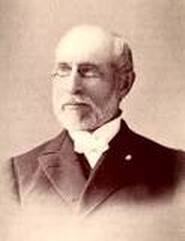 One song that was very popular at the time of the Civil War but not included in Where Duty Calls is "The First Gun is Fired: May God Protect the Right." Written by George Frederick Root, it is recognized as the first song specifically written for the American Civil War, and was published and distributed just three days after the Battle of Fort Sumter.
"The First Gun is Fired: May God Protect the Right," isn't the most recognizable of Civil War songs to 21st century listeners, but it is likely that every Union soldier would have known it. Root went on to write many other songs that had a war theme. "Tramp! Tramp! Tramp!" was also wildly popular at the time of the war. His most enduring song, "The Battle Cry of Freedom," continues to be well known.
The prolific songwriter was born August 30, 1820 in Sheffield, Massachusetts. He died in 1895, leaving behind a legacy of church hymns and popular parlor songs.
Here are the lyrics to the Civil War's first song: 1. The first gun is fired!
May God protect the right!
Let the freeborn sons of the North arise
In power’s avenging night;
Shall the glorious Union our father’s have made,
By ruthless hands be sunder’d,
And we of freedom sacred rights
By trait’rous foes be plunder’d?
Chorus--Arise! arise! arise!
And gird ye for the fight,
And let our watchword ever be,
“May God protect the right!”
2. The first gun is fired!
Its echoes thrill the land,
And the bounding hearts of the patriot throng,
Now firmly take their stand;
We will bow no more to the tyrant few,
Who scorn our long forbearing,
But with Columbia’s stars and stripes
We’ll quench their trait’rous daring.
3. The first gun is fired!
Oh, heed the signal well,
And the thunder tone as it rolls along
Shall sound oppression’s knell;
For the arm of freedom is mighty still,
But strength shall fail us never,
Its strength shall fail us never,
That strength we’ll give to our righteous cause,
And our glorious land forever.
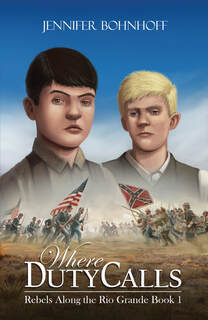 Jennifer Bohnhoff is a former New Mexico history teacher. The native New Mexican lives in the mountains east of Albuquerque.
 Her novel Where Duty Calls is the first in a trilogy of novels set in New Mexico during the Civil War and is written for middle grade readers. It is scheduled to be published by Kinkajou Press, a division of Artemesia Publishing, on June 14, 2022 and is now available for preorder here.
February 15, 2022
The First - and Last- Lancer Charge of the Civil War
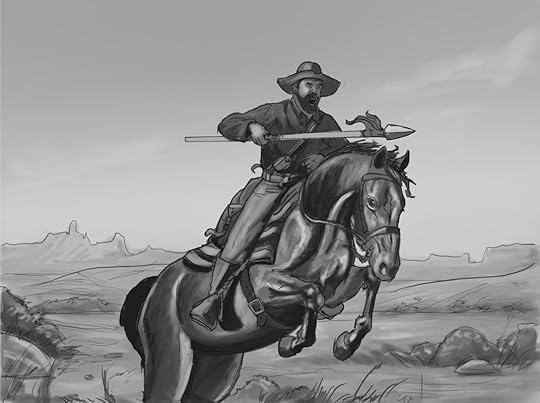 Illustration by Ian Bristow from Where Duty Calls.
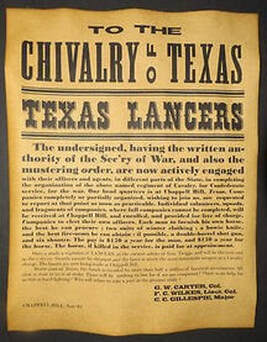 When Confederate Major General H. H. Sibley invaded New Mexico in 1862, he brought with him two companies of lancers.
Handsome and chivalrous heirs of medieval knights, the lancers were the darlings of the parade through San Antonio on the day Sibley's force, which he named the Army of New Mexico headed west. Bright red flags with white stars snapped in the breeze as they rode past. Ladies swooned. Everyone thought the lancers were invincible.
Lances had been used in battle for a long time. Common on Napoleonic battlefields, and were used by Mexican cavalry during the conflicts against the Texans in the 1830s and 1840s. The lances carried by the two companies that accompanied Sibley into New Mexico were war trophies that had been captured from the Mexicans during the Mexican American War thirteen years earlier.
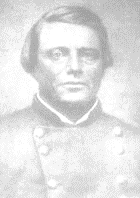 Col. Thom Green On February 21, 1862 those two companies, along with the rest of Sibley's forces, had made it well into New Mexico. After finding E.R..S. Canby, the commander of Union forces in New Mexico, unwilling to come out of the heavily fortified Fort Craig, the Confederates had bypassed the fort and made their way to Valverde Ford, a crossing on the Rio Grande several miles north. There, they found Union forces blocking their way. The battle for that crossing, known as the Battle of Valverde, was over by that afternoon.
On the the day of the battle, Confederate Colonel Thomas Green's forces had taken shelter in the curve of a dried oxbow that the river had abandoned. He peered across the battlefield and saw uniforms that he couldn't identify. Knowing they weren't Union regulars, he guessed that these men on the Union extreme right were a company of inexperienced New Mexico Volunteers whom he expected would break and run if faced with a lancer charge.
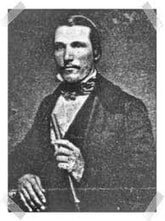 Captain Lang Green turned to the commanders of his two lancer companies, Captains Willis Lang and Jerome McCown. He asked which would like to have the honor of the first charge.
The first hand up belonged to the leader of the 5th Texas Cavalry Regiment's Company B. Captain Willis L. Lang was a rich, 31 year old who owned slaves that worked his plantation near Marlin in Falls County, Texas.
Lang quickly organized his men. Minutes later, he gave the signal and his company cantered forward, lowered their lances, and began galloping across the 300 yards that divided his men from the men in the unusual uniforms. The plan called for McCown's company to follow after the Union troops had broken, and the two lancer companies would chase the panicking Union men into the Rio Grande that stood at their back.
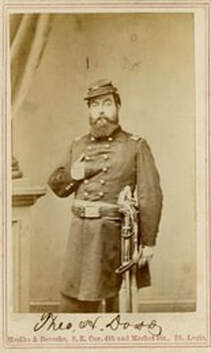 But Colonel Green was wrong. The men in the strange uniforms were not New Mexican Volunteers. They were Captain Theodore Dodd’s Independent Company of Colorado Volunteers. Dodd's men were a scrappy collection of miners and cowboys who were reputedly low on discipline but high on fighting spirit. They formed into a defensive square, then coolly waited until the lancers were within easy range. Their first volley unhorsed many of the riders. Their second volley finished the assault. More than half of Lang's men were either killed or wounded, and most of the horses lay dead on the field.
Lang himself dragged himself back to the Confederate lines because he was too injured to walk. Lang's charge was the only lancer charge of the American Civil War. The destruction of his company showed that modern firearms had rendered the ten-foot long weapons obsolete. McCown's men, and what remained of Lang's men threw their lances into a heap and burned them. They then rearmed themselves with pistols and shotguns and returned to the fight.
The day after the battle, Lang and the rest of the injured Confederates were carried north to the town of Socorro, where they had requisitioned a house and turned it into a hospital. A few days later, depressed and in great pain, he asked his colored servant for his revolver, with which he ended his suffering. Lang and the other Confederate dead were buried in a plot of land near the south end of town that has now become neglected and trash-strewn. The owners do not allow visitors.
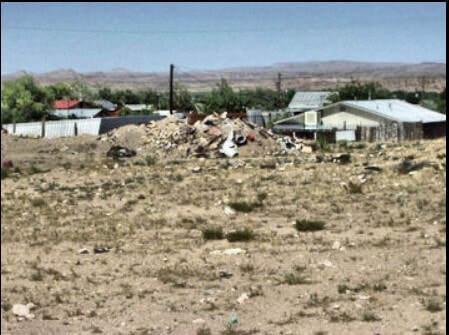 This field used to be a Confederate Cemetery.
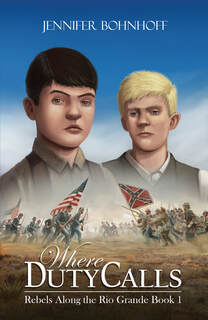 The Confederate lancer charge is one of the events detailed in Jennifer Bohnhoff's novel Where Duty Calls, an historical novel for middle grade readers which is scheduled to be released in June 2022 by Kinkajou Press, a division of Artemesia Publishing.
 To commemorate the 160th anniversary of the battle, Ms. Bohnhoff is having a Preorder Party for Where Duty Calls from February 20-26th. Anyone who preorders a copy of the book and lets Ms. Bohnhoff know will be entered into drawings for prizes and book bling.
You can contact Ms. Bohnhoff at jennifer.bohnhoff@gmail.com
Click here to preorder the book.
February 8, 2022
Paddy Graydon, Wild and Crazy Spy Captain
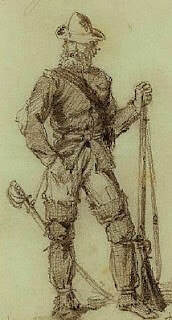 "A Jurilla" Library of Congress There aren't too many Civil War characters more colorful Captain James (Paddy) Graydon. He was a hard drinking, disagreeable man who was quick with his fists and short on temper, but his recklessness has earned him a place in American history.
Graydon was born in 1832 Lisnakea a poor, isolated Irish village. He emigrated to the United States to escape the Potato Famine when he was 21 years old. Like many poor immigrants of the time, Graydon joined the army soon after arriving, and was posted to the southwest with the elite 1st Dragoons. They took the Santa Fe, and arrived in New Mexico in August of 1853. Graydon was posted to Los Lunas, a village south of Albuquerque along the Camino Real.
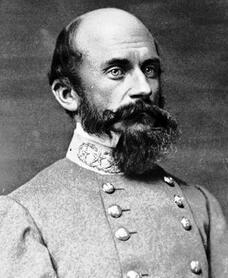 Richard Stoddert Ewell in his Confederate Uniform Grayson, a fair skinned, blue-eyed man who stood about 5 feet 7 inches tall, was quick to adapt to the rigor of military life. Under the command of Richard Stoddert Ewell, a West Point graduate who was to become a general in the Confederate Army, Graydon learned to speak Spanish and Apache. For five years, he fought Mescalero, Chiricahua, and Jicarilla Apaches, Navajos, bandits, renegades, and claim jumpers in an area that stretched from north and south from Santa Fe to the Mexican border and as far west as Fort Buchanan, in what is now Arizona. When he was discharged from the Army in 1858, the seasoned veteran opened a hotel and saloon a few miles south of Fort Buchanan in Sonoita, Arizona. The whitewashed adobe, which became known as “Casa Blanca,” or “The White House,” attracted a rough crowd of patrons. His establishment boasted round-the-clock poker games and housed the region’s top prostitutes. But all this was still too sedate for Graydon, who tracked horse thieves and murderers, rescued captives from the Indians, and guided army patrols and U. S. military expeditions in his spare time.
In 1861, when Confederate General Henry H. Sibley threatened to bring the Civil War into New Mexico, Graydon abandoned Casa Blanca and rode to Santa Fe to offer his services to the Union. Territorial Governor Henry Connelly awarded him with a commission to recruit a company of spies that would operate virtually independently of the Army. Graydon rounded up 100 of the “hardest cases” he could find, then reported to Colonel E.R.S Canby, the Commander of the Army in the territory, at Fort Craig. Many of the men Graydon recruited were former patrons of his saloon. They were an undisciplined lot, mean and nasty, but very good at collecting information and doing the kind of sabotage work that regular Army soldiers could not. Canby gave Grayson the mission of infiltrating the Confederate lines and sending back news about troop movements and numbers.
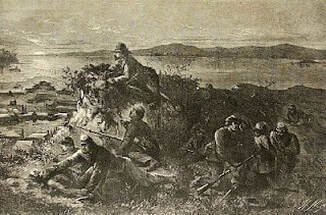 There are no pictures of Graydon or of his Company of spies, but the Library of Congress sketch entitled "A Jurilla" that is shown at the top of this article is probably a good representation of what a member of the spy company would look like. They wore no uniforms, rarely bathed, and refused to participate in parades and drills like regular soldiers. The bottom corners of this lithograph, from an April 9, 1863 Harper's Weekly, shows a company of spies taking two sentries prisoners. Graydon's spies did this kind of work. They were also well known for wandering into the Confederate camp and sitting around the campfires, drinking coffee and gathering information. But the action that Graydon is most famous for happened on a bitterly cold night in February, 1862. Sibley's Confederate Army was encamped about four miles east of Fort Craig, where Canby's Army and a large number of New Mexico Volunteers awaited. Under cover of darkness, Graydon and four of his roughest men left the fort and crossed the icy Rio Grande. When they got close to the corral that enclosed Sibley's pack train, Graydon lit the fuses on pack boxes filled with explosives that he had put on two old mules, then shooed them towards the Confederate lines.
 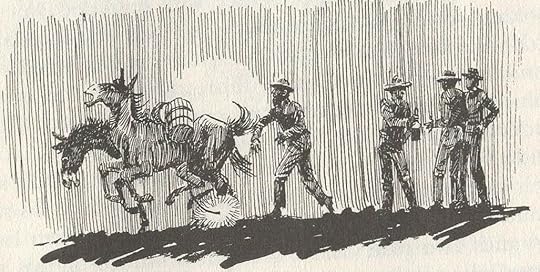 From Steve Cottrell's book Civil War in Texas and New Mexico Territory. Graydon's scheme did not go as planned. His mules turned back. As Graydon and his men rode for their lives, the explosives blew up, killing no one but the mules they were attached to. However, the explosion caused Confederate pack mules to stampede down to the Rio Grande, where Union troops rounded them up. The Confederate Army lost over 100 animals, and had to abandon many of the supplies that they desperately needed if they were going to conquer New Mexico and the rich gold fields of Colorado and California. Graydon’s outrageous scheme had not stopped the Confederate invasion of New Mexico, but it had seriously crippled it.
 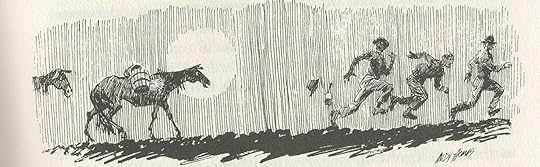 also from Steve Cottrell's book Civil War in Texas and New Mexico Territory.
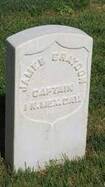 Graydon continued to command his spy company for another year and a half. In October of 1862, he was involved in an altercation with Mescalero Apaches at Gallinas Springs. At least eleven Apaches, including their Chief, Manuelito, were killed. The next month, he was in Fort Stanton when Dr. John Marmaduke Whitlock, an Army surgeon and Graydon got into a fight over the killings. Whitlock shot Graydon, and then Graydon’s men shot Whitlock. Graydon is buried in the Veteran’s cemetery in Santa Fe.
 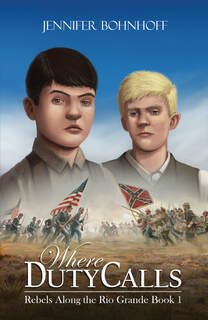 James Graydon is one of the historical people who appear in Where Duty Calls, an historical fiction novel for middle grade readers by Jennifer Bohnhoff. It will be published in June 2022 by Kinkajou Press, an imprint of Artemesia Publishing.
February 5, 2022
Some love (and not) for Middle Grade Books
Middle Grade readers can be pretty confused about life. Kids in the upper end of elementary school and the lower end of middle school or junior high often don't know from day to day whether they want to be treated like adults or kids. When I taught middle school, I listened to kids snort derisively when a sticker appeared on their returned work, then complain when they didn't. The same kid who seemed to be emotionally bobbing in the rafters one day would seem to crawl on his belly the next. A lot of this confusion is hormone driven. Puberty is hard on bodies and minds alike.  These conflicting emotions often come to a head around a holiday, especially one as emotionally charged as Valentine's Day. Kids say they don't care if they get valentine's cards, but there's a bit of fear in their eyes right behind the bravado. They may think valentines are childish, but they're afraid that not getting any will mean they're not liked by anyone.
Hector Anderson, the main character in the series named The Anderson Family Chronicles, is a typical geeky 6th grade boy who doesn't get what all the fuss is surrounding Valentine's Day. Like his preschool-aged brother Stevie, he's most attracted to the candy - which Stevie called the tweet sarts and pollylops - until a new girl enrolls in his school and he is bitten by the love bug. Hec finds himself in competition with the handsome, athletic, and rather bullying big man on campus to win a dance with Sandy at the Valentine's Day dance.
If this sounds like a book you'd like, you're in luck. My Valentine's Day gift to you is a copy of Tweet Sarts! You can get a copy for free just by signing up for my emails here. If you'd rather not, you can still download the book for just .99 on Amazon between February 7 and 14. Please pass this on to anyone who might also want a copy.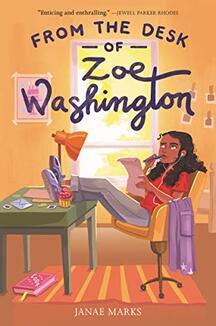 I recently read From the Desk of Zoe Washington, by Janae Marks. I know that I'm in the minority here, but I didn't love this book. Google says that 97% of the people who read it loved this book. It got 4.3 out of 5 stars on Goodreads, and 4.8 out of 5 on Audible. What turned me off is what I call the Ariel Affect.
Ariel is the name of the little mermaid in the Disney version of Hans Christian Andersen's fairy tale. In the original version, the mermaid falls in love with a prince and uses magic to become human, but he spurns her for a mortal princess. The broken-hearted Little Mermaid almost kills the prince in order to become a mermaid again, but instead throws herself overboard and becomes seafoam. In the end, she is transformed into an ethereal, earthbound spirit and given 300 years to make up for her errors by doing good deeds before attaining Heaven.
In the Disney version, the Little Mermaid defies her father and convention to chase the prince, and is rewarded by living happily ever after. She proves that her father was wrong in his assumptions, and that she had every right to determine her own future, despite her father's wishes.
In From the Desk of Zoe Washington, Zoe receives a letter on her 12th birthday from her biological father, who is in prison for murder. She decides to sneak around behind her mother's back to get to know her father. Zoe lies and engages in some pretty dangerous behaviors as she tries to prove that her father is innocent. Occasionally she wonders if he is all that she thinks he is. What if he really is a murder? What if he's not as nice as he appears? In the end, though, she is able to prove that he is innocent and the whole family accepts him into their lives.
This is all well and good in a novel, but it's a bit scary in real life. While it's true that some people are incarcerated for crimes they did not commit, it's also true that a lot of people who are imprisoned are con artists who can sweet talk the innocent and naïve into believing their sad-sack stories. Zoe's story might have turned out very differently.
Parenting has never been easy. It's harder when the media tries to convince children that they know what is good for them far better than their parents do. I know there are bad parents out there, but most are doing their best to protect their children from dangerous and hurtful situations. I hope no child reads From the Desk of Zoe Washington and does what she does, only to end out with a less than fairy tale ending to their own personal story.
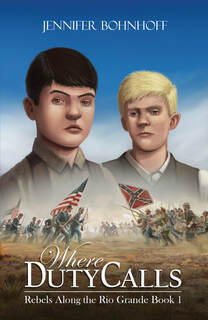 After a career teaching English and history at the high school and middle school level, Jennifer Bohnhoff left the classroom and now writes from her home high up in the mountains of central New Mexico. Her next book, Where Duty Calls, is the first in a trilogy of middle grade historical novels about the Civil War in New Mexico, and will be published this summer by Kinkajou Press.
These conflicting emotions often come to a head around a holiday, especially one as emotionally charged as Valentine's Day. Kids say they don't care if they get valentine's cards, but there's a bit of fear in their eyes right behind the bravado. They may think valentines are childish, but they're afraid that not getting any will mean they're not liked by anyone. Hector Anderson, the main character in the series named The Anderson Family Chronicles, is a typical geeky 6th grade boy who doesn't get what all the fuss is surrounding Valentine's Day. Like his preschool-aged brother Stevie, he's most attracted to the candy - which Stevie called the tweet sarts and pollylops - until a new girl enrolls in his school and he is bitten by the love bug. Hec finds himself in competition with the handsome, athletic, and rather bullying big man on campus to win a dance with Sandy at the Valentine's Day dance.
If this sounds like a book you'd like, you're in luck. My Valentine's Day gift to you is a copy of Tweet Sarts! You can get a copy for free just by signing up for my emails here. If you'd rather not, you can still download the book for just .99 on Amazon between February 7 and 14. Please pass this on to anyone who might also want a copy.
I recently read From the Desk of Zoe Washington, by Janae Marks. I know that I'm in the minority here, but I didn't love this book. Google says that 97% of the people who read it loved this book. It got 4.3 out of 5 stars on Goodreads, and 4.8 out of 5 on Audible. What turned me off is what I call the Ariel Affect.Ariel is the name of the little mermaid in the Disney version of Hans Christian Andersen's fairy tale. In the original version, the mermaid falls in love with a prince and uses magic to become human, but he spurns her for a mortal princess. The broken-hearted Little Mermaid almost kills the prince in order to become a mermaid again, but instead throws herself overboard and becomes seafoam. In the end, she is transformed into an ethereal, earthbound spirit and given 300 years to make up for her errors by doing good deeds before attaining Heaven.
In the Disney version, the Little Mermaid defies her father and convention to chase the prince, and is rewarded by living happily ever after. She proves that her father was wrong in his assumptions, and that she had every right to determine her own future, despite her father's wishes.
In From the Desk of Zoe Washington, Zoe receives a letter on her 12th birthday from her biological father, who is in prison for murder. She decides to sneak around behind her mother's back to get to know her father. Zoe lies and engages in some pretty dangerous behaviors as she tries to prove that her father is innocent. Occasionally she wonders if he is all that she thinks he is. What if he really is a murder? What if he's not as nice as he appears? In the end, though, she is able to prove that he is innocent and the whole family accepts him into their lives.
This is all well and good in a novel, but it's a bit scary in real life. While it's true that some people are incarcerated for crimes they did not commit, it's also true that a lot of people who are imprisoned are con artists who can sweet talk the innocent and naïve into believing their sad-sack stories. Zoe's story might have turned out very differently.
Parenting has never been easy. It's harder when the media tries to convince children that they know what is good for them far better than their parents do. I know there are bad parents out there, but most are doing their best to protect their children from dangerous and hurtful situations. I hope no child reads From the Desk of Zoe Washington and does what she does, only to end out with a less than fairy tale ending to their own personal story.
After a career teaching English and history at the high school and middle school level, Jennifer Bohnhoff left the classroom and now writes from her home high up in the mountains of central New Mexico. Her next book, Where Duty Calls, is the first in a trilogy of middle grade historical novels about the Civil War in New Mexico, and will be published this summer by Kinkajou Press.


