Real People in Where Duty Calls
Where Duty Calls, the Civil War Novel set in New Mexico Territory that's scheduled to be released this summer is historical fiction. As such, it's populated with a mix of fictitious and real people. All of the important events and dates are historical, the information gleaned from diaries, newspaper and internet accounts, and secondary sources.
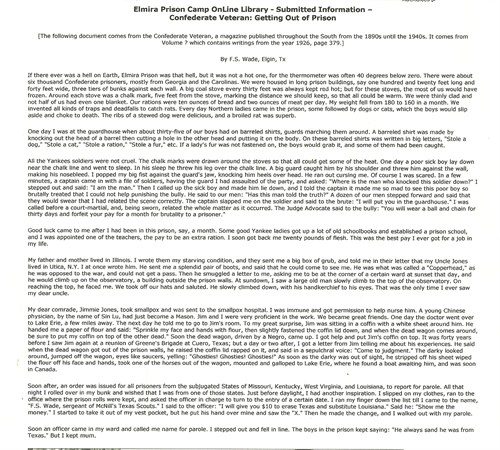
If I could have found real people who were always in the middle of the action that I wanted to depict, I would have made them my main characters. Unfortunately, real people can't be everywhere, so limiting myself to real people would have limited the scenes that I could include in my story. I created Jemmy and Raul so that I could show the more personal side of the story and not worry about putting words and emotions into the mouths and minds of real people who might not have said or thought what I wanted them to. The small, personal scenes depicting their family life are entirely made up.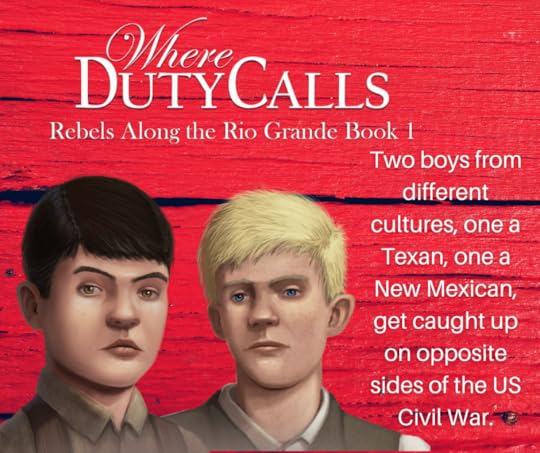 Other characters in Where Duty Calls are well known historical figures.
Christopher :Kit" Carson (December 24, 1809 – May 23, 1868) is perhaps the most famous Indian Scout, mountain man, and frontiersman of all time. Carson left his home in rural Missouri when he was only 16 to become a mountain man and trapper in the rugged Rocky Mountains. By the time of the Civil War, he had added wilderness guide, Indian agent, and U.S. Army officer to his resume. Carson was a legend in his own lifetime, and his exploits, although greatly exaggerated, appeared in dime novels.
Carson was a quiet man, short in stature, and uncomfortable with his own celebrity In Where Duty Calls , he is mending his own clothes when he meets Raul for the first time at Fort Craig. Carson was then leading a division of New Mexico Volunteers who had been called to Fort Craig to repel the invading Confederate Army.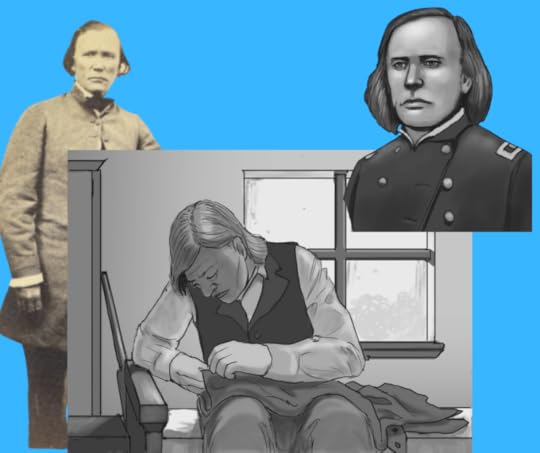 Illustrations by Ian Bristow. These appear in Where Duty Calls.
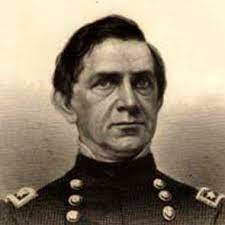 Edward R.S.Canby (November 9, 1817 – April 11, 1873) was a West Point graduate who was in command of New Mexico territory's Fort Defiance when the Civil War broke out. He was appointed colonel of the 19th Infantry on May 14, 1861 and made commander of the Department of New Mexico after the man who had been commander left to join the Confederacy.
More an administrator than a fighter, Canby was a cautious and careful leader. He realized that defending the entire territory from every possible attack would stretch his forces too thinly, so he amassed his troops at Fort Craig, to guard the route up the Rio Grande. He was defeated at the Battle of Valverde, but managed to retain the fort and keep its precious stores of food and arms out of enemy hands. Eventually, this forced the Confederates to abandon their campaign and return to Texas.
Canby made no secret of his distain for the New Mexico Volunteers. His reports blamed them for more cowardice and incompetence than they deserved.
Canby was killed in 1873 while attending peace talks with the Modoc in the Pacific Northwest. He was the only United States general to be killed during the Indian Wars.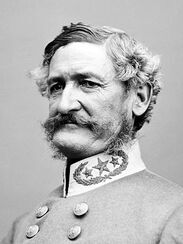 Henry Hopkins Sibley (May 25, 1816 – August 23, 1886) was also a West Point graduate who was serving in New Mexico territory at the outbreak of the Civil War. He resigned his commission on May 13, 1861, the day of his promotion to major in the 1st Dragoons and joined the Confederate Army. Sibley convinced Confederate President Jefferson Davis to put him in command of a brigade of volunteer cavalry in West Texas, which he named the Army of New Mexico. Sibley's intention for the New Mexico Campaign was to capture Fort Union on the Santa Fe Trail and make it a forward base of supply. He would then capture the gold and silver mines of Colorado and the warm-water ports of California. Sibley was accused of alcoholism during his time in New Mexico. Before the war ended, he had been court martialed and censured. After the war, he served as an advisor for the Egyptian Army, but continued to struggle with alcoholism. He died in poverty.
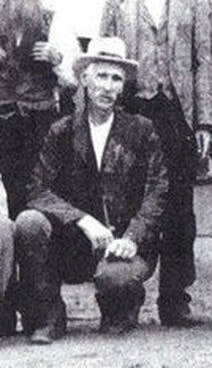 Frederick Wade in later years. Some of the other characters in Where Duty Calls are real people, but they are not famous. Many of these characters made it into the novel because I used their diaries and letters to flesh out my story. Some of these people had wonderful stories that did not make it into my novel.
One of these is a story by Frederick S. Wade. Wade was a teacher before he enlisted as a private in Sibley's the Army of New Mexico. His obituary, in the June 27, 1925 edition of the San Antonio Express, says that he told Abraham Lincoln that Texas would secede from the Union. The story goes that he was visiting his parents in Illinois when Lincoln asked him about Texan opinion. Supposedly, Lincoln tried to get Wade to tour Texas and urge it to remain with the Union, but Wade declined.
In 1862, Wade became a POW and was put in the Elmira Prison Camp.While there, he helped a friend escape. His friend had contracted smallpox and was in the hospital. Wade sprinkled the man’s face and hands with flour, then sealed him into a coffin that was loaded on the top of the other coffins in the dead wagon. After the wagon had left the prison, the man raised the lid of the coffin and called “Come to judgement” in his spookiest voice. The frightened driver ran away yelling “Ghosties! Ghosties!” Wade’s friend then stole one of the horses and escaped to Canada. You can read this story, plus some other remembrances here.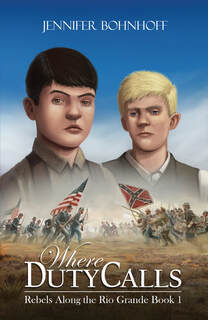 Jennifer Bohnhoff is a former History and English teacher, who now writes and lives in the mountains of central New Mexico. Her middle grade novel, Where Duty Calls, is scheduled for release by Kinkajou Press, a division of Artemesia Publishing, in June 2022. It is the first in a trilogy of novels set in New Mexico during the Civil War.
If I could have found real people who were always in the middle of the action that I wanted to depict, I would have made them my main characters. Unfortunately, real people can't be everywhere, so limiting myself to real people would have limited the scenes that I could include in my story. I created Jemmy and Raul so that I could show the more personal side of the story and not worry about putting words and emotions into the mouths and minds of real people who might not have said or thought what I wanted them to. The small, personal scenes depicting their family life are entirely made up.
Other characters in Where Duty Calls are well known historical figures. Christopher :Kit" Carson (December 24, 1809 – May 23, 1868) is perhaps the most famous Indian Scout, mountain man, and frontiersman of all time. Carson left his home in rural Missouri when he was only 16 to become a mountain man and trapper in the rugged Rocky Mountains. By the time of the Civil War, he had added wilderness guide, Indian agent, and U.S. Army officer to his resume. Carson was a legend in his own lifetime, and his exploits, although greatly exaggerated, appeared in dime novels.
Carson was a quiet man, short in stature, and uncomfortable with his own celebrity In Where Duty Calls , he is mending his own clothes when he meets Raul for the first time at Fort Craig. Carson was then leading a division of New Mexico Volunteers who had been called to Fort Craig to repel the invading Confederate Army.
Illustrations by Ian Bristow. These appear in Where Duty Calls.
Edward R.S.Canby (November 9, 1817 – April 11, 1873) was a West Point graduate who was in command of New Mexico territory's Fort Defiance when the Civil War broke out. He was appointed colonel of the 19th Infantry on May 14, 1861 and made commander of the Department of New Mexico after the man who had been commander left to join the Confederacy.
More an administrator than a fighter, Canby was a cautious and careful leader. He realized that defending the entire territory from every possible attack would stretch his forces too thinly, so he amassed his troops at Fort Craig, to guard the route up the Rio Grande. He was defeated at the Battle of Valverde, but managed to retain the fort and keep its precious stores of food and arms out of enemy hands. Eventually, this forced the Confederates to abandon their campaign and return to Texas.
Canby made no secret of his distain for the New Mexico Volunteers. His reports blamed them for more cowardice and incompetence than they deserved.
Canby was killed in 1873 while attending peace talks with the Modoc in the Pacific Northwest. He was the only United States general to be killed during the Indian Wars.
Henry Hopkins Sibley (May 25, 1816 – August 23, 1886) was also a West Point graduate who was serving in New Mexico territory at the outbreak of the Civil War. He resigned his commission on May 13, 1861, the day of his promotion to major in the 1st Dragoons and joined the Confederate Army. Sibley convinced Confederate President Jefferson Davis to put him in command of a brigade of volunteer cavalry in West Texas, which he named the Army of New Mexico. Sibley's intention for the New Mexico Campaign was to capture Fort Union on the Santa Fe Trail and make it a forward base of supply. He would then capture the gold and silver mines of Colorado and the warm-water ports of California. Sibley was accused of alcoholism during his time in New Mexico. Before the war ended, he had been court martialed and censured. After the war, he served as an advisor for the Egyptian Army, but continued to struggle with alcoholism. He died in poverty.
Frederick Wade in later years. Some of the other characters in Where Duty Calls are real people, but they are not famous. Many of these characters made it into the novel because I used their diaries and letters to flesh out my story. Some of these people had wonderful stories that did not make it into my novel.One of these is a story by Frederick S. Wade. Wade was a teacher before he enlisted as a private in Sibley's the Army of New Mexico. His obituary, in the June 27, 1925 edition of the San Antonio Express, says that he told Abraham Lincoln that Texas would secede from the Union. The story goes that he was visiting his parents in Illinois when Lincoln asked him about Texan opinion. Supposedly, Lincoln tried to get Wade to tour Texas and urge it to remain with the Union, but Wade declined.
In 1862, Wade became a POW and was put in the Elmira Prison Camp.While there, he helped a friend escape. His friend had contracted smallpox and was in the hospital. Wade sprinkled the man’s face and hands with flour, then sealed him into a coffin that was loaded on the top of the other coffins in the dead wagon. After the wagon had left the prison, the man raised the lid of the coffin and called “Come to judgement” in his spookiest voice. The frightened driver ran away yelling “Ghosties! Ghosties!” Wade’s friend then stole one of the horses and escaped to Canada. You can read this story, plus some other remembrances here.
Jennifer Bohnhoff is a former History and English teacher, who now writes and lives in the mountains of central New Mexico. Her middle grade novel, Where Duty Calls, is scheduled for release by Kinkajou Press, a division of Artemesia Publishing, in June 2022. It is the first in a trilogy of novels set in New Mexico during the Civil War.


No comments have been added yet.