David Williams's Blog, page 40
April 8, 2019
The Moment of Unfulfilled Potential
 It was one of those missed opportunities, one of those moments of probabilistic energy that came and presented itself and then...poof...you've missed it.
I saw it there, this great floating soft pitch, the kind of pitch you throw your kid when you really, really want them to hit the ball.
The pitch was a question, at conference for journalists who write on faith. I'd been invited to speak on a panel exploring the intersection between faith and science fiction. Because, well, that's what I do, with varying degrees of success. There, up on the stage, a cheerfully cerebral professor, a young Muslim woman writing about science fiction from the perspective of her faith, and a justifiably famous bestselling author of some seriously great space-opera epics.
And also, through the strange workings of providence, me, the small town, small church pastor who somehow got published.
We'd done our presentations, and were fielding questions.
To the mic came a young correspondent, and he asked this:
"So, has your reading and writing of science fiction ever turned you into a heretic, or caused you to believe differently? If so, how?"
That's how I recall the question. And Sweet Lord Baby Jesus, did I have an answer.
I'd written a whole book about it, in fact. It leapt up in me. It surged and boiled. Ooh! Ooh! Yes!
But then I overthought, which I can do fairly rapidly, being both Presbyterian having had fifty years to practice finding ways to justify not doing what needs to be done. Here are the three reasons I found not to answer the question we were just asked:
1) I was aware that I'd answered the last question at some length. You're dominating the conversation! 2) I was also aware that I was feeling chatty. My introvert's nervous energy...hundreds of strangers!...and the large cup of coffee I'd consumed before the gathering created the potential of me going on an overstimulated monologue. Again, you're dominating the conversation!
3) I was also aware that we were late into the event, and, of course, I'd be holding things up.
I waited for another panelist to respond. None did. I waited a little more. And then, before it got too awkward and we moved on, I answered.
With a brief non-answer. I said, basically, Yes. Absolutely. Science fiction has shaped my theology in significant and heretical ways.
But then, in an act of predictable self-sabotage, I didn't say how. Or mention my book at all. I played coy about what exactly my heretical take on faith was, which got laughs, and the moment passed.
The thing I did not say was this: The best science fiction storytelling, in my eyes, is both speculative and grounded in science. It connects us to ways of understanding the universe that we might not otherwise consider.
And if science fiction has a recurring theme these days, an understanding that rises and rises and rises again, it is that we live in a multiverse. Not a single universe, one linear narrative with a start and a finish. But an infinite, endless, bubbling multiverse.
Taking this as one's understanding of creation does strange, strange things to theology, the sort of wild heresies that one only gets away with out on the margins of faith.
In some other universe, or perhaps in more than I could count, I answered that question.
That's some small comfort, I suppose.


theologies

Theologies
That areNo more andNo lessThan
Picking at ourFlesh
And ItchingAt OurIll Imagined Categories
Furtive Chicken Scratchingsin the Dirt
Feel
They feel
Against the greatYawning Washof the Infinite Deep
They feel
So
small
April 7, 2019
Being Paid To Love People
 As the adult education class in my congregation moves on to our next study, we're delving into the writing of Barbara Brown Taylor.
She's an Episcopalian, and a writer and speaker of justifiable and longstanding repute. When I was but an earnest seminarian O so many moons ago, her book The Preaching Life was one of the primary texts in my homiletics class. It's one of those books that stuck with me, her writing rich and alive. Her articulation of the vocation to which I then aspired felt powerfully real, in both a spiritual and visceral way.
So she's where we're going next, as we explore with her the place of darkness in the life of faith.
But there was a caveat as I start reading her again after 20 years, one that I had filed away somewhere in the back of my brain. She's no longer a pastor. She set that aside, and moved on. There was a book about that choice, because of course there was. Leaving Church, it was titled. It seemed worth exploring the why of that before we got into reading her. You know, in case she left because she'd discovered her true calling was to be a Laveyian Satanic Priestess. Or that she'd become a disciple of Ayn Rand. Six of one, half dozen of the other.
So...in lieu of adding that book to the stack...I went and listened to the NPR book tour interview I knew I'd find if I looked.
The reasons for her choice to move on were familiar.
First, fatigue with the church as an institution. As her church grew and expanded on the wings of her entirely justified reputation, it became more complicated. More structures were required, both organizational and physical. Things that are and should be simple became more and more complex. It became too much.
Second, fatigue, period. If you're the pastor, you're the one folks look to expecting them to do and be everything. And unless you're one of that small number of humans who are actually made of coffee, that can't be sustained. You get tired.
Third, there was her acknowledgement that anxious introverts are often not the best pastors. Lord have mercy, do I feel that one.
And then, finally, the last one: her gnawing, soul-subverting feeling that she was being paid to love people. You know, being that you're the Official Certified Jesus Professional, what with your salary and your benefits and all. You sit with people, you listen to them, you pray with them and share the most joyous and painful parts of their lives because, well, that's what they pay you for.
What that little whispering demon says to a pastor is this: This is false. You're faking it. You take something radically personal and intimate, you commodify it, and in doing so, you kill the soul of it. It becomes a drab, exhausting, inauthentic act.
That, as much as anything, was why Brown Taylor "left the church."
It's a good reminder to be ourselves, to let our care for others flow from a place of Christ-centered identity...and to be sure in all of that that we're being true to our calling.
March 27, 2019
Creation Care
The theme of the gathering was creation care. We gathered, and we sang. Drums were beaten, because we are liberal. Good warm words were spoken, some of them Hebrew, because we are Presbyterian. Earnest songs were sung, in delightful harmony. At the end of the event, we were given a charge: Go home, and share your reflections on creation care.
So I shall.
There is an assumption among religious liberals, and a well meaning one, that we care for creation because it is so terribly fragile. Here we are, dumping plastic into our seas, and filling our shallow skies with the carboniferous flatulence of our strange, anxious busyness. Poor creation, we think. Poor dolphins and butterflies and baby penguins, we think. We must protect our poor fragile planet, we think.
And we must.
There is also an assumption among religious liberals that we should protect creation for aesthetic reasons. Because it is beautiful. I don't for a moment dispute this. Seas and stars, storms and aurora? Beautiful. Life itself, from the tiniest budding crocus to the serene majesty of a blue whale? Amazing, complex, miraculous. I am deeply sympathetic to this position.
I see the stars, I hear the rolling thunder, God's power throughout the universe displayed, as the old hymn sings it.
But these are not the only reasons why I drive a hybrid, nor is are they why I am vegetarian. They are not why I live lean, or why I personally do what I can to minimize my impact on that which God has placed around me.
I also do these things because God's creation scares the crap out of me.
Lord have mercy, does no one read Jack London any more?
The delicate balance of our planet's ecosystem, to which we've spent the last couple of billion years adapting? It's still harsh, but nowhere near as harsh as it will become if we do not shake the opium dream of our modern era hubris. If we do not correct our foolish assumption that God's creation owes us anything.
Creation does not. It is red in tooth and claw. It is as implacable as the rising sea, or the storm that scours and shatters. It is a terrifying thing.
And that's just our tiny blue speck of a planet. When I say the words "God's Creation," I don't think of the Earth. "Creation" is not a synonym for "Earth" to me. Not at all.
I think of all of it. All thirteen point something billion years of this spacetime, stretching gigaparsecs beyond the parochial scale of our imaginings. And beyond, into a multiversal infinity that goes deeper still, deeps beyond deep.
God didn't just make this small rocky world, after all. You look up to the twinkling stars, so pretty in the sky? That's a great yawning vastness, filled with fire and emptiness and poison, where life hangs on by a thread. In most of it, we homo sapiens sapiens can survive about five seconds, assuming there's no explosive decompression involved.
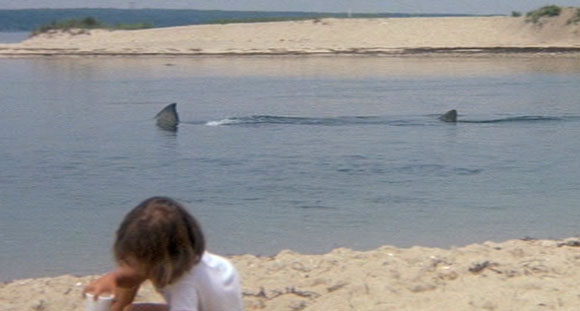
Creation is not just our world, and we need to take "care" of it in the way that we take "care" when we go swimming with a Carcharadon carcharias.
Oddly enough, the humans who lived at the time that the Bible was written were more than aware of this. The storm and the fire and the sea were terrifying. The One who made them all, even more so. Life was short and death was ever present.
But we moderns are coddled fools, wrapped in a few hundred fleeting years of industrial agriculture and fossil fuels and a false sense of our own power. We whisper lies to ourselves, in the closed mind of our #collectivedelusionchambers.
Our little bit of earth does not care about our desires at all. If we sabotage our ecosystem, and the ensuing tumult of five thousand years of warming leaves another, less maladaptive species to rise in our place? Creation would continue on. The epochal spasm of mass extinctions that could wash us away would mean little to our world. It would matter even less on the true scale of creation.
But what of God? I mean, God does care, right?
Yes.
But.
God also lets us reap the harvest we have sown. No matter what that harvest might be.
March 13, 2019
On Tone Policing
 Things just seem get louder and more unyieldingly belligerent.
Every day, more outrage, more shrieking, more umbrage. In this interconnected era, when we hunger to silence the dissonance of the Other by forcing them to be as we are, there There is always something, always a trigger, because there has to be. If we are not stirred and threatened and emotionally on edge, we do not engage obsessively. And if we do not engage obsessively, our views cannot be monetized or added to a follower count.
in this interconnected era, when we hunger to silence the dissonance of the Other by forcing them to be as we are, anger is omnipresent. We are, as a culture, addicted to rage.
It bends and warps reality, to the point where it seems genuinely insane.
If one notes this, though? If a person says, hey, hey, let's turn down the heat a little here, try to be more civil? We swat it down, because what right do you have to tell me what to say or how to say it? "Of course I'm angry," you'll say. "I have every right to feel this way! And who the hell are you!"
The term we have created to silence those who'd like us all to just calm the [fornicate] down is "tone policing."
It isn't surprising that we've created that term, given that having our anger directly challenged always makes us angrier. When you've got your dander up, having someone say "You need to calm down" always and invariably has the opposite effect.
That said, it is my observation that this cultural anger is fundamentally toxic to both our individual and collective souls. It serves no purpose other than itself, like the roaring, suffocating inhalation of a Dresden firestorm. Anger is a powerful energy, and it can have purpose. But it also makes us reactive. It makes us dead to nuance, and dead to disconfirming information. It makes us more easily manipulated. It calcifies our view of others. It radicalizes, and polarizes.
And if it never, ever, turns off? It becomes a form of madness.
I do not want it to rule my soul. But there is a boundary to where I can make that happen.
The only place where I can govern tone is me. I can say to my soul: you do not need to burn with the endless rage of outrage culture. I can govern my own reactions, and assess the tone and intent of those things I read and watch and consider.
I can police my own tone, because tone matters. Tone opens the path to mutual understanding, just as it can wall off the Other. It's a discipline, one that requires significant effort. When I'm attacked, I have the same reaction as anyone else.
I cannot make anyone else do this.
March 11, 2019
The Q Word
 Years ago, when I was a boy of eleven or twelve and living in London, I somehow fell in with a free ranging mob of boys one Sunday afternoon. I can't remember if it was a party or a general gathering. It's too long ago. But what I recall is that we were playing.
 First, King of the Mountain, which was a raging scrum as every boy tried to be the last one standing in a particular location. I don't remember doing well at that game, as I was small, asthmatic and spindly. I got knocked down a whole bunch. We played that for a while, and then the idea came that we should play another.
The game: Smear the Queer.
The rules were simple: one boy was the Queer. The rest of the boys would go after that boy. Sort of like an inverted version of tag, only with quite a bit more pounding and tackling. The group would then select another Queer, and the game would reset.
I didn't like the spirit of it, or the name of it. I was already aware that Queer wasn't the kindest of terms, used primarily as invective. I was also aware that it referred specifically to being gay, which is how that was described back then. While at eleven I wasn't quite sure what I felt about gay folk, I knew that some people were horrible to them. Meaning, it was not uncommon for them to be physically assaulted, and that seemed terrible and cruel no matter what.
That was the point where I bailed. I just laid low while the other boys charged off in the woods after the first Queer. Then I quietly left the group, and wandered back home.
Which leads me to my current conundrum.
I find the ever expanding acronym used to describe genderdivergent folk just ragingly awkward.
LGBTQIA, or so it's become. EllGeeBeeTeeCueAyeAy just doesn't roll of the tongue. It's a clumsy graceless letter-mass, a creeping categorical accretion. It reminds me of how you make a German words by just adding one German word to another. This works fine, until suddenly you're trying to say donaudampshiffahrtselektrizitätenhauptbetriebswerkbauunterbeamtengesellschaft, and you keep running out of air and passing out halfway through the word.
It's a lumpy fumbling aesthetic disaster, like most of my cobbled-together outfits most days.
There's got to be a better term.
Embedded in that acronym is a Q, which just stands for Queer, which seems to be all of the other things combined. I note that it's used more now as a catchall, by Queer folk themselves, which seems like the right thing.
But can I use it? I am as gendertypical as they come, and the transition of "Queer" from its pejorative roots reminds me of, well, another word. A word I don't use because it's inherently offensive to black people, one that occupies a strange place in our cultural discourse. It cannot be spoken outside of the tribe.
So I wonder about this word.
March 8, 2019
Our Violent Hearts
 There's a peculiar thing, in the midst of all of our cultural dissonance.
Say to a conservative, "Hey, what do you think of Gandhi and Martin Luther King Jr.?" Generally, you don't get anything but praise. Conservatives, in fact, find nothing but virtue in both of these persons. They see in both of them discipline, focus, and an emphasis on reconciliation and the integrity of the person. They see the best nature of human beings, and as that is a part of who we have been that we do not wish to abandon, conservatives want us to hold on to that nature.
Conservatism is, after all, the desire to hold on to what is good.
Say to a liberal, "Hey, what do you think of Gandhi and Martin Luther King Jr?" Generally, you get the same thing. Liberals see in them a radical call to justice coupled with a deep spirit of tolerance and grace. They see the best nature of human beings, and as that is a part of who we wish to be that we don't want to abandon, liberals want us to hold on to that nature.
Liberalism is, after all, the openness to encountering the good yet unknown.
In my ongoing reading of Howard Thurman's meditations on the ethos that creates nonviolence, I feel more deeply aware of the impacts of violent thinking on our culture. Because all is violence, an endless churn of vitriol and outrage, of mockery and shaming, of demonization and invective.
And yes, sure, it's not physical. But the crass, shallow brutalism of our discourse is violent. It rises from a heart of violence.
For those who claim to be disciples of Jesus, this is a problem. Because Jesus doth not give us permission to indulge in the sweet taste of hatred. It's only words, Jesus, we might say. I'm allowed to hate them and mock them, to let the fires of focused hatred govern me, so long as I don't actually beat the crap out of them, right?
No.
Jesus is pretty clear on that subject. When our conservatism rots into the fever-swamp fantasies of the Reichsministerium für Volksaufklärung und Propaganda? When our liberalism devolves into the fulminations of Robespierre on the floor of the National Convention? It doesn't matter that those are "just words."
If we assert that Jesus has authority over our lives, we are not permitted to foster a heart of violence. That does not mean we are to be passive. But when we yield to rage and the reflexive diminishment of the other, we fail.
Because nonviolence is first and foremost an attitude of the heart.
March 6, 2019
On Not Fearing Death
 When you read wildly and wantonly, you often encounter peculiar resonances and conjunctions.
Last week, I was reading two books simultaneously. Totally different cultural contexts. Totally different purposes.
On the one hand, I was delving into Tsunetomo's IN THE SHADOW OF THE LEAVES. It's an 18th century Japanese text laying out the Bushido ethos...the "Code of the Samurai."
And it's, well, it's a complicated book.
In many places, it's remarkably graceful. Wise, elegantly poetic, and thought-provoking. It sings of detachment from the world, of stoicism and simplicity, of the moral rot of grasping, selfishness, and greed, and of compassion as the highest virtue. I've collected the best of it here, if you're interested.
And at the same time, it's a book that celebrates both fanaticism and death. Death, which is both inescapable and to be embraced. Fanaticism, which is the complete unquestioning obedience to one's Master, to the point where death itself doesn't matter. If your Master says, hey, go disembowel yourself with a sharp pointy object, you do, and you do so as a point of pride. It tells story after story of brutal death and horror, all with a strange abstracted joy. It's full of death, full of quotes like:
"Death is the only sincerity. It is said that becoming as a dead man in one's daily living is the following of the path of sincerity."A strange bit of literature, the kind of book that you'd read for inspiration before climbing into your Cherry Blossom and flying it into the side of an American transport ship.
While being both fascinated and weirded out by Tsunetomo, I was also continuing in my reading of Howard Thurman's MEDITATIONS OF THE HEART for my Sunday School class. On the surface of it, this is a completely different book, from an entirely different culture, with an utterly different purpose. Thurman's gracious mystic ruminations provided the spiritual foundation to his radical embrace of nonviolence...an embrace that both informed and transformed the civil rights movement in 20th century America.
The terrible brightness of Tsunetomo's warrior ethic seems the farthest thing from Thurman's radical commitment to peace and nonviolence.
What I discovered, in reading the two of them simultaneously, is that there were peculiar harmonies I did not anticipate. The emphasis on calmness of soul. The seeking of stillness, of dreams, of the value of poetry, of the natural world. And...oddly, paradoxically...in their attitude towards death.
"Take no thought for your life," says Thurman, sounding for all the world like Shimeda preparing his little band to defend the village.
Both Tsunetomo and Thurman tell us that death is inescapable, and therefore not to be feared. That death is meaningless to the unanxious person who understands their purpose in life, and who has lived every moment towards that purpose. As Thurman puts it:
Finally, the glorious thing about man's encounter with death is the fact that what a man discovers about the meaning of life as he lives it need not undergo any change as he meets death. It is a final tribute to the character of an individual's living if he can die "unshriven" but full-blown as he has lived. Such a man goes down to his grave with a SHOUT.It's a peculiar harmony, one that makes a certain sense given Thurman's context. The nonviolent ethos of the civil rights movement required a warrior's courage, focus, and detachment. Facing dogs and hoses and bullets and bombs cannot be done without an immense fierceness of conviction.
Of course, there are nontrivial distinctions. Thurman's daimyo being Jesus and all.
Because war and the path of war is understood. It is a form of power that has always defined human social struggle.
The absolute refusal to use violence or coercion against another as an implement in mortal conflict is strange and terrifying. More than a little terrifying. As living creatures, we fear both pain and death, because of course we do. We recoil at an ethos that tells us not to preserve ourselves, not to strike back, to stand instead with equanimity in the face of opposition and suffering. To love our enemies, even to the point where we express that love as we are dying.
Tsunetomo often describes his teachings as the Way, which again, resonates interestingly. Because that, as we recall, was one of the first terms used to describe the path of Jesus in the Bible.
If truth be told, the Way of Thurman...and of Jesus...seems harder.
Fallen Leaves
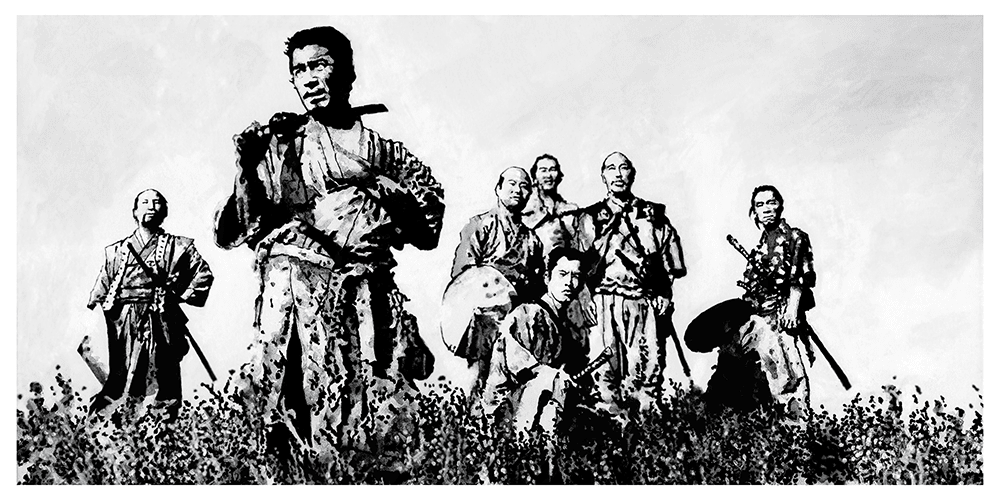
Bits and pieces from Tsunetomo's IN THE SHADOW OF THE LEAVES.
The good bits. Not the brutal, choppy, killy bits. But the bits that can be reconciled with and resonate to the teachings of my Master.
-----
To hate injustice and stand on righteousness is a difficult thing. Furthermore, to think that being righteous is the best one can do and to do one's utmost to be righteous will, on the contrary, bring many mistakes. The Way is in a higher place than righteousness.
----
There is one transcending level, and this
is the most excellent
of all.
This person is aware of the endlessness of entering deeply
into a certain Way
and never thinks of himself as having finished.
He truly knows his own insufficiencies and
never
in his whole life
thinks that he has succeeded.
He has no thoughts of pride
but with self-abasement
knows the Way to the end.
----
Matters of great concern should be treated lightly.
-----
..Someone said, "If we were to cast aside every man who had made a mistake once, useful men could probably not be come by. A man who makes a mistake once will be considerably more prudent and useful because of his repentance. I feet that he should be promoted."
Someone else then asked, "Will you guarantee him?" The man replied, "Of course I will."
The others asked, "By what will you guarantee him?"
And he replied, "I can guarantee him by the fact that he is a man who has erred once. A man who has never once erred is dangerous." This said, the man was promoted.
----
Learning is a good thing, but more often it leads to mistakes. It is like the admonition of the priest Konan. It is worthwhile just looking at the deeds of accomplished persons for the purpose of knowing our own insufficiencies. But often this does not happen. For the most part, we admire our own opinions and become fond of arguing.
----
It is said that one should not hesitate to correct himself when he has made a mistake. If he corrects himself without the least bit of delay, his mistakes will quickly disappear. But when he tries to cover up a mistake, it will become all the more unbecoming and painful.
----
Calculating people are contemptible. The reason for this is that calculation deals with loss and pain, and the loss and gain mind never stops. Death is considered loss and life is considered gain. Thus, death is something that such a person does not care for, and he is contemptible.
----
What is called generosity is really compassion. In the Shin'ci it is written, "Seen from the eye of compassion, there is no one to be disliked. One who has sinned is to be pitied all the more." There is no limit to the breadth and depth of one's heart. There is room enough for all. That we still worship the sages of the three ancient kingdoms is because their compassion reaches us yet today.
----
The master took
a book
from its box.
When he opened it
there was
the smell
of
drying clovebuds.
----
There is surely nothing other than the single purpose of the present moment. A man's whole life is a succession of moment after moment. If one fully understands the present moment, there will be nothing else to do, and nothing else to pursue. Live being true to the single purpose of the moment .
Everyone lets the present moment slip by, then looks for it as though he thought it were somewhere else. No one seems to have noticed this fact. But grasping this firmly, one must pile experience upon experience. And once one has come to this understanding he will be a different person from that point on, though he may not always bear it in mind.
----
Whether people be of high or low birth, rich or poor, old or young, enlightened or confused, they are all alike in that they will one day die. It is not that we don't know that we are going to die, but we grasp at straws. While knowing that we will die someday, we think that all the others will die before us and that we will be the last to go. Death seems a long way oft.
Is this not shallow thinking? It is worthless and is only a joke within a dream. It will not do to think in such a way and be negligent. Insofar as death is always at one's door, one should make sufficient effort and act quickly.
-----
At times of great trouble or disaster, one word will suffice. At times of happiness, too, one word will be enough. And when meeting or talking with others, one word will do. One should think well and then speak. This is clear and firm, and one should learn it with no doubts. It is a matter of putting forth one's whole effort and having the correct attitude previously. This is very difficult to explain but is something that everyone should work on in his heart. If a person has not learned this in his heart, it is not likely that he will understand it.
------
Human life is truly a short affair. It is better to live doing the things that you like. It is foolish to live within this dream of a world seeing unpleasantness and doing only things that you do not like. But it is important never to tell this to young people as it is something that would be harmful if incorrectly understood.
Personally, I like to sleep. And I intend to appropriately confine myself more and more to my living quarters and pass my life away sleeping.
-----
At a glance, every individual's own measure of dignity is manifested just as it is. There is dignity in personal appearance. There is dignity in a calm aspect. There is dignity in a paucity of words. There is dignity in flawlessness of manners. There is dignity in solemn behavior. And there is dignity in deep insight and a clear perspective.
These are all reflected on the surface. But in the end, their foundation is simplicity of thought and tautness of spirit.
----
Covetousness, anger and foolishness are things to sort out well. When bad things happen in the world, if you look at them comparatively, they are not unrelated to these three things. Looking comparatively at the good things, you will see that they are not excluded from wisdom, humanity and bravery.
----
One should be careful and not say things that are likely to cause trouble at the time. When some difficulty arises in this world, people get excited, and before one knows it the matter is on everyone's lips. This is useless. If worst comes to worst, you may become the subject of gossip, or at least you will have made enemies by saying something unnecessary and will have created ill will. It is said that at such a time it is better to stay at home and think of poetry.
----
To talk about other people's affairs is a great mistake. To praise them, too, is unfitting. In any event, it is best to know your own ability well, to put forth effort in your endeavors, and to be discreet in speech.
----
The heart of a virtuous person
has settled down
and he does not
rush about at things.
A person of little merit
is not at
peace
but walks about
making trouble
and is
in conflict with all.
----
People with intelligence will use it to fashion things both true and false and will try to push through whatever they want with their clever reasoning. This is injury from intelligence . Nothing you do will have effect if you do not use truth.
-----
Feeling deeply the difference between oneself and others, bearing ill will and falling out with people-these things come from a heart that lacks compassion. If one wraps up everything with a heart of compassion, there will be no coming into conflict with people.
----
It is bad to carry even a good thing too far. Even concerning things such as Buddhism, Buddhist sermons, and moral lessons, talking too much will bring harm.
----
There are two kinds of dispositions, inward and outward, and a person who is lacking in one or the other is worthless. It is, for example, like the blade of a sword, which one should sharpen well and then put in its scabbard, periodically taking it out and knitting one's eyebrows as in an attack, wiping the blade, and then placing it in its scabbard again.
If a person has his sword out all the time, he is habitually swinging a naked blade; people will not approach him and he will have no allies.
If a sword is always sheathed, it will become rusty, the blade will dull, and people will think as much of its owner.----
People become imbued with the idea that the world has come to an end and no longer put forth any effort. This is a shame. There is no fault in the times.
As everything in this world is but a shame, Death is the only sincerity. It is said that becoming as a dead man in one's daily living is the following of the path of sincerity.
----
Meditation on inevitable death should be performed daily. Every day when one's body and mind are at peace, one should meditate upon being ripped apart by arrows, rifles, spears and swords, being carried away by surging waves, being thrown into the midst of a great fire, being struck by lightning, being shaken to death by a great earthquake, falling from thousand-foot cliffs, dying of disease or committing seppuku at the death of one's master. And every day without fail one should consider himself as dead.
----
People will become your enemies if you become eminent too quickly in life, and you will be ineffectual. Rising slowly in the world, people will be your allies and your happiness will be assured. In the long run, whether you are fast or slow, as long as you have people's understanding there will be no danger. It is said that fortune that is urged upon you from others is the most effective.
February 28, 2019
The Five Rules of Fourth Dimensional Chess

When you Google "four dimensional chess," you get this picture. There's Spock. There's his weird chess board.
But that is not four dimensional chess. It is just three dimensional chess with a couple extra boards. To play four dimensional chess, one must be smarter than Spock. Smart, in fact, as I am smart. You must be a genius like me.
I am feeling brilliant today, as always, but also generous, so I will share with you five basic principles of fourth dimensional chess. You will not understand them as I do, but perhaps, in time, you will at least develop an appreciation for the masters of the game.
1) There are no "pieces."
In two dimensional and three dimensional chess, these things are necessary. Small minded people require them. But in fourth dimensional chess, we ask: what even is a "piece?" Is not the thing we refer to as a "piece" simply an agglomeration of atoms and subatomic particles, which are themselves simply elements found everywhere in the universe? Is not a "piece" primarily emptiness between those particles? And if a piece is mostly emptiness, what is there that cannot be called a "piece?"
My hand is a "piece." That leaf is a "piece." The screen on which you're reading this is a "piece."
Everything is a "piece." This is the first rule of fourth dimensional chess.
2) There is no "board."
Again, in two dimensional and three dimensional chess, you have a finite and bounded board. An eight by eight grid of alternating colors, typically.
But four dimensional chess has nothing like that. Why would one need something as prosaic as a board, for a game that has no boundaries? Fourth dimensional chess is a meta-game, a game that functions on the level of quantum superposition. A "move" of a "piece" can be anywhere and everywhere. In the crudest layman's terms, it has to do with spooky action at a distance, which is a highly complicated phenomenon that has to do with physics you don't understand as well as I do.
In such a game, boards...and rules generally...are completely unnecessary. Irrelevant, even. There are no spaces, no pieces, and no rules. That is the second rule of fourth dimensional chess.
Wait, you say. What? No rules? But...but...you have this list of rules. Doesn't that count?
You think you're being clever. That's so cute. I could pat you on your little head.
But that is only because you have not yet read rules three and four. You are simply uninformed. Unenlightened. So read on, and learn.
3) Tell everyone you're playing fourth dimensional chess.
This is necessary, because fourth dimensional chess is so complicated that average human beings cannot grasp that you are even playing it. "But you're just taking money from my wallet," they might say. "And now you're using my credit card to buy bitcoin and haggling with Bulgarian escorts on the darkweb."
This is only because they do not understand fourth dimensional chess, as they are not a genius in the way that I am. So they must be told. This, in point of fact, is how one begins the game. Simply state it, and the assertion creates the observer effect. Again, this is a thing that has to do with quantum physics. It's complicated. What, you've not read Richard Fynemann?
Any action, any moment, any statement? It becomes fourth dimensional chess, simply by stating that that is what it is.
What?
You think I've misspelled Feynman? Perhaps I have.
Or perhaps it's...fourth dimensional chess.
4) Repeat the assertion that you're playing fourth dimensional chess.
When you tell the weaker minded about this game of geniuses, some of them will be recalcitrant. They will fall into cynicism and stubbornness, and refuse to open their minds to your brilliance.
You're just BSing, they'll say. You're full of it, they'll say. Dear God man, what sort of monster would try to transplant that boy's heart when you're only pretending to be a cardiologist, they'll say. Why would you sloppily fawn over a man who runs concentration camps and murders his family members with antiaircraft guns, they'll say.
All you need to do is remind them of the real game you're playing. Over, and over, and over again, insist that they simply do not grasp the brilliance of this game of games. They see only the surface. They see only the momentary mess you've made of the O.R. They see only you debasing the dignity of our republic as you transparently flatter a tyrant.
Small minded people can be that way.
So you repeat the assertion that this is, in fact, four dimensional chess.
Then you repeat it again. And again. And again.
And eventually, many human beings will start to think, hmmm. Perhaps that is what he is doing. They will consider the possibility.
And once they've considered the possibility? Bingo. Observer effect. It becomes, at least in part, four dimensional chess.
5) You always win.
Or rather, I always do. Like right now.
I've just won, and you didn't even know we were playing. And now. We just played another game, and I won.
I am so very good at this game.
That's the best thing about four dimensional chess. To win, you simply say, we were playing four dimensional chess, and I won.
So there you have it. The five rules of fourth dimensional chess. It's the game of winners. It's the game of geniuses.
Because we geniuses always, always win, no matter what we do.