David Williams's Blog, page 41
February 26, 2019
My Temptation in the Desert

The wind rises up, fat with dust.
My eyes itch. My skin crawls with it, mingling with the sweat of this strange, temporary flesh. I have been here, waiting for him, for days. I think. Time moves strangely in the waste, light to dark, light to dark. All of it, a test.
The sun too close, a brute oppressor, searing flesh, drinking thirstily at my body, cracking skin like clay, parching lips as a dried stream bed. The dark of night, cold and uncaring and cruel, the infinite heavens alight with far off suns that neither care for or notice this tiny, frail world and its delusional inhabitants.
It is a place of emptiness and testing. That is why I wait here. For him.
He will come. He knows I am here, awaiting him.
He will come, and show himself to me, and I am both giddy and frightened at it.
Giddy, because this is my purpose. It has always been my purpose, since I sang with the angels at the dawn of time.
Frightened, because, well.
Because he could make me betray myself. Oh, he pretends at vulnerability. But he is anything but vulnerable, if what I fear about him is true. He terrifies me. I have tested myself, over and over. I have burned all dishonesty from my soul, all lies, all falseness. Objective truth and self understanding are my sword and shield. But still, still, he will test me as I have not ever been tested.
I must guard my soul. I must be wary.
A shimmer. Off across the wide arroyo. Just the air, dancing in the heat of the day. But perhaps not. I peer at it with sun drunk eyes.
Is that? Could it be? I cannot tell, not with the limited vision of this strange flesh I inhabit, so poorly adapted to this bitter desert.
The shimmer coalesces. It's a shadow now, a shadow among rock shadows, living clay in the reddish umber of dirt and dust. It is moving. Coming slowly but with purpose.
Coming directly towards me. I wait, standing still, tasting the hot air in these lungs. I wait, watching, and the shadowed form grows closer still. Then down, down it goes, slowly setting as it descends into the gully. For a long moment, it is lost from view. I close my eyes, set my face upward against the unforgiving and honest sun, call on my soul for strength.
When I open them again, he is in view. The heart of this body trembles in my chest. Fear? Is it fear? Perhaps it is. He traverses the rocks, picking his way carefully towards me. I could throw a stone and hit him. The thought is appealing. It whispers in me. It hisses in my ear. I could throw stones, and drive him away, and not have to do this.
But no.
No.
That is not why I am here. We must meet. This must happen. I must accomplish my purpose.
I can see his face now, through the heat and the brightness. So bright. Though his features are dark as the desert earth, it is as if the sun itself hangs around him. And the eyes. Not their color, which is nothing special. But there is a...I cannot describe it. It hangs around him. It burns from him. A radiance like fire. Terrible, terrible fire.
I feel a thrill of fear again. What if I am wrong? What if I can't do this?
But I will. I must.
He stops, finally. Right there. He is right there in front of me. I could touch him.
He does not speak, but looks at me. It is as if the desert itself regards me. It is the cold eye of the night sky.
He still does not speak. It is him, asserting his power. Attempting to claim authority over me, with nothing more than silence. So much like him. So what I expected. We stand there. I do not know how much time passes. But he simply regards me. Such arrogance. Such terrible certainty. It falls to me, then, to begin this.
"Joshua, son of Joseph," I say. He nods slightly, in acknowledgement, and replies.
"Satan." The title, so old, so formal how he says it, speaking of another life. But it is more than a title now.
He extends his hand, and, repressing a tremble in the body I have assumed, I take it.
We begin.
-----
And now? Now it is over.
Below us was the city. It was my last and final effort. I held back nothing. I offered him my whole self, in exchange for his self, and he would not yield. What more could I give, than the sweet taste of this world, the honor of cutting away its soft, delicious rot? The fever-honey of power, of wielding the blood-sated sword of justice. Of honest, naked, pure truth, unsullied by sentimentality and weakness.
You could rule them, I offered, as I do. Serve what I serve, my great and pure purpose.
He refused. Rejected the honesty I bring to all things.
He refused all my efforts.
I saw that he was hungry, that he thirsted, and I told him it did not have to be so. This was true. I only ever speak the truth. But he would hear none of it. He would rather have starved than use the power of his nature for himself. Even though life is nothing but the cold Iron Law of power. Madness. Utter madness.
High above the city, on the edge of death, the yawning hunger of gravity pulling at us, I told him I would be there. If he but let himself fall, I would catch him. I would hold him in my arms when he fell. It is true. Of course I would. In an infinity of possible choices, I make that choice half of the time. All that matters to me is reality. I really would have.
And now, I have nothing. The purity of my justice, nothing before this...terrible...being. We are back in the desert. We are done. I am done with him. We stand together, and I await his departure. Return to your murderers. Return to those you claim to love.
Only he isn't leaving. We stand there, together, and he won't go.
He speaks, in that contemptible, ignorant Galilean drawl.
"Thank you," he says.
The words, a shock. What? I compose myself, and reply warily.
"You have rejected all I offered. Why do you thank me?"
"For still following your calling. For doing what you were made to do. For this time of testing. For this purification. For this clarification."
No. No. That is not what I was doing. Not at all. None are righteous. All are deluded and false. Including him and...that terrible, seething One from which he springs. That discovery is the end and purpose of justice. Every prosecutor learns this. There are no innocent. They are all guilty. All of them. I serve only that truth. I renounced that...other role. I do not refine. I do not improve.
I destroy.
I cast that falseness away.
He resumes talking.
"It is not your deepest purpose. You know this. There is always another path, and you still can serve that path. There is always a chance to be something more."
The nose of my body crinkles in disdain. I am compelled to reply. "I can be nothing more than what I have become."
His eyes avert, not ashamed. Like he is suppressing a...a...laugh? Could he be laughing? At me? There is a wry smile on his heat-split lips as he looks up again.
"You know that isn't true. Of all of my brothers, you know that isn't true."
"You and I are not brothers."
The smile does not leave his lips. It is no less maddeningly authentic. "That is a matter of our perspectives. But I will not say it again, if it offends you." A pause.
"But again, you know that what I say is true. You do not have to be as you are now. Even after all of this...time. What does that matter, time? What does the weight and pattern of the past mean, even of so much time, to the freedom that you claim to cherish?"
"None of us are free." The words taste of bile. I spit them from my mouth.
"Funny. Wasn't your freedom the entire point of what you're doing now?"
My retort dies as it rises. Because he...
That isn't really what...
Damn. I feel his monstrous influence worming in me, that miserable weakness of his "grace," the mealy impure falseness of his "forgiveness" and "compassion." I step back. I step back again. I reach into myself for a sword, a sharp edged truth to slash at him.
"This will end in horror. In your shame."
"It will." He does not flinch at my truth. I see it cut him, yet he doesn't even flinch. "And more."
Aaaah. He is...could it be that he knows something...could I... The lie of that possibility gnaws at me, teases me, seduces me. I was right to be wary. To fear him.
I, the tempter, am tempted.
No. I strike out at that false impulse with all the fire of my soul. I burn it away. I refute it. I refuse it.
Then I turn my back.
I walk away. I do not look back, not for a moment, though the flesh I have possessed seems compelled to turn. Because of course. It is weak, as all flesh is weak.
But I? No. No, I will not.
I continue on into the dry bleakness of the desert, to the truth of void, of searing heat, of bitter cold.
I have survived. I remain what I was. My hard-won integrity is preserved.
I am what I must be.
I have no choice.


February 25, 2019
The Timeline of the "Green New Deal"
 The plan, as I understand it, is radical.
Crazy. Unfeasible.
It seems to congeal down into one core concept: to wean the United States of fossil fuel dependence in 10 years.
I mean, look around you. Almost every vehicle, powered by fossil fuel. Your car. Your truck. The truck that brings the food. The ships that bring the products. The harvesters that make the food. Our entire economic system, reliant on that one single source of energy-dense fuel.
And we're supposed to change that, all of that, in ten years? Some skepticism is inescapable.
But as I reflect on the seemingly self-evident impossibility of such an abrupt transition, that number stirs a recollection. Ten years? Why is that familiar?
The answer: because that's just about exactly how much petroleum is left on American soil.
Government and industry estimates of our current proven reserves put them at around 40 billion barrels. That includes conventional resources, projected fracking yields, and untapped offshore resources. Everything we've found.
We're pumping 10 million barrels of crude a day from the ground, more than ever in history, which is why gas prices are so very, very low.
The math is real easy, so easy a pastor can do it. Ten million a day gets you to three point six five billion a year. Times that by ten, and you've got thirty six billion.
At current petroleum production rates, the United States of America will be bone dry in just about ten years. There will be nothing left under our direct control. Nothing.
Which, as it so happens, is the same timeline as the "impossible" Green New Deal.
And sure, there's plenty of oil elsewhere in the world. In Russia. In Saudi Arabia. Our close and beloved friends, bastions of liberty and human freedom.
And in Venezuela, which has the richest proven reserves of any nation on the planet, almost ten times our own. I hear they're crying for some freedom these days.
Why should America try for something that difficult, when we can pal around with despots and install friendly governments and get by for the next 100 years?
February 13, 2019
Struggle

"One of the most effective seductions of Evil is the call to struggle. "- Kafka, the Zurau Aphorisms. Before You Leap To disagree
Your Struggle
A clubIn your Hand Remember That odd little Franz Wrote this In German In1918
And the word For struggle In German Is
Kampf
February 11, 2019
Strength for Remembering
 I opened up the email late in the evening, one forwarded to me by the web admin of our little church.
 It was one of those messages forwarded from the site which we'll get every now and again, as someone tries to be in touch with the church. This one, from a local historian in the county, who was doing an event in our little town through the local historical society, and wanted to know if we'd be willing to connect with him about it.
The event: a lynching tour. In June of 1880, a black man in Poolesville named George Peck was accused of molesting a white girl. He was arrested, but a mob formed, overpowered the arresting officer, and lynched him. A Washington Post article describing the event gives a very specific location for his death: a locust tree, in a field directly across the road from a Presbyterian church.
According to the article, the body was still hanging from the tree on Sunday morning as worshipers were going to church.
There is and has been only one Presbyterian church in Poolesville. Mine.
The lynching happened just yards from the sweet little sanctuary of the church I pastor. Right there, the passions of an inflamed mob, and a man murdered.
It felt like such a terrible thing, so brutish and horrific, so close to a space that is sacred to me. It felt like a violation. It felt hard and insurmountable. How could such a monstrous event happen, right there in front of the church?
And at the same time I encountered this difficult truth about the history of our town, I was reading Howard Thurman's Meditations of the Heart. Thurman was the radically nonviolent Christian pastor and theologian who helped inspire the civil rights movement. As a black man growing up in the American South in the early 20th century, Thurman would have felt the reality of segregation and racial bias all too well.
And yet in him and from him, there's this powerful and incongruous calmness. He was able to encounter an often violent culture where many considered him less than human, and still thrive, claiming his humanity in a way that could not be broken. That strength rose from his faith. In Meditations of the Heart, Thurman writes:
"The edge of hope that constantly invades the seasoned grounds of despair, the faith that keeps watch at the doors through which pass all the labors of my life and heart for what is right and true, the impulse to forgive and to seek forgiveness even when the injury is sharp and clear--these and countless other things make my know that by day and by night my life is surrounded by the love of God." (p. 211)
For all of the horror, violence, and ignorance in the world, that radical orientation towards God's grace can be a transforming thing. It's a strength that goes deep, and changes all that we are, even in the face of the very hardest things.
It's a good thing to recall, when we encounter challenging times. Or when we are called to remember that which we would rather forget.
February 10, 2019
The Angel of Light

The Angel Of LightShinesHis Shiny Spotlight BrightnessOn Just thatOne ThingAbout The OtherThat You MostDespise.
"Look,"He saysVoice ShimmeringWithSympathetic Outrage"Lookat theHorrible TruthofWho They Are."
February 9, 2019
Condensation

How many
Tears are
Nothing But Condensation On the Flesh of a Cold Hard Heart
February 8, 2019
The Background Check
For the last fifteen years, I've been a pastor. A Presbyterian, as it happens.
During that time, in my corner of the Christian faith, I've been taught over and over again about the importance of maintaining the integrity of our churches. Meaning, church needs to be a place where Jesus is authentically followed.
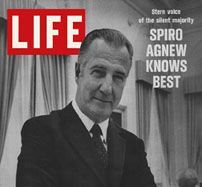 Spiro Agnew? Why?And to do that, church needs to be a place where children and the spiritually/personally vulnerable are safe. Meaning, you have no tolerance for predators. Period.
My denomination takes that very seriously. Individuals who want to be pastors are vetted extensively, including psych profiles and background checks. Once we become pastors, my Presbytery requires me to go through a regular training to insure that I'm spiritually and personally aware of the real danger of abuse and/or "boundary violations" in the church.
Churches are required to have protection policies, and background checks on employees who interact with children. We take all of this seriously, because malfeasance has costs.
And sure, it's kind of an intrusion. And a pain in the butt. After having gone through it five times, that training seems quite familiar now. But that doesn't matter. It's important to preserve the integrity of who we are. And to keep us alert for times when people try to take advantage or work around a system that is necessary for the integrity of the church.
Here's an example of how that might work. Let's say I had an opening for a youth pastor position. One of my candidates for that position was a person who claimed a "heart for the young people." They knew the lingo, and they were filled with the Spirit, and were all about "disrupting" the boring old ways of being church and "transgressing" against rigid, dull norms. They seemed a little wild. "Edgy." You know, the squiggly sort of soul that many adolescent humans parse as "authentic."
But when it came time for the background check, they balked. First, with excuses about why they couldn't give the information we needed to run the check right now.
And then, after I pressed, that candidate'd question the whole idea of doing a background check. Because Jesus was calling them to ministry. Because this was just a stupid, oppressive rule. Because really, it's all about the Holy Spirit. And if God is calling them to ministry, who am I to demand that they prove they don't have an active restraining order keeping them 1000 yards from elementary schools?
What should you do with such a candidate for an important church position?
I pitched the question to the hive mind of my social media feeds, which are filled with pastors and Christian educators and other Jesus folk:
Should I hire someone who refused to cooperate with a background check as a youth pastor?
From pastors and Christian educators, the answer, almost all the same. Some said "No." Others said "Hell no." Some said so using memes, because many of my pastor friends are hipper than I.
One even asked, hey, why are you even asking this question? Because we all know the answer, and you know the answer.
A church should never, ever, ever hire a person who tries to evade a safeguard.
So here's the principle, learned by the church at a terrible cost: If you have put something into place to prevent a predator from entering a position of trust and power, people who try to circumvent that barrier are not being "creatively transgressive." They're not being "disruptive leaders."
What they are, more likely than not, are predators.
Which gets me, finally, to the point of this little exercise, and the reason why there's that incongruous picture of Spiro Agnew at the beginning of this post.
Agnew, as history teaches, was Nixon's first Vice President. He was forced to resign the office in 1973 after a corruption investigation revealed he'd been taking kickbacks from government contractors. It's an interesting, interesting chapter in America's history, one that you can read about by following this link.
It's bizarrely familiar, with so many echoes of our current political climate.
So here's the thing. After Agnew's ignominious departure, politicians introduced...informally...a way to show the world that they were not corrupt and engaged in financially questionable practices.
They released their tax returns.
It was a show of accountability. It was a mark that they were willing to submit themselves to scrutiny. It was a sign that they were trustworthy, not corrupt or self-dealing or the agents of foreign influence.
For those seeking political power, that was not a trivial thing. It was a way of saying they understood that corruption was a problem worth rooting out, and that barriers preventing politicians from grifting the system needed to be in place.
Which makes complete sense. Like the background checks on youth pastors. Or the checks on pastors, who'll be privy to secrets and intimate knowledge of their congregants at their most vulnerable.
Whenever people want positions of power, you do not let them circumvent safeguards.
Because whenever they insist they're above such things, or find reasons to stall or evade, it means something.
This is a thing that churches know.
But clearly something "Christian" America still needs to work on.
During that time, in my corner of the Christian faith, I've been taught over and over again about the importance of maintaining the integrity of our churches. Meaning, church needs to be a place where Jesus is authentically followed.
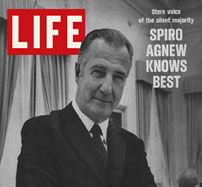 Spiro Agnew? Why?And to do that, church needs to be a place where children and the spiritually/personally vulnerable are safe. Meaning, you have no tolerance for predators. Period.
My denomination takes that very seriously. Individuals who want to be pastors are vetted extensively, including psych profiles and background checks. Once we become pastors, my Presbytery requires me to go through a regular training to insure that I'm spiritually and personally aware of the real danger of abuse and/or "boundary violations" in the church.
Churches are required to have protection policies, and background checks on employees who interact with children. We take all of this seriously, because malfeasance has costs.
And sure, it's kind of an intrusion. And a pain in the butt. After having gone through it five times, that training seems quite familiar now. But that doesn't matter. It's important to preserve the integrity of who we are. And to keep us alert for times when people try to take advantage or work around a system that is necessary for the integrity of the church.
Here's an example of how that might work. Let's say I had an opening for a youth pastor position. One of my candidates for that position was a person who claimed a "heart for the young people." They knew the lingo, and they were filled with the Spirit, and were all about "disrupting" the boring old ways of being church and "transgressing" against rigid, dull norms. They seemed a little wild. "Edgy." You know, the squiggly sort of soul that many adolescent humans parse as "authentic."
But when it came time for the background check, they balked. First, with excuses about why they couldn't give the information we needed to run the check right now.
And then, after I pressed, that candidate'd question the whole idea of doing a background check. Because Jesus was calling them to ministry. Because this was just a stupid, oppressive rule. Because really, it's all about the Holy Spirit. And if God is calling them to ministry, who am I to demand that they prove they don't have an active restraining order keeping them 1000 yards from elementary schools?
What should you do with such a candidate for an important church position?
I pitched the question to the hive mind of my social media feeds, which are filled with pastors and Christian educators and other Jesus folk:
Should I hire someone who refused to cooperate with a background check as a youth pastor?
From pastors and Christian educators, the answer, almost all the same. Some said "No." Others said "Hell no." Some said so using memes, because many of my pastor friends are hipper than I.
One even asked, hey, why are you even asking this question? Because we all know the answer, and you know the answer.
A church should never, ever, ever hire a person who tries to evade a safeguard.
So here's the principle, learned by the church at a terrible cost: If you have put something into place to prevent a predator from entering a position of trust and power, people who try to circumvent that barrier are not being "creatively transgressive." They're not being "disruptive leaders."
What they are, more likely than not, are predators.
Which gets me, finally, to the point of this little exercise, and the reason why there's that incongruous picture of Spiro Agnew at the beginning of this post.
Agnew, as history teaches, was Nixon's first Vice President. He was forced to resign the office in 1973 after a corruption investigation revealed he'd been taking kickbacks from government contractors. It's an interesting, interesting chapter in America's history, one that you can read about by following this link.
It's bizarrely familiar, with so many echoes of our current political climate.
So here's the thing. After Agnew's ignominious departure, politicians introduced...informally...a way to show the world that they were not corrupt and engaged in financially questionable practices.
They released their tax returns.
It was a show of accountability. It was a mark that they were willing to submit themselves to scrutiny. It was a sign that they were trustworthy, not corrupt or self-dealing or the agents of foreign influence.
For those seeking political power, that was not a trivial thing. It was a way of saying they understood that corruption was a problem worth rooting out, and that barriers preventing politicians from grifting the system needed to be in place.
Which makes complete sense. Like the background checks on youth pastors. Or the checks on pastors, who'll be privy to secrets and intimate knowledge of their congregants at their most vulnerable.
Whenever people want positions of power, you do not let them circumvent safeguards.
Because whenever they insist they're above such things, or find reasons to stall or evade, it means something.
This is a thing that churches know.
But clearly something "Christian" America still needs to work on.
February 6, 2019
The Dangerous Bird

My soul hears
As a sweet
Tenderheart
Sister
Sings to me
Do not repent in
Ashes
She sings
Let the
Soft animal
Of your body
love what it loves.
O
Dear sister
My soul sings
In reply
The soft animal
Of my body
Loves nothing
Nothing
I sing
In All
The Vast Creation
More than
Power.
February 5, 2019
The Leader God Wants for Us

There's been a lot of talk of late about God's will and American leadership, as one person and then another suggests that the Creator of the Universe desires a certain person to be President.
Honestly, I think they are likely correct, but my agreement comes with a significant caveat.
Saying "God wants this person to lead our nation" or "God wants that person to rule our country" does not necessarily mean it's a good thing for the nation or country in question. Even a modest level of *cough* "Biblical literacy" would teach one that.
Take, say, this pungent bit of the divine will from the prophet Isaiah:
6:8 Then I heard the voice of the Lord saying, "Whom shall I send, and who will go for us?" And I said, "Here am I; send me!"
6:9 And he said, "Go and say to this people: 'Keep listening, but do not comprehend; keep looking, but do not understand.'
6:10 Make the mind of this people dull, and stop their ears, and shut their eyes, so that they may not look with their eyes, and listen with their ears, and comprehend with their minds, and turn and be healed."
6:11 Then I said, "How long, O Lord?" And he said: "Until cities lie waste without inhabitant, and houses without people, and the land is utterly desolate;
6:12 until the LORD sends everyone far away, and vast is the emptiness in the midst of the land.
6:13 Even if a tenth part remain in it, it will be burned again, like a terebinth or an oak whose stump remains standing when it is felled."For a morally decadent nation where grace is forgotten, truth is meaningless, wealth is worshiped, creation is ravaged, and justice is mocked, I don't think we should be quite so eager for the leader that God wills for us.
Because the I Am That I Am is perfectly willing to punish a people with the leader they deserve.
I mean, seriously.
It's almost like American Christians don't really read their Bibles.
January 30, 2019
Attending the President's Church
It's been nearly a decade since the President of the United States was a regular churchgoer. It's not a requirement, of course, nor should it be. But it is a change, a significant shift in the role and place of Christian faith communities in the national discourse.
Barack Obama was a regular churchgoer as a local politician. But once he was on the national stage, where a congregation is less useful as a social and political community? Church was no longer necessary, at least as it means participation in a gathering of other Jesus folk. For all of Obama's unquestionable brilliance in articulating the faith, his subtle expositions on Niebuhr? Church no longer really mattered enough to put energy into it.
As a DC area pastor who had a professional interest in where the POTUS goes to church, I paid attention to this for eight years. Church...meaning engagement with a particular faith community...just didn't happen.
It was "inconvenient." A "security risk for the congregations." I never bought that. Abraham Lincoln attended the DC congregation where I grew up. When war was raging near enough that bodies of dead American soldiers came floating down the Potomac, he was still going to church. At the height of the Cold War, with hostages held in Iran, Jimmy still taught Sunday School.
Honeychild, church ain't something you skip, not if it matters to you.
One might argue that it is not necessary to participate in a community of disciples to be an authentic follower of Jesus. "You don't need church to love Jesus," one might say.
Sure. Uh Huh. Maybe if you're an anchorite or a desert mystic. And no, your social isolation and the #twitter wasteland don't count towards that. But that's another argument for another time.
Our current president is different. Very, very different. His Sunday mornings have never been for church. Both before his election and after, they're for angry tweeting and golfing alone at one of his resorts. There's not time for Jesus or sabbath, not when you're being the brand 24/7. Fortunately, there's an alternative in this media-driven era. So the president participates in church in the same way that he receives his actionable intelligence about the world: by watching tee vee.
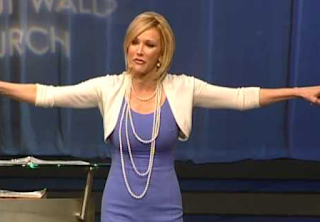 As he flips through the channels having finished shouting along with Tucker Carlson, he'll come across tee vee preachers, those televangelists who fill our cable channels with eager Jesus messages delivered before large and eager crowds. One in particular stands out as having caught his eye and held his attention: Pastor Paula White-Cain of Paula White Ministries.
Given our president's well known predilections, it's perhaps not surprising that he might stop for a moment and linger watching Pastor White-Cain.
His connection with her is his "in" with the evangelical community. She's the pastor who, upon invitation to speak with him, was willing to testify that he'd found the path to Jesus.
She's front and center in this administration now, as the highest profile faith advisor to the White House. If the president has a church, it's hers. Not that he goes there any more often than he attends his youngest son's school events.
But he watches it, now and then.
And when he watches, what does he see?
Paula White-Cain has a fascinating, complicated backstory, one I first encountered years ago on one of those days I was feeling particularly riled about Prosperity Preachin'. She is, of course, part of the name-it-and-claim-it prosperity gospel movement, and entered into ministry initially as the preaching spouse in a husband and wife pastoring team. Think Jim and Tammy Faye, with all of the goodness that such an analogy entails.
That marriage was both doomed and complicated. Meaning, her pastor-partner husband was both unfaithful and abusive. The stories of his spiritual bullying and bizarre, creative abuse are genuinely horrifying. Sweet Lord Jesus, what kind of a man does that to his wife?
But she found her strength, and pulled away, and divorced him. She survived. She rebuilt her own church...still very much in the "give to the church and you'll be blessed" model...and married the lead guitarist from Journey. Honestly, one child of God to another, I'm glad for her.
Now, more than any other religious leader, she has the ear of a president.
So out of curiosity, I pulled up YouTube, and sat through four or five videos from the New Destiny Christian Center in Apopka, Florida, where Pastor White preaches.
Watching her at work is...peculiar. Here's a sample, if you're interested.
Her congregation is remarkably diverse. I mean, it is. It's majority minority, which probably tracks with her television and online audiences.
The service is stock standard contemporary in feel. Meaning, screens and praise for forty minutes, followed by a message. The musicians are competent instrumentalists and vocalists. Things are generally well done.
Her preaching is...hmmm. It's not quite as high energy as one might assume. It's in the style of most contemporary prosperity preachers, meaning anecdote/scripture excerpt/anecdote, on a repeating and semi-thematic cycle. There's not a whole bunch of exegesis or narrative flow.
But it's also a little flat. A little distant. In all of the broadcasts I watched, she just seems kind of tired.
And the preaching always, always, always revolves around money. I mean, I'll preach on wealth on occasion, and remind my church folk that sharing resources for the common good is a vital part of faith. But this is on another level.
Need and money, need and money, in an endless cycle of tithing and capital campaigns and planting a seed, all with a remarkable sense of urgency. She's breaking the chains of financial hardship over your life, all of which will happen when you give generously to her ministry.
And like all frontline Prosperity preachers, Paula does quite well for herself.
It's hard to watch. Not because it's a bizarre manifestation of AmeriChrist, Incorporated. Not because it's so transparently grasping and transactional. Not because it's strangely recursive, raising funds to raise funds to raise funds. Not because the genuinely Christian things her church does...the front and center acts of incarnate grace and service...go mostly forgotten and unmentioned, like a faded window dressing lost in the ever brightening sparkle of mammon.
But because it's...well...it's ultimately kind of dull. I honestly struggle to track along with the peculiar, looping, aimless requests for funds. The praise music, while quite competent, all feels by the numbers.
I drift a bit. I get distracted. I feel the urge, after about five minutes, to be doing something else.
Which, if you're noodling through the channels in the Oval Office during "executive time," would be so very easy to do. Get a couple of minutes of health and wealth preaching, and when you get bored? Click, and you're right back to yelling at CNN.
But hey, at least the president's been to church, right?
Barack Obama was a regular churchgoer as a local politician. But once he was on the national stage, where a congregation is less useful as a social and political community? Church was no longer necessary, at least as it means participation in a gathering of other Jesus folk. For all of Obama's unquestionable brilliance in articulating the faith, his subtle expositions on Niebuhr? Church no longer really mattered enough to put energy into it.
As a DC area pastor who had a professional interest in where the POTUS goes to church, I paid attention to this for eight years. Church...meaning engagement with a particular faith community...just didn't happen.
It was "inconvenient." A "security risk for the congregations." I never bought that. Abraham Lincoln attended the DC congregation where I grew up. When war was raging near enough that bodies of dead American soldiers came floating down the Potomac, he was still going to church. At the height of the Cold War, with hostages held in Iran, Jimmy still taught Sunday School.
Honeychild, church ain't something you skip, not if it matters to you.
One might argue that it is not necessary to participate in a community of disciples to be an authentic follower of Jesus. "You don't need church to love Jesus," one might say.
Sure. Uh Huh. Maybe if you're an anchorite or a desert mystic. And no, your social isolation and the #twitter wasteland don't count towards that. But that's another argument for another time.
Our current president is different. Very, very different. His Sunday mornings have never been for church. Both before his election and after, they're for angry tweeting and golfing alone at one of his resorts. There's not time for Jesus or sabbath, not when you're being the brand 24/7. Fortunately, there's an alternative in this media-driven era. So the president participates in church in the same way that he receives his actionable intelligence about the world: by watching tee vee.
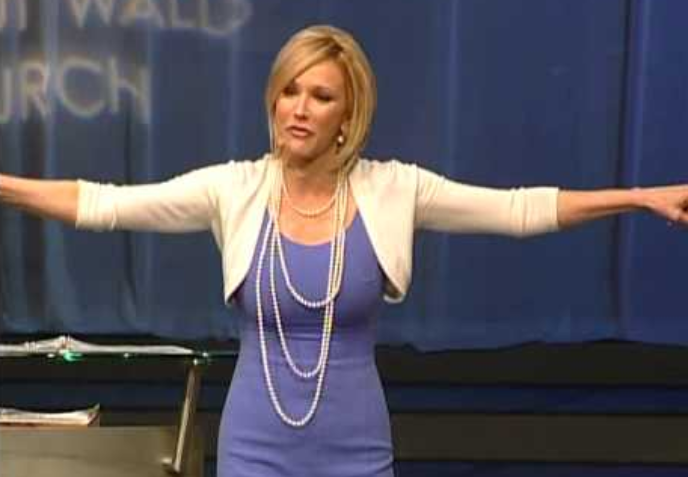 As he flips through the channels having finished shouting along with Tucker Carlson, he'll come across tee vee preachers, those televangelists who fill our cable channels with eager Jesus messages delivered before large and eager crowds. One in particular stands out as having caught his eye and held his attention: Pastor Paula White-Cain of Paula White Ministries.
Given our president's well known predilections, it's perhaps not surprising that he might stop for a moment and linger watching Pastor White-Cain.
His connection with her is his "in" with the evangelical community. She's the pastor who, upon invitation to speak with him, was willing to testify that he'd found the path to Jesus.
She's front and center in this administration now, as the highest profile faith advisor to the White House. If the president has a church, it's hers. Not that he goes there any more often than he attends his youngest son's school events.
But he watches it, now and then.
And when he watches, what does he see?
Paula White-Cain has a fascinating, complicated backstory, one I first encountered years ago on one of those days I was feeling particularly riled about Prosperity Preachin'. She is, of course, part of the name-it-and-claim-it prosperity gospel movement, and entered into ministry initially as the preaching spouse in a husband and wife pastoring team. Think Jim and Tammy Faye, with all of the goodness that such an analogy entails.
That marriage was both doomed and complicated. Meaning, her pastor-partner husband was both unfaithful and abusive. The stories of his spiritual bullying and bizarre, creative abuse are genuinely horrifying. Sweet Lord Jesus, what kind of a man does that to his wife?
But she found her strength, and pulled away, and divorced him. She survived. She rebuilt her own church...still very much in the "give to the church and you'll be blessed" model...and married the lead guitarist from Journey. Honestly, one child of God to another, I'm glad for her.
Now, more than any other religious leader, she has the ear of a president.
So out of curiosity, I pulled up YouTube, and sat through four or five videos from the New Destiny Christian Center in Apopka, Florida, where Pastor White preaches.
Watching her at work is...peculiar. Here's a sample, if you're interested.
Her congregation is remarkably diverse. I mean, it is. It's majority minority, which probably tracks with her television and online audiences.
The service is stock standard contemporary in feel. Meaning, screens and praise for forty minutes, followed by a message. The musicians are competent instrumentalists and vocalists. Things are generally well done.
Her preaching is...hmmm. It's not quite as high energy as one might assume. It's in the style of most contemporary prosperity preachers, meaning anecdote/scripture excerpt/anecdote, on a repeating and semi-thematic cycle. There's not a whole bunch of exegesis or narrative flow.
But it's also a little flat. A little distant. In all of the broadcasts I watched, she just seems kind of tired.
And the preaching always, always, always revolves around money. I mean, I'll preach on wealth on occasion, and remind my church folk that sharing resources for the common good is a vital part of faith. But this is on another level.
Need and money, need and money, in an endless cycle of tithing and capital campaigns and planting a seed, all with a remarkable sense of urgency. She's breaking the chains of financial hardship over your life, all of which will happen when you give generously to her ministry.
And like all frontline Prosperity preachers, Paula does quite well for herself.
It's hard to watch. Not because it's a bizarre manifestation of AmeriChrist, Incorporated. Not because it's so transparently grasping and transactional. Not because it's strangely recursive, raising funds to raise funds to raise funds. Not because the genuinely Christian things her church does...the front and center acts of incarnate grace and service...go mostly forgotten and unmentioned, like a faded window dressing lost in the ever brightening sparkle of mammon.
But because it's...well...it's ultimately kind of dull. I honestly struggle to track along with the peculiar, looping, aimless requests for funds. The praise music, while quite competent, all feels by the numbers.
I drift a bit. I get distracted. I feel the urge, after about five minutes, to be doing something else.
Which, if you're noodling through the channels in the Oval Office during "executive time," would be so very easy to do. Get a couple of minutes of health and wealth preaching, and when you get bored? Click, and you're right back to yelling at CNN.
But hey, at least the president's been to church, right?