David Williams's Blog, page 36
June 18, 2020
Of Masks and Moral Responsibility

A week ago, I attended a march in my small town. Four to five hundred souls marched peaceably to recognize the human value and integrity of black folk, and I was honored to be a part of it.
Though there were hundreds there, there were also notable precautions against this cursed pandemic. It was outdoors, in the bright hot sun. People were visibly trying to make space between groups. And functionally everyone was wearing a mask. Ninety five percent, at a minimum, with the handful of outliers mostly being adolescent boys who are dumb in the way I was when I was their age. Folks were taking it seriously.
Last week, I also came across this strange, harsh cartoon about masks, one produced by a far-right political activist. Some over on #twitter were making light of it, but there were plenty of folks and/or bots of uncertain origin spreading it unironically.
What struck me was not just its bullying, Nelson Muntz mockery of perceived ideological weakness. The cartoon expresses a warped morality that has abandoned traditional virtues. Wearing a mask isn't a bolshy Jacobin thing to do.
Wearing a mask is conservative. It's about personal responsibility, seeing freedom as a call to duty and care for your neighbor. It requires discipline and a desire to protect both the vulnerable and the integrity of your community. It recognizes legitimate authority. It rises from a spirit of decency, charity, and integrity.
There was something else. Something darker. Starting this weekend and continuing for the next few months, there will be political rallies on the American right. Americans who increasingly embrace the ideology of this cartoon will gather by the tens of thousands. They will shout and cheer. They'll be packed in tight. They'll be older. And goaded on by this kind of propaganda and the ego-hunger of a demagogue, they'll view masks as a sign of weakness, as a leftist snowflake thing. "Yeah, you can wear one, but you're just a coward and a weakling if you do." "Don't drink the Kool Aid," they'll smile, the oversweet blood red stain on their lips.
Then they'll go back to their homes, their communities, and their churches.
It's a recipe for death. Not just one person, shot dead on Fifth Avenue, but hundreds of deaths. Horrible, prolonged, suffocating deaths in the overburdened ICUs of mid-sized Southern towns, as exhausted nurses helplessly watch yet another human being die alone.
Were I a cruelly Darwinian soul, I might sneer at those folks, and say they're getting what they deserve. "You cannot separate a fool from their folly," I could say. "A rod for the back of fools," I could say. But Jesus being my Lord and Savior and all, I try to avoid that way of being. I desire no-one's suffering. Instead, I do what one does when you realize you're helpless to stop a horror. Or when you watch a person caught in the thrall of their personal demons, their ears closed to your voice, their eyes turned away from your help. I raise my voice, even though it might not be heard. I pray.
And I wear my mask, which says: I am willing to do my part.


June 13, 2020
LIttle Churches and Regathering
You do a familiar thing, and it's comfortable and things run smoothly. But life rarely offers up neat, easy, and familiar paths.
As we roll into summer, things are still up in the air. There are hopeful signs here and there that we may be able to reopen. After months of social distancing, closures, and mask wearing, all of our national efforts seems to have stalled out that virus.
But we're not sure, not enough, not yet. As the Session of my church met this last month to talk about potentially regathering, no-one felt it was time to go back to that normal that we all do miss. Our sweet little sanctuary is too small, that comfy soft space too limiting to do the singing and greeting and being together that we so love. And sure, we could gather without raising our voices in song or in prayer, with no bulletins and no communion, no time in fellowship, and no classes in which to study together.
That just wouldn't be worth doing. I mean, sure, we'd "be together." "Hey, come to church! We don't sing. We stay away from each other. We don't pray out loud. We can't see one another's faces."
I wish I could say that sounded appealing, but Lord have mercy, it does not.
Instead, we're waiting to see whether there's a second wave, which we should know definitively in two weeks. At that point, we'll put our heads together and determine, based on the best available information, what is the best way forward.
In choosing any path, it's best to be neither panicky nor headstrong. Anxiously fretting over every possible negative outcome and stubbornly blundering ahead no matter what are equally unwise. And while wisdom these days may seem in short supply, it's right there in scripture for any who seek it.
For the next five weeks, our adult ed class will be looking at the marks of wisdom for a Christian soul, because it seems kinda like a useful thing to keep in front of our souls in this time. We'll get those from the Epistle of James, one of the most practical, direct moral teachings in the Bible.
Lord willing, we'll be in a place to gather again when we're done. I am very much looking forward to that.
June 11, 2020
Young Crow
June 10, 2020
My Story Mine
Once My story
Mine Leaves parted lips Sings the air And alights Purring Tickling Whispering In your Waiting Ear It is no longer My story Mine but Yours.
June 4, 2020
Lafayette Square Park, Faith, and Freedom
As a teen, I still went to church, but I was...well. I didn't like Sunday School. I was gloweringly sixteen, into Camus and Sartre, and even though I loved the church in the way that a teen loves their parents, it just felt too...something. Too soft, perhaps. Too formal. It lacked that dark edge that appealed to my adolescent eyes, so newly opened to the mess of the adult world.
So I'd leave the church, grab a free City Paper, and wander over to Lafayette Square Park. It was my quiet place. My sanctuary. I'd settle in, read snarky, informed reviews of film and culture, and watch the world go by. The park was quieter on a Sunday morning, but as the day wore on, there was plenty to watch. Tourists from all over America, here to see the sights. Clusters of visitors from other countries, wandering behind tour guides. Near the bench where I'd sit and read, a little yellow church sat, a trickle of Episcopalians coming and going for their bells and smells and Jesus..
In Lafayette Square Park, there'd be occasional demonstrations and protesters. People with signs. Folks trying to get you to sign petitions. At least one older peace activist basically just lived there.
I'd watch the tour guides do their schtick, leading school groups and church groups. "Look," they'd say, pointing to the resident activist with her signs. "Right here in front of the White House, people are free to speak their minds. That's the difference," they'd say, "Between America and the Soviet Union. This is a free country." And the school groups would chat with the protesters, and move on.
Despite my newly found teen cynicism, it was undeniably real. For all of her flaws, I couldn't deny my own eyes and experience. America was genuinely free.
That park is not accessible now. It's cordoned off from the American people. The peaceable voice of the people's grievance, driven from that space by clubs and tear gas and flashbangs. Even that modest yellow church on the park is now forcibly closed, as yesterday church members and leaders were denied access to their own property.
"Law and order," those in power say, "makes this necessary." "Safety and security," they say, "requires it." These are lies unworthy of our republic. At the height of the Cold War, toe to toe with Soviet authoritarianism, nuclear holocaust just one misunderstanding and a twenty minute missile flight away? In those hard times, Lafayette Park was open, as both a symbol and as living proof that Americans are a free people, whose leader does not hide behind high walls and cold eyed men with guns.
Those freedoms have been taken to serve the ego of a petty despot, a dissembling huckster and bully who has desecrated the freedoms that made America a beacon to the world. Freedom of religion. Freedom of speech. Freedom of the people to seek redress.
I remember what it was like to sit as a free American in that park on a cool Sunday morning. I remember what it meant, even at the height of my adolescent awakening, to know what it meant to be free.
I refuse to forget that freedom.
May 21, 2020
Climate and COVID
One of the things I'm struggling with is how to integrate the pandemic into my writing. There are clear conceptual connections between how America is dealing with the pandemic and how we've dealt with climate change, ones that seem obvious. Like, say:
How we ignore science, and reject expertise as elitist or controlling. How we create false narratives to support our ideological biases. How we value the immediate over any long term vision. How deeply we're willing to steal from our future to satisfy our desires in the now.
But making that connection isn't easy now, because most of the impacts of this pandemic are yet to come. Looking at the most likely probabilities, our next four to six months are going to be rough.
We are moving to reopen, which seems viable after months of semi-quarantine. The success of that reopening feels deeply unlikely. Yes, it could work. It could definitely work. I buy that.
To make it work, we'd need to be doing the things...as a nation, all together...that would make success more likely. Testing, tracing, and quarantining are the three keys to this. You test broadly across a population to detect any new outbreaks. You trace contacts so you can map the possible impact of any resurgence. And you locally quarantine based on your testing and tracing, so that the system more broadly can continue functioning.
If you do those things, the odds of a successful national reopening are vastly improved.
We are doing none of those things. Testing is sporadic, inconsistent, and limited. Contact tracing? Sweet Lord Jesus no. There's nothing in place nationally. Nothing. And quarantine efforts are a splattered, sloppy mess of conflicting local and regional recommendations.
There is a slender chance that providence will smile on our foolishness. What is considerably more likely is a significant COVID resurgence, a second wave of this outbreak that matches or exceeds the first. We are that villager who decides to take a long walk when the eye of the hurricane passes over, sure that the worst of the storm is past.
By the time my book goes to print in 2021, the impacts of our decisions right now will be clear. It is most likely that they'll offer up a painful parallel to our inadequate response to climate change.
But as I don't know that for sure, it's kinda hard to write that into a manuscript.
March 28, 2020
A Daily Liveblog of the COVID Year
of the most remarkable occurrences,
as well public as private, which happened in
Washington DC during the great visitation in 2020.
Written by a Citizen who continued
all the while in Washington.
March 16
Last night, Lije and I dropped by the local Burger King, where we snagged a couple of Impossible Whoppers for takeout. The place was typically Annandale-diverse, as it tends to be.Esconced in the corner was the grey bearded homeless man who usually spends a chunk of his days there, chatting with a couple of guys in baseball caps. He's there on cold days, and on rainy days, because he can be. The staff at the BK are fine with him being there, in a way I'm not sure other businesses would be.When the restaurants all close, and the libraries close, one wonders where he'll go in this strange, unwelcoming time.
March 17
Today is lovely, Spring evidently oblivious to the ambient anxieties and mortal fears of human beings. Our little suburban street is suddenly filled with foot traffic. Not just the usual trickle of dog walkers, but teens. Runners. Couples. Families with strollers.A family passes. Their little girl, not more than two, leaves her mother's hand and capers across our front yard. She finds a stick. She squats and looks at it. Then she picks it up, considers her options for a moment, and throws it. Throwing it pleases her, and she scampers back to her mother's outstretched arm, utterly devoid of any care in the world other than perhaps finding another suitable throwing stick.
March 18
Every morning at sevenish, I'm out with the dog. It's bright, clear, and brisk this morning, the air sharp with cold. The dog snuffles about in her usual aimless way, tending to the scents that must be investigated. She leaves her little comments-section stream on whatever chat the passing neighbor dogs are having this week.I, on the other hand, am listening. It is sevenish, but sevenish is different. The aural environment has changed. There's an ambient noise we suburban creatures simply forget, the soft thunder of millions of tons of steel constantly on the move. It is always present, always there, a distant cataract of steel and tire and tarmac.Today, that roar is quieter. Not gone, but notably hushed. Its voice, lowered. As one might when one hears an unexpected sound upstairs. It feels wary. At attention.
March 19
Two days ago, out in the back yard, I was gathering kindling for a coming cold snap. The dog seemed unusually happy. She eagerly trotted over to a spot behind the shed, where I'd seen her rolling about gleefully the day before. I followed, with the intent of stirring our compost pile. That's when I noticed the smell.Behind the shed, the remains of a raccoon, a ruined shapeless mass of fur and dark melting flesh. It crawled with innumerable white and squirming things. The dog wanted so bad to roll in it, to perfume herself with it. Dog odorants, I think, would be named Old Stank and Rotstench no. 5. I sent her inside, which she did reluctantly and with her more usual ennui.I buried what remained of it yesterday morning. Took the shovel, and dug out a small trench in the wet clay near the shed. I scooped the dripping pile of bone and blackness into the hole, and though it was utterly foul beyond foulness, I found myself laughing as I filled in the hapless creature's grave.Were I in a writer's workshop with the Creator of the Universe, I'd call Them out on the foreshadowing. "This feels a little obvious," I'd say, right before the thunder drowned out my voice.
March 20
The two shopping carts sat on either side of the bench, piled with possessions. They usually can be found outside a Burger King, but BK is closed now for anything but take out.I approached the mass of possessions, wondering in my selfish way if there would be an ask as I passed. Two of them, each familiar, were beneath an umbrella, opened to shelter them from an unusually hot March sun. He, grizzled and greybearded. She, sturdy, of indeterminate age, latina or indigenous.I glanced at them, a furtive bourgeois curiosity. He was asleep, curled up, his head on her lap. She, her hand softly on his head, looking down at his face, her expression inscrutable. The umbrella, a shadowed halo cast around the two of them.I looked away. It was too intimate, this moment of connection between the two.She did not look up as I passed.
March 21
Essential businesses must remain open, we are told.Yesterday, I walked past one of the title lending "businesses" that have sprung up all throughout Virginia over the last two decades. In exchange for the right to take your car as collateral, they offer loans at absurdly high, usurious interest rates. 200%. 300%. It's fundamentally predatory, but such businesses present themselves as "providing a a lifeline." They give generously to the re-election campaigns of Virginia politicians, who serve them well.With the economy seizing up, they were doing a brisk business. A woman, leaving in a late model Kia. Older, morbidly obese, and wearing a surgical mask. She did not look well. At the door, a woman and a man waited for admittance. I wondered which of the cars belonged to which. Was his the Toyota work-truck? Was hers the Honda Accord? They stood six feet apart from one another in the strangely warm March sun. They did not talk.Inside, "easy money," now desperately needed, borrowed from an uncertain future at a heavy cost.
March 23
Yesterday after virtual church, I went to the store. I walked, because if I can walk an errand, I do. It's good for me physically, and better for creation, and better for my soul. Walking clears my mind, and disconnects me from the strange compound hysteria of our virtual world. So I strapped on one of our big frame packs, and walked with my son and his girlfriend to the local Harris Teeter. Round trip: about three and a half miles. It's just around half an hour walk each way, if you dawdle.The flowers, in bloom, the air sweet the scent of spring. We passed shuttered schools and quiet churches. A funky little house we'd never noticed before, yard neatly ordered, surrounded by polka dotted poles upon which sat the Buddha's head. We passed the sweet little gardens out front of my son's old elementary school, and critiqued the book selection in a Tiny Library. One doesn't see such things while driving.At the Starbucks in the strip mall, a long line of cars snaking halfway across the parking lot. Each idling, windows up, sitting and waiting, occupants staring at their phones, locked away on a lovely spring afternoon. Humans are so peculiar.
March 24
Yesterday was Monday, and Monday is a slower day. Wet and cool, on the border of cold. I felt that cold as I weeded, clearing out the soil in the raised bed to the left of the driveway. In between the weeds, kale poking up, starting to flourish, sweet from the cold of winter.Clearing around the kale was hard and manual. I squatted, feeling the long squat in my knees and quads, my fingers probing into the rich dark soil, the wetness chilling to the bone. But the weeds needed to be gone from the bed, and other greens planted. So I dug and pulled and pulled and dug, my hands crusted with dirt and numbed with cold.When I came back into the kitchen, I washed my hands, scrubbing the earth from under my nubby, bitten nails, the warm water a blessing.
March 26
I went to church, and the day was cold and damp and grey. The buildings, cool and dark and quiet. No meetings. No worship. The news of the day, from the governor, that schools would be closed through late April. I and my lay leaders are committed to listening to competent, wise counsel on such matters. We're following the state and county on closure, and that meant, well. That meant, definitively: no Easter worship in our sweet little brick sanctuary. It was no surprise, but still set a little heavy. My soul felt weary and as grey as the day. It's hard to set aside the rituals of meaning that define a life.I checked the mail, and the phones, and the general integrity of the building. I took a couple of calls, did some prep for Sunday's bible study, and then headed home.Getting off the Beltway, nearly back, I stopped at a light. By the side of the road, an abandoned, handwritten sign on a piece of cardboard. The young woman who panhandles there, now gone. But her words remained, the ink clear and unblurred by rain."Anything helps," said the sign.Well. That is good to know.
March 27
Yesterday morning was damp again, the wetness welcome in the soil of my gardens. Into the earth, more of my seed-saved kale for a late spring harvest, before the nibblers and the crawlers are out in force. The kale, joined by spinach and carrots, with space set aside for the tomatoes to go in several weeks from now.In barrels filled with compost, potatoes are springing up in their vigorous way, joined by the rising fresh leafing of strawberries. At the front of the house, the blueberry bushes are starting to leaf too, tantalizing us with a harvest that mostly feeds the birds. The fate of my blueberries always makes me think of that sweet old Disney song. "That's a lovely sentiment, Ms. Poppins, but I planted those for a reason," I sigh, as the sparrows flutter away sated.As I puttered about my suburban quarter acre, checking and tending here and there, something caught my eye. Two years ago, I'd randomly buried excess seed potatoes in an untended patch of earth in the back yard. I promptly forgot about them.But there they were, the familiar leaves wet with the spring rain, springing eagerly from the unforgiving, unenriched Virginia clay."Well, look at you go," I said, because talking to potatoes seems perfectly reasonable these days. "Good for you."One of the great pleasures of a garden are those little surprises.
March 28
Time has felt odd lately. The flow of days is all wrong, as the minutes and hours stumble over one another, uncertain of their places, unsure of their steps. It's like watching a middle school squaredance, uncertain and awkward, the days uncomfortable in their newly changed selves.We're just not quite sure what we're supposed to do. We knew the dance before, kind of, and had it down enough to get by. But now we're not even sure we know what day it is half of the time. There are no markers, no measures, no points that let us orient our days.Which is why those rituals of life are more important than ever. My existence still has Sunday worship as its fulcrum, that moment when I am doing what I'm called to do, even if the specifics are kinda different these days. Juggling AV and USB cables and fretting that my uncut hair is starting to resemble that of a public access televangelist aren't my old norm, but so it goes.And then there's Shabbas observance, because unlike most Christian pastors, I find myself in a household with four Jews for the forseeable future. When the boys were growing up, Friday nights meant prayers intoned in Hebrew over, marking the day, blessing the fruit of the earth and the vine.Last night, over takeout Chinese and the flickering light of tea candles, we did just that. Here, we said together. This is the day it is.We remember where we are, and what we're doing.
February 26, 2020
We Try So Hard
February 24, 2020
Climate Change Conservatism
 Over the course of the last year, I've been working on a manuscript that discusses the Christian moral response to the climate crisis.
 My assumption, grounded in the hard reality we don't want to hear: catastrophic climate change cannot be avoided. That horse has left the shed. That Elvis has left the building.
Climate change will place new, intense and particular moral demands on Jesus folk, ones that will press us to live deeply into some of the core virtues of the Way. We'll need to turn away from our endless cycle of consumerism and manufactured greed. Thrift, after all, is a virtue. I mean, it is, right?
The manuscript lays out that in terms of Christian moral virtue. We all need to feel a sense of personal responsibility, and act on our duty to protect the well being of future generations. We'll need to slow down and take more sabbath in our lives. We'll need to reconnect with the earth, the soil, and the goodness of God's creation. We'll need to be less tribal, and more compassionate to the stranger in need. We'll need to have hope, even in the face of unprecedented trial.
As I've thought about it, the most gracious responses all have deep roots in our faith...so deep that one could even call them "conservative."
And yet I find myself struggling mightily to see how to share this with conservative American Christians, with whom I would love to share this hopeful, can-do message.
That manuscript was recently turned down by an excellent and reputable conservative publisher, because, well, I'm straightforward about my liberality in it. But the rejection came with details, which were both thoughtful and presented in a Christlike way. I was...well...amazed at how gracious they were. So I asked, hey, can we talk about this? And in something close to a miracle, the editor who'd turned it down said, sure. Yes.
I then had a wonderful phone conversation with that graciously-souled editor. He suggested that I look for places of commonality, places where my admittedly liberal commitment to Jesus can harmonize with his readers. There is so much possible scriptural and theological common ground, and so much that we share on this precious world of ours. Surely, surely, there must some way we can talk to one another.
It was good advice, and so I went out and looked for possible conversation partners.
For that, I looked to the writings of the Cornwall Alliance for the Stewardship of Creation, an evangelical organization that discusses climate change. Here, I thought, may be evangelicals who might share some common understanding. I spent several days reading through their materials, seeking places of connection.
First, I looked for where the organization stood on climate change. When speaking to someone, it helps to know where they stand, so you can endeavor to honor their integrity and speak so that you are heard.
The position: climate change is not real.
Or if it is real, it's not caused by humans.
Or if it's caused by humans, it's trivial and will cause no noticeable change.
Or if it isn't trivial, those radical changes to the global climate will actually prove beneficial.
Although it may also not be happening.
Every single one of these positions was expressed.
There were articles by evangelical scientists which challenged the idea of consensus around climate change. There were other arguments that the existence of consensus around climate change was meaningless secular herd behavior. I honestly had trouble finding purchase, because what I found was a dissonant, atonal chorus of every possible objection. I could find no coherence beyond a spirit of opposition.
What about the relationship with those who disagree? Were there already places of fruitful connection and hopeful pursuit of common ground? I pored through their materials again. There were attacks on the integrity of climate activists, who are all hypocrites because they use fossil fuels...or, in one instance, because they had been observed at a restaurant with people who were eating hamburgers. Where those activists were both Christian and assiduously avoided air travel, the attacks were on the integrity of their faith and the legitimacy of their belief. Where they were scientists and Christian, their standing in their field and their faith were attacked. Ad hominem assumptions about those who present variant perspectives do not generally provide a good foundation for conversation. They are, in point of fact, intended to shut conversation down.
There's the apolitical nature of climate change, because when a storm rises, ideology doesn't matter. This is not a political issue, I could say. The rain falls on the righteous and the unrighteous alike, after all. I speak as a concerned soul. Let's talk about this as something greater than our politics. Yet there, again, I was stymied, as the Alliance shared praise and hagiography for America's current president, whose choices it describes as brave and bold and noble. It makes it clear where allegiance lies, and casts the struggle in clear and political terms that clearly align faith with unswerving, absolute loyalty to a leader.
I looked for shared language, like the words "creation stewardship." I believe in that. Where creation stewardship is defined by the folks at Cornwall, it appears to mean: the continued and expanded use of "affordable, abundant, reliable fossil fuels." That phrase is repeated in most of their position pieces. Renewable energy sources are dismissed as poor stewardship, being too expensive, too "elite," inherently corrupt, and harmful to the development of less-privileged economies.
Well, what about the things that are affirmed, the positive declarations of how one should live? Following Jesus is an affirmative path. There are things Jesus asks us to do, and laying out a Way that honors the Gospel is a core part of the purpose of the faith. What does it look like, if we are to hew more closely to God's intent for our use of creation? I could find nothing affirmative, no "here is what this looks like." There is no telling of a real and gracious story, no sharing of what the reality of their vision of "creation stewardship" looks like when you define your life by it.
In negation, everything was granular and particular, down to micro-level detail. In affirmation...vague, misty, platitudinous. There were no practical suggestions, no examples, no stories of what good stewardship looks like. Now, they may have been there somewhere.
I just couldn't find them after a couple of days of looking.
But what about scripture and theology? Surely there were places of connection there, I thought, perhaps unreasonably. What about the pro-life idea, the need to care for future generations? Choose life, that you and your descendants may live, cries Torah. A pro-life ethos can easily be understood to encompass all moral choices, right? One could say, well, out of concern for the well being of my children and yours, I'd like us to begin the transition away from fossil fuels in a reasonable, measured way before we reach the point of scarcity and crisis. That's pro-life, right? Yet there, in answer, was an essay declaring that the only thing pro-life can ever mean is anti-abortion. Pro life, or so declares the Cornwall Alliance, means nothing but anti abortion. Nothing more, nothing less, and efforts to expand that meaning (as the Catholic Church has) are Trojan Horses. That's not exactly the sort of rhetoric that leaves room for conversation.
Every door I tried, locked and barred. Every effort, frustrated.
And with that frustration, a challenge for my soul. For from frustration can rise anger, and from anger invective. I could allow the spirit of the Adversary to rise in me, and to see only evil, assuming the worst of motives and the darkest of intents. What's their funding stream, and why is it intentionally hidden? What's the real audience and intent? I could make assumptions about their inner hearts, and carefully construct a dark narrative of opposition.
Or I could, in the face of a message of complacency, distraction and denial, tap down deep into the tradition of Scripture, and let the Lord speak my anger for me. I'm not sure that helps, either.
Ultimately, the wise counsel of that evangelical editor still sang in my ear. Don't argue. Don't come up with reason to condemn and lines of attack. Don't berate. Don't allow yourself to fall into Satan's method of relentless accusation.
None of these things are fruitful, and harsh words only harden hearts, even if they are not my own. You have to tell your story.
It's better and more gracious to name the reality you see, affirm what can be done about it, and tell the good story of how that can be made real. In all of that, ground it in Christ, and present that to as many souls as have ears to hear it.
January 23, 2020
Of Dice and Diversity
This may be because we're all racist, or so some folks say. I do wonder at that, though. Racism requires intentionality, and there's little evidence that's the case here. Then there's "structural racism," which can be defined in a range of different ways, but tends to involve cultural assumptions that create bias against certain groups and for other groups.
Where I have some trouble is here: if we use the modern-era racial categories as a way to define human beings, the proportional allocation of individuals into those categories isn't itself racist. Meaning, simply, this: a non-racist culture in which certain groups comprise a larger portion of the population will...in the absence of bias...be more likely than not to have leaders who come from more well populated categories.
In other words, if your culture is majority "white," you will, in the absence of systemic racism, still likely have more white folk in leadership. Probabilistically speaking, it's not a sign that bigotry is a factor.
As a way of playing about with this idea, I took a twenty-sided die, one I'd used the last time I played role playing games with my sons. Then I took a look at the current demographic breakdown of the United States of America. If you roughly line up American racial/gender demography with the numbers one through twenty, you get the following:
1-6 White Male
7-12 White Female
13-14 Latino
15-16 Latina
17 Black Female
18 Black Male
19 Asian
20 Other
This is a clumsy simplification, of course, and one that doesn't represent the longer term dynamics of America's demographics, but it's as close as one can get to results that split the difference between the last census and where we're trending. And yeah, I'm sure you can do better, because you're smarter and more woke than I. Why not tell me about it in the comments section below? What? There is no comments section? Well, I hear #twitter is great for telling other human beings how inadequate they are. You might try that.
Having laid out those parameters, I busted out my d20 and started rolling. There are four Democratic candidates with a shot at the nomination now, and so here are my first four rolls:
1 White Male
2 White Male
3 White Female
4 White Male
As it so happened, my random rolling yielded the exact current race/gender makeup of the four leading Democratic candidates. Does this represent systemic racism, or a "diversity problem?" I'm not sure how one could meaningfully argue that, given that the race/gender representation of my "white" folks category is slightly under where demographic data shows America falls. One could, of course, suggest that a completely race-blind and randomized selection process is racist, but...well...that'd be a little insane.
I kept rolling.
5 White Female
6 Black Female
7 White Female
8 Latino
9 White Female
10 White Male
11 White Female
12 White Female
13 White Male
14 Black Male
15 White Female
16 White Female
17 White Female
18 White Female
19 Latina
20 White Male
And with those twenty rolls, the spread bent towards Whitey. More female than male, as it so happened, but that was just a factor of randomness and a small sample size. "Asian" and "Other" never quite surfaced, but had I spent the entire afternoon tossing my icosahedron, I'm sure things would have evened out.
Because dice are absolutely fair and devoid of bias.
Looking at the breakdown of my rolls, an unbiased, representative, and "unproblematic" distribution of candidates might look like this:

There's a mixed distribution of gender and race, one that isn't too wildly far off from the actual demographics of American citizenry. If there were racial and gender bias in a culture or sub-culture, it would manifest as if being white gave you a significant advantage, that classic "plus 5" modifier. Do that kind of rolling and it would look more like this:
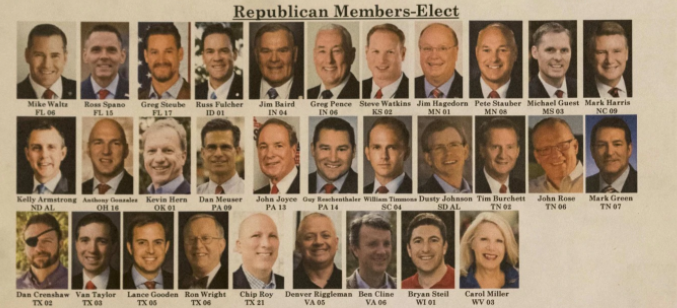
Here, there's a gender mix that would be near impossible to replicate with a d20, and a racial breakdown that would be only slightly less difficult. Clearly, something is skewing the results, making this second image radically unrepresentative at the national level. You want "problematic?" Well, here you go.
But when considering candidates for the presidency, "diversity" is an odd frameset. Because, ultimately, there's just one person you'll be voting for, and a single person definitively cannot be "diverse."
If we insist on valuing human beings by race and gender, and not by how their policy positions impact all citizens of every hue and gender, then we can't help but be disappointed when we equate presidential virtue with demographic categorization.