David Williams's Blog, page 37
January 10, 2020
Tradition, Change, and Faith
It was a blur and whirl of a journey, as my extended family took the winter break to bumble about in the Spanish province of Andalucia. I'd never been to Spain, and like all travels to places that are radically unfamiliar, it meant encountering a part of our world so different that it could almost be a different world altogether.
There's the language, of course, which meant I had to try to dredge up the memories of my two years of modestly successful college Spanish. I did a lot of pointing at things on menus, and pleading the strange helplessness in other languages that's a defining characteristic of Americans. But the differences went deeper.
The flora and fauna weren't familiar at all, the landscape was dotted with tall narrow pines that were so defined they seemed to have been sculpted. Olive groves blanketed the countryside, neat geometric lines of little trees covering the hills, stretching sometimes to the horizon. Mealtimes were different, as the Spanish eat later than we, with dinner running deep into the late evening.
The roads were filled with vehicles that even my car-geek self didn't immediately recognize. I found myself driving most of the family down intimidatingly tiny narrow cobblestone roads in a French nine passenger diesel van with a manual transmission, which is about as far from American driving as one can get.
Even more peculiar was the way it was Christmas in Spain, but it also wasn't. We'd flown in on the day after Christmas, and there were still strings of lights sparkling everywhere. Christmas music was still playing in the stores...American pop-country Christmas music, as it happened.
This wasn't because they'd forgotten to stop, because Christmas in Spain wasn't finished on Christmas Day. It had only just begun, as Spaniards geared up for the height of their gift giving season: January the 6th. The festival of Epiphany is the big day for presents in Spain, which by tradition aren't given out by Santa. They're given out by the tres reyes, the Three Kings.
This, truth be told, makes a whole bunch more sense than the weird way we do it. I mean, the Tres Reyes are the ones who had gifts, right? It's right there in Matthew, a whole lot closer to the story we hear in church on Christmas, which makes very little mention of the North Pole, jolly old elves, and Rudolph with his nose so bright.
Outside of the royal palace in Seville, I watched kids eagerly approach a nativity scene to talk with three ornately costumed kings, as a guitarist played softly in the background. It wasn't familiar, and yet it was, and I wondered at the differences, at the way faith plays out across different cultures. Here was a variant telling of Christmas, just as filled with the spirit of that season. It cast a new light on the way we celebrate, and on the role of faith in our culture.
All journeys into the new and unfamiliar open us to deepening and expanding our sense of who we are, and offer us the richness of becoming more than we now are.


December 11, 2019
Of Not Seeing the Sun in the Sky
 The study was just another one of those temperature-taking exercises. It was a national poll, one that looked at American attitudes towards climate change and the possible causes thereof.
On the one hand, more of us are aware that this is actually an issue, that it's a real thing. The world is warming, and the impacts are visible and tangible. We see it in storms, in strangely intense weather, in encounters with things we've never seen before.
In my little corner of America, I've seen two five hundred year floods in the last ten years, as the little stream that burbles along the bottom the valley in which I live has turned into a raging torrent hundreds of yards wide. Twice in the last two years, we've had fierce bursts of graupel, a peculiar winter precipitation that isn't snow, hail, sleet or freezing rain. It's an alpine phenomenon, or used to be, and one I'd never heard of before I saw it rushing down as I drove. When you see precipitation, and you're 50 years old, and you don't know what it is? That's a thing.
The weather has been "Biblical," which is generally a hopeful adjective until it's applied to meteorology.
So we all know things are off. The majority of human beings recognize that this is a crisis.
But when asked why things are happening, we still seem to struggle. The poll showed that we thought all manner of things might be the cause of climate change.
Like, say, the thirty seven percent of Americans...more than one in three...who believe that the world is getting warmer because the sun is getting hotter.
I've heard this before, as something pitched out to explain the obvious changes in things. "Well, it's just part of a natural cycle of the sun." This sounds like science, and it would be, if it were true. But it isn't. Solar energy has been static for my entire lifetime. There's no change coming from our G-type main sequence star that can be tied to the increase in temperatures on our little world.
No space scientists are suggesting this. No astrophysicists are suggesting this. There's no data coming from our observatories or space-based instrumentation to affirm this idea. It seems to come out of nothing. It's just not true, and not in an "it's debatable" way. There is no evidence for it, and all of the evidence is against it.
Why, then, do we believe it?
It seems that there are two reasons: disinformation and self-deception.
The first is part of the plague of our social age, the passing on of malicious misinformation by actors who do so to sow discord and hatred to their own benefit. Like, say, the folks who insist that 9/11 was an inside job coordinated by Republicans. Or that Sandy Hook was a hoax. Or that an international cabal of child sex slavers were running a secret warehouse of captive children out of the basement of a neighborhood pizza joint.
These wild, unfounded, inflammatory fantasies are almost impossible to escape, as they are shared by earnest friends in our endless online rumor chamber. They come from conspiracy theorists, glazed-eye ideologues, and bad state actors whose cynical interests lie in the continued use of fossil fuels. Why do we share them?
That is the human part, our deep seated ability to see only what we want to see. All of us fall prey to this, particularly when we encounter realities that aren't the reality we want to see. Rather than open ourselves to the thing right there in front of our faces, we turn our eyes to the thing that affirms what we would like to be true. It isn't necessarily malicious in intent. But it has malicious effect, as our ego-driven blindness causes just as much harm as had we meant to do ill.
So when we'd rather not change our lives, and see a bit of information that seems to affirm our current position, we grasp after it. We want to believe it. We hunger for it to be true, even if there's nothing behind it. We see what we want to see.
To the point, apparently, where the sun can shine in the sky, and we can't even see it.
November 23, 2019
School Dream
So last night I had this
School dream
It was the
First day of school
And I was on time to class
And I was wearing pants
And I found a seat with no problem
And I
Listened to the professor lecture
on
Literature, justice and the law
While taking notes by hand
with a blue pen.It wasn't stressful at all.
Kind of a good class, actually.Weird.
School dream
It was the
First day of school
And I was on time to class
And I was wearing pants
And I found a seat with no problem
And I
Listened to the professor lecture
on
Literature, justice and the law
While taking notes by hand
with a blue pen.It wasn't stressful at all.
Kind of a good class, actually.Weird.
Self Aware
This Is Just an Utterly Ordinary Sentence That I Rearranged On Separate Lines And Called A Poem
November 13, 2019
Of Grace and Letting God Work
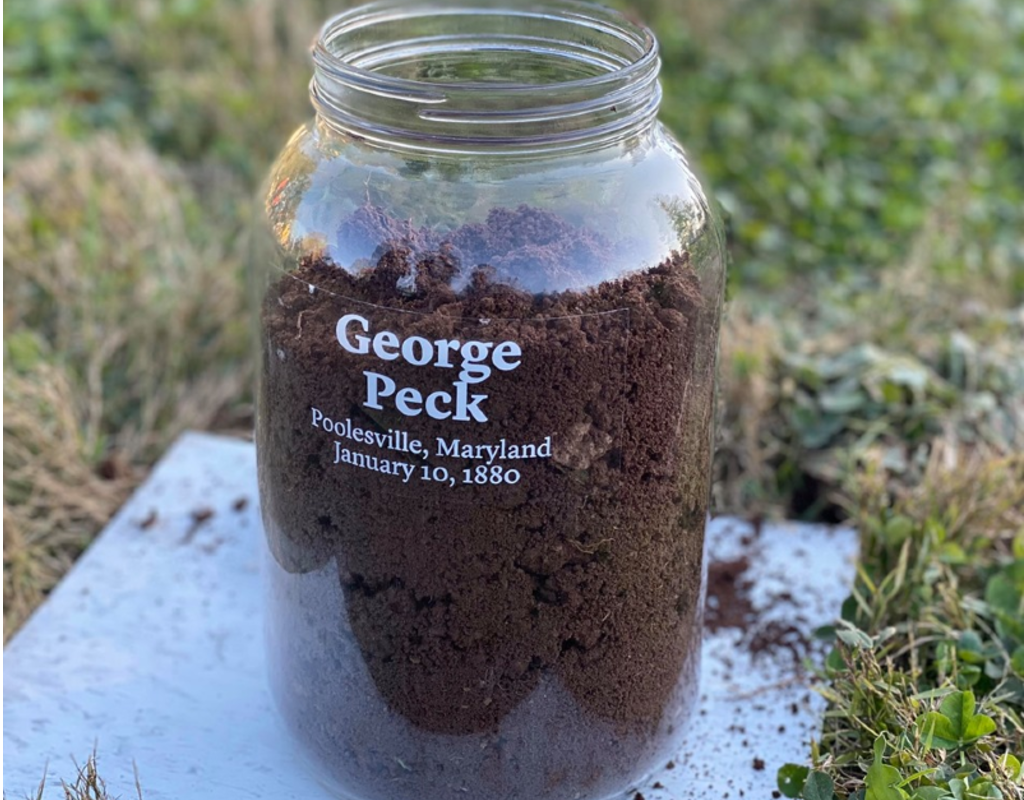 This last month, Poolesville Presbyterian "did some work," as folks apparently say these days.
In 1880, a black man named George Peck was lynched by a white mob directly across the street from our church sanctuary. In partnership with a coalition of churches, local leaders, and other members of the Poolesville community, our little church hosted a memorial event. There were prayers, meditations on violence and reconciliation, and poems from local students. Then, a soil collection from the site of the lynching, after which that soil was sent to the Equal Justice Initiative's museum in Montgomery, Alabama.
The day was perfect and beautiful. There were hundreds in attendance, from our community and from all around the county. There were news reports, as radio and local television stations shared the event, with coverage on the front of the Washington Post metro section, and other media outlets ranging from the Houston Chronicle to the San Francisco...Chronicle. The story of what the Iglesia Presbiteriana de Poolesville was doing even made its way into Spanish language media.
It was kind of a Thing, and it was a thing church folks had wrestled with for a bit. How do we do this?
We'd thought about it, prayed about it, and considered the event carefully before it began. What gifts should we bring? What's the best way to support other organizers of the event? How do we do this well, and respectfully, and in a way that is both honest and healing and respectful to the best spirit of our community?
Folks from the church stepped up, as we do. There were snacks, and beverages, and a general sense of supportiveness and welcome that couldn't be missed.
Both I and the elders on Session were of one mind about how the event should be lead. We needed community folks engaged, and the closer to the heart of our community, the better. There were many different folks who might be able to provide leadership, but one name kept resurfacing: Pastor Chuck, who leads worship at the nondenominational church in town. His family goes back a hundred and fifty years in our little town, one of the longest standing black families resident in the area. They've owned land...a free black family, owning land...since before the Civil War. And he works in Poolesville. And he's just a great, spirit-filled, gracious human being.
We all knew he was right for this moment. This town is "his dirt," as he so viscerally an appropriately described it on that day. The challenge was twofold. First, getting him on board, which proved to be as easy as so much of what God intends is easy. Chuck was all in and called in. Chuck was fired up.
The second challenge was on me. It was shutting down those mutters and nibbles of ego that stir whenever an important thing happens, right there in your church, and you realize you're not going to be leading it. You'd think, as an introvert, that I'd automatically avoid that, but no. There's always that human tendency to want the light of public affirmation, to want the limelight, to want to overstep or upstage. I do come from a family of actors, anxious and inward as I am. What I needed to do was to find the right amount of space, to speak words of welcome and support and move aside, to be sure that the people that are clearly called by God to a moment were right where God wanted them to be.
Which, praise the Lord, was just what happened.
That challenge to both be present and make space is one that rests on every moment of our lives. We're called to both live out our gifts into the world and lift up others. The first requires that we overcome our fears. The second, that we overcome our desire for control.
Neither is particularly easy, but both are necessary as we seek to live out God's gracious work of reconciliation.
October 30, 2019
Consuming Our Way out of the Climate Crisis
 It was morning, just a tick past eight, and I was walking.
I regularly walk my errands, because it's good for my soul. My mind clears when walking. Anxiety and scatter drifts away, and my thinking focuses. I see the world around me. I feel and smell and hear, and the rhythm of my movement calms me. I was heading home, having dropped off our trusty hybrid Honda for a routine service.
It was cool out, and a little overcast, and the leaves were dancing down from the trees as fall began. On the roads, an increasing flow of cars, as the DC metropolitan area woke for another morning of anxious rushing busyness.
My walk home would be just over three miles, which would take me, at my modest pace, fifty minutes.
This is, of course, inefficient. Inconvenient. It requires effort.
I could have called a Lyft or an Uber. I could have had the dealership drive me home in one of their courtesy vehicles. But I didn't, because, well, why? Am I in that much of a hurry? I am not. Do I need the exercise? I most certainly do. Is my convenience worth that expenditure of energy? I don't think it's necessary.
And as I walked, I found my thoughts turning to the way we are taught to think about caring for our planet. What we need, we are told, is new efficient stuff. We need a $50,000 electric car. We need a $50,000 solar roof and a $12,000 home battery unit. We need a three hundred dollar wi-fi connected thermostat that pours data into the cloud through our two hundred dollar router and our big fiber optic multi-thousand dollar annual connectivity charge.
I do not question that these are nice things. If one has the resources for them, then by all means, go ahead.
But I'm not sure that consuming the same amount differently is the full moral response to a climate crisis. It's like switching up your diet, and eating two thousand calories of kale instead of an IHOP pancake platter. It's the same amount of calories, only I'm not sure a human being can eat that much kale. As much as I love greens, death by kale seems a bad thing.
Somewhere in there, we need to consume less. Just...less. We need to travel less. We need to rush about less. We need to rediscover the old classic virtue of thrift, the simple pleasure of slower and smaller. Of using the legs God gave us. Of being aware.
This isn't hard. In fact, it's rather pleasurable.
And so I walked, and I breathed in the cool air, and I watched as the other humans rushed towards our future wrapped in tons of shiny new steel.
October 16, 2019
Getting to Know Rachel
 For the last two months, my adult education class has been reading together through G.K. Chesterton's ORTHODOXY, because, well, it's worth doing. My goal as a pastor is to share the richest spiritual food I've tasted with as many souls as I can, and that's what I'm doing.
It's a whirling, heady, poetic, and often baffling defense of the faith, and it's complicated.
Wonderful, because Gilbert Keith can spin out some of the most beautiful thoughts, and turns a phrase with a grace that few authors can match. The deep abiding liberality of his soul radiates from so much of this book, as he shows the ability to both disagree fiercely with another, and yet recognize and appreciate all that is good in them. His lifelong friendship/jousting with George Bernard Shaw is perhaps the most noted example, but his is a great warm heart that loves and honors a worthy opponent.
Frustrating, because he can be...well...a little full of himself. And a little meandering in his mucking about with ideas. And a little too delighted in his own thinking, so much so that he often fails to notice when he's lost track of compassion. And just blazingly wrong about some things, a wrongness that he misses as he spins out his words. But just when you're getting annoyed with him, then, again, suddenly a phrase or paragraph of such radiant grace or whimsy that you love him again.
This book has been great grist for meaty, respectful conversations and laughter.
But it's been something more. We're not just reading Chesterton. We're with him, because he's powerfully present in his own words. This isn't academic writing. It's the farthest thing from abstract or formal. His great wit is in the room with us. His love of life and art and literature, all of his exuberance is in the room with us. And sure, he's monologuing a bit, and prone to bloviation on occasion. But that's who he was. We hear him. We're connected to this soul, and to his particular story and take on faith and creation. In an odd way, he remains a living presence with us, as his words tell us who he is and witness to how faith shaped him.
Which gets me to the next book we're reading as a class. It's SEARCHING FOR SUNDAY, by Rachel Held Evans.
When Rachel Held Evans passed earlier this year, there was a great disturbance in the progressive Christian force. Seemingly everyone I knew online was filled with lament at her untimely death, and...particularly among those who knew her...there was a deep, physical, personal grief. I didn't know her at all. I knew of her, of course, but I'd not yet read anything more than a few blog posts and the occasional twitter argument. None of the folks in my class had read her, either, although some had intended to.
I understood the cries of common lament, though I didn't participate. There are loved ones I have lost. I miss the flesh and bones of them, the present life of them. The world felt emptier in the knowledge they no longer walked it. So I got that.
But people would cry, O, O, we've lost her voice! She is gone! She is gone! Even the foreword to SEARCHING FOR SUNDAY presages that cry. "Whenever I want to scare myself," it begins, "I consider what would happen to the world if Rachel Held Evans stopped writing."
I wonder at the root of that sentiment.
Perhaps it rises from the loss felt when a bright creative soul passes, and you realize that you have received all of their words and art and music. Particularly with one who was familiar and beloved, one from whom more was hoped and eagerly expected.
But as someone who is just starting to engage with her, my encounter is new and fresh. That, of course, is part of the magic of books.
Books cause entire worlds to wake within us, and make us see things that have never been. The best books also bear the living imprint of their author's soul. You can read them, and truly get to know that person, as surely as if that author was right there with you. It's just scratches of ink on a wood byproduct, or pixels on a screen, but there that person is.
Again, books are magical that way. I use that word only barely as metaphor, perhaps not as metaphor at all.
I never met, spoke with, or personally knew Rachel Held Evans. Her span of days has passed, as it does for all mortals. What she is now rests in God. But I'm confident she can still be known here, her voice fresh and new and alive.
October 8, 2019
The Rage of Lemmings
 We all know what lemmings are.
They are cute little rodents, native to Norway, that sometimes reach a point of such massive overpopulation that they create huge herds. Those herds race about, and eventually fling themselves blindly off of cliffs. It's one of those factoids from the natural world that often gets applied to humanity, as we warn against "being a bunch of lemmings." It's shorthand for blindly, mindlessly following a path to our own destruction. It's such a familiar metaphor that it's a bit trite, and a little stale.
I'd never really studied any more about lemmings after learning about their tendency to destroy themselves, and that meant I really didn't have a sense of them as creatures. My assumption as a child: lemmings were like mice. They were timid, easily frightened creatures that scampered about eating crops. They were vulnerable, and like most rodents their primary evolved defense was just to have so many babies that you couldn't eat/kill them all.
My vision of lemmings on the march to oblivion was that of a mass of fearful creatures that had over-reproduced. A lemming death march, or so I thought, was being driven by blind terror, hunger, and the false security of the herd.
But that's not quite right. Norwegian lemmings aren't mice. They're not timid. They don't cower in their holes, or sneak about in darkness.
Norwegian lemmings are relentlessly aggressive. Lemmings are rage rodents. Lemmings are murder mice.
They have one mode: attack. That's all they do. If you mess with a lemming, it will fight you until you are dead. If you're a cat? A bird of prey? A towering higher primate? Lemmings don't care. Lemmings never, ever, ever back down. Lemmings, like Bruce Banner, are always angry.
They wear their aggression on their bodies, their brightly colored pelts serving as a threat display. Those bright colors against the snow and rock snarl to the world that if you even think about [fornicating] with it, a lemming will [fornicate] you up, mother[fornicator].
This puts their self-annihilating behavior in an entirely different light. They don't destroy themselves because they are hungry or afraid or blind herd animals.
They destroy themselves because they cannot ever, ever turn off their rage.
If they see a cliff, a great void before them? They hurl themselves over it with the fearlessness that comes from fury. If they encounter the North Sea, with its towering waves and bittercold waters? They attack. They fling themselves into the sea and swim until they perish not because they have a death wish, but because they will not back down in the face of anything.
This, to be honest, makes the lemming an even more pungent metaphor.
October 3, 2019
Of Sanctuary and Guarding Our Souls

I was at a memorial service for a long time member of my little church, where I was talking shop with my predecessor, who'd come to pay her respects to an old friend.
We're both writers, and she mentioned something as our conversation danced around ministry, her upcoming book, and the things we were writing.
"Yeah, I noticed that you don't really write much about politics any more," she said.
Which is true. I don't. It's not that I don't think about it. It's not that I lack opinions, or that my feelings have changed in any meaningful way. Nor is it that I'm any less informed, or any less committed to our constitutional republic.
It's none of those things. It's something else. It's something more analogous to the way we protect the integrity of our souls when we find ourselves connected to toxic or psychotic persons. There are souls, and all of us know them, who will devour every last bit of us. They're filled with anger and relentlessly hostile, or constantly radiating negativity, or manufacturing crises. It's all drama, all the time, all about them.
If they're a neighbor, a co-workers or acquaintances, there's some natural space there, some distance that gives us room to breathe. If they're our boss or in a position of power, it's harder.
If they are loved ones, it's hardest of all. They could be a brother or sister, parent or child. We love them, and we don't want to stop loving them, but if we don't set boundaries for our souls, and have significant places of respite, we'll get torn apart.
So much of our national dialogue is like being in relationship with that kind of soul. We taken together are cognitively dissonant, blindly angry, unable to find anything that gives us cohesion. burning in the entropic fire of big raging drama.
As someone who processes things by writing them, and thinks about things by writing them out, there's only so much toxicity, anger, and falseness that my soul can manage before it messes with me. It feels, at times, like we are foie gras geese of outrage, force-fed bitterness and negativity until we've gone wrong inside.
All of life cannot be that, if we are to remain sane. The wise put some distance between themselves and the self-destructive, we hear from the Proverbs. Even Jesus found himself needing that time, up in the quiet air, away from the roar and crazy of the crowd.
We need the simple healing graces of dirt under our nails. We need that long quiet walk, or a good long run. We need the word-spun world of an interesting book, or a meal and laughter shared with friends. Those things aren't escapism. Nor do they mean we don't care, and that we're not paying due attention.
They simply keep us from forgetting what the point of it all is.
September 27, 2019
Lying About Our Age
 This Sunday, before I left my church office, I leafed through the always-useful Presbyterian planning calendar for the year. It reminds me what color stole I should wear, and keeps me apprised of key dates for the year. It's also filled with inspirational images that are meant to turn our hearts to doing mission, and I appreciate its intent.
But I couldn't help notice something this year: in the many images of earnest progressive Christians doing earnest Jesus-justice things, there was one...just one...person with white hair. And one older person, whose hair was in shadow.Its possible there were three. It's possible some of the folks were coloring their hair, and I just missed it. But the theme was significant and sustained.
The images proclaimed a denomination bustin' out with young folk.If we look at the data, and then compare it with the story we are telling ourselves, it's, well, things are a little different. I am fifty years old, which...though my hair's mostly holding up so far...means I'm an older soul. I'm still on the younger side of the Presbyterian world. In that, there is dissonance.
I wonder at it because older folk were my mentors in service and mission. I learned the Way from amazingly active, caring, and dynamic human beings...who also had white hair and a lifetime of experience serving the needy, marching for justice, and showing the love of Jesus. "Mission" and "service" are things that older grownup Christians do, with passion and commitment and energy.
Beyond that, it goes deeper. When a church tells a story of itself that is fundamentally at odds with what it actually is, that says something about the state of its soul. A healthy church is open and straightforward about who it is. It feels it has nothing to hide, and is comfortable with itself. We are this way, and we love Jesus where we are, as we are.
Anxious communities, on the other hand, cast out a tale of themselves that misrepresents who they truly are. "We're welcoming," the website proclaims, only when you show up, there are furtive glances in worship and a circle of backs in the social hour. "We're active and connected," the Facebook page says, in the most recent post from four years ago. "We're growing," says the church that last added a member ten years before that Facebook page update.
In seminary, I was taught to watch for this in the communities I pastor. I inferred, from that teaching, that I was to be wary for it in my own soul, as my own ego and desire to tell a sweet lie about my own success or gloss over who I am.
Perhaps I am overthinking this. Perhaps it's nothing more than the tendency of older folks to prefer pictures of their grandkids and pictures of themselves when they were young. Maybe it's just random.
Then again, perhaps not.