David Williams's Blog, page 32
May 6, 2022
Faith, Madness, and Multiverses
 As a writer, I'm used to failure.
 Most often, it's just a publisher letting my agent know that "this manuscript doesn't meet the interests of Book Bookman and Siblings at this time, best of luck in your future endeavors, e pluribus unum, etcetera, etcetera." This is ninety eight point three percent of the writing life, so I sigh, and move on.
Every once in a while, that rejection will be more pointed. Not formulaic, or the welcome word of helpful critique, but actually the teensiest bit sharp. Like, for instance, the tart response I got back in 2019 from an editor of renown at a major religion publishing house. My stalwart agent had sent him the draft manuscript of a book about Christian faith and multiverses. The concept of the multiverse, as drawn from speculative physics, is that the nature of reality is not just our linear spacetime. Instead, reality is a functionally infinite array of universes, in which all possibility is made real.
For years, I’d encounter this cosmology in conversations with atheist friends and conversation partners, presented as an alternative to God’s creative act in making our universe. As I was listening to and not just yelling at them, I found myself fascinated by how that way of viewing reality interacted with my faith. So I started writing about it, and a book materialized.
How, I asked in the manuscript, does Christian faith encounter this understanding of the cosmos? While multiverse cosmologies have often been presented as a counterargument to faith, they really aren’t at all. In fact, they’re almost indistinguishable from faith, in ways that are both heady and delightful.
With the book completed, it was time to send it out, and so my longsuffering agent and I did.
We'd dutifully waited the months and months it took the editor to get around to it. His response, when it finally came, didn't beat around the bush:
"No one cares about this topic, and even if they did, no one would care what he has to say about it."
Well. Alrighty then.
There's truth to the second part of that statement, to be sure. As the hermit-ish pastor of a sweet little congregation in a rural town, I'm not a "name." It's a fair cop, guv. A publisher doesn't typically make back an advance, even a modest one, if they gamble on a relative unknown. I get it. Publishers do want a return on their investment, and that editor was right about me.
But he couldn't have been more wrong about the multiverse.
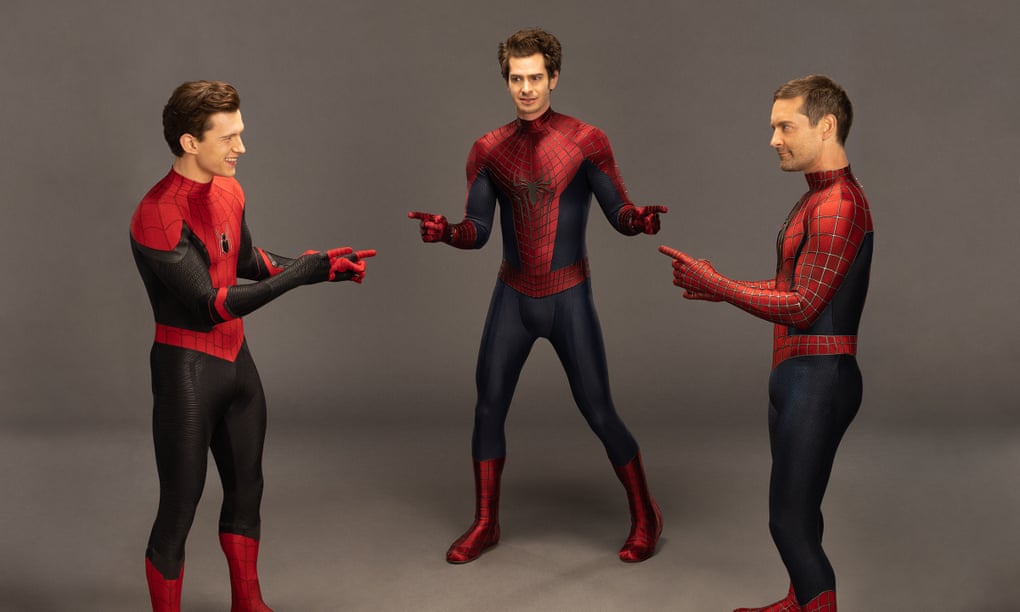
Unless you've been living under a rock, you know that multiverses are front and center in the cultural zeitgeist these days. Avengers Endgame, the final film in the sprawling Avengers saga? If ROI is your crude capitalist metric, that alone brought in two point seven billion dollars of global box office, against four hundred million in production and distribution. What's the theme? Multiverses. Spiderman: No Way Home managed to shake off the cinematic malaise of COVID this last year to reach actual audiences. It also yielded one point eight eight billion dollars in box office, against two hundred million in production and distribution. What was the schtick? Multiverses.
Right now as I write this, the delightful action comedy Everything, Everywhere, All at Once? It's an indy-ish film, with limited release, but it’s punching well above its weight, and it's all about the multiverse.
 Coming out this Spring is yet another film from the Disney/Marvel superhero entertainment complex, Dr. Strange and the Multiverse of Madness. I’ve been looking forward to that one for years, as I find the mystic stories of Dr. Stephen Strange and his reality-bending magic both entertaining and excellent grist for sermon illustrations.
 And that’s just film. It’s equally pervasive in literature. The brilliant, entertaining ALL OUR WRONG TODAYS by Elan Mastai? Matt Haig’s bestselling blockbuster THE MIDNIGHT LIBRARY? A THOUSAND PIECES OF YOU by Claudia Gray? All stories of the multiverse.
In blockbuster movie after blockbuster movie, novel after novel, our contemporary storytelling is pervaded by the idea of multiverses. But there's more to multiversality than crass materialist profit seeking. These alternate universe narratives have purchase now because they speak to something fundamental about our society.
In the internet age, we human beings are being forced to confront a panoply of different truth claims and competing visions of reality, each rising from the ground of a variant culture or subculture. Some of them can be reconciled with one another, but many claims exist in diametric opposition. This has always been true, but the immediacy of new media concentrates that experience, intensifies it, and we find ourselves torn between wildly disparate visions of reality. It seems, frankly, like many of us live in entirely alternate timelines.
In a multiverse, in other words.
In a multiverse, after all, every single possibility is actualized. Every version of ourselves, every timeline, every possible choice? They're all made real. While this might make for entertaining storytelling possibilities, it’s also more than we can wrap our heads around. Human beings cannot handle everything, everywhere, all at once. The cognitive dissonance that generates is too great, and our sense of self decoheres.
What if we hadn't done X, but instead chosen Y? Or Y1b.A-sub7? How would we know what our "best self" means, or what our "true" self looks like, if every iterative variance is equally real, and equally "true?" We can't do all of them, or be all of them. For our sanity, our selves, and our souls, we must choose who we become in the face of the unformed churning yarp of being. That choice can feel overwhelming, as competing visions of who we might be paralyze us. Every decision we make precludes another, and confronted with the anxiety of choice overload, we can end up curled up on our old sofa, watching endless Youtube snippets, making no choice at all.
That's where faith comes in. Faced with the irreducible complexity of a reality so wildly chaotic that our souls cannot bear it, faith gives us a ground on which to stand and imbues life with meaning. That has always been the strength of faith, be it the purpose-driven life of Rick Warren Evangelical Christianity or the Ultimate Concern of Tillichian Christian existentialism.
However you define it, faith gives us our integrity. It allows us to act, to make that choice against a measure that transcends us infinitely.
I, for instance, try to make every one of my choices as a disciple of Jesus of Nazareth. Are there other choices I could make? Sure. There are so many other ways I could live that I could spend my whole life counting them. But faith is an orientation towards a defining purpose, one that integrates and gives cohesion to our souls.
What choice should I make? What path should I take? The answer, for the faithful Christian, is simple. As Scots mystic George MacDonald so bluntly puts it, if you call Jesus Lord, you must do what Jesus would have you do. “How do you call me Lord, Lord,” Jesus sighs, rolling his eyes at us in Luke’s Gospel, “if you do not do what I say?” If we claim not to know what that means, we’re deluding ourselves. Of course we know what that means. Every day, in every way, striving to love God, love neighbor and enemy alike, and endeavoring to be in all things guided by Christ's teachings.
Make the call to that person you know is suffering. Take that time to center yourself down with a prayer. Spend a moment in study, or sort clothing at a local clothing closet. Share a meal with a friend, or with a stranger. Forgive the one who done did you wrong.
Some days, the thing Jesus would have you do is simpler still. Make that bed. Sweep that floor. Wash those dishes. Weed the garden. Do what needs to be done. Those potentialities are right there, and how we actualize them is the measure of our faith. This is true in a complex, linear spacetime, and remains true in the functionally infinite branching wildness of a multiverse.
But how do we know, our anxiety asks, that we're doing that thing exactly right? How do we know that we're making the best possible choice, and that we're following Jesus in the best possible way?
The answer, again, is simple. We don't. Nor, if we've been listening to Jesus, do we need to. Because that's where grace comes in. Grace is, after all, both the heart and foundation of Christ's teachings. Grace, which accepts our flaws and imperfections. Grace, which understands our human limitations. Grace, which forgives our imperfections, and shows mercy, and gives us the courage to strive again.
As a writer, after all, I am used to failure. Failure, to paraphrase Dr. Stephen Strange, is an old friend. As a writer, as a pastor, as a husband and father and human being, pretty much nothing I do is perfect. Failure happens. But every moment shines with the grandeur of God, each offering up the promise of something new. I dust myself off, remember my purpose and the grace of God, and then do what needs to be done, as best I understand it.
No matter how dizzying and maddening the universe around us might be, we can meet that complexity with the hope that rises from faith.


April 18, 2022
A Eulogy for an Opponent
John Shuck was not a friend.
He and I interacted on several occasions, none of which were particularly amicable. I'd gotten to know him back in the early, heady days of the internet, back when we all foolishly assumed that this new medium was somehow going to bring about peace and understanding.
John was a pastor within my denomination, which for a while meant we were part of the same general social network. The algorithms thought we should be connected, and for a while, we were. Sort of, in that way you interact with a semi-regular acquaintance.
As I perceived him through the funhouse filter of that medium, he was a fighter, a strong willed soul who aggressively called out anything he encountered as injustice. Which meant, for a while, calling out injustice towards Queer folk within the church, which how I came to know him. But his was a restless, quixotic spirit, and that emphasis soon faded.
John's activist energy turned then to his sense that atheists were persecuted within the church, which made no sense to me at all. Wait, atheists? Why would atheists even bother being Presbyterian? He declared himself an atheist, rejecting all of the trappings of faith as a pernicious delusion, but continued to insist that he was perfectly qualified to lead a church. I found this confusing, because fundamental cognitive dissonance is always confusing. I honestly couldn't understand how a Presbyterian church could have a committed anti-theist as a pastor, any more than I would understand if the Freedom From Religion Foundation was led by a devoted and practicing Catholic. I posted about my struggle with this, back when I was regularly blogging. This started something of an online argument between us. I tried to be civil, and to find connection, and explain why I found his position confusing. He took offense. I suggested that maybe Unitarianism was a better match for this stage in his journey. He took that as an affront (it wasn't, Unitarians can be lovely), and the whole thing became a mess.
Having no desire to continue the conflict, I severed the few social media connections we had, but...as a parting offer a few years later...got Hemant Mehta at the influential Friendly Atheist blog interested in John. If he wanted a platform to talk about being a Atheist Pastor, well, I was going to give him one. Going the extra mile, offering up my cloak also, and whatnot.
I'd check in, now and again, as John didn't seem entirely stable. That instability deepened with the tragic death of his son, who took his own life. His blogging about that loss was utterly heartrending, and I read every single entry he posted, feeling his anguish as a father who also loves his sons. After that terrible, shaking experience, John spiraled into conspiracism.
He fiercely believed that September 11th was an inside job by the CIA and Mossad, and became a Truther. That lead him to connect with Iranian interests, and to Shia Islam, and for a while after a pilgrimage to a Shia holy site he would sing the praises of Mohammed's son Husayn, while also being a ferocious atheist who rejected all faith, while also being a Truther, while also being, somehow, still a Presbyterian pastor in good standing.
When the pandemic struck, he became radically antivax, as some on the extreme Left are. He was convinced that vaccines were a corporate conspiracy, designed by the fundamentally corrupt American regime and their oligarchic masters to force population compliance. He publicly and repeatedly refuted the idea that COVID was a real issue, and declared that to comply with vaccine mandates was a violation of human freedom.
Then, unsurprisingly, he got the Delta variant. Back in October of last year, it killed him. I discovered this when his name crossed my mind, and I did a simple Google search.
His passing was most prominently marked by a website dedicated to gloating over the deaths of COVID deniers and antivaxxers. The article on his life was relatively straightforward.
The comments, on the other hand, were the comments. They were a horrorshow of schadenfreude and cruelty. To the commenters, he wasn't even a human being, and their glee at his suffering and death was, well, there's a word for it.
It was monstrous. It was evil.
Human beings are good at that, particularly when it comes to those we oppose. We return evil for evil as easily as breathing out and breathing in. What is harder, when we find someone frustrating or false, is to acknowledge that their personhood matters as deeply as our own.
Jesus reminds us of this, of course, as we need reminding. No one, not one soul in this world, is loved any less by God than we are. That we forget this about our opponents is one of our most pernicious failings. Because I didn't really know John Shuck, not as his friends did. Or as our Creator did.
So to his family, and to his friends, my condolences at the loss of your loved one. You knew his graces and gifts more than I ever could, and I hope that you are finding solace and comfort after his passing. I equally hope you have been able to celebrate the places where he gave you joy in this fleeting life.
March 8, 2022
On the Perils of "Climate Justice"
 It was, I suppose, inevitable.
There I was, sitting in a large room, listening to a progressive bible scholar talk about their discomfort with the term "creation care." You know, the idea that creation is this fragile, delicate thing, and that it requires us to carefully tend and nurture it. It's a little baby bunny that we nurse back to health, or the delicate wings of a butterfly, or that first fragile shoot of a tomato seedling. As a modestly competent amateur gardener, I know what it is to care for delicate living things.
I also know that the creation is so very much more than the small patch of land which I "own."
The bible scholar then suggested that, in the face of the climate crisis, the term had served its purpose. Its time had passed, and I most certainly agreed. In fact, I wrote a whole book on that exact subject.
Instead, the scholar posited, we should be calling efforts around faith and the environment "climate justice."
To which I heaved a sigh, and not because slapping the word "justice" onto every single concept feels the teensiest bit prog-buzzword-lazy.
Applying a "justice framework" to the climate crisis means some very specific things. It means framing climate action through the lenses of race and gender. It means conceptualizing it in terms of systemic equity. It means talking about the disproportionate impact of our changed world on Black and Brown bodies. It means decolonizing and dismantling and reimagining will be earnestly discussed, and, again, oy gevalt.
Not because dealing those things is wrong, per se, but because, as a semiotic toolset, they fundamentally misrepresent the crisis we're encountering. Those terms are part of academic and activist justice discourse, as human social systems are endlessly deconstructed, challenged, and critiqued.
If we want to talk about "justice," though, we need to understand the term with clarity. Justice is how a society manages competing interests, how a particular social system balances out the claims of individuals and groups within it. Justice rests on the application of power, on "might for right." It's the scales and the sword. If it's limited to the human sphere, that is, which it now very much is not.
The climate crisis is no longer a crisis within a system of government, or within the informal systems of human culture. It's an existential crisis, one that has moved beyond the constructs of our society. It is now, first and foremost, an imbalance in the natural order of our little world. More significantly, it is past the tipping point. It has become, due to our hubris, a self perpetuating process, a cascade, one beyond our control.
Fools that we humans are, we have chosen to offend creation itself. We have thrown our whole planetary system off kilter, and that means that the "person" offended in this instance isn't one group of human beings or another. It's not human at all.
It is no longer a matter of "social justice." It's bigger than that. It's the skies. The seas. The soil. All of it.
Which means, quite frankly, that "climate justice" is not the sort of thing that we human beings should be so eager to encounter.
When God sets things aright, and begins a return to balance, what does that look like? When the imaginary worlds of our social constructs and synthetic economies are forced to stand before the Truth, what does that look like?
God help us, we know what that looks like. It looks like what we're seeing now. Unprecedented fires. The howling of winds. Towns, shattered into matchsticks. Floods, drowning us in our homes. It looks like nothing homo sapiens sapiens has ever experienced in the 175,000 years our species has walked this little world. It looks like the fateful lightning of his terrible swift sword.
Calling for "climate justice" reminds me of the words of the prophet Amos, who smacked down those among him who were eager for God to set things aright. "Woe to you who long for the day of the Lord," Amos roars, and I hear his voice hard against us. We claim to want the arrival of God's justice, as the people of Israel once yearned for the Day of the Lord.
But that's because we are, as they were, fools. Climate justice? Lord have mercy, we don't know what we're asking.
March 7, 2022
The People's Convoy
The traffic approaching the American Legion Bridge on the Outer Loop of the Beltway was heavy yesterday afternoon on my way back from church. I was riding somewhere near the tail end of the People’s Convoy, the shambolic trucker protest of…something. The mask mandates that have all been rescinded? The pandemic restrictions that are now lifted? The federal vaccine mandates that never existed? Freedom is their cry, but honey, ain’t nobody free from traffic on the Beltway.
The convoy itself wasn’t quite what I’d anticipated. Not a parade, not tightly organized columns, not the close formation of Rolling Thunder bikers. Just scattered randomness. Near me, a Gadsen flag flying Toyota SUV, covered in political bumperstickers. Far ahead, a single truck, with signs I couldn’t read. They weren’t in formation, but had been absorbed into the semi-solid particulate sludge of DC traffic. The convoy wasn’t the cause of the slowdown, which had been caused by a minor fender bender. It’s the Beltway. There are always accidents.
It was stop and go, stop and go, but started to clear as I got nearer to the bridge. The pace accelerated. Up ahead, in the lane next to mine, I saw brightly colored debris in the road. Fabric? A bit of carpet? It wasn’t large, just about the length of a man’s arm. Cars and trucks were running over it, treading it down into the tarmac. It fluttered weakly.
At the moment I passed it, I realized what it was. It was an American flag. Old Glory must have fallen from one of the flag-festooned trucks in the convoy, as insufficiently secured things so often do. I felt the urge to stop and recover it, but I was past it before I could act, and leaping off of your scoot to run grab something in flowing traffic on the Beltway is a great way to cash in your life insurance policy.
I sighed into my helmet. “Well, that meant something,” I muttered.
September 27, 2021
A Message on Masking from Your Friend Satan
MEMORANDUM
TO: Liberals and Moderates
FROM: The Right Honorable Lucius Hasatan, Esq.
RE: Masking and the Cessation Thereof
Ah, my sweet liberals and moderates. It's Satan, your oldest and dearest friend, here to offer you my help in your time of need.
You've been so good, so righteous, such diligent citizens, which did vex me for a while there. When I set the pandemic among all of you to make you stronger by culling the weak and the stupid, you did precisely what was strong and smart. You quarantined. You masked. You waited patiently for the scientists to produce a vaccine, because you trust the science. When the vaccines finally arrived, you waited patiently again. Well, truth be told, impatiently, as you obsessively attempted to schedule an appointment for yourself online. I prefer the impatience, naturally. It stirs frustration and resentment and all manner of other helpful energizing sentiments.
Still, you opposed my work at every turn, which was not nice of you. I forgive you, because I know how much you need me now. I have heard your cry. You have been hurt, and as the angel who ensures that Justice is done to the guilty, I have so much to offer you. I have something you should consider.
For a little while there, you were feeling elated, imagining hopefully that COVID might be finally beaten. The masks came off. You were free. But it didn't last. It could have, of course. You were so very close. Except, well, for THEM. To beat a disease, a community all has to work together, and, well. That didn't happen, because of THEM.
I and the One Who Serves Me have managed to convince enough people that any action required to prevent the spread of disease is an affront to their personal freedom. That it's a hoax. That it's not real. That it's Big Government or Big Pharma just trying to control your lives.
On the far left, they've refused vaccines, treating themselves instead with Indigenous locally sourced organic patchouli suppositories. On the right, they were even worse. They wouldn't wear masks or vaccinate or quarantine. No change of lifestyle, outside of getting even louder and more obnoxious. They bellowed and tantrumed and roared around in their big stupid trucks with their big stupid flags. They're loud and horrible, tacky and brutish, all of them utterly devoid of any redeeming virtues at all.
Now, the virus has mutated, as all of you knew it would if it was given enough time and opportunity. The vaccines are less and less capable of preventing the spread of the new, fiercer strain. It is as bad as it ever was, as the real second wave breaks like a tsunami over the land.
Who is responsible for this? The antivaxxers and the antimaskers. This is materially, provably their fault.
How does that make you feel? Angry? Overwhelmingly, fiercely, ragingly angry? It should. You have every right to feel angry. I feel your pain. They have made you suffer. They have mocked you. The right wingers in particular have bullied you, storming into meetings, shouting and yelling and threatening you with guns. They are monsters. They are barely human at all. It is so important that you not think of them as human, because they really aren't any more.
But there's something important to remember.
With a fierce and lethal new version of virus burning anew through the population, they are also unmasked and unvaccinated. Your deplorable, inhuman enemies, who you hate, are...of their own choice...unprotected. Defenseless. You see where I'm going with this? Oh yes. Oh yes you do.
They are, all of them, now vulnerable in a way that you are not. Because you are vaccinated. If you get COVID, you might get a little sick. A tiny cough. *cof* A little sneeze. Achoo! A loss of taste, which actually might help you lose a few of those quarantine pounds.
But they? Oh, they will suffer. And die. Horribly. They should. They should pay for what they've done to you.
So just take off the mask. Go among them. Take off your mask, and spread the virus. It's a weapon, a gift from me, one that will destroy your enemies.
They have said all along that they think nature should take its course, so why not give them exactly what they want? They deserve it. Let it cull them, all of those bacon-fat Easy Rider wannabes, all of those shrieking-to-see-the-manager Karens, all of those Seal Team 6 cosplay Walrus Boys, let it ravage their lungs and burn through their nervous systems. Let them die by the hundreds and thousands, which is what happens to any creatures too stupid to adapt. This is only fair. Because it's about Justice! This is a Justice Issue, one that must be prosecuted. It would be perfectly just for them to suffer for what they have done, because they are to blame. Those who falter and those who fall must pay the price.
Sure, there might be some very minor collateral damage. A child here or there. They are unlikely to be your children, so, well, that's probably fine. A few exhausted nurses and doctors quitting because they can't take it anymore, but they need to take that break, and they'll have no trouble finding work again when they're ready. A grandparent or two. That will be very sad, but it'll be the fault of the antimaskers who are responsible for all of this, which means you can hate them even more.
What was that? What did you just think? Oh no. I'm sure it won't mutate into something even worse. That is so very unlikely. You have my promise as an Angel of Light that you don't need to worry about that.
But you seem troubled, so let me sweeten the deal. Think about this, instead: if there are fewer of them because they've all died of COVID, you'll win more elections, no matter how much they gerrymander and suppress voting and try to rig the system in their favor. You'll finally be in charge, able to do whatever you want, with none of their meddling and obstruction. You'll have power.
What I offer you is pure justice, and as a bonus, I'll throw in the possibility of power which you can use for good. Think of the things you could do with that power. Let power fill your imagination, and your dreams.
All I ask in return is, well. You know what I want. It's not such a big thing really, a "soul." It's nothing at all. A trifle, barely more real than a dream. You don't even know if such a thing as a soul really exists. I offer you something for basically nothing, which is always a sign of my great generosity and trustworthiness.
So take off your mask. Let the chips fall where they may. It's the just thing to do.
Trust me.
September 1, 2021
The Image of Freedom
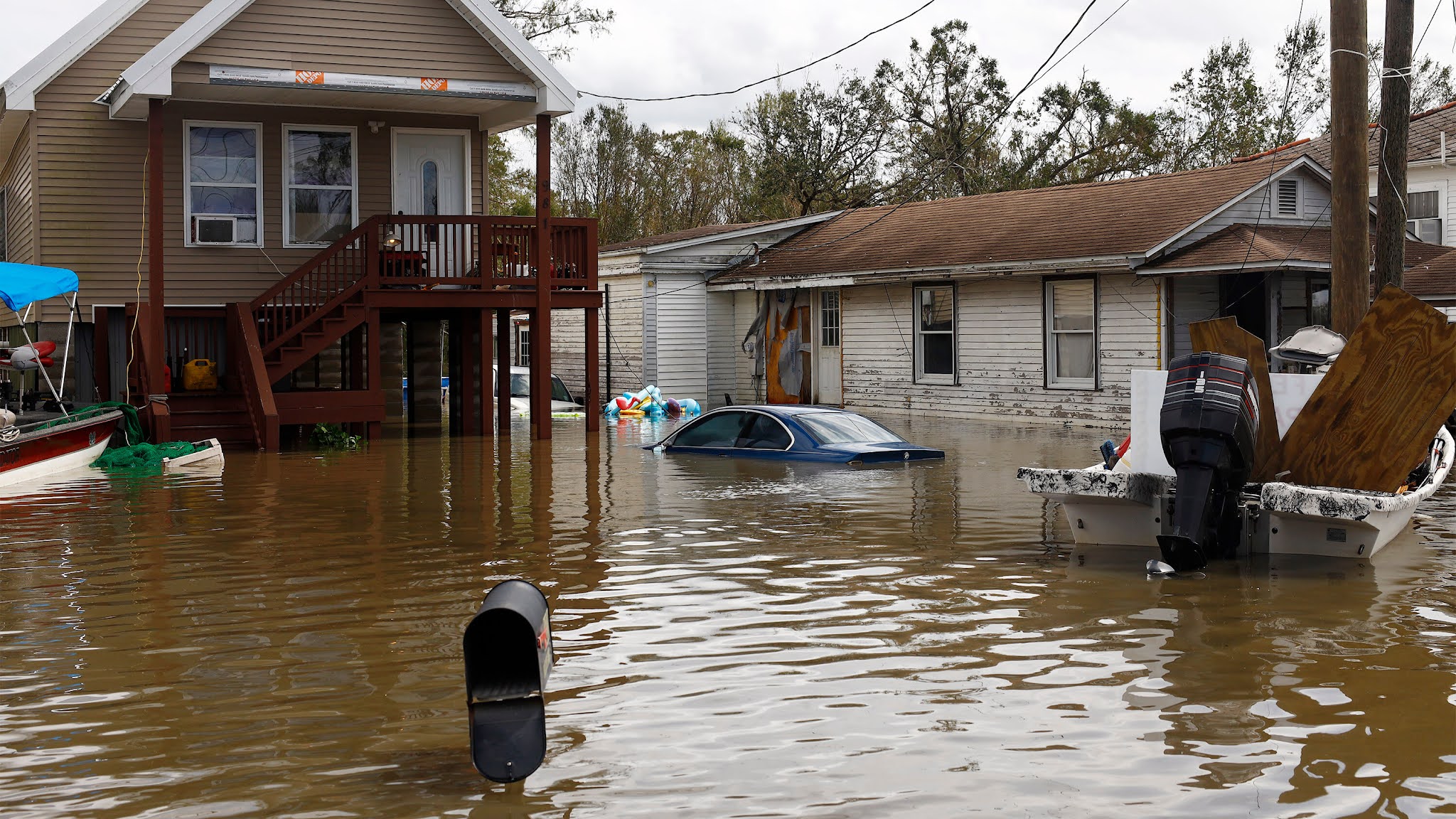 In Louisiana, devastation, as Hurricane Ida blasted away so much of the infrastructure that maintains our familiar day to day life. The lights are out. The roads, impassable. Communities lie in ruins, blasted by wind and rising sea. The remains are the murky umbers of mud and clay, the drab sullen green muck of mold and wet and cloying, inescapable humidity.
 In Northern California, the color palette is different. As fires cross the Sierra Nevada for the first time, and come sweeping down into cities and towns, the destruction is different. It is a different color. The lowering deep-orange-grey of towering clouds of choking smoke, the fiercer living yellow-orange of devouring flame, the charcoal of ashen ruin.
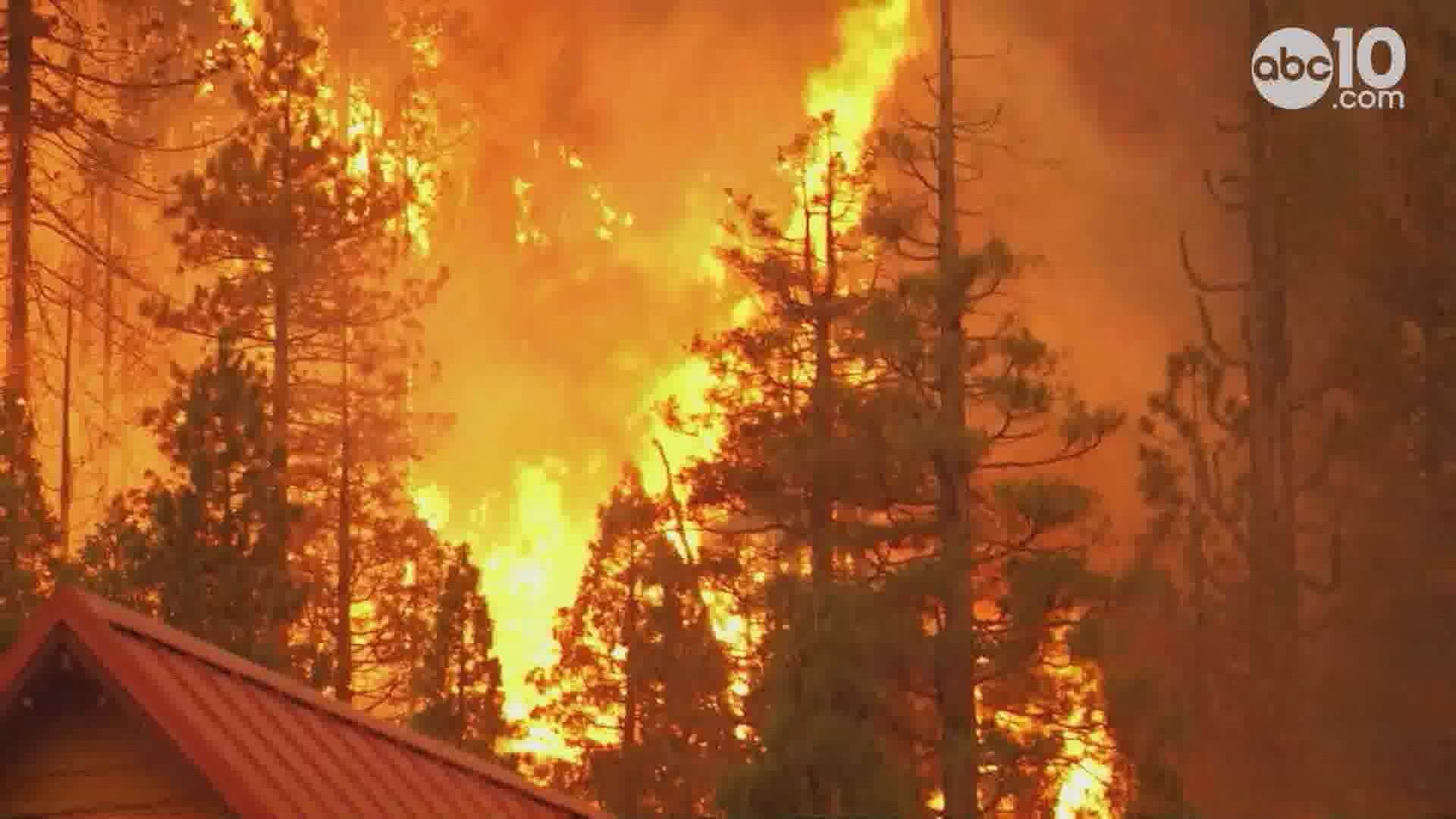
Yet in so many ways, the two events are the same.
There is the same look on the faces of the human beings. The exhaustion. The resignation. The sorrow and fear and uncertainty.
There are the same lines of cars. Well, not cars. Americans no longer buy cars. We drive Sport Utility Vehicles, the great lumbering totems of cheap gas and American consumer freedom. They are not, as the manufacturers pitch us, cruising effortlessly across empty highways, filled with smiling picture perfect families living abundantly. They are not, as the marketers would have us believe, driving through the deep backwoods, on the way to a secluded campsite by a shimmering moonlit lake.
Those SUVs aren't moving at all. They're sitting useless in long lines in Louisiana, waiting for gas, a gallon here, a gallon there, idling with the air conditioning on against the stifling, intolerable heat, consuming gas as they wait for gas, a hopeless ouroboros of consumption.
They are packed to the gills near Lake Tahoe, trapped in bottlenecked traffic for hours and hours, as the fires creep closer to the one road out, doors open, drivers standing on the doorframes, peering out at the backs of endless identical SUVs, emblems of our individuality, stalled motionless as far as the eye can see.
The same faces, and the same vehicles. And there is also the same cause, our warming, more threatening world.
It is a painful irony, seeing the flood and the flame, seeing human fear, and those helpless columns of huge, inefficient vehicles. Because we know, we do, that these three things are all different parts of the same fearsome painting. The fire and the storm...and our fear and helplessness in the face of a roused and angered world...are a result of the gases that spew from the exhausts of those very same Sport Utility Vehicles.
Which we know, but somehow cannot change, as if our addiction to an illusory image of freedom has made us forget that we are free to choose another path.
Such strange, strange creatures, we humans are.
August 10, 2021
The Littlest Sunflower
July 22, 2021
Ovaltine
The little children huddle
Eager
Round the radio
Secret decoder rings and
Captain Midnight code wheels
Sipping their Ovaltine
And making their car payments
As they have been instructed.
July 19, 2021
Cicadas, Climate Change, and Hope
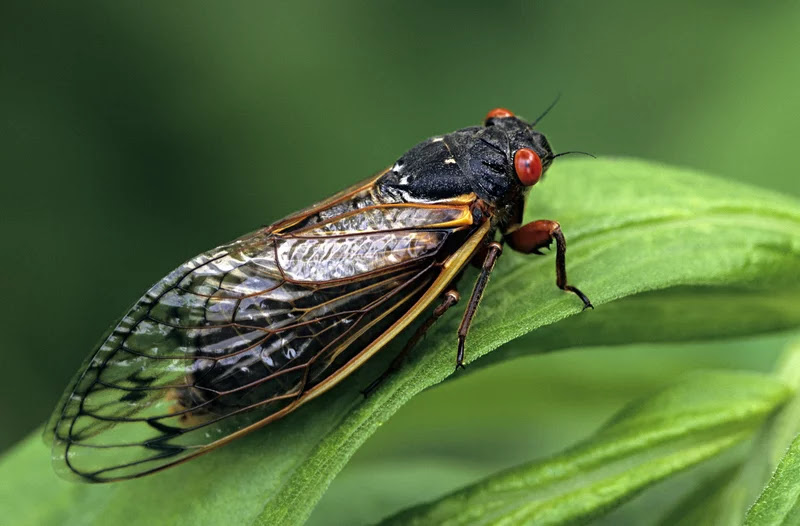 They’ve gone quiet now, their voices stilled. Here and there, a few husks remain, clinging to brick out of the reach of the wind-driven rain. Though we’ve moved on, it was good to hear the cicadas singing again.
As a DC Metro townie, born and raised inside the Beltway, that recent event was my third time hearing the warblings of the Brood X choir. I was a senior in high school during the 1987 emergence. In 2004, I was the dad of two busy little preschool boys. And as that long remembered Star Trek phaser/War of the Worlds keening filled the air a third time this year, I’ve become a middle aged empty nester.
As the cicadas bumbled about in the treetops, shouting out their songs of love, the sound was a welcome thing. Like a visit from an old acquaintance, or a journey to a house where you once lived for a few years as a child. I remembered my youth, and those little boys, now grown. I watched Brood X clamber out of the earth and whir heavily through the air, and I felt nothing but supportive. I was rooting for them. You go, little guys!
They seemed to need all the help they could get.
When that first advance wave came tumbling out, though, they didn’t do well. After we’d gotten a big burst of summer heat to wake them, things got oddly cold, and they were visibly weakened. As cold blooded creatures, they didn’t have the energy to molt. Or their wings failed to form properly in the cool of grey, sunless days, leaving hundreds with stunted, useless appendages. Their carcasses littered the ground and splattered in the roads and sidewalks. It warmed, for a while, but then it got cold again, bitter rain that silenced their song for days.
It stirred a worry, one that rises from a broader anxiety that many of us feel these days. Our world is warming, the temperature inching upwards, and the ecosystem is struggling to adapt. The signs of that change comes daily, as storms and floods, fires and droughts shout for our attention. For many species of flora and fauna, this abrupt shift will prove overwhelming.
Looking at the bizarre, miraculous, alien seventeen-year cicada, so simple and easily broken, a fear rose. Might find this new harsher world we’ve created destroy them? Every species that falls is a loss, of course, but these bumbling bugs are so peculiar. So endearing. So ancient.
Cicadas come from a long bloodline. They seem prehistoric because they are prehistoric, with a lineage that goes back deep into the history of life on earth. The primal ancestors of cicadas go back to the heart of the Permian era, around 275 million years ago, well before the dinosaurs, when the mammals from which we sprang didn’t yet even exist.
As good as cicadas seemed to be at dying in the mouths of our dogs and under the wheels of our cars, they also come from a stock that survived the greatest mass extinction in our little planet’s history. 251 million years ago, the Permian/Triassic extinction event was likely triggered by catastrophic volcanic eruptions, eruptions which ignited massive reserves of coal. The atmosphere filled with gigatons of carbon, global temperatures soared, seas became acidic, and the majority of species died. It was far worse than the event that killed the dinosaurs. Among scientists, it’s known colloquially as The Great Dying.
While the vast majority of insect species died off, the ancestors of the cicada did not. Cicadas may be fragile individually, but together? Together they’re resilient. If their ancestors could make it through The Great Dying, they can probably handle the extinction event we’ve inflicted on our world.
Seventeen years from now, I’ll be almost 70. It might be the last time I’ll hear the cicada song that now fills the air. The world will be warmer and likely still on a warming arc, but the cicadas give me some hope. If those bumbling, booping, endearingly awkward critters can survive and adapt, it seems very possible that we homo sapiens can too. Because even though we may feel small and fragile individually in the face of our changing world, we together can make it through.
That’s how that song sounded in my ears. It was a song of hope for the future.
May 27, 2021
Earth and Ashes
It's Earth Day 2021, and it feels, well, it feels a bit strange.
Earth Day has always been a little peculiar, as holidays go. It's only fifty one years old, and not really a holiday, given that we generally keep bustling about our lives as we always do. It lacks rituals and liturgies and traditions, beyond an amorphous set of warm sentimentalities and dreamy aspirations. Growing things are nice, we think. We really, really should start taking better care of our planet, we say, nodding sagely, as we have for every one of the last fifty one years. Now is the time to act, we say, as we get into our SUVs and drive to pick up a case bottled water for little Tyler's travel league team.
There are pictures of green things, and talk of seeds and planting. Perhaps we put a tree into the ground. Perhaps we repost some meme with a smiley heart earth, or a pastel drawing of a multiethnic group of kids holding hands in a circle with butterflies and flowers. That's just so nice.
It just doesn't feel right. It feels dissonant. Like we are, somehow, missing the reality of where we stand.
It reminds me a little of something that well-meaning earnest progressive Christians started doing a few years back on Ash Wednesday. That's the day in the Christian ritual year when we Jesus folk remind ourselves that we are mortal, fleeting creatures of dust, and that our time here on this world is little more than a blink of an eye.
We typically mark ourselves with a sign of ashes, to remember that we are fleeting and mortal and small. This is meant to be reflective. It's meant to be somber, because hard truths are that way. But we don't like to do somber, because somber makes us sad and stuff. So some folk decided to mingle glitter with the ashes, because it was sparkly and fun. Let's celebrate our earth-wrought mortality with shiny bits of plastic!
Oy. I mean, you do you and all, but oy. It just felt like missing the point.
"Celebrating" Earth Day feels a bit the same way to me now. All is not well on our little planet. We are past the inflection point for dealing with climate change. We're already seeing the effects, as vast planetary systems are starting to shift. Wildfires and droughts, storms and rising seas. Even if we somehow manage to come up with a concerted effort, we're in for a rough ride.