Mary L. Erlain's Blog, page 13
April 10, 2025
Accountability

By implementing these ideas strategically within your organization, you’ll cultivate a culture of leadership accountability that drives alignment, builds trust, improves performance—and ultimately leads your business to success!
The post Accountability appeared first on Peak Development Strategies.


April 9, 2025
SMART Goals Development
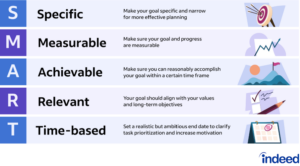
Below are some creative and logical ideas to help you or your team effectively develop SMART (Specific, Measurable, Achievable, Relevant, and Time-Bound) goals:
1. Use the “Backward Design” MethodSpecific: Start with the end result in mind and reverse-engineer the steps needed to get there.Example: If your goal is to increase revenue by 20% in Q3, identify which departments need to act and how their roles contribute.2. Incorporate Milestone TrackingMeasurable: Break down large goals into smaller milestones with measurable checkpoints.Example: Instead of aiming to onboard 500 customers by year-end, aim for 125 per quarter.3. Create Collaborative GoalsAchievable & Relevant: Involve team members in brainstorming sessions to ensure buy-in and practicality.Example: “Increase marketing campaign leads by 10% through collaborative cross-departmental efforts.”4. Gamify Your GoalsTime-Bound & Measurable: Introduce gamification techniques like progress bars or point systems to track progress toward goals.Example: Reward teams when they reach 50%, 75%, and 100% of their target.5. Align with Organizational VisionRelevant: Ensure every goal ties back to broader organizational objectives.Example: If the company’s focus is sustainability, a goal could be “Reduce paper waste by 30% within six months.”6. Use Data as a Starting PointMeasurable & Specific: Base your goals on historical data or trends for realistic benchmarking.Example: “Increase website traffic by 15% compared to last quarter’s average of X visitors.”7. Adopt a Quarterly SMART Goal FrameworkTime-Bound & Achievable: Plan shorter-term quarterly goals instead of long-term ones to adapt more flexibly.Example: Set Q1-specific targets like “Launch two pilot programs for product testing by March.”8. Emphasize Continuous LearningAchievable & Time-Bound: Encourage personal growth goals alongside professional ones.Example: “Complete one certification course in digital marketing within six months.”9. Integrate Cross-Team DependenciesSpecific & Relevant: Create interconnected goals that require collaboration between teams.Example: “Sales and Marketing teams will collaborate to generate 200 qualified leads per month.”10. Use Realistic Stretch GoalsAchievable & Realistic: Balance ambition with feasibility using stretch goals that push boundaries without overwhelming teams.Example: “Increase monthly sales from $50K to $60K over six months through targeted strategies.”11. Apply Metrics Beyond NumbersSometimes qualitative measures are just as valuable as quantitative ones.Example:Instead of just focusing on “50 new clients,” focus on improving client satisfaction ratings from X% to Y%.The post SMART Goals Development appeared first on Peak Development Strategies.
April 8, 2025
How Great Leaders Inspire Action

Here are 15 creative and logical ideas on how great leaders inspire action, based on Simon Sinek’s Golden Circle model and leadership principles:
1. Start with the “Why”
Great leaders focus on clearly articulating their purpose or belief system. By sharing their “why,” they create an emotional connection with their teams and audiences, fostering loyalty and passion.
2. Lead by Example
Leaders inspire action by modeling the behavior they expect from others. When leaders demonstrate integrity, empathy, and dedication in their actions, they motivate others to follow suit.
3. Build a Shared Vision
Unite teams around a common goal or purpose that resonates deeply with everyone involved. A shared vision creates alignment and drives collective effort toward achieving meaningful outcomes.
4. Emphasize Emotional Connection
Tap into the limbic brain (responsible for emotions) by focusing on values, beliefs, and shared purpose rather than just facts or logic. People are inspired when they feel connected to something bigger than themselves.
5. Encourage Innovation and Questioning
Create a culture where team members feel safe to challenge the status quo, propose new ideas, and take risks without fear of failure. This promotes creativity and continuous improvement.
6. Focus on Long-Term Impact
Great leaders prioritize long-term goals over short-term gains. They inspire their teams by showing how their work contributes to a larger legacy or vision that extends beyond immediate results.
7. Hire Based on Belief Alignment
Recruit individuals who believe in your organization’s mission rather than those solely seeking a paycheck. Employees who align with your “why” will be more committed and passionate about contributing to success.
8. Foster Empathy in Leadership
Understand the needs, feelings, and challenges of team members through active listening and genuine concern for their well-being. Empathetic leaders build trust and strong relationships that inspire loyalty.
9. Communicate Transparently
Openly share your vision, goals, successes, failures, and reasons behind decisions with your team or audience. Transparency builds trust and inspires others to fully engage in achieving shared objectives.
10. Celebrate Small Wins
Recognize progress along the journey toward larger goals. Celebrating milestones reinforces commitment to the mission while keeping morale high among team members.
11. Tell Stories That Reflect Purpose
Use storytelling as a tool to convey your organization’s purpose (“why”) in an authentic way that resonates emotionally with people—whether it’s employees, customers, or stakeholders.
12. Empower Others to Lead
Inspire action by giving team members autonomy and opportunities to take ownership of projects or initiatives aligned with the organization’s mission.
13. Connect Actions to Core Beliefs
Consistently align “what” you do (products/services) with “why” you do it (purpose). This ensures that every decision reinforces your belief system while inspiring confidence in stakeholders.
14. Inspire Through Authenticity
Be genuine in your communication—don’t try to fake enthusiasm or passion for causes you don’t truly believe in. Authenticity inspires trust, which is essential for motivating action.
15. Develop Emotional Intelligence (EQ) as a Leader
Cultivate self-awareness, self-regulation, motivation, empathy, and social skills as part of your leadership toolkit to effectively connect with people on both intellectual and emotional levels.
By incorporating these principles into their leadership style, great leaders can inspire action not through authority but through belief-driven connection—a powerful force for transformation!
The post How Great Leaders Inspire Action appeared first on Peak Development Strategies.
April 7, 2025
Here are 15 creative and logical ideas for stress management based on the sources provided:

By incorporating these strategies into your routine, you can build resilience against everyday pressures while enhancing overall well-being!
The post Here are 15 creative and logical ideas for stress management based on the sources provided: appeared first on Peak Development Strategies.
April 4, 2025
Understanding Burnout

Burnout is a syndrome characterized by chronic workplace stress that has not been successfully managed. It manifests through three primary dimensions: feelings of energy depletion or exhaustion, increased mental distance from one’s job, and reduced professional efficacy. The World Health Organization recognizes burnout as an occupational phenomenon, emphasizing its connection to work-related stress rather than being classified as a medical condition like depression or anxiety1.
Symptoms and Warning SignsRecognizing the symptoms of burnout is crucial for effective management. Common signs include:
Emotional Exhaustion: Feeling drained, fatigued, and lacking enthusiasm.Cynicism: Developing negative attitudes towards work and colleagues.Reduced Performance: Experiencing decreased productivity and feelings of incompetence2.These symptoms can lead to serious health issues if left unaddressed, including insomnia, depression, and physical ailments such as heart disease3.
The Phoenix PhenomenonThe concept of the “Phoenix Phenomenon” refers to the transformative process individuals undergo when recovering from burnout. Just as the mythical phoenix rises from its ashes renewed and revitalized, individuals can emerge stronger after experiencing burnout. This transformation involves several key steps:
1. RecognitionThe first step in overcoming burnout is recognizing its presence. Individuals must acknowledge their feelings of exhaustion and disengagement from work4. This self-awareness is essential for initiating change.
2. Seeking SupportSupport systems play a vital role in recovery. Engaging with colleagues, friends, or mental health professionals can provide necessary encouragement and guidance5. Open discussions about workload and stressors can help alleviate feelings of isolation.
3. Implementing Self-Care StrategiesSelf-care is critical in combating burnout. Effective strategies include:
Regular Exercise: Physical activity helps reduce stress and improve mood.Mindfulness Practices: Techniques such as meditation can enhance emotional resilience6.Adequate Sleep: Prioritizing restful sleep aids in recovery from fatigue.4. Work-Life BalanceEstablishing boundaries between work and personal life is essential for preventing burnout recurrence. Scheduling regular breaks during work hours and ensuring time off for relaxation can help maintain this balance7.
5. Reassessing GoalsIndividuals should take time to reflect on their career goals and personal aspirations. This reassessment may involve setting new objectives that align better with their values and interests, fostering a sense of purpose at work8.
ConclusionOvercoming burnout requires a multifaceted approach that includes recognition of symptoms, seeking support, implementing self-care strategies, maintaining work-life balance, and reassessing personal goals. By embracing these steps, individuals can experience their own “Phoenix Phenomenon,” emerging from burnout with renewed strength and clarity.
The post Understanding Burnout appeared first on Peak Development Strategies.
April 3, 2025
Empowerment in the Workplace
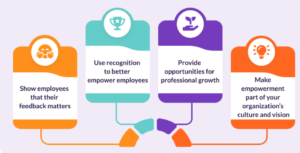
Employee empowerment in the workplace refers to a management philosophy that encourages employees to take ownership of their work, make decisions independently, and contribute actively to the organization’s goals. This approach contrasts sharply with micromanagement, where employees are closely supervised and have little autonomy. Empowering employees involves providing them with the necessary resources, authority, trust, and support to perform their roles effectively.
Understanding Employee EmpowermentTo empower employees means to give them the authority and freedom to make decisions regarding their work. According to the Cambridge Dictionary, empowerment is defined as “giving someone authority or freedom to do something.” In a workplace context, this translates into allowing employees to take initiative, share ideas, and feel confident in their abilities without excessive oversight1.
Benefits of Employee EmpowermentResearch indicates that empowered employees tend to be more engaged and productive. For instance, studies show that those who feel empowered rank in the 79th percentile for engagement compared to just 24% for those who do not2. The benefits of employee empowerment include:
Increased Productivity: Employees who feel trusted and valued are more likely to perform at higher levels.Higher Retention Rates: Empowered employees are less likely to leave an organization because they feel appreciated and recognized3.Enhanced Creativity: When given autonomy, employees can think outside the box and propose innovative solutions4.Improved Morale: A culture of empowerment fosters a positive work environment where employees feel motivated and satisfied with their jobs5.Strategies for Implementing Employee EmpowermentTo effectively empower employees within an organization, several strategies can be employed:
Communicate Openness to Ideas: Leaders should encourage feedback and demonstrate that employee input is valued. This openness fosters creativity and innovation6.Provide Professional Development Opportunities: Offering training programs, mentorships, or opportunities for skill development helps employees grow professionally and personally7.Recognize Achievements: Regular recognition of employee contributions reinforces positive behaviors and motivates individuals to continue performing well8.Create Feedback Loops: Establishing mechanisms for both giving and receiving feedback ensures that employees know how they are performing while also feeling heard by management9.Set Clear Expectations: Clearly defining roles and responsibilities allows employees the freedom to determine how best to achieve their objectives without micromanagement10.Encourage Flexibility: Allowing flexible working hours or remote work options can help accommodate individual employee needs while promoting productivity11.Delegate Responsibility: By delegating tasks based on skills and expertise, leaders can empower team members by showing trust in their capabilities12.Foster a Culture of Trust: Building an environment where mistakes are viewed as learning opportunities encourages risk-taking and innovation among staff members13.ConclusionIn summary, empowering employees is crucial for fostering a productive workplace culture that enhances engagement, creativity, morale, and retention rates. By implementing effective strategies such as open communication, professional development opportunities, recognition of achievements, clear expectations, flexibility in work arrangements, delegation of responsibilities, and fostering trust within teams, organizations can create an environment where employees thrive.
#genzisourfutre #genz #coaching #everyone #genzcommunity
The post Empowerment in the Workplace appeared first on Peak Development Strategies.
April 2, 2025
Developing Your “Why” – Based on Simon Sinek’s TED Talk

To develop your “Why,” follow these structured steps inspired by Simon Sinek’s concepts from his TED Talk, “Start With Why.”
Step 1: Understand the Importance of “Why”The first step in developing your “Why” is to recognize its significance. According to Simon Sinek, the “Why” represents your core belief or purpose that drives everything you do. It goes beyond making money; it encapsulates the impact you want to have on the world and why your organization exists. This foundational understanding will guide all subsequent steps.
Step 2: Reflect on Your Core BeliefsTake time to introspect and identify what truly matters to you and your organization. Ask yourself questions such as:
What motivates me to get out of bed every morning?What principles do I hold dear?Why did I start this organization or project?This reflection helps clarify your beliefs and values, which are essential components of your “Why.”
Step 3: Articulate Your PurposeOnce you have a clearer understanding of your core beliefs, the next step is to articulate them into a concise statement that captures your purpose. This statement should be simple yet powerful enough to resonate with others. For example, Apple’s “Why” is about challenging the status quo and empowering individuals.
Step 4: Align Actions with Your “Why”After defining your “Why,” it’s crucial to ensure that all actions within your organization align with this purpose. This means evaluating:
How you operate (the processes and behaviors that bring your “Why” to life).What products or services you offer (the tangible evidence of your beliefs).When these elements are aligned, it creates authenticity and builds trust with customers and employees alike.
Step 5: Communicate Your “Why”Effective communication is key to inspiring others. Use storytelling techniques to share your “Why” with stakeholders, including employees, customers, and partners. Make sure that when you communicate:
You emphasize emotional connections rather than just facts.You illustrate how your “Why” translates into real-world impacts.This approach not only engages people but also fosters loyalty as they connect with shared values.
Step 6: Foster a Culture Around Your “Why”To sustain the impact of your “Why,” cultivate an organizational culture that embodies this purpose. Encourage team members at all levels to embrace the mission by:
Sharing success stories that reflect the organization’s values.Creating feedback loops where employees can express their alignment with the “Why.”A strong culture centered around a clear “Why” enhances employee engagement and drives collective action toward common goals.
ConclusionBy following these steps—understanding the importance of “Why,” reflecting on core beliefs, articulating a clear purpose, aligning actions, communicating effectively, and fostering a supportive culture—you can develop a compelling “Why” that inspires both internal teams and external audiences. Remember, people don’t buy what you do; they buy why you do it, so make sure your “Why” resonates deeply throughout every aspect of your organization.
The post Developing Your “Why” – Based on Simon Sinek’s TED Talk appeared first on Peak Development Strategies.
April 1, 2025
Women in the Forefront of Leadership

Women are increasingly recognized as vital leaders across various sectors, yet they continue to face significant barriers that hinder their advancement into top leadership roles. Despite making up nearly half of the global workforce and achieving higher educational attainment than men, women remain underrepresented in senior management and executive positions.
Current Landscape of Women in LeadershipWomen hold approximately 25.1% of senior management roles and 24.9% of board positions globally, which indicates a slow but steady increase from previous years12. However, men still dominate these areas, holding about 75% of senior management roles3. This disparity is particularly pronounced in revenue-generating positions, where women occupy only 29% of such roles4.
Barriers to AdvancementSeveral systemic barriers contribute to the underrepresentation of women in leadership:
Stereotypes and Biases: Traditional views on leadership often associate masculine traits with effective leadership, leading to biases against women who exhibit similar qualities5. Women frequently face higher standards for promotion compared to their male counterparts, which can impede their career progression.The “Broken Rung” Phenomenon: Research highlights that the primary obstacle for women is not necessarily reaching the top but rather securing their first managerial role. For every 100 men promoted from entry-level to manager, only 87 women achieve the same promotion6.Work-Life Balance Challenges: Women disproportionately shoulder domestic responsibilities, which can limit their availability for leadership roles7. The lack of flexible work arrangements further exacerbates this issue.Networking Gaps: Men generally have more extensive professional networks that facilitate mentorship and sponsorship opportunities essential for career advancement8.Benefits of Women in LeadershipThe presence of women in leadership roles brings numerous advantages:
Companies with diverse executive teams tend to be more profitable; those in the top quartile for gender diversity are 21% more likely to outperform their peers financially9.Women’s involvement in decision-making processes leads to more inclusive policies and practices that benefit organizations as a whole10.Female leaders often prioritize employee well-being and engagement, fostering a healthier workplace culture that can reduce turnover rates11.Moving ForwardTo enhance women’s representation in leadership positions, organizations must implement targeted strategies:
Establish clear goals for gender parity within leadership ranks.Create supportive environments through mentorship programs and flexible work policies.Address biases by promoting awareness and training among all employees.By actively working towards these changes, companies can unlock the full potential of female leaders and create a more equitable workplace environment.
The post Women in the Forefront of Leadership appeared first on Peak Development Strategies.
March 31, 2025
Getting Started as a New Leader

To successfully start your journey as a new leader, it is essential to focus on several key strategies that will help you build relationships, establish credibility, and create a positive team environment. Here’s a detailed step-by-step approach:
1. Adopt a Beginner’s MindsetAs you transition into your new leadership role, embrace the idea of being open to learning. Approach each situation with curiosity and humility. This mindset allows you to observe how your team operates and understand the existing dynamics without imposing your preconceived notions or solutions too quickly1.
2. Listen ActivelyEngage in what is often referred to as a “listening tour.” Spend time talking with your team members, peers, and stakeholders to gather insights about their experiences, challenges, and aspirations. Listening not only helps you build rapport but also provides valuable information that can guide your decision-making 2.
3. Set Clear ExpectationsCommunicate openly about your leadership style, values, and expectations for the team. Clearly define roles and responsibilities so everyone understands their contributions towards achieving common goals3. This clarity fosters accountability and helps align efforts across the team.
4. Establish RelationshipsBuilding strong relationships is crucial for effective leadership. Take time to get to know each team member personally and professionally. Understanding their strengths, weaknesses, motivations, and concerns will enable you to lead more effectively4.
5. Create a 30-60-90 Day PlanDevelop a structured plan outlining your objectives for the first three months in your role:
First 30 Days: Focus on listening and observing.Next 30 Days: Start implementing changes based on feedback gathered.Final 30 Days: Drive results by executing on commitments made during the previous phase5.6. Lead by ExampleDemonstrate the behaviors you expect from your team members. Be proactive, show integrity, and maintain a positive attitude even in challenging situations6. Your actions set the tone for the team’s culture.
7. Encourage Open CommunicationFoster an environment where team members feel comfortable sharing their ideas and concerns without fear of judgment. Regularly check in with them through one-on-one meetings or informal catch-ups7. This openness promotes trust within the team.
8. Recognize AchievementsAcknowledge both individual and team accomplishments regularly. Celebrating successes boosts morale and motivates everyone to continue performing at their best8.
9. Be DecisiveAs a leader, making timely decisions is crucial for maintaining momentum within the team. While gathering input is important, avoid analysis paralysis; instead, make informed decisions based on available data9.
10. Stay Informed and AdaptableContinuously seek knowledge about industry trends, organizational changes, and emerging technologies relevant to your field10. Being adaptable allows you to pivot when necessary while keeping your team’s goals aligned with broader organizational objectives.
By following these steps diligently as you embark on your leadership journey, you’ll be well-equipped to establish yourself as an effective leader who inspires trust and collaboration among team members.
The post Getting Started as a New Leader appeared first on Peak Development Strategies.
March 28, 2025
Understanding Leadership and Management

In the context of organizational dynamics, leadership and management are two distinct yet interconnected concepts that play crucial roles in guiding teams and achieving organizational goals. While they share some similarities, their primary functions, focuses, and approaches differ significantly.
DefinitionsLeadership is primarily about inspiration, vision, and change. Leaders focus on setting a direction for the organization, motivating individuals to work towards common goals, and fostering an environment where innovation can thrive. They are often seen as visionaries who challenge the status quo and inspire others to follow them.
Management, on the other hand, revolves around organization, coordination, and execution. Managers are responsible for ensuring that day-to-day operations run smoothly, tasks are completed efficiently, and resources are utilized effectively. Their focus is on maintaining stability within the organization by adhering to established processes and guidelines.
Key Differences1. Focus on People vs. TasksLeaders prioritize people and relationships; they aim to inspire and motivate their teams.Managers concentrate on tasks and processes; they ensure that work is organized and completed efficiently.2. Vision vs. ExecutionLeaders create a vision for the future of the organization; they articulate what success looks like.Managers execute that vision by developing plans, allocating resources, and overseeing implementation.3. Innovation vs. MaintenanceLeaders encourage creativity and innovation; they seek new ideas to drive change.Managers maintain existing systems; they focus on optimizing current processes rather than changing them.4. Long-term vs. Short-term OrientationLeaders think long-term; they consider how decisions today will impact the future.Managers often focus on short-term objectives; they prioritize immediate results over long-term strategy.5. Influence vs. AuthorityLeaders rely on influence to gain followers; their power comes from their ability to inspire trust.Managers exercise authority based on their position within the organizational hierarchy; they direct subordinates through formal power.ConclusionIn summary, while both leadership and management are essential for organizational success, they serve different purposes. Leadership is about inspiring change and setting a vision for the future, whereas management is focused on executing that vision through effective organization and coordination of tasks. Understanding these differences allows organizations to cultivate both strong leaders who can innovate and visionary managers who can implement strategies effectively.
Thus, the difference between leadership and management can be summarized as follows:
Leadership focuses on inspiring people towards a vision while management emphasizes organizing.
The post Understanding Leadership and Management appeared first on Peak Development Strategies.