Polly Campbell's Blog, page 21
October 29, 2014
Five Ways to Handle Dinnertime Drama and Save the Day
 My kid was complaining about homework “It’s haarrrddd.”
My husband had the vacuum going which is a good thing for sure, but a noisy one. And I was in the last 15 minutes of a deadline struggling to focus.
By the time I was done I felt on edge and irritable. I was tired of noise and complaints and pressure. I was just downright tired. And I let that intense energy spiral around me until I snapped at everyone.
Then I took a timeout.
Each day we are faced with plenty of challenging moments. Often one builds on another until our self-control is depleted and we feel wiped out. But our day isn’t over just because we are. There is dinner to fix, clothes to wash, homework to help with or at least nag about, and this end of the day routine of sets up the Perfect Storm. A coming together of people and energy and demands at a time when we’ve already been pushed by people and energy and demands and we just aren’t into it anymore.
This is prime time for petty arguments, overcooked dinners, whining kids, and red wine. This is also the time when we can add to the stress with our bad behavior or pull on our big girl britches, (otherwise known as sweats with an elastic waistband) take a swig (or two) of wine, and act like the heroines we are.
Shift the Mood to Something Better
I fancy myself heroic, I mean it’s unlikely the people I live with would know what kale is, let alone have underwear to wear, if I weren’t here to help. But, despite adhering to higher nutritional and hygienic standards, I’ve been told I can get a bit impatient and sarcastic and well, perhaps even snarky, at the end of the day.
It do get a little edgy when certain family members dump their pockets out on the kitchen counter where I’m preparing the fish dinner and other certain family members say that they aren’t going to eat the fish anyhow so it doesn’t matter if the keys and the screw found in the driveway are sitting next to it on the counter.
In these chippy moments, it’s easy to let the negative vibes take over and fall into a pattern of fatigue and frustration induced nagging, yelling, complaining guaranteed to create enough drama to ruin dinner and probably the day. Or we can shift the energy just enough to change the tone of the night and feel better.
Sometimes, on my best days, when I am my most evolved self, that is what I do. And I use some little life hacks, simple little things, to help me get through the upset before I create more.
How to Save the Day
Get away. Take a timeout. Got to a back bedroom and take a deep breath and if you do it a little huffy and dramatic like I do, people will be too afraid to come knocking on your door for the first five minutes. Usually that’s all I need to turn it around. Just a breather.
Smile at the people who are making you crazy. First and foremost, a fake smile generally helps me keep my mouth closed so I’m less likely to say all the things I’m thinking. But, research by Robert Zajonc in the 80s, and others since, shows that when we activate those smile muscles we actually feel better. Plus, smiling out of turn also keeps the grouchy people around you a little nervous.
Assume the Wonder Woman pose. Harvard researcher Amy Cuddy says a change in posture also changes our mood. Stand tall, feet wide, shoulders back, hands on your hips, a la Wonder Woman and you’re likely to feel more confident and in charge. Crazy how effective this is. Now, if you want to don a little star-spangled leotard and a cape, that would probably go a ways toward changing the mood in the household too.
Turn down the lights. Bright lights intensify our moods and dim lights tend to diffuse the intensity, according to new research led by Alison Xu. So, when things are heating up, turn down the lights.
Turn on music. Some days call for Wilson-Phillips Hold On, others a little Happy or Shake it Off. Some days Patsy Cline’s Crazy does the trick. Whatever it is, change the dynamic in the room by putting on some music that inspires, calms, or just plain-old makes you feel good. From the time our daughter was a baby, she could be soothed by music and it works for most of us. In this house you’ll hear everything from heavy metal to classical and it always changes the tone of things around here.




October 27, 2014
Focus on What is Working
 Lately, I’ve been thinking about running away.
Fantasizing about it actually. Leaving the daily routine behind for a few days of quiet. I would drink coffee and later wine. I’d read books and meditate and breathe in the space and get to know myself again.
Nobody would interrupt me. Toilet paper would be abundant and there would never be an empty tube left on the holder. I wouldn’t plan a single meal I’d just eat when I wanted. There would be no complications.
And this weekend I did go away – with my family in tow. All the way out of town I imagined checking into my own room. Having a shower without someone talking to me through the door.
Within minutes of check-in my daughter’s stuffies were scattered throughout the room and she was using the remote to check out cable cartoons, while putting on her swimsuit. Life just felt noisy.
But I took a deep breath. Put down my gear. And walked with her down to the pool. She skipped ahead. And then she danced. And then she sung through the hallways. She was thrilled we had to take an elevator to get to the lower level. She asked questions about the permit and the emergency phone and when the doors opened she sprinted for the pool.
I watched her toss her sweatshirt into the chair and jump into the water without testing the temperature and when her head bobbed to the surface, with water drops rolling down her hair and skin, her face was one big grin.
I got it then.
Focus on What is Working
This is hard sometimes. The routine. The daily responsibilities that don’t always jive with my personal desires in-the-moment. It gets old figuring out what to cook for dinner and digging the soccer uniform out of the laundry to wash it yet again and juggling work deadlines and bill schedules and a marriage to a man who is spending hours training for a marathon.
The routine can eat us up and raise our stress levels until we daydream about another, more peaceful world.
But, what I remembered, while watching my daughter transform into a mermaid named Bubbles, is, that this is the life I want.
When days seem a little less rosie, when we are tired or feeling trapped, it’s easy to begin thinking about what isn’t working, instead of what is.
It would be a lot less complicated to be alone in a motel room – and I’m certainly not opposed to the idea. One of these days I might escape for the day.
But I’m coming back. Because, to have few complications is to have few experiences.
I would miss watching my daughter skip down the hall. I would miss taking pictures of my husband’s finish. Sure, I wouldn’t have to juggle childcare and schedules, but I would so miss the dinners with my girlfriends when we solve the problems of the world.
This stuff is also part of the routine and for now, it’s what I’ll put my attention on because skipping through life is a whole lot more fun than skipping out.

October 20, 2014
Put a Bounce In Your Step and Your Mood
I spilled coffee over the keyboard, an editor e-mailed saying payment hasn’t been processed, and the vegies I was planning to use in the soup, had spoiled. None of these are a big deal, but these little annoyances had me in a funk. Now, I needed to raise my positive energy before the whole day went haywire.
Often we let the little things determine how we feel our entire day. A few things go wrong or we have to cope with some little hassles and we think “whelp, I guess I’m just having one of those days.”
Yet, just as a few annoyances can lower our mood a few little tweaks can trigger our positive energy and make the whole day better.
Strut Your Good Stuff
Sometimes, simply changing your physiology can pull you out of the doldrums. In the 80s psychologist Robert Zajonc found that when the small facial muscles move into the shape of a smile they also trigger specific brain functions that are associated with happiness. So fire up a big fake grin and you’ll start to diffuse negative feelings.
Now German researchers say, putting a bounce in your step can also raise happiness levels. People who altered their gait to walk with a more energetic and uplifted stride – head up, shoulders back — felt happier and more positive.
Other research shows that people who are feeling sad or depressed tend to sit and walk slumped over, shoulders down. But, when we lift up our posture, pull back our shoulders, and stand tall we feel better.
It’s easy to let the little things get us down. Next time, though, when you feel yourself falling into a cycle of niggling annoyance and negativity put a little spring in your step. It may be enough to change your mood and your day.

October 15, 2014
Five Ways to Become More Curious
 Last week I learned the proper form for a deadlift. I also learned a new chord on the ukulele, how ebola is transmitted, what it’s like to adapt a screenplay from a book, and exactly how to shape puff pastry into a gross, intestine-like shape. I also had a conversation about how some forms of vigorous exercise can sometimes offset the symptoms of Parkinson’s and where the Arabian Sea is located. Again.
I am naturally curious, but this is also a quality I work to strengthen. We can all become more curious and that is worth doing. Curiosity helps us learn, remember, grow and engage in the world. It’s also fun because out of inquiry comes passion and the discovery of things we like to do. And it improves performance.
In one study out of the University of Edinburgh, researchers found that those of average intelligence who are curious and conscientious did just as well in school as those thought to have greater intelligence.
Fear Can Quell Curiosity
Sometimes, though, fear overrides our desire to know. I am curious to know what it would be like to survive alone in the wilderness, but I’m fearful that I would spend much of my time hungry, crying and cold so in this case, my fear will keep my curiosity at bay.
When I wrote my first book, though, I was also afraid. Afraid I couldn’t do, fearful of rejection, disappointment.
But the strongest sense I had while proposing and writing that book was wonder. And that ultimately trumped my fear. I wondered whether I could write a book. I wondered what it would be like to see it on the shelf. I was curious to see what it would be like to write 65,000 words and how I would feel and how I would organize my days. I had so many questions about the experience that the questions themselves kept me going. I needed the answers.
That’s how it works. Curiosity provides intrinsic motivation. Moves us forward. Helps us explore, act, accomplish and it creates a structure for us to participate in life.
Curiosity can be the link between feeling stuck and moving into your greatest life.
Five Ways to Become More Curious
Find what fascinates you. You may have to go looking. You may discover a bunch of baloney that does not interest you at all, but the exploration process will yield some surprises and those are always good for revving up curiosity.
Do things you don’t know how to do. When I signed up for a Beginning Ukulele class I was nervous. I didn’t have a clue how to play this little instrument. But, I thought it would be interesting to find out if I could. Try something different, something you don’t know how to do. Study a new language, pick up an instrument, try a new recipe or pick up the Sunday crossword and challenge yourself with what you don’t know.
Ask questions. We tend to associate questions with childlike behavior and as we grow we act more like the expert than the student. Be the student. Ask the questions. When you learn something new, express an opinion, converse with others, ask why. Why do you like Asian food? What is it about green that turns you on? Why do you do the job you do? Explore your experience through the questions, then seek out the answers and reflect on what you learn. Self-reflection – a processing of the information you discover – is essential to self-understanding and often prompts curiosity.
Go to people, not Google. I love Google, but the most dynamic learning occurs when we interact with others. They inspire us. They trigger thoughts and actions that inspire our curiosity. Curiosity is a dynamic process of questioning and creating and investigating. It is inspired when we come up against others who are also exploring the world; others who have knowledge to share acquired from their own inquiry. Hang out with these explorers, ask questions of them, listen and watch and learn.
Don’t allow boredom to become you. When we go to a restaurant, I always sit with my back against the wall so I can people watch. I am fascinated by what prompts people to do what they do. I watch their table manners and expressions and become curious. Even in this most mundane environment – lobby of a doctor’s office, seat of a bus, bank teller line – there is always something to read or look at or ponder. Challenge yourself to do that. Curiosity is about inquiry and exploration. Actively choose to act curious rather than succumb to boredom and you will learn more and become more curious.
Curiosity isn’t limited only to the exposure of external things either. Our internal landscapes are fascinating. Next time you are prone to boredom, shift perspective by asking questions: Who am I? What is the meaning of life? What would I do if I had a million dollars? Why?

October 13, 2014
How to Remember What You Learn
 One of the reasons I was drawn to writing is that it requires me to learn new stuff. To write well you’ve got to read and talk to people and research and try new things and contemplate and ponder and question — and these are a few of my favorite things. I am curious. There I things I want to know.
And curiosity is something I also want to ignite in Sweet P because when we are curious we are engaged and participating in this world and we feel better.
Curiosity allows us to find meaning in our lives, it inspires passion, play, and exploration. It also impacts memory and intrinsic motivation. It gets us going; pushes us beyond our comfort zone to grow and achieve.
And, it makes it easier to learn. A recent study published in the journal Neuron describes what happens to our brains when we are curious. One of the obvious findings was that when people are curious, they are more likely to learn the information they need to satiate that curiosity. But that isn’t all; they are also better able to learn overall, even things they weren’t curious about. And, they are better able to retain that information. Learning all kinds of things is easier when we are curious about something. Anything.
Curiosity also piques the brain’s reward center, according to researchers, releasing dopamine and make us feel good, and increases activity in the hippocampus, the part of the brain that forms new memories. So what we learn sticks.
And, here’s the thing, we can learn to be more curious. While some degree of curiosity is innate – think of young children who come loaded with questions – it is also a cultivated skill that can be practiced and strengthened to aid us in our daily lives.
In the next post, I’ll offer up some surprising ways to cultivate your curiosity.
Want to know more? Well, then, you’re already on your way to strengthening this quality.

October 1, 2014
Four Quickie Ways to Ease Stress in the Moment
 On my best days, I see the kind of routine moments of stress like jury duty, and the third-grade meanie, and a family subsisting on peanut butter because I haven’t had time to shop, not as stressful, but as part of a grander, life experience. On my best days. Sometimes, though, any of these and other little routine things get under my skin and stress me out.
On those days, perspective is everything and I rely on four primary stress-busting strategies to keep me grounded and sane.
Four of My Stress-Busting Favorites
Why are these my faves? Because I can do them in the middle of an 8-year-old’s meltdown over hair bands, while stuck in traffic, or when facing a work deadline. They work anywhere. They are free, easy-peasy and immediately help you move from the stressful mindset of what-isn’t-working to the focused mindset of what is.
Acting stressed is time consuming. It’s energy depleting. And sometimes leaves me feeling muddled. I just don’t have time for that. So, I’m a fan of anything I can use that promotes calm and clarity. Here are four things that do.
1. Breathe. Simple, but effective. Take at least five deep slow breaths from your diaphragm. See your belly moving in and out and you are doing this right. This simple act changes your physiology and also your focus. It take intention and attention to breathe this way and when you do it, you slip out of the cycle of rumination and worry.
2. Accept. Much of our stress comes from worrying about what might happen, or wishing away what has happened. I wish I was thinner. I wish I my hair wasn’t turning gray. What if the car conks out on the freeway? What if I run out of peanut butter? Then we move on to bigger and better worries – what if I have cancer? What if I lose the job? When we do this, we are stuck in a worried imagination instead of dealing with reality. Wishing and what-iffing do not change what is, but they do keep us stuck in the ick.
Acceptance is the antidote. It roots us in the moment and takes the drama out of the situation. Simply notice the moment, without judgment. “I’ve been summoned to jury duty” feels easier to cope with than, “what if jury duty means I’m late picking up my daughter after school?” When you can find acceptance in the moment, you also have greater clarity and insight as to how to deal with the situation in the next moment. Before you stress out, then, you’ve got a solution to the trouble you might still be what-iffing over. This is a healthier, more empowering, less stressful way to live.
3. Reframe. Take a different view of the world. Sometimes this is as simple as sitting in a different chair in the room. You see the room from a whole new perspective and it changes how you think.
Often, when we are under fire or stressed out we take a narrow view of the stressful circumstance. Instead, take a broader perspective. View the situation from all sides and pick the one with the best scenery. Things are rarely black and white. There are many true and accurate ways to look at any one situation. Pick the one that helps you cope better with the situation. For example, a job loss can be awful, stressful, devastating or it can give you the extra time you need to pursue your passion or find your dream job.
4. Move. Don’t pause to ruminate. Get up. Go outside and surround yourself with a green landscape (green and nature are both stress reducers.) Change your posture, journal your feelings and then move on, exercise, make the call, send the e-mail, register for the class or take an inspired action toward the thing you want and away from the thing causing you stress. Allowing unwanted thoughts to circulate through your psyche unattended is a sure way to build stress, but when you acknowledge them and use them to motivate you to get busy moving toward something better, their power is diffused.
Life is filled with stressful moments to be sure, but how you react to them will determine how well you live and maybe even how long.
Image from GraphicStock

September 29, 2014
Everyday Stress Hurts Us the Most
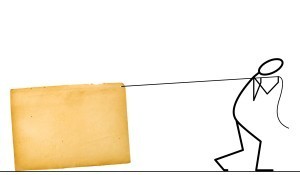 One of the third grade girls doesn’t want to play with my daughter at recess. I’m not sure what to cook for dinner tonight – right now peanut butter sandwiches are an option because it’s about all I have in the house – but then does this make me a bad mother? I need to wash the reds so that my daughter’s soccer uniform is ready for the weekend game, my husband has a late, will-miss-dinner meeting and the check engine light just went on. Oh, and I see I’ve just been summoned for jury duty.
Any one of these hassles – so common to the daily routine — can ratchet up the stress. And, how we react and cope with that has a big-time impact on how happy and healthy we feel and how long we live.
Research Shows Daily Stress is the Worst
Stress morphs into many forms and consistently high stress levels just plain wear our out our brains and bodies priming us for a host of health risks. But it isn’t necessarily the big stuff like job loss, divorce, or death that places the greatest demand. It’s the little daily hassles like job pressures, relationship conflicts, commuting issues, and other common and routine burdens that may have the biggest impact on our longevity, according to new research out of Oregon State University.
Significant life events are a major source stress, but it doesn’t seem to impact our life span as dramatically as the daily challenges, says Carolyn Aldwin, director of the Center for Healthy Aging Research in the College of Public Health and Human Sciences at Oregon State University.
In Aldwin’s research, she and others looked at the stressful life events and everyday hassles for nearly 1,300 older men. Those who identified few everyday hassles had the lowest mortality rate. Nearly half of the men who said they had a mid-range number of hassles had died by the end of the study. But of those who reported a high number of everyday stressors 64-percent died.
The study seems to indicate, that while some stress is unavoidable, how you react to those stressors has a big impact on how well and long you live.
“It’s not the number of hassles that does you in, it’s the perception of them begin a big deal that causes problems,” Aldwin said. “Taking things in stride may protect you.”
How do you handle the daily stresses? It’s worth adopting some go-to coping strategies to get through the days with a bit more ease.
For now, though, try this: when you are freaking, stand up, widen your stance – broad shoulders, legs wide – and put your hands on your hips a la Super Woman. This is what researcher Amy Cuddy calls a power pose and simply standing like that can boost your confidence. So give it a go and consider other ways to minimize the stress of the daily routine. Tuesday, I’ll provide a few of the easy-peasy tips that work for me.
Image: Stock.xchng

September 24, 2014
How to Make Promises You Can Keep
 Keeping a promise is a big deal. Simply doing what you say you are going to do, matters a whole lot to people. And, whether you make or break a promise will influence the quality of your relationships and even your own self-image and self-worth.
You don’t even have to put out greater effort, say researchers at the University of Chicago Booth School of Business, simply keeping your word is meaningful and powerful.
A promise is so highly valued, that it’s worth thinking about before you make a promise you can’t keep.
Four Ways to Make Promises You Can Keep
1. Say what you can do and what you will do. If you aren’t sure, don’t make a promise. Listen, you don’t have to promise the world. But if you do, make sure you can deliver. It’s okay when asked to say “I’m not sure, but I’ll try to be there” or “I can’t commit to that now.” But damage is done if you repeatedly make promises and fail to deliver. Take time to give some serious thought to the promise at stake and promise sure you can follow through.
2.Speak the truth, rather than saying what others want to hear. I used to have this bad habit of promising to call. I’d run into old friends, people who I sincerely liked, and I’d end every conversation with: “We should get together. I’ll give you a call.” Even while hearing the words roll off my tongue, I knew I would never call. Life was busy, and I had a tight network of close friends and family responsibilities and I wasn’t good about reaching out to acquaintances that way. So why did I say it? I think it’s because I didn’t know how to end the conversation. It seemed appropriate to indicate to these people whom I genuinely liked that I would like to see them again. I said what I thought people might want to hear. Thing is, it always felt like a lie and it undermined how I felt about myself. So, I stopped doing. Now, I speak the truth. ’ll say something like “it is nice to see you. I’m so glad I ran into you.” But I don’t make promises based on what others might want or expect from me.
3. Be honest about your limitations and your needs. When I’m writing a book, I can hardly hold a conversation that isn’t about the work. So, this is not a good time to promise to meet friends for dinner or coffee dates. I am also a person who needs downtime. If I have more than two demands or social engagements a day, I know I’m not going to make the third – so I limit my activities. If it’s a busy week, I’ll look ahead and see that it wouldn’t be smart to promise I’ll be at the weekend party – when I know I probably won’t be up to going. Though it sometimes happens, I work hard not to over-commit.
This requires some self-awareness. You have to take a look at the other responsibilities in your life, your values, your physical and health needs, your schedule. You have to know what matters to you and what doesn’t and then commit to the things that do so that you can keep your promises.
4. Update others immediately, when you can’t make good on your promise. Life changes, kids get sick, work hours are added, or your parents are unexpectedly coming to town. Things change that may prevent you from keeping certain promises. Hopefully, because you are a person who usually keeps your word, one broken promise as a result of changing circumstances won’t hurt your relationships.
But, when you make a promise, others act on the expectation that you are good for it. They buy extra food for the dinner or they put your item on the agenda. They include you in their plans. If things change, the responsible and respectful thing to do is to let others in on it. Call and explain why you can’t follow through. Make amends if they are required. It’s not only polite and respectful, but it shows that you also take your promises seriously.
Making promises that you can keep is about self-awareness. It’s about knowing your values and valuing yourself and those you promise. It’s about keeping your word because that is the way you show self-respect and respect to others. You don’t have make a bunch of promises. You don’t have to say anything at all. Consider carefully, the promises you will make because they can improve and enhance your relationships or whittle them away.
“Do what you promise you will do,” says behavioral scientist Nicholas Epley, “and people will be grateful.”
And you’ll be able to live better with yourself.

September 22, 2014
Why You Should Keep Your Promises
 “But Mom, you prom-isssed,” wailed my 8-year-old when I told her she couldn’t have ice cream after dinner. While there is still some debate whether I promised or whether I said it was a “possibility” (I say no, I’m not a big ice-cream promiser) the drama ignited an important discussion.
What is a promise? What does it matter? Does it hold true even if circumstances change? For example, my daughter had had a Slurpee when she was out before dinner, so it didn’t make sense to then load her up on ice cream an hour later.
And, if you don’t say the word promise, as I rarely do, is it still a promise?
What is a Promise?
A promise is a declaration or vow. A commitment that you are going to do (or not do) something you say. It’s a statement that gives others the reasonable expectation that you will follow through on your word.
Course we make promises all the time. There is the implied promise, when we buy a house that we will keep up with the payments. When we get married, we promise to hang tough even when one of us is acting crazy or annoying. We made a vow. A promise. When I take on an assignment, I promise to do the job on time, and with integrity.
I also commit to feeding the kid, cleaning the bathrooms, returning calls, driving with my seatbelt on and paying taxes and other grown-up deals – yet I never say “I promise” to do these things.
But then there are a whole lot of things that we commit to that ultimately go by the wayside or can’t be followed through on because circumstances change so quickly and completely that the promise no longer applies, such as the Slurpee vs. unexpected-ice-cream dilemma.
When that happens – when you double book a coffee date with friends and a work meeting, when you decide not to show at the party you promised to go to, many of those broken promises are understood and eased with simple communication alerting the person you promised to the change in plans.
But, done too many times, even the smallest broken promises can have a big impact on our relationships and our own self-worth.
How Broken Promises Hurt You and Others
Promises unkept send a clear message to the person you promised that something or someone else matters more. In other words: What is important to you is not them. And even the smallest thing to you – the promise of a phone call or dinner out – carries major significance to the person you promised – the friend who rearranged her schedule to meet you.
Ultimately, broken promises devalue and disrespect others, but they also chip away at your own sense of self.
“Not keeping a promise is the same as disrespecting yourself. Ultimately it can harm our self-image, self-esteem, and our life,” says positive psychology expert Michelle Gielan.
Make Promises You Can Keep
Many of us don’t set out to break promises and chip away at our own self-worth. Circumstances change and that can cause us to waffle on our word, or simply have priorities shift in the moment. For example, my sick kid will negate your coffee date.
The key is to keep the promises you can so that it’s rare and circumstantial when you can’t make good on your word. It’s also important to choose your promises – you don’t have to promise anything and everything. Be judicious when you give your word. And, fill others in ASAP when conditions change.
When you are self-aware honest with others about what you can deliver, you’re more likely to deliver on your promises.
In the next post, I’ll talk more about how you can make promises you can keep. For now, start by not making many to begin with.

September 17, 2014
How We Find Joy in the Mundane
 My graduation from college was awesome. My wedding? Meaningful, lovely, a total blast. The first time I held my daughter? Breathtaking. All big days to be sure.
But, so was the first day I sat alone at the desk as a self-employed writer. And the moment my grandfather let me drive his car. And the morning my daughter made her own breakfast. And a conversation I had with a girlfriend over margaritas. And the hug from my husband after a really rotten day.
We like to celebrate the biggies of life – and they should be celebrated – but we also need to notice, and honor, and enjoy the little moments. These mundane moments that show up in the daily routine are the things that will add meaning and joy to our lives, say researchers.
“What is ordinary now actually becomes more extraordinary in the future – and more extraordinary than we might expect,” says Ting Zhang, a researcher at Harvard Business School who found that when we document the routine moments of our lives to read later we actually experience greater pleasure and joy remembering a “typical” day rather than a big-time event.
Things that did not seem meaningful in the moment, a favorite song or playlist, a conversation with a friend, are the types of things the meant a great deal when remembered later, Zhang says.
“The studies highlight the importance of not taking the present for granted and of documenting the mundane moments of daily life to give our future selves the joy of rediscovering them,” he says.
Notice the Now
Before you can start documenting the moments of your life, you must notice them. Start by pausing at least three times a day and during every transition – like before you brush your teeth, or start the car, or get up to leave — to notice what is around. Use all five senses to soak up your environment then pause to become aware of what you are thinking and feeling. Sit with it. Don’t act on these thoughts, just become aware.
Notice the amazing in the familiar. The complexity of a spider’s web, the way the sun comes through the trees, a child’s laugh. And, here’s the key, soak it up. Identify the good feelings that emerge from this noticing and pause to fully absorb them. Spend 15 or 20 seconds soaking up the good feeling.
Also, journal, or use a gratitude practice (or combine the two) to connect to the amazing in the mundane.
Do this several times a day and you’ll not only line the future with joy and meaning, but you fill the moments right now with gratitude, appreciation and good feeling
Photo from Stock.xchng