Polly Campbell's Blog, page 17
March 25, 2015
Don’t Let the Routine Crush You

Personal freedom = personal happiness which makes TOTAL sense to me when I’m hiding in the bathroom hoping the little person here doesn’t come pounding on the door.
In that moment, I don’t feel all that free, nor do I feel all that happy.
Researcher Richard Ryan from the University of Rochester says our happiness is due in part to having the freedom to decide what to do and when we’ll do it, without a lot of door-pounders.
With this kind of freedom, we feel more confident, capable and in-charge, and we also have a greater sense of well-being, he says. It isn’t bad for our relationships either, because often when we feel like we have more free time, we tend to spend it with the people we love.
Still, most of us feel trapped by the daily schedule. We say “yes” to much. Do things we SHOULD do rather than the things we want to do and get sucked into the daily demands. Little things like oh, work schedules that requires to be in a 9 a.m., and feeding the children and doing laundry — AGAIN — can put a damper on our sense of freedom.
Yet, even with a 9 to 5 there are always pockets, like lunch breaks, evening hours, and weekends where we can decide how to spend our time and reclaim some of the good feelings that come with our sense of independence.
Here’s how to do it:
1. Do what you must, then do what you love, then do nothing more. So many days we do the essentials — and everything else. You don’t really need make dinner, do the dishes, and create handcrafted wrapping paper for the 23 birthday parties your child is invited to this summer – unless it gives you great pleasure. If you love making wrapping paper, then do it. When we spend time on the things we enjoy, it fills us up and gives us a sense of freedom. Otherwise, buy the gift bag and eat on paper plates once in awhile so you have an hour to spend on a family hike, or playing the ukulele, or doing nothing at all. It’s a great practice to leave the empty space empty and see what emerges.
2. Leave one weekend a month unscheduled. This means saying “no” sometimes. It means declaring a day as sacred, open time. Don’t make plans. Don’t make any decisions until you wake up that morning and see what you feel like and what the day holds and then do what feels good to you Do, however, spend time talking about your unscheduled Saturday as it approaches. By anticipating the free day you will heighten the happy feelings. Be patient with yourself, it may be hard not to fill the day up with barbecues and cupboard cleaning. But, you’ll get in the habit of it. And it feels freeing.
3. Say “yes” to the things that align with your values, “no” to the others. It’s hard doing to-do list triage on the daily schedule. Often, though, we end up doing things that don’t even align with the things we care about most. This is when our happiness takes a hit. If family is one of your highest values, but you spend most of your days cleaning house or at work then you’ll feel drained, and possibly depressed, at the end of the day. If health is a high value, but you eat take-out and sit at a desk most days instead of working out, your life satisfaction is bound to drop. Take a close look at how you are spending your days and identify those activities that match your personal values and those that don’t. Then stay as close as you can to what matters.
If your job right now does not fit your values, then build in an activity and passion that does – go for that walk on your lunch break, or meditate for 10 minutes, to read that book you are captivated by. Deliberately choose to spend your time on the things that you value and you’ll feel more autonomous.
4. Create some unscheduled time every day. This is a biggie and so hard to do when you are working and parenting, but, if you make it happen, you’ll feel better and get more done in the long run. When I get my daughter to bed, I know I get an hour to myself. I rarely plan that time. Sometimes I’ll go to bed early, or finish a work project or watch a basketball game or read. But, knowing I have a bit of time that I don’t have to coordinate or schedule helps me feel better during the rest of the day. It also quells the feeling of overwhelm. If you can’t carve out time in your day, schedule it. Plan a date night – alone. Get it on the calendar so the kids are accounted for and all the must-dos are met, but then wait until the time arrives before deciding what to do. Then do what the things that align with your values and desires.
You are free. You do get to decide how to spend your time and while there are many meaningful things that we must do — family responsibilities and career demands– how we spend the moments in between will determine how much joy and well-being we experience.
This post first appeared here in 2014.




March 23, 2015
How Time Off Helps

Everybody needs a break — or at least a change in the regular routine — so I’m taking one this week. This post originally published here a couple of years ago and updated today, is a good reminder, for me anyhow, of why taking a little time off is so important. And you can find scads of other posts all written to help us amplify the goodness in life and cope better with the ick, right here on this site. I’ll be back with new stuff on March 30th and we’ll take on the spring together.
Be Well
-p
I know, I know, with kids and work and soccer practice and all the expenses of life, it might be tough to take a break for an afternoon, let alone a week’s vacation. But, do it anyhow. Make the time.
Vacations – a break from the regular routine – contribute to peace of mind, good health and yes, better relationships. But, they also make you more productive and efficient when you do return home or to the office. And the slow down also helps strengthen that spiritual connection.
I’m not saying you have to take a 21-day Caribbean Cruise to feel better (though doesn’t just thinking about it feel good?) Even an afternoon off or 10-minute mini-breaks during your day can give you a respite that will make a difference in how you feel. The key is to create a break that will move your focus from the stress of the day to something that offers relief, rest, and joy.
3 benefits of a break:
Better immune function: Even a mini-break has been shown to ease stress and boost immune function – which keeps you from tapping into your sick days when you are supposed to be working.
Try this: Pack a picnic lunch and get out of the office or the house for an afternoon. A simple change of scenery can help you disconnect from the daily stress.
Improved heart health: Women who take regular time off are less likely to die from a heart attack, according to Bigwig researchers.
Try this: While it is best to actually go somewhere, even fantasizing about your dream vacation can create positive thoughts and health benefits. So pull out those travel brochures and begin planning your next trip. Just thinking about it will make you feel better and visualizing it can help make it real.
Enhanced creativity: When you step out of the regular routine, even just for awhile, you start to see things differently. New visuals lead to new ideas and inspiration which can boost your energy – all good stuff when it comes to creating anything from a new dinner idea to drawing.
Try this: Get up and go outside. Go sit on that park bench. Walk a new route around the neighborhood, head to the nature park nearby, plant flower, mow the lawn. Just being in nature can help you see the world differently, plus it’s a proven stress reliever.
Whether it’s a 15-minute time-out or a two-week get-a-way you plan, do something that engages the body, brain and spirit and you’ll feel relaxed, relieved and ready to roll when you head back to the regular routine.
Photo by: Stock.xchng

March 18, 2015
When to Ditch the Present Moment
Sure we can find plenty to stress about – How will I pay the bills? What will the test results show? What if these shows don’t look good with this skirt? – but the BIGGEST source of our stress comes from ruminating about the future.
That’s right. As if we didn’t have enough to worry about RIGHT NOW, when the check engine light is blinking and the station wagon is filled with kidlets holding ice cream cones, we go and worry about something that MIGHT happen two weeks from now. Maybe. Perhaps. What’s up with that?
I call it what-iffing. What if my kid doesn’t learn to read? What if I lose my job? What if I run out of wine while the in-laws are in town?
And present-moment awareness – being here NOW – can be a great way to manage our emotions in those moments. When you are immersed, tuned in, otherwise engaged in the present, you are too busy to worry about what might happen, later on.
But, research shows, and this is SUPER good news for Type-A-ers like myself, that a little forward focus can help us feel better about the present.
Three Ways a Future Focus Can Help
Optimism. Consider your best life, say five years from now, and you’ll feel more optimistic today, say researchers. In several experiments, they found that people who wrote about their ideal life felt better than those who simply remembered certain moments.
One practice that really works? Each night before bed write down three things that you are looking forward to in the day ahead.
Patience. Really, who doesn’t need more of this? Oh, and to the guy who CUT ME me off on the freeway ramp at the last minute, hear this: People who think ahead a bit, actually act with greater patience and make better decisions in the present.
In-the-moment thinking can cause us to seek instant gratification – YES, I think I will take those million-dollar shoes today, as long as I’m here, instead of waiting for the sale next week.
When we think about the future, though, we are more patient and willing to delay the instant pick-me-up for healthier and more fiscally responsible future outcomes.
Less stress. Our regular routine can leave us stressed out and EDGY. Like snapping-at-everyone edgy.
I mean how can how can I finish up work in time to get through traffic to meet the kid after band practice? What will I make for dinner with the three bananas we have left? How can I keep working with the jerk at work who spends most of his time on smoke breaks?
These little things often feel so big and icky and hard during the day, but they probably AREN’T going to affect our lives in three months or a year, or five years. Probably not, even an hour from now.
By projecting out, then, and looking at the long-term, we can see that our problems today, won’t really matter tomorrow and THAT realization helps us cope better NOW. You getting all this?
With a long-term perspective, we feel less stressed in the present, according to researchers, Emma Bruehlman-Senecal and Ozlem Ayduk, in the Journal of Personality and Social Psychology.
The trick, then, is to toggle between a future focus and present-moment awareness to manage stress and boost good feeling.

March 16, 2015
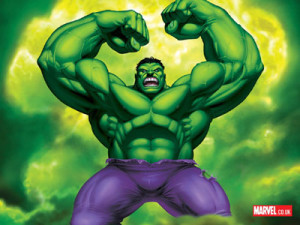
How Spiritual Practice Helps Keep the Hulk Away
 She looked at me and I SWEAR, I could see smoke pouring from her ears, her eyes on fire with rage.
“You never let me do ANYTHING!” she screamed. I grabbed the remote and turned off the television.
“You are the meanest Mommy anywhere.”
‘And, my job is done here,’ I thought. My inner dialogue gets a little sassy like that when pressed.
But, I SAID, calmly, oh so calmly: “Time for bed. Go get your pajamas on.”
I sipped – okay gulped — a glass of wine.
Her cheeks tightened and her chin dropped on to her chest and she looked up at me, this child of mine, her eyes a narrow slit.
“No!” she said.
Damn, I thought.
“Go. Get. Your. PAJAMAS on.” I said a little louder now.
This set off a fit of foot stomping and shrieking kind of like those who walk over hot coals but don’t quite make it.
Spiritual Practice under Pressure
And that’s how my spiritual practice showed up that night. Right there in the middle of foot-stomping madness, I was either going to get a lesson in mindful acceptance or I was going to run out the door, clutching my wine bottle, screaming “I can’t take it anymore” before finding myself at Walgreens wandering in a fluorescent-light induced daze.
But it was cold and I hadn’t showered. And well, I couldn’t find the car keys, so I opted for the more spiritually-oriented, stay-at-home, freak out.
And this is when the spiritual practice pays off. In the middle of the madness when I’m exhausted and my kid is sassy and I can’t get to Walgreens. This is when it has got to work, right?
I mean gratitude and mindfulness and acceptance is all good when everyone is doing everything just right and the sun is out and you’ve just seen a unicorn galloping toward the rainbow at the end of the block while you pick up the mail containing your lottery winnings. Hey, let me tell you what, I am really good with acceptance on those days.
But when my kid is squealing like a little humpback whale and I’m standing here without a go-to parenting plan, this spiritual stuff HAD better show up. I need help and I need it NOW.
Why Spiritual Practice Matters
And it does. You know? It does. Most days I find peace in these practices. Acceptance helps root me in the moment, even while reminding me that if I can just hang on the moment will change. There is clarity and hope there that keeps me from covering her mouth with duct tape or otherwise over-reacting. Or at least it keeps me from over, over-reacting.
Gratitude reminds me of the goodness that is there too, even when it’s wrapped up in squinty eyes filled with frustration and the defiant posture of a you’re-not-the-boss-of-me 8-year-old. And mindfulness, helps me find perspective. It helps me stay centered and connected to myself instead of all “I-am-your-mother-you-will…”
This is why the PRACTICE MATTERS. It helps us get in the habit of acceptance and mindful awareness, and gratitude, and compassion. These things become something we do, every day, even during the easy times, so that when the tough stuff is coming down we fall into these practices, by default really. And instead of going all Bruce-Banner crazy we manage just a little easier. We find a little grace. And we get through.
Fast Forward
Sometimes though, shifting from the present to the future can be helpful too, and I’ll tell you about that in Wednesday’s post.
For now, consider which habits support you when the cable goes out or the bills are due or the kid is crying or the boss doesn’t “connect” to your ideas and life is just a little bit tense, a tiny bit stressful. What practice could you develop so that it supports you doing those trying moments?
Now, make time for it. Save five minutes for a gratitude practice during your day. Challenge yourself to practice mindfulness every time you wash your hands. Get comfortable with the practices and they will be there to help during the times you feel most uncomfortable.

March 11, 2015
Stay Curious and Change is Easier
 Our days are marked by transition. The sun comes up. The sun goes down. We change out of our work clothes and into our pajamas. We eat something different for lunch.
Each day, our bodies are remade as cells die and others are born. The natural environment changes before our eyes when a spider stretches her web between rhododendron leaves, or the slow drip from the gutter nurtures a little patch of soil allowing a wildflower to grow.
This is the nature of life. It’s fascinating and dynamic and yet we cuss it and complain about it and worry about the changes that may come. We hold tight to what we know, and worry about what’s ahead.
This position keeps us stuck. We never apply for our dream job because we’re afraid we might fail. We don’t go back to school, or get the divorce, or tell the guy that we love him, because we are afraid of what comes next. We don’t talk about death or stay close to our dying loved ones because we are afraid too, of not knowing what will happen or how we’ll cope.
Yet, these things happen – anyhow. The sun always sets, before rising again. You can either accept this, participate, and live, and learn and move, or you can stay stuck in denial and rooted in the status quo.
Stay Curious
No transition is easy, but dang, if you’re paying attention and learning and growing and seeking the meaning and wisdom that is contaned within every experience, you’re going to do pretty good with no matter what comes. Curiosity turns transition into a quest. It becomes an adventure. A chance to learn and meet people, develop new skills and have new experiences. Curiosity fosters engagement. When we are curious we participate in the dynamic process of change — instead of getting stuck and caught up in the what-ifs of it all.
Curiosity is the thing that gets you out the door, even though you are now living in a new neighborhood. And pretty soon, you’ve lost track of how tough the transition is because you are too busy living it.
How to Act Curious
What’s that? You say you are not a curious person? Well, become one. Or at least fake it until you feel better. Everybody has some innate curiosity but the rest can be strengthened.
Here’s are 3 ways:
1. Take in something new and novel. I did a new cardio machine at the gym today. I was scared. About fell off because I couldn’t get my legs churning with the pedals. But I kept at it. Paid attention and by the end of the 30 minutes I OWNED that thing. Doing something new, made a dull workout interesting and time passed quickly. And let me tell you what, I’m all for time passing quickly at the gym.
Novelty does not require you to do crazy things like climb mountains or eat crickets, but it does encourage you to do things differently. Try something you haven’t tried before: a new exercise, a new ingredient, a new salon, or route home. When we switch up our routine a bit, we discover new opportunities and intrigues everywhere, that makes us even more curious.
2. Question what you don’t know. As adults we often want to be seen as the experts, after all we waited 30 years (some of us a bit more) to be the one in charge, in the know. But, vitality and resilience come when you are willing to learn about what you don’t know. If you are reading and come across a word you don’t know, look it up. If a freind says they’re travelling to Cozumel, find out where that is. If you child’s third grade math homework is too tough for you to handle (maybe that’s just me) then learn along with him how to solve the equations. Explore the answers to the questions that come up in life rather than letting them go. Not only will this kind of curiosity make life changes more interesting, it will lead you toward some of your greatest passions.
3. Do the thing that feels exhilarating — and a little scary. There is a fine line between exhilaration and anxiety, but when you take on the thing you’ve always wanted to do, you’ll feel a rush. Inspiration usually follows. Then there is room for creativity and innovation. If you’ve wanted to write, or ski, or work for a non-profit, or act, the best way to manage change is to take it on. Of course there will be fear and the anxiety that comes with doing something different. The discomfort that comes with change. But when you are driven by a curiosity to see what something is like, or to know something you don’t know, or to experience something you never have, that fear will be tempered by exhilaration and a rush of energy will carry you forward.
This is the best kind of change.

March 9, 2015
How Change Can Save You
 I don’t want to be a stayer – you know the gal at the party who is the very last to leave. Yet, there are times when it all feels so fun and good I don’t want to go. Like ever. Like want to bare-knuckle grip this moment so that it never ends.
But of course it does. No matter how tight I’m holding. The kids start crying and the wine runs out and the sink fills with dirty dishes and the moment shifts into something new.
We dread that part of change. The movement from what we love, or at least what we can handle into something, well, different. Undefinable until it arrives.
But change is also FANTASTIC and it happens ALL THE TIME! This means a miserable moment, day, year is going to END. And this second, will be different than the next. This is a huge RELIEF if you are buried in crappy moments.
Change SAVES us. It rescues us from the bad days, allow us to go on when we don’t think we can. It is the clearest reminder that this shit won’t last forever – probably won’t even last until tomorrow – so baby we CAN HANDLE one more second of this moment. We can. And as soon as we know that, HAH, IT’S OVER and we get to move into the next a little better.
The Wisdom of Change
When my baby was born she apparently missed the memo that infants were to sleep. We were up most of the night – as expected. But she was also up most of the DAY. She took 15 minute cat naps and then crowed until I’d come pick her up.
I lived life in 15 minute intervals. There were whole days during that first year that felt longer than the entire eight years I’ve shared with her since.
But during this time, change kept me afloat. Just when I knew I couldn’t handle it one more second, she changed and slept a full hour and I got through it.
Change is like that. It doesn’t take much. A little ripple, a little shift. Someone keeping quiet instead of spouting off, a right turn instead of a left, a smile instead of a frown. Those subtle changes move you a little bit differently into the next moment. And that small tweak can change everything just enough to get us through to the next moment.
Baby Steps
It does not take big changes or big decisions or ultimatums to change a life. It takes baby steps. Persistent, consistent, I-am-not-going-to-quit baby steps. And those baby steps can change vast, living landscapes.
Think Colorado River – Grand Canyon vast. A little trickle of water creating one of the most awesome places on the planet.
Think new baby vast. A Six pound life bomb.
Think, “I’m not going to do that anymore,” vast. A simple, little phrase creating movement in a new direction.
Because of change, there is hope. Hope that if you show up and participate the moment will morph into something you can manage. Change is the thing that takes us from loneliness to love, poverty to abundance, sickness to health. It’s the sunrise after darkness, and spring blooms after winter death, and it’s the kid, who never used to sleep, hugging you goodnight before she drifts off.
It’s the lifeboat in rough seas there to push you into the gentler current. All you have to do is stay afloat and let it move you.
Tomorrow will be different than today. It’s unavoidable. As long as you remember that you’ll know that tomorrow can also be better.

March 4, 2015
How Judgment Hurts You
I don’t like those shoes.
I can’t believe she said that.
It makes no sense when he puts the bowls in the top of the dishwasher.
That color does not work for her.
Why would they pay money for that?
Did you hear what he said to his daughter? Tsk. Tsk. Tsk, say the voices of judgment.
And it seems these days we’ve all got the tone down pat. We are quick to scrutinize and form opinions about other people and things.
Judgment Hurts Us
Of course, this habit has also helped us survive. If we deem someone a bit sketchy, or too drunk to drive, or unsafe we are more likely to stay away and stay out of danger. We generally don’t do the things that we judge as harmful to ourselves and others.
But too often quick judgments are flat out wrong loaded more with snark than survival skills. And when we do this thing, cast out our views on others, we are putting up a major block to our own success.
Judgment can hinder our creativity. When we figure that things are bad or wrong or unsolvable or too hard, we are less likely to try. If we judge things as having only a single solution, we shut down innovation.
It also limits our relationships. We are less likely to connect with others we deem as too snobbish or mean or boring, and we miss out on important friendships, or connections that can help us succeed in life and on the job. When we judge our nearest and dearest we are prone to criticism and contempt –that doesn’t work so well in a marriage.
And when we hold tight to a single view about vaccinating our kids, gay marriage, a woman’s right to choose her medical care – when we hold to a single view about anything – and judge others for not sharing it, we veer toward criticism, hostility, anger, even war.
Judgment restricts us. It keeps us where we are. Sometimes it keeps us angry.
Acceptance is Easier
Acceptance leaves a better taste.
You don’t have to change your mind, or give up your position to accept those of others. It’s just that instead of blaming, fighting, criticizing you can let it be. You don’t have to have an opinion on my business. I don’t need to weigh in on yours.
You can advocate for your position, but you don’t have to disparage others for not holding it. You can work your angle, without needing to challenge mine.
When you do this, live from this place of acceptance, it lets a little light in. It allows room for the amazing. It opens up the impossible and allows you to see a black and blue dress when others see it as gold and white.
Acceptance allows for understanding and compassion and curiosity and growth.
Next time you are cut off on the freeway, or someone holds a position you don’t understand, next time someone scrutinizes you with their eyes and you feel judged by another, take a deep breath, tune in to your environment and notice things just as they are – without opinion or judgment or criticism. The guy judging you, you don’t need to judge him. He’s not your business. You can simply get quiet, notice the world around you and see what happens.
Chances are the subtle shift will elevate the moment into something that serves you far better.

March 2, 2015
Different Views and The Dress
 Last week there was an uproar on the Internet as many of us on Facebook and Twitter and through text messages became consumed by “the dress.”
It was a simple thing really, a picture of a white and gold dress.
What? You saw something else? Blue and black maybe?
Soon after the pic appeared the cyber trash talk began. “Are you CRAZY? That is gold!” said a post.
“Am I crazy?” said another, “The dress just changed while I was looking at it.”
“I KNOW it’s blue and black, I don’t know what the rest of YOU are looking at,” from another.
But this isn’t about the picture we saw. It’s about what we believed we saw.
Looking at the Same Thing Differently
We each saw a single representation of the same dress. Only many of us saw it differently. It wasn’t WRONG. Those who saw the gold were really seeing it. It had everything to do with the way the photo was taken and how our eyes adjust.
But, many were willing to battle over their vision of right. Mostly it was good-natured –until it wasn’t. Until those who saw it one way became adamant and sure and began trying to talk the others into seeing it that way too.
We live so much of our lives like this, in absolutes. We see the world in hues of rights and wrongs. And this, well, is wrong.
Because when we line up on a side, we get only one view and then, we get a little judgy.
We see something or read something or hear something and we KNOW it to be true in our lives, so we want it to be true for everybody.
Get Curious, Not Judgy
Instead of being curious and excited that others view things differently, we try to talk them into seeing it our way. Instead of growing and learning about new possibilities we hunker down in our own views and FREAK when others start talking crazy about something that can’t possibly be true — until it is.
If we are nice about it, we’ll cajole a bit, or quietly nod our heads, ‘oh, now I see, she’s one of those’ we say to ourselves before trying to convince them to think more like us. Then we may just sidle over to self-righteousness and condemnation. Often times, we are willing to argue and fight. When all along, staying curious and connected is really the power position.
I’m all for declared values and views. We’ve got a set of standards in this family. I have certain beliefs that I live by. I’ve been known to pick a fight now and again over something I believe in, shake my head in wonderment at some of the different ideas out there. But still, it’s pretty clear, that I don’t get to force YOU to live by my rules. I might want to, sure, it might sometimes FEEL better for me if you did things my way, but truth is you do not need to live by my standards to be successful in this world. And, my life would be pretty narrow and limiting if I thought you did.
Most days, when you bring a casserole to the party of chips and dips, I’m going to get curious and take a bite, and ask about the recipe and see what I can learn, because maybe this concoction will be the best thing I have ever tasted. And most days, I’m going to reserve the right to change my mind when you show me a better way.
Looking at Things a Bit Different
Now, d0n’t get nervous here. You DO NOT have to change your mind just to see a different perspective.
But, here’s the thing: when you do open yourself up to different ideas, your view might just shift a teeny bit. And that little bit might be the big difference. The new insight. Innovative product. Man of your dreams. Deeper friendship. Cure.
We are dynamic, fluid, changing beings (like it or not). There are few rights and wrongs in the world and when you can recognize that, you let light in a little more light. And only then can you see all the colors.

February 25, 2015
Proof that You Can Handle Anything
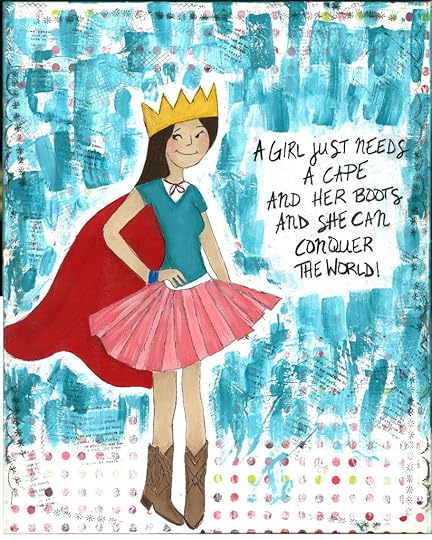
Original work by Erin Cairney White
Seriously, you’ve got this. Whatever it is keeping you awake at night or causing your impatience and stress, you can handle it. I know that.
Still, there are times when it feels like the challenges and hurt are bigger than we are. It becomes tough to see our way through the difficulty. So today I’ll be what intuitive Sonia Choquette calls your “believing eyes.”
I believe that while you may be facing obstacles you’d rather not face, you’ll be okay. You can do it. You don’t even have to know how. The path doesn’t have to be clear, you just have to believe you can get through.
You are enough, right now, to handle whatever you have to face.
Here’s how I know:
You contain the power of the Universe. Think about this: you are made of the same stuff that makes up the sun and the moon and the mountains and and oceans. That stuff is in you. This is not a small thing. If this planet can survive millions of years of erosion and scary dinosaurs and crazy-ass people, I’m thinking you can survive a blind date, or a rotten interview. You are made of impressive stock. Don’t forget it.
Brains are plastic. Not like the BPA toxic plastic, nor the molded polyvinyl chloride of of Barbie dolls, (yes, I Googled that), but of neurons and pathways that grow and develop as we experience new things. In other words, your brain expands and so does your capability for dealing with stuff. You may not feel comfortable in the process, but as you try new things, and explore and learn new ways of coping, your brain will literally get a groove on, creating new smoother grooves and pathways that translate into more skilled behavior and ability. Like it or not, your brain will adapt and grow to help you deal better with the challenges you face.
You’ve done it before. Death. Loss. Financial stress. Relationship troubles. Kid demands. Health concerns. If you are a human over the age of two, you’ve probably survived most of these hardships already. So, you’ve got this. Evidence shows that you are resilient. You may not want to deal with the next challenge, but you can. With strength and grace. I know this for sure, because you have done it time and time again.
Even dumb people have done this. Seriously. I’m not one for comparisons. Generally I think they just make us sad and lonely. But, when you are pretty sure you can’t get through this challenge or hurt, take a little mental inventory of the others who have already done it. Chances are high that you are at least as capable as most of them and probably smarter and better equipped than a bunch. So, if they can do it, of course you can. Now come on.
You’ve got life in you. As long as your heart is beating and you are still breathing you’ve got a shot at turning this ship around. Take a minute then to give thanks for the marvel that you are. Each day your heart pumps gallons of blood, your eyes blink, your lungs inflate, and your brain will analyze millions of bits of information – all without your conscious involvement. So now, you really think the co-worker being pissy or the check not arriving on time is something you can’t handle? Sheesh. With a little attention you got this.
There are people who can help. No matter how hard it feels you no longer have to work in isolation. There are support groups, on-line clubs, books, articles, audio tapes, hotlines, volunteer organizations, friends, family members, even friendly baristas out there who can help. You are not alone in this. You simply must find the people that are willing and able to provide what you need. If you are doubting your abilities or needing some fresh ideas, money, support, laughter, a hand to hold, seek out those who can provide that. It’s okay, necessary even, to ask for help. Then, go politely after what you need. The most resilient people do that.
Play the statistics. Most people, the vast majority, experience challenging moments and devastating losses. They hurt and cry and worry and complain and still they go on. They even find happiness again and many settle into a new normal with a greater appreciation because of what they have been through.
This is how I know that you can do it too. You may not like how it goes. You may not get your way or the outcome you want or the rainbows and unicorns you dream about, but you can handle whatever comes. And life can be pretty good again. There is peace in knowing this. You are capable. You’ve got this.

February 23, 2015
Unlearning Limitation
 I’ve been listening to Invisibilia, a podcast about thoughts. How they work, what they do, how dependent we can become on our own ideas even though often what we think isn’t true at all.
That doesn’t stop us from adhering to them. To following these unfounded ideas and beliefs. We even act out of them. And that behavior creates tangible results. Results which we then hold up as evidence that our idea was true all along. When all along it was probably just a really bad idea.
Here’s how it works: once a teacher or parent or other grown-up suggested you weren’t all that good at math (or dancing or reading or dressing or whatever). You took this in, and repeated the thought to your friends on the playground as the reason why you only got 4 out of 5 on the quiz. And you super-charged these thoughts through repetition inside your head and out. And these bionic thoughts became a belief.
Holding tight to the belief that you were math poor, you didn’t take many math classes nor did you practice math a whole lot and so you didn’t improve much. When you got your mediocre math scores on the SAT you had plenty of evidence that yes, indeed, you do suck at math. When it reality, you just chose to behave on your belief that you were bad at math, and you stopped doing the things you needed to do to get better. What if you had believed instead that you were pretty good at math? Or even took on a growth mindset that you could improve your math skills and get better? That belief would have certainly created a different experience.
We do this with everything. We build entire lives around our beliefs big ones and little ones. Ideas that we picked up from the playground, those that were instilled in us by others, those we chose to create and take on ourselves. And we let them unconsciously and unchallenged play out in our lives. Even if they weren’t helpful. Even if most of them are faulty.
Socialized Limitation
On Invisibilia the reporters interviewed Daniel Kish, a guy who is technically blind. He doesn’t have eyeballs in his sockets. Yet he hikes, climbs trees, rides bicycles and does everything else he wants because he was never taught that blindness was a limitation.
He didn’t know he wasn’t supposed to climb trees or hike or bike. So he learned to do those things and can “see” his way through by making clicking sounds with his tongue against the roof of his mouth. Kish uses the clicks like bats use echo-location as a kind of sonar to identify the locations of obstacles and objects. And he teaches others how to do the same thing.
But the biggest obstacle he encounters isn’t the at the edge of the unseen precipice, it’s found in the beliefs others hold about what it means to be blind. We are socialized, taught, to believe blind people can’t do what Daniel Kish does.
Unlearning Limitation
What we believe, what we learn from others and ourselves and hold tight to, determines in large part what we’ll do and explore and feel. But it doesn’t have to.
With awareness we can tweak our beliefs about our own capabilities and twist and mold and shape them into beliefs that support us, move us toward a life of passion and possibility. We can follow our curiosities – no matter what our parents say – and discover the beliefs that will inspire us. Those that are helpful. Those that stand for possibility rather than limitation. We can pick those.
When Daniel Kish was a kid, nobody told him blind people weren’t supposed to be climbing trees. So he climbed them. Later, when he was older he met plenty of people who freaked when they found out he was riding a bike. But it was too late. By then, he’d already installed the belief that he could ride.
Take a minute to consider the limiting beliefs you buy into. Here’s a hint, they often start like this:
You can’t.
You never.
You are too [insert your limitation of choice] short, fat, old, tall, skinny, white, black, dumb, smart.
You are too much or not enough.
Often, it’s the very labels we are given that lead to limiting beliefs — a lady doesn’t act that way, girls can’t call boys, men don’t cry, successful people don’t quit their jobs, women are too bossy, men are so aggressive, you’ll never make a living as a writer, yadda, yadda, yadda.
What labels do you hold? What limiting beliefs have you bought into?
Now, let them fall away, pick a belief that supports the life you want to live.
Then, get moving.
I’m not saying it’s easy. But, geez Louise, living with limitation isn’t easy either.
And, when you identify the ideas that are keeping you down, you can choose a new one and begin systematically choosing behaviors that support better beliefs.
‘I can’t lose weight,’ becomes ‘I make healthy choices for my body and can become fit.’
Then, instead of buying the chips and dip, you’ll behave from that belief and buy the yogurt and over time your new behaviors will create tangible evidence to support your new ideas.
But here is the clincher. It’s not enough to think about this stuff. You’ve got to be brave enough to act on those thoughts.
Stop living from a place of socialized, learned limitation. Stop behaving from the beliefs that are holding you back. Instead, get on that bike. Start peddling a new direction even if you can’t see where you’ll end up.
Seriously, if a blind guy can ride bikes, don’t you think you can figure out how to write the book, or learn the language, or try a new workout?
I know you can. You can thrive through anything. In Wednesday’s post, I’ll tell you how I know that for sure.