Polly Campbell's Blog, page 15
May 27, 2015
Three Ways to Feel Deeply Without Becoming Overwhelmed
 I laughed I cried. I freaked out, yelled, sighed, felt excited and anxious – and that was just Monday.
I am an emotional person – and so are you. We all are, it’s a distinction that separates us from other animals. Yet, many people don’t show or share their emotions. Others try to blow through them or suppress them or deny and dull them by drinking or shopping or eating so that they don’t have to feel the rough stuff.
Thing is, emotions can provide us valuable clues that tell us when we are on track in our lives or falling over the edge. We can use them to guide us, help us make important changes, connect more honestly and deeply with others.
But we still have to find a way to function, to live in this world even with our big feelings. You can feel your emotions, you can be charged with joy and excitement or unhappiness, even stress – you can feel it all, but you still have to work get up and get moving again.
The best thing we can do is to learn to identify what it is we are feeling, and then learn how to live with those feelings, how to manage them, so we get their message without winding up a dripping, overwhelmed mess in the corner.
Here are three ways to do it.
1. Keep a feelings journal. Often we get fired up and we act on the emotions we think we are feeling — when really it’s something else altogether. Until we can identify what it is we are experiencing, we have a hard time soothing ourselves or easing the situation that may be fueling the feeling. For example, you may react in anger to something your husband says, when hurt is really at the root of it. Anger can cause the conversation to veer off course and never get resolved, but if you can slow down long enough to identify what it is you are feeling, and then address that – ‘I felt hurt when you said that,’ — you’ll gain greater insight and develop a deeper connection to others. Journaling, simply writing about your feelings or listing the emotions you think you are feeling in a notebook can provide clarity and help you identify the patterns and triggers that drive your feelings.
2. Gain some distance. It’s tough to manage big, intense emotions when we are in the thick of them and feeling overwhelmed or flooded by all that we are feeling. This is a good time to gain some distance from our feelings so we can find balance and understanding. One way to do this, according to Ethan Kross, a researcher at the University of Michigan, is to take a wider view of the situation. Look at the circumstances from a distance as an outsider. This psychological distancing can provide space and calm that will help us reason through the circumstances without being overwhelmed by them.
3. Become mindful. Yep, this simple and powerful approach can help us settle down and move into a place of awareness and understanding even in the moments of intense feeling. With mindfulness, you give your attention to the moment. This takes us out of our head. Keeps us from over-thinking, which we are prone to do when we are mad or stressed or worried – even when we are happy. We often experience those big emotions as something outside ourselves. Mindfulness requires you to reconnect to the now, to feel the sensations in your body, notice your environment, observe your thoughts. It’s a non-judgmental way of noticing and it creates great peace and balance, which allows you to experience your emotions without being run over by them.




May 25, 2015
Why Happy Tears are Good for You
 “This is the best day ever,” Sweet P said with tears running along her nose, dripping off her chin. She cried and smiled as she looked around her room.
We had updated her room – new shelving, new comforter, a few other big-kid things – as part of a birthday surprise and Sweet P was psyched.
But still she cried.
I do too at sappy commercials and videos of others doing good deeds. I cried when I held my baby for the first time, and my first book. When I saw J in his tux moments before he’d become Mr. J and all the times in between.
Later when I tucked Sweet P in after the big bedroom reveal, she said “I feel better now. Sometimes you just need a good cry.”
Yep you do.
Crying is the way we steady ourselves while drifting in a sea of big-time, intense feelings. Incongruous emotions like tears at happy times help people cope and process the experience, says Yale University researcher Oriana Aragon.
Tears seem to flow when people are overwhelmed by strong, positive emotions, she says, and people who shed happy tears, as Sweet P calls them, seem to manage those feelings better. Tears are part of regulating our experience so we can continue on.
There are some other healthy ways to manage our emotions too, before we wind up laying on the couch, eating a gallon of ice cream while watching the Kardashians. I’ll share them in Wednesday’s post. In the meantime, if you’re experiencing intense feelings, a good cry might be just the thing to help you through.

May 20, 2015
Get Out of Your Head and into Your Heart
Kindness can be a pretty simple thing, a ‘Thank You,’ holding the door open for another, donating to someone in need, o ffering a gentle smile, or helping a neighbor. Leading with compassion rather than hostility.
But we can make this so hard. We get caught thinking that our kindnesses are too small, that they don’t matter, that we can’t make a difference. We believe that if we cannot save the rainforests or end crime that we are powerless to do anything. Baloney.
To be a good in the world, though, you’ve got to get out of your own way. Stop over thinking and start feeling. Move from your head into your heart. Take inspired action.
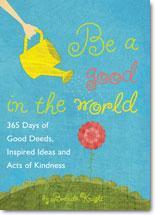
A friend of mine Brenda Knight offers some thoughts about how to do this in her post below and more in her new book Be a Good in the World, where she offers daily ideas for sharing your goodness and making a positive contribution. Check it out.
–pc
Be a Good in the World
Out of Your Mind (And into Your Heart)
By Brenda Knight
For the last few years, I’ve worked two jobs. My “day job” is my publishing career, which is enormously rewarding. The other is my “inner work” – meditation, visualization, intention-setting and deep delving within. It is how I begin and end each day.
I can make myself miserable when I get completely “in my head,” out of my body and out of my heart. I get into an over-thinking “spin” mode and start to worry, disconnecting from my feelings and from those of others. I am trying to become more mindful of this, but it is one of my major unhappiness habits.
Are you sensitive when someone is nattering on and on about themselves, especially when nearly every sentence begins with the word “I”? I used to get very irritated at this, even going so far as to count the “I’s.” But that’s a superficial judgment, as self-absorbed people can humble-brag and many empathetic sentences can begin with “I.” “I am trying to become more compassion.” “I am part of this community.” “I am listening to you.”
One of the quickest turnarounds when you find yourself in this mindset, disconnected from the heartfelt approach to life, is to think it out or even write down your feelings in a journal. There may well be a concern somewhere in the back of your mind, an insecurity, or a fret that is almost subconsciously causing this low level anxiety. Why fret about yourself when you can collaborate with others?
Worry is another major happiness eradicator. We all do it and we all should stop. Worrying truly is useless. It will not help, and worse, it can escalate. Worry can become stress, and stress can lead to depression. If you can’t control all of the little things that bother you, it might make you feel helpless and ultimately bummed out. Dig into your mind and find what nagging frets are beyond your control. Write them down, and chose to either deal with them or to not let them distract you while you’re working on other projects. If you filter out the daily onslaught of those nags, you can focus on what you hope to achieve, what cleaner and more beautiful world you want to live in, what space you can create around you to help you become the best version of yourself.
Plus, worry is a huge timewaster. Focus on what makes you feel right and good in this moment. Get back in touch with your heart and you’ll get back on track.
Invest in the Moment
Mary Jane Ryan, author of some of the very best “heartful” books (Attitudes of Gratitude, The Happiness Makeover), is someone I admire enormously as a happiness expert. She is the highly successful writer and business entrepreneur of Professional Thinking Partners (PTP), and a well-rounded person with varied interests, a loving family and friends. I asked her recently, How does she do it all? With PTP and book tours, she frequently travels internationally, writes bestselling books every year, and still finds time to be involved in her daughter’s school and cook great dinners for her husband. I was really curious to discover her secret. She told me it was really very simple. “I only think about what I am supposed to be doing in the moment. If I am writing, I clear everything else out completely. If I am giving a lecture, I am completely engaged with the people I am speaking with. If I am making a romantic pasta dinner, I am fully vested in making it great. For example, I am talking to you now, and focused completely on this conversation. It is a simple matter of focus. It is also excellent time management. Once I learned this, it completely transformed my life.”
Mary Jane’s words about focusing on our conversation reminded me, for some reason, of Bill Clinton. Few Americans have been as successful as the two-term president, humanitarian, and possible future First Dude. And what’s the secret to his success? “Clinton gives everyone he meets his full, undivided attention,” claims The Third Metric blog. It’s truly his superpower. “In our culture of distraction and multitasking … the ability to completely engage with another person is an unusual trait.” If someone with that much on his mind can still hone in on the person standing in front of him, then we all have the capability.
It takes a bit of time to get good at this disciplined focus, but it is vital for me. “Just try it.” I am trying it and, dear reader, Mary Jane Ryan is right! This happiness habit is a “mastery of life skill.” I still wrestle with monkey mindedness every day, but on the occasion when I achieve disciplined focus, I feel a frisson of joy throughout my being. Mary Jane’s advice is deepest wisdom and we must integrate it into our daily moments. To be absolutely focused requires the mind, body, the spirit, and the heart. As she said, try it!

May 18, 2015
Lead with Kindness
 Yesterday, a friend, whom I don’t talk to often, took time from her ridiculously full life to write me a note. She told me that these posts make a difference to her. That they make her think and that she appreciates my work and the friendship.
The note came at just the right time: In a moment when I wondered if all this hard work was worth it. If it mattered. And in that moment, her kindness kept me going.
It’s the little things that make a big difference. But we overthink this detail. We think that we can never do enough. We figure, well, if I can’t end war, poverty, AND global warming what does it matter?
But your kindness matters a lot to the sick neighbor who felt cheered by the flowers you dropped by, or the kid you volunteer with at school, or the checker who felt better after you took the time to say thank you and offer a smile.
The little kindness matters a lot for someone in the thick of illness or pain or despair who doesn’t know if they can go one more minute. Then you step in and remind them they can.
A Little Kindness Makes Big Difference
It doesn’t take much to alter the course of someone’s day. Someone’s life, even. And when others touch us with their kindness it inspires us to be a little better too. To let others know we love them, to help a stranger, to speak softly with compassion rather than yelling in frustration.
Often we look too far ahead. We plan five years out, or 10 even. Set goals. Fill our schedules. I do it too. But none of it matters not really. Not if we don’t take care of this moment. This ONE moment, is the one we can make better.
Life is made up of these little moments. When we focus on this time, RIGHT NOW and fill it with love and gratitude and kindness, when we bring our goodness and receive the good energy of others, we can uplift this moment a little bit. That alone changes the next moment, and then the next and we can string together a whole bunch of sweet little moments. By the end of this life then, we have a whole lot of little moments that made a great big wonderful, amazing life.
It starts now. Today. Lead with kindness. Take in the kindnesses that are being given to you and then repackage that good energy and send kindness right back out to others. It doesn’t take much, but it might just mean everything.
Image by: Erin Cairney White

May 13, 2015
How to Cut Cravings
 One of the best ways for me to manage my cravings – which seem to strike in the mid-afternoon – is to keep the food that gets me into trouble out of the house. I rarely buy chips so when I want them, I have to find something else to eat.
But there are other strategies that help keep my cravings at bay. If if I eat a good breakfast with fruit and protein and usually a whole grain like a piece of bread, I rarely crave chips or sugary snacks later in the day. That experience is backed up by research.
In a study, Heather Leidy and other researchers found that those who ate a good breakfast were less likely to crave sweets later in the day and those who ate a high-protein breakfast were less likely to want high fat foods.
Works for me.
Walk to End Chocolate Cravings
In another study, a brisk, 15-minute walk was shown to end the urge for sweet and sugary snacks.
Cravings often occur when we are under stress and we want to fill up on the foods that comfort us. Go for a walk instead and the exercise will help diminish your stress and the cravings that come with it.
Keep Your Brain Busy
Finally, distracting your brain with other things, may be the easiest way to thwart cravings for the sweet and savory. In one study, just three minutes spent playing the video game Tetris helped curb the urge to eat.
Immersing yourself in dynamic visual activities – like video games or awesome views — or tapping your imagination to think about stunning visual displays can take our mind of the cravings until we no longer have them.
And, if they do return, a focus on the long-term impact of our food choices can keep us from indulging, according to Brown University researcher Kathryn Demos.
With a few of these strategies we can take charge of our cravings rather than letting them control us.

May 11, 2015
The Biology Behind Cravings
 Chips.
Chips and dip. Ruffles and onion dip to be precise. Yeah. I could go for some of that right now.
Seems like every afternoon I’m seeking something salty. The latest food craving. Other times it’s ice cream after I get my daughter in bed. Sometimes it is pasta.
While I don’t believe in abstinence – meaning if my body feels like eating a particular type of food, I’m likely to eat at least a little bit of it – I don’t want to be at the whim of my cravings, either.
I’m working on eating more mindfully and making healthier food choices. So, when I encounter a craving, I want to use it to understand my stress, my mood, or what my body is feeling before I start snacking. Cravings are about much more than just our desire to maw down on chips.
The Biology Behind Cravings
Three regions of the brain, including our memory centers which associate certain foods with rewards, are activated when we are craving. The brain is literally lighting up with electrical impulses that contribute to our intense desire to pick up food. By satisfying those cravings, we soothe ourselves by easing stress and anxiety, according to researchers like Adam Drewnowski, director of the University of Washington Center for Public Health Nutrition.
Often we crave foods like ice cream, chocolate, chips, macaroni and cheese. Those high fat, high sugar foods, (and others), boost the hormone serotonin while reducing the levels of stress hormones in our bodies. So, that kind of comfort food can calm us down.
Though I don’t recommend eating a bag of chips or a pan of mac and cheese every time we are stressed out, restricting the foods we crave isn’t going to work either. In fact, that kind of limitation makes us want the food even more.
Managing the Craving
The easiest way for me to put off the craving – until I become more mindful of what it is I’m craving and why – is to not keep those high-demand foods in the house. If the chips are here, I will eat them, so I rarely keep them around. Nowadays, I’m more likely to have a few salty Greek olives with a small piece of feta to feel satisfied.
Others find that their chocolate craving can be satisfied with a few M&Ms or a small taste of another sweet.
But one interesting piece of research says looking at pictures of the food we crave, can actually keep us from indulging in it.
In one experiment half of the participants looked at pictures of salty foods like French fries and the other half looked at images of ice cream and chocolate. In both cases, the more pictures the participants looked at, the less pleasure they got from eating the actual food, says researcher Ryan Elder, who led the study.
Kind of like eating that first chip. Tasty. But, by the time you reach the end of the bag, you’re pretty sick of chips. And, as the experiment went on, Elder found that the more pictures people saw of the foods, the less likely they were to want to eat it at all.
So for now, I’ll be staring at pics of chips. Then, Wednesday, I’ll offer some other ways to manage food cravings.

May 6, 2015
How to Be Kind When Others Aren’t
 It’s tricky staying cool and compassionate when others aren’t.
But, results are powerful when you do. Not only will you feel better, but you will change the angry dynamic, lower stress for others involved, and contribute to an atmosphere of peace rather than hostility. This will help you move on and through without dealing with more muck. Here are some ways to do it.
Smile and send a silent hope. If someone is behaving badly, it might be because they a)have got big problems and stresses in their lives, b) they are jerks because they have big problems and stresses in their lives, c) they feel lonely because they are jerks with big problems and stresses in their lives.
No matter the scenario chances are people are experiencing some big stress and maybe a few problems and that can cause pain. Big, hard-to-notice-anyone-else, pain. And, if they are filled with that kind of pain and stress and anger, and that’s all they have inside, then that may be all they have to give to the world, right now.
I am sorry, then, and I do not want to contribute to more of the same.
For these people, on my best days, (sometimes I’m snarky but compassion is what I’m going for) I offer a gentle, non-sarcastic, sometimes-to-myself smile and send a silent prayer for their peace so that they can move through the difficulty and into something better.
Assume the best about the person. We all have bad days. Sometimes we make mistakes. But most of us are good people. We love our mothers and we work hard even when we are sick and we try to do the right thing. When you assume others are good not only will you feel more hopeful, but you will bounce off the negative behavior of others without getting wrapped up in it.
Think about your legacy and the energy you want to bring. Acting with compassion even when others seem undeserving is more about you than them. What legacy do you want to leave? What values are you aligned with? Often those who behave badly are in deep need of kindness. When you meet hostility with courtesy or understanding, you might ease the pain a bit, and you’ll also be showing who you are.
Consider their backstory – there always is one. Challenge, drama, pain, adversity are part of all of our stories and we don’t always handle them well. We aren’t always kind and aware and calm. Because I don’t always get it right, I know that when someone acts out, it is almost never about me. When I inadvertently cut someone off, it’s not because I don’t like them, it’s because I wasn’t focused and I made a mistake and nothing more. I didn’t do it on purpose. So, why then, when they cut me off would I get upset? Not my problem. Not my fault. Not about me. Wish them well and keep heading forward.
Repeat a compassion mantra. But, boy oh boy, can others get under our skin. It’s tough to always keep your cool around difficult people. This is when I use a little reminders – phrases that I repeat to myself before and after the holiday dinner, or meeting with a client. I repeat something like this: ‘I will act with kindness and calm.’ Or, ‘I choose compassion.’ Just so I can remember that who I am and how I want to show up in the world is not dependent on what others do.

May 4, 2015
Five Things About Compassion
 One of the best things you can do for yourself – and actually the world if you’re into saving the world and that kind of stuff, is to act with compassion.
This means extending kindness. Connecting with others not in empathy, when you share their pain, but as a helper who wants to ease it. Compassion has huge physical and emotional benefits not only to those who receive your kindness, but to those who extend it.
Research by Steve Cole, Barbara Fredrickson, Lara Aknin, Martin Seligman, and others shows that when we act compassionately we feel happier, less stressed and we experience greater well-being.
But another thing happens in the moment when you act compassionately: you feel good. Better about yourself. Better able to cope with adversity.
Bad Behavior
Yet, there are plenty of times when we are ticked off: Guy cuts you off on the freeway, someone pushes in front of you in line, or those dang telemarketers just keep on calling – and we just don’t feel like being nice.
We take the bad behavior personally. See it as a sign of disrespect and that fires us up.
Thing is, it’s never about us. The guy is simply not thinking on the way to a work meeting. The woman in line? A single mom trying to get home to her sick kid. Telemarketers? Just trying to pay the bills.
Rather than getting caught up in the actions of others, we can act with compassion and ease the upset for them and for us. Here’s how.
Five Things about Compassion
Remember we all make mistakes. People are screw ups. Seriously. Imperfection is one thing we ALL have in common. If you haven’t made a mistake yet, get ready, because you are due. And when you blow it you’ll want the kindness of others on the other side. Make sure you offer the same.
It is not about you. Everyone has a backstory. What’s going on in their lives is none of your business but you can assume something is because we are human and we all have our own crap to deal with. Their alleged disrespect or rudeness had nothing to do with you, it’s what is within them. Therefore you acting schmucky back teaches nothing, changes nothing, just leaves everyone feeling bad and stressed and unhappy. Don’t be that grouchy guy.
Even grumps need love too. Often the grouchiest people are those that feel the most alone and forgotten in the world. A little kindness can make a profound difference for them and then they will offer it to their kids or wife or the world. That is a game changer.
Compassion is a choice not a reward bestowed. Emotions and good feelings spread. And so do the bad. What legacy do you want to leave in the world. Are you the one to leave things better, or contribute to the stress and hostility that already abounds? Your choice. No one has to do anything to earn compassion. Everyone is deserving. In fact, whether you act compassionately or not has nothing to do with anyone else. It’s simply a choice you get to make – to be kind or not.
Compassion is active. Empathy allows us to share emotions with others, but compassion is active. It requires you to do something to ease the suffering of another. To reach out. Offer support or encouragement or kindness. And we all feel better. Unlike stress, hostility and anger which can harm our bodies when carried around too long, compassion can help us heal.
In Wednesday’s post I’ll offer up some specific ways to be compassionate when others aren’t.

April 29, 2015
This Coping Strategy that Can Change Everything
 I’ve got lots of research and practices and strategies that can help us become more aware and live healthier, happier lives. But really, it comes down to how well you cope when the crap comes down. The people who do well in this life, are those you learn to manage adversity.
Because it’s gonna happen, right?
We are going to face pain and adversity and people who don’t like our hair. One time or another someone is going to be mean and hurt our feelings and not want to be our friend. And all this will feel icky and painful. And all of this will be part of our experience, because we are human and life is like that.
But instead of letting that worry you, know this: You are capable of handling anything that comes your way. Okay, okay. You may not LOOVVE it. But still you can deal. You’ve got all the tools to do it and the biggest one is your curiosity.
How to Cope with the Drama
There are lots of ways to handle the ups and downs of life. A few of my favorites? Gratitude, solitude – anyone for a timeout? – mediation.
But the VERY BEST way to handle the drama of the moment – whether that moment includes clueless husbands or yapping kids or the clerk who closes the line right in front of you, or an insecure boss who insults you in front of the co-workers, a doctor who keeps you waiting, an abusive mother, angry ex, or the client who doesn’t pay – is to get curious.
Now, stop that. Do not roll your eyes. I know. It sounds silly, but I am totally serious here. During intense moments curiosity keeps you from being sucked into the emotion and it allows you to remain clear-headed. Instead of freaking out, then, or rising to the anger or being bowled over by hurt you will manage the moment with a kind of detached awareness and THAT will help you choose appropriate action so you can cope with the challenge rather than making it worse.
I Wonder…
Next time you are hurt and wanting to lash out or crawl back in bed, meet the situation with a question:
“Why is he responding this way?”
“What can I learn from this?”
“I wonder what happened to make him feel so scared?”
“What kind of pressure is she under to make this work?”
“I wonder what happened to cause this mood.”
“I wonder what would be the best way for me to handle this moment?”
“I wonder how I can resolve this situation?”
Usually, I ask these and other questions, silently to myself. But the minute I do, instead of catching someone’s anger or being caught up in the intensity of the situation, I become an explorer.
Instead of reacting emotionally, I go looking for context. I work to identify what is really happening in the moment; to understand why I’m feeling the way I am, and the experience of the others. That helps me pause. Gives me time to catch my breath and respond rationally rather than reacting emotionally.
Curiosity Yields Insight
When I do this, curiosity yields insight. Mostly, it reminds me that whatever is going on around me is usually not really my business and I don’t need to take it personally. Often I learn something about myself and others. Or, I recognize my role in the situation so I can handle it more appropriately.
I don’t always get it right, of course. Sometimes I do leap into the emotional fire and ratchet up the stress. Rarely does that go well. Usually, the true issue gets clouded by all the emotion and nothing gets settled anyhow.
But, when I can meet any adversity, argument, challenge, with a curious nature, a desire to know more, to understand the experience of another, it diffuses the moment.
Anger and upset have a hard time co-existing with curiosity. Curiosity demands more of my attention and that diffuses the volatility and stress around me. The challenge eases and I become engaged and able to cope rather that flustered and angry or hurt.
Think of it like this: haunted houses are really scary when you are wandering through in the dark. But, when you are curious about how it all works, and you turn on the lights and see the gimmicks, and flashing lights and speakers transmitting scary music, when you see the human beings standing upright, clad in costumes, the drama is gone.
Curiosity is like that. It shows us what’s behind the emotion or adversity and by doing so it diffuses the drama and creates a way through any situation.

This Coping Strategy Can Change Everything
I’ve got lots of research and practices and strategies that can help us become more aware and live healthier, happier lives. But really, it comes down to how well you cope when the crap comes down. The people who do well in this life, are those you learn to manage adversity.
Because it’s gonna happen, right?
We are going to face pain and adversity and people who don’t like our hair. One time or another someone is going to be mean and hurt our feelings and not want to be our friend. And all this will feel icky and painful. And all of this will be part of our experience, because we are human and life is like that.
But instead of letting that worry you, know this: You are capable of handling anything that comes your way. Okay, okay. You may not LOOVVE it. But still you can deal. You’ve got all the tools to do it and the biggest one is your curiosity.
How to Cope with the Drama
There are lots of ways to handle the ups and downs of life. A few of my favorites? Gratitude, solitude – anyone for a timeout? – mediation.
But the VERY BEST way to handle the drama of the moment – whether that moment includes clueless husbands or yapping kids or the clerk who closes the line right in front of you, or an insecure boss who insults you in front of the co-workers, a doctor who keeps you waiting, an abusive mother, angry ex, or the client who doesn’t pay – is to get curious.
Now, stop that. Do not roll your eyes. I know. It sounds silly, but I am totally serious here. During intense moments curiosity keeps you from being sucked into the emotion and it allows you to remain clear-headed. Instead of freaking out, then, or rising to the anger or being bowled over by hurt you will manage the moment with a kind of detached awareness and THAT will help you choose appropriate action so you can cope with the challenge rather than making it worse.
I Wonder…
Next time you are hurt and wanting to lash out or crawl back in bed, meet the situation with a question:
“Why is responding this way?”
“What can I learn from this?”
“I wonder what happened to make him feel so scared?”
“What kind of pressure she is under to make this work?”
“I wonder what happened to cause this mood.”
“I wonder what would be the best way for me to handle this moment?”
“I wonder how I can resolve this situation?”
Usually, I ask these and other questions, silently to myself. But the minute I do, instead of catching someone’s anger or being caught up in the intensity of the situation, I become an explorer.
Instead of reacting emotionally, I go looking for context. I work to identify what is really happening in the moment; to understand why I’m feeling the way I am, and the experience of the others. That helps me pause. Gives me time to catch my breath and respond rationally rather than reacting emotionally.
Curiosity Yields Insight
When I do this, curiosity yields insight. Mostly, it reminds me that whatever is going on around me is usually not really my business and I don’t need to take it personally. Often I learn something about myself and others. Or, I recognize my role in the situation so I can handle it more appropriately.
I don’t always get it right, of course. Sometimes I do leap into the emotional fire and ratchet up the stress. Rarely does that go well. Usually, the true issue gets clouded by all the emotion and nothing gets settled anyhow.
But, when I can meet any adversity, argument, challenge, with a curious nature, a desire to know more, to understand the experience of another, it diffuses the moment.
Anger and upset have a hard time co-existing with curiosity. Curiosity demands more of my attention and that diffuses the volatility and stress around me. The challenge eases and I become engaged and able to cope rather that flustered and angry or hurt.
Think of it like this: haunted houses are really scary when you are wandering through in the dark. But, when you are curious about how it all works, and you turn on the lights and see the gimmicks, and flashing lights and speakers transmitting scary music, when you see the human beings standing upright, clad in costumes, the drama is gone.
Curiosity is like that. It shows us what’s behind the emotion or adversity and by doing so it diffuses the drama and creates a way through any situation.