Polly Campbell's Blog, page 19
January 14, 2015
Mindful Mealtimes Leads to Better Health
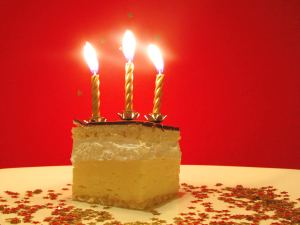 Mindfulness at mealtimes is a no-brainer.
Science shows us that eating mindlessly leads to weight gain, poor health decisions and lack of enjoyment. It also leads to indigestion, a fair amount of bloating and a craving for ice cream after 8:00 p.m. – maybe that’s just me.
But mindful eating — – this practice of paying attention and noticing without judgment – slows us down, helps us to savor (and enjoy) our food, connect to our emotions, (which can curb emotional eating) and make healthier choices. We are less likely to overeat, as well, because we tend to notice when we are full.
And, my own personal research done at the dining room table shows mindfulness can also ward of anger and insanity when the 8-year-old claims to hate the meal you just spent 40 minutes prepping.
Mindful eating is the opposite of eating cold, leftover pizza while standing at the counter. It is not chowing down on a protein bar while in the car, or unconsciously picking the mac & cheese off the kids’ plate. Sure, you can be mindful of those moments too, but to max out the benefits of mindful eating, it’s best to sit down, slow down and give your attention to the meal and the experience of eating it.
When you make dinnertime –or any meal — a practice in mindfulness, a time to slow down, come together, enjoy the food by appreciating its aroma and texture and beauty the time itself becomes more nourishing, satisfying, and yes, even calm. And who doesn’t want peace at the dinner table?
5 Tips for More Mindful Meals
1. Get quiet. Sit down. Even if you are by yourself, turn off technology, close the book, and shift your attention to the meal. Give thanks for the food. This does not have to be a prayer, but a pause in the moment to silently acknowledge the food before you. Allow yourself to be fully present. Notice your environment, how you feel sitting in the chair, the details of the food and decor. Focus on the meal experience, not the chores you have to finish after.
2. Eat with all of your senses. Before you dig in notice the colors and textures, aromas and sizzle. Experience the meal with more than just your taste buds. Savor that first bite. When you do take a taste, allow yourself to fully experience the sensations. Imagine you are a judge on Chopped or another cooking show and really allow the food to dance on your palette. Don’t judge it as good or bad, just experience it in the moment. Then absorb the positive feelings that come with a really good bite for 15 or 30 seconds before doing anything else. Notice them. Take them in. You’ll not only eat slower (and probably less) but you’ll develop greater appreciation for the meal.
3. Put your fork down between bites. Seriously, we are so rushed during the day that we even eat at a rapid fire pace. Mindfulness is about paying attention to the moment. You must slow down to do this and when I put my utensil down between bites, it’s a signal to self to settle down, take in the moment. It physically forces me to slow down.
4. Chew with your mouth closed. This is more than just good manners. Usually, our mouths are open because we are shoveling in food or we are talking, both are distractions to mindfully chewing every bite. Chew with your mouth closed. One bite at a time.
5. Create a ritual. Create a short ritual at meal times, such as offering grace before you eat. Or offer a up gratitude or a goodness, we call them, from the day. Perhaps you have a ritual of deliberately and carefully putting the napkin on your lap or a set way of serving others. Whatever it is, a short ritual repeated deliberately and consciously before you eat every meal will enhance your experience of it. Even the ritual of blowing out birthday candles has been shown to improve the taste of the cake.
**portions of this post have been reprinted from an earlier post in Imperfect Spirituality.




January 12, 2015
Emotional Awareness Can Help You Lose Weight
 It was 2 p.m. and I still hadn’t eaten lunch. My stomach was growling as I tried to finish up the article due and I kept watching the clock. My daughter would be home from school in an hour and I had a lot to get done before that.
I moved to the kitchen, grabbed a banana, a handful of crackers and ate it all while standing at the counter and making notes on my To-Do List. Then, I grabbed a piece of string cheese from the fridge and a forgotten and rubbery Tootsie pop from the back cupboard and carried them to my desk.
I still don’t remember eating the lollipop but the wrapper is sitting there under the computer monitor.
The stress of much to do in a little time had me eating mindlessly and without enjoyment. That unconscious anxiety reflex was keeping me from optimal health.
Unconscious Choices
Whether it’s boredom, anger, grief or anxiety when we don’t take time to stop, tune and pay attention to what we are feeling we tend to act unconsciously. We operate by default instead of making deliberate choices. Rather than connecting to the emotion in the moment and understanding how it serves us we often turn to short term solutions to make us feel better in a flash. Thing is those short-term solutions do nothing to help us improve our mood, lose weight or improve our health.
We stay late at the office thinking we’ll feel less stressed if we just get some more work done. We drink, or shop, or fritter away our time on Facebook. Or we eat trying to ease the stress or fill the hole or keep busy, or get it over with, without even realizing that mindless eating is only going to contribute to our bad feelings.
No matter how many sticky-icky Tootsie pops I consumed that day (for the record it was one, along with a stale fortune cookie) they weren’t going to ease the deadline pressure – but a pause to sit down, appreciate my food, choose items that would boost my brain and body, now that could have made a difference.
Research led by Blair Kidwell and published in the Journal of Marketing Research, shows that different food products lead to different emotional states. People who learned to become aware and respond to the emotions prompted by food and circumstance were, in the end, more likely to choose healthier snacks instead of eating the junk.
Some study participants were followed for three months and those that could recognize the emotions linked to certain foods – a la ice cream equals party time – were able to mindfully make more nutritious choices and even lose weight.
The researchers say that when we become aware of how we feel we can then use our emotions to help us create greater well-being. Mindfulness at mealtimes then, can help us turn off the habit of mindless eating and turn on to better health.
In Wednesday’s post, I’ll tell you how to do it.

December 31, 2014
Five Questions to Create a Better Life in 2015

Happy New Year! I’ll be back Jan. 12 with all new posts to support our growth and joy in 2015. In the meantime, here is a new post to get you thinking. Ask yourself the questions below and set the mood for an awesome year ahead.
One of the best ways to live deliberately – to actually become aware of the life you are living to create the experiences you desire – is to ask good questions.
When we ask questions our brains and instincts circle around searching for the answers until they come up with something that speaks to our questions.
You ask, “why am I not having success?” and you will get plenty of answers as to your failings. But, when you ask “what can I do to become more successful?” you will also get the answers to that question and those answers will put you on the path to creating more of what you would like.
So this New Year, choose good questions, and the answers you seek will actually guide you toward greater health, abundance, love, peace and self-awareness.
Here are five questions that can super-charge your growth and success in 2015.
How can I serve? We all want to contribute something positive to the world, but we often get mired in the daily routine and forget that we do best when we are making a difference.
How can I live close to my values? To answer this question you’ll need to identify the things you value most so this is really a two-parter. Studies by psychologists including Steven Reiss have shown that when we know what we value and we do things each day to stay close to those values, we experience happiness. Not just the one-off variety that passes quickly, but sustained happiness that lingers.
Who and what do I love? Ask this often, daily. List everything. The simple noticing of the things we care about translatse into Big Gratitude and that improves our moods, health, relationships and everything else that matters. When we dwell in fondness – thinking of the things we love about a person or thing – we tend to discover more things to be fond of and this is oh, so good for your relationships and moods.
How can I create more abundance in my life? Stronger relationships, better health, more money, bigger fun. These things make up an abundant life and they belong to those who ask and take action. Often though we focus on lack. We ask questions like “how am I going to pay these bills?” “Why do things never go my way?” “Why do I never have enough?” Instead, try asking the how questions — “How can I find new work opportunities?” “How can I lose the weight I want?” “How can I improve my marriage?” and allow your mind to go to work on big-time, abundance-building answers.
Who am I? Alright, this one is a bit esoteric and philosophical but valuable just the same because when we really contemplate our very essence, we connect to the higher energy of ourselves — the core of light and love and peace that we all are. It’s hard to get our undies in a bunch and worry about all the little details of life when we realize that we are connected to that Universal energy and comprised of the same elements that make up the sun and the oceans and the mountains the stars. Perspective people and this question helps us create it.
Ask these questions. Pose more of your own. And allow your mind to ponder the answers as you sit in meditation or go about your daily business. Your instincts will flair too and you’ll arrive at a knowing – a settled feeling — when you get close to the answers that will serve you now.
Don’t be afraid to ask new questions and to change your mind, either. Be open to the journey wherever it leads knowing that when you ask a good questions the answers lead to a better life starting right now.

December 29, 2014
Setting the Theme for 2015
 I rarely use resolutions anymore.
I do have a list of goals, specific things I’m working toward, but when it comes to starting the New Year, I go big with a broad theme statement. Something vast that, when I keep it in mind, will also bring me into the moments of life.
Instead of resolving to lose weight, for example, one year I chose a theme of good health. That involved setting weight goals or exercising more, as well as strengthening my relationships and getting some coaching — all things which, I believe contribute to my overall wellness.
My year of money brought me an awareness of what it represents to me, how I earn it, spend it, and give it away. It was an exploration not only of my savings and investments, but my beliefs about money. The year yielded greater awareness and peace of mind. One year, my focus was on flow. Within every theme there can be dozens of separate goals or activities, but the theme helps me keep an awareness on how they all connect. The theme holds space for the smaller goals to root.
The New Year, 2015, is going to be the year of Experiences. Plenty of research shows that happiness, meaning, and well-being go to the people who immerse themselves in life. It doesn’t take away pain or hardship, but those who live whole-heartedly tend to bounce back from that adversity. They carry with them a kind of perspective that reminds them even in the dark times that the goodness lingers there too.
People who use their money to buy experiences tend to fare better too. They usually feel more satisfied than those who invest in products is or disposable goods. Experiences linger. They teach us about ourselves and the world and they guide us long after the moment has passed. Many provide an avenue to connect with others, to belong and grow and expand.
When I talk of experiences, I’m talking about trying new things, and being fully present to the routine and familiar experiences. I’m talking about opening to experiences even when they are painful and scary, and to immersing in the good. I’m talking about engaging in life.
Living Deliberately
My year of Experiences will not (probably) include bungee jumping, not my thing. I doubt I’ll sell my house and go hiking through the Himalayas. I’m not much into hiking.
But living a whole life isn’t only about marquee adventures. Experiences don’t have to be flashy to be meaningful because the power is in the noticing. Though I do intend to snorkel with dolphins, I also want to eat more sushi (it’s been a long while) and write another book and take a spontaneous trip to somewhere, anywhere, and walk a labyrinth. I want to do some different volunteer work and say “yes” more than “no” when the experience aligns with my values.
But, I also want to experience the after school time when it’s just my daughter and I. I want to be present with her and listen as she rambles about school. I want to put the phone down and give her my attention and experience again and again what it means to slow down and be with someone .
I want to go on a night hike at the Nature Park and see a varmint or two. I want to camp at a new site. Try my hand writing a mystery novel (did I just say that aloud?) and take a cooking class. I want to be at the finish line when my husband finishes his marathon. And do something that I’m a little afraid I may not be able to do – not sure what that is yet.
When I think of experiencing life, I think of tuning in to it all. Being present. Showing up for these and other moments and giving them my full attention.
This requires deliberate action, and practice, and awareness. But, when we choose to show-up and participate, everything shifts. Life becomes bolder. More fun. More colorful. And ultimately, this is the experience I want to create.
So what is your Big Picture Theme for 2015 and how will that show up in your life?
Image by Erin Cairney White. Cairney White uses mixed media – acrylic paints, gelatos and a variety of papers, inks and stamps to create her work from her Snohomish, Washington studio.

December 24, 2014
Six Ways to Give Gratitude this Holiday Season
 Listen, I know it’s complicated. The holiday season is filled with more of everything – activities, food and shopping and traffic and bills – and that adds to everyone’s stress. If we celebrate we are stressed trying to manage all the extras. And if we don’t or can’t celebrate the way we’d like, we feel left out or as thought we aren’t doing enough.
What if, instead of letting seasonal expectations get you down, you decided to focus on gratitude this year? Not just feeling it, but giving it. What if you gave kindness to everyone you come in contact with and gave them something to be grateful for? That’s one way to make the season brighter for everyone – including yourself.
Six Ways to Give Gratitude
Smile (now don’t be sarcastic about it) at the grouches among us. Wave at the guy who cuts you off on the highway or the curmudgeon in the parking lot or the impatient checker at the store. Assume they are good people who are just stressed out too. Be kind and let go.
Surprise someone for no reason. You know the friend loves those special chocolate turtle thingies? Get a couple and drop them off for her at work. Take flowers to the school receptionist. Write a note of appreciation to the vet. Do something special for no reason at all.
Drop off dinner. Know a single parent, a struggling neighbor, a working mom or someone else who is exhausted trying to keep up? One night drop dinner by. It’s easy to make a little extra when you put your own meal together and everyone I know would appreciate a homemade meal that they didn’t have to cook. The food and the gesture will uplift anyone during a difficult time.
Go out of your way to say thank you. The people up the street from us are all decked out with holiday lights and we love looking at them each year. Last year, when we were driving by, we saw the couple outside and stopped to thank them for their effort. When we left, we were all smiling.
Comment on the good stuff. A couple of weeks ago I had excellent customer service at JCPenney. One woman took extra steps to make my life easier and better and she actually saved me money in the process. It took a lot of extra effort on her part. She had to step out the traditional service model to make it work. But she did it. And I told her how appreciative I was and even shared the story with her manager. We are often so quick to complain about the bad stuff or things that we don’t like But, how often do you take the time to voice the good stuff, the great stuff, good people doing excellent things? Now is the time. Call people out for the good things that they do. Praise someone who is “just doing their job” but doing it well. It’s not going to make anyone soft or entitled. Instead, it will make them better. We all could use a little more appreciation and less criticism in this world.
Send a note. There are so many people doing good things in the world that make our lives easier. You may not know them – the school crossing guard, or the receptionist at the dentist or the barista down the street. But because of their efforts, your life is easier. Send them a thank you note. Or send a handwritten letter to the friend on Facebook who is struggling. Or drop a card by a senior home for a person who rarely gets mail. The process of handwriting a note is actually healing and can even lower your stress. And imagine how good the person who receives your note will feel. Simple gesture. Big impact.
In this world, we rarely interact face to face anymore. We text and tweet, but ultimately the greatest gift you can give is the gift of kindness and connection. When we reach out to acknowledge another through kindness we bridge loneliness with love and give the gift of gratitude. And you know what? It only leaves you feeling more grateful too.

December 22, 2014
Complications Ease When You Get Caught in Gratitude
 My 8-year-old daughter was home sick from school yesterday. Stuffed up nose and itchy, sore throat. Nothing major, fortunately. But enough to really mess up my schedule. Enough to really fire-up my stress.
I mean, have you seen my To-Do List? Probably a lot like yours. Medical appointments and work deadlines, bills to pay, gifts to pick up. I also need to get to the DEQ before the end of the year. My to-do list doesn’t leave time for a sick kid.
But, about halfway through The Sound of Music, when she was snuggled up close to me, watching the kids walk around in the drapes for her first time, I started to well up with emotion. I finally got it.
My daughter was home sick with a cold – that’s all. Not cancer. Not arthritis or heart disease. She was stuffed up. And, I was the one person who in some little way could hold her and comfort her on the couch for a day.
I also could stay home with her without worry about keeping my job. Because despite the demanding work schedule, I’m self-employed and my boss gave me time off to help my kid.
And there is was. Gratitude. The things I was worrying about and stressing over were parts of the life I love. The one I’m creating. I was overcome with gratitude and it elevated the moment which just a second before had been filled with frustration and stress.
Go with Gratitude
Life is demanding. We’ve got big-time things to think about. People counting on us to do our work and raise our families and pay our bills and show up on time and even the smallest changes can throw us into a spin-cycle of stress and uncertainty.
Yet. right there in the middle of the very thing we are griping about are the things we also adore. The things that add meaning and joy and love to our lives. They are right there in that same moment.
We can forget to look for the gratitude though. Life can feel scary and hard and bigger than we are. The daily routine can be a drain. Even the little things can throw us, a la work due when the kid calls sick from school – but when we stop freaking and start looking at what lies beneath, there is plenty to appreciate.
Try it: You know that little thing you’ve been stressed or complaining about? Give it a little love instead. Tired of cooking dinner? Instead of complaining be grateful you have the food. Crazy schedules? So happy you are healthy enough to be busy. Too much traffic? How nice you have a car.
So often we get caught up in the complication. Instead, get caught up in gratitude. Your life won’t be free from challenge or stress, but you’ll feel better when you meet it.

December 17, 2014
Creativity Emerges When We Explore Life
 It’s been tough going the last three months. Sure, I’ve been writing. It’s what I do. It’s how I understand my world and it is how I keep my cats in kibbles. I have assignments and responsibilities. Writing is my job. But it’s been a slog. An icky, I’m-not-sure-how-I’ll-write-again slog.
Not that writing has ever been easy-peasy to begin with. I’m not one of those whom the words pour out of. I’ve never channeled a single piece. Not even a thank you note. The work I do, I do by sitting down, slumping over the keyboard and moving my fingers until some idea breaks free and makes sense. Or, until I pretend to do more research. On Facebook.
Right now though, I am parched and any good ideas have long since blown away. I’m in what my friend calls the Fertile Void. But it feels anything but fertile.
The void part I get. I’m in a creative black hole. Vast and empty. And dark. It feels frightening and lonely and desperate and hard. It feels like I have nothing left and it feels like the only thing I’m good at is drinking coffee and making sandwiches. I am a very good sandwich maker. My lunch is getting a whole lot of attention.
Living to Create
In the last three years I’ve written three books, hundreds of articles and blog posts, probably millions of words. I couldn’t wakeup without an idea. It all just flowed. The work was challenging and exhilarating and though there were tough times, the ideas guided me. Now I’ve got nothing.
Come to think of it, life this last couple of months has become a bit routine too. Put my daughter on the bus in the morning. Head to a workout. Sit at my desk and write or worry about writing. Meet my daughter’s school bus. Help homework, cook dinner, do dishes, visit with husband. I put my daughter to bed. Then I go to bed until I wake up and put my daughter on the school bus again. It’s an endless routine of obligations, that I willingly take on, but it is not the routine that best fuels the work.
Creative energy comes from exploration. From questioning and puzzling and feeling and wondering. It comes from daydreaming. It comes from engaging in life. Hanging around inspiring people. Eating new foods. From showing up, tuning in, and turning on.
The best ideas come from living life. From talking to others, reading, and watching and trying and testing and traveling and experimenting. Even an interaction at the grocery store or an observation at school can be the seed for an article or research inquiry or character background, if I’m paying attention.
A quiet moment alongside the ocean or a hike along a wooded path can be enough to set my imagination free.
I’d forgotten that creativity is not a passive endeavor. It is not office bound. It is not in the computer. I thought writing the books was a way of participating, but to really write, you must really live. That means getting out and filling up again on life.
My routine, as much as it works for me, has become a bit too familiar for my writing. A void in the work then, is just a reminder to live a bit bigger.
To get out there again. To look at the familiar a new way and mix up the routine. To drive a new route home from work, contemplate the big questions, try the food that you’ve always been curious about. To read a different genre, ask why when you don’t understand, do the thing you’ve always wanted to do.
And, when you do that, when you engage again, that void I was talking about does become fertile. A place of growth and possibility for living and creating.
This post first appeared on the Creativity Post.

Awe is the Secret to a Creative Life
 The surest way to a more creative life is to start living. To engage an experience the world. To connect with others, to listen well, to learn and grow and love and experiment and explore.
I’m not just talking about the paint-like-Picasso kind of creativity. I’m talking about the kind that infuses your life with passion, helps you solve problems, improves relationships and illuminates meaning in life. To live creatively is to go through the days with a open-hearted kind of curiosity and the awareness that you can make something out of any situation. The kind that allows you to experience awe.
Awe is a big-time emotion that can have a big-time impact on our lives. As described in Monday’s post, when we experience awe, we are more likely to reach out and share and connect with one another. Sounds something like this: “Hey did you see that race?” “Check out the full moon.” Or “Isn’t this song, just powerful?”
But, awe goes further than just inducing good feelings. It also creates a sense of meaning, and purpose. Every time I look at the waves of the Pacific crashing into The Cove along Oregon’s North Coast, I am touched. It’s awesome, no matter what else is going on, no matter how many times I’ve seen it. When I think of the creatures that can survive in those tide pools and rough surf, from the tiniest hermit crabs to the largest whales, I feel full of life. Moved by it. And I feel like I matter too. Knowing that something as awesome as the ocean and the creatures within it exists, give my life meaning too. It reminds me that we are all an integral part of something bigger and wonderful and mysterious. Awe can help us tap into that and inspire us to live on purpose. It raises us up and in turn we raise the level of our life.
Want more of those AWEsome moments? Here’s how to get them.
Go big. Take time to be the small piece of a larger whole. Go stargazing or whale watching. Become part of a flash mob or sing out loud at a live concert. Whenever we can get a little perspective, add our small voices to unified, larger one and recognize ourselves as part of larger whole, an important part of the Universe, feelings of awe often take root.
Go out. Check out your environment. Nature is awe-inspiring (and stress relieving) check out the oceans, or a corps of ants constructing their pathways. The buds on the cherry tree outside my house are awesome when they return every spring. And I love thinking about the amazing salmon who return to the same waters each year. I don’t understand all the science behind it. Doesn’t matter. I like the wonder of it all. I like not knowing how it all works, but trusting that it does. Even man-made structures can provide major awesomeness. Think Egyptian pyramids or the Golden Gate Bridge. Get yourself out in the world and look on it with curiosity and awe.
Go looking. Remember the video clip of the young Autistic boy who finally gets a chance to play basketball and he hits all those three-pointers to the glee of his teammates who mob him after the game? Or Susan Boyle showing up Simon for the first time? We are surrounded by awesome moments in nature, in people, in ourselves. Find a way each day to see, hear, experience something amazing. It’s inspiring.
Remember, no matter what you’re doing, you’ve got to take notice. Become aware and present to the moments of your life. With quiet awareness wonder shows up and makes for a truly awesome experience.
portions of this post first appeared on this site in 2011.

December 10, 2014
Three Tips to Diffuse Tension
Even the little annoyances can lead to big problems in relationships if we don’t slow down long enough to listen, respect one another, and work through the difficulties. If we take a little step back when things are feeling heated, we can diffuse the drama and ease the stress before things escalate into trouble and hurt.
Here are three tips I use to settle down before I start behaving badly. And the emotional space they help me create also provides greater clarity and compassion.
1. Shut-up and Listen. Alright, I’ll confess, I have a tendency to over-talk everything. So, I’m continually working on this one. Say what you must, then, just, shut-up. So many times relationship squabbles are a product of miscommunication or misunderstanding. But you aren’t going to clear those up without equal air time. When you spend time listening, (without rolling your eyes), you’ll gain clarity which will help you find resolution, or at least peace.
2. Pause, Breathe, Leave. So often, we are triggered by an event (or circumstances like we are tired and hungry) that sends us spiraling into bad behavior. Then, instead of being able to deal with the real issue, we have to mop up from the drama. When you feel things start to escalate, take a deep breath, and respectfully announce that you are going to take a timeout and will come back in five or 10 minutes to talk over the issue.
Don’t just storm off – this isn’t the time for door slamming — but don’t come out too soon either. Go to a back bedroom or somewhere quiet. Take deep breaths and let the raw emotion diffuse a bit. The break will calm you both down so that when you come back you can lead with compassion and curiosity rather than contempt.
3. Take the View of an Outsider. Sometimes the best way through a conflict is to approach the dilemma as an outsider. When we can step out of the drama and look at the situation as a distant observer we are better able reason through it, according to research by Igor Grossmann and Ethan Kross.
Want a simple way to do this? Try talking to yourself about the conflict in third person, using your own name when evaluating the circumstances.
Any relationship is bound to have ups and downs. But, by becoming aware in the moment and taking simple steps to diffuse the difficult emotions you will be more likely to work through the stress than get caught up in it.
*portions of this post originally appeared in PsychCentral.com

December 8, 2014
A Do-Over Can Make a Difference to a Relationship
 I came home after a dinner with friends to hungry cats, wet laundry still in the washing machine, and muddy footprints tracked across the carpet.
I was tired. And I felt my tension rise. I’d expected those chores to be covered.
He had been out in the yard, digging a French drain to keep the crawl space from drawing too much rainwater during the winter storms.
He was tired from the wet, dirty work. He’d expected me to be pleased by the effort.
By the time we sorted through missed expectations, we were both impatient and irritated. We didn’t feel like talking – probably good because neither of us felt like listening either.
Every relationship, whether it’s with your kid or your partner or your boss or your mom or the computer customer service guy who can’t seem to understand what isn’t working, has moments of tension and challenge.
Sometimes it is big stuff – like how to cope with a cheating spouse, or how to work with a boss who doesn’t share your values. Other times – most times – getting through the day requires us to respond to a variety of small tensions – like chores and changing schedules, parenting dilemmas, bill paying, coordinating vacation time, and folding laundry.
How you handle these conflicts big and small determines the resilience of the relationship and how good you’ll feel going forward. Handle the conflict with respect and grace and you’ll be fortified with positive energy that is good for you and the people you care about.
But if you blow it and spin off into a contrail of blame and anger and hostility everybody is going to suffer.
Over the years as I’ve worked to learn and grow in my own marriage, interviewed relationship experts, and written dozens of articles on the topic. I’ve made plenty of mistakes, too, but there are some pieces of advice have stuck with me. These are the things I can actually do – even when I’m ticked. And, when I use them they make a difference.
Give a Do-Overs
Stuff is going to happen. People – good people – are going to make big ol’ messy mistakes. Heck, you are going to make big ol’ messy mistakes. But sometimes the best way to get through the upset is to give the other individual the benefit of the doubt and move on.
He blew it, or perhaps you did, but nobody meant to cause harm. A do-over allows you to start again without rehashing.
Give these freely (aloud or quietly to yourself) and ask for them too, when you know you’ve stepped out of bounds and need to start over. Instead of over analyzing and blaming, just acknowledge the conversation has gone off the rails, drop it, and do it over. Better this time.
This requires compassion too. An understanding that sometimes our egos run amok and people around us do crappy things or maybe we are responsible for the bad behavior. Compassion allows you to grant the do-over or accept your responsibility in the matter and go forward gently without causing more hurt.
A compassionate do-over has made a difference in my relationship. In Wednesday’s post I’ll share three other tips that have too.