Polly Campbell's Blog, page 22
September 15, 2014
The Little Moments Matter
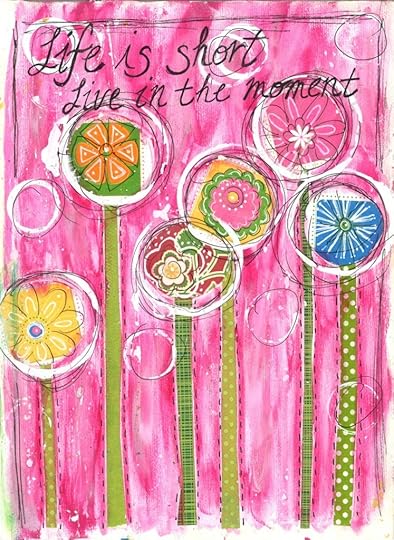 It’s the little things people.
Yesterday, before she left to soccer on a 95-degree day, Sweet P (who is not always, uh hmm, sweet) came in to thank me for filling her water bottle.
Little thing.
Then a friend texted to say she was thinking about me. I found a five in the pocket of the capris I hadn’t worn in awhile. And, my cat came and laid on my lap and purred like a little engine.
Little thing. Little thing. Little thing. Sure. It’s not like Oprah called saying she wanted to be besties, it’s not that I won a gazillion dollars, or created world peace. I didn’t run into Justin Timberlake at the market, but all these so-called little things made for one-big-fat-good-feeling night.
Living Well in the Moment
Don’t bother worrying about the little things – or anything really, because worry rarely translates into actions that make a difference. “Don’t,” as Richard Carlson said, “sweat the small stuff.”
But do focus on making the little, quiet, routine moments better.
Do focus on filling them with gratitude and compassion and joy and love, because one thing is sure: when we give attention to living well in this moment, we make the next moment a little better, a little easier to bear. That helps us make the moment beyond that a bit better and all the moments to come easier until we’ve strung together a whole big awesome life of little sweet moments.
Life is in the little things. The brief moments when we say I love you or walk away, when we give a hug or keep our distance. The moments when we choose kale over chocolate or chocolate over kale. These little moments shape the quality of our lives and the way we contribute to the world. Life is all about the little things.
You can sit at home and make a five year plan – and I have. You can have long and short term goals – and I do. But, my primary focus now is to give attention to the moment that I have now. It’s all I know for sure. And, anything I’ll complete five years out, starts right now, with me making the most of the moment that I have.
Image by Erin Cairney White. Cairney White uses mixed media – acrylic paints, gelatos and a variety of papers, inks and stamps to create her work from her Snohomish, Washington studio. She is a wife and mother of four who also teaches art classes and works with educators in the Snohomish School District to support special needs students.




September 10, 2014
Mindfulness Helps Ease Overwhelm
Mindfulness is a fine practice for the monks.
The real question is how would it help a mama on a 90-degree summer day? I put it to the test.
Mindfulness is the practice of paying attention. The turn-off-the-phone-and-be-still kind of paying attention. It is not new to me. It has bailed me out many a time when I was feeling more reactive than responsive.
 It eases stress, helps me find perspective and settles me down when I’m teetering near overwhelm. When I am mindful I am calmer, more creative, and more deliberate in my actions — even when squirt guns are dribbling water all over the house, I discovered.
So, when is comes to managing and actually enjoying summer break, mindfulness is a practical and easy-to-use strategy. It costs nothing and it can be done just about anywhere, always.
How to Start a Practice of Mindfulness
Here’s a crash course in mindfulness.
1. Stop. Get still, get quiet. Settle down. This is a game-changer. Carving out a few minutes, or more, each day without Internet or phones or kids or conversation just to be quiet is restorative and illuminating and it’s essential to creating a practice of mindfulness.
2. Breathe and become present. Once you settle, take deep breaths from the belly and become aware and present to the sensations in your body, the things in your environment, sounds, smells, and any thoughts flying through. Just notice. Don’t judge, just become aware. The easiest way to start this process is to breath and engage with each of your five senses and your intuition. Don’t get hung up on any single idea or sentiment or sensation. Just notice.
3. Act deliberately. When you are ready to engage with the world again, do so mindfully and deliberately. Be aware of what you say and the words you choose. Notice how your body feels. Pay attention to the details within the environment.
In the beginning, you may feel flustered, and unfocused and decidedly unmindful during your sessions. You might even forget to do it. So put it in your calendar. Practice five minutes a day and make a commitment to the practice. Over time it will become easier to do.
Also, slow down and become mindful at various times in your day — while brushing your teeth, washing dishes, spreading peanut butter, cleaning your desk, even during the conference call.
Tune in to the moments of your life with all of your senses, notice your environment, and in time, mindfulness will become an easy-to-use habit that supports you in all the best ways, even when contemplating a turn on the Slip-n-Slide on a hot summer day.
**Portions of this post ran in this spot, earlier this year.

September 8, 2014
How Mindfulness Boosts Creativity
 My meditation sessions are sporadic these days and sometimes interrupted by the squeal of kids on the Slip N Slide outside the window of my office-slash-meditation room
I might get five minutes to sit in quiet and watch my thoughts go skittering through like skeeters on a pond. Other times I’ll take twenty-five. But, no matter how long I spend, meditation is always a difference maker.
Even after just a few minutes, I feel myself settle in to a more relaxed and curious state – one without the rigid, routine, rational thinking that sometimes takes over my days.
My thoughts are more abstract after meditation, I’m more open, engaged and aware – probably because I’m less stressed and reactive. All this is good for creativity.
Researchers from the University of Amsterdam recently drew a link between mindfulness and creativity. In their study published in the Personality and Social Psychology Bulletin, they found that those with strong observation skills, which can be cultivated through a mindfulness meditation practice, also demonstrated greater originality and flexible thinking.
In another study, researchers at the Institute for Psychological Research and the Leiden Institute for Brain and Cognition in the Netherlands found that the focused attention developed during mindfulness and the meditative practice of observing thoughts without judgment leads to more, creative ideas.
It isn’t the non-judgmental awareness that makes the biggest difference, though, according to the University of Amsterdam researchers, but how you look at the world.
Mindfulness meditation, say researchers, reduces “cognitive rigidity” and helps us identify and develop innovative ideas. And, it eases stress in a big way which generally makes people more open and curious anyhow.
We have so much background noise in our daily routine that it’s nearly impossible to notice the new and innovative ideas we have in the first place. Mindful meditation can help us notice the spaces in between the racket and that’s where creativity resides.
So, stop making the excuses. Unleash your creative energy through mindfulness meditation.
In Wednesday’s post, I’ll show you how.

September 3, 2014
Three Ways to Get More Done
Often we get caught up in this mindset that if we are running around crazy, with a long to-do list then we must be getting a lot done. But, what we are doing doesn’t matter all that much. And, instead of feeling satisfied and accomplished, we end up feeling disconnected, overwhelmed and void of passion and purpose.
Enough of this. Sure there is plenty to do, but if you are working and acting in a way that sustains your passion, inspires creativity and creates meaning you’ll actually get more done in and out of the office. So get the must-dos done, then get busy doing what matters.
Three Surprising Ways to Get More Done
Stop multi-tasking. Do one thing at a time. This is actually a time saver. Multi-tasking leads to mistakes, miscommunication, and forgetfulness. All this means we usually have to go back and redo the things we’ve already done. Sure, this keeps us busy. But we aren’t accomplishing much. One thing at a time, people. You’ll get more done, feel less frantic.
Sleep, Eat, and Exercise. I love the “I’m-to-busy-to-workout” excuse, but the data is clear, when we exercise we stress less, get more done, and feel better about what we are doing. Spend 30 minutes walking around the neighborhood and you’ll actually have more energy to complete your to-do list once back at home. Exercise will also help you sleep better. When we are sleep deprived and hungry we make poorer decisions (which leads to mistakes we have to spend time fixing) tend to be more stressed stress (which limits our ability to focus) and our self-control takes a hit. When we don’t take care of ourselves with sleep, diet and exercise, we have a harder time taking care of anything else. So start with these basics to ramp up productivity.
Loaf On-Line. Alright don’t go using this an excuse to download a new game app, but a little cyber surfing on your lunch break or between stressful projects may help you get more done. Researchers from the University of Cincinnati found that employees who surf the web a bit during stretches of intense work are actually more productive and feel more refreshed than those who don’t. Note the keyword: short. Undisciplined breaks can obviously lead to a loss of productivity. But a 10-minute refresher to look at the cute cat videos or read an inspiring article might just be the ticket to a more productive afternoon.
Use these tips to get more of the must-dos done and then look for ways to add meaning to your life.

September 1, 2014
Add Meaning and You’ll Be More Productive
 In honor of Labor Day, I am not working. You probably aren’t either. First celebrated in 1882, Labor Day honors the achievements of American workers by giving them (or at least some of them) the day off.
Many of us though, will make a to-do list and figure out ways we can be more productive once we do get back in the office. Right? While we celebrate how the American workforce has contributed to the strength of our Nation, we will be figuring out how we can get more done.
Productivity is revered in this country. Some of our Puritan and Calvinist ancestors even used to believe the harder we worked the better chance we had of squeaking through the Pearly Gates of Heaven. Historically, then, those who worked hard were thought better than those who didn’t. And so formed this drive to stay busy.
Even today, we like people who are productive. We rarely notice what they are busy doing, but if they seem frenzied and hectic and then we too-often assume they are doing something that matters. We give’em the old Atta Boy.
I used to be this way too. I used to take pride in telling others how much work I had. How busy I was. Never took a day off. Then I realized, it didn’t matter one bit if I was busy all the time. What mattered most was how I was spending my time.
What are You Busy Doing?
These days, I’m still busy. But sometimes I’m busy at physical therapy healing my body, other days I’m out with my daughter watching her slip in slide, and long days are spent at my desk writing articles and books and blog posts. I’m busy doing the things that matter to me. I busy creating meaning in my life. Sometimes that takes me out of the office, sure, but after, when I’m back at the desk, I almost always get more done.
Yep, all that time out of the office, actually infuses me with creativity. It eases my stress, promotes awareness and focus. Because I’m doing the things that provide meaning in my life, I feel revitalized and fired up when I do sit down to do the so-called work that pays my bills. Time off then, doesn’t necessarily mean time wasted. It isn’t time spent laying on the couch. It’s time spent learning and growing and connecting and loving.
Of course there are still deadlines to meet, work to be done, and plenty of days when I need to get to it. My work is meaningful, but there are aspects of it that aren’t; jobs that I don’t love to do. But, even the drudgery is easier to face when you spend some of your time doing what matters.
In my experience, this is the crux of working smarter. Life is about more than making a deadline and earning the money and getting a lot done. It is about experiencing the world. Savoring the goodness. Learning from adversity. It is about doing the things that fuel you even while contributing to others. When you add at least some of these meaning-makers to your to-do list, you’ll be less likely to burnout and more likely to feel inspired and productive.
So, what are you producing? What are you busy doing? How are you contributing? Make sure you’re spending at least some of those hours creating more meaning in your life. In, Wednesday’s post, I’ll offer some tips that can help you take care of the essentials and still have time left over for more meaningful endeavors.

August 27, 2014
How to Find Quiet in the Middle of Your Day
 If you want to improve your relationships and your health, ease stress, inspire creativity and foster clarity, self-control and self-awareness, alone time is the way to do it.
Silence allows us space for self-reflection. From that comes acceptance and gratitude and peace. Sometimes, it churns up some new knowledge that can be surprising or difficult, but then compassion, understanding and awareness can also be found, like a refuge in the quiet moments.
With moment of quiet time built into our days, we tend be less reactive and more patient with ourselves and others. All this is good for our own personal growth, but it also benefits our kids and spouses and the people we live our lives with.
But, don’t panic, you don’t have to spend a week in isolation or hours in meditation to feel better and reap the rewards of a little alone time. Quiet time doesn’t have to be spooky or heavy. It doesn’t always have to yield profound moments of understanding or introspection. Sometimes, it’s just a relief. A chance to space out, daydream, rest.
The best way to get these restorative moments of quiet in your day then is to find pockets of it right in the middle of your routine. The spaces in between for peace. Here’s how to do it:
1. Plan for it. Ask for it. My husband is always willing to help me find time because he knows now that most times, an hour or two to myself each week, keeps me from becoming a raging, crazy woman.
2. Make it a priority. Like brushing your teeth or taking a shower, 10 minutes of quiet time a day packs health benefits that will contribute to your peace and well-being. This is not a luxury. It is part of taking care of your body and cultivating your spirit and it’s just as important as eating vegetables and working out.
3. Teach the people you live with about quiet time. We’ve coached our daughter that each day includes quiet time. This is special time you get to yourself. No television or computer or music. This is the time to read or play or create art — alone. It is possible to be with people in the same space and still have quality quiet time. One of my favorite things is when my husband, daughter and I are scattered around the house reading our own books – alone but together. By telling those you live with that this is important to you, and leading by example, they’ll begin to support it and enjoy it as well.
4. Use the spaces in between. I rarely have the radio on in the car when I’m driving alone. When I’m waiting for an appointment, I’m seldom texting or talking. And chore time at home, can be quiet time. I often work without music or television or noise. I don’t always get alone time, but the spaces in between the rest of my responsibilities allow time without noise.
5. Create at least one daily ritual that promotes quiet. Say a prayer. Meditate a few minutes each day. Go for a run without headphones. Take a long bath, or sneak in a shower before bed. My morning coffee is a ritual around quiet. When I know I’ve got a particularly cluttered day ahead, I’ll get up 15 minutes early just to drink coffee in the quiet, still-sleeping house and center myself.
Creating pockets of solitude is a powerful way to refuel and energize our lives. Make it a priority. Build it in. You’ll feel better and more equipped to manage the challenges of your day.
–portions of this post originally ran on this site and on Psychologytoday.com

August 25, 2014
The Shocking Benefits of Silence
 A crazy thing happened today — everyone left my house. And they left me in it. Alone.
There was work and soccer and a playdate and the people here had places to go and after weeks of noise and laughter and television running at weird times and conversations and rants – there was nothing. Silence.
I sat in it. Just sat in the quiet space.
The noise – even the delightful noise of fun and silliness and love – was the hardest thing for me adjust to when I abandoned the single life to get married and have a child.
But on this end-of-summer day, I’d almost forgotten how to be in the quiet. I sat for a minute. Took deep breaths. Then I began poking at my phone and thinking about the DVR’d shows I could watch. Then, I thought again.
I shut off the technology. Sat in the brown chair with the leather peeling off. I fidgeted, worried that I wasn’t doing enough around the house or that I should fold laundry. And then I remembered the power of the quiet.
I listened for my heartbeat. Heard my breath. Closed my eyes and felt the peace that comes with silence. I felt grounded again. Then I turned on the music and rocked out when nobody was watching. But that was only after I had settled into the stillness.
Silence is Key to Peace
Silence is the key to my sanity. And I spend much of my day looking for pockets of quiet in the middle of the busyness. To have hours of uninterrupted time – not all of it sitting still, but all of it spent in silence – was restorative.
It allowed space for my next writing project to develop. It helped me sort through my thoughts about a recent argument. I found compassion in that quiet time. A new perspective and with that came appreciation and gratitude and humor.
Quiet time is an antidote to stress. It is the entre’ to clarity, health, well-being. It enhances focus and concentration and boosts creativity.
Shocked in the Silence
But, apparently not everyone thinks so. In a recent study, researchers from the University of Virginia and Harvard University found that quiet time freaks most people out.
Most of the study participants had a hard time sitting alone with their thoughts for up to 15 minutes and wanted something else to do. In another experiment in the study, some even opted for a mild electric shock rather than sitting quietly, though they earlier had said “they would pay to avoid” the pain of it, according to researchers.
The brain is wired to engage with life and to experience the outer world, researchers concluded. So, perhaps this is why it becomes difficult, scary even, to sit quietly and engage with the inner world.
Health Risks of Noise
But life is noisy. Lawnmowers and airplanes and computers and cars and iPods and smart phones and televisions blaring in the background of homes and minivans and restaurants. All that noise is not good for our health or our peace of mind.
Numerous studies talk about the risks of chronic environmental noise. http://www.apa.org/monitor/2011/07-08/silence.aspx It can increase our stress and blood pressure, contribute to more heart attacks and even cause cognitive delays in children.
At home, our constant need to go and do and text and tune in and turn on the devices in our lives contributes to our stress and feelings of overwhelm. Beyond that, the racket in between keeps us from engaging with each other at the dinner table. We are so busy tuning in to other things, that we aren’t paying enough attention to our own needs, or those of others.
Our own personal growth, our ability to create and thrive and act with compassion is dependent also on our ability to sit quietly. In that stillness we can develop our self-awareness, contemplate life’s big questions – and the little ones like what the heck will I make for dinner?
In that stillness we remember our values and find meaning in the moments of our lives. Those are the things that make a busy, noisy life one that is also full of joy and love and connection.
So, which would you choose: an electric shock or 15 minutes alone with your thoughts?
On Wednesday, I’ll offer up some easy ways to reap the rewards of silence by finding a little quiet time in the middle of your day.

August 20, 2014
Three ways to feel more grateful
 I’m often asked for “quick-tips” to jump start the day and ways to power up a better mood. Gratitude is the answer. It is both the easiest and most powerful practice I know if you want to quickly shift from bad feelings to better and it often leads to curiosity and compassion.
So take a look at the post first published on this site a couple of years ago and fire up the gratitude and appreciation in your life. It will be a difference-maker in your day.
Resarch by psychologists like Robert Emmons indicates gratitude improves our moods, health, and overall well-being. People who practice daily gratitude also felt better about their lives overall and were more likely to reach their goals.
It’s also good for relationships. When I give thanks that Mr. J is doing the dishes, I’m also noticing him and his goodness and reflecting, for a moment, on all that he brings to my life. That’s a good thing.
And the great thing is, gratitude is not limited. It can be accessed by anyone, anywhere, anytime and it just takes a moment.
Looking for ways to count your blessings? Here are three quick gratitude habits.
1. Say Thank You. This habit requires you to stop and take stock of what’s happening right now. Say this regularly to yourself, to the conditions that surround you, to the people who help. Use it as a way to be present and as a reminder that even the challenges you face offer lessons and opportunity for gratitude.
2. Pick five. Make it a personal goal to find at least five different things to be grateful for every day. Lots of people list theirs in a daily gratitude journal – which is illuminating and helpful. Often I just name five things to myself in the morning and before bed. But holding yourself accountable for at least five will keep you noticing things to be grateful for all day long. Don’t be afraid to smart small. If life feels hard right now, you can still be grateful for your breath or your cat or a mug of hot soup or the beautiful tree outside your window.
3. See the gift in the garbage. It is an exercise in mindfulness and present-living, as well as gratitude to notice the goodness even when things are bleak. It may take a little effort, but it’s worth it because there’s a positive payoff at the end. Connecting to the goodness that remains in life, even when it’s hard, is healing and it reminds you that darkness is never absolute.
From a little pinpoint of light there can be life again.
Photo by: Stock.xchng

August 18, 2014
Change Your Life in 3 Easy Steps with Gratitude

Gratitude is one of my favorite practices because it’s easy and fast, can be done anywhere, and never fails to deliver. How’s that for a spiritual sales pitch.
Seriously though, research is proving that gratitude not only makes us healthier, happier and more resilient, but it also improves our relationships, builds life satisfaction, and enhances well-being. What’s not to love?
Another study shows that gratitude even improves our self-control which could help us save money and lose weight.
According to researchers at Northeastern University, gratitude reduces the impatience that can cause us to make poor choices. When we practice gratitude we tend to slow down, become more patient and less selfish. All that helps us make better decisions, so that we are less likely to make an impulse by or high the drive-thru.
How to Practice Gratitude
Put your practice in place now with these three tips:
1. Name three things you are grateful for – go small if you have to — the breath in your body, fresh water to drink, the home that you live in, the device you are reading this on.
2. Feel the emotion of appreciation and gratitude for those three things.
3. Then consider the cause of them.
Try to do this daily, coming up with new things each day, and notice how it just makes life a bit easier.
In Wednesday’s post I’ll share some other gratitude tips. And you can learn more by clicking on these links http://imperfectspirituality.com/2013..., http://imperfectspirituality.com/2012/11/21/emmons-talks-about-wonder-and-gratitude/, and http://imperfectspirituality.com/2014/06/25/five-practices-to-strengthen-your-mind-body-spirit/ or checking out a rundown of gratitude research on the PsyBlog.

August 13, 2014
How to Choose a Mantra to Support Your Growth
 What is it that you want more of in your life? Which quality – love, peace, joy, patience – would you like to draw into your moments?
When you know what sense or quality you want to create a mantra can be a way to help.
A mantra is a phrase or word or sound or tone that you repeat or chant to yourself during meditation or throughout your day. It is a trigger, a reminder to shift your focus on the thing you want to attract, the quality you want to embody.
When things are feeling out of whack in my own life or I’m particularly reactive and nervously attaching to outcomes, I’ll say “let it go” quietly to myself throughout the day and it helps me to surrender to the moment. Repeating a mantra during meditation is also a powerful way to focus attention.
Ready to take one for a test drive? Follow these five steps to choose a mantra to support your growth.
1. Consider which quality, sound, phrase, or word feels powerful to you. Many people repeat the name of a religious person or figure such as Allah, God, Mother Mary. Other’s find power in Ohm, which, when repeated some say, is the frequency of God or creation. I often use the word peace or joy to help remind me what I’m going for. Yes, is another one of my favorites. I draw the word out, YEESSS, use it to remind me to open to the experience of life instead of reacting from a place of fear. Write down a few words, phrases, or sound that feel powerful and inspiring.
2. Consider what you want to draw into your life today. If you are going through a tumultuous time, perhaps peace is the quality you most desire, or joy. Pick a quality that would support your life right now, then then match it to a fave word or phrase from above – one that feel inspiring and powerful and jives with the quality your want to create. Pick something you can live with for awhile. Mantras gain power in repetition so I suggest you stick with this first one for at least 30 days.
3. Now, take it for a test drive. Repeat your mantra. Say it aloud. Be mindful of how it rolls across your tongue and how the air pushes from your diaphragm and throat to speak it. Try different tones and phrasing – statement or chants – and find the approach that feels the most powerful. Like how it feels? Then go with it.
4. Now, set the timer for three minutes (seriously, people, you don’t have to take vacation time to try this – just three minutes) so that you don’t keep looking at the clock, take a deep breath and exhale and repeat your mantra slowly and clearly. Focus on this mantra and be present to the feelings and sensations that arise. If your thoughts wander — and they probably will — bring your attention back to the mantra.
5. When the time is up, get up and go about your day, but look for ways to repeat your mantra throughout your day. If I’m feeling triggered to a negative emotion, this is usually a good time for my mantra. It helps me slow down and keeps me from being so reactive. My mantras also help me be more present, aware and clear so I can deal with any life experience in an engaged and proactive way rather than feeling stressed out. I also mutter my mantra during the transitions of my day, before meals, when I take a bathroom break (oh yeah, I’m that spiritual), while brushing my teeth or before I start the car. If I’m feeling tested I’m mantra-tizing (yes, I know it’s not a real word) all day long and it helps me stay grounded.
While mantras are a powerful way to keep your focus on what you want in your life, they are also a great way to stay grounded and present to the moments you are living right now. They can help us savor and appreciate what is.
And, when you say these in a meaningful and resonant way, the repetition of speech is soothing and calming and that’s something we can all benefit from.
Art by Erin Cairney White
Erin Cairney White uses mixed media – acrylic paints, gelatos and a variety of papers, inks and stamps to create her work from her Snohomish, Washington studio. She is a wife and mother of four who also teaches art classes and works with educators in the Snohomish School District to support special needs students. When she is not creating, or working with kids, Cairney White and her husband raise pygmy goats. Her original artwork is available through the little details company.