Polly Campbell's Blog, page 23
August 11, 2014
How a Mantra Can Help

I recently read a study that says affirmations can be bad news for some folks.
It seems those with low self-esteem who cling to a declaration hoping to benefit are going to be sorely disappointed.
It appears that many of us don’t believe the affirmations we’re using. When we say them, they ignite a storm of contradictory thoughts which aren’t at all helpful. For those with low self-esteem they can leave you feeling worse.
And, personally, I’m here to tell you that repeating the affirmation that I am a healthy size six – while eating my evening ice-cream – has done nothing to move me closer to the smaller size.
But, I do think an affirmation can be particularly powerful when it is truthful and it helps us become aware and focused on the qualities that we want to create in our lives.
This is why I like to use mantras.
Affirmations tend to be more grandiose (they don’t have to be) declarations. Often, we repeat them without really thinking about what we are saying. Mantras tend to be more deliberate and meditative and they help me be conscious and focused on creating the qualities I want in my day.
What is a Mantra?
In some religious traditions such as Hinduism and Buddhism, a mantra is a sacred word, chant, or sound that is repeated during meditation. It is usually melodic, or easy to say.
For me, it’s a phrase or even a single word – an expression of a larger quality or idea that I repeat, usually when I’m freaking out, but at other times throughout the day. Mantras aren’t just for meditation any more.
A mantra keeps me focused on my essence, on the positive, on the qualities I want to create in my life. It settles me down, helps me to be less reactive and more connected to my higher, spiritual energy.
Over time the power of a mantra is in its repetition. It becomes a trigger, like a spiritual string tied around your finger reminding you of who you are and what you want – peace, joy, ease.
Some mantras invoke the name of God. Others repeat a quality or virtue – such as love, patience, compassion – that you want to draw into your life. Others, like Ohm or Ah use a tonal frequency to connect to vibration of higher consciousness.
Mantras for Compassion and Forgiveness
By repeating this thought or quality or idea throughout your day and during meditation you keep your focused on creating the quality you want rather than drawing to you the drama you don’t want.
For example, if you are a Type A control freak you may adopt the mantra to ‘go with the flow.’ Been there, done that. You would then repeat this phrase intentionally throughout the day, especially when you feel your need to micromanage kick in, as a reminder of how you want to be in the world.
Psychiatrist Walter Jacobson an expert on forgiveness suggests people use a mantra to remember to let go of past hurt and forgive by saying “Anger hurts, forgiveness heals” or “I don’t need to judge.”
Mantras can also be helpful in self-compassion, says Kristin Neff, psychologist and a renowned expert on the practice. A mantra like, I I’m going to be kind to myself,” or “I made a mistake and I’m going to support myself to get through it” can be a good way to focus on kindness and peace and patience.
Or you can keep it even simpler by choosing a single word, or tone that feels significant or inspiring to you. I love the way ‘Ohm’ resonates and it reminds me of the higher energy that directs my life.
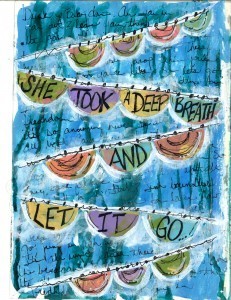
But, when I’m moving through my day, I use phrases to help me focus on what truly important to me. I may simply say “peace” slowly, and meaningfully, to remind me to stay out of the drama. I also say “Let it go” and I release the ‘go’ with a big exhalation so it sounds like I’m actually letting the air out of the tire.
Often, when I’m drawing from my courage or confidence I repeat “I’ve got this” to myself. Sometimes, “choose joy.”
A mantra can be a powerful way to keep your attention on what is important to you and with that kind of focus you’re likely to create that quality in your life.
What is it you are going for? Consider your own power words, or the qualities that you aspire to. Then, on Wednesday, I’ll offer up some easy guidelines to help you create your own mantra.




August 6, 2014
Counter-Intuitive Ways to Get Creativity Flowing
 Once we realize that creativity isn’t solely about painting or writing or other more traditional, artistic pursuits we can see that the more creatively we approach life the better life we’ll live. Creativity is linked to happiness and well-being. It also boosts our productivity, helps us find our passion, and solve problems.
But how do we access this super power in the middle of a busy day? That’s something I think about a lot, when I’m sitting before a blank computer screen trying to come up with the next book or article idea before my daughter arrives home from school.
Here are a few surprisingly counter-intuitive life hacks, which, research reveals, can invoke our creative spirit.
Tackling the Mundane
Alright now, find a phone book – seriously, I know we don’t use them anymore but the folks from the yellow pages are dropping them in your driveway — and start reading. Yep, open a page, and read through the list of numbers right there in the phone book.
Turns out this kind of boring and mundane task might be just what we need to work into a more creative mindset.
In a couple of small experiments by Sandi Mann and Rebekah Cadman, people who took on passive, more boring activities – like reading or copying numbers out of a phone book – were more creative problem solvers. It seems the more boring tasks allow room for more daydreaming which may explain why many of my best ideas come while unloading the dishwasher or folding clothes.
All this has got me thinking: is there greater potential for those who are bored at work or living in isolated environments to create great novels or paintings or other works of art? Who knows? But as we ponder the fate of these bored and faceless, but, oh-so-creative strangers, we might just feel another creative nudge.
Thinking of Others
That wouldn’t be all that surprising to Evan Polman and Kyle Emich. Their research indicates that we tend to come up with more creative ideas and better solutions when we are thinking of other people. The theory is, that when we are stewing over our own circumstances we tend to be more concrete and rigid in our though patterns. This is stifling to our creativity.
But, when we distance ourselves and focus on someone else’s problem – poor schmucks — we become more expansive, our perspective broadens and we become more flexible and abstract in our thought patterns. Enter: innovation and interesting ideas.
Put yourself in someone else’s shoes and not only will you be more kind and compassionate – by-products of empathy — but you might just stumble on a compelling and creative idea. Or you might literally stumble over it, on a walk.
Going for a Walk
Walking appears to alter our physiology in a way the fires up our imaginations. Research out of Stanford University indicates that we come up with the most creative ideas while walking, but that creativity lingers even after. Those study participants who sat throughout the experiment, not so creative. Those who walked, whether on a treadmill or outside, pulsed with creative energy.
Exercise has long been linked to creativity and if I must choose between the boring task of sweeping the family room or going for a walk, well, I’m lacing up my sneakers right now.
When I get back, the dirty floor will still be waiting, by then though, I expect I’ll have something else to write about.

August 4, 2014
Redefining Creativity

The muse is dead. Or at least I’m pretty sure she is, because she isn’t showing up around these parts.
And I’m feeling particularly hostile toward her this morning after reading about a writer who downloaded an entire book. She was a channel for the words. One minute they didn’t exist, the next she had them all on the page. Others have done this, created revelatory work from the ether. Not me.
But I have had days, months even, where the creative process – though always confusing and muddled and invigorating and mysterious – has worked for me. Where I had interesting ideas marinating even while I developed another. The process from the beginning, where it usually starts with an illogical and unformed hunch through the end-stage wow when you’re looking at how that hunch turned into something vast – is so exhilarating that I wait for it. I seek it. I study it in the hopes that it will happen again. Like right now. I’m waaiittinng.
Creativity is Linked to Happiness, Productivity
I know it’s there for me – somewhere. It’s there for all of us. Creativity is the one thing we all possess. It doesn’t ever completely dry up but after about second grade fitting in becomes more important than acting creatively. We begin to express our creative side differently, often suppressing and denying it. Then, we stop believing in it. At this point creativity becomes something so select that only a few – the Mark Twains, Georgia O’Keeffes, Beyoncé-types – can ever really be considered creative. The rest of us are just out of luck.
We think Twain? Heck, I can’t write anything like Twain (who can?) so I must not be creative. And, that’s the end of it. Embarrassed by the comparisons to “real writers and real artists” we abandon our own super power.
This, of course, makes us creatively insecure and totally unhappy because creativity, happiness, and well-being are linked. It is part of our innate nature. It helps us solve problems, achieve goals, finish work, relate to teach other and world.
We Are All Creative
Most of us are doing these things all the time though, because we can’t paint like Picasso, we are quick to declare – “no, no I’m not creative at all.” Still, we make up little songs to get the kids to brush their teeth and games to engage them at the grocery store. Or perhaps you’re the one looking for different ways to motivate a tribe of employees at work or solve the networking program, or juggle the family budget, or pull together a meal from the items you have left in the pantry – all which are creative pursuits.
Living is a creative endeavor because it challenges us constantly to adapt and adjust and discover and develop. Problem solving, pondering, exploring, are all a part of the creative process. So is mess and trial and error and exhilaration and even fear. So, you see, if you are on this planet, you’ve got some creative stuff going on just to survive the day-to-day. Creative, is who you are.
Access that creative power by first redefining what creativity is, then, take a look at how you are spending your time. I’m betting there are creative aspects to just about every routine task you take on. Finally, look beyond what you know and choose a new (or old) form of creative expression.
Return to your roots and rediscover those creative things you loved to do as a kid, dance, color, play music, write stories, shape clay, build forts, play. Get comfortable with creating again and you’ll find that your creative spirit never left.
Check out the site Wednesday for some quick, and counter-intuitive tips to help you access your creative spirit in the moment. Here’s a hint, you’ll want to start reading the phone book.

July 30, 2014
How to Make a Short Break Count
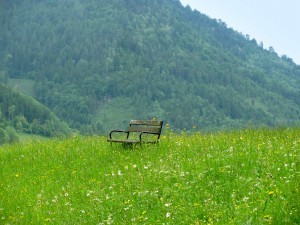
I’m on vacation this week, so I’m reposting this article with some of the reasons why. I used to be the one who wouldn’t take a break. Now, I know it’s not only good for my health to take a little time off, but it boosts my productivity when I return. This repost will tell you how to make it happen, even if you are in for a staycation.
It takes more than a change of location to access the benefits that come with a vacation like better sleep, (even when you return), a healthier heart, better immune function, lower stress, and more joy.
To maximize those feel-good qualities, you’ve got to shift your focus from the stress-producing routine to something that lightens and inspires you.
In other words, while away, step away from the phone. And the Internet. And the Ipad and any other device that keeps you hooked in and revved up. And for a week, an afternoon, even 15 minutes during the day, back away from the gadgets and the daily routine and take a rest.
You’ll find that when you return to it you’ll actually be more productive, more focused and efficient. Here are some tips for making it work.
3 Tips for Making Your Break Powerful
Do what you like. Seems obvious, but often we end up spending our break time doing what others want to do. Make time for something you define as fun whether its tinkering with car, solving a crossword, weeding the garden or laying on a deck chair poolside – find something that says AHHHHH when you think about it and make it a priority in your week.
Get out of the noise. The hum of the computer, the buzz of the fridge, The Wiggles CD playing in the background – even the joyful sounds of life contribute to feelings of overwhelm. Find a moment of quiet every day (lately I’ve been getting up an hour early to get a moment of conscious quiet. My friend finds peace in the bathroom – not kidding) AND make time for some solitude while on vacation. It restores mental balance and peace of mind.
Set a time, but, skip the plan. Plan for an hour off or a weekend away, but don’t plan what to do (other than maybe childcare) until the day of your get-away. Keeping up with the minutiae of a daily schedule is stressful and exhausting. Wake up the day of your break, smile because you know you’re going to get some time off, then go where your inclinations lead. Notice how you feel. Have Fun. It’s invigorating to be spontaneous once-in-awhile and nice not to have to plan every detail.
Now, I know what you’re thinking, I’m too busy or too broke to take time off right now. But, there are plenty of ways to fit mini-breaks into the middle of your day. Instead of eating lunch at your desk, go to a park, or head home for a power nap – which provides a great stress release. Or take a night off from your evening bedtime chores, let your partner take the kids, and go do something that makes your heart sing. Skip housecleaning Saturday morning and go to a state park for a picnic. Find the time and in return you’ll be more productive when you do get back to work.
Photo by: Stock.xchng

July 28, 2014
How Time Off Helps

I’m on vacation this week, taking a break from our regularly scheduled programming, and reposting this piece from many moons ago that explains some of the reasons why a break is beneficial. So read this, then take a time out. You’ll feel better!
I know, I know, with kids and work and soccer practice and all the expenses of life, it might be tough to take a break for an afternoon, let alone a week’s vacation. But, do it anyhow. Make the time.
Vacations – a break from the regular routine – contribute to peace of mind, good health and yes, better relationships. But, they also make you more productive and efficient when you do return home or to the office. And the slow down also helps strengthen that spiritual connection.
I’m not saying you have to take a 21-day Caribbean Cruise to feel better (though doesn’t just thinking about it feel good?) Even an afternoon off or 10-minute mini-breaks during your day can give you a respite that will make a difference in how you feel. The key is to create a break that will move your focus from the stress of the day to something that offers relief, rest, and joy.
3 benefits of a break:
Better immune function: Even a mini-break has been shown to ease stress and boost immune function – which keeps you from tapping into your sick days when you are supposed to be working.
Try this: Pack a picnic lunch and get out of the office or the house for an afternoon. A simple change of scenery can help you disconnect from the daily stress.
Improved heart health: Women who take regular time off are less likely to die from a heart attack, according to Bigwig researchers.
Try this: While it is best to actually go somewhere, even fantasizing about your dream vacation can create positive thoughts and health benefits. So pull out those travel brochures and begin planning your next trip. Just thinking about it will make you feel better and visualizing it can help make it real.
Enhanced creativity: When you step out of the regular routine, even just for awhile, you start to see things differently. New visuals lead to new ideas and inspiration which can boost your energy – all good stuff when it comes to creating anything from a new dinner idea to drawing.
Try this: Get up and go outside. Go sit on that park bench. Walk a new route around the neighborhood, head to the nature park nearby, plant flower, mow the lawn. Just being in nature can help you see the world differently, plus it’s a proven stress reliever.
Whether it’s a 15-minute time-out or a two-week get-a-way you plan, do something that engages the body, brain and spirit and you’ll feel relaxed, relieved and ready to roll when you head back to the regular routine.
Photo by: Stock.xchng

July 23, 2014
Pinpointing Your Purpose

While our expression of purpose is broad and ever-changing our purpose or focus in life usually remains consistent. And it helps to know what that direction is.
Uncovering your purpose then starts by paying attention. Start noticing what you are doing when you feel really good. When you feel connected to life and others. Take a look at what excites you.
When do you feel like you are the most engaged and passionate in life? In the flow? What are you doing when you feel like you are making a positive contribution?
If you can’t answer these questions now, think back to another time when you felt fired up and excited and recall what you were doing, in vivid detail.
What skills did that role require? Where were you? What talents did you have that helped you in the situation? How you were you interacting with others?
What Talents and Abilities Do You Bring?
For example, if you felt great during the client meeting, what was it specifically that turned you on? What did you share of yourself, which skills did you use that helped the meeting flow?
If you were meeting with patients or helping your daughter with homework, or cooking a meal for your family when you felt most engaged, what did you bring to those situations that made them so successful?
Perhaps it was your ability to communicate, your humor, patience, compassion. Maybe it is your passion that draws people in or your intelligence that helps you manage these situations.
Find the Pattern
Now, look for the pattern. Which times do these skills and abilities show up in your life? If you are able to fairly and comfortably negotiate a business deal for the benefit of all, is that a skill you also use at home to keep peace between family members?
If you are a corporate trainer, do you also find yourself teaching other volunteers how to help students in the classroom? If you are a teacher or a counselor, do you also find yourself empowering and encouraging others at the gym?
Match the times when you felt you were making a meaningful contribution with the skills and abilities and talents expressed during those times. Then, look for the three or five elements – the skills, roles, emotions, duties — that show up every time you feel that impassioned. Look for the pattern.
In my case, I feel great when I’m able to help someone identify their own strengths and power. I feel like I’m making a difference when I provide an information or support that helps someone improve their life. I feel in flow when I’m learning and connecting friends, family, even strangers in a deep way. Those feelings seem to appear when I’m speaking or writing on personal development topics, when I’m supporting someone through a difficult time, when I’m overcoming my own adversity, when I’m laughing and connecting with friends and others. See the pattern?
Uncovering the Patterns Help You Find Purpose
These patterns are an expression of your purpose. Your purpose, then, is the over-arching quality that brings them altogether. Your desire to nurture, or inspire, or teach, or love, or advocate. See how this works?
In my case, many of my talents and also the times I feel most connected and alive center around my roles as a communicator/teacher inspiring people to live better lives. So, my purpose then, is to inspire, teach and guide others to live better lives. Now that I know that, there are a bajillion ways to do that from my most intimate roles as a wife and mother to global expressions as a speaker, author, volunteer.
Look for the patterns in your life. Notice how your talents and skills and abilities link up with the times when you feel most engaged, most alive. The times when you feel as though you are making a difference. Then, identify the big-picture theme within those patterns and you will identify your purpose. It’s already within you, it’s just a matter of uncovering it.
Image by: Erin Cairney White
Erin Cairney White uses mixed media – acrylic paints, gelatos and a variety of papers, inks and stamps to create her work from her Snohomish, Washington studio. She is a wife and mother of four who also teaches art classes and works with educators in the Snohomish School District to support special needs students. When she is not creating, or working with kids, Cairney White and her husband raise pygmy goats. Her original artwork is available through the little details company.

July 21, 2014
Purpose in Life Increases Longevity and Satisfaction
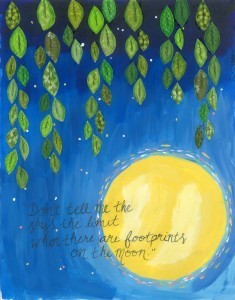 For a long time I thought my purpose in life was to write.
So imagine the panic when after a zillion years working as a writer, I began to hate it.
All washed out at 30. If I couldn’t write, what would I do? What was my purpose?
Truth is, my purpose isn’t dependent on the writing. Or the parenting, or anything else I do. My purpose, as I know now after years of study and reflection, is to inspire and teach and support people to live better lives, and that can happen in a bunch of different ways.
What is Purpose?
Purpose is sometimes described as the thing we are meant to do, the focus of our life, the values and goals that define us and motivate our behavior. It is an expression of our desires and talents and authenticity.
It’s a big deal according to Patrick Hill, of Carleton University, because purpose not only influences the quality of our lives and how we contribute to others, but it also helps us live longer. With data from more than 6,000 participants over a 14-year period those who had the strongest sense of purpose in life, lived the longest. Other research shows that people with a clear purpose also tend to be more resilient and have greater meaning in life which promotes well-being.
Purpose is good for our bodies and our souls.
Purpose is Vast and it is Within You
Yet, how we think about purpose is often too narrow. We think there is one thing, one right way to do it and if we aren’t clear on our modus operandi, if we don’t know what are purpose is, we freak out. We feel scared, unfulfilled. Lame.
But don’t worry. You got this. You are expressing your purpose right now even if you can’t define it. It is within you, it seeps out of you all the time. What we need to do is back up and start uncovering the purpose we are already living.
In my case, I was so tied to the notion that writing was my sole purpose in life, that I never stopped to look beyond. The writing was simply a way to express my purpose. It wasn’t my purpose at all.
My purpose, as I think about it today, is to inspire, guide, support people to live better lives. I feel most connected to my work and my family and my friends, most grounded in myself, when I’m doing this.
So, when I was writing marketing materials, I wasn’t all that close to my purpose (though I didn’t know any of this at the time) and it felt icky. I blamed the writing. Yet, when I began writing about psychology and personal development and other stuff that moved me back into that purposeful space, I was passionate again.
I still write, but the expression of my purpose is broader now. I also parent a daughter – and my purpose to inspire and guide and support abounds in that role. I’m a speaker who strives to inspire and guide audiences so my purpose shows up there too. And I’m a wife and a friend and in the quiet moments when I’m hanging with my tribe sharing the moments of our lives, I’m on purpose too – I hope to support and encourage my friends and reflect their magnificence.
You see how this works? We get caught up in the thing we are doing and we think that’s our purpose. So when we change spouses or lose jobs, or when our kids grow up and move out and no longer need round-the-clock parenting we feel bereft, as though our purpose in life is over, gone.
Purpose is Not Limited
But that is not it. Purpose is not finite. It is not contained by a single duty or job description or activity. It is not limited by a single expression. It is vast like the universe and the oceans, it is as expansive as we are. And it is revealed by passion.
While your purpose will probably remain the same throughout your lifetime, how you express it will flex and shift and change dozens of times. Make room for that expansion, be open to it, don’t judge it. Stay close to your purpose and you’ll feel healthier and more engaged in life no matter how it shows up.
In Wednesday’s post, I’ll offer some quick tips for getting clear about your purpose and finding the means of expression that help you stay on track.
Image by Erin Cairney White
Erin Cairney White uses mixed media – acrylic paints, gelatos and a variety of papers, inks and stamps to create her work from her Snohomish, Washington studio. She is a wife and mother of four who also teaches art classes and works with educators in the Snohomish School District to support special needs students. When she is not creating, or working with kids, Cairney White and her husband raise pygmy goats. Her original artwork is available through the little details company.

July 16, 2014
How to Forgive
 I read these inspiring stories about loving people who forgive their daughter’s killer or families who forgive the drunk driver who killed their relatives, or spouses who forgave the betrayal and I think, Wow. Forgiveness doesn’t get any bigger than that.
Here I am holding on – usually not consciously until it surges up in my memory –to some little, teeny, tiny hurts from long ago and I think if these amazing people can forgive the big stuff, I can certainly get over the little stuff. And we must. You see? No matter the situation, when we hold on the past hurts and anger and hostility we suffer. When we seek revenge or wish for bad things to befall the one who hurt us, we are the ones who are stuck. Locked in anger and hurt and bitterness.
Forgiveness isn’t going to erase the hurt, or excuse those who did the hurting, it simply allows you to move on, to create better things in your life. To take charge and say this is my life and I will not let you hurt me anymore. Forgiveness isn’t a gift to the one who harmed you; it is a gift you give yourself.
Yet, it seems so intangible. So, lately I’ve been looking at the work of forgiveness experts for a tight, little, easy-to-follow forgiveness framework, a “how-to” forgiveness primer. I’ve boiled down the details from psychiatrist Walter Jacobson and other experts who teach forgiveness. And here are the steps I’m using to hone my forgiveness habit. I’m testing it out on a workplace conflict with a co-worker (transgression feels too polite a word) that happened years ago.
How to Forgive
1. Identify the feeling. What is it you’ve still got roiling around there, when you reflect on the difficult situation? Anger, hostility, judgment, or is there also some deep-seated hurt. I was angry after the co-worker called me out, but I was also super hurt that she acted, all day, as though nothing were wrong, and then went after me publically.
2. Let go of the story line. Disengage. Simply observe the emotion and the painful situation and thought patterns you have without judgment. Just look at what happened objectively. Then replace judge with acceptance. Jacobson recommends you even do this aloud by saying: “I don’t need to judge here.”
3. Release the hurt. Decide to let go of the pain. Visualize it leaving your body, heart and mind. Remember, this is a choice, you get to decide if you want to carry it around or hold on to the hurt.
If you are a linear, pros-and-cons kind of person, and I am, you may want to think about it this way: What do I gain from hanging on to the anger? What do I gain from letting it go? Remember, forgiveness is all about you, it really doesn’t have anything to do with the other.
4. Replace the hurt with something helpful. Look for a goodness now to fill in the hole where the hurt remains. Surround yourself with beauty, turn to a loving friend, get a massage, do something that feels good for you.
Then, remember the forgiveness. Like surrender, you may have to do it a bunch of times to remind yourself that you have forgiven and that the hostility and anger is no longer a part of you. It takes awhile to develop the habit of forgiveness and when you catch yourself feeling bad about the painful situation, you can go through these steps again.
For me the most interesting part of this process was the point #2, letting go of the story line. When I simply observed, without judgment, what occurred, I really felt the anger slipping away. It’s no longer relevant to my life and this made it easier to let go of the niggling feelings that were cropping up. I was also able to see the growth that occurred because of that situation. Now, it is simply something I experienced. It is no longer weighted by emotion. I no longer have bad feelings attached to it.
That feels a whole lot better than hanging on to the hurt

July 14, 2014
How Forgiveness Helps You Forget
 The memory came back to me like a summer squall, blowing into my psyche bringing up stormy feelings and leaving debris in its wake.
It was about the time a co-worker called me out for a job she thought I’d done poorly. The complaints were personal, loud and public – in front of my co-workers at an all-office meeting– and I was stunned. Didn’t see it coming, though I’d eaten bagels with this woman just an hour before.
Course all this happened more than 15 years ago and I still think about it, on occasion, and the memory leaves me angry and confused all over again.
This latest round of memory challenged me to get a little reflective, to reexamine the situation, and to let it go once and for all.
Bottom line: I needed to forgive my co-worker and myself. And, that forgiveness would also help me forget, according to new research.
Forgiveness Allows Movement
Forgiveness starts with our willingness to do it, says psychiatrist Walter Jacobson, author of Forgive to Win! (CreateSpace, 2010). This is where we stumble. We think that by forgiving another that we are letting them off the hook for their bad behavior. We believe that by forgiving, we are endorsing what they did that caused us pain. We are all about sticking it to those who have hurt us and we think by staying angry, hostile, withdrawn we are punishing.
All this does is help us hang on to the hurt. The hurt caused by the parent who left us, the husband who betrayed us, the boss who blamed us, the friend who cut us off.
When we can forgive all that, when we can let go and stop replaying the bad behavior in our minds, then we get to move on and our memory of the pain tends to fade too.
When the transgression has been forgiven, we are also more likely to forget the details that can bring up the old pain, according to researchers at the University of St. Andrews, Scotland. That helps us move on, healthier.
Forgive for Better Health
Forgiveness has long been linked to mental and physical health benefits and greater well-being. And, if you can forgive you’ll gain greater peace of mind and the memory of the hurt itself will fade. This means we can move on instead of staying stuck in the pain.
Of course all of this takes practice. First, we’ve got to decide to let go. But, don’t worry, you don’t even have to talk to the person who did the hurting to do it. This is all about you. You can do this for yourself, by yourself.
It becomes easier to do when we remember that by forgiving another we are actually choosing goodness and peace and more joy for ourselves. Instead of letting the memory of them or their bad behavior linger in your life, you are choosing to move on and in to a great life. That hurt becomes but a blip on your emotional radar screen. OK perhaps it is more than a blip, (it doesn’t have to be) but it’s one thing to carry the pain, another to carry the hostility and anger. Forgiveness frees you from that kind of drain.
In my case, though, the inner-office-chewing-out was just a blip. Really. I wasn’t cheated on. I have no physical scars. Sure, at the time it felt painful and shocking, but it’s long been over. My self-worth was in no way tied to the angry co-worker and I’ve rarely seen her since. So, imagine my surprise that the memory of that moment pops up every once-in-awhile. It’s time to try a more formal brand of forgiveness.
It starts with understanding which feelings are tied up in the moment of ick – for me there is embarrassment, surprise, anger, self-doubt, hurt – then it’s time for release.
In Wednesday’s post I’ll share the steps I’m using – disengaging, letting go, replacing – and let you know how they work.
Until then, what situation or person are you ready to forgive and let go of so you can move on?
Image by Erin Cairney White. Cairney White uses mixed media – acrylic paints, gelatos and a variety of papers, inks and stamps to create her work from her Snohomish, Washington studio. She is a wife and mother of four who also teaches art classes and works with educators in the Snohomish School District to support special needs students. When she is not creating, or working with kids, Cairney White and her husband raise pygmy goats. Her original artwork is available through the little details company.

July 9, 2014
Tips to Ease Summer Stress
 The good weather and fun, summer activities can sometimes be overshadowed by changing routines. You’re juggling work, and kids’ camp schedules, and vacation times, plus a bunch of backyard barbecues and while it’s all good stuff, the shifting schedule can cause a bit o’summer stress and fatigue.
One way to cope is to manage your mindset and reframe potentially difficult situations with a more positive perspective.
Here are three other tips that can keep your summer stress and bay.
1. Follow the flow. If packing up the picnic and the cooler and the water toys and the Frisbee, and slathering on the sunscreen feels hard and stressful, or if you pick a fight with the family when you can’t find the kids’ flip flops, it may be time to change plans and go with what feels better.
Often, obstacles, frustrations and negative emotions are there to show us what isn’t working. They are a sign that we should regroup, adapt, and move toward something that feels better. Sometimes, turning on the sprinklers in the yard is better than packing up the gear and driving across town to a park. Go with the flow, move toward what feels right, adjust the plan, and whatever you decide to do for fun will actually be fun.
2. Move into the light. Natural light can do wonders for a waning mood. Sunshine or even the glare on a cloudy day shuts down the body’s production of melatonin — the naturally occurring hormone which makes us sleepy — and leaves us feeling more refreshed and energized. This, of course, makes it easier to cope with any potential craziness.
When you get up in the morning, open the blinds, or walk out on the porch for few minutes to soak up the light. This will increase blood flow to the brain and leave you feeling more alert. And, I, for one, need all the help I can get.
3. Savor the goodness. Finally, amid the chaos of changing routines and summer schedules, pausing to notice the good things in life can make everything more enjoyable.
Once you identify the good things, take a moment to absorb the positive emotions – wonder, peace, joy, curiosity, appreciation – that come from that awareness and you’ll feel better, says Fred Bryant, PhD, and social psychologist at Loyola University.
Do this several times a day — pause a minute or so to notice the pink of the geraniums, the sweetness of a sip of lemonade, or a favorite song playing during your commute – and you’ll feel less stressed and more sane this summer.
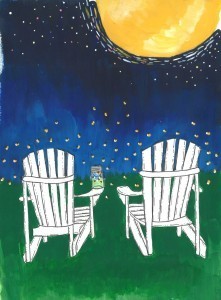
Image by Erin Cairney White
Erin Cairney White uses mixed media – a crylic paints, gelatos and a variety of papers, inks and stamps to create her work from her Snohomish, Washington studio. Her original artwork is available through the little details company.