
Marina Gorbis's Blog, page 1255
September 2, 2015
To Become a Leader, Think Beyond Your Role

The world is full of people with opinions. Television, radio, and other media are brimming over with commentators making suggestions and offering seemingly authoritative advice to government officials and corporate executives about what they ought to do. At dinners and cocktail parties — and around the water cooler at work — we talk about what others should do or should have done, or the flaws of our bosses.
In our jobs, we may give our opinion on an issue from a functional or departmental point of view — in other words, a limited perspective. Or we may give an opinion without fully thinking about the issues and weighing the interests of various constituencies that our boss has to consider in order to make an important decision. We may do this because we don’t have access to additional information or, alternatively, because we believe that broadening our perspective simply isn’t part of our job description.
This kind of opinion giving may be quite appropriate and adequate in any number of situations, but it doesn’t constitute leadership. Leadership requires much more. It starts with taking on a broader perspective in figuring out what you truly believe should be done — that is, as if you were an owner.
I Thought I Did a Good Job
Jim, a vice president of a consumer goods company, called me to discuss a problem he was facing. He was a former student of mine and was calling to seek advice. He had just had a jarring experience, and he was trying to make sense of what had gone wrong.
Jim had been working on the launch of an important new product for his company. He was a key member of a multifunctional launch team that was headed by the senior vice president in charge of one of the company’s key divisions. The team was charged with conceiving of all aspects of the new product’s design, packaging, marketing, and distribution strategy. This product was vital to Jim’s company, because the market share of several of its core products was eroding, and senior executives urgently needed to find new avenues for growth. They thought that this new product would address an important consumer need and reestablish the company’s position in the minds of its customers.
Each member of the project team was assigned one aspect of the new product and its launch. Jim’s responsibility was to focus on the point-of-sale promotion for the product. He felt this wasn’t the most critical assignment, but — given the importance of this project and the high quality of the other team members — it was still a good opportunity.
After several weeks of work, he came up with a detailed plan regarding display and placement for the product within each retail context: grocery stores, drugstores, and other consumer outlets. In addition, he developed alternative point-of-sale materials to be used in some of the regional product tests that were about to be conducted.
During this period, the project team met once a week, with each member of the team reporting on his or her area of responsibility. The senior vice president wanted every team member to be aware of the plans for all aspects of the launch. He hoped that team members would question each other and learn about each other’s assignments, and thereby produce a more effective launch strategy.
Initially, Jim was very pleased with his work on this project. “I thought I did a very good job,” he told me. To come up with the detailed plan, Jim had assembled a subgroup comprising several of his subordinates. He felt great about how things were going, which was why what happened next was so disconcerting.
Adapted from
What You Really Need to Lead
Leadership & Managing People Book
Robert Steven Kaplan
27.00
Add to Cart
Save
Share
At one of the late-stage project team meetings, Jim was asked to present his final recommendations. To his surprise, several members of the project team roundly criticized his proposal. They felt it was out of step with the nature of the product, price point, and likely consumer buying behavior. In particular, the members of the larger team felt his point-of-sale positioning was more consistent with an impulse purchase, whereas they believed strongly that this product should be positioned and priced as much more of a premeditated buy on the part of the consumer.
Jim was shaken. After the meeting, the team leader took him aside and asked him how much he really understood about the product being launched. “I’ve been in every meeting,” Jim replied, “and I’ve listened carefully.” If that was true, the team leader asked, how could he be so out of step with the team members regarding the product’s positioning? Jim countered that he thought he had responded well to what he had heard in the meetings, and that he had also drawn effectively upon his past experience working on other successful launches.
The team leader proceeded to ask Jim a series of specific questions: “Who do you think should buy this product? How should it be priced? How should it be packaged?” Jim admitted that he hadn’t really thought about these issues because they weren’t explicitly part of his specific assignment on this project. Other team members, he argued, were supposed to be worrying about those questions.
The team leader was exasperated by Jim’s comments. Before ending the meeting, he gave Jim some pointed advice. He urged him to think about how he would answer these questions if he were the team leader, rather than simply a member of the team with a narrow set of specific responsibilities.
Jim thought this was an odd recommendation. He called me to get my reaction to what had happened and to ask for suggestions regarding how he should respond to the project manager’s challenge. My reaction was straightforward: “Jim, your team leader has given you some great advice. I agree with him. Pretend that you’re responsible for this situation. Really try to think as if you were the boss, or even owned the company. Imagine that your life depended on getting every aspect of this launch right. How would you do it? You’re a talented guy. Think like an owner and use your talents to answer his questions.”
Jim acknowledged he hadn’t thought about this approach, in part because his current and previous bosses had never encouraged him to think or act this way. “That’s going to take a lot of thought and analysis on my part,” he said, “and maybe even some serious soul-searching. Are you sure this is really my role? Do I really have to do all that?”
“Yes,” I responded. “If you want to be a leader, you absolutely do.”
He decided to take this challenge seriously. He interviewed other team members and applied his broad skills and talents to think through every aspect of the product positioning. He even conducted some of his own research at selected retail outlets, looking to see how competitive products were being positioned. After doing all this work, he began to realize that his initial recommendations were at best superficial, and at worst radically misaligned with what he now thought would work for this product launch.
He came to a disturbing insight: he had done a lousy job. He had not applied a leadership mind-set in his work on this project assignment. As a result, he had done inferior work and made himself look bad to others in the company. He decided to summon his courage and apologize to the team leader and the entire project team.
The project team members were gracious about his apology. They were impressed that he had had the guts to admit he was wrong, go back, and redo his work and rethink his recommendations. He proceeded to explain the new positioning recommendations, which his teammates quickly approved. He felt as if he had been welcomed back as a valued member of the team.
He realized that he had learned something valuable from this experience. This was reinforced when the senior vice president, who was widely recognized as a rising star in the company, told him, “From here on in, Jim, I hope you’ll act like a leader in this company. You have great potential here, but only if you start thinking like an owner. Define your job broadly, rather than narrowly.”
Jim promised himself that in the future, he wouldn’t think like a narrow functionary, but instead approach his work as if he was an owner of the company. This new mind-set helped make his thinking much clearer and his work much more effective. He had a new prism for judging his thinking and his actions.
Developing Conviction
It sounds simple: “Think like an owner.” In fact, it is hard to do. It requires you to put yourself in the shoes of the decision-maker. You may realize that you prefer not to be in those shoes. There’s too much pressure; there are too many considerations; there are too many constituencies. With all the complexity, constant change, and myriad of issues in the modern world, it may be easier to rationalize more narrow thinking: Dammit, it’s not my job!
Yes, it is your job, if you want to be a leader. If it frustrates you, or makes you agonize, or even creates a heightened level of stress for you, then you need to get used to experiencing those feelings. The more you practice this, the better you’ll get at doing it. I would urge you to begin to believe and internalize the view that thinking like an owner is central to your effectiveness in your job. Thinking like an owner means getting to conviction. “Conviction” is meant to describe a threshold level beyond which you feel a high level of confidence about what you truly believe should be done.
Many leaders spend their lives striving to get to conviction about what they would do in a particular situation. The reality is that, much of the time, they may not have a strong point of view. They keep gathering information, agonizing, and assessing until they reach a threshold level of confidence.
On the other hand, some leaders need to be wary of getting to conviction too quickly, or having such a strong initial point of view that they fail to take into account key considerations that are crucial to making a good decision. Each of us has blind spots, may be prone to ideological points of view, or may be unaware of our own subtle biases. As a result, we each need to also take sufficient time to gather information, consider alternative arguments, agonize, and make sure we are arriving at a balanced judgment.
The point is that the process of searching for conviction can be very challenging. The contextual factors and considerations are changing all the time; competitors take significant actions; products get commoditized, and so on. In addition, different people looking at the same situation may come to different points of view about what should be done. To cope with all these factors, leaders need to perform analysis, seek advice and input from others, debate alternatives, and generally ruminate. Much of the time, this process may feel like a grind.
While you’re going through this grind, you don’t always need to know exactly what to do; you don’t always need to have the answers. However, as a leader, you do need to be constantly striving to get to a level of conviction on key issues. How do you do this? You and your team need to focus your efforts on taking the necessary steps that will help get you to a sound judgment.
With practice, you will learn to understand yourself better and increasingly learn what conviction feels like. As you search for it, you will get better at gearing your efforts to work in a way that will help you get to that feeling. Leaders don’t look for excuses for why they can’t act like an owner. Instead, they embrace the challenge of ownership and encourage their teams to do the same.
This post is adapted from the book What You Really Need to Lead: The Power of Thinking and Acting Like an Owner.


How to Work Confidently with Numbers People

HBR STAFF
In the era of Big Data, analytics are becoming a competitive necessity for many managers. And even if it’s not an explicit part of your job description, chances are you need to understand at least something about data and analytics to be successful. So, where should you start? What’s the best way to get a handle on the basics? How should you get to know the quants in your company? And how can you be sure you’re asking them the right questions?
What the Experts Say
Whether you’re in financial services, consumer goods, advertising, hi-tech, or public health, the nature of your day-to-day job is likely changing to include data. For some managers, this is intimidating. “A lot of people want to hide because they weren’t particularly quantitative in school or school was a long time ago, but given the number of executives that want to use data-driven insights to propel their decision-making, you can only hide for so long,” says Thomas H. Davenport, a professor at Babson College and the author of Big Data at Work. Besides, hiding is bad for your business and your career, says Joe Knight, a partner and senior consultant at the Business Literacy Institute, and the coauthor of Financial Intelligence. Your goal, after all, is to be the kind of manager who not only understands formulas and analytic methods, but also knows how to “interpret [results] to make better decisions and improve efficiency.” Here are some strategies to help you.
Get educated
If you remember your statistics classes from college or business school, you may be okay. But for those who don’t or, ahem, are somewhat numerically challenged, a refresher is in order. Fortunately, there are myriad ways to get back up to speed: Enroll in an executive education class; read books and articles on the subject; take an online course. Your goal, according to Knight, is to become data literate. “It’s not hard to get the fundamentals down,” he says. “You need to have a sound baseline understanding of business analysis—including the four families of financial ratios and tools for calculating return on investment.” Davenport highly recommends also getting a solid grasp on the basics of regression analysis. “The vast majority of statistical analysis approaches are based in regression analysis,” he says. If that term makes you want to turn and run, don’t. You don’t have to know how to run a regression analysis but simply what it means and how it is performed.
Form relationships
In some organizations, the quant team and the business executives have an adversarial relationship, says Knight. Managers may feel, “Those numbers guys are always ruining our projects.” While the analysts think, “Those business people don’t understand the analysis.” It’s counterproductive. You will get much better business results if you form deep, trusting ties with the quants in your organization, according to Davenport. Don’t write off your analysts as “geeky” number crunchers. Get to know them and treat them with respect. Perhaps the best way to develop mutual trust is to make clear that you value their skills and want to learn from their expertise. Simply saying, “I have a lot to learn from you” can go a long way toward forming a partnership. And if you have a say in hiring decisions, be on the lookout for people who “want to solve business—not just mathematical—problems,” says Davenport. This will help prevent antagonism in the first place.
Include analysts in decision-making
If you manage a team that includes quants, don’t let them sit on the sidelines. “Make the quant a full-fledged member of your team,” Davenport says. “Expose them to the business problems, so they can see them with their own eyes.” Set up frequent meetings and project-reporting sessions so that they fully understand the business. But don’t just ask them to observe; include them in the decision-making process, especially when you’re using the data they’ve delivered to inform the outcome. “Let them know you’ll be working together to make good decisions,” suggests Knight. Ask for their opinion. Often they might have insight that no one else on your team does.
Establish open communication
Maintaining and nurturing your relationships depends on honest, “open communication,” according to Knight. “The quants must be willing to help you understand the estimates and assumptions in the numbers and help you figure out where the risks lie.” Along the way, you need to ask a lot of questions, he says. “There is a tendency to think of numbers as hard and inflexible but that’s not true. The data are inexact.” Davenport suggests pressing the quants in your organization about their models by asking questions like, What are the assumptions you’re using in this model? Under what conditions might those assumptions become invalid? And, how well do the sample data represent the population? “Don’t be afraid to admit what you don’t know,” he says. Ask for help in understanding anything that’s not clear to you.
Don’t get overwhelmed by the volume of data
Often, sifting through the sheer volume of data available is daunting. Fortunately, “all businesses run on a few key metrics,” Knight says. “You don’t need to be looking at 10 to 20. That’s too many. You need to understand the two or three that drive your organization’s profitability and cash flow.” To figure out which ones are most relevant to your business, he suggests enlisting the help of your quants to, “look at the cause-and-effect of all your metrics, and then weed through the ones that don’t have very much impact.” When you discover which metrics are most important, zero in. “You need to understand those in great detail so you can immediately see when there is a problem,” he says.
Respect the data
Data—not instincts or opinions—should drive decision-making, says Knight. The goal of any analytics team worth its salt is to provide an objective, unbiased perspective. So while “a good operations executive might have an intuitive feel for what could work in the business,” that manager should never pressure an analyst to seek out numbers to support his or her opinion. Not only does that pressure defeat the purpose of rigorous analysis, it also creates an environment where the data team feels it exists merely to please the leader. “Most people who do analytics want to see what the numbers reveal about a truth in the world, not support an executive hunch or prejudice,” says Davenport. Be willing to run experiments and trials to test your ideas and gut feelings. Of course there may be some reasons or “situations where you may want to overrule the data, but if you just cynically ignore what the numbers say, or ask an analyst to prove whatever you think is correct, it can be very damaging for your organization.”
Principles to Remember
Do
Brush up on your statistical skills in an online course or executive education program
Include analysts in your decision-making process, especially when you’re using the data they’ve delivered to inform the outcome
Pose a lot of tough questions to your quants and don’t be afraid to admit what you don’t know
Don’t
Write off the quants in your organization as nerdy numbers people—work on forming deep trusting ties
Pressure analysts to seek out numbers to support your opinion
Try to understand all of the data available to you—select the two or three metrics that drive your company’s cash flow and profitability and concentrate on those
Case Study #1: Cultivate an environment of curiosity and experimentation
Adam Blake is the co-founder of ThriveHive, which offers low-cost, customized marketing services to small businesses. Adam has a background in mechanical engineering, but he realizes not everyone is as at ease with numbers. One of his top priorities as a manager, therefore, is to help make sure that all his employees are comfortable and confident with data analytics even if they don’t have any specialized expertise.
One way he does this is by fostering an environment of experimentation. Recently, Adam received a tip from his sales team. “There was a thought that maybe some of our customers would be willing to pay to hire freelancers to write their company blogs,” he says.
Rather than present his employees with an edict based on this assumption, Adam asked his product team and engineering team to come up with a data-driven experiment to prove it or disprove it. Communication for this project would be key. “The executives needed to be able to formulate and define the business problem for the team,” says Adam.
After healthy debate on how best to crack the problem, they created a simple experiment. “We placed a button in the product that offers customers a way to connect with someone who could write their blogs,” says Adam, adding that the button was not yet a real product feature but rather a way to test how much interest there was in that service.
Before the experiment kicked off, Adam made sure the product team worked with the analysts to create clear measures of success. “We said our expectation would be that more than X% would click the button; if it didn’t hit that number, then we would have a sense that need [for freelancers] is low.”
The analyst team and the product team are in the process of scrutinizing the data to determine whether or not the company should offer the new service. And since then ThriveHive has undertaken other experiments to try out other ideas. “Our approach is always: ‘If you have a hypothesis, let’s create an experiment and test it out.’”
Case Study #2: Hire the right quant for the job and work on revealing key metrics
Zach Mayo is not particularly numbers-minded. In college, he majored in philosophy. Before business school, he spent two years in the Peace Corps. But today as co-founder of RelishMBA, the online platform that streamlines the MBA employment process for both companies and students, Zach is steeped in numbers and data.
His company, which he started recently with fellow student Sarah Rumbaugh, is focused on eliminating the inefficiencies in the business school recruitment process. “The entire process is driven by decisions that are not informed by data in any significant way,” he says. “From the employer side, decisions on everything from which schools to target to which student groups to recruit [are often made arbitrarily]. Students, meanwhile, have to sift through opportunities and are often at the mercy of circumstances in terms of which recruiters come to their school and which sessions they can attend.” RelishMBA aims “to be the match.com of the MBA job search process,” he says, by providing both employers and prospective hires with more transparency.
Zach and Sarah’s first priority is to hire a quant. They’re looking for someone who can help them figure out the metrics most relevant to their business. “We want someone who has the expertise we lack—someone with a robust understanding of database architecture and data storage strategy management,” he says. “But another big part of the criteria is that we are looking for a person who has curiosity and enthusiasm for what we’re doing. We want someone who’s interested in solving problems from the point of view of the business.”
Their next priority is to sort through all of the data they’ve gathered from their customers. Their goal is to find the best potential hires for companies and the best potential employers for students, so “we are looking for those few key metrics in terms of what creates the best match,” says Zach. They have already identified one: past conversions from internships to full-time hires. They are on the hunt for others. “As we continue, we hope to narrow it down to just a few metrics that reveal the biggest insights,” he says. “Right now our customers, the employers, have a lot of data, but they don’t know what to do with it.”
RelishMBA has already grown to more than 1,000 users—averaging about 50 new sign-ups every day—and is steadily attracting new companies.

Leading a Digital Transformation? Learn to Code

Leaders ascend to their positions by mastering today’s (or even yesterday’s) business. Almost by definition, they don’t have first-hand experience with a disruptive shift in their market when they encounter it. A lack of intuition around the new and different can at best slow progress and at worst lead to serious strategic missteps.
What should a leader do? Dave Gledhill decided to learn to code.
Gledhill is Group Executive and Head of Group Technology & Operations at DBS Bank, a leading Asian bank with more than $300 billion of assets and a market capitalization of about $35 billion. Over the past few years, its CEO, Piyush Gupta, has been pushing an aggressive transformation agenda, with a specific focus on embracing digital technologies.
The smartphone is obviously an important emerging area for any bank going digital, and DBS has aggressively explored mobile-only banking offerings in markets like India. While Gledhill is a “fourth-generation” engineer with a degree in computing and electronics, his formal education was decades ago, well before the rise of smartphones and related apps.
“My coding days were 20 years ago, and none of this stuff existed then,” Gledhill said. “I was struggling to understand at a deep level what was happening inside the phone, which made it hard to function as a leader of technology.”
So Gledhill committed himself to develop an app. An evening event provided the inspiration. In Singapore, every car is required to have a reader with a smartcard that interacts with the city-state’s smart toll system and almost every parking garage. One time Gledhill found himself at an event where the host provided complimentary parking. Unfortunately, Gledhill forgot to remove his smartcard from his car, so the complimentary parking was rendered moot.
What if, Gledhill wondered, he could create an app that provided location-based alerts, which reminded you to do a certain thing only when you were in a certain location? He knew he could have used one to remind him to remove the smartcard from his car.
“How often do you find yourself saying, ‘When I get here I must remember to…?'” Gledhill asked.
He downloaded Apple’s developer kit and started watching videos from Apple University while exercising. After “teaching myself C++ all over again,” Gledhill developed a functioning version of the app, which he called, simply, Reminder. The app proudly sits on his phone’s home screen, complete with an icon resembling a shoelace knot; (Gledhill explained to me it was actually a strand of pasta). While Gledhill didn’t pursue formally publishing the app on Apple’s store, he considered the experience invaluable.
“It has given me such a depth of awareness about how devices operate and what they are capable of,” he said. “It has made me better able to provide guidance for the digital bank at a very technical level because I really understand what is going on.”
For example, making a location-based app work requires understanding precisely where a user is located. The most reliable way to do so is via a GPS signal. However, GPS doesn’t work indoors, which required Gledhill to figure out how to use Apple’s location beacons (iBeacons) to deliver against his original use case. That first-hand knowledge aids in decision making, problem solving, and discussions with vendors, Gledhill notes.
The experience also helped Gledhill understand how hard it is to make truly world-class user interfaces (UI). “I thought I would be good at it, but I was totally useless,” he said.
Several of Gledhill’s direct reports followed his lead and started developing their own apps. “When a leader does this,” he said, “it sets the attitude that everyone in the organization better be learning about how to be a leader in the digital space.”
Leaders confronting a disruptive shift in their industry should follow Gledhill’s lead. It is hard to make decisions about technologies or business models with which you have no first-hand experience.
Beyond applied learning and in-market experience, make sure your advisory team has representatives that are legitimate experts in the new space. As INSEAD professor and leadership expert Herminia Ibarra noted in the Financial Times: “It is not uncommon for even the most superbly trained executives to have networks that are literally redundant because most of their contacts also know each other.” These insular networks often get in the way of bringing in true experts in disruptive technologies.
And, of course, if you need a reminder to do any of these things, there’s an app for that. Just call Gledhill.

September 1, 2015
Dealing with the Emotional Fallout of Selling Your Business

Steven Moore for HBR
“Congrats on selling your business,” a longtime mentor said the day after I signed the paperwork. “Now get ready for a depression.”
That was seven years ago. At the time, I was confused by this remark. I had just made what felt like a pile of money, achieved a long-term goal of building and selling my business, and was about to spend the coming months traveling abroad, one tropical country at a time. Depressed? Hell no!
This memory came to mind as I read a series of melancholy tweets from Markus Persson this past weekend. Markus, a 36 year-old Swede who goes by “Notch,” was the creator of Mojang AB, the company that created the popular game Minecraft. He sold it to Microsoft for $2.5 billion in 2014.
He tweet series began: “The problem with getting everything is you run out of reasons to keep trying, and human interaction becomes impossible due to imbalance.”
He continued: “Hanging out in ibiza with a bunch of friends and partying with famous people, able to do whatever I want, and I’ve never felt more isolated.”
His tweets continued in this vein, and the internet responded predictably with “poor rich guy” mockery as well as genuine offerings of support.
Understandably, it’s hard to feel sorry for a newly minted billionaire tweeting from Ibiza. Yet Persson’s tweets give voice to what many entrepreneurs feel following the sale of their businesses: isolation, a lack of purpose, a sense of drift.
It seems obvious in retrospect. When you spend years architecting your life around a business and suddenly it’s gone, you’re probably going to have an identity crisis and some post-partum depression.
What’s more, sudden wealth can shape the dynamics of relationships, especially if it’s a large windfall like Markus’s. Thus his comments about “imbalance.” Markus later tweeted about meeting a girl who “felt afraid of me and my lifestyle, and went with a normal person instead.” Even for those with much smaller exits, there are mundane questions: How are you going to respond when family members ask for money? How will this impact friendships?
Then there’s the issue of purpose and motivation. Without the constraints of money and responsibilities of your business, what will be your “reasons to keep trying” as Persson put it? The freedom of being unanchored sounds great, but it comes with the potential of drift and lack of motivation.
These issues don’t mean you shouldn’t proceed with a sale, just that you may want to prepare for the emotional journey afterwards. With the benefit of hindsight, here are some suggestions:
Learn from others’ experiences. There’s remarkably little literature on the post-exit experiences of entrepreneurs. Thankfully, Barbara Roberts of Columbia Business School and Tiger21, a financial peer learning group, recently wrote two reports documenting the real-world experiences of entrepreneurs following the sale of their businesses. Check out “The Owner’s Journey” and “Life After An Exit.” (Disclosure: both were sponsored by banks.)
Also, you may want to reach out to people in your network who’ve been through a sale. Take them to lunch and ask them about their experiences.
Accept that this will be a reinvention process. Selling your business may be the pinnacle of your career, but the emotional experience is similar to retiring or quitting a job you’ve loved. Before signing the papers, make sure you consciously accept that this will be a process of transition and reinvention, and that it won’t always be peachy. Mourning and drift may be part of the journey, and getting back to “flow” may take longer than expected. For guidance on navigating a reinvention, check out the books Chapters by Candice Carpenter and LifeLaunch by Frederic Hudson.
Develop a game plan for the first six months. Think of this as the flip side of succession planning. While you can’t plan your way through a reinvention, you don’t want to wake up the day after selling your business thinking, “OK, now what?” I recommend developing a simple game plan for the first six months following your exit, with between three and five areas of focus. This way you have some structure the day you leave.
Here’s an example from one of my coaching clients:
Get my personal finances in order.
Coach my son’s baseball team.
Take the family on an extended vacation to Hawaii.
Hire a Spanish tutor, relearn Spanish.
Explore local non-profits and angel groups.
Based on this plan, he developed a simple schedule for the initial period following his exit.
Join a community or peer group. Many entrepreneurs overlook the psychic benefits of their companies, particularly the sense of community and purpose. For this reason, I recommend identifying a community or peer group to join. It might be taking on a position at your church or a non-profit. Even better would be to find a group with others who’ve been through this experience. Tiger21, for example, is a group with many “post-exit” entrepreneurs. Your local angel groups and investment clubs may have some too.
Get a coach. At a time when most people are focused on either your business or your money, you want someone on your team who can advocate for you as a whole person, act as a thought partner, and provide some guidance and structure through the transition. For this reason, I recommend hiring a coach. Find someone who has either gone through this process or helped others through it.
Avoid making too many changes at once. After selling my business, I sold my home, started a new relationship, and moved to New York City within a matter of months. In retrospect, it was too much change at once. It shook my identity.
When selling your business, it’s natural to think of other major life changes to make — like moving to Montana or buying a new home. Selling and leaving your company is enough change to handle at once. I recommend waiting six months for any other major changes.
Develop a healthy relationship with money. It’s hard not to look at Markus and see that the “imbalances” he complains about are largely of his own creation. This is the guy who bought a $70 million house in Beverly Hills and parties with celebrities in Ibiza.
You don’t have to spend like a cartoon of a wealthy person. It’s understandable to reward yourself, but keep in mind the bigger picture: What is the purpose of money in your life? The sooner you resolve this, the better off you’ll be.
Get curious. I like the way Anil Dash replied to one of Markus’s tweets: “Ibiza was demoralizing because it’s full of people who have resources but no purpose. You need the opposite.”
After years of intense focus on building your company, it may feel weird to suddenly be “heads up” and open to new possibilities. Rather than fighting this, try to embrace this as a period of exploration. What are you curious about? What are you grateful for? According to Barbara Roberts, it typically takes an entrepreneur 5-7 years to get back in “flow” after selling their business. But those in-between years could still be the greatest growth period of your life.

How Making Time for Books Made Me Feel Less Busy

Six months ago, I found myself drowning in a flood of easy information. The internet—and all the lovely things on it, things like Wikipedia, Twitter, podcasts, the New Yorker, email, TED Talks, Facebook, Youtube, Buzzfeed occasionally, and yes, even the Harvard Business Review—provide unlimited sources of delight at the touch of a finger.
The delight, indeed, abounds. But it’s not always delightful. It comes with some suffering too. I was distracted when at work, distracted when with family and friends, constantly tired, irritable, and always swimming against a wash of ambient stress induced by my constant itch for digital information. My stress had an electronic feel to it, as if it was made up of the very bits and bytes on my screens. And I was exhausted.
This all came into a sharp focus when I realized, to my horror (but probably not to my surprise), that I had read just four books in all of 2014. That’s one book a quarter. A third of a book per month. I love reading books. Books are my passion and my livelihood. I work in the world of book publishing. I’m the founder of LibriVox, the largest library of free public domain audiobooks in the world; and I spend most of my time running Pressbooks, an online book production software company. I might have an unpublished novel in a drawer somewhere.
I love books. And yet, I wasn’t reading them. In fact, I couldn’t read them. I tried, but every time, by sentence three or four, I was either checking email or asleep.
I started to wonder: could training myself to read books again help me manage the digital information stress in the rest of my life? Could the cure for too much information be slower information? In the same way that snake venom can be used to produce curative antivenom, I wondered whether that old, slower form of information delivery—books—could act as a kind of antidote to the stress caused by the constant flow of new digital information. Whether my inability to sustain my focus—at work, home, and on reading books—could be cured by finding ways to once again sustain my focus…on a book.
Further Reading
HBR Guide to Managing Stress at Work
Managing Yourself Book
19.95
Add to Cart
Save
Share
Understanding Our Brains, Part 1: Dopamine, pleasure, and learning bad habits
Recent neuroscientific research is starting to help us understand why we behave as we do with our modern information systems. Humans brains, it turns out, are built to privilege new information over just about anything else (including, some studies suggest, food and sex). The promise of that new information, spurred by, say, pressing the refresh button in your email, or the ding of a Twitter DM alert, triggers the release of a neurotransmitter—dopamine—in the brain. Dopamine makes us more alert to the promise of potential pleasure, and our brains are wired to seek out things that generate dopamine.
There is a learning loop to this process—new information + dopamine = pleasure—that lays down neural pathways that “teach” your brain that there is a reward for pressing the email refresh button (even if that reward is nothing but another message from Dave from accounting).
This loop is reinforced every time you watch a second, third, or fifth, cat video on Facebook. And it’s a very hard loop to break. It’s almost—almost—as if hundreds of billions of dollars of engineering and product design have gone into building the perfect machine for keeping us distracted; the perfect system to tickle certain wiring in how our brains are set up.
Understanding Our Brains, Part 2: The energy costs of flitting around
While the addictive attraction of new information is one side of the problem, the other side is the cost of jumping from one thing to the next and back again.
The typical human brain is about 2% of the body’s weight, but it consumes in the range of 20% of the energy, according to neuroscientist Daniel Levitin. What the brain is doing dictates how much or how little energy it consumes: when you are relaxing or staring out the window, your brain is “at rest,” and uses around 11 calories per hour. Focused reading for an hour will use up around 42 calories. But processing lots of new information takes around 65 calories per hour. And jumping from topic to topic is worse.
Every time you pop out of your work to read an email, it costs you not just time, but energy too. As Levitin says: “People who organize their time in a way that allows them to focus are not only going to get more done, but they’ll be less tired and less neurochemically depleted after doing it.”
So what do we do?
My workday is tied to fast digital information: a keyboard, a big glowing screen, an Internet connection, data in and data out, crises to handle, fires to extinguish. While I can make some changes to how I approach that workday, it’s almost impossible for me, for most of us, to escape the digital flows of information during working hours. For me it’s been more effective to start weaning myself from digital inputs during my life outside of work.
I’ve used “reading books again” as the focus of my efforts—to unplug from the flow of digital information, and reconnect with that slower kind of information, the kind I used to get so much pleasure from.
I’ve settled on three hard rules that achieve two things: they get me reading books again, and they give my brain a break from constant digital overload. Here are my three rules to read again:
1. I get home from work, I put away my laptop (and iPhone). This was probably the scariest change—there is an expectation that we are always on, always connected for work. But, for me, there are very few emails that arrive at 10:15 p.m. (or 8:15 p.m.) that need to be answered right away. There are crunch times when I need to work in the evenings, but in general having a clear, well-rested mind when I start my work in the morning is far more valuable than having an overtaxed, exhausted mind from too many emails the previous night.
2. After dinner during the week, I don’t watch Netflix or TV, or mess around on the Internet. This is probably the change that has had the biggest impact. That hour or two of post-dinner wind-down is, for me, the only real free block of time in my day. So, once kids are in bed, dishes cleaned, I no longer even ask the question; I just get out my book and start reading. Often in bed. Sometimes at an outrageously early hour. I thought this change would be most difficult, but it’s been the easiest. Making time to read again has been a real pleasure. (And I enjoy the TV I do watch more than ever.)
3. No glowing screens in the bedroom (Kindle is OK, though). This was my first move away from digital overload, and even if I cheat on the other rules occasionally, this is the one rule I never violate. Not having a connected iPhone or iPad by my bedside means I am no longer tempted to check email at 3:30 in the morning, or visit Twitter at 5 a.m. when I wake up too early. Instead, in those moments of insomnia or an early wake up, I reach for my book (and usually fall right back to sleep).
Following these three rules has made a huge impact on my life. I have more time—since I am no longer constantly chasing the next byte of information. Reading books again has given me more time to reflect, to think, and has increased both my focus and the creative mental space to solve work problems. My stress levels are much lower, and energy levels up.
Managing the flows of digital information in the workplace, and in our personal lives, is going to be an ongoing challenge for all of us in the years and decades to come. Digital information flows will get faster and more voluminous. The internet is just a couple of decades old, and we’ve only had smartphones for less than 10 years.
We are still learning how to live in this information ecosystem, and how to build the ecosystem for humans rather than for the information. We will get better at it—as humans, and as builders of technology. And in the mean time, reading books again will help.

Case Study: Should This Startup Take VC Money or Try to Turn a Profit?

Unable to solve their impossible problem, VV and Reza went out for a ride. Miles down the California coast, they parked their bikes under the eucalyptus outside a winery conference center. It wasn’t a random stop. They knew that FundersPlatform, a rival to their start-up, AndFound, was holding a networking event there, and they were curious about what sort of crowd it had drawn.
They soon found out.
“VV! Reza! What are you guys doing here?” It was their old friend Cynthia Finlay, a well-known angel investor in Silicon Valley.
“What are you doing here?” asked VV. He’d assumed that FundersPlatform wouldn’t be able to attract high rollers like Cynthia. Reza seemed taken aback, too. He looked down and busied himself with his bike.
“Just because I love you and your site doesn’t mean I ignore what else is going on,” she replied. “These guys do a good job of matching us angels with promising start-ups. It’s like speed-dating. I must have talked to 20 entrepreneurs today. But don’t worry,” she added. “They’re no threat to you. Their fees are killer — thousands for the companies, $500 per deal for the investors. They’ll never be able to compete with free!”
Free. That was the towering advantage of AndFound, an online platform that connected investors with a curated selection of start-ups. It’s why the service, launched in 2012, had grown so popular with users. But it was also potentially a business model weakness — it was the impossible problem that had prompted the contentious discussion at the office and then driven VV and Reza onto their bikes.
VV put his helmet back on. “You’re right,” he said. “You can’t beat a free service — as long as it survives.”
Editor’s note: This fictionalized case study will appear in a forthcoming issue of Harvard Business Review, along with commentary from experts and readers. If you’d like your comment to be considered for publication, please be sure to include your full name, company or university affiliation, and e-mail address.
A Hard Slap at VCs
Friends since their engineering days at Stanford, VV Tikekar and Reza Rastegar had each been involved in several start-ups before joining forces on AndFound. At first it was just something to do between jobs — a way of “giving back” to the entrepreneurial and angel communities, while also giving a good hard slap to Silicon Valley’s competitive, exclusive, information-hoarding venture-capital culture. Reza, especially, relished that, having experienced firsthand — and hated — the VC world as an associate and partner at a couple of firms.
It was an ugly business, they believed. VC firms knew so much more about funding than entrepreneurs did, but they rarely offered any guidance and tended to back only people they already knew. Where was the objective, helpful advice and merit-based access to money?
AndFound had started as a blog on topics such as how to find funding, pick a team, and make a capitalization table. When VV and Reza began to get queries from entrepreneurs asking for referrals to angel investors, they decided to build a comprehensive database of funder profiles, using information collected from the investors themselves — what they were interested in funding, past levels of investments, and so on. Soon VV and Reza were playing middlemen, putting founders in touch with people in their database. The next step was to hire engineers to develop technology that would enable start-ups to create online profiles, like Facebook pages, and investors to filter results — for example, allowing them to search only for founders who’d previously worked at Google or graduated from Harvard or MIT.
In fact, they deliberately chose not to charge fees because they sensed that doing so would drive away the best entrepreneurs and investors, and that once they lost the top-caliber participants, the whole thing might very well unravel. They assumed that, eventually, as the site became more and more valuable to the start-up community, some way to monetize the business would emerge.
Before long AndFound carried information on 10,000 investors and 100,000 companies, ranging from hair salons to tech start-ups. Screening algorithms highlighted the best new entrants so that they could be individually reviewed and featured. It was a full-blown social-networking hub, with participants “following” people and companies, commenting on posts, and “liking” other users’ updates. As a result, everyone in the start-up community was using it — even VCs.
VV and Reza weren’t the only players in the space, however. Numerous accelerators in the Valley and elsewhere provided coaching for entrepreneurs and opportunities to pitch ideas to investors. One was AndFound’s competitor FundersPlatform. In one sense, it was well behind AndFound — it had only a few thousand investors on its site — but in another it was way ahead: It had raised $10 million in funding since its seed stage. AndFound had opted not to raise a penny beyond its first round.
Never Say Never
Cycling back toward Mountain View, Reza yelled something over his shoulder that got lost in the wind. VV pedaled hard, caught up, and shouted, “What?”
“I said we’re never going to charge our users for meeting each other!” Reza shouted back.
VV pumped his legs harder to get out in front of his partner and stayed there for the rest of the ride. Reza’s categorical opposition to charging fees was what had stalled the business-model conversation earlier in the day. VV knew they needed to continue that discussion, but they weren’t going to do it on their bikes.
He thought back to a meeting the previous month with Hap Berger, an investor even wealthier and more connected than Cynthia. He’d flown VV and Reza to Los Angeles on his private jet, sent a car to drive them to a Newport Beach marina, and taken them out on his boat, which was so big VV actually got lost on it. The purported goal was to look for the huge, weird-looking ocean sunfish that sometimes lolled just below the surface of the water, but VV and Reza knew Hap’s real intention was to kick the tires of AndFound and decide whether to invest.
He was talking very informally, but it was about real money — at least $10 million, maybe as much as $25 million — which VV thought the company desperately needed in order to hire staff, improve its technology infrastructure, and sustain the kind of growth it had seen so far. The problem was that Hap was looking for explosive revenue growth. VV explained why he and Reza cared so much about “best” and “free,” and why AndFound wasn’t chasing revenue yet. Then Reza used the “never” word — and that was that. Hap, his mood suddenly sour, said it was probably too late in the day for sunfish and turned back toward shore.
VV understood why Reza was so adamant about not charging user fees. He too saw AndFound as a vital service to all the extremely talented but unconnected entrepreneurs and investors who were suffering through a badly broken funding system. But, in VV’s opinion, the site couldn’t survive for much longer — much less keep pace with its competitors — without an influx of cash.
There were alternatives to charging user fees, and VV and Reza had discussed them on the way home from their visit with Hap.
First, there was the company’s new Talent portal. Aware of how difficult it could be to find entrepreneurial talent, VV and Reza had set up a section of the AndFound site to connect start-ups with job seekers in technology hubs around the country, allowing them to apply filters, just as investors could with companies. They were now making 2,000 introductions per week on behalf of 30,000 candidates, and estimated that the service could save a typical company $25,000 or more in recruitment fees per candidate. The service was currently free, but it was certainly a potential source of cash that wouldn’t conflict with AndFound’s primary mission of linking the best investors with the best start-ups.
The tools and documents that VV and Reza had developed to help facilitate the funding process were another potential source of revenue. Many had already been made available for free, in the form of blog posts, but perhaps AndFound could set up a paid membership or subscription play for access to them.
But none of these revenue model options seemed to be a silver bullet; so, as had happened so often before, VV and Reza put the decision off.
Point of Contention
It was so late when they returned to AndFound’s offices after their bicycle ride that everyone else had gone home. Physically spent, VV and Reza sat down in chairs and simply looked at each other.
“We need to do a funding round,” VV said.
Reza didn’t answer.
“We need twice the staff we’ve got now,” VV continued. “And we’re way beyond tapping angels or foundations.”
“Personally, I think we can manage for quite a while as we are,” Reza finally said. “But OK, I’m game for a funding round.”
“For that, we need a revenue model. If our aim is to raise $10 million to $25 million at a pre-money valuation of $100 million to $150 million, high-quality investors will need to see how, exactly, we’re going to get to a billion-dollar valuation in a few years so they can get their required return.”
“All those things we’ve been talking about — the Talent portal, the tools, the shared brokerage fee, the carried interest,” Reza said. “Let’s get serious about investigating them as monetization strategies.”
“But are they really going to take us where we need to go?” VV asked. “They’re probably capable of generating some decent money, but even in combination, they’re probably not going to generate anything like the growth we need.”
“I think you’re wrong there. We won’t know until we try. But even if you’re right, we’ll just have to come up with other options — something else that taps into third parties’ interest in what we’re doing,” Reza said.
“But we can’t rely on just tiny slivers of our offerings and community. We need a revenue stream that comes out of our core business and strength: connecting good start-ups with good funders.”
“OK, so let’s postpone the funding round,” Reza said, sounding frustrated. “In our business, six months is a century. Our traffic could be up by 200% in that time, which could drastically improve the potential value of all the revenue streams we’ve talked about. It would change our valuation and leave us less vulnerable to dilution from any Series A funding. I’ve said this before, but I’ll say it again: If we commit to a model now, we risk hamstringing our business.”
Now VV was frustrated. “Six months? We’re barely able to handle everything we already need to do.” Improving algorithms, maintaining the site infrastructure, continuing to review all the start-ups and select the ones to feature to investors — the list went on and on. “As the site degrades, we’ll lose business,” VV continued. “FundersPlatform may not look like much of a competitor now, but wait until it starts to pump its new capital into its operations — while we get weaker.”
“We’re never going to lose business, because we’re the best thing that ever happened to the start-up community,” Reza said. “And we’re free.”
Should AndFound commit to a revenue model right now?

As Hopelessness Sets In, Grexit May Be Inevitable

When the European Union has finally approved Greece’s €86 billion bailout package, and Greece has used some of the money to repay the European Central Bank, why does uncertainty still dog the country’s future? Why did Alexis Tsipras, who led Greece’s fight against the EU until recently, resign as prime minister, forcing general elections for the third time in 2015?
You have to live in Greece or spend time there to understand why. Last month, two nights before Greece voted on the terms that the EU had set for the country remaining in the euro zone, I was standing in the checkout line at a mini-mart in Athens. I saw at least one shopper forced to return some lemons at the counter so she would have enough money to pay for her other groceries. Another shopper asked how many euros she had withdrawn in case the local banks did not open the following Monday; she simply shrugged. The stranger ahead of me turned and said, “I don’t see a good future for us Greeks.”
The next evening, on my way to a formal dinner in the Parthenon’s shadows, I had to wade through two demonstrations: one supporting a “Yes” vote to the EU’s terms so it would continue to offer economic assistance to Greece, and the other backing the “No” vote that the Greek government, led by Tsipras, had advocated. The people holding the “Yes” banners were listless, resignation evident in their eyes. They had turned up only to support something they felt was the lesser of two evils. Predictably, the next day, almost two-thirds of Greeks voted to turn down the EU’s offer.
Outside Greece, especially in the other countries that constitute the euro zone, no one seems to appreciate the extent of the economic crisis. Five years of government expenditure cuts, higher taxes, private-sector retrenchments, and corporate bankruptcies have crushed the country’s people. The debt crisis has led to a recession, with output having contracted by more than a quarter since the crisis began in 2009.
Moreover, Greece is unlikely to generate much growth in the near future. The new government will have to use much of the latest bailout package to repay existing debts rather than to rebuild the shattered economy. Thus, Greece’s creditors are sticking to processes that have already delivered six years of recession.
Many Greeks have limited, or no, incomes today; a quarter of the population is unemployed, and almost half those between 15 and 24 years old don’t have jobs despite an exodus of working-age Greeks from the country. Many depend on older relatives’ pensions, which the government keeps slashing. The country’s ability to attract foreign investment has dwindled because of its economic and social problems.
This latter-day Greek tragedy is unlikely to end soon. The new deal includes more pension reductions, public sector spending cuts, and the imposition of greater value-added taxes. Among the policies mooted: scrapping tax breaks for farmers who receive subsidized fuel, tighter regulations on individuals owing taxes, and an increase in the pre-paid income tax on forecast incomes. The government has also agreed to sell at least €50 billion of assets to recapitalize Greek’s banks.
Added austerity, apart from proving to be almost impossible for people to bear, will likely retard a Greek recovery. Expectations are that the economy will shrink by around 2.2% in 2015. As the International Monetary Fund recently noted, Greece cannot repay all its loans without both write-offs and long-term restructuring; some say of as much as a third of the country’s debt. After all, the euro zone, the European Central Bank, and the International Monetary Fund had provided the Greek government with €344 billion in loans by June 2015 — almost twice as much as Greece’s annual output in 2014.
For it to be worth Greece’s while to remain in the euro zone, creditors must restructure its debt; structural reforms have to gain ground; and bad blood has to be set aside in favor of good faith. Above all, the effects of the austerity program on the most vulnerable will have to be mitigated in various ways, and the economy must be stimulated.
A lot of that doesn’t seem likely, or would take too long to happen. That’s why it may well be in Greece’s best interests to exit the euro, and to reintroduce the drachma as the legal tender. Greece’s central bank will then have to print enough money to cover repayments of public debt, leading to inflation. The drachma’s value will be initially low against foreign currencies, but the Greek government will gain control of important economic levers, will have incentives to effectively collect taxes and control spending, and risks can be priced properly.
By law, existing prices, wages, contracts, and balance sheets (including internal and external debt) will have to be converted from Euro to drachma, and all of that will decline in value. The resulting devaluation will force Greeks to buy domestic products rather than import them although some companies will struggle to keep their supply chains running. However, tourism and exports will get a boost. As the trade deficit gradually turns into a surplus, Greece could repay some creditors, and, as the economy strengthens, foreign direct investment will rise as well.
Many experts frame Greece’s decision to leave the Euro currency in terms of politics, viz. that many in the leftist government wanted to exit while the right wing opposition wanted to continue with austerity. Political inclinations are irrelevant; what matters is which of the two will lead to a brighter future for the Greek economy.
If Greece leaves the euro zone, it may create the risk of contagion, though. When the other European economies in recession, such as Spain, Portugal, and Italy, have trouble repaying their foreign loans, investors and depositors will rush out given the prospect of new capital controls or the appropriation of depositors’ funds — as happened in Cyprus in 2013. That will lead to more instability, which could hurt the fragile global economy. However, for Greeks, the prospect of leaving the euro has never been more appealing.

Why the Future of Social Science Is with Private Companies

Nullius in Verba—take nobody’s word for it—is the Royal Society’s great motto. Proof, not prestige, should be the true persuader. So when a group of academic research psychologists decided to take it seriously, the entire discipline was shaken by the results. The Reproducibility Project found it could substantively replicate the results of fewer than 40% of 100 high-profile experiments published in peer-reviewed journals. One study that failed replication claimed that encouraging people to believe there was no such thing as free will made them cheat more. Another study that failed the test reported on the effect of physical distance on emotional closeness. Volunteers asked to plot two points that were far apart on graph paper later reported weaker emotional attachment to family members, compared with subjects who had graphed points close together.
“The success rate is lower than I would have thought,” Stanford’s John Ioannidis told the Atlantic, who described his Why Most Published Research Findings Are False as “a lightning rod for the reproducibility movement.” “I feel bad to see that some of my predictions have been validated. I wish they’d been proven wrong.”
“This project quite clearly shows that findings reported in the top psychology journals should not be taken at face value,” declared Jelte Wicherts, an associate statistics and methods professor at the University of Tilburg, to Retraction Watch. He added even more damningly, “We knew there were many results that were too good to be true.”
While disconcerting and embarrassing for academe, these unhappy revelations highlight radical new realities and opportunities for business. When it comes to generating breakthrough insights around choice, preference, bias, affinity, creativity and decision—all the psychological elements and ingredients that go into making humans human—industry, not university, is far better positioned to design, develop and deploy replicable experiments that matter. (I’m not talking here about research into “Is this product safe?” or “Does this pill work?” which still needs to come from independent sources.)
Tomorrow’s most important discoveries into why people do what they do will most likely come from business innovation than university research. The best and most rigorous social science experiments will be done for profit.
This shift has, of course already begun. Google, Facebook, Amazon, Microsoft, Netflix, Alibaba and scores of other global enterprises conduct literally thousands of experiments on their networks every day. No doubt, many or most of them are marginal or incremental in design. But with literally billions of measurable customer, client, and channel interactions a year, be sure they’re also testing hypotheses that could lead to profitably disruptive innovations.
“In general, even academics specialized in this area don’t really understand how much of this is already happening,” noted Jim Manzi—the founder and chairman of Applied Predictive Technologies, an experimentation-oriented analytics firm recently acquired by MasterCard for over half a billion dollars—in a recent email exchange. “I think [many businesses] are already doing it at a far larger scale than academics are.” (Full disclosure: I consider Jim a friend; his company’s been a client.)
Manzi also points out the obvious: where an academic experiment is frequently a “one-off” event, business experimentation is part of an ongoing process. What’s more, cost-effective replication is essential to business success; experiments that can’t quickly, easily and confidently replicated “in situ” are worthless. The incentives are such that research academics might be tempted to overstate outcomes in ways post-industrial researchers are not. They’re less likely to be caught fudging results. That’s why business experimentation typically demands higher levels of rigor and accountability than their social sciences counterparts.
This holds as true for the “people analytics” of the workplace as practiced by Google and Amazon as it is for personalization and social graph experimentation of a Facebook and Pinterest. While companies can learn from fast failures in experiment, both inside the enterprise and out, they literally can’t afford to rely on the flawed or fraudulent.
The economics of business experimentation become increasingly favorable as organizations worldwide become more and more networked. The innovation paradigm shifts from R&D (Research & Development) to E&S (Experiment & Scale). Networks dramatically reduce the costs and risks of scaling experiments into value-added products and services. As the author of a book on business experimentation, I see more and more firms recognizing and investing in the new business reality that experimental design and design thinking are opposite sides of the same coin.
In many respects, the ongoing eclipse of academic social science research by post-industrial innovators recalls and recapitulates—replicates?—the historic successes achieved by great corporate laboratories: Heinrich Caro at BASF; Willis Whitney at General Electric; Melvin Kelly at Bell Labs.
In each case and every era, academic distinction and vitality was essential but the dynamism and vibrancy of economic opportunities led to greater insight and impact. In computer science, artificial intelligence and machine learning—the commercial imperatives of the Googles, Facebooks, Amazons and IBMs—have made them the real pacesetters for the deep learning future. Is it any wonder why so many of the very best researchers in these domains go commercial or become entrepreneurs themselves?
This is increasingly true for psychology and the social sciences. See Richard Thaler’s wonderful intellectual memoir Misbehaving for an informal history of how ambitious financial innovators were often more open to the predictive promises of behavioral economics experiments than tenured academics.
There will always be room for the best of the best in academic research in virtually any discipline. But, as the Reproducibility Project results indicate, constant vigilance, scrutiny and skepticism are essential to quality assurance. In the human and social sciences, market forces now drive the elite research agenda. But don’t take my word for it: take a good look at how market leaders are experimenting with experimenting—and are more experimentally creative than “traditional” researchers.

What the CEO of the “New” Google Needs to Do Next
HBR STAFF
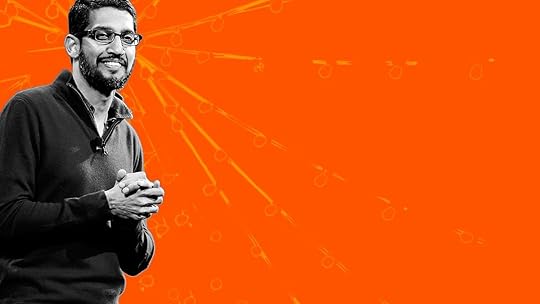
The Google/Alphabet metamorphosis has catapulted Sundar Pichai into one of the highest profile leadership jobs in Silicon Valley. As the new CEO of Google, he has been handed the keys to one of the world’s most valuable brands, the top website to open to get to other websites, the most popular operating system for smartphones, and the most desirable employer for engineering or business graduates. A quick scan of recent company financials reveals that 90% of the revenues of the entire enterprise, all of which used to be known as Google, came selling advertising — the core business that Pichai will now run.
Pichai now leads an all “bits” business even though he was trained, solidly, in the world of “atoms,” as a metallurgical engineer. Born in Chennai, India, he came to the U.S. for graduate school, earned a Stanford degree in Engineering and Materials Science and a Wharton MBA. After stints at Applied Materials and McKinsey, he joined Google just a little over 10 years ago. He spent the early phases of his career there as a product manager, working on products such as Toolbar.
There are three traits revealed by his tenure at Google that I’ve found to be worth noting. First, he showed strategic foresight in anticipating that Google’s crown jewel, the search engine, was vulnerable. Google search easily could be replaced as the default search engine on popular web browsers. It was the Chrome browser, led by Pichai, that helped shore up the company’s place in the world of browser competition. Second, his philosophy on products includes the principle of serving the ecosystem of users and developers. And third, his belief that technology is an equalizing force. “What struck me about Google search was that you had the same access to information whether you were at Stanford … or a young kid in India or Indonesia,” he said in an interview on Indian television.
The old Google had always been a tricky leadership challenge. Industry veteran Eric Schmidt has been the face of the company in the past, while founders Larry Page and Sergey Brin were focused on growing the company. More recently, Page and Brin’s interests shifted to the pursuit of a disparate array of moonshots — and a subsequent list of failed attempts — bankrolled by a single core business. But as the scope of the founders’ experiments expanded, the vision of that core business became harder to articulate. And from a revenue perspective, it was being taxed for the benefit of those unrelated ventures.
So what should we expect from the leader of this “new” Google? Here four things I think he should focus on as he takes the helm:
Signal his commitment to serving at technology’s cutting edge. To the average user, search engines feel interchangeable. Enter a query on Google or on Bing and the results look similar. What keeps people with Google is a perception that the engine behind its search is somehow better. So Pichai needs to make sure Google continues to maintain the positioning of being the most advanced search engine — and deliver on that promise. Now that the moonshots have moved to a different business, Pichai could find his brand losing luster if its technology doesn’t keep up. He will need to work harder to send signals of being at the cutting edge in a way that neither Page nor Brin had to during their 17-year run.
Personally attract and recruit talent. One of the biggest risks for Pichai’s Google is that it will not be as attractive to the best and most creative talent. His new hires may have little chance of tinkering with self-driving cars, or with life itself, since those functions are part of the Alphabet group. This means Pichai will need to have a strategic talent plan that he guides personally. His promise to new hires will need to be inspirational in how it frames the opportunities for the legacy business. New Google hires will have the opportunity to shape highly-influential widely-used technologies — and that’s a compelling recruiting message. But he still needs to attract entrepreneurially minded tinkerers who may be more attracted to the moonshots part of the business. And that will require old-fashioned, in-person persuasion.
Avoid the risks of a leader tasked with playing defense. Devoid of dramatic departures from the core product, Pichai’s Google will feel itself exposed for several reasons. Traditional advertising revenue will eventually decline as usage shifts to mobile, where the ability to place ads and get them noticed is more limited. In addition, consumers are already spending more time on apps or on e-commerce sites, such as Amazon.com, and a growing variety of social media platforms. Searching the web or email will decline; already, the top five search engines saw traffic declines of up to 31% in a study done over the period December 2013 – May 2014. As he considers his options, Pichai should be careful to avoid traps like incremental sustaining innovation geared toward stemming market share losses by simply adding low value features. Pichai will need to return to his core philosophy and belief in user-centered product development.
Find new growth markets – fast. Apart from the challenges of reinvigorating a legacy business, Pichai’s Google faces many obstacles in the largest international markets. In China, Google search is a non-entity largely because of government censorship and it now faces tough competition there from Baidu. In Europe, there is a strong backlash against the dominance of Google. Pichai will face a global challenge in shaping both public opinion and policy. The under-tapped growth markets of South Asia and sub-Saharan Africa are, of course, regions where Pichai may see the most potential; the challenge is that these markets are still quite nascent and they will require both patience and potential new products and business models. Pichai’s own brainchild, Android One, is a set of competitive specifications that allow manufacturers to produce affordable smartphones with the latest hardware. These low-cost devices will feature the Android OS and receive updates directly from Google. While this seems like a win-win, the risks are that the program is likely going to take a long time to turn a profit and there is powerful competition from low cost Chinese handsets. Finally, the market for digital advertising is still underdeveloped in India and Google has to invest heavily in products that can work well despite India’s slow internet infrastructure and the low level of internet penetration.
I am excited for Pichai. He has a chance to hit the reboot button on a wildly successful technology company. In a way, it is not Larry Page or Sergey Brin who are about to launch in new directions. They are just continuing with their moonshots. Pichai’s leadership challenge is to build a new Google, keep it fresh and relevant to consumers, advertisers, and talent. I think we’ll find that the old Google and Pichai’s Google are worlds apart.

August 31, 2015
How Managers Should Judge Psychology Experiments

Nicholas Blechman for HBR
The flow of astonishing research findings with business implications has never been greater. Just about every day, we hear about some counterintuitive study from behavioral economics or social psychology. Consider an experiment showing that simply raising a person’s height (a metaphor for virtue) on an escalator increases his or her contributions to charity. Or the finding that after viewers see a media story portraying death, such as a report about a car accident, they tend to prefer domestic rather than foreign brands.
Such research not only provides compelling narratives, it also helps generate news stories that go viral and rack up eyeballs. Even more important, many managers may use such research to think creatively and make bold business decisions. After reading that elevation encourages prosocial behavior, a nonprofit might decide to place potential donors on a raised dais (to help open their pocketbooks). Research on the death portrayal–domestic brand connection might encourage domestic companies to advertise during the ten o’clock news (rife with stories of death). Unfortunately, managers applying these findings will be wasting their money. Both studies have been retracted, and the psychology researchers behind them have admitted to outright academic fraud.
These examples illustrate a dark truth that managers need to be aware of. The field of experimental psychology is in a state of crisis. Within just the past few years, a number of prominent and prolific psychology researchers have admitted to falsifying data, leading to dozens of paper retractions and question marks regarding entire fields of research. Studies show that questionable practices of collecting and analyzing data to increase chances of finding eyebrow-raising findings are widespread throughout the field, casting doubt on how reliable and transferable the reported results are. And just this past week, a large-scale attempt by hundreds of researchers to replicate published studies in prominent psychology journals yielded sobering conclusions: Of the hundred studies tested, only 39 could be replicated successfully. (Although, importantly, that doesn’t mean the other research teams committed fraud.)
What do these raging controversies in psychology mean for managers? They demonstrate the need to be skeptical and vigilant and suggest it is important to brush up on basic statistics to evaluate reported findings beyond face value. The ramifications can be condensed to four points:
Be skeptical of sensational findings and intricate narratives. There has been a decades-long trend in experimental psychology to develop ever more convoluted explanations about when and why certain effects occur. In fact, intricacy is the yardstick by which many journal editors and reviewers determine whether research is publishable. But such complex story-weaving comes at a price. Researchers often resort to creative and questionable methods such as repeated tests and statistical tricks to get acceptable results. This is one reason why many studies fail to replicate. Complex explanations, by definition, are contingent upon the specific conditions under which the study is carried out. They fail to apply beyond that context. The same is true of sensational findings. As the cases of academic fraud show, if something sounds too amazing, it probably merits a closer look.
Pay attention to robust effects that work across contexts. Simple, robust effects are more valuable to managers than tortuous narratives. In most cases, managers do not even need to know why a certain psychological effect occurs to use it. For instance, in over 15 years of studying the effects of marketing surveys, I (along with my coauthors) have consistently found that when customers participate in surveys, that participation increases their loyalty over the long term. To this day, I cannot tell you exactly why this effect occurs (there are at least three potential explanations). But does that matter? In a body of studies done by us and others, this effect has been shown to occur in many industries and regardless of whether customers are surveyed online or by telephone.
Brush up on relevant statistical concepts. When you’re evaluating a research report or study, especially when considering its application, the details are essential. One positive outcome of the psychology crisis is that psychologists are questioning their obsession with looking for significant differences in studies. The field is in the midst of shifting to a more nuanced consideration of data and reporting of results based on confidence intervals and effect sizes. Now is a particularly good time for managers to brush up on these concepts and grasp the basics of designing business experiments. This effort is worthwhile. It will make you a more discerning consumer and a more effective user of psychological research.
Support replication efforts and share findings however you can. For academic researchers, the incentives don’t favor replicating known effects. After all, if a particular result has already been published, why would a journal want to waste its precious space reporting the same finding again? For business applications, however, the calculus is different. The success of a particular effect is dependent on its context. If survey participation leads to greater customer loyalty, for example, a mobile survey might or might not produce similar results. It is important to find out. Test the effect under different conditions and, where appropriate, make the results publicly available.
Despite the current crisis, a vast majority of psychology researchers are diligent, hardworking, honest people. The quagmire that psychology finds itself in has been propelled in large part by journal editors and reviewers, the media, and consumers, all of whom clamor for something sensational and counterintuitive to print, view, and discuss. It is also supported by tenure committees at research universities that focus on publication counts in evaluating performance. These dynamics, in turn, fuel questionable research practices and fragile results.
Managers have an important role to play in breaking this cycle. They need to support psychological research that, even if not glamorous, provides useful, valid, and transferable findings for business decision-making. They should be skeptical consumers of research, yet supportive patrons and collaborators of the new paradigm that will shape psychological research in the coming years.

Marina Gorbis's Blog

- Marina Gorbis's profile
- 3 followers

