
Marina Gorbis's Blog, page 1252
September 10, 2015
Why a Gin Company Hired Musicians as Part-Time Salespeople

The cost of recruiting and retaining new salespeople was bleeding Martin Miller’s Gin company dry. That is, until two and a half years ago when CEO Jacob Ehrenkrona had a bright idea for tapping into a new part-time salesforce.
Ehrenkrona realized that young musicians would make the perfect salespeople for his product. For one thing, they’re already in the places where he wants his gin to be — such as clubs, trendy bars, and hip restaurants. Musicians add the cool factor that Martin Miller’s needed to inject into their product in order to attract the next generation of consumers.
Then, there are transferrable skills: he finds musicians to be organized, educated, authentic, and intentional in their focus. There’s no “pretending” to be a successful musician. And like a good salesperson, a good musician needs a certain amount of hustle to get gigs. “I’ve been a hustler since the beginning, so that mentality is nothing new to me,” musician-salesperson Jake Pinto said. “To be a hustler is to live on that edge between being obnoxious and doing what it takes to make it happen.”
The shift in recruitment is working. Rather than the typical six to seven months — and the significant financial investment — that it was taking for a conventional recruitment company to suss out a candidate’s success, Ehrenkrona knew within one or two weeks if a new musician recruit would make it as a salesperson. “We uncap the most important asset that the person already possesses,” Ehrenkrona told me in a recent interview, namely, their network of venues and contacts behind the scenes. New recruits find their footing as salespeople in their local neighborhoods, and many branch out from there. Often they also recruit other salespeople from within their network; Ehrenkrona established a relationship with his first musician salesperson, and it set off a chain reaction.
For a young musician, working as part-time salesperson can be a boon to the budget and to a fledgling music career. The schedule is flexible, and musicians can devote as little or as much time to it as they want. Since most musicians’ gigs are at night, they have some flexibility with their schedule during the day and can call on accounts when bar managers are available — usually from about 1 p.m. to 6 p.m. “Some get an adrenaline kick from selling,” Ehrenkrona said, “and they can make quite a lot of money.” They’re also making connections in the business they set out to be in, and most really enjoy and believe in the product.
Dallas Kalmar, a singer, has found that being a salesperson has, in fact, boosted her music career. “Lots of artists have bar-hopped, trying to get a gig,” she said. “It’s like I’m bar-hopping with the purpose of selling gin, and that’s how the relationship starts. From there, I can do my own PR, and land more singing gigs. It’s a very symbiotic relationship.”
Martin Miller’s approach seems obvious and logical once it’s pointed out, and is not that different from other companies’ attempts to recruit a part-time workforce (such as Lyft or UberX). But there are some subtle points of execution that made their strategy successful, which can apply to similar efforts beyond the food and beverage industry.
Fitting in, and mirroring your audience, is part of it. “It’s important that I don’t look like a salesperson,” Pinto said. “I just wear what I normally wear, which is how the people I’m talking to are dressed, as well. Beverage managers are generally young people who aren’t impressed by a suit.”
In addition to dressing the dress, Martin Miller’s sales team literally walks the walk — of the neighborhood and venues the company wants to reach, that is. “We build on our relationships with great music venues,” Pinto said. “We’ve played there, and now they’re clients. They appreciate that I’m coming to them as an artist who also has a great product.” The company has developed a Gin & Jazz series to help build that bridge: the musicians play, and the bar lists Martin Miller’s on the menu, sometimes for up to a year or more. Salespeople host the series, often at no cost, to help boost the relationship, drive sales, generate revenue, and promote the gig via social media.
Reinvigorating a salesforce, as Martin Miller’s has shown, may mean recruiting candidates that seem unlikely at first. But look for proximity to the product — and a personal investment in that proximity — to shift their inherent value in your favor.


6 Ways to Keep Good Ideas from Dying at Your Company
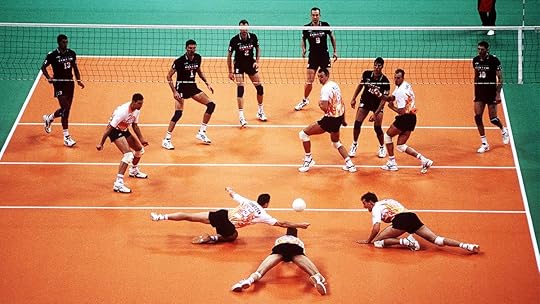
Anyone who has worked inside a large organization can rattle off a lengthy list of the things that regularly kill promising ideas: conflict with existing businesses, naysayers, management turmoil, insufficient resources.
And yet when companies suddenly decide to “get more innovative,” starting hackathons, idea competitions, and accelerator programs, they typically forget to address all those things that kill perfectly good ideas after they hatch.
Why? Spinning up new innovation initiatives is exciting, but changing the environment those new ideas are born into is really difficult. The former you can do with a few staffers and the CEO’s blessing, but the latter requires broad organizational support and ongoing effort.
The result is a lot of innovation programs that can build fantastic concept cars, but have a tough time getting production vehicles onto the road. Here are six ways to change that.
Start with a survey. What would new product development executives or project managers in the R&D lab tell you are the organizational dynamics that ice their best ideas? Executives may be playing favorites with one way to approach a particular opportunity, or it may be hard to envision how a tiny customer base can get big. Simply asking the “innovation MVPs” in your company about these dynamics will yield some surprising answers — some of which you’ll want to act on quickly. When my publication, Innovation Leader, surveyed nearly 200 innovation-oriented executives in partnership with the consulting firm Innosight, respondents told us about plenty of good reasons to pull the plug on projects, such as not hitting deliverables. But the most common cause of death they reported? Business unit executives hadn’t bought in to the idea.
Decide if it’s a consultancy or a skunkworks. Many innovation groups want to have it both ways, acting as a partner to the business units to help them tackle near-term opportunities, while also developing further-out, “disruptive” ideas that could shake up their industry. But those are two separate functions that require different staffing, relationships, and resources. They need different kinds of runways to ensure that their ideas can take off.
The first approach requires the creation of an internal consultancy to the business units, asking them to identify needs or opportunities that your team should work on, and agreeing that at a certain point, you’ll hand over projects to them once they’re ready to move past the testing phase. At the storage and software company EMC Corp., business units and functional groups like marketing or human resources set out “challenges” that they’d like employees to work on. In 2014, more than 5000 submissions came in. The challenge sponsors picked the best ones, and they are responsible for eventually rolling out the product, service, or process improvement. That kind of runway is smooth, but it is also biased towards designing the kinds of innovations that business units think they need.
The other approach, a skunkworks, can develop ideas that may require their own distribution channels, or compete with products that the company already sells. Skunkworks often need to be protected from the business units, so that they have the freedom and resources that their ideas need to get out into the market. Sometimes that requires creating a separate operating structure.
For example, at Lowe’s, the $53 billion retailer, Lowe’s Innovation Labs has a team that collaborates with outside startup companies to build prototypes. One area of focus: how technologies like virtual reality and augmented reality will be able help consumers visualize the end result of their home improvement projects.
“We’re working on the problems that haven’t arrived yet,” says executive director Kyle Nel, who reports to the company’s chief information officer. And he cautions that trying to apply “conventional retail metrics” will kill any idea “that looks remotely different from what is currently out there.” Instead, the labs are measured on factors like the potential of their ideas to change shopping behaviors in positive ways, and to burnish the Lowe’s brand.
Get external validation. In most organizations, the terms “innovation” and “R&D” are synonymous with “top secret.” Firms are hesitant to socialize ideas with business partners, customers, or media before they’re considered polished enough for an official launch. That leaves many ideas swimming around inside the corporate fish tank for far too long.
At Dell, chief innovation officer Jim Stikeleather says that selling an edgy new idea or technological approach to internal constituents gets much easier when external constituencies are already up to speed or even already eager to get their hands on it. Executives in the company, Stikeleather says, “need to hear [about the idea] from their teams, the customers, and reading about it in the press.” Once that starts to happen, he adds, executives start to feel like “it’s their idea.”
Once an idea is out there, customers can express their desire for it, one of the most powerful forces for overcoming organization inertia and resistance. And showcasing the work of an innovation program or R&D lab, as @WalmartLabs does on its website, has a fantastic side effect: it will help attract fresh talent to the organization. The benefits of revealing what’s in your pipeline can be greater than the risks of divulging it to competitors.
Invest real money. Many companies have figured out how to parcel out small amounts of money to employees cultivating something new. One example: Adobe’s Kickbox program, which supplies tools for refining and validating an idea, along with a $1,000 pre-paid credit card to cover expenses. But ask innovators how they secure a couple million bucks for the infrastructure and marketing necessary to properly launch an idea that has shown promise in the pilot stage and…you’ll hear crickets. Making it possible for ideas to turn into real businesses means creating a process for investing real money in them, based on actual market data (instead of baked-in company biases.)
Reward decision-makers who back winners. In the startup world, venture capitalists compile data about how many pitches they’ve listened to, how many they put through due diligence, and how many they invested in. They’re incentivized to say yes to a few, since they make massive amounts of money when they back the next Facebook, Google, or Dropbox. Ensuring that there’s a financial and reputational upside for executives who back winners — and that backing losers isn’t a career-ending move — is vital to making sure new ideas get the money and political support they need. Otherwise, the “forces of no” will defeat most worthwhile notions.
Think weekly, not quarterly. Venture capitalists meet every Monday to review deals in the pipeline. Too often, I hear about quarterly meetings of innovation review committees. Moving slowly kills ideas that don’t need to die and demoralizes innovators. Look for every possible tweak to process and oversight that can improve the aerodynamics of building new things.
It’s laudable that large companies are experimenting with new ways to foster innovation and an entrepreneurial mindset among their employees. But CEOs, boards, and business unit chiefs need to pay more attention to the environmental conditions into which all those promising new ideas will be born.

Helping a Coworker Who’s Stressed Out

Stress in the workplace is a significant issue for at least a quarter of the working population in the United States. Alarmingly, that percentage doubles to almost 50% for those in office jobs. Statistically, that means that one of the coworkers sitting beside you is likely experiencing a substantial amount of stress. At some point, it’s sure to affect you, either directly or indirectly. So, what should you do?
Ignoring your coworker’s stress is an option, but it’s probably not a good one. If you’re up for it, there are several ways you can take a more active role in helping your coworker manage stress.
A note of caution first: although stress isn’t contagious in the traditional sense, it can spread. That’s because your brain is wired to pick up on the emotional states of those around you. For example, sitting across from an anxious person will tend to make you uncomfortable—that’s how your brain works. Before getting too close, remind yourself that the stress isn’t yours. Acknowledging this will help protect you from mirroring the other person’s stress.
With that said, there are three ways you can help a stressed out coworker:
1. Reduce isolation by listening and being empathetic. In other words, try some good old-fashioned kindness. When talking with a person under duress, adopt a calm and reassuring demeanor and focus on listening and validating that person’s experience. First, just let her know that you’re noticing the state she’s in. “I’m hearing a lot of big sighs from over there. What’s up? Can I help?” For some people, just being made aware of their emotional state will be enough to help them get re-centered. If they admit that they are overwhelmed, worried, or stuck, start by just repeating what you’ve heard. “I get where you’re coming from. You have a lot on your plate right now.” The object is not to agree or to justify the stress, it’s simply to make the other person feel heard and understood. Without that step, any attempts to help reduce the stress might feel judgmental or condescending.
2. Find the root cause of the problem. Once you understand the source of the stress, act as a sounding board or a coach to help your coworker get at the reasons behind it. Obviously, the exact nature of help needed depends on what’s causing the stress, but I will address three common stressors: too much to do; uncertainty about how to succeed; and interpersonal conflict. Once you’ve uncovered the cause, you can suggest practical ways to work through it.
3. Suggest tactics for minimizing the impact of the stressor.
Too much to do. If your coworker is overwhelmed by workload, help him talk through priorities and get clarity on one or two tasks. Start with “OK, you certainly have a lot going on. What are some of the most pressing things you have to do?” Then help select which one to do first by asking a couple of good questions: “When are they due?” “Which ones could someone help with?” “What’s the most logical one to tackle first?” After your coworker has chosen the first task, help get traction by talking it out. “How are you going to approach this?” Grab a note pad and jot down the steps so that they feel tangible. That alone will likely be enough to get your coworker unstuck and back on track.
Uncertainty about how to succeed. For the person who lacks confidence, talk him through the task and what it will take to complete it successfully. Reinforce the good ideas and help him think through other strategies for the parts that are more difficult. “Who might know more about this?” “What other project have we done that were similar?” Again, the goal is to get your coworker to a list of concrete steps.
Further Reading
HBR Guide to Managing Stress at Work
Managing Yourself Book
19.95
Add to Cart
Save
Share
Interpersonal conflict. If the source of the stress is interpersonal, your distance from the situation might actually be very useful for your coworker. You can ask about how your coworker is experiencing the difficult relationship and then disentangle the impact the third party is having from their intent. If the source of the stress is a particularly unflattering interpretation of the third party’s actions, help your coworker to reframe the situation by asking questions such as “What if her curtness with you in the meeting was simply a reflection that she was late?” You can even offer to role play a conversation. “I’ll pretend to be Carla. How could you share your concerns with me?”
Regardless of the nature or source of the stress, your strategy is threefold: help your coworker talk through the situation to reframe it more constructively; break it into manageable chunks; and then help visualize a plan of action.
In some cases, it won’t be possible to eliminate the source of the stress. In those cases, try to reduce the toll the stress is taking. Small gestures go a long way. For example, keep your coworker fueled. If you notice him skipping lunch, grab him a snack: preferably a piece of fruit or something with protein, but if it’s dire—go with jelly beans. Another great approach is to offer to talk through your coworker’s to-do list while on a quick walk to get a coffee (physical movement, especially if it is in the fresh air, can often unlock a person who is stuck). You can also provide a moment of levity with a cartoon or by sharing a video (you choose whether it’s a 6-minute inspiring TED talk or a 15-second cat video.) None of these strategies changes the magnitude of the stress, but they do increase your coworker’s resilience and thus make the stress seem more manageable.
My favorite cartoon depicts a team of three construction workers carrying a beam across a steel girder. There’s a gap in the girder too wide for a person to step across. In the first frame, the first worker hangs on tightly to the beam on his shoulder while his feet dangle over the gap. Only by relying on his teammates does he make it across. In the second frame, it’s the second worker with feet dangling; and then the third. To me, it beautifully summarizes teamwork. Some days, you’re on terra firma while your teammate dangles precariously. Other days, it’s the other way around. Be the grounding force your coworker needs on those days. When it’s your turn, your coworker will surely be there for you.

The Big Misconceptions Holding Holacracy Back

One important reason why there are so many very badly managed firms in the world today is the widespread belief that management should be the responsibility of a few people at the top. The future of corporations may therefore depend on the rise of distributed forms of management, such as holacracy.
Don’t cringe. True, Zappos’s recent experience with holacracy, as widely reported in the media, demonstrates that the transformation to distributed management is not easy. Holacracy was supposed to revitalize the online shoe store’s culture and its reputation as a fun place to work, but the ever-expanding circles of responsibility that have emerged within the company and the resultant endless meetings are becoming a drain on productivity.
Still, the essential concepts behind holacracy offer perhaps the best hope of easing top managers’ stranglehold on companies and, by extension, on innovation. As Clayton Christensen and many others have demonstrated, the management practices prevailing in most companies tend to stifle any dialogue on ideas that arise from the shop floor or the front line.
The real problem with holacracy isn’t the ideas behind it but the persistence of a few false beliefs that have grown up around it. Three misconceptions, in particular, have been particularly damaging: that holacracy is non-hierarchical, that implementation specifics aren’t important, and that the board’s functioning shouldn’t be affected. These misconceptions lead CEOs and other would-be change agents to underestimate the challenges arising from holacracy. As a consequence, they end up merely inventing “clever titles to replace those at traditional corporations.”
I’ll address those misunderstandings, but first it’s worthwhile to take a look at where holacracy came from. Brian Robertson’s adoption of holacracy in Ternary, the software company he founded, didn’t come out of the blue. His distributed-management approach drew inspiration from an earlier model, sociocracy. The two approaches share a set of key principles and practices, with the main differences arising from jargon: Sociocracy, developed in the 1970s, was based on principles of cybernetics; holacracy represents a repackaging of the principles in the vocabulary of software engineering.
The key idea of both is that management should be viewed as a mechanism — an “operating system” in holacracy — for distributing power and leadership throughout the organization. Information and authority flow in linked circles, with people taking on shifting roles as needed. For engineers familiar with the concept of distributed intelligence in systems, this is an easily understandable, even obvious, form of structure. But it challenges most people’s deeply rooted notions about management and governance. The idea that a few directors and managers should run the organization is so entrenched in people’s consciousness that it’s hardly ever questioned.
Another stumbling block is that distributed management is still a rarity — few people have had any experience with it. Although sociocracy is in place in about 100 small and medium-size organizations, some of which have been using it for decades, there are no applications in multinational companies (except for a small unit within Royal Dutch Shell that applied the principles for more than a decade, with good results in such areas as productivity and employee satisfaction). The consulting firm HolacracyOne says a few hundred organizations have recently been “trying out” holacracy, but only Ternary has used it for more than five years.
It’s no surprise, then, that misconceptions have grown up around holacracy. But if the practice is to find its way into more than just a handful of companies, then business founders, managers, and directors need to have a good understanding of what’s true about holacracy and what isn’t.
Misconception 1: Holacracy means abandonment of corporate hierarchy. Although holacratic and other distributed-management approaches are fundamentally different from the command-and-control structures that prevail in many organizations, they aren’t nonhierarchical, as many believe. A truly nonhierarchical structure is a scary prospect for most businesspeople, and for good reason: a lack of a hierarchy leaves an organization without a clear sense of who is accountable for what.
Instead, in holacracy and sociocracy, self-organization coexists with and complements a robust hierarchy. Each staff member has a powerful voice, and employees are organized into self-managed circles. Power and authority can flow in virtually any direction, but with an eye to maximizing efficiency, the hierarchy helps the organization determine how many circles should exist, identify which circle should decide on a particular idea or proposal, and create links between circles. Moreover, instead of conferring authority, the hierarchy establishes an unambiguous sequence of levels of accountability.
The interplay between self-organization and hierarchy has enhanced the resilience of Endenburg Elektrotechniek, the Dutch engineering company that initially pioneered sociocracy. A rough schematic drawing of the company’s structure would show a top circle, consisting of the board of directors, above and slightly overlapping a general-management circle, which is above and slightly overlapping the circles for units such as manufacturing and technical installations.
When Endenburg Elektrotechniek lost more than one-third of its sales, its CEO saw no solution other than to lay off 60 employees. The next day, an employee called a meeting of his unit circle to discuss an alternative: delaying the layoff for a few weeks and shifting people into a concentrated sales and marketing effort. The unit circle appointed him to advocate for the proposal to the company’s general-management circle, which decided to have the proposal discussed by the board of directors’ (or top) circle. The board authorized the proposal, and all available employees got a one-day crash course in customer acquisition. Within several weeks, the effort had won enough new projects to make the layoffs unnecessary. Although the company’s largest business line was sized down substantially, growth in several other products and services led to a much more diversified customer base.
This example demonstrates that each staff member has a powerful voice, with the circular hierarchy processing ideas and proposals. Anyone can signal problems and raise ideas in the circle he or she belongs to, with functional leaders (appointed in the next-higher circle) and delegates (appointed in the lower circle) acting as links between circles. The system also maintains unambiguous accountability and decision authority: For example, major investments need to be authorized by the directors in the top circle, but the directors will not interfere with how people are assigned to key roles in any of the other circles.
Endenburg Elektrotechniek and many other applications of sociocracy suggest that “self-organization” and “hierarchy,” rather than being contrasting ideas, are complementary tools in turning distributed management into a system with a limited number of circles conducting very creative but efficient meetings. Interestingly, in companies like Endenburg Elektrotechniek, the general-management circle will typically meet twice per month, and all other circles will meet (on average) four to six times a year, unless there is an exceptional situation like the one previously discussed.
Misconception 2: The goal justifies any means. Another common belief is that once the blueprint of holacracy has been adopted, any implementation strategy will do to get the company there. At Zappos, Hsieh’s ultimatum to employees — embrace holacracy or accept a buyout — illustrates this misconception. A “hit and run” strategy toward empowerment creates a major misalignment between the CEO’s empowerment rhetoric and the reality of the arbitrary use of absolute authority. Employees are left in utter confusion, which can prevent the company from fully implementing the intended change.
Many such experiences demonstrate that the implementation process must itself be holacratic, drawing on employees’ ideas and ensuring that everyone understands and embraces the changes. The transition can’t come about as a directive from the top. In fact, the best approach is for top executives to get out of the way while a dedicated project team (possibly including external experts) orchestrates adoption and implementation.
The pace of change must also be deliberate and well-orchestrated. The brand-strategy consulting firm Fabrique, for example, first defined shared objectives and had a project team pilot-test whether sociocracy served to realize those objectives. Then, on the basis of the evidence collected, it had the project team, together with the executive team, make a shared “go/no-go” decision (the result was a “go”). An approach like this signals top managers’ deep understanding of distributed management and leadership and establishes them as role models.
Misconception 3: Distributed management does not affect the C-suite or boardroom. Many attempts to introduce distributed management fail because executives and directors take themselves out of the equation. They assume that the change affects only operational and middle managers and that their own discretionary powers will remain intact. They don’t grasp that holacracy represents a fundamental redistribution of power and authority throughout the organization.
For example, corporate-governance systems and financial ownership often need to change in a holacracy. Zappos now falls under Amazon’s ownership umbrella; will Amazon’s ownership ultimately work against Zappos’s experiment with holacracy? And what if Hsieh’s successor someday turns away from holacratic principles?
Companies such as Endenburg Elektrotechniek and MyWheels, also in the Netherlands, and the Terra Viva Group in Brazil have taken steps to restructure financially in an effort to ensure their sustainability. Terra Viva Group, a formerly family-owned agribusiness company that adopted sociocracy to manage its rapid growth, created a shareholders’ association that owns 51% of the company so that no single large shareholder, such as a family member, can interrupt capital investments by leaving the company. Terra Viva now “largely owns itself,” says its current CEO, Frans Schoenmaker.
Too often, CEOs treat distributed management as their latest toy, and they don’t think through its full implications. Awareness of the misconceptions that have grown up around sociocracy and holacracy can help a company avoid the kind of turbulence and confusion seen at Zappos and turn distributed management into a highly productive system that ensures the firm’s long-term productivity, viability, and resilience.

Can You Predict a Startup’s Success Based on the Concept Alone?

It’s easy to make fun of bad startup ideas – Airbnb for toilets? – but it’s not so easy to pick the good ones ahead of time. Just ask venture capitalists, the vast majority of whom lose money. The difficulty of separating good ideas from bad is part of why angel investors end up investing based largely on the founding team.
So does the initial idea matter at all to a startup’s success?
New research helps answer this question and reinforces just how hard it is to pick a startup based on the idea alone. The paper, by Erin Scott of the National University of Singapore, Pian Shu of Harvard Business School, and Roman Lubynsky of MIT, finds that the perceived quality of a startup idea predicts success in some sectors, but not in others. If you’re investing in startups in life sciences or energy, for instance, the initial idea seems to matter more than if you’re investing in software or consumer products.
The researchers studied a dataset of 652 ventures from MIT’s Venture Mentoring Service (VMS), which connects founding teams with mentors. What makes the data interesting is the way in which mentors select which teams to work with. Potential mentors “receive an objective, standardized summary of the proposed venture, composed by a VMS staff member,” and only very limited information about the team. “On the strength of the summary alone, without meeting the entrepreneurs, mentors must decide whether they want to work with a venture,” the researchers write. In other words, their decision depends almost entirely on their opinion of the potential startup’s idea.
The researchers measured initial mentor interest in response to the summary of the venture’s idea, and then compared that measure to the venture’s eventual outcome. The more initial interest from mentors, the greater the chance that the venture was successfully commercialized and that it raised venture capital or angel investment. Overall, good ideas – as judged by the mentors — had a greater chance of succeeding.
But how much more likely is a seemingly good idea to succeed, compared to an average one? Overall, 22% of the ventures were successfully commercialized. (Commercialization was measured by whether the venture launched a product or service, with evidence of repeated sales.) Ventures that were a standard deviation above average in terms of mentor interest were about 26% more likely to be successfully commercialized. That’s a meaningful and statistically significant increase, but it also suggests that predicting startup success based on idea alone is very difficult. The initial idea helps predict success, but plenty of other factors must matter.
Could the link between mentor interest and success just mean that mentoring is valuable? The researchers controlled for that possibility. First off, VMS is set up such that every venture has access to mentoring, even those based on less popular ideas. Second, when the researchers controlled for how much mentoring a venture received, the link between interest in the initial idea and eventual success remained.
Notably, the relationship between mentor interest in the idea and eventual commercialization was largely driven by highly rated ideas. An average idea wasn’t all that much more likely to be commercialized than a below-average one. But a highly rated idea was significantly more likely to be commercialized. This makes sense, as the venture capital world is driven by big successes. Separating good ideas from average ones may be even more important than separating the average from the bad. (The relationship between mentor interest and commercialization held even after the very most popular ventures were removed, so this effect wasn’t just driven by a few great ideas.)
When the researchers broke up the data by sector, things looked different. They grouped R&D-intensive sectors like life sciences, hardware, and energy together, and less R&D-intensive ones like software and consumer products together. For R&D-intensive ventures, the relationship between mentor interest and commercialization was even stronger, particularly when the idea was based on academic research or intellectual property. But for software and consumer goods the relationship was no longer statistically significant.
Think of it this way: if the venture “idea” includes patent-protected technology in an industry with high entry costs, it’s going to be easier to determine that the venture has commercial potential. For web and mobile ventures, which are less likely to have intellectual property, and where entry costs are lower, it’s harder to know up front whether a venture will have a real, sustainable competitive advantage.
None of this means that good ideas don’t matter to startups. But this research does reinforce the idea that it’s difficult to pick a good idea early on in a startup’s life, particularly in less R&D-intensive industries. Investors may therefore be justified in betting on other factors, like the quality of the founding team or early traction with customers.
No doubt some investors will choose to ignore all this, believing they are unusually capable of picking out good startup ideas. Some of them may even be justified in their self-confidence. But a final word of warning to angel investors and VCs who see themselves as particularly expert in this regard. The researchers checked to see if “expert” mentors were any better at picking ideas than the group overall. They looked at mentors with experience in the venture’s industry, as well as mentors with a PhD. Neither group was any better at predicting which ideas would succeed.

September 9, 2015
What a Year of Job Rejections Taught Me About Pitching Myself

After sending out hundreds of copies of my résumé to dozens of companies over the last year, I realized that I was getting nowhere because my approach was wrong.
I did everything I was taught to do: I created a list of the top 20 companies I wanted to work for, I customized my résumé for each opening, I networked online and offline. I met some fantastic people throughout the process, but nothing got me closer to a securing a role, or even a chance to interview.
What I had failed to do was ask myself some of the tough and honest questions early on.
My story began in May 2015 when after 10 years of building a successful career in the Middle East, I decided to move to Silicon Valley to look for opportunities with tech companies. I wanted to learn, and to be part of something big. I knew it would be a challenge to restart my career in a new market, especially one that is densely populated with talent, so I expected the process to take a few months.
As a few months turned into a year and I saw no signs of progress, I reached a point of panic. Something felt wrong. Something was wrong. How was no one interested in learning more about my background? How could a career that ranged from working with royalty to Fortune 500 brands and startups not pique the curiosity of any hiring managers?
As a marketer, I decided to re-frame the challenge. Instead of thinking as a job applicant, I had to think of myself as a product and identify ways to create demand around hiring me. I applied everything I knew about marketing and storytelling to build a campaign that would show Silicon Valley companies the kind of value I would bring to their teams.
The experiment was a report that I created for Airbnb that highlighted the promise and potential of expanding to the Middle East, a market that I am extremely familiar with and until recently they had not focused on. I spent a couple of days gathering data about the tourism industry and the company’s current footprint in the market, and identified strategic opportunities for them there.
I released the report on Twitter and copied Airbnb’s founders and leadership team. Behind the scenes, I also shared it by email with many personal and professional contacts and encouraged them to share it if they thought it was interesting — most did, as did some of the top VCs, entrepreneurs and many peers around the world.
Within hours of releasing the report, a recruiter from Airbnb reached out to me to schedule an interview. Within a few days, I had interviews with many of the area’s top tech companies. And within a few weeks, I had identified an exciting role and have since joined Upwork, an online platform that connects businesses with freelancers.
I was fortunate that the novelty of my approach — along with a little bit of luck and a lot of social media strategy — got me on everyone’s radar. It opened all the doors that I had dreamed of.
I figured that if I created something that inspired people and got a wide audience talking about it, that would force talent scouters to take notice. That happened to the tune of millions of social media impressions and global media coverage, but the lessons I took away from it went beyond the power of a good marketing campaign.
What I realize in hindsight is probably one of the most important lessons of my career so far. The project highlighted the qualities I wanted to show to recruiters; more importantly, it also addressed one of the main weaknesses they saw in me.
In my case, having moved from Jordan to California, I was at a disadvantage. I didn’t have a network of people that I had worked with in the past, people who knew my work and would want to bring me onto their teams. The company I had co-founded there didn’t have the recognition that it enjoyed throughout the Middle East either. I had only looked at those shortcomings from my perspective until recently.
What I had failed to see was that from most recruiters’ perspectives, the market I was coming from was irrelevant.
What the report helped me do was show, not tell, my value beyond their doubts. It refocused my perceived weakness into a strength: an international perspective with the promise of understanding and entering new markets. And though none of the roles that I interviewed for in the last two months focused on expansion, by addressing and challenging the weakness, I was able to re-frame the conversation around my strengths.
In almost all interviews candidates go through, there is the cliched question that is asked: “What is your main weakness?” Most people are trained to answer that question by thinking of a strength and packaging it as a weakness. As job-seekers, we tend to think of what the person across the table wants to hear. If I’ve learned anything from this experience, it’s that asking yourself a different version of that question is going to make you better prepared for any conversation with a recruiter, a potential client, or even a potential investor.
The question I should have been asking myself wasn’t “What is my weakness?” but rather “What do they perceive as a weakness in my background?”
Had I asked myself that question and been honest with the answer earlier, I would have realized the reason I wasn’t making any progress was not necessarily because of errors in how I was applying, but in what I was communicating. Rather than focus on why I’d fit into a top organization, I should have been telling them how I’d stand out.

Jack Welch’s Approach to Breaking Down Silos Still Works

Working across organizational boundaries was a new way of thinking 25 years ago —one that was largely championed by Jack Welch, then CEO of GE. Welch was convinced that the speed of globalization and technological innovation in the 21st century would require companies to work very differently – with shorter decision cycles, more employee engagement, and stronger collaboration than had previously been required to compete. He advocated for a “boundaryless organization,” and to build it, he initiated what became known as the GE Work-Out process – a series of structured and facilitated forums, bringing people together across levels, functions, and geographies to solve problems and make decisions in real time.
Fast forward to today, and we live in a different world. Our communications technologies have dramatically improved, and we have instantaneous access to massive amounts of information. Welch’s “boundaryless organization” should seemingly be the de facto reality for most companies.
To the contrary, however, many organizations still have hierarchical, siloed, and fragmented processes and cultures. In fact, having to cope with a fast-changing global economy has led many companies to create even more complex matrix organizations, where it’s actually harder to get the right people together for fast decision-making. As a result, we still need the Work-Out process to improve cross-boundary collaboration.
I learned this from working with senior executives at one of the world’s largest high-tech engineering companies recently, who were concerned that many of their big customer programs were over budget and behind schedule. After some investigating, they discovered that their fragmented, geographically dispersed matrix structure made it very difficult for the program managers to coordinate efforts across functions, keep everyone focused on the cost and delivery goals, and get people to reach consensus.
To illustrate this problem, we can look at one program manager – let’s call him Tom – who had to coordinate among a dozen specialized engineers. Since each reported to different departments, Tom would constantly go back and forth with the engineers’ managers regarding disputes over overscheduling and conflicting priorities. At the same time, Tom was looping in supply chain partners, as well as quality, sales, and finance teams that were dispersed around the globe. Because of how siloed these functions were and how many different layers of command Tom had to go through, it was nearly impossible to bring these units together when needed. Decisions were delayed or not executed, and of course the program’s performance suffered.
While tools like video-conferencing, virtual workspaces, and instant messaging helped people communicate, they didn’t help with getting everyone aligned on the same priorities, nor did they foster rapid decision-making.
Senior management knew this was an issue. But they also valued the lower cost and flexibility of having functional experts reside in different centers of excellence so that they could be assigned to programs as needed when workloads shifted —a culture that had evolved over many years. They didn’t want to implement processes that prevented this. So instead of changing this structure, they asked their teams to initiate the Work-Out process to improve collaboration and speed up decision-making across the various organizational boundaries.
A neutral facilitator was brought in from an internal “lean consulting” group to lead each Work-Out. These sessions physically brought together all the people who were working on different aspects of a single customer program, including the program manager, the 20-30 key engineers and experts involved, and managers from functions like procurement, sales, and finance. In preparation, the program manager defined the issue, pulled together the relevant data, and recruited a senior executive to serve as the on-the-spot decision maker at the end of the session. The main goal was that these cross-functional teams had to reach consensus on a solution in two days—and devise a plan for executing it. They would present this at a “town meeting” on the second day, and the senior exec would then say yes or no to the various recommendations.
In one session, for example, the issue was that the different engineers couldn’t agree on how to customize a critical product component without compromising the overall design. This was delaying product production. During the Work-Out, they explored a number of alternative ways to solve the problem as a team, and eventually reached a consensus that was ratified, on the spot, by the head of engineering. They agreed to put limits on how much could be changed. They also laid out a plan for how to implement this approach in a way that would save the company millions of dollars. So instead of the program manager chasing after the engineers through a never-ending series of meetings, the Work-Out forum brought them together and led them to reach a solution quickly.
I’ve seen other firms adopt similar Work-Out-style initiatives in the past year. For example, a large consumer products company began holding forums to increase communication across hierarchical and functional boundaries separating various category teams. During these meetings, team leaders get real-time input from multiple stakeholders (marketing, product development, supply chain, finance) and then make immediate decisions about how to reduce costs and increase market penetration. Similarly, an electronics firm accelerated product commercialization by bringing together R&D and business areas to create a faster and more effective product launch process.
The boundaries that exist in organizations today – between managers and employees, customers and suppliers, and across functions and geographies – are still difficult to breach, despite all of our communications tools. In fact, the lack of standard operating procedures for using these tools, and the sheer number of them, have even exacerbated this challenge. So if you and others in your company are struggling to get everyone on the same page, a Work-Out that gets people in the same room, at the same time, and following a structured conversation, might be a solution. If so, focus on a critical business issue that needs to be resolved, identify stakeholders who can contribute, and find a senior executive who has sufficient clout to make real-time decisions. Then watch how a boundaryless organization can become a reality – just the way Jack Welch envisioned it.

Treat Promises to Yourself as Seriously as Promises to Others

ANDREW NGUYEN/HBR STAFF
Successful leaders keep their promises. They take their responsibilities to others seriously, and, when necessary, they put aside their own needs for the good of the organization. As Simon Sinek put it in his bestselling book, Leaders Eat Last: “Leaders are the ones willing to give up something of their own for us—their time, their energy, their money, maybe even the food off their plate…Unless someone is willing to make personal sacrifices for the good of others to earn their place in the hierarchy, they aren’t really ‘alpha material.’”
In my firm’s work with and analysis of more than 1,000 senior executives around the world, we’ve found that this description is only half right. Of course leaders sacrifice aspects of their personal lives at times; that’s the price of admission in today’s competitive work environment. But those who subjugate their own personal needs for healthful diet and exercise, sleep and recreation, personal connections, professional development, cultural enrichment, and community engagement over five, ten or 20 years eventually succumb to a phenomenon we refer to as brownout—the graduated loss of energy, focus, and passion, which ultimately diminishes their success.
You and Your Team
Stress
Don’t let it get the better of you.
In contrast to burnout, where someone is obviously unable to function successfully, brownout is often imperceptible to outsiders—yet our observations indicate that it affects a much larger percentage of the executive population. Let me give you an example. During my first private conversation with “Steve,” the CEO of a top mid-sized law firm, he surprised me with a confession: “Mike,” he said, “I have to share something with you that I really can’t tell anyone else. I’m 39 years old and I’m running a successful firm. My client work is stimulating and challenging. I make close to a million dollars a year, and I have a wonderful wife and a five-year-old son. But I haven’t slept more than four hours a night in over three weeks. It’s been ten days since I last saw my son awake. I’m completely overwhelmed by work. We’re meeting in this conference room because my office is piled floor to ceiling with files. There is really important stuff that I know I’m not dealing with because of how fast new things come in. Sometimes it gets so bad that I find myself actually hoping I’ll have a heart attack. At least it would be an honorable way out.”
Steve was an extreme example, of course. But his story illustrates the profound stress facing leaders who focus too heavily on their responsibilities to others. After a time, the selfless behavior that made them successful in their early careers ends up impairing their long-term productivity, effectiveness, and well-being. They can find themselves becoming the highly promoted senior executives that no young professionals want to emulate.
In our work, we’ve found that today’s superstar leaders supplement their commitment to focusing on others with another, equally important skill: keeping promises to themselves. What are some examples of promises you might make?
To take care of yourself physically: exercise regularly, eat right, get enough sleep, and visit the doctor.
To pursue activities that will help to differentiate your skill set from others.
To spend time with your family and close friends.
To manage your personal finances with care and attention, and with long-term objectives in mind.
To spend time reflecting on what is most important to you in life and live and work according to your deepest values.
To participate in a community outside work that truly matters to you.
The idea is to commit to activities that will make you feel better, increase your energy, stimulate your mind, and enrich your spirit. This isn’t self-indulgence. When you make and keep promises to self, you become a better, more fully realized version of yourself, which benefits not only you but everyone around you and your organization. You also become a true role model for those following you up the ranks.
Nice idea, you may say, but what about all my responsibilities, my crazy boss, my needy team and customers? Clients will, of course, have to adjust when they realize you are no longer available to take phone calls at every hour of the day or night. Colleagues will need to reset their expectations when they learn that you’re no longer willing to take on more projects or serve on yet another committee. But we hear from executives who have tried this tactic that key stakeholders quickly come to respect and honor their new way of living and working, since it so clearly improves their performance.
Inertia, procrastination, the power of habit, and the fear of others’ judgments can also make it difficult to make and keep promises to yourself. Clinical workaholics might find it impossible without professional psychological support. But we advise people to start by making one small but exceptionally meaningful promise to themselves—and to stick to it with 100% integrity. For example, if you decide that more time with family is most important to you, you might commit to eating dinner together at home three times a week for the next two weeks. And, if you successfully keep that promise, it should give you the confidence to try another: you might commit to walk for a half-hour every weekday, or to sharpen your presentation skills by tackling a public speaking course.
Everyone knows the customer service principle “underpromise and overdeliver.” Treat promises to yourself in the same way. Be realistic about what you can achieve and develop a plan for carrying it out.

Coca-Cola Met Its Water Goals Early. Were They Too Easy?

Coca-Cola, in an impressive display of leadership on water issues, recently announced it would meet its aggressive water targets five years early. But the company’s achievement also raises some interesting questions about how goals are set, how they’re viewed in the court of public opinion, and what Coca-Cola should focus on going forward.
The quick background: Coca-Cola needs water badly. For every liter of its beverage products (like Sprite, Dasani, teas, juices, and energy drinks) you’re drinking about a liter of the life-giving liquid. And the company uses a significant amount of water — some 300 billion liters annually to make 160 billion liters of product.
Because Coca-Cola uses so much of a precious resource, it needs the support of local communities (a so-called license to operate), and thus the company must maintain a good and credible reputation for water stewardship. There’s some important history here as well; companies can face public protests and incur huge financial losses — and this has happened to Coca-Cola – when people believe that they’re using too much water.
For years, Coca-Cola’s leaders have recognized that maintaining water availability and quality — for the company’s own facilities and the people around them — is a critical, material issue for company success. And so it set goals accordingly. In this case, the Coca-Cola promised to “replenish 100% of the water we use;” that is put back those 300 billion liters per year by, in part, funding projects that protect watersheds or provide clean, safe water to communities in the developing world.
This goal, and its achievement, arguably makes Coca-Cola “water neutral.” It’s a parallel concept to the carbon neutrality that many companies try to achieve by, for example, using renewable energy, planting trees, or buying carbon offsets. Water neutrality has always been a trickier concept: unlike carbon molecules which have the same climate warming impact anywhere, water use is inherently local. But the progress Coca-Cola made is real and highly unusual.
A couple questions arise, though:
1. Does meeting a goal 5 years early mean it was too easy?
The short answer is “no.” More than 300 billion liters is, well, a lot of water. So it takes real effort and commitment to create projects that measurably and defensibly protect this much water — even with partners like The Nature Conservancy and the U.N. And the $2 billion Coca-Cola spent on water efforts over the years shows real commitment.
That said, any eco-efficiency goal related to operational footprint alone often has three weaknesses that Coca-Cola’s target shares to some extent. First, companies can go faster than they realize. In my experience, companies consistently hit energy, water, and waste reduction targets quicker than they thought because there are tremendous inefficiencies in the system that can be fixed with limited investment (in Coca-Cola’s case, the big news is the replenishment, but it’s also been killing it on efficiency for years, which brings down the total number of liters they need to replace).
Second, we have a larger problem with how we set goals, and not just sustainability targets. Companies generally go bottom up, asking each division how much they think they can accomplish on, say, sales goals, cost reductions, or energy minimization. Then management tacks on a bit of a stretch target and, unsurprisingly, the operations guys often still nail it.
But with sustainability goals, this approach is dangerous — we need to set externally –driven, science-based targets that take into account global and regional limits. On climate, that means cutting carbon at the pace required by both science and physics. On water, it could mean that replenishing how much you use specifically is much less important than how much a specific watershed needs to cut back to protect everyone’s ability to do business, grow food, and live.
Third, a company’s own footprint is often very small compared to the value chain impacts. Coca-Cola wrote a groundbreaking report with The Nature Conservancy five years ago that calculated total water use along the full chain: only about 1% of the company’s water use was under its direct control in operations. The vast majority of water was consumed upstream, mainly in the growing of crops — and that means sugar.
2. Meeting the water goal is important, but is it really the core issue for Coca-Cola right now?
Good water stewardship is becoming the norm and expected by communities — ironically, this is partly because of Coca-Cola’s leadership on the subject (no good deed goes unpunished).
Unfortunately for Coca-Cola, big brands don’t always get to pick which issues resonate for their stakeholders. The company is now facing an existential challenge about sugar and its stance on health and obesity. The New York Times spanked the company a few weeks ago over the funding of studies that proclaim sugar is, in essence, not so bad for your health.
The views on food and the companies that make it are shifting fast. A few months ago, Fortune Magazine ran a powerful cover story about the “war on big food” and the rise of consumer interest in healthier, simpler ingredients. The big guys are all on their back heels.
So for the food giants, goals need to focus increasingly on the full value chain and what’s in the products. Full lifecycle targets will become the norm. Goals on sugar, salt, and fat are commonplace. And a few big food companies, like Campbell’s and, as of about a week ago, General Mills, now have goals for reducing carbon and/or water use upstream in agriculture. Coca-Cola is not unaware of the challenge and its 2020 supply chain targets include statements about improving yields (which clearly affects total energy and water use) and helping farmers use drip irrigation techniques.
It may not be fair, but even operational water neutrality will only get Coca-Cola so much credit with the public. Growing societal expectations and pressures are coalescing around sugar — mainly how much we all eat (which we all obviously have responsibility for), but also what it takes to grow and bring it to market. Attention will inevitably turn to how much water it takes to grow sugar. In the end, the company’s water issues are inextricably linked to its ingredient choices and future.
So unfortunately for Coca-Cola, whether they like it or not, even their good works raise important questions about the big picture. Their only defense may be to employ next level of thinking and even bigger sustainability and health goals, perhaps for their sector as a whole. This most iconic of companies will need to deal with its biggest issue, sugar, head on — water is one pathway to the issue, but not the one everyone will be watching.

China’s Slowdown: The First Stage of the Bullwhip Effect

For the last two months, global supply chains have been experiencing the first stage of a bullwhip effect triggered by uncertainties about the severity of China’s economic slowdown. While the contractions in business activity along global supply chains will cause companies to cut capital investments and inventories, we should remember that this is only the first leg of the phenomenon. The second stage of the bullwhip is likely to involve renewed demand, with orders reverberating upstream with increasing amplitudes. Consequently, although companies should cut costs now, they should be on the lookout for the quick rebound that is likely to follow.
The bullwhip effect is the amplified response to demand signals as one moves “upstream” in the supply chain: from retailers to manufacturers to suppliers to commodity providers. The essence of the phenomenon is the fact that each stage in the supply chain plans its capital projects and operations, including inventory levels, based on its future expectations.
Here’s a hypothetical illustration of the bullwhip effect: A retailer might experience an X% drop in sales owing to some external event. As a result, it might reason that future sales will be low, too, because most forecasts are based on past experience. In addition, it might realize that its current inventories are too high if future sales continue to be low. Consequently, the retailer might cut orders to the wholesaler by, say, 2X% (reflecting both its expectations of lower future sales and its desire to reduce its current inventory).
The wholesaler, seeing the 2X% drop in orders from the retailer, might prepare for future lower sales and too much inventory on hand by cutting orders to the manufacturer by 4X%. The manufacturer, in turn, may cut orders to its suppliers by an even larger amount, and so on. At each tier of the supply chain, the decline in demand sparks a bigger decline in orders from suppliers — each company reasoning that it needs to quickly cut production (to adjust to declining sales) and work off its seemingly bloated inventory.
In the context of a normal economy with modest demand volatility, the bullwhip effect causes volatility to vary across the tiers of a supply chain. Wholesale volumes will be more volatile than retail volumes, manufacturing volumes will be more volatile than wholesale volumes, and supplier volumes will be more volatile still. This phenomenon has been documented in the consumer-packaged-goods, food, semiconductor-manufacturing, and other industries.
During an economic crisis, the exaggerated decline in orders can be especially damaging to upstream suppliers that have high fixed costs tied to production assets. Ford CEO Alan Mulally tried to mitigate the impending bullwhip during the 2008 financial crisis by imploring the U.S. Senate Banking Committee to save his competitors. He argued that if the automakers failed, then their suppliers would fail, and so on, affecting the entire U.S. automobile industry.
The China-Sparked Crisis
The trigger unleashing the current bullwhip was the implosion of the Shanghai Stock Exchange (SSE) Composite Index. It reached a peak on June 12 and then proceeded to lose over 40% of its value by the end of August despite efforts by the Chinese government to prop up the market. The SSE carnage led to widespread stock markets declines all over the world as investors, fearing the implications of a Chinese economic slowdown, started to flee equities, especially those of companies exposed to China’s appetite for commodities.
Since 2000, the Chinese economy has been growing at an increasing rate — from 6% per year in 2000 to 12% per year in 2010. This performance, combined with policies of the Chinese government, led investors to believe that future growth would be ever higher, creating the stock-market bubble.
Even as the Chinese annual growth started to slow to the current official 7% rate, it was still growing and companies were still counting on this growth to continue. Consequently, they continued with capital investments and accumulated inventories to meet the future growth. As the SSE bubble burst, the belief in the “Chinese Miracle” seems to have burst as well and companies started to pull back, unleashing a bullwhip that continues to reverberate throughout the global supply chains.
Lessons from the Past
Lessons from the 2008 financial crisis can help companies adjust to both the down swings in demand as well as the upswings that are sure to follow.
Macroeconomic data during the 2008 financial crisis show the bullwhip effect operating on a much broader scale. For example, U.S. retail sales (representing consumer demand) declined by 12%; yet U.S. manufacturers pulled down inventories by 15% and manufacturing sales declined almost 30%, while imports plunged over 30%. The financial crisis created a broad bullwhip across the globe. More than 90% of OECD countries exhibited simultaneous declines in exports and imports of more than 10%. A survey of 125 Dutch companies found that those in Tier 1 and Tier 2 relative to the end-consumers saw a 25% drop in revenues, while those in Tiers 3 and 4 experienced a 39% to 43% drop.
When the business cycle turns — as it will surely do once the SSE will find its equilibrium and China continues to grow at an enviable rate — demand will revive. (This is exactly what happened during 2010 and 2011 as the global economy was bouncing back.) At that point, the bullwhip pattern reverses as each echelon boosts ordering both to cover expected higher sales and to quickly replenish depleted inventories. Again, the effect amplifies up the chain with larger and larger order-size increases upstream in the supply chain.
However, because of cuts in capacity during a downturn, upstream companies take time to respond to orders. Consequently, as orders flood in, lead times grow, suppliers start allocating partial shipments to customers, and customers respond by boosting orders even more in an effort to garner a greater percentage of the allocation. All of this causes significant swings in inventory and orders.
Strategies to Implement Now
As the bullwhip roars and media reports increase the fear in the marketplace, companies can expect consumers to become more frugal. Companies should anticipate this trend and start developing “value pricing” and less expensive products. Firms in the upstream echelons of the supply chain should tighten their belts fast and hard but understand that this is to be expected. Demand forecasting may become more challenging as demand patterns change, and companies may be advised to look into forecasting methods based on scenario planning rather than historical patterns.
Conserving cash is extremely important — both in order to survive the downturn and in order to be able to respond quickly when the demand returns. Good critical suppliers should be protected in case they run into difficulties so they will be there for the long term. Layoffs should be kept to a minimum, using the time for training and upgrading capabilities in order to anticipate the second, up-stage of the bullwhip.
I couldn’t agree more with economist Paul Romer, who once said: “A crisis is a terrible thing to waste.” Downtimes, when there is significantly less resistance to change and underutilized workers are available to make on them, provide excellent opportunities for companies to tackle challenging restructuring projects.
With this in mind, some companies used the 2008 financial crisis and the Great Recession to their advantage. To improve its operations, Staples, the office-supplies giant, made major changes to its IT systems by merging two IT networks. Home Depot implemented a new distribution strategy, consolidating cross-docking flow centers to improve delivery efficiency. As the China crisis continues and the bullwhip cracks, leaders should follow suit and focus on strengthening their operations.

Marina Gorbis's Blog

- Marina Gorbis's profile
- 3 followers

