
Quinn Reid's Blog, page 18
February 24, 2012
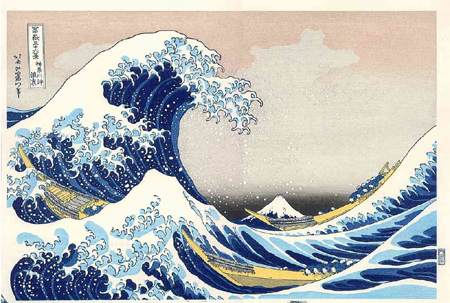
Audio Fiction: The Wave's Second Day
From February 24th through March 9th, I'll be posting a free audio flash fiction story each Friday from my collection Bam! 172 Hellaciously Quick Stories. The stories are read by my father, voice, film, and stage actor J. Louis Reid.
Today's offering is "The Wave's Second Day."


February 22, 2012
How Not to Psych Yourself Out
In just over a week I'll be attending the annual winter black belt testing of my Taekwondo Association, where I'll be among the candidates, testing for my second dan (degree) black belt. In preparation, we've been practicing (among other things) board breaking. Once you know what you're doing, board breaking is generally either easy or impossible.
Board breaking is a high stakes activity, which makes it an excellent example of a situation where it's easy to psych yourself out. When you break boards at Blue Wave testing, you're the center of attention–there's nothing else happening at just that moment–and you're being watched especially by the senior black belts of the association, people who have been doing Taekwondo for decades and whom you tend to respect and admire. If you fail to make your breaks, you may fail your test overall and not be able to test again for six months. Also, there's the potential for personal injury, either to yourself or to the people holding the boards. It can be hard not to think about what can go wrong.
If you're interested, consider this video from a Taekwondo group in Culver City, California. I don't know if any failed breaks have been edited out, but there are a few occasions where the person misses, including at least two where they hit the board holder's hand instead of the board. You won't see much flagging confidence here, which I think does this group credit, but getting to that point isn't easy.
In this way, board breaking is a lot like other high-pressure situations: competitions, job interviews, first dates, speeches, public demonstrations, and so on. If you start feeling confident, then everything may go beautifully. If you begin to question yourself, it can be hard to get back on track.
I don't have final and perfect solutions to this problem, but since I'll be doing three kinds of board breaks at testing, I've made a point of trying to learn what I could about not psyching myself out. Here's what I've got.
Practice makes it easy
I go on about practice a lot on this blog, because there's immense evidence from research that practice is the crucial element that makes people good at skills. How many times have you seen someone try something new and say "I guess I'm just not good at this"? Of course they're not good at it yet: their brains are still trying to make sense of the activity and haven't built any dedicated neural connections to make it go smoothly! Days, weeks, or months later, after some practice, the same person make appear to be naturally gifted at whatever it is.
When we're faced with a performance situation, it's easy to get wrapped up in the details–but if you've practiced enough, you've already worked out the details. I watched a fellow testing candidate yesterday have trouble with several different technical aspects of a difficult break, but she later came back and smashed through perfectly. The technical problems weren't because she didn't know where to place her foot or how to orient her body: they were because she was losing confidence. The more you practice, the less likely it is that even disruptive situations will get in the way of your confidence. Fortunately, my friend from last night had practiced hard for a long time, and when she was in the right mindset, her good kicking habits took over.
One comment about practicing, an insight a senior black belt shared with me yesterday: practicing in as close to the real situation as possible is important. For example, you might be used to delivering speeches in a conference room, but not in an auditorium. If you're nervous about a big speech, then, it could help to borrow the auditorium when it's not in use and try it there. The same applies to breaking boards: practice with someone standing there holding a target for you. When you come back for the real thing, not only will you be faced with fewer surprises or new circumstances to cope with, but your brain will already have the connection for that activity in that circumstance: it will feel more natural.
Find a focus
When practicing one of my own breaks last week, my first attempt not only didn't break my target, but missed it by a foot. I may not be perfect, but I'm not that bad: I was clearly getting in my own mental way. My instructor advised me to go "straight up and straight back," which is to say to jump up cleanly, chambering both knees, then kick straight out behind me. Having this to focus on took my mind off the various distractions I was coming up with for myself and allowed me to tap into my good habits. I jumped, kicked out behind me, and broke through three boards, exactly as I hope to do it at testing.
One of the key reasons this works is that the easiest way not to think of something is to think of something else. Because I'm sometimes a contrary person, for instance, whenever someone says "Don't think of a pink elephant" (and oddly, this has come up several times for me), I immediately think of a blue giraffe, because as human beings we're very bad at doing nothing. Not doing one thing, for us, generally means choosing to do something else.
Warm up with something that makes you feel confident
I mentioned my friend practicing breaks yesterday, and how her later attempts went so well. What was the difference between the earlier and later kicks? Her very first attempt was good, but not quite confident enough, so that she hit the boards solidly but without enough forward momentum to break them. The senior black belt I mentioned earlier took her away from the boards and had her do practice kicking for just a couple of minutes, the way we do when sparring–and she had sparred so much, this was a very comfortable, confident activity for her. When she came back from it, she jumped, kicked, and smashed through. She had transported herself into a mental state in which where she felt confident and focused, and then attempted the tough task while still in that mindset. Even though she won't have the opportunity to do that at testing, she'll remember the feeling and, if all goes well, be able to apply it.
"Just do the thing"?
One piece of advice I can't really comment on intelligently yet is the "just do the thing" approach, where you're urged to put your thoughts aside and just do whatever it is. On the one hand, this is exactly what we need to do in high-pressure situations: put aside our misgivings and go for it with complete confidence. On the other hand, though, this seems like more the result of overcoming anxiety than a means of overcoming it. It may be natural advice for someone to give when they've seen you do something well and you're not currently tapping into it, but I'm not sure that it's always something we can get a handle on to change our thinking.
It's true, though, that being confident means to some extent putting aside caution, sense, and vigilance. You can't successfully jump up out of a trench and start shooting at the enemy, or try to put your foot through several inches of solid wood, or make a speech to a thousand people, without running the risk of catastrophic failure. Well, and so what? The only alternative to risking failure is never trying, and where's the challenge in that?
February 16, 2012
When a Failed Story Becomes a Great Story
There are stories that are just not well-conceived, stories that, unless they are completely altered, will never be successful. A story like this might have characters that don't appeal, events that don't satisfy, ideas that don't engage, or they may just never connect emotionally with the reader.
Other stories are rough in early drafts, but with a limited number of changes become very effective. How do you tell the difference? Unfortunately, it's not easy, and for the most part it's a problem that's similar to judging your work in the first place, with similar solutions (see "Your Opinion and Twenty-Five Cents: Judging Your Own Writing").
Sometimes, though, it can be very hard to have faith that revision can make a big difference. As an example to demonstrate how it can, consider this account from Writers of the Future and Nebula winner Eric James Stone, originally mentioned on the Codex writing group and quoted with permission.
To understand the context, note that we regularly run writing contests on Codex in order to push ourselves, generate new work, and learn from the competition. Weekend Warrior is a yearly event there in which each participant writes a story of 750 words or less from prompts over a 60-hour period.
For 2009 Weekend Warrior, Round 2, I wrote a story I thought it was powerful and might do well in the contest, but I was wrong: 5.35 average [on a scale of 1-10 -- Luc], 8th out of 17, closer to the bottom score of the round (4.06) than the top (7.47). It was my lowest point total of the five weeks, so it didn't even count in my overall score for the contest. That was my biggest flop ever in WW. (I've had lower-scoring stories, but I didn't think they were going to do well in the contest.)
I put it aside for over a year, then deleted three sentences, added ten, and edited seven. That lengthened the story by about 25% and allowed the powerful story that was in my head to come out more clearly. I sent it out and it sold to the first place I sent it [a major pro market -- Luc], where it became one of the most-liked stories of all time (at least on their Facebook page): "Buy You a Mockingbird."
Now, I'm not saying the contest score was wrong — I had not successfully conveyed what I wanted to convey, and I needed to edit the story later in order to make it work. What I'm saying is that sometimes a flop can be turned into a hit.
If you're interested in Stone's work, you may want to check out his story collection Rejiggering the Thingamajig.
February 15, 2012
Stay the Course or Try Something New and Promising? Some Ways to Decide
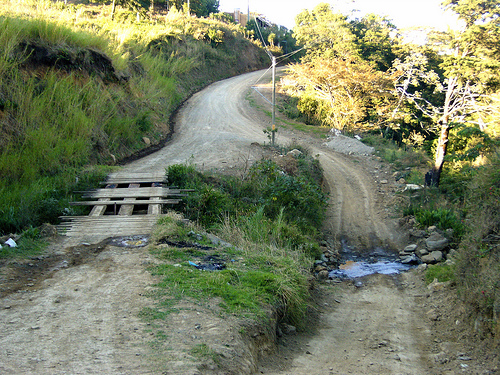
A friend recently mentioned that she was having trouble deciding whether to stay with a project she'd been working on for some time or to follow a new, very unusual idea she'd come up with that could, she thinks, be highly successful. While she's been enthusiastic about the new idea, it isn't catching on with the people she's talked to about it so far.
There is no simple way, much of the time, to make these kinds of decisions. Some of us are constantly seduced by new and exciting ideas–for me, for instance, it's an unusual week when I don't dream up some huge project I could be doing instead of what I have on my plate already. I'm glad to say I usually write these down and stay the course, since if I followed every one I'd never finish anything at all.
Others of us have no inclination to rock the boat and want to stay with what we have–sometimes even when that's showing every sign of failing.
So how can we make good decisions about choices when we can't predict the outcomes? Here are some suggestions for ways to do that.
Sometimes audacity is brilliant
First, it seems to me that doing things that other people say will never work sometimes works amazingly, as with J.K. Rowling's much-too-long debut young adult novel or Beethoven's opening to his 5th symphony, which starts on the second beat.
Innovators have to be able to hold the line
Second, even when an audacious idea is successful, its creator often has to perservere well beyond the usual point of success to get anywhere. Rowling was rejected by a couple of dozen publishers before Bloomsbury picked her up, and the great majority of writers would probably never have persisted that long. I gather that some of the initial reaction to Beethoven's 5th symphony was disbelief and scorn, though some of that may have been because the premiere went very badly.
Failure is normal
Third, most ideas that other people say will never work really do never work, just because it's hard to make a big, new thing come to life in an effective way. Audacious surprise successes are very unusual.
How committed can you be?
Fourth, the audacious ideas that do succeed seem to do so only when their creator is completely behind the idea, heart and soul. I can reflect on a variety of businesses I've worked on the past that have begun promisingly but ultimately died with a whimper because I didn't want pour my entire life into them. Some were very sound, and one of the businesses did hundreds of thousands of dollars worth of business before it petered out, but when it comes down to it, business isn't what interests me, so that these days I avoid getting involved in business pursuits whenever I can even though I've gained a lot of good experience in that area.
Follow happiness
Some advice that's very good in other situations, like "follow your passions" or "just do it!" can fail us when we're working on complicated decisions. One suggestion I've heard is "What would you do if you knew you couldn't fail?" This kind of advice has led uncounted young people to Hollywood to try to become stars, for instance, and the huge majority of them wash out completely. Does that make it a bad decision? It depends. Maybe the thing to do is to choose the course that will make you happy even if you fail, just because you tried and you put everything you had into it. With that approach, even failure can be a form of success.
Photo by brockzilla
February 13, 2012
Choosing What to Say in Your Bio, for Writers and Others
 Writers are often invited to include a sentence, paragraph, or page of information about themselves when their works are published, and the same thing often applies to speakers, new employees, or anyone else who is in the spotlight for a moment or two. But what do we say? Do we give our basic statistics–age, occupation, education, hometown? Do we trumpet our successes, wax enthusiastic about our interests, or just try to sound clever?
The answer depends on what you want the bio to do. If you just want to get out of the spotlight as soon as possible, a boring bio is ideal. No point mentioning you're a ballroom dance champion if you don't want people to come talk to you about it, or to look you up when they need to learn a few moves for their sister's wedding.
For writers, though, staying out of the spotlight is a bad idea. Like actors and public speakers, we are usually our own brand. The ideal for many of us would be for the focus to always be on our work, and biographies can be used for this purpose. However, personal details can often do more to help build a relationship with readers–and a long-term relationship with lots of readers is what most of us are after, at least those of us who want a writing career.
I'm not sure that I'm a master at writer bios, but I certainly have some suggestions on the subject. My point of view is that ideally a bio does one or more of the following:
1) Helps the reader become more interested in the writer
2) Makes the writer more memorable
3) Offers somewhere to go right now to read more from or connect with the writer
The reason these three things are useful, it seems to me, is that #1 makes it more likely a one-time reader will become someone who looks for the writer's work; #2 makes it more likely the reader will recognize the writer's name at next exposure, wherever that may be; and #3 is especially offers the possibility of developing a further relationship with the reader right now, whether or not an immediate sale results. Note that #s 1 and 2 tend to encourage readers to follow up on #3.
I'm not a fan of cute bios or of bios that make the person sound like Generic Writer Number 1433 (e.g., "John P. Smith loves Science Fiction, especially the works of Asimov and Arthur C. Clarke, has a degree in chemical engineering, and lives in the Pacific Northwest with his wife, kids, and three cats, whose shenanigans keep him in stiches from dawn 'til dusk."). Wildly-varied-list-of-jobs-I-have-had bios also do very little for me.
In theory, bios that don't really tell you anything about the writer seem like they can work if they're examples of really entertaining writing, since that addresses point #1.
I tend to write specialized versions of my bio for each venue or context. My bio for my article coming out in the April issue of The Writer emphasizes my writing-related background and my focus relating to the article content, plugs my current top-priority publication, and invites the readers to my blog (which is closely related to the article content–no accident, as I was pitching articles related to my blog to build on the things I know and help attract more readers).
Luc Reid is a Writers of the Future winner, the founder of the Codex online writing group, and an author of fiction and nonfiction, most recently the novel Family Skulls. He blogs on writing and the psychology of habits at lucreid.com.
For a recent sale of my flash fiction story "Tornado on Fire" to the Escape Pod podcast, I used some of the same material, but mentioned Taekwondo (I should probably have used the phrase "black belt," which to me has always been a coolness-booster), didn't plug the novel (as there was a more closely-related book I got to plug along with the bio), and mentioned my current work-in-progress, which could attract interest to the blog, since it's closely connected.
February 9, 2012
Always Giving to Others? That's Fine, If You Want to End Up a Stump
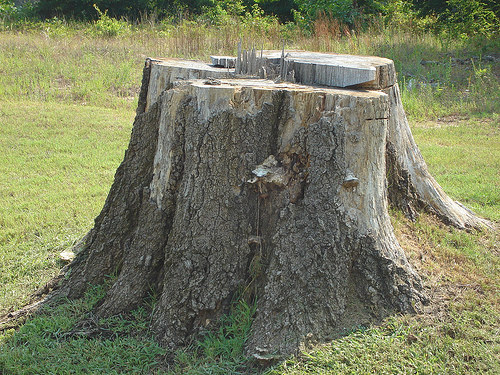
I've long had a problem with the acclaimed Shel Silverstein picture book The Giving Tree. It's the story of a "friendship" between a tree and a boy in which the tree progressively gives everything it has–starting with the reasonable gifts of shade and fruit and a place to climb, but pushing on to the point where it urges the boy to cut it down–in order to make the boy happy.
Don't get me wrong: giving is wonderful. What's not wonderful is giving everything you have and are away. Self-sacrifice is one of the 18 problem mental schemas covered by the school of psychology known as schema therapy (see "Mental Schemas #13: Self-Sacrifice").
Women seem to be disproportionately the victims of self-sacrifice. While many of us grow up with the message that it's better to give than to receive, it seems that girls more often than boys are told that it's always right to do things for others and never right to do things for ourselves.
Healthy relationships require balance. Everyone involved in the relationship is important, and when the needs of one person completely trump the needs of the other, both suffer. The giving side of this is called self-sacrifice; the taking side is another mental schema, Entitlement, and it's not particularly fun to be afflicted with either.
What makes the boy in the story so comfortable hurting the tree to benefit himself? Why, when the tree is demonstrating such extraordinary consideration for him, does he feel so little concern for her?
Some people interpret the story as a straightforward parable of parents and children, and I suspect it was intended this way. The problem is that as much as a parent-child relationship for a long time is a lopsided arrangement, children are not so important that adults should ignore their own needs entirely in order to satisfy the child's every whim. If this sounds insufficiently nurturing, consider this: one of the most important jobs parents have is modeling strong, healthy relationships. A child who gets everything while the parents give everything either follows the parent's model and becomes a tool for the takers of the world, or (more likely) grows up with a sense of being the center of the universe, not subject to the same rules as everyone else, entitled to do anything that seems necessary to get a desired outcome–in other words, a taker him- or herself.
Another thing to consider about self-sacrifice is that sacrificing so much that one's needs aren't getting met usually results in emotional trouble. We all need a certain amount of love, consideration, and support. When we tell everyone else that they should take everything they want from us and never need to give anything back, we don't get those things, and as a result we become stunted and often bitter. By giving everything, we end up having less available to give, just as the tree could have continued giving shade, apples, oxygen, and a place to play for generations if it hadn't tried to give up its entire being just so the boy could make a boat.
To really be able to give the most to others, we have to be willing to receive some things ourselves.
Photo by karenhdy
Added afterward: In the same vein, Alison Cherry has an eye-opening version of the story on her site at http://alisoncherrybooks.com/blog/2011/12/8/why-i-hate-the-giving-tree.html .
February 7, 2012
Your Opinion and Twenty-Five Cents: Judging Your Own Writing
This piece first appeared in my column "Brain Hacks for Writers" over at the online publication Futurismic. I'll be republishing each of my BHfW columns here over the next few weeks.
I don't know, personally, whether it's merely difficult or actually impossible for writers to judge our own writing well. You write a story that you're convinced is the finest thing you've ever written and send it out to the world, and it's only 18 months and ten rejection slips later that you decide it really wasn't so good after all. Or you scribble something up in a rush that you think is unremarkable, and everyone who reads it tells you it's great.
This stuff is frustrating. If we don't know how well we're doing, how can we do better? And how can we ever have any confidence in our own work? If we can't really judge the quality of our own writing, even something that sells can feel like a fluke, a bad call on the part of an editor. A few thousand adoring fans can be an effective cure for this, but they are hard to come by in those numbers.
It does make sense, though, that we can't be perfect judges of our own writing. If we could, we'd immediately see and fix all of the flaws, never suffer any doubt as to changes we might need to make, and never be upset by a rejection. Further, being able to judge the written work would mean completely ignoring all of the imagined things that went into that work, not allowing them to influence the reading at all–yet we have to be intimately involved with those imaginings in order to write the piece in the first place.
It seems to me that it's important to recognize this blindness, this inability of any one person–especially the author–to make any kind of final judgment about a piece of writing. If we don't come to terms with this limitation, we're doomed to crash repeatedly into the jagged rocks of reader and editor opinion, to be amazed and horrified at the difference between our beliefs about our own work and everyone else's. Some writers (you may have met them) do exactly this, assuming that if they write work they deem brilliant and readers don't agree, then the readers are deficient. That way lies madness–and also failure and a really annoying personality.
But though we can never be perfect judges of our own work, there are steps we can take to be better at judging it. Here are specific techniques we writers can use to get a new perspective on what we write:
Get someone else to read it. This can be a critique group, a friend, a relative, a teacher, etc., although all of these kinds of readers are problematic in one way or another. Teachers and other writers have ideas about how things should be written that don't necessarily have to do with how well something reads, and friends and relatives tend to be biased. The ideal feedback would come from a group of people in the target audience who don't have a connection to the writer and don't write, though that's not an easy group to recruit.
Let time pass. I don't know about you, but for me it's very difficult to let a piece sit when I'm excited about it. I want to send it out right away and get some kind of excited response in return. Yet if I let a piece sit for weeks or months (or at least a few days), then when I come back to it my experience is much closer to that of a normal reader than it was immediately after I wrote it, when I still had all the supporting ideas and images swirling in my head.
Read it aloud. Some people have no use for this approach, others swear by it, and yet others (like me) might like it if they tried it but never seem to get around to trying it. If you're in that last group, consider having a computer, Kindle, or other device read it to you. (I'll be giving this a whirl myself.) You can even use headphones.
Look for specifics. Another way to get perspective on your work is to analyze it instead of reading it to experience it. You can go through the piece checking for voice, plot, sensory detail, character, or practically anything else. One friend of mine goes through printouts of his work and highlights things like action, moments that show character motivation, and themes in different colors to check the balance and pacing [see image above]. You might like to use a checklist: I have one I've compiled of the best ideas I've come across, "The Virtuoso Writer's Cheat Sheet," which I use to try to remind myself of all of the ways I could improve a given story.
January 25, 2012
Finding the Perfect Attitude for Willpower, Part II
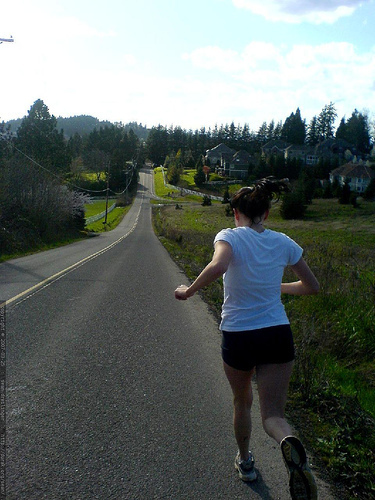 In the first post in this series, I brought up the question of a perfect approach to willpower, some kind of zone we could get into that would make us automatically able to make the good choices we want for ourselves–exercising more, dealing better with people, eating healthier, working harder, stopping dangerous behaviors, or anything else. Lately I've gotten a glimpse of a frame of mind that is something like that zone, a frame of mind that has been making willpower much, much easier for me. Unfortunately, it's not a single, simple change–but the pieces of it are ones we can master. Here are the ones I've been able to puzzle them out so far, and though I'm talking mainly about weight loss, the principles are the same for any other willpower challenge.
1. Resignation
This might seem like an odd thing to emphasize, but it's become clear to me recently just how essential resignation is. Resignation is saying "OK, so this will be painful or inconvenient or unpleasant sometimes. I can deal with that." Resignation is saying "I'll embrace hunger, or loneliness, or whatever the challenge is for me, and find out what there is in it I can enjoy."
Ineffective fad diets often claim they can help you lose weight without going hungry, or while still eating foods you love. It's not impossible to lose weight without going hungry very much, or while eating foods you love, but it's much easier if you're willing to eat food you find boring, dull, and insufficient. If that sounds joyless, consider: what's the best source of joy anyway? Yes, it can occasionally be delightful to eat a doughnut, but more often it's just vaguely pleasant and we don't pay that much attention anyway. Feeling successful, healthy, strong, and capable, however, pays off in joy consistently.
2. Going toward, not running away from
To eat well, it's much easier to focus on getting healthy food than on avoiding unhealthy food. To quit smoking, it's much more motivating to focus on how many non-smoking days one has had so far than on missing smoke breaks. The more we think about things, the more our brains automatically configure themselves to be ready to do those things. If we spend a lot of time thinking about activities we're trying to stop or do less of, it will make it harder to avoid them. Instead, we can focus on things that carry us forward.
3. Consistency and commitment
I don't know how much this is my particular personality and how much this is true for most people, but it's far easier for me to stop doing something I'm used to than to do just a little of it. For example, in 1985, concerned about environmental impact and mistreatment of livestock, I stopped eating meat, seafood, and poultry. I continued as an ovo-lacto vegetarian for more than 20 years, at which point I found that there were health issues for with my diet as it was (notably, it turns out that I'm allergic to soy and needed to reduce cholesterol consumption), and I added seafood and poultry back in. Vegetarianism was sometimes inconvenient, but it was never difficult. Similarly, I go years at a time without having any caffeine–coffee, chocolate, most sodas, etc.–because my body doesn't handle caffeine well. That hasn't been hard either.
By contrast, it can be very hard for us when we try to ration unhealthy foods or TV watching or Internet usage. Rationing seems to encourage us to think more about the things we're trying to minimize, which as I've mentioned causes trouble. So the most successful attitude toward healthy eating for me has turned out to be "I'll try to make healthy food choices every time." Yes, there will be situations where I don't have many good choices, and there may even be situations where I choose something less healthy because that's the choice that makes sense to me at the time, but my practice now is to stop myself before any "recreational" eating choice and see if I can't find a perspective that makes me happy to skip it. Not that this is always easy: more on that below.
4. Awareness
In order for me to make good choices, I have to realize it when one of those choices is in front of me. If I have four pieces of pizza in my belly before I remember to think about what I'm eating, then it's already too late. Accordingly, the first thing I practice is being aware of making a choice. The second thing I practice is being willing to think about my motivations for making good choices. It shocks me how often I'll realize I'm in a situation where I need to make a good choice and my first inclination is to not think about it. When I get past that and focus my attention on what I'm trying to achieve in my life, it becomes much easier to make the good choices. It's when I don't notice the opportunity or do notice but don't allow myself to think about it that I run into problems.
5. Knowledge
I should say that any positive change needs to be founded on real knowledge. Meaningful facts–whether it's calorie counts for eating well, knowing that people who have tried to quit smoking before are more likely to succeed when they try again, knowing what markets are available for the novel you're working on, or really understanding the question of cardio versus strength training–facilitate reaching our goals, while lack of information gets in our way. For instance, if I try to lose weight but don't realize that some of my "diet foods" are high in calories, I'm very likely to give up, because I'll see I'm not making any progress.
So those are the pieces–at least, the ones I recognize so far. In the third post in this series, I'll talk about how these pieces fit together and what it feels like to be fully engaged in changing a habit for the better.
Photo by sean dreilinger
January 20, 2012
What Makes Characters Riveting?
I've been thinking about the question of what makes a good fictional character, and the result is this list of ways characters can draw readers' interests, which I hope you'll find useful.
There seem to be some basic requirements for characters that aren't as much about drawing readers to them as about the character being workable at all, things like having flaws, actively pursuing goals, being vulnerable in some way, and being believable (at least in the context of the story). My list below is not so much about these things, which we might consider the character basics, but about the more difficult and touchy job of creating a character that pops off the page or that readers love.
With that said, my fictional success isn't yet to the point where I can claim that all of my characters do this, so certainly you can take this list with a grain of salt.
So what I came up with when I dug into this question was five categories of things that get and keep readers interested in a character. They aren't entirely exclusive of one another, but they seem to be helpful categories. They are:
1. sympathy (we like the character)
2. attention (we want to see what the character will do next)
3. entertainment (we enjoy seeing the character in action)
4. admiration (we aspire to be like the character), and
5. identification (we feel like the character reflects ourselves)
It's likely that there are some other methods or even an entire category or two I've missed, but this list should be useful at least as a starting point.
By the way, I give a character for each of the below as an example of that item, but I'm not suggesting that the item in question is the only or even necessarily the primary thing that's interesting about that particular character, just that the character is an example of that item in action.
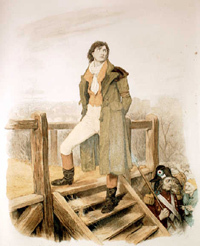 SYMPATHY
* Suffering through something undeserved (Harry Potter in Harry Potter and the Sorcerer's Stone)
* Makes a sacrifice for someone else's good (Sydney Carton in A Tale of Two Cities)
* Consistently kind to others even when mistreated (Little Orphan Annie in the Little Orphan Annie comic, etc.)
* Extremely loyal (Sam Gamgee in The Lord of the Rings)
* Highly principled (Atticus Finch in To Kill a Mockingbird)
* Not consistently nice, but sometimes willing to put real effort into being kind or friendly (Greg House in the TV series House)
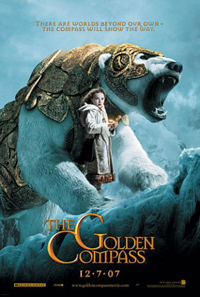 ATTENTION
* Mysterious (Lestat in Interview with the Vampire)
* Trying really hard to accomplish something difficult (Hazel in Watership Down)
* Extremely resourceful, whether well-intentioned or not (Tom Sawyer in Tom Sawyer)
* Unique, fascinating, or exotic (Iorek Byrnison, the armored bear in The Golden Compass)
* Very powerful, whether in politics, money, physical prowess, etc. (Darth Vader in Star Wars)
 ENTERTAINMENT
* Eccentric, unpredictable, fun to watch (Captain Jack Sparrow in Pirates of the Carribean)
* Willing to say things most people would only think (Sherlock Holmes in the modern movie and TV adaptations–I can't comment on the originals, not having read them for a long time)
* Witty or intentionally entertaining (Bartimaeus in The Amulet of Samarkand)
* Strongly identifiable and partly–but not entirely–predictable (Homer Simpson in the TV series The Simpsons)
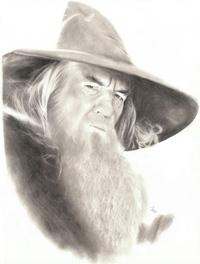 ADMIRATION
* Great at something (Zorro in various movies)
* Wise or knowledgeable (Gandalf in The Lord of the Rings)
* Unflappable; impossible to keep down (Lyra in The Golden Compass)
IDENTIFICATION
* Struggling with issues we can identify with, whether successful or not (Holden Caulfield in The Catcher in the Rye)
* Feels like a stand-in for the reader (Bella Swan in Twilight)
Of course, many of the best characters hit multiple points above.
As an exercise, it can be useful to think of a character you love from a book, movie, or television show, consider whether one or more of the above applies strongly to that character, and decide for yourself whether or not that has much to do with why you like the character. Recently I've been watching the excellent BBC series Masterpiece: Downton Abbey, and I was interested to realize that as I made this list, various characters from that show popped into my head without me even trying.
A more potent exercise: take a piece of your writing–or even someone else's writing–in which there's a character who doesn't really stand out, and go through this list to find one or two of the above items that you can use to punch the character up. What are your results?
I'd appreciate your comments, additions, protests, and so on.
January 12, 2012
Finding the Perfect Attitude for Willpower: Part I

Since I started this blog more than two and a half years ago–actually, no, since long before that–I've quietly searching for the perfect state of mind, the way of thinking or being that would make willpower simple. It always struck me that people sometimes go through experiences that affect them so much that their actions are completely different from that time forward, even though all that changed was their thoughts.
I was talking to an acquaintance the other day about her father. He's been a diabetic for decades, but he never really got into the habit of checking his blood sugar regularly. It's hard to blame him: who wants to draw their own blood twice a day for life? A few days ago, though, he called his daughter on the phone and told her something was wrong. His speech was slurred, he couldn't stand up, and his daughter feared he was having a stroke. She called an ambulance.
The paramedics were able to rule out a stroke, and it turned out that the problem was just that the amount of insulin her father was taking was off. He should have been testing his blood sugar so that his doctor would know if it was getting too low (in this case it was much too low–a little lower and it would have sent him into a coma) and be able to adjust things accordingly.
You might not be surprised to know that my friend's father is now checking his insulin religiously. Poking yourself with something sharp every once in a while suddenly stops feeling like so much of a nuisance if it's going to prevent you from collapsing on the floor and going into a coma.
What does this have to do with willpower? Well, I've always wondered. On the one hand, I've thought, maybe it's possible to jar ourselves into that state of complete dedication to making the smart choice, over and over again, in the same way my friend's father was jarred. On the other, maybe that only applies to really traumatic experiences.
A little more background we'll need to make sense of this topic: I've never had a friendly relationship with food. I'm one of four kids, raised in a household where the food budget was sometimes very tight. The kinds of food we liked weren't always easy to come by, so if something was served that we considered especially good, we'd scarf down our first portion to get seconds before it was all gone. In this and other ways, we all learned some bad ways of dealing with and thinking about food, and for me this has been an issue into adulthood. I was unhappily overweight for years, gradually gaining mass, until about seven years ago, when I finally understood about exercise. I'd always thought it was something that you tried to put up with: I had never realized that exercise could be something you crave, and yet regular exercise made that transformation for me, and with that change along with some hard work to eat better, I eventually lost more than 60 pounds.
Over the past six months or a year, though, I hadn't been bothering as much about fitness, having family matters to deal with that were a more important place to put my time and attention, and recently I realized I had started putting weight back on. The idea was very unappealing to me, as you can probably imagine, and I focused on the problem to piece together what I knew about willpower so that I could find a state of mind where I didn't just eat well, but craved eating well–just like I crave exercise. I may have found it, but it's not as simple as I once imagined it might be. I wasn't scared into changing my life. Instead, I began looking at things in a different way. In my next post, I'll talk about what that change of attitude was and how to get to it.
Photo by Chris Rimmer
Quinn Reid's Blog

- Quinn Reid's profile
- 6 followers

