
Quinn Reid's Blog, page 16
April 12, 2012
Now Offering In-Person Talks on Drive, Focus, Motivation, and Habits

Writing about the topics I write about here–habits, fulfillment, focus, goals, motivation, and all the rest–is exciting to me because I can mine useful ideas and techniques out of a wide variety of sources and try to offer them to you here in as clear and meaningful a way as I can manage. I get a similar charge out of writing articles and books (and a different but also compelling charge out of writing fiction). At times I've tried to offer those ideas and that kind of communication in other ways, for example by doing a limited amount of coaching, but after a great deal of study and preparation, I'm now bringing the things that I've learned and that I teach into a new arena: public speaking.
I've done public speaking before, most recently at the New Hampshire chapter of the Romance Writers of America, where I had a wonderful time and got the chance to connect with some good people. However, until recently I had never made a formal study of public speaking or set my sights on making it a regular part of my schedule. I'm now taking the lessons I've learned here on the road–though not very far on the road, as for now I'm sticking almost exclusively to New England, southern Quebec, and parts of upstate New York.
I've added a new speaking sub-site here on LucReid.com, always available through "speaking" tab above or at www.lucreid.com/speaking . There's an explanation of my offerings, some biographical information I've never shared on this site before, a speaker sheet you can print off if you're interested, a contact page, and a video page for speaking clips. If you're curious about what I offer or just about what in the world I'm doing, I hope you'll explore and perhaps comment or get in touch. I'm always interested in talking about these presentations with anyone who has questions or ideas.


April 11, 2012
Brilliance and Dreck: Using Good and Bad Writers to Self-Motivate
I'm not sure when I first began wanting to become a professional writer, only that by third grade I had that idea firmly in my head. It wasn't until a few years later that I got a particularly awful SF book from a bookstore–I think it had a robot on the cover, one of those jobs with the dryer-vent-hose arms and the antennae on the head–and really got fired up for the job. I thought (and this may sound familiar) "God, if a lousy book like this can get published, I'm going to be rich!"
Let's skip over the many misconceptions and sad bits of naïvete lurking in that sentence, if you don't mind.
Good writers had at least as much influence on me as bad ones, of course: reading Tolkien and LeGuin as a kid, especially, gave me something to shoot for. Here are some accounts from writers I know who talk about authors who drove them to write in the first place, either in admiration or disgust:
Donald Mead, whose work can be found in venues like Fantasy & Science Fiction and Writers of the Future XXV, said
I suppose it was 20 years ago or more that I read Brooks' Sword of Shannara. I found it to be an unrepentant rip-off of Lord of the Rings. I had no writing aspirations at the time, but after reading that disaster, I thought "Well, anyone can write a book." And then it was a short step to "I can write a book."
Funny, many years later I was on a panel at Capricon with Peter Beagle and he mentioned that he was the first reader for Sword of Shannara. He told the editor it was a rip off of LotR. The editor said "That's great! That's what it's meant to be." It was for the reader who'd read LotR eight times and just couldn't pick it up for the ninth time.
Please note, I have nothing against Brooks. From all I've heard, he's a great guy. I'm just saying if I ever make it big, it's because of Sword of Shannara.
Incidentally, I found out it wasn't true that "anyone can write a book." I quickly found out I had no idea how to write; it was a lot harder than I ever imagined. I have a lot more respect for Brooks now.
SJ Driscoll's short fiction has appeared in Asimov's, Ellery Queen's Mystery Magazine, and elsewhere, and her successful works include plays, many articles, and poems. Her inspiration was
Poe. I started reading him when I was seven, while those moronic learn-to-read first-grade textbooks were being stuffed down my throat. Death from boredom…. I never wanted to learn to read–I wanted to be outside doing things. My dad tried to teach me starting at age four, and I despised it. Then elementary school almost murdered me with dreariness. Squash, crush, stifle. Man, did Poe revive me. The way he used language! By the time I was ten, I'd read all the fiction and poetry he ever wrote. I used to think the word, "poetry," came from his name. He taught me to use words to give the world hard edges. He started me writing stories because stories gave my strapped-down childhood a shape I could control. I was a child, I wasn't allowed to do real things, I wasn't free, so I wrote. I still write to give the world hard edges, to be free. Poe was the first writer to save my life. I honor him.
S Hutson Blount (Andromeda Spaceways In-Flight Magazine, Escape Pod, Black Gate, etc.), said
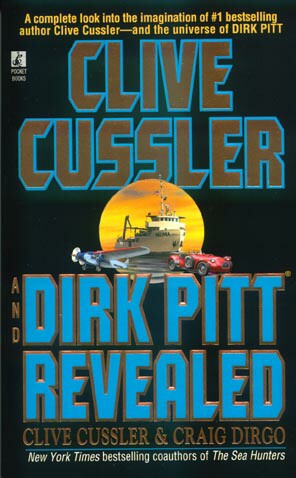
Most of my formative examples were negative. There was once a section in bookstores called "Men's Adventure." Mack Bolan lived there, along with Remo Williams, Dirk Pitt, Casca, and a bunch of hypothetical Third World Wars. This was where I went when I needed to reassure myself that if these guys could get published, I could too.
Melissa Mead (Sword & Sorceress and others–no relation to Donald), on the other hand, said
I first tried writing for publication after reading Marion Zimmer Bradley's Sword & Sorceress series. I commented to my husband that it would be such fun to write for something like that, and he encouraged me to give it a try. S&S was invitation-only by then, and shortly thereafter MZB died and the series ended. By then, though, I'd had a story accepted by The First Line, and I was hooked.
Years and years later, when Norilana revived S&S, I sold a story for the 23rd volume, and the inspiration came full circle.
Yep, it was as much fun as I'd imagined.

The takeaway here, if you'll indulge me for a second, is that if at any point we want to be more enthusiastic about some kind of work we might do, one option is to immerse ourselves for a little while in the work of someone who is either very good or very bad at whatever it is. While this may not work for anyone who has evolved beyond all feelings of indignation, superiority, or envy, for the rest of us it can provide a damn good shot in the arm.
This piece is reprinted (with improvements) from my "Brain Hacks for Writers" column at Futurismic.
April 5, 2012
High Pressure and Losing Streaks
A friend of mine, writer John Murphy, pointed me to this discussion, in which devotees of the computer game Starcraft talk about how they recover after a losing streak. My first thought was that the topic wouldn't be of much use in terms of looking at how we motivate ourselves in general, because computer games are hardly the same thing as cleaning out the garage or succeeding at our chosen career, right? Fortunately, it didn't take me long to set myself straight on that count: after all, when we are focused on a goal and are facing obstacles and frustrations, the emotional situation is very similar regardless of whether the obstacles are gaming opponents, inefficient coworkers, or unmarked boxes full of bicycle parts. (See "A Surprising Source of Insight into Self-Motivation: Video Games")
That's not to say that I think that all goals are equally praiseworthy. I wouldn't expect to impress anyone with my skilled movie watching or badminton playing, and while computer games are much like anything else in terms of how motivation works, that doesn't mean I'd especially recommend that people direct their energies there. Engrossing is not necessarily the same thing as meaningful. With that said, every healthy life has leisure activities, so let's learn from this one.
A warning: if you do read the discussion I linked to on your own, there may be parts that are completely foreign to you. For instance, in the following passage, I had no idea whatsoever what the author was talking about (although I enjoyed the sense of disorientation that came with that):
When I lost to broods, I checked the rep and knew I needed an observer in his main to see what the hive timing was, when hive was started I threw down a stargate. If I couldnt get an obs in his base, I told myself to start a stargate at the 12 minute mark, and to try to get a third faster.
But enough jargon: to the interesting parts. Many of the suggestions and ideas in the discussion touched on meaningful self-motivation strategies that are supported by research. For example, the gamers in this discussion were very sensitive to losing streaks, as most people tend to be. Streaks can become a burden, or can be used to create more motivation (see "Harnessing a Winning Streak" and "How to Stop Having a Bad Day").
A couple of things to know about Starcraft (although everything I know about the game I learned from that discussion thread): first, there are different kinds of games, and the highest-pressure option seems to be "Ladder," which I gather is a highly competitive fight to move up in the rankings. Also, unlike many video games, Starcraft seems to have limited social aspects. A user called Stereo (all participants in the discussion went by user names like this) said
Yea in wc3 if you had a losing streak it didn't seem to matter at all 'cause I could just go talk to people and jump back into a game and have some laughs …. Here it's like a ghost town where the only thought is the last game and why you lost.
Some of the insights in the thread (and there were a number of insights from gamers paying attention to their own thoughts and feelings) touched on taking ownership of success, failure, and the emotions that result from those experiences. Qriator said
When I'm losing it's not because the other guy's trolling or just way better – it's because I'm messing up my own build.
This point is a key one: our mood, effectiveness, and resilience are affected enormously by whether we assign blame for a failure to someone else or take responsibility for it ourselves. It's not intuitive, but taking responsibility for a failure can actually be much less stressful than blaming it on another person or outside forces, because it suggests that we have some control over the situation and might be able to handle it better next time. Focusing on others' actions is demoralizing and stressful because by and large we have no power to make people act as we think they should. RipeBanana (I know, the names are a little strange for a conversation like this, but bear with me) commented in a similar vein:
I used to get really angry when I lost a game, then get a ton more angry if I lost 2-3 (or 9) games in a row. Then one day, and I am completely serious, I told myself I wouldn't get mad anymore.
As simple as that – and I no longer rage.
It's interesting how emotions work. We may have little control over our immediate, initial reaction to an experience, but our emotional state from there on is powerfully influenced by our own thoughts. (See "How emotions work" and "All About Broken Ideas and Idea Repair").
Several participants in the discussion emphasized the importance of going back to figure out what went wrong, and of concentrating not on winning, but on improving. Terminus said
… by analyze I mean going to the point in the replay that made you lose the game, and remembering to not commit that same mistake again.
You have to get into the mindset that games are no big deal. Points aren't important, ranking isn't important, what matters is improving …. once you improve, your ranking will naturally rise.
Jazzman takes a similar approach:
… then I watch the replays of my last couple of losses, pinpoint the earliest possible fix I can make, and proceed to go crush 3 or 4 people in a row.
Both of these players have a good chance of doing better through this process–that is, their loss may mean that they'll actually win more in the future–because they're pushing themselves to consciously work in a different way. (See "Practice versus Deliberate Practice")
The last idea I'll quote from the thread–although far from the last idea that was suggested there–is from piCKles:
There's actually a little trick that I learned from a quarterback that I'm going to start using. You wear a rubber band around your wrist and every time you get into a new game, you snap the rubber band. This helps create a trigger in your mind … that every time you snap the rubber band you forget about everything that went wrong with any of the previous games, and that this game is fresh start and a new chance to pull off the winning play or game in this instance.
I've never tried this, but it makes perfect sense: any simple reminder to clear our minds and shed any lingering anxieties or anger about previous problems is likely to help us do better at the next thing. For instance, if a person has two job interviews in a row and the first one is a disaster, the ability to "snap back" and approach the second job interview fresh is likely to make a big difference for the better.
April 2, 2012
Have to Do Something and Don’t Want to? Here Are 4 Steps to Get on Track
Recently a friend posted in an online discussion forum that she had revisions to do on a book she was writing, but didn’t feel able to do them. This is an accomplished writer, but she found that she just really doesn’t want to tackle rewriting this particular chapter.
I have some suggestions for her, because of course writing motivation is a subject in which I have a passionate interest and on which I’ve done a lot of research. Here was my response, much of which applies as well to other kinds of tasks as it does to writing.
First, may I suggest my free PDF eBook, “The Writing Engine: A Practical Guide to Writing Motivation“? There’s a motivation troubleshooting section in back that could get you some good answers within minutes
About the specific question, I wouldn’t suggest walking away and waiting for your subconscious to sort the problem out. That definitely works some of the time, but there’s a needless delay involved, your subconscious may very well be preoccupied with other things, and there’s a chance that you’ll let it linger and dread of the work will grow until the project dies for want of just a little industry. Better to face the problem head-on, get used to facing such things in that way, and get the sense of satisfaction that comes from making progress through dedication and effort.
I share the thought that it’s possible you sense something wrong with the story, in that I have been derailed in my own writing sometimes when that was the case. However, it’s also possible that you’re facing fears of what will happen to the story when it’s finished and is finally ready for you to try to sell it or get representation. A lot of us seem to get thoughts like “Is it any good? What if it’s really junk and I’ve spent all that time on it? Can I even do any better? Maybe I’m just a lousy writer. Maybe my success so far is a fluke.”
Alternatively, you might just be associating some bad feelings with the task, e.g., “Man, this is going to be a pain,” or “I don’t even know if I can fix this,” or “I hate revising!” or “Why didn’t I write it well the first time?”
Regardless of the reason, here’s what I would recommend.
1. Sit down now or at your nearest opportunity and commit to making some kind of progress on the work. You don’t have to finish it. You don’t even have to start on it. Instead …
2. Write about your situation. You can write about what you want to change, what you’re feeling about the work, both, or something else related.
3. If you’re not already carried into the work by step 2, next brainstorm as many ways as possible to change it, include ridiculous and stupid ideas, ideas that might require more work elsewhere in the book, cutting things, adding new elements, etc. (See “Writing Differently: Picking Up the Scary Tools“)
Step 2 or 3 is very likely to get you into a mood to want to work on the revision. From out here, the revision looks like nothing more than a pain in the ass. From up close, working on ideas that excite you, it may well start looking like an exciting opportunity. Alternatively, you may discover to your dismay that you think the whole project is horribly flawed, in which case it might be time for feedback, or else to just finish it, send it out, and perhaps discover that you were wrong and it’s terrific.
If Steps 1-3 don’t get you there, then I would recommend
4. Sit down, make a list of the things you need to do, figure out what the first one is, and just start doing it. Don’t worry about if you don’t feel like it, aren’t sure you can do a good job, have other things you need to do, etc. Focus on the task, ask yourself whether it’s physically possible to accomplish it, and if so, do it. Then do the next one. This isn’t forcing yourself: it’s resignation.
Picture by kxp130
Have to Do Something and Don't Want to? Here Are 4 Steps to Get on Track
Recently a friend posted in an online discussion forum that she had revisions to do on a book she was writing, but didn't feel able to do them. This is an accomplished writer, but she found that she just really doesn't want to tackle rewriting this particular chapter.
I have some suggestions for her, because of course writing motivation is a subject in which I have a passionate interest and on which I've done a lot of research. Here was my response, much of which applies as well to other kinds of tasks as it does to writing.
First, may I suggest my free PDF eBook, "The Writing Engine: A Practical Guide to Writing Motivation"? There's a motivation troubleshooting section in back that could get you some good answers within minutes
About the specific question, I wouldn't suggest walking away and waiting for your subconscious to sort the problem out. That definitely works some of the time, but there's a needless delay involved, your subconscious may very well be preoccupied with other things, and there's a chance that you'll let it linger and dread of the work will grow until the project dies for want of just a little industry. Better to face the problem head-on, get used to facing such things in that way, and get the sense of satisfaction that comes from making progress through dedication and effort.
I share the thought that it's possible you sense something wrong with the story, in that I have been derailed in my own writing sometimes when that was the case. However, it's also possible that you're facing fears of what will happen to the story when it's finished and is finally ready for you to try to sell it or get representation. A lot of us seem to get thoughts like "Is it any good? What if it's really junk and I've spent all that time on it? Can I even do any better? Maybe I'm just a lousy writer. Maybe my success so far is a fluke."
Alternatively, you might just be associating some bad feelings with the task, e.g., "Man, this is going to be a pain," or "I don't even know if I can fix this," or "I hate revising!" or "Why didn't I write it well the first time?"
Regardless of the reason, here's what I would recommend.
1. Sit down now or at your nearest opportunity and commit to making some kind of progress on the work. You don't have to finish it. You don't even have to start on it. Instead …
2. Write about your situation. You can write about what you want to change, what you're feeling about the work, both, or something else related.
3. If you're not already carried into the work by step 2, next brainstorm as many ways as possible to change it, include ridiculous and stupid ideas, ideas that might require more work elsewhere in the book, cutting things, adding new elements, etc. (See "Writing Differently: Picking Up the Scary Tools")
Step 2 or 3 is very likely to get you into a mood to want to work on the revision. From out here, the revision looks like nothing more than a pain in the ass. From up close, working on ideas that excite you, it may well start looking like an exciting opportunity. Alternatively, you may discover to your dismay that you think the whole project is horribly flawed, in which case it might be time for feedback, or else to just finish it, send it out, and perhaps discover that you were wrong and it's terrific.
If Steps 1-3 don't get you there, then I would recommend
4. Sit down, make a list of the things you need to do, figure out what the first one is, and just start doing it. Don't worry about if you don't feel like it, aren't sure you can do a good job, have other things you need to do, etc. Focus on the task, ask yourself whether it's physically possible to accomplish it, and if so, do it. Then do the next one. This isn't forcing yourself: it's resignation.
Picture by kxp130
April 1, 2012
New Flash Fiction of Corporate Interplanar Disaster Planning
My latest flash fiction piece, "RE: The Dark One, In Case It Should Arise from Its Horrible Abyss" is now live on Abyss & Apex. This was a story that arose from a title, though I can't for the life of me remember how I came up with the title. Based on it, though, a story of corporate maneuvering and interplanar disaster planning quickly emerged. It does not, all in all, bode well for the replacement.
http://www.abyssapexzine.com/2012/03/re-the-dark-one/
March 30, 2012
14 Patterns for Successful Article, Post, and Speech Titles

I mentioned recently that I'm beginning to do speaking engagements, and one of my steps in preparing for this has been to take the topics I chose to focus on at the start and come up with the strongest titles for them I could find. I didn't want hype: I wanted to come up with titles that loudly and proudly promised exactly what I was going to deliver, and did it in a way that would get the attention of my target audiences.
I already have an article on titles for fiction ("Luc's Desiderata of Titling"), which is an entirely different process. It has similar intentions, but uses completely different methods. For non-fiction, I have experience but had never really thought out the possibilities, so I did some research, reading articles other people wrote about titling, evaluating titles I felt were really effective, and experimenting with everything I found.
Two of the most useful articles I found are freely available on the Web: "Presentation Titles That Attract an Audience" by Olivia Mitchell and the section I've linked to in "Answer People's Key Question" by Craig Hadden.
From this groundwork, I've come up with 14 patterns that can be used to brainstorm arresting titles for how-to articles, blog posts, keynotes, etc. For each pattern, I've made up an example to demonstrate, although many of these patterns can be used in a wider variety of ways than the single example would suggest. The invented titles are meant to demonstrate how each pattern can work well, so if it's successful, each one should intrigue you (at least, if you're in the right target audience for that title).
1. How to ___ (optionally include a benefit)
"How to Stop Micromanaging Your Children for Their Happiness and Yours"
2. How (noun) (verbed)
"How the Dishwasher Changed the Way We Eat"
3. X {keys, ways, requirements, challenges, ideas, etc.} to/for ______
"3 Keys to Never Forgetting Another Name"
4. (New research/information/etc.)
"New Research on the Best Way to Exercise"
5. X Common Mistakes ______
"3 Common Mistakes We Make When Choosing a Spouse"
6. The X Worst _____
"The 5 Worst Ways to Teach Math"
7. (The Truth/Secrets/Hidden Information)
"What Your Child Is Really Doing at 'Student Council Meetings'"
8. How Can I ____ ?
"How Can I Be On Time, Every Time?"
9. Do (something desirable) by/with ______
"Get Crucial News Faster Using This Smartphone App"
10. (Catchy phrase or intriguing promise): (explanatory subtitle)
"Be Rich Instantly: How to Realize Your Desires Without Paying a Cent"
11. ______ versus (something similar but suggestively distinct)
"The Successful Novel vs. the Best-Selling Novel"
12. What/How (some enviable group of people) ____ Differently
"How The Most Successful People in the World Learn Differently"
13. (Common thing or phrase) (uncommon contrast or claim)
"Safe Investments –Why They Haven't Existed Since 1992″
14. (Brief time or other suggestion that this will be quick or easy) (action or role)
"12-Minute Math Boosters"
The general theme is the same throughout: all of these types of titles are promising something that's valuable and new to the audience or reader. They only differ in how they're attempting to capture someone's interest. I'd suggest that this is what a non-fiction article or speech is about: offering new information that has value. We can just slap titles that are pretty or that play with words on if we just need a handle, but that means the title isn't doing the work it could do. On the other hand, we may have a topic that does all the work itself, for instance "Archbishop Dies In Lemming Attack" or "Exxon to Convert to Worker-Owned Cooperative."
Some of these title formats are familiar from magazines that over-promise, and I hope that neither you nor I will ever do that with our own titles. Titles like "The 4 Foods That Melt Fat Overnight" and "Make a Killing in Real Estate With These 3 Easy Tips" are hype rather than promise, and fulfilled promises are what it's all about.
A writer friend pointed out that some titles that use these patterns can come across sounding like hype even if they may have something real to offer. Obviously, we want to avoid that too.
I used this list to brainstorm titles for my four initial speaking topics, and then I asked people in my writing group to review the titles and mark any that they liked or disliked. In the near future, I should have a chance to post those brainstormed titles and the total response each one got. By the way, this survey process has turned out to be very educational: I recommend it for working out especially important titles.
Of course, these options don't begin to exhaust the possibilities, but they do reflect a healthy percentage of what seem to me the most successful titles of this kind out there. I expect to update this article over time (completely screwing up the number in the title) as I come across more of them. Do you know of any? Suggest them in the comments, if you'd be so kind–or use comments to take issue with any of the above approaches you don't like.
Photo by Amy
March 28, 2012
Having a Purpose Makes You Powerful

In a recent post ("How to Change the World: Simon Sinek on Leadership"), I talked about Simon Sinek's TED talk, which boils down to "People don't buy what you do; they buy why you do it." By "buy," Sinek also means "care," "act," "follow," or "join in." The principle fits sales, but it also fits social change, politics, the spread of ideas, and a lot else.
To have a "why" is to have a purpose, and I've begun to realize that having a purpose makes you nearly invincible. To explain that, let me tell you two stories. Let's start with the failure.
The fall of the REALM
About 18 years ago I owned a small software development company outside Philadelphia, and I was hired to develop a software product to manage real estate and physical assets, like vehicles and storage tanks. The man behind the project at the client company was a friendly, energetic guy, and he quickly revealed that he was interested in doing more than just dealing with his own corporation's needs: he had forged an agreement with the company such that they got free updates and enhancements and he would get rights to the software they paid to have developed. As I was the developer, he offered to split proceeds with me 50/50 if I would stay in the game and develop it further.
This was a golden opportunity. There was no software we could find that did what REALM (Real Estate, Assets, and Logistics Management) came to be able to do. REALM was easy to use, was inexpensive by corporate software standards, and was developed by an asset management specialist (him) and a skilled database and application developer (me). We made many enhancements and began to sell the software. We got a few clients, a few opportunities … and eventually fizzled. What should have been a business that could have made me financially secure for a long time, if not for life, turned out to be a time suck. Why? We had a good product. We had funding to develop it to a marketable state. We were both smart, friendly people. What happened?
I'll tell you what happened: my heart wasn't in it. When it came right down to it, I didn't care about physical asset management, and even if I did, I didn't care about the corporations that needed to do it. I was in the project for the money; that was basically it.
I don't mean to suggest it was immoral or anything. After all, we need money to live in this society: without it, there would be a very real chance of starving or freezing to death on the street. Yet money has never really seemed that important to me in the grand scheme of things, and it was an utter failure for me as inspiration.
The rise of Codex
Now let's shift gears and talk about something I've done that has been very successful: Codex. Codex is a free, online writers' group designed originally for "neo-pro" fiction writers–that is, writers who are just beginning to prove themselves. (A number of its members have since become established pros, however.) The initial entrance requirements were either making a pro fiction sale or attending one of the major workshops where they choose participants from a writing sample. We later added alternative ways to qualify: getting a good agent or reaching a certain level of success with selfpub writing.
Codex was a ton of work. I had written a forum system in the past, and I used that for Codex instead of installing one of the common ones. Because I had done that, it wasn't too hard to integrate a lot of features into the forum, like a critique exchange with tracked critique credit, contests with anonymous participation, a library of Codexians' work, a blog tour system, and a lot more. The Codex forum as it now exists represents tens of thousands of dollars worth of custom programming, though I had never thought about it like that until just now.
Yet the technical work has been a minority of what I have done to keep the group running. I've participated in thousands of discussions, moderated, handled disputes, developed rules when they were needed, oriented new members, and otherwise run things that need running.
How has Codex worked out? Very, very well. We've barely made any effort to recruit members, but we get a steady stream of new applications. We've had over seven thousand discussions with well over 200,000 posts, over a thousand works critiqued, and dozens of contests over eight years. Our membership continues to grow bit by bit: last I checked, there were more than 230 active members. More and more members are selling novels and short stories and getting nominated for awards. On the current Nebula award ballot, every single person in the short story category is a member of Codex, though one of that group joined (without any solicitation from the group) after the nominations were announced.
Codex doesn't net me any money–in fact, in the past it has cost me money, though this year a Codex member generously underwrote the cost of the entire year's hosting as a celebration of his writing success. What's more, these days I'm so busy with my own writing and related work, family, Taekwondo, and the daily demands of life that I can't really even participate meaningfully in the discussions–I don't have time. Yet Codex has provided meaningful friendships, my best professional opportunities in writing, huge amounts of insight, and a lot more. My first book sale (to a major publisher), my opportunity to do commentary for a Florida NPR affiliate, and my first professional speaking engagement all occurred because of Codex.
The thing is, I've never questioned my commitment to Codex because I have a purpose: to develop and be part of a community that helps its members improve their writing. If I hadn't had that purpose, I would have given up on it a long time ago. My purpose protected Codex from getting derailed by problems like arguments among members (rare, but damaging), unreliable Internet hosting providers (we've had to switch service providers five times!), the need for complicated yet unpaid programming work, and so on.
There is no such thing as competition when you have purpose
Having a real purpose eliminates competition: people who are doing the same thing you're doing for the same reason are helping you, because a real purpose is about something bigger than ourselves. People who are doing the "same" thing you're doing for different reasons, often shallow ones, really aren't doing the same thing at all.
I've recently started doing professional speaking events, and at first I was a bit worried that there would be too much competition for me to thrive. Yet I quickly came to realize that my speaking was an outgrowth of the same thing that has made this blog successful, which is a profound desire to first learn, then share knowledge of how to become a more empowered, compassionate, and happy human being. I don't know whether that sounds hokey or not, but I do know that people who hear me speak do and will see that I am there to try to make their lives profoundly better. Anyone who's doing the exact same thing has my admiration. Anyone who isn't is no competition at all.
Photo by Lisa Tiyamiyu
March 26, 2012
Writing Differently: Picking Up the Scary Tools

In creating Dr. Horrible's Sing-Along Blog, Joss Whedon picks up some scary tools of his own
If all has gone well with your writing so far, by now you may have some favorite practices: maybe you always outline your pieces, or have a moment in mind you want to go to, or you scribble a bunch of scenes on index cards and then try to figure out their proper order. You may have a sense of some special strengths and weaknesses: maybe people tell you you have an ear for dialog, or you have trouble with action scenes, or your settings come out convincing and vivid, or you couldn't write romance if Jane Austen were sitting on your lap.
So, good: you have some favorite techniques to use. This now gives you an opportunity to do something very productive–specifically, to violate them.
Why, you might sensibly ask, would I throw away exactly the things that work for me best? Why put aside the comfortable tools for the scary tools that I'm not even sure I can operate correctly?
First, I'm only suggesting this as an exercise, or a series of exercises. There's nothing to say that if you're an outline writer now that you can't stay an outline writer forever … but if you want to improve both the quality of your prose and your facility in getting the words on paper, you'll want to up your game, and upping your game generally means not just trying harder, but trying differently. Good writing habits are valuable, and consistency creates them, but variation creates learning opportunities that consistency can't offer.
Here are some of the advantages of trying differently:
You get insights into your process, into what advantages your current approach has and/or why you should start considering other avenues.
You may unexpectedly find a new favorite method of doing something. If you're used to writing one way, you may have avoided another approach because you don't have the practice at it and feel unsure of yourself. Experimenting with those other ways gives you the chance to try them on for size.
You'll get a better sense of what your available tools and options are. For instance, if you generally write very little dialog and as an exercise trying writing an all-dialog story, you may find yourself working out dialog techniques that you had never considered before. These become new tools on your utility belt, ones that might come in handy if you hit a wall with your usual tools some time in the future.
Challenging yourself while writing is a good way to stimulate your brain and improve your chops. We get better at tasks through "deliberate practice," which is to say challenging work plus feedback. If we fall back on our accustomed writing practices, we're not challenged and therefore aren't likely to improve much.
I'll throw in the example of Dr. Horrible's Sing-Along Blog, which Joss Whedon (and friends) created for the Web during the writers' strike a few years back. I find it hugely entertaining, although I know some fun and tasteful people who don't. Regardless, Whedon took a chance not only in what he wrote but in how he brought it out. He had time-tested ways to get his work in front of people; he didn't have to do something like Dr. Horrible, but he did, and it was brilliant. (By the way, fans, this just in: the sequel tentatively goes into production this summer.)
Those are some of the whys of writing differently; following are some of the hows.
The next time you're bored with what you're working on, or need to get warmed up, or have time for a side project, look at one or more of these areas and choose an approach completely different from your usual. Alternatively, get together with several writer friends and take turns choosing approaches from any of the categories below. (Examples: "Outline a short story by writing down a bunch of scenes and then finding an order to put them in"; "Write a very short story longhand based on a tense opening situation") Mojitos are optional.
While of course it's always possible that you'll write something that works magnificently with one of these exercises, I'd recommend caring more about what you learn from the process than about how the final version comes out. Worrying too much about the story not coming out perfectly or being saleable while trying out a new technique can make it a lot harder to really throw yourself into the experiment. As Ken Robinson says, "If you're not prepared to be wrong, you'll never come up with anything original."
Building your story
Some of us just start writing; others outline; others write scenes on index cards; others gradually develop sets of ideas into a coherent structure using a tool like Scrivener. Consider trying whichever method is least like the one you use now.
The kernel of your story
You may tend to start stories with an idea for an important scene, with a character, with a setting, with a plot idea, or with an initial situation. What methods have you rarely or never used to start a story?
The physical act of writing
Do you always write on a computer? Then what happens if you write longhand, or dictate into an audio recorder or voice recognition system, or try telling the story to a friend (or to yourself in the car) before writing it down? Does your style change? Is the process easier, harder, faster, slower, deeper, more unusual? Are there any unexpected advantages?
Story form
If you usually write novels, you might try a short story or two. If you write short stories, try flash, or even poetry, or just outlining a novel to see what that structure would look like. Consider writing a short stage play, radio play, or screenplay, even if it's not in proper format, to focus more on dialog (stage), dialog and sound (radio/podcast), or sight and sound (screen).
Genre
If you always write science fiction or fantasy, try a non-speculative romance or a mainstream piece. If your stories are always full of clever talk, try writing a piece that's mainly action. What kinds of muscles do you need to flex in these unaccustomed kinds of stories that don't usually get much exercise?
Editing habits
If you tend to write freely and edit later, try writing something in which you concentrate on getting everything right the first time–not because this will necessarily work, but because of the different kind of focus it will create. If you always try to get everything right in the first draft, try writing more freely to see if it offers you better opportunities.
Asking "what else"?
Most importantly of all, consider more options. Many of us have a tendency, when we come to a place where we have a writing decision, to work on that decision only long enough to come up with a solution that works–one solution. Instead of settling for one, try to brainstorm five, say, even if a couple of them are a little loopy. Statistically, what's the chance that your first idea for a character, plot turn, way of expressing something, etc. is going to be the best one you could possibly come up with? Tell yourself "Sure, that would be one good solution. And what's a completely different one?"
My intentions here aren't to derail your writing practices permanently, but to offer some approaches you can take to push the envelope and to develop and expand your skills. As writers, we'll be tempted by any success to think that we need to keep doing things the way we're already doing them. Certainly it's sometimes possible to build a career by doing the same thing over and over, but constantly trying new angles will continue to build a writer's skills in ways that eventually leaves stagnant writers eating our dust.
This piece is reprinted from my column at Futurismic.
March 22, 2012
How to Change the World: Simon Sinek on Leadership
Are you familiar with TED talks? These are fairly short presentations given by passionate and insightful people on all kinds of subjects. Recently I got to see what is probably one of my favorite talks of all time, because I want to change the world*, and Simon Sinek explained to me how it's done.
Sinek's central message, which applies to everything from the discovery of flight to the civil rights movement to iPods, is "People don't buy what you do; they buy why you do it." He explains this using what he calls the "Golden Circle," which looks like a target made out of three rings. The Golden Circle explains what the difference is between the mostly uninspiring things in the world and the things that set us on fire.
The outer ring is "what": we mostly know what we do. We earn money at jobs, or find some other way to live. We spend time with family, or friends, or both, or neither. We have hobbies, or we look for entertainment, or we try to get outside a lot.
The middle ring is "how," the way we do things that's different from the way most people do things. Maybe you don't have a TV, or maybe you have big family movie nights. Maybe you work for a large institution, or you're self-employed, or you take care of the house and the family while your partner works.
The center ring is "why," and Sinek contends that in most endeavors, people don't have a good "why." He points to Samuel Pierpont Langley, who could have been the man who invented the airplane, the way Sinek tells it, if he'd had a better reason to do it than to be wealthy and famous. He has other examples. He is rather convincing.
So if we want to make a difference in the world, to hear Sinek tell it, we have to have a reason that other people care about. If we are acting for ourselves only, our powers are very limited. If we are acting for a cause that other people can get behind, then we have the power of the whole world behind us.
*In case you're interested, my goal is this: I want to understand and spread the knowledge of how we can bring the best of ourselves out into the world instead of flailing around looking for things to make us feel better.
Quinn Reid's Blog

- Quinn Reid's profile
- 6 followers

