
Quinn Reid's Blog, page 29
May 7, 2011
Interviews by Deborah Walker on Flash and Favorites and Alethea Kontis on Hard Choices
 Deborah Walker, whose fiction and poetry appear in venues like Nature and Daily Science Fiction, did a new interview with me on her blog ("Interview with Luc Reid — and Free Flash"), in which she brings out questions on flash fiction, favorites, and writing habits. Her blog, "Deborah Walker's Bibliography," covers writing and writing resources.
Alethea Kontis, author of AlphaOops: The Day Z Went First, The Dark Hunter Companion, and the upcoming fantasy novel Sunday offers Genre Chick interviews at aletheakontis.com where she gets down to brass tacks with some of the most interesting up-and-coming speculative fiction writers around today–but she has an interview with me, too, at http://aletheakontis.com/2011/05/genre-chick-interview-luc-reid-2/ .


May 2, 2011
Some Reasons for Amanda Hocking's Success
 If you pay much attention to eBook success stories, you've probably heard of Amanda Hocking, who began self-publishing her young adult contemporary dark fantasy/romance novels for the Kindle about a year ago and has since made more than two million dollars from them. The burning questions this brings up are: Why her? What has she done right? and Can other writers somehow follow in her footsteps?
I'm only an interested observer, but I have a few thoughts I hope you may find useful based on digging up industry statistics, learning what Ms. Hocking has had to say about her own work, and reading the beginning of her Trylle Trilogy.
Feeding a need
The heart of the matter, if you ask me, is that Ms. Hocking is successfully providing something that a huge number of readers want. Her Trylle books feature a slightly misanthropic, beautiful teenage girl who discovers she is a troll changeling princess when she returns to the troll enclave where she was born. The premise has some obvious similarities to Stephanie Meyer's Twilight books, which are about a disgruntled, beautiful teenage girl who discovers she has unusual status among a small, benign group of vampires. Both series feature a tension between the paranormal world and the normal world, multiple potential boyfriends, family conflicts, life-or-death obstacles to love, paranormal creatures who are more beautiful than ordinary humans, and dramatic, no-holds-barred romances that become literally more important than life to the main characters.
At the same time, Hocking doesn't seem to have just traced Meyer's books and filled in the outlines with her own ideas: the Trylle Trilogy seems very much the same kind of thing as Twilight, et al, without being a revamp. Hocking's plots and premise have enough of her own invention to set them apart from Meyer's work while still appealing strongly to the same kinds of readers. I think Hocking benefits enormously from Twilight's audience being a large, book-hungry, self-aware group. Now that they've read Meyer's books, they know what they want and are looking for more of it. Hocking appears to be deeply in tune with these readers and to intuitively want to deliver the right mix of danger, romance, strangeness, and angst. Anyway, that's my theory.
Mistakes that don't matter?
What's very interesting to me, too, is what Hocking doesn't do well. Her grammar is not great. She uses "alright"–a colloquialism that nearly any editor in New York would rapidly correct to "all right"–in narration, along with many other similarly dubious constructions. There are places in her books where a key word or phrase has accidentally been left out. She makes a huge number of small-scale writerly "infelicities," and there are very often several grammatical and writerly issues on a single page.
In other words, she sorely needs a copy editor–or at least, that was my reaction when I saw her work. But apparently more than a million readers don't necessarily agree, because poor copyediting has not gotten in the way of her tremendous success. What surprises me is that after she started bringing in all that money–and presumably started hearing about errors in the books–she wasn't interested in engaging a copyeditor to spend a little time cleaning them up. With eBooks, cleaning up the current edition is simply a matter of doing the edits and uploading them. Admittedly, Hocking must have a lot going on at this point–for instance, a new, 2 million dollar, 4-book deal with St. Martin's Press–but would this have been so hard?
Then again, a lot of major publishing houses put out eBooks plagued with formatting problems. I guess this is what happens in the Wild West phase of a new business environment.
But in a way I'm grateful she hasn't done this cleanup work, because it demonstrates something very basic and very important about writing: it's about delivering a story people care about, and if it does that, it can succeed regardless of trappings, presentation, or the opinions of pundits. It doesn't matter what people who don't buy her books think about them if she has a large enough audience of people who do buy her books, and it doesn't matter much if the people who do buy her books notice errors if they still enjoy the story.
Books for teenage girls that aren't for teenage girls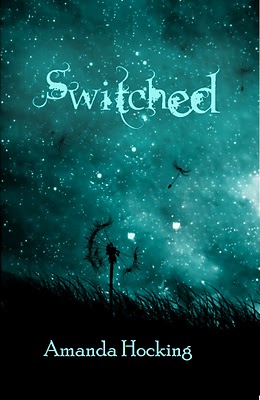 One more surprising thing about Hocking's success is that it's happening on the Kindle. The reason I say that this is surprising is that the official target market of her books seems to be teenaged girls, yet according to a recent Nielsen poll, only 12% of Kindle users are under the age of 18, and users are about equally balanced between males and females. Were the majority of those one million plus book sales to the 6% of Kindle readers who are female and under age 18? Probably not. Harry Potter and the Twilight series had huge adult audiences, and the people reading about teenage paranormal romance in this case seem to be mainly adults, and presumably mostly female. This begins to shed more light on both Hocking's and Meyer's success, because to the best of my knowledge, English-speaking, adult, female romance fans are the most prolific readers on the planet. It's a damn nice audience if you have the kind of imagination that naturally taps into it.
So what can we other writers learn from Hocking if we want to see success in finding an eBook audience? Well, a few things come to mind: Find your natural demographic. Write a lot. Get your work out there. Work tirelessly. Make your story yours even if it taps into an existing readership. Worry more about connecting with a good story than about publishing method, presentation, or promotion.
For what it's worth, the authors I know personally who have done fairly well with eBook novel sales are also people who seem to be following these kinds of approaches, except that in the cases I've seen they are much more polished in their presentation than is Hocking.
That's about it for light I can shed on the subject at the moment, but there's probably much more we can learn from Hocking, and links to posts that delve into that would be welcome in comments.
AND FixedAsOf IS NULL
April 28, 2011
Three Steps to Getting Paid for What You Love

I try to steer clear of posting a lot of personal theories here, but bear with me, because if I put together evidence from a variety of sources and make a leap of faith or two, I find myself faced with a pretty solid-looking explanation of how people succeed at making self-employment pay the bills, get new businesses to succeed, sell novels, and otherwise find ways to connect their passions with their paychecks.
It's three fairly simple steps–though unfortunately, this is one of those cases where simple and easy don't mean exactly the same thing. Are the steps readily understandable? Yes. Is there an excellent chance you and I can do them? Also yes. Would the process be quick and convenient? Hell no.
Step 1. Practice and get feedback
A huge body of solid research has been done on people who are exceptionally good at all kinds of things, from sports to music to business to law enforcement and beyond, and one of the conclusions that appears to be inescapable is this: people who get in tons of deliberate practice–that is, focused effort to improve with careful attention to results (see "Practice vs. Deliberate Practice" and "Do you have enough talent to become great at it?") get very good, and people who don't get in deliberate practice don't. To keep this post short, I'll let you investigate (or not) as you're inclined to, but in case you haven't already come across the information, I'd like to urge you to glance at the above articles and consider the books they point to if you are interested in being great at anything. Inborn talent is a misleading explanation we've come up with for a process that really isn't that mysterious.
Feedback is even harder than practice, because while you can simply decide to practice something, you can't force other people to carefully consider your work and give you their honest opinion of it. Too, most of the people who like you enough to do that are too biased to be able to provide an impartial opinion. However, feedback is essential in order to be sure you're practicing the right things and to tell you how far you're getting. It also makes the process of practicing much more compelling and fun (see "Flow: What It Feels Like to Be Perfectly Motivated" and "Some Steps for Getting into a State of Flow").
It's tempting to want to skip step 1. After all, it takes years to get really excellent at something. Fortunately, skipping is sometimes possible if your business or job doesn't require any special skills for the entry level. If you want to excel in retail sales or to work your way up the ladder in a business that always needs new people, you may not need to practice anything before you start: you can learn on the job.
However, if you want to live by writing novels or making robots or coordinating a fleet of moped couriers, you probably have some real study ahead of you–or if you've been practicing for years, already behind you.
Step 2. Choose something you love
If you're doing something for its own sake, then there will be rewards regardless of whether or not you're financially successful any time soon. You'll have reasons to keep with it through the hard times, you'll think about it more often (and therefore come up with better and deeper ideas about it), and you'll enjoy yourself even when no one is paying you. Since very often becoming successful enough to get paid at something means doing it for nothing or next-to-nothing for a quite a while first, this is a major advantage.
For one practical example of this idea (though applied to fitness rather than income), see "Finding Exercise You Love: The Taekwondo Example."
Step 3. Be willing to work at it for a long time
This may be the hardest part: say you've become really terrific at something and have found a way to combine a passion with an income opportunity. Many times, at this point, the money does not flow at the beginning. Sometimes it doesn't flow for years. Harry Potter and the Philosopher's Stone was rejected a dozen times before Bloomsbury bought it. (See accounts of other multiply-rejected successful authors at this link.) Founders of new businesses, unless they already have control over a lot of money, often have to work for a long time with no income to get to the point of viability, to say nothing of profitability. Artists, like musicians and novelists, often have even longer to wait.
In 1983, actor Jim Carey reportedly wrote a check to himself for ten million dollars–and postdated it ten years in the future. This is the kind of commitment and long-term thinking that tends to foster a certain amount of success. Doing a very good James T. Kirk impression also doesn't hurt.
Yes those who don't persist hardly ever triumph. Business is difficult. Writing a good novel is difficult. Convincing people that you should be their massage therapist is difficult. Those who don't continue to believe in themselves and what they're doing, persisting because they love their work and knowing they have something worthwhile because they've gotten feedback on their practice efforts, can stay in the game long enough to actually make it work.
It's true, of course, that some people get discovered in Hollywood the week after they roll into town; some novelists get big deals from publishers as soon as they finish their first books; and some businesses start making real money right out of the gate. Sometimes time isn't necessary. However, those are the exceptions: the Steve Jobs and Stephen Kings of the world didn't find instant success, and we're not likely to either. But if we're doing something well, something we love, then we can afford to wait.
Photo by eszter
April 25, 2011
Why Do Different People Like Different Things?

The answer to why different people like different things might seem obvious: people are just different; their brains are just wired differently. And certainly there's a lot to that, especially with evaluating complicated things like novels or other people's personalities. But what about our reaction to new experiences that don't fit into predefined preference categories for us–a completely new food, say, or a style of clothing, or a different kind of music? Do we learn these preferences, are they innate, or do we somehow choose them? And if we choose them, why do we make the choices we do?
Here's a recent, trivial example from my own life: I've never liked black jelly beans, although I would eat them from time to time if they came mixed in with fruit-flavored jelly beans. But the other day my girlfriend, whom I admire a lot and whose tastes are so close to mine that we usually order each other's first or second choices in restaurants, said that she loved black jelly beans.
The next time I ate a black jelly bean, I had this in mind–and it was delicious. I don't even mean that I just had happy thoughts while eating it and enjoyed those: I mean that my sensory experience of the jelly bean was more pleasurable.
It's a small change, something that was close to neutral for me became mildly pleasurable–but it's interesting that the only thing that altered to effect that change was my attitude toward black jelly beans. Their chemistry and my physiology were unaltered. How much of what we like is based on what we're thinking as we experience it?
Professor Jane Wardle of Cancer Research UK has studied one aspect of this question through children's eating preferences, reportedly concluding that while children's tastes in meat and fish seemed to be mostly inherited, tastes in other kinds of foods had much more to do with environment. Unless our taste buds themselves change in response to environment (which of course might be a possibility), our own thinking seems to determine a lot about our likes and dislikes.
All of which may be a huge yawn to you. If our likes are influenced by our thinking, so what? But there's a useful lesson here: if our likes are influenced by our thinking, and if we can change our own thinking patterns by conscious choice (which we can–for instance, see articles on this site on the subject of idea repair), then apparently we can alter some of what we like and don't like by conscious choice.
I don't know how far this conscious influence of likes and dislikes can go, but consider the applications: enjoying a job more, preferring healthier foods, or having an easier time with unpleasant but necessary tasks. Influencing our own likes–perhaps through approaching an experience with an unusually open mindset and being willing to interpret sensory input as pleasurable whenever possible–can (it would seem) lead to greater happiness, productivity, and health.
In a way this is just another perspective on how thoughts influence emotions, and I don't know whether for you it will be a particularly useful one or not. For me, though, a whole lot more delicious jellybeans just came into existence, and that's not a bad thing.
Photo by Grim…
April 17, 2011
The Strongbow Publishing Saga: Part II
Judson Roberts is a former organized crime prosecutor and current full-time writer living in Texas. His series of historical novels set among the Vikings, The Strongbow Saga, was originally published by HarperCollins and is now finding even greater success published through Roberts' own Northman Books. This Codex Blog Tour interview follows up on an earlier interview about the writing of the books, following the Saga's sometimes difficult path through the publishing world and out the other side to readers. It was preceded by part I.

Has it been a great advantage to have an existing readership or fan base for the series? Are there other advantages you felt you had, coming into the self-publishing arena? Any special disadvantages?
"This sudden upward jump"
When we're talking about the first two books of the series that were taken out of print by HarperCollins, whose rights reverted back to me, and that I republished myself, I'm not sure to what degree, if any, having an existing readership or fan base was a measurable advantage. Existing fans of the series who had already read books 1 and 2 aren't likely to be the purchasers of the new editions of those same volumes. But since they were republished in December, sales of those two books, in their new Kindle editions, have taken off to a really surprising degree─and sales of the Kindle edition of book 3, which HarperCollins still owns the rights to, have increased along with them. So the real question is when I did republish books 1 and 2, self-publishing them myself through Amazon, what has caused this sudden upward jump in sales, after some years of very low figures while the same books were under HarperCollins' care?
And to be perfectly honest, the answer is that I don't know. Over the years, the books─and especially Viking Warrior, book 1 of the series─have accumulated a significant number of 5 star reader reviews on Amazon. I have to think that that strong base of positive reader reviews helps sell the books to new readers. But that doesn't explain how or why so many potential new readers are now going to the books' pages on Amazon, where they may be influenced by the reviews there.
"Low e-book prices boost sales"
There are several reader reviews of Viking Warrior that specifically recommend the series to readers who enjoy Bernard Cornwell and Conn Iggulden, two very widely read authors of historical fiction. In recent months Amazon has apparently linked the Strongbow Saga in their search engines and customer recommendations to those authors, plus some other popular historical fiction writers, so I suspect that kind of product recommendation is sending many prospective new readers to the series. And finally, there is the issue of pricing. Like most traditional publishers currently are doing, when HarperCollins owned them they priced the e-book versions of all three books close to the cost of print versions (and the e-book edition of book 3 is still priced that way). Publishers do this because they fear that if they price e-books too low, e-book sales may "cannibalize" sales of print editions, on which the publishers make a majority of their profit. But the conventional wisdom espoused by authors who have considerable experience self-publishing through Amazon and other e-book venues is that lower priced e-books sell much better, and the higher sales volumes generated by low pricing more than compensates for the price differential, particularly when Amazon's 70% royalty rate to authors is factored in. In accordance with that theory, I priced my new e-book editions low, and the greatly increased sales volume they are experiencing would certainly seem to support the argument that low e-book prices boost sales.
But to reiterate, I really don't know exactly what factors have raised a series that was given its last rites and declared dead by its original publisher not only back to life but to a new level of popularity that it had never achieved before. Maybe it's just fate─that would certainly be fitting for a series about the Vikings.
In that case, what will be your strategy going forward? Are you just concentrating on the short term for now, or are there things you're doing for the long-term success of your career, too?
"Long-time fans have been kept waiting too long"
I guess I'd answer that by saying I'm focusing on the short term─meaning by that what I hope to achieve over the course of the next two to three years─but my short term plan should have long term effects. My most immediate goal is to write book 4 of the Strongbow Saga, and publish it myself in e-book and print format. Long-time fans of the series have been kept waiting for the next installment of the story too long, and now that Amazon has made self-publishing such a viable and potentially profitable option for authors, there is no reason to delay further.
"A specialized agent is still needed"
Another short term career goal is to try and get HarperCollins to release the rights to book 3 back to me, so that I will own the entire series. Considering how badly they mismanaged the books, it's galling that they still control one book in the series. Once I achieve that, I plan to look for an agent who specializes in foreign and subsidiary rights. Although I can now handle getting the series out in English language print and e-book formats─and through Amazon, can sell the English language e-books internationally, reaching markets they've previously not been able to touch─I'd still like to make the books available overseas in translated versions, so readers in Europe and other areas can read them in their native languages. I'd like to make audio book editions available, too, and of course would love to see the story on film, if possible. All of those things are the kind of subsidiary rights a specialized agent is still needed for.
Once I finish writing and publishing book 4 of the series, I intend to return to The Beast of Dublin, the stand-alone historical thriller that's set in Ireland about five years before the Strongbow Saga begins. It sets up a new character who will play a major role in the fifth and final book of the Strongbow Saga, so it needs to be completed, too. At this point in time, I'm leaning toward self-publishing it, too, but so far am willing to keep my options open.
My last career goal, for the short term, is writing book 5, which will wrap up the Strongbow Saga. After that, who knows?
April 15, 2011
New, Free Flash Fiction eBook: 17 Stories About the End of the World
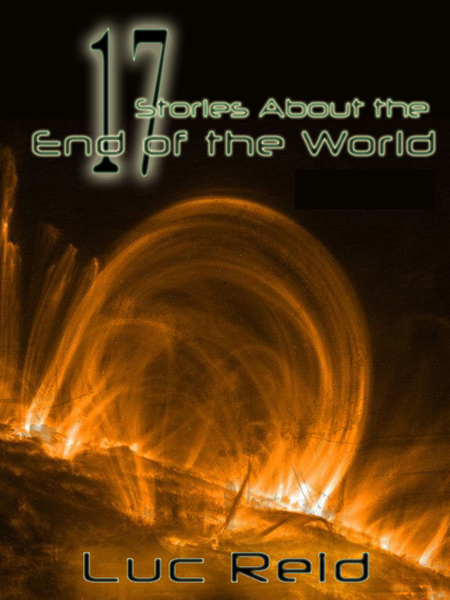
I have a hard time figuring out how the world will end. War? Plague? Alien invasion? Robot insurrection? The gods getting bored? A gentle fade? Cosmic disaster? The possibilities are not only varied, they're also interesting. If it's the last day ever, do you reveal your secret crush? What do you do in the last 5 seconds of your life? What if your band's first good gig ever has been interrupted by the robot insurrection and a little girl wanders into the bar after everyone's run away in panic–do you give her pineapple juice? These and other questions kept charging my subconscious with stories I needed to write about the end of the world, and 16 such made their way into my book Bam! 172 Hellaciously Quick Stories for Kindle and other eReaders.
My new, free, eBook, 17 Stories About the End of the World, offers those 16 plus a new one ("The End"). Well, I say free: you can get it for free on Smashwords or for 99 cents on Amazon (authors aren't given a way to offer a book for free on Amazon, but if you put it up for a price on Amazon and for free on another eBook site, Amazon will sometimes drop the price to free, though it's hard to say why that should be the only way to do it).
I also plan to offer the book for free on this page: watch this space!
Quinn Reid's Blog

- Quinn Reid's profile
- 6 followers

