
Đỗ Hồng Ngọc's Blog, page 109
May 6, 2015
“Mới Hôm Qua Thôi”: ONLY YESTERDAY (lời Anh)
6.5.2015
Thư gởi bạn xa xôi,
Bạn nhớ Hồ Đắc Đằng không? Anh bạn đồng khóa y khoa Saigon với bọn mình (1962-1969), một cây piano nổi tiếng của trường, nhớ không? Một hôm, Bác sĩ Đằng nghe được bài hát “Mới hôm qua thôi” do nhạc sĩ Vĩnh Điện phổ thơ mình “Trong một nhà giữ lão ở Montreal” qua giọng ca của Vũ Hoành đã xúc động gởi email về mình (qua Nguyễn Kim Hưng)
(10.4.2015)
Ngoc oi ,
Dang day .
Toi khong chac cai nay den ban duoc , cai E mail ban cho toi may nam truoc no khong qua duoc . Neu qua duoc thi ban tra loi .
Toi duoc nghe cai bai hat tren You tube , tho DHN , nhac Vinh Dien ; ca si Vu Hoanh . Toi thich cho den doi , toi dich ra English cai lyric cua ban cho cac ban My cua toi o day . Ban co the nao lien lac voi anh Vu Hoanh xem anh co the hat cai Lyric English chang . Cac ban My cua toi o day se mung lam . Neu hat duoc , ban nen de len You tube cho English speaking folks thuong thuc luon .
Hồ Đắc Đằng ơi,
Mừng quá, được email của bạn. Bọn này , DHNgọc, TTMinh… đi cafe vẫn nhắc bạn luôn đó chớ!
Bài thơ “Trong một nhà giữ lão ở Montreal” mình viết năm 1993, khi ghé Montreal, mới đây nhạc sĩ Vĩnh Điện phổ, đề nghị đổi thành Mới Hôm Qua Thôi đang có trên Youtube, và chỉ trong một tháng đã thấy có trên 30 ngàn lượt truy cập!
Moi Hom Qua Thoi có lời tiếng Anh của bạn nữa thì quá tốt! Mình sẽ liên hệ với anh Vĩnh Điện nhờ ca sĩ Vũ Hoành hát bản tiếng Anh của bạn.
Đỗ Hồng Ngọc.
…………………………………………………………………………………..
Ngoc oi ,
Dang day .
Mung qua , nhan duoc thu ban . Cam on thang Hung mu qua .
The nay nhe , day la cai ban dich cua toi gui cho nhom ban My , ca cai thu ngan cua ban va bai hat :
In December 1993, in snow-blanketed Canada, I visited a Montreal Nursing Home ,along the St Lawrence river . Canada has a very good health care system for the elderly , possibly the best in the world. My heart , however was heavy when I was exposed to the human condition of aging . Outside was such a peaceful stillness of an uninterrupted , immense white space .
I wrote a few sentences , in fact , just as a wandering pen , to acknowledge the moment : my first hand feeling of life in a nursing home in Montreal , along a snow covered river .
Twenty years later , , a musician , Vinh Dien , sent me the song with the lyrics from my poem of the nursing home in Montreal with the suggestion to change its title from “ A poem from a nursing home in Montreal “ to “Only yesterday “. I listened , stunned . Only yesterday . That ‘s it . With the singer passionate voice, with its illustration and lively music , I wonder if I should post this to share with friends . Some have suggested that it would be too sad to be reminded about an unwelcome reality for all of us .Some thought it would be good to be reminded about a universal reality . Hence , it is up to you , with an open heart , to decide .
Kindly , to all.
Do hong Ngoc .
…………………………………………………………………………………………
14.4.15
Ngoc than men,
Hay qua , hay qua .
Toi hom qua , toi ngoi truoc cay dan , khong choi duoc bai gi khac ngoai tap di tap lai cai ban Moi Hom Qua Thoi cua ban va nhac si Vinh Dien . Toi me man , say me . Toi pho nhac cho ben ban tay trai . Cau ma toi say me nhat lai la cau chot , bat dau bang Sol cua tay mat . Ca nha di ngu het , chi con toi voi cay dan . Tuyet voi . Toi thu hat theo , ( tieng Viet ) . Khong duoc , khong hay bang anh Vu Hoanh . Cai cau chot “ Ngoai kia , tuyet bay trang xoa , Ngoai kia dong song menh mong , menh mong “ , hai tay toi nhe nhang tren phim dan ma toi chay nuoc mat . Toi luc nay de cam dong lam . Ngoi meditation ma mim cuoi voi chay nuoc mat la thuong . Khong duoc dung voi tinh than an tru cua thien lam . Biet sao , minh chac con mot chut nghe si trong mau day Ngoc a .
Sau day la cai lyric English toi thu de vo cho bai tiếng Viet cua ban (…)
…………………………………………………………………………………………………………………
Đằng ơi,
Bọn mình bây giờ đều vậy, ai cũng cảm xúc tràn trề. Carl Rogers đã nói khi ở tuổi 80, tưởng già thì lạnh lùng, lãnh đạm, nhưng không, càng già cảm xúc càng trào dâng. Nên không lạ, bạn đã nghe tiếng Như Lai (Tathagata/Thusness) rồi đó “Ngoài kia tuyết bay trắng xóa/ ngoài kia dòng sông mênh mông mênh mông”… Không Tử cũng nói: Trời có nói gì đâu!? (Thiên hà ngôn tai) nhớ không?
Đằng ơi, moi đã gởi toi bản ký âm của NS Vĩnh Điện, có thể nào ghi luôn English lyric vào ngay trong đó không? Moi không rành vi tính. Nhưng thôi, để moi chuyển anh Vĩnh Điện để nếu được thì hy vọng phổ biến rộng hơn (cho các bạn người nước ngoài và người Việt mình, thế hệ thứ hai, không rành tiếng Việt!).
Anh Vĩnh Điện hứa sẽ nhờ Vũ Hoành hát rồi đó.
ĐHN.
……………………………………………………………………………………
28.4.2015
Ngoc oi ,
Dang day .
Day la cai ban nhac “ Moi hom qua thoi “ voi loi Anh toi tam dich . Toi co gang de tung chu vo tung note nhac . Anh Vu Hoanh se tu tien chuyen bien neu can cho no nhip nhang theo tieng nhac . . .
Ban gui loi toi tham hoi 2 anh Vinh Dien va Vu Hoanh . Sao tu nhien toi lai co mot moi tinh cam moi voi 2 nguoi ma toi chua he quen biet nay . Vui qua Ngoc oi . Dung nhu Einstein noi , minh cang vui hon khi minh noi rong cai “ circle of family “ ma minh bi cai self cua minh no bop meo nhu qua mot “ optical illusion “ .
Thuong ban qua . Cam on Hung mu , cam on Vinh Dien , Cam on Vu Hoanh . Ban co nho ai noi “My family now is all beings , my home is earth ,my position is that of a monk who depend on the generosity of others “ ?
Dang
……………………………………………………………………………………………………………………………………….
Và, như bạn thấy đó, sáng nay, 6.5.2015, nhạc sĩ Vĩnh Điện đã gởi mình khúc hát bằng tiếng Anh này qua giọng ca sĩ Vũ Hoành. Bạn thử nghe xem sao nhé.
Trân trọng cám ơn Vĩnh Điện, Vũ Hoành, Hồ Đắc Đằng, Nguyễn Kim Hưng và tất cả…
Thân mến,
Đỗ Hồng Ngọc.
Vĩnh Điện
Wed, May 6, 2015 at 2:06 AM
Clip “Only Yesterday”


May 5, 2015
Đọc “CÓ MỘT CON MỌT SÁCH”
của Đỗ Hồng Ngọc
Huyền Chiêu (Nha Trang)
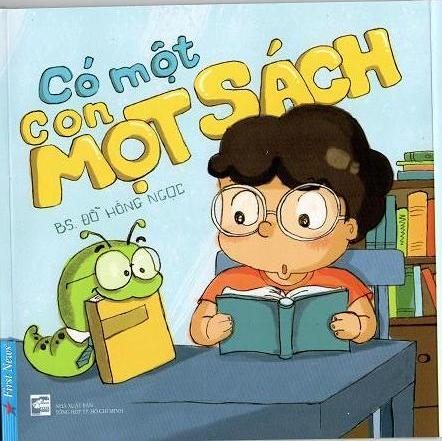 Sắp đến hè, vào nhà sách tìm mua vài quyển truyện cho cháu, tôi thật vui khi bắt gặp trên kệ sách một tập truyện mỏng dành cho trẻ em của Bác Sĩ Đỗ Hồng Ngọc.
Đã từng đọc những tác phẩm rất đáng yêu của ông dành cho những người đang bâng khuâng lìa xa tuổi trẻ để bước vào tuổi chớm già, đã từng cảm thấy an ủi khi đọc những bài viết cổ xúy cho một tâm thức sống trẻ vĩnh viễn cho những người sắp vĩnh viễn lìa xa cõi đời, tôi hồi hộp chờ xem ông có thể nói gì với những em bé lên tám lên mười…
Sách có bìa thật đẹp. Khen cho họa sĩ trình bày khi vẽ chú bé đang ngồi đọc sách có chiếc mũi của pinocchio, nhưng rõ ràng mái tóc và chiếc gương cận thị đích thực là hình ảnh của tác giả Đỗ Hồng Ngọc hồi còn bé.
Bên trong sách là 7 câu chuyện kể vô cùng hấp dẫn cho trẻ em lẫn người lớn.
Đọc xong tập sách, tôi nghĩ thật đáng tiếc cho trẻ em khi Đỗ Hống Ngọc không làm thầy giáo làng mà lại đi làm Bác sĩ.
Ông thật sự là một nhà giáo dục tuyệt vời, một nhà tâm lý sâu sắc.
“Có một con mọt sách” là tựa của câu chuyện cổ tích đầu tiên.
Con mọt sách, trước vốn là một cậu bé ham đọc sách. Cậu mê đọc sách mà quên cả giữ gìn sức khỏe cho mắt
“Đêm trăng sáng đã đành mà đêm trăng mờ cũng mang sách ra đọc ngoài hiên…”
“mới đầu còn ngồi ngay ngắn trước án thư, sau nằm dài trên chỏng mà đọc..”
Thiếu nắng, thiếu gió cậu bé trở nên gầy ốm xanh xao và sau khi bị cha cấm đọc sách :
“Sinh lén cha trùm kín mền giả bịnh mà đọc”
Tất nhiên là mắt của cậu bé yếu dần và cậu phải dán mắt vào trang sách mới đọc được.
Một đêm, dưới ánh trăng hạ tuần vàng vọt, cậu bé đang nằm bẹp trên trang sách, người bổng thu nhỏ dần thành một con mọt mãi mê bò trên đống chữ.
Tác giả muốn dạy cho các bé phải biết đọc sách nơi có đủ ánh sáng, trong tư thề ngồi ngay ngắn và đọc có chọn lựa, không bạ thứ gì cũng đọc. Nhưng nói như thế thì có khác gì lời dặn dò của thầy cô giáo ở trường. Mà trẻ em thì rất hay quên lời thầy cô. Nếu biết vâng lời thì không đến nỗi hiện giờ có đến gần một phần ba học sinh trong một lớp phải mang gương cận. “Thầy” Đỗ Hồng Ngọc đã dùng thủ pháp “hăm dọa”. Trẻ em có óc tưởng tượng vô cùng phong phú, hay tin vào chuyện đòi xưa hơn lời nói của cha mẹ thầy cô và nhất là hay… sợ.
Chúng sợ… ông ngáo ộp, sợ ma, và sợ mình biến thành con sâu, con bướm, con dế, con cào cào… và khủng khiếp biết bao khi mẹ mình không nhận ra mình còn mình thì không thể kêu lên “mẹ ơi con đây nè…”
“Cá bảy màu” kể lại chuyện 7 hoàng tử cá tìm cách trổ tài để vua cha nhường ngôi.
Hoàng tử út xuất hiện sau cùng và có vẻ không muốn tranh đua cùng các anh. Sau khi được hoàng hậu hỏi han và thúc giục chàng mới lúng túng cho biết vừa qua chàng chu du tới một nơi xa lạ và ở đây chàng gặp một loài vật hung ác. Chúng có cánh bay đi hút máu người, và truyền bệnh làm chết nhiều trẻ em. Quái vật này đẻ trứng dưới nước và chàng đã tiêu diệt bọn chúng khi chúng nở thành những con sâu bơi lăng quăng.
Cả triều đình hoan hô và tất nhiên chàng được vua cha trao cho ngôi báu.
Diệt muỗi bằng cách diệt bọ gậy (lăng quăng) là điều các em cần nhớ.
Trong câu chuyện này Tác giả đánh vào bản chất mơ làm hiệp sĩ, giữa đường thấy chuyện bất bình chẳng tha của trẻ em.
Chẳng phải tất cả trẻ em đều yêu chàng Thạch Sanh chém chằng và ghét gã Lý Thông gian trá?
Trẻ em yếu đuối là thế nhưng luôn mê say những cuộc phiêu lưu, những chuyến đi thật xa một mình, không có mẹ bên cạnh như Remi trong Vô Gia Đình, như Thằng Người Gỗ, như Sinbad….
Biết quá rõ điều này “thầy” Đỗ Hồng Ngọc đã kể cho các bé nghe cuộc phiêu lưu kỳ thú của chú lãi đũa từ khi còn là một cái trứng bé xíu cho đến khi biến thành một chú ấu trùng (vẫn nằm trong vỏ trứng) được đem ra chợ bán kèm với cọng rau mà chú cố bám chắc vào (truyện Một cuộc du lịch kỳ quái). May mắn là cọng rau ấy là rau ăn sống chứ không phải rau luộc. Một cuộc phiêu lưu kỳ thú đưa chú lãi con từ dạ dày sang ruột non, theo tĩnh mạch vào đến gan rồi từ gan bơi lên phổi. Không khí trong lành ấm áp ở phổi không dừng được bước chân giang hồ của lãi và chú tiếp tục nhoi lên cổ họng để được một lần nữa lọt xuống dạ dày. Bây giờ chú đã an cư, lạc nghiệp ở ruột non và
“Chú bèn lập gia đình và tiếp tục đẻ mỗi ngày hai trăm ngàn trứng lãi”
Ghê quá!
Bài học về cuộc đời của con lãi thì trong sách khoa học đã có nhưng học trò học mãi không thuộc. Cám ơn “thầy” Ngọc đã có cách dạy khác đi để học trò không học vẫn thuộc bài.
Các bài học trong “Có chí thì hư”, “Cái mũi để chi”, “Nghỉ hè, nên làm gì” cũng là những bài học nhẹ nhàng thú vị mà trẻ em chắc chắn không mệt mỏi khi học.
Tôi thì thích nhất chuyện “Giếng nước mùa Xuân” vì chuyện này “thầy” muốn dạy các bậc cha mẹ nhiều hơn dạy trẻ em.
Muốn cho con cái khỏe mạnh và nên người thì nên tập cho con được sống như…con nhà nghèo.
Đứa bé phải biết đói thì mới biết “khoai lùi bếp nóng ngon hơn là vàng (*) Đứa bé phải thích lao động chân tay, phải biết xách nước, bửa củi, phải được chạy nhảy nơi núi đồi, được tắm ánh nắng chói chang, hít thở khí trời trong sạch.
Để khỏi ốm o gầy còm, chán ăn biếng ngủ, để khỏi béo phì, mê ăn mê ngủ nhưng lười vận động, lười học, đứa bé phải cảm thấy cái hạnh phúc được … đi chăn trâu.
“ai bảo chăn trâu là khổ
Chăn trâu sướng lắm chứ
Ngồi mình trâu phất ngọn cờ lau
Và miệng hát nghêu ngao” (*)
Miển là:
“Vui thú không quên học đâu” (*)
“Thầy” Ngọc nhắn nhủ:
“siêng năng, cần mẫn, không ỷ lại, lười biếng… Sức khỏe là vốn quý nhất không thể mua được bằng vàng bạc, gấm vóc, bằng sức mạnh quyền uy…”
Và cha mẹ cũng phải biết tu nhân, tích đức để xứng đáng làm bậc sinh thành của đứa con hoàn hảo về thể chất lẫn tinh thần.
Điều giản dị như thế nhưng thực ra rất khó thực hiện trong cuộc sống bề bộn, quay cuồng của ngày hôm nay.
Cám ơn tác giả của tập sách mỏng nhưng gói ghém rất nhiều bài học tưởng rằng giản dị nhưng vô cùng cần thiết dành cho các bậc cha mẹ và các bé con thân yêu.
Cũng xin cám ơn họa sĩ Đỗ Đức Thuận đã có những bức tranh minh họa thật dễ thương làm cho tập truyện vô cùng ấn tượng..
Đọc xong tập truyện, tôi tiếc rằng thời tôi còn bé, tôi không được cầm trên tay một tác phẩm cho trẻ em đẹp và hay như thế.
(tháng 5- 2015)
(*) trong bài hát “Em Bé Quê” của Phạm Duy
April 22, 2015
“Có một con Mọt Sách”

Cuốn sách mới in xong ngày hôm qua, còn nóng hổi, dành cho các bé thiếu nhi mùa hè này.
Thực ra đây là những chuyện kể tôi viết cho trẻ em trên một tờ báo Thiếu Nhi từ … 30 năm về trước, nhưng nội dung vẫn còn rất thời sự, nay có dịp được in lại thêm phần hình ảnh minh họa sinh động của các họa sĩ. Đây không phải là “truyện tranh” mà là “tranh truyện” dành cho bạn đọc từ… lớp 1 đến sau đại học vậy.

 Cảm ơn Hội quán Các Bà Mẹ đã tình cờ tìm thấy bản thảo này và có nhã ý đưa in thành tập sách đẹp trong “Tủ sách cho con” – phối hợp với Nhà xuất bản Tổng hợp TpHCM và Công ty Văn hóa Trí Việt (First News) ấn hành 4.2015 nhân Ngày đọc sách, với ước mong ngày càng có nhiều những con Mọt Sách.

Tôi cũng không quên cảm ơn bác sĩ Nguyễn Vũ Minh Trang, người học trò thân thiết đã nói hồi lên 9 tuổi, cô đã trở thành một con “Mọt sách” từ quyển sách cho thiếu nhi này đó vậy.
Thân mến,
Đỗ Hồng Ngọc.
April 16, 2015
“Thân Tâm Thường An Lạc”
 Bạn thân ơi, Năm Còn Mới nên Ban Phật Học chùa Xá Lợi mời tôi trình bày đề tài “Thân tâm thường An lạc” như một lời chúc Năm Mới gởi đến các bạn bè thân thiết gần xa. Chúng ta vẫn luôn chúc nhau đó thôi, nào “Thân tâm thường An lạc”, nào “Vạn sự như ý” v.v… đặc biệt vào những ngày Tết. Thế nhưng, ta vẫn biết, Thân thì bất tịnh, Tâm thì vô thường… làm sao mà “An lạc” đây? Hơn hai ngàn năm trăm năm trước, Tu-Bồ-Đề hỏi Phật: “Làm thế nào để an trụ tâm? Làm thế nào để hàng phục tâm?” (Vân hà ưng trụ? Vân hà hàng phục kỳ tâm?), câu hỏi như vẫn còn văng vẳng đâu đây trong một thế giới phẳng, toàn cầu hóa đầy những bất an, căng thẳng… hôm nay.
Cho nên, nếu có rảnh chút, thử nghe vui!
Thân mến,
Đỗ Hồng Ngọc
(04-4-2015)
April 15, 2015
Một tuổi già hạnh phúc (tt)
 Thời buổi bây giờ người ta còn dễ điếc hơn xưa. Nhạc xập xình ầm ỉ với công xuất lớn ở các tụ điểm ca nhạc, rồi đám cưới mở hết volume, “hát với nhau” ầm ỉ chịu không nổi. Đầu váng mắt hoa lùng bùng lỗ tai nên người già trốn biệt. Nhưng ngày nay điếc ngày càng… trẻ hóa! Nghiên cứu cho thấy “nhóm trẻ” 40-59 tuổi ở Mỹ đã có…35% kêu gặp khó khăn khi trao đổi qua điện thoại; 24% hiểu sai, dẫn tới hiểu lầm; 9% cảm thấy cô độc gần như bị cách ly vì tai kém.
Kinh nghiệm là nếu bị lãng tai, đừng buồn! Ai biểu… già chi! Già thì nó vậy. Đâu phải chỉ mình ta. Tai kém mắt kém, cái gì cũng kém. Già mà tai thính, mắt tinh hoài thì ai chịu cho nổi!
Nếu lãng tai, trong giao tiếp, cứ thẳng thắn: “Tai tôi hơi điếc, làm ơn nói to chút”.
Đừng ngượng. Chẳng ai trách gì đâu!
Nhớ đừng quát to “Cái gì?” mà nên lặp lại điều đã nghe, người kia thấy mình trật sẽ nói lại cho rõ thôi!
Cần thì bảo “ vui lòng nói chậm rãi chút, tai tôi hơi điếc”, vì ở người cao tuổi, các âm thanh thường dính nhau, khó phân biệt. Người kia sẽ lặp lại, sẽ dùng từ khác dễ hiểu hơn, hoặc dùng từ địa phương càng tốt.
Chú ý nét mặt, ánh mắt, nét môi người nói, hoặc cách họ ra dấu sẽ giúp dễ hiểu.
Riêng với con cháu trong nhà có cụ già, khi tiếp xúc với các cụ đừng xuất hiện đột ngột dễ làm họ giật mình. Nên đánh động, tạo sự chú ý trước khi xuất hiện. Giữ khoảng cách đủ gần để giúp họ dễ thấy dễ nghe. Đứng đối diện, ngang tầm mắt, nơi có ánh sáng tốt để các cụ có thể đọc được sự máy môi. Đừng nói to tiếng. Đừng hét vào tai. Các cụ sẽ kêu: “Tao có điếc đâu!”…
Nếu các cụ có mang máy nghe, phải chắc là máy đã mở, còn pin, đang hoạt động tốt.
Nên dùng những từ đơn giản, câu ngắn gọn. Lặp đi lặp lại nếu cần. Mỗi lần chỉ nói một ý, một việc. Nhiều thông tin một lúc, dễ bị “nhiễu”, vì các cụ không thể “nắm bắt” hết được!
Dặn dò điều gì thì nên nhắc lại các ý chính. Tốt nhất ghi ra giấy. Chữ phải rõ, to, chân phương, dễ đọc. Thường các cụ không tiện hỏi lại vì ngại. Hỏi lại chứng tỏ mình tai điếc, đầu óc lẩm cẩm sao! Thông cảm nếu có sự nhầm lẫn, sai sót, quên trước quên sau. Nếu cần, nhờ người nhà, người chăm sóc các cụ “phiên dịch” giùm vì họ đã quen.
BS Đỗ Hồng Ngọc.
Bản tiếng Anh: GƯƠM BÁU TRAO TAY (tiếp theo)
 HANDING DOWN
the
PRECIOUS SWORD
(Do Hong Ngoc, MD
English translated by GT Dieu Hanh)
2. Handing down the precious sword
Subhuti, sitting among the assembled peers, suddenly leapt up: “It is very rare, World Honoured One! How well the Tathagata protects and thinks of all Bodhisattvas, how well He instructs all the Bodhisattvas!”
At this point, I was again more perplexed. Subhuti is no stranger! He is one of the ten great disciples of the Buddha, an arahant, famous for his delight in living alone, foremost in Emptiness. Nonetheless, he spoke as if… he was jealous of the Bodhisattvas… “You, Bodhisattvas, be ‘joyous’ for Lord Buddha has ‘favoured’ you and devoted his teachings to you this day!” “He minds you, protects and instructs you so earnestly as if He had never taught, entrusted, nor guided you, his greatest and closest disciples, before!” At first I was aghast, then it dawned on me that things were not as they seemed. Arahants, Worthy Ones, had attained the state of no-rebirth, how can they be jealous and give birth to such a mental affliction? Maybe here is an important teaching, dedicated especially to the bodhisattvas– enlightened beings who choose to remain sentient in this world, and who are ready to plunge into the world of suffering in order to provide salvation for others. Among the attendees are confirmed bodhisattvas, as well as some (religious or laymen/women) newly generated Bodhicitta who are not yet enlightened beings but are available to assist others attain enlightenment, and apply the Buddha’s teachings and doctrines in the process. They formed a new generation of Buddha’s disciples at the time He taught the Diamond Sutra. It was a formation of Bodhisattvas aspired and ready to engage as life saviours to those in need.
Was it like:
The Emperor, handing over his precious sword, at midnight calls for war and sets the day?
“Chín tầng gươm báu trao tay / Nửa đêm truyền hịch định ngày xuất chinh” (Đoàn thị Điểm)
 A precious sword? Absolutely. The sword that was handed here was the sharpest, made of diamond, able to slice through all human suffering and destined misfortune of mankind. This task is entrusted to the “future” Bodhisattvas, the good men and women who aspires to throw themselves into life’s danger with zeal, eager to spread forth the liberating Dharma. As for the Worthy Ones who had eliminated all afflictions, who had laid the “burdens” down, it would also help that they chose to commit themselves to return to the samsaric world and continue upholding the Dharma source! I remember having read: “when the source is deep, the stream is long!” The source must be deep so for the stream to be long!
And what about going to war? The war here is not with other countries to defend one’s own or to occupy another but to be at war with ourselves, with the greed-aversion–ignorance foes inside each of us. Lao Tzu said: “those who conquer others are strong; those who conquer themselves are powerful”. It’s difficult to conquer oneself. One needs a precious sword for that.
The way Subhuti praised Buddha of “how precious, dedicated and mindful the Tathagata was taught to all the Bodhisattvas, protecting and instructing them so well” already expressed this. Nowadays, this is known as “creating motivation” as part of the participatory education. With the use of motivation, students study better, or else they might… fall asleep! Maybe everybody assembled there was just as stupefied, making them more open, more enthusiastic to absorb the teaching. Each of them vowed to strive to be a bodhisattva to deserve the Buddha’s protection and trust.
Subhuti then asked: “World Honoured One, if good men and good women want to achieve enlightenment, upon what should they rely? What should they do to control their mind?”
2500 years later, this question still resounds. Especially today when globalization and the “flat world” etc… have driven mankind to fierce disputes, struggles over power and interests that lead to wars, epidemics, and natural disasters… as we all have witnessed. Never men had been so “enflamed” and their minds so “wildly disarrayed” as much as they do now.
Indeed, to be enlightened, all you need is to focus on that mind. You must quiet it, subdue it and that’s it! Doing so one will be enlightened in the same way as Buddha did. As He said, ordinary people are not yet enlightened Buddhas, and a Buddha is an already enlightened ordinary man. That’s it. There’s nothing more. We need nothing more. All the disturbing elements in life, all sufferings and misfortunes come from that mind. One need only bridle it, pull it back, discipline it, coax it – in other word tame it as one would have tamed a wild horse or an angry bull— contain it somewhere and prevent it from wreaking further havoc!
Easier said than done. In fact, the mind is very difficult to control, train, subdue and settle. As powerful as Thai Thuong Lao Quân, and still was unable to discipline his riding bull from breaking loose from its cage and doing damage to the world! The bull used to smell Lao Quan’s magical medicine, which only made it even more violent! Even Tôn Ngô Không, with his 72 kinds of supernatural powers was sometimes desperate, helpless and had to ask Quan Âm Bodhisattva for help!
It is interesting to note here that Subhuti spoke of good men and women in general, and not of any men or women in particular. Firstly, they must be good, worthy. That is the primary condition to become a bodhisattva. The path leading to enlightenment recommended by the Buddha is an odd one, so strange but wonderful, hardly believable and certainly not an easy process to follow. That is why at the beginning, the Buddha hesitated a long time before giving his first sermon (turning the Dharma Wheel). It is clear today that Subhuti applied the technique of creating “motivations” to set a favourable environment for Buddha to pass on the precious sword. Another interesting point to note: there are no gender distinctions. Both men and women can become bodhisattvas! And think that this was 2500 years ago!
The Buddha answered Subhuti: “Well said, Subhuti. Well said. So it is, Subhuti, it is as you say. The Tathagata blesses bodhisattvas with the best of blessings and entrusts bodhisattvas with the greatest trusts…” How good to hear that! Even the Buddha had confirmed Subhuti’s foresight! How then would one dare be inattentive! The atmosphere of the assembly must have been different then, more conducive and ripe.
“You should therefore truly listen, Subhuti, and consider this well”. Listening is the first skill in the contemporary world of psychotherapy. To listen truly is not just to give ears carelessly or superficially, but to be attentive with all one’s mind, all one’s body. A good listener is someone who leans forward and looks the speaker in the eyes, nods his head in approval at agreeable points, ask questions when necessary and summarizes in his/her own words what was heard to confirm good understanding of the speaker’s intent. A good listener must be an understanding, emotional person. It is not surprising that in the Diamond Sutra, Subhuti, an arahant, who already attained the “no-rebirth” status, was still moved to tears! The word “truly” here also has the meaning of “examining/ scrutinizing thoroughly”, not just listening and trusting absent-mindedly. When we study Buddhism, it is interesting to note that the Buddha never imposed the teachings. He always said we must not believe immediately, but instead have to analyse, test and experience what He said for ourselves.
If we pay further attention still, we will see that the Buddha is speaking personally to Subhuti and only to him. “I shall tell you…” the Buddha said, which means “I shall not tell this to anyone else, because you are the one who knows how to ask important and ultimate questions. So I’ll tell only to you. Good men and women who want to achieve enlightenment should do things like this…like this”…
Just imagine how all of us would be attentive in this situation, how we all would prick up our ears in that forum! Everybody suddenly become astute eavesdroppers! Eavesdropping is a good way to… learn! The 6th patriarch Hue Nang naturally eavesdropped upon entering the temple, while daily pounding rice, cutting wood and cooking meals. Thanks to that, he immediately recognized that “fundamentally there is not a single thing” (Bổn lai vô nhất vật), while others remains lost in their quest. In classical text, when there is something secretive, private to share, one would say “This is how you do it … like this….” and that invites curiosity. Is that a special strategy the Buddha adopted to teach the Diamond Sutra? Are the Buddha and Subhuti playing their roles in the very modern participatory method?
Subhuti grinned widely: “Yes, yes, I very much wish to hear!”
3. It looks like that but is not the way it is
Subhuti respectfully asked two questions to the Buddha: “How can we rest our mind, how can we subdue our mind?” and the Buddha said: “There is nothing difficult there, the Great Bodhisattvas should subdue their mind this way, this way… Listen carefully. I shall tell you how”. Subhuti happily answered: “Pray, do, World-honored One. With joyful anticipation we long to hear.”
More than 2,500 years later, more so now we very much long to hear and prick our ears to listen, because man has never lived so much in fear, anxiety and stress as we do now within the scope of global conflicts, epidemics, natural disasters and the like! Man is infected with various diseases which modern medicine cannot heal just yet! So many different kinds of diseases manifests around us, one induces another because their roots are not to be found in our body! We go to see every kind of doctors eventually ending up resorting quack specialists. An abundance of drugs are available like anti-depressants, sleeping sedatives, anxiolytics, even very potent drugs to help people disengage themselves from their thoughts and induce a temporary sensationless state just to provide momentary rest, peace and isolation from the taxing emotions and distress of anguish or fear.
The Buddha taught: How to control your mind? Where must your mind dwell? You only need to bring all living creatures of whatever class to the final extinction, to the unbounded liberation, Nirvana! But actually none of them was brought to the final extinction!
Oh my goodness! What a whirlwind! The Buddha continued on before one recovered from the first train of thought:
“Why so? Because no Bodhisattva who is a real Bodhisattva cherishes the conception of an ego, a personality, a being or a life span”.
Upon hearing this many listeners felt the contradiction to commit themselves further and they started to reconsider their idea of becoming Bodhisattva.
Even Subhuti cried out:
“I might easily understand the Buddha’s teaching, but in 500 years, what about the people of that time, will they be able to understand?”
The Buddha admonished him: “Subhuti, do not utter such words.”
This is because the Buddha has great faith in the future, as people are more likely to easier understand his teaching thanks to modern technology, mode of media communication, and so forth… though material improvements and life conveniences will be abundant… people will be more prone to suffer and their destructive emotions will also soar up! The Buddha added: “In the future, if someone hears this Sutra and is not frightened, or alarmed, or terrified, you should know that person is most rare”.
Half a century ago, Edward Conze (Ph.D. in Psychology and well-known Buddhist scholar who translated the Diamond Sutra into English) said that an intellectual theologian friend of his, upon reading the translation bewilderedly exclaimed: “It’s crazy! Utterly crazy!” But Edward Conze didn’t think this was crazy at all, on the contrary he affirmed that the results will be acknowledged through daily application of its principles!
Nguyen Du read the Diamond Sutra over and over, thousands of times, until he had the opportunity as Ambassador to make a trip to China. As he looked at Prince Luong’s stone terrace and its fading carved words, he lamented:
“Finally I understand that only wordless sutras are genuine teachings!”
(Chung tri vô tự thị chân kinh)
The ancients similarly attested: “We vow to understand the true meaning of the Tathagata’s teachings” (Nguyện giải Như Lai chân thật nghĩa).
Perhaps there is something … some secret here.
The Buddha said hat to discipline one’s mind, one must bring together countless types of beings – beings born from womb, from egg, from moisture or from transformation, beings with form or without forms, with perception of without perception, with neither perception nor non-perception… to the final extinction (of rebirth), to the Nirvana without exception. Then, although these countless, incalculable beings have been brought to extinction, in reality… no one been extinguished!
Up to now, we think that beings are animated things, inclusive of human beings, so if we bring every ‘being’ to extinction then whom are we left to live with? Some texts say that we must bring the totality of beings to extinction without pride on oneself, in so doing to achieve the magnanimous deed that is the way of a Bodhisattva.
Other texts have alluded to beings not as human beings or animated things but as thoughts, ideas, concepts!
To ordinary people as ourselves, the sentence “bring to extinction”, then moving toward Nirvana is somewhat terrifying! In fact, to bring people to extinction does not mean to kill them, but to bring them across the way to the other shores, i.e. to liberate them!
If we think it through, maybe the premise here is the word “being”. If we manage to decode it, we might perhaps open even the “Lost secrets of Martial Arts” (Càn khôn đại nã di tâm pháp) as Vô Kỵ (the knight errant of Kim Dung’s martial novels) did while he stayed in a deep crypt.
Once I talked to a monk regarding my question about “beings”, he answered briefly “those who depend on causes and conditions to come into being” and that was all he said. But to me that was enough, that was very clear; after long periods of searching and pondering, my concerns finally resolved. Now I understand why Zen masters used to demand that their disciples pound rice, fetch water and cut wood for many years without any semblance of teachings, until the disciple internalized a sense of maturity. Like in the old days when an apprentice wanted to learn from a master alchemist, the master would examine the disciple from every angle before proceeding to teach him skills on how to cut herbs, shed, pound and cook them… only after five to seven years would the disciple be allowed to check pulses and prescribe remedies because a minor mistake can be fatal! And when he succeeds, the master might even give him his daughter’s hand in marriage! So we can say that the context of “beings” here is not what we typically understand but refer to the causes and conditions linking up with one another and coming together, or coming into ‘being’, that is why we call them “beings”. As the chanced meeting ends, so does the act of ‘being’. In Buddhist studies we cannot rely on words alone, nor can we depart from them…
In the latter parts of the Diamond Sutra, it is said clearly that “the beings are not beings”. We are acquainted now with the “it is no…, therefore it is called…” phrasing in this sutra. This kind of saying, this unconventional, beyond-the-thinking language helps us to refute false tenets and to destroy concepts which have long been frozen in our cortex. To be liberated, a man must first free himself from his extremely solid concepts and perceptions into which, as in a spider’s web, he is entangled, caught up, hampered and unable to move.
Every branch has its own terminology that those within the same specialization can understand completely, unlike non-specialists who may not comprehend fully. For example, a large number of medical terms cannot be translated, and must be pronounced phonetically in their original forms in order to completely express their meaning (subtlety and all). That is why doctors used to add Latin terms when talking to each other, to the great confusion of their patients who don’t have the slightest idea of their meaning and subsequently get them all wrong and entangled in more confusion.
“Arisen from causes and conditions”, sentient beings differ greatly from one another. That is why they are innumerable. We ourselves also are a sentient being, a being constituted by the five aggregates (skandhas) combined together: Aggregate of Matter (or of Form), Aggregate of Feeling or Sensation, Aggregate of Perception, Aggregate of Mental Formations and Aggregate of Consciousness … In other words, our parents were “fated” [i.e when the causes and conditions were complete and linked together] to meet in order to… have us. In the case they were not “fated” to meet, “even face to face they could not see each other” (vô duyên đối diện bất tương phùng), we by no means can be here! And what about our grand-parents? If they did not happen to wonder once “Why did I meet this person? Are we fated to live a lifelong together?” (người đâu gặp gỡ làm chi, trăm năm biết có duyên gì hay không?), our presence here would also be highly improbable! Therefore we have the opportunity to inherit the genes of the entire clan, even those of our character, or those of asthma, of diabetes. The two H and O atoms are “bound to meet” so that different matters come into being, and if we add the C atom, sometime the combination of them would give rise to vinegar, some to alcohol. And if we are “bound to meet” with alcohol, not a few new beings will be “fated” to come to life! Let’s take anger, for example. Because of an offensive comment, we can react in explosive anger! A few harsh words are exchanged and soon a few problems spring into “being”! From words, these “beings” can easily come to blows. The anger, greed, sadness, fear and anxiety or stress are also “beings” which can wreak havoc in our mind and lead to endless flusters, afflictions, sufferings! Even those around us might be very sweet like angels in the morning, but easily turn to demons in the afternoon. And so can we, as the others see us!
“Tea, alcohol and females,
these few trifles are keeping me distracted…”
Một trà một rượu một đàn bà,
ba cái lăng nhăng nó quấy ta (Tú Xương)
Is it true that these “trifles” distract us? Not really! “The wind does not move, the flag does not move. Only the mind does” [said the 6th Zen Patriarch]. When our mind is peaceful, what can “distract” us? Should anger or sadness (or anything else) come into being, we only need to “extinguish” them all, to let go of them entirely and that’s it! The surface of a lake must be motionless for the moon’s reflection to hold. But that takes time. We have to train painfully for a long time, it will not do to rush progress. The word “extinguish” here does not mean to destroy but to put aside, or “not to let it come into being again”, or let it be in an “unborn state”. If we train skillfully, we can “extinguish all the sentient beings”, why not? To “extinguish all the sentient beings” also means that no sentient being has been extinguished, because if they no longer come into being, what is left to be extinguished?
But it seems that even this [explanation] doesn’t entirely make sense!
(continued)
April 14, 2015
Bản dịch Anh ngữ “Gươm Báu Trao Tay”
Bản dịch Anh ngữ Gươm Báu Trao Tay
(viết về Kinh Kim Cang)
Ghi chú: Năm 2003, tôi cho ấn hành cuốn Nghĩ Từ Trái Tim, viết về Tâm Kinh. Thật ngạc nhiên, nhiều bạn đọc gần xa rất chia sẻ, có bạn lại mong có được bản dịch Anh ngữ để cho con em họ – thế hệ thứ hai – ở hải ngoại không rành tiếng Việt được đọc và hiểu Tâm Kinh Bát Nhã. Đến năm 2008, sau khi nghiền ngẫm, thực hành Kim Cang, tôi cho ra mắt cuốn Gươm Báu Trao Tay, những cảm nhận và thực hành của mình về Kinh Kim Cang , như một sẻ chia của người Thầy thuốc nhiều năm “lên non hái lá” về chữa bệnh thân- tâm cho chính mình và cho bạn bè đồng bệnh tương lân. Hầu hết các bài viết này đều đã được đăng trên Tạp chí Văn hóa Phật giáo và sau đó thấy xuất hiện trên một số trang mạng Phật học. Vài năm trước đây, Ban Phật học chùa Xá Lợi cũng đã mời tôi trình bày một buổi cho các Phật tử tại chùa với đề tài “Vận dụng tư tưởng Kim Cang vào cuộc sống” rất được bà con hoan hỷ. Lại cũng có người mong được có bản dịch sang tiếng Anh quyển Gươm Báu Trao Tay cho bạn bè, em cháu đang sống ở nước ngoài được đọc. Có lần tôi thử đề nghị người bạn, anh TNL, đệ tử thầy Bhante Henepola Gunaratana đang sống ở Mỹ dịch sang Anh ngữ nhưng anh nói đọc thì hay mà dịch thì khó quá! Mãi gần đây, duyên lành, tôi được một độc giả đang sống ở Paris là GT Diệu Hạnh, tình nguyện dịch cuốn Gươm Báu Trao Tay sang tiếng Anh. Còn gì vui hơn! GT Diệu Hạnh là dịch giả chuyên nghiệp, lại là một Phật tử thuần thành, thường dịch thuật cho các buổi thuyết giảng về Phật pháp của các vị Thầy người Việt và các vị Rinpoche Tây Tạng khi đến Pháp. GT Diệu Hạnh cũng là người cùng Nguyễn Minh Tiến đã Việt dịch các cuốn Sống Một Đời Vui (The Joy Of Living) và Trí tuệ hoan hỷ (Joyful Wisdom) của Yongey Mingyur Rinpoche từ bản Anh ngữ đang có mặt ở các nhà sách.
Tôi vẫn chưa có dịp gặp GT Diệu Hạnh, trong quá trình dịch Gươm Báu Trao Tay chỉ trao đổi qua email, nhưng cô làm việc rất nghiêm túc và cẩn mật. Đến nay bản dịch vừa hoàn tất và cô đã gởi toàn bộ về tôi. Tôi chưa xin phép cô nhưng muốn chia sẻ ngay nơi đây vài Chương trong bản dịch này để giới thiệu trước đến bạn bè thân quen và cả các em cháu “không rành tiếng Việt” theo yêu cầu của họ bấy nay.
GT Diệu Hạnh cũng từng nói rất mong… được lắng nghe các góp ý từ bạn đọc về bản dịch này.
Trân trọng,
BS Đỗ Hồng Ngọc.
(Saigon 12.4.2015)

Gươm Báu Trao Tay
(Viết về Kinh Kim Cang Bát Nhã)
Lời ngỏ
Người xưa tìm thuốc lên non hái lá. Thử nếm. Thử chữa bệnh cho mình. Rồi mới dám mà sẻ chia cho bạn bè hàng xóm, giữa chốn thân quen. Phải phơi nắng, phơi sương, phải chẻ, phải sao, phải sắc. Ba chén sáu phân. Tùy bệnh tình mà gia giảm. Có khi phải dùng nước mưa, có khi nước giếng, có khi nước lá sen… Phải dùng siêu đất nung nửa đen nửa đỏ, phải canh ngọn lửa than hồng nửa phừng phực nửa riu riu… Đâu có mà dễ dàng! Thuốc chữa đựơc bệnh cũng là thuốc độc. Chỉ cần một chút sơ sẩy, hững hờ!
Tôi là một người thầy thuốc, một bác sĩ, mà cũng là một bệnh nhân, lắm nỗi lao đao, đi tìm thuốc chữa cho chính mình. Mới thấy tốt nhất là đừng nên có bệnh! Đừng phải cần đến thuốc men. Nhưng
“Không hẹn mà đến, không chờ mà đi, bốn mùa thay lá thay hoa thay mãi đời ta…” (Trịnh Công Sơn)
Có lần tôi hỏi một vị sư có phải câu hay nhất trong Kim Cang là “Ưng vô sở trụ nhi sanh kỳ tâm” không, sư nhẹ nhàng bảo không, Kim Cang câu nào cũng hay! Câu nào cũng hay? Vậy mà sao ta chỉ thấy những chưng hửng, ngẩn ngơ, lủng ca lủng củng. tối mịt tối mò. Hay là đã tự ngàn xưa nên tránh sao khỏi tam sao thất bổn? Hay là phải chắt lọc bốn câu một kệ mới thấy chỗ vi diệu thậm thâm? Làm sao mà “ưng vô sở trụ nhi sanh kỳ tâm” đủ làm cho Lục tổ Huệ Năng đại ngộ? Làm sao mà “đối cảnh vô tâm” đủ làm cho vua Trần Nhân Tông trở thành Tổ sư thiền phái Trúc Lâm?
Làm sao mà hai trăm năm trước Nguyễn Du phải đốt nến đọc Kim Cang đến ngàn lần…
Ngã độc Kim Cương thiên biến linh/
Kỳ trung áo chỉ đa bất minh!
(Kim Cương đọc đến ngàn lần/ Mà trong mờ ảo như gần như xa- T.V) để rồi cuối cùng mới chợt tỉnh thấy ra kinh không chữ mới thật là chơn kinh ( chung tri vô tự thị chân kinh-Nguyễn Du)! Kinh không chữ ư? Đọc giữa dòng ư? Lục tổ đã chẳng bảo “Ta không biết chữ, chỉ biết nghĩa!” đó sao? Nhưng cũng chính ngài ân cần dặn dò không đựơc bỏ sót dù một câu một chữ! Khó vậy thay!
Chợt nhớ chỉ một tiếng “OM” hôm nào vang lên trong đầu chàng sa môn tuyệt vọng sắp đắm mình vào dòng nước biếc mênh mông bỗng thấy ra khuôn mặt đầy khổ đau già cỗi đáng thương của mình mà bừng ngộ trở thành ông lão chèo đò ngày ngày đưa khách sang sông. (Câu chuyện của dòng sông, Hermann Hesse). Một câu, một chữ chẳng đã có thể chuyển hóa nỗi khỗ đau thành niềm hạnh phúc, nỗi tuyệt vọng thành niềm an vui đó sao?
Câu hỏi ngàn đời của Tu Bồ Đề “Vân hà ưng trụ? Vân hà hàng phục kỳ tâm?…” chẳng phải cũng là câu hỏi của chính ta hôm nay- giữa bủa vây trùng điệp của âu lo và căng thẳng trong một thế giới nhỏ như lòng bàn tay mà nghìn trùng xa cách?
“Gươm báu trao tay” có thể là một thanh kiếm sắc- chém thép như chém bùn- có khả năng chặt đứt bao nỗi muộn phiền, nhưng cũng có thể chỉ là một thanh kiếm gỗ của chàng Vô Kỵ (nhân vật Kim Dung) – nhờ nội công “thâm hậu” tự bên trong mà khắc chế đựơc đại địch. Không phải vô cớ mà Edward Conze, người đã dịch Kim Cang sang tiếng Anh từ hơn nửa thế kỷ trước đã từng khẳng định hãy ứng dụng vào đời sống hằng ngày đi rồi mới thấy tác dụng kỳ diệu của Kim Cang!
Vượt qua cái chữ, thấy đựơc kinh vô tự, ấy là đã thôi không dừng trên văn tự nữa mà đã bước vào quán chiếu để từ đó mà thấy đựơc thực tướng Bát nhã!
Nó vậy đó. Nó “Như như bất động”. Nó Chân Như.
Kẻ làm thầy thuốc có thể chữa được cái đau mà không chữa được cái khổ. Có thể chữa được cái bệnh mà không chữa được cái hoạn. Có thể chữa được cho người mà không chữa được cho mình. Nên phải cầu học, tìm học khôn khuây.
Đâu dám mà lạm bàn những điều “thậm thâm vi diệu”.
Chỉ là một cách nhìn, cách nghĩ. Một cách học, cách hành. Một cách dùng thuốc.
Và mong được sẻ chia.
Trạm trạm nhất phiến tâm/ Minh nguyệt cổ tỉnh thủy.
Vằng vặc một tấm lòng/ Giếng xưa trăng rọi bóng.
(Nguyễn Du)
Đỗ Hồng Ngọc
. Saigon, tháng 5/2008 .
HANDING DOWN
the
PRECIOUS SWORD
(Do Hong Ngoc, MD
English translated by GT Dieu Hanh)
FOREWORD
In the past, the ancients climbed mountains to gather medical herbs. They would test them on themselves first and try to treat their own illness. Only then, did they dare to share them to their neighbouring friends and acquaintances. The herbs first must be dried under the sun or in the morning dew, then cut, sliced before being put to boiled [in an earthen pot] to make a certain measure of decoction, three cups 6 ounces, according to the disease to be cured. For that, sometimes the rain water or water collected on lotus leaves would be called for. The earthen pot would be baked until its colour turned half black half red and the herbs would be boiled using charcoal that yielded half blazing half gentle flame. It’s no picnic! Healing remedies can become poison. A second of inattention, of carelessness and…
I’m a physician, a medical doctor but also a patient, an ill person, who had painfully looked for remedies to heal my own diseases, and realised that it is best not to take ill and not to have recourse to remedies… But:
Unwanted and unexpected, the four seasons come and go,
rotating flowers and leaves and moving my life around over and over..
Không hẹn mà đến, không chờ mà đi, bốn mùa thay lá thay hoa thay mãi đời ta (Trịnh Công Sơn)
Once I asked a monk whether the best sentence in the Diamond Sutra is “to dwell nowhere to generate a mind”, he gently answered “no, in the Diamond Sutra every sentence is the best”! Every sentence is the best? But why one is puzzled, bewildered by such a dissonant, haphazard reading? What if the Sutra came from so far in the past that its meaning was altered and distorted? Or must we condense it into one “stanza of 4 lines” in order to appreciate its depth and sagaciousness? How come that the sentence “dwell nowhere to generate a mind” was sufficient to make the 6th Zen Patriarch attain the great enlightenment? How come that by only being “empty mind” in front of whatever phenomena, the king Tran Nhan Tong became the Zen patriarch and founder of the Truc Lam school? And how come that 200 years ago, Nguyen Du had to light candles to read the Diamond Sutra thousands of times:
I read the Diamond Sutra more than one thousand times
Its content was still abstruse and not clear in many places…
Ngã độc Kim Cương thiên biến linh
Kỳ trung áo chỉ đa bất minh (Nguyễn Du)
and finally, he realized that “wordless sutras are the genuine teachings” (Chung tri vô tự thị chân kinh). Wordless sutras? Must we read between lines to find the meaning? The 6th Zen patriarch said “I don’t know words but I know their meanings”, didn’t he? But this same patriarch also heartily reminded us that no word, no sentence in a sutra should be disregarded. How demanding!
Suddenly, I remember the single sound “OM” that resounded in the mind of the monk who was so desperate that he was about to jump in the wide blue water to end his life. But he had a glimpse, on the water, of a tormented and pitiful old face, and was awaken. He became an old ferry-man on this river afterward (Siddharta, by Hermann Hess). Doesn’t that prove that one sentence, one word has the power to turn suffering into happiness, or desperation into contentment?
Subhuti’s question thousands of years ago “where they can dwell, how can they subdue their mind” is still relevant today as we are tightly besieged by stress and anxiety in a world as small as the palm of our hands, but in which people seem to live a thousand miles from each other.
The precious sword that was handing down might be very sharp and could slash through iron as through mud, and able to sever all our predicaments. But it might also be a wooden one, like that of Vo Ky (a character of Kim Dung’s martial novels), with which he repelled a flock of enemies through his very powerful inner energy.
It was not without reason that E. Conze who had translated the Diamond Sutra into English more than half a century ago, affirmed that if applied to our everyday life, the Diamond Sutra can have wonderful effects.
To go beyond the words and find out what’s a wordless sutra means that one had relinquished words and letters to enter the reign of contemplation and been awaken to the true nature of the prajna!
It’s this way, it’s unmoving true reality, it’s Suchness.
A physician is able to heal physical pains but not the mental suffering. He can fix diseases but not tragic situations in which are plunged his patients. He can cure others’ illness but not his own. So he must study and cultivate to find comfort. I don’t dare to dabble in things so “deep and wonderful”, but it’s my way of seeing, my way of studying and practicing, that I wish to share with:
a heart that shines as the bright moon
reflected on the water of the old well
(Trạm trạm nhất phiến tâm, minh nguyệt cổ tỉnh thủy) (Nguyễn Du)
Đỗ Hồng Ngọc
Saigon, May 2008
1. Onwards on the Path
When I first read the Diamond Sutra, I was a bit startled and rather confused. Up to now, upon hearing someone recite the passage “Ưng vô sở trụ nhi sinh kỳ tâm” He (the bodhisattva) can only give rise to that mind without dwelling anywhere, I always thought it was a comforting mantra to soothe one’s anguish state of being. I’ve even read that the 6th patriarch Hue Nang, one day while out selling wood casually heard someone quote that passage and he was instantly enlightened. For me, the more I hear it, the more I’m lost in the fog of confusion.
After the publication of my book Thinking from the Heart, which comprised of my every thought and feeling about the Heart Sutra, I felt that my understanding was somewhat better though some confusion remained. For this reason I wanted to study other sutras to gain a little bit more clarity, in hopes of obtaining more faith and thorough practice. Knowing and Understanding is one thing, but to transcend from Knowing to believing, practicing, and remaining aware is not easy. That is why in the Heart Sutra, the Bodhisattva Avalokiteshvara is said to “practice deeply the Prajna Paramita…” acknowledging that the five aggregates are empty, and then was freed from all suffering and misfortune. He was so happy that he cried out “Bodhi! Swoha!” but the Buddha admonished “Go on practicing deeply. Practice more deeply. Nothing has been achieved. Don’t be self-satisfied. Don’t be neglectful”.
I studied the Diamond Sutra and was surprised to find myself as captivated as I was when I studied the Heart Sutra earlier on. Sometimes I was surprised, sometimes I was puzzled, sometimes baffled, sometimes perplexed. Despite the existence of numerous sutras [taught by the Buddha] there is clearly a consistent unity of principle that went from the beginning to the end, with the methods of teaching vary depending on the audience for the teaching. If one can grasp the essence, maybe one will be less perplexed and be able to find “the way in”?
One reason for my perplexity when studying the Diamond Sutra was that I expected to study, listen and learn the profound and scholarly teachings of the ancient mysterious Dharma. But, oh my goodness, the Diamond Sutra begins with a very normal, not to mention trivial and somewhat elementary, story: The Buddha, sensing he was hungry at mealtime, would put on his robe, retrieved his begging bowl and went to beg for alms. He did not deign to say a word, not even clear his throat to assert his authority. Just think, at that time there were thousands of people, great bodhisattvas, arahants, “dignitaries”, close disciples, all sitting there waiting eagerly for a profound teaching. But the Buddha just donned his robe, took his bowl and went into the city to beg for food. When he deemed the food enough, he came unhurriedly back to the “assembly”, took out his food, ate it, then put bowl and robe neatly away, washed his feet, took the cross-legged position, and breathed deeply… which means he entered … a dhyana absorption! Not one word was said. Not even a small murmur of instruction! I imagined, if I was there, hanging somewhere around outside in the corridors waiting to listen to the teaching, how I would be frustrated out of my mind and utterly dismayed! All of a sudden, Subhuti appears from among the seated crowd. Jumping up on his feet to a revered ceremonious bow to the Buddha, he said “It is very rare, World Honoured One! How well the Tathagata protects and thinks of all Bodhisattvas, how well He instructs all the Bodhisattvas”!
Like a big explosion catching everyone off guard, so came the impact of the delivered message in the lesson that no one had initially realized! From shock turned to discomfort. Oh my God, we didn’t pay attention carefully for the unspoken teaching given by the Buddha! Fortunately, Subhuti did! Otherwise, we’d be sorry to miss such an opportunity!
The Buddha has his own method of teaching: he does not speak, but he acts for us to see. This is a very new and modern instructional method to teach “life skills”, called “demonstration” which means to show, to give example to be followed. Once more, we see that learning and practicing Buddhism involve doing, not speaking. Do first, explain later. In fact, there may not be a need for speech at all. We understand now why the Zen masters required their disciples to cut wood, cook meals, fetch water, plant vegetable, and pound rice … without uttering one word of teaching. Until the student discovered an urgent need to be taught, then the teaching will be given but in a unique way: sometimes by capsizing a boat, sometimes a knock to his head, or a reply in riddles, or sometimes by an ambiguous answers like “give me your mind, I’ll pacify it”. The student at first will be stupefied… then later enlightened as if awaken from a delusion! At the end of the school, the student will not receive any diploma to show off, and the master has nothing to give him either. Because “the thing” inherently already exists within the pupil, the master only helps him to unearth it and experience the discovery of the “resolution” for himself. This process is called “counselling”, a contemporary method in psychotherapy and modern day medical treatments. The counsellor is like a midwife; she helps the mother to give birth but cannot give birth in her place. The child already exists in his mother’s womb.
Back to the lesson, everyone felt a rude awakening and suddenly realized that the Buddha had taught them their first lesson: eat when you are hungry, drink when you are thirsty. Eat when it’s time to eat. Those who say that they don’t need to eat do not know how to live, or they simply lie. Almost 2000 years later, Tran Nhan Tong, a king of the Tran dynasty of Vietnam and a great Zen master, founder of the Truc Lam Yen Tu school, also mentioned it in a poem of his “Cu Tran Lac Dao” (To enjoy the path while living a worldly life): “when hungry, eat ; when tired, sleep” (Cơ tắc xan hề khốn tắc miên).
Even the Buddha was busy putting his robe and taking his bowl to go for the alms, let alone us! A special note worth mentioning here: Buddha, a World Honoured One, at the slightest hint of food would receive variety of delicious and exotic offerings bestowed upon him. His attendants have likely already prepared a savoury meal for him, to be served after the teaching. But alas no, the Buddha went out to beg the food himself, relying on no one. He did not eat the good food prepared for him, but lived by his own teachings. How can we not but be in awe and amazed? Some high-ranking monks (“dignitaries”) there… uneasily pondered, being served feasts of “delicious and exotic” vegetarian delights. Nowadays there are even vegetarian food creations that strikingly resemble prawns, fish, chicken legs… quite controversial! We are also amazed because the Buddha, a being of the highest status as the World Honoured One, with dozens of “venerable titles” and still was such a simple man! He still walked barefoot peacefully carrying his bowl. He stilled trudge along hot midday sun begging for alms, eating whatever food he was given. The Buddha walked serenely, naturally, aware of each step, not caught up by judgments or comments about him, around him. He only breathed with each step, easily, gently, feeling good! He did not choose rich households to beg, nor did he choose the poorer ones which might be kinder, or the people he were acquainted with to be sure that he would receive something. The Buddha unhurriedly went from house to house, there was no need to make any difference, no need to help only the rich or the poor! Everybody has problem, everybody suffers. The poor have poor’s problem, the rich have rich’s problem! But after a few hours walking, any food can become delicious one, easily digested if eaten mindfully, if chewed mouthful per mouthful. It seems the bowls were just big enough for only one person’s need, just so there was not too much food nor leftovers.
Nowadays it is very rare to see mendicants in town, but if one has the chance to see a monk in yellow robe, carrying a bowl, mindfully walking easy steps and begging his food at each doorstep, we can’t help but admire and being moved by the Monks of a thousand years past. At present, there is no need to go to each house begging for each meal, but it is still good for your health if you could walk a few hours per day. Simple food, with plenty of vegetable, beans, limited in fat, sugar and salt, are also very good for your health. Above all if your meals are taken in a good setting: leisurely enjoyed in a relaxing atmosphere, with simple and sufficient food, then every meal is good and healthy.
After his lunch, the Buddha put everything away neatly, washed his feet and sat down to meditate. Note here that he did not go straight to bed or participated into any heavy discussions, but sat peacefully, meditating. Maybe that is the best time to follow each activity of your body, to feel how your food is digested, absorbed, transformed into energy in each one of your cells. The teaching has been set in motion. If we are mindful and carefully observe the Buddha when he carries his bowl and went to each house, we would be likely to discover more insights and interesting details. For example, the mendicant was not the receiver but actually the giver. Here we cannot distinguish who is begging and who is giving. When the mendicant shows up at the door the householder is exuberant, feeling great joy and happiness, not only because the mendicant was the Buddha, but also the act of begging itself has another meaning: it gives a meaning of a gentle reminder and suggestion. The householder has the opportunity to look at himself, to hear some voice from the deepest place of his heart… perhaps he will forget it quickly, but the day will come when he remembers this moment of teaching. As for the wealthy, they may start to see that the barefoot, bareheaded monk, standing with his begging bowl at their doorstep was a crown prince who renounced his kingdom, his palace life and beautiful courtesans, and for whom? There might also be some who turned him out, shouted abuses at him, but they still received a grateful look, a sweet smile and the peaceful steps of the mendicant. At night, these men will remember, and surprised to hear another voice within their heart. There are poor people, who do not have enough to eat themselves let alone to give. But they can exchange a friendly expression, a compassionate smile. His respect, His equanimity betrays a lot of things. In fact, if one examine closer, when the Buddha got up and put on his robe, took his bowl… each one of his gesture has a dignified mannerism quite unlike ours. If someone still insists to question what the dissimilarity is between the Buddha’s action of preparing his robe and bowl compared to our own, it’s likely the Buddha will smile gently and say “oh yes, there is…”. The Buddha donned his robe and took his bowl with awareness, while we tend to make the same attempts quite hurriedly fetching the robe and haphazardly grasping the bowl…
Through the process of demonstration, every gesture, every movement should be observed closely and noted in detail so as we can replicate the teachings and actions. All along this teaching, we learn more than we can imagine: how to give but not giving, to hold precepts but not holding precepts, to be forbearing without being forbearing, as well as being temperate, content, diligent, mindful … while at all times remain in a serene, peaceful, relaxed, wise state of mind. No wonder Shubuti praised the Buddha “It is marvellous…The Tathagata blesses bodhisattvas with the best of blessings and entrusts bodhisattvas with the greatest trusts!”
(continued)
April 8, 2015
thơ Trần Vấn Lệ: may mà còn nhớ thương
Gửi bạn tôi, Đỗ Hồng Ngọc,

“em chở mùa hè của tôi đi đâu?” (ĐTQ)
Bây giờ Phan Thiết mình dọc bờ sông phượng đỏ. Ngọc ơi sao mình nhớ ngày xưa thuở học trò…
Ngày xưa ôi ngày xưa khi cây cầu đúc gãy, đò xé dòng nước chảy, hoa phượng trôi theo đò…
Mấy mươi năm không chờ, con sông đó chừ khác: ba cây cầu được bắc…mà một người đi xa…
Mỗi năm một mùa hoa không bao giờ thay đổi, hoa phượng tàn, rơi, nổi, con sông đỏ ráng chiều…
Bạn mình cứ nhắc hoài – chuyện thời gian, hoa phượng. Lòng mình thật đau đớn: Tại sao mình bỏ quê?
Ngày xưa mỗi độ Hè, mình ra bờ sông hứng, hoa phượng bay trong nắng, lòng mình như nắng trong…
Hồi đó, Ngọc nửa chừng bỏ trường và xa bạn, mãi đến năm chin tám mình mới tìm lại nhau!
Thời gian qua thật mau, năm mươi năm thiếu chút, tưởng người còn người mất…té ra hai đứa còn!
Mình đang ở đầu non, đang trông về cuối biển: Phan Thiết mình hiển hiện, Ngọc tóc bạc gió đùa…
Đang cũng vào mùa Hè, mình thấy thêm hoa phượng, đỏ rực trong trời nắng…mà tím hườm trong mơ!
Ngọc ơi, một chút thơ gửi về cho Ngọc ngó – mình, con thuyền chưa đỗ, mình, con thuyền còn trôi…
Mình đang rất xa xôi. Ngọc cũng không gần gũi. Phận người, con dế nhũi…May mà còn nhớ thương!
Trần Vấn Lệ
Một tuổi già hạnh phúc (17)
 “…24 năm sau/ tình cờ đất khách gặp nhau/ hai mái đầu đều bạc/ nếu chẳng quen lung/ đố nhìn ra được/ liếc đưa nhau đi rồi/ con mắt còn có đuôi…” (Tình già, Phan Khôi, 1933).
Dĩ nhiên họ phải quen nhau lung lắm mới nhìn ra nhau được… vì bây giờ ai cũng đã già, tóc đã bạc, da đã nhăn, nhưng “con mắt còn có đuôi” nói lên nhiều quá: tình vẫn chưa nguôi. Phải rồi. Người ta thì có thể già nhưng tình yêu thì không già đi chút nào. Nhưng ở đây ta không bàn chuyện tình yêu mà bàn chuyện… tình dục, sau khi đã bàn chuyện ăn, chuyện ngủ, chuyện thở, chuyện vệ sinh… cho “Một tuổi già hạnh phúc”.
Tùy mỗi nền văn hóa. Có nơi người ta tôn trọng sự yêu nhau của những người già, có nơi người ta cười cợt chế giễu! Ở nhiều nơi, người ta sử dụng vi tính để làm môi giới cho những cuộc tình… già. Một người “kê khai lý lịch” của mình và đặt ra những yêu cầu, rồi họ “matching” xem ai hợp với ai như ngày xưa người ta coi bói, tam hợp tứ hành xung vậy! Đó là những cuộc tình mới, còn tình xưa thì đã có câu “tình cũ không rủ cũng tới”!
 Bây giờ ở một số viện dưỡng lão người ta mời các cô vũ nữ đến múa “sexy” cho mấy ông già bà già coi. Người nào mà mắt còn sáng trưng lên từng chập thì OK, người già nào thờ ơ, ngoãnh mặt làm ngơ đi thì coi như hết… thuốc chữa! Nhớ rằng, ở tuổi dậy thì, các kích thích tố sinh dục nhanh chóng vọt lên thế nào thì ở tuổi già nó cũng nhanh chóng tụt xuống như thế. Vì thế người ta thường phải dùng biện pháp sử dụng kích thích tố thay thế. Nhưng cái gì trái với quy luật tự nhiên đều nguy hiểm!
Tiếng Việt ta thiệt hay! Ta không chỉ nói người có tuổi, người cao tuổi, người già, ta còn có già cả, già háp, già khú đế, già dịch, già… dê và già không nên nết! Không biết các ngôn ngữ khác có phong phú như vậy để nói về người già không?
Phải khẳng định ngay rằng tình dục không xấu. Tình dục gắn với con người từ trong trứng nước. Khi thụ tinh một bé thì đã sẵn có các nhiễm sắc thể X,Y, phân định giới tính , dù đến 3 tháng trong bụng mẹ, thai nhi mới có đầy đủ các bộ phận sinh dục nam hay nữ! Bên cạnh đó, thiên nhiên còn trang bị sẵn một hệ thống các tuyến sinh dục, để tới tuổi nào đó thì sẽ tự động kích hoạt… tạo ra các kích thích tố để bùng nổ giới tính!
Sinh vật –nói chung- phải ăn, phải ngủ, phải thải chất bã và phải… truyền giống! Những chuyện này luôn được lắp đặt sẵn trong gène. Con gà mới nở đã biết mổ thóc ăn, đã biết bươi để kiếm thức ăn và sau đó biết… đạp mái! Con bê mới sinh chập chững vài bước đã biết tìm đến vú mẹ và sau đó biết kiếm cỏ rồi đến một lúc thì biết đi tìm “ý trung nhân”. Con người cũng vậy, sinh ra đã biết vùi đầu tìm vú mẹ nút chùn chụt ngon lành, không cần ai phải dạy và sau đó đi tìm… người yêu!

Nhưng con người là sinh vật… cao cấp nên không chỉ biết ăn thôi, mà còn biết tìm món ngon vật lạ, cao lương mỹ vị để ăn sao cho ngon, cho khoái. Ngon quá, khoái quá, nhồi nhét cho cành hông mới sinh bệnh nọ bệnh kia. “Trăm thứ bệnh đi qua đường miệng”. Ngủ cũng vậy. Không thể không ngủ. Ngủ thừa hay thiếu ngủ đều sinh bệnh. Thải bã cũng vậy. Bón hay tiêu chảy đều… khổ cả! Cuối cùng là chuyện… truyền giống! Để khuyến khích các sinh vật đừng làm biếng đối với chuyện vô cùng quan trọng này, thiên nhiên đã “dụ” nó bằng cách ban thưởng cho ít nhiều khoái cảm. Vì thế mà ta thấy các sinh vật đều hùng hục truyền giống một cách hăng say! Có điều, các sinh vật làm nhiệm vụ theo bản năng, đúng mùa đúng tiết. Con người, do “thông minh vốn sẵn tính trời” đã… tận dụng mọi điều kiện để hưởng thụ khoái cảm mà quên chuyện… truyền giống! Kết quả, nhiều xã hội đang chới với vì thiếu sự đổi mới thế hệ, người già cứ già hoài, người trẻ chẳng sinh ra! Và bệnh tật liên quan đến tình dục không ngừng phát triển, từ bệnh lậu, giang mai, hột xoài, viêm gan đến HIV/ AIDS… để “cảnh cáo”!
Tuổi tác có ảnh hưởng vấn đề tình dục: các nghiên cứu cho thấy nếu người già còn quan hệ tình dục thì cần phải có nhiều thời gian hơn để khởi động chớ không như hồi trẻ hối hả: “mau với chứ vội vàng lên với chứ…” (Xuân Diệu) được. Già thì có khô, có héo là lẽ đương nhiên! Cũng thường mắc thêm các bệnh mạn tính, uống nhiều thứ thuốc cũng có ảnh hưởng rõ rệt. Có thuốc làm cho… liệt. Có thuốc làm hưng phấn. Gần đầy có nhiều thứ thuốc kích thích, tạo hưng phấn quá đáng đến nỗi nhiều người già kêu… trời, than bị thuốc “hành”! Có người kêu “Tôi chỉ cần hai mươi phút chứ chẳng cần đến hai giờ ngất ngư như vậy!”.
Nhu cầu tình dục vẫn duy trì ở người già ở một mức độ nào đó là đúng, và cần thiết, để giúp họ nâng cao “chất lượng cuốc sống”. Dư luận xã hội nhiều khi không thuận lợi có thể làm cản ngại không ít.
Một bạn đồng nghiệp ở Mỹ về nói bên đó bây giờ tỷ lệ người già nhiễm HIV gia tăng từ ngày có thuốc … cường dương! Thôi thì, tùy hỷ!
BS Đỗ Hồng Ngọc
April 6, 2015
Ơi những con đường ta đã đi…
Ghi chú: Một hôm, nhạc sĩ Nguyễn Thanh Cảnh gởi tôi bản nhạc viết tay phổ bài thơ “Trên sông khói sóng” của tôi viết cho Phan Thiết từ năm 1971. Mới thôi mà đã gần nửa thế kỷ! Ngày đó khi tôi học lớp Nhất trường Bạch Vân trong chùa Bà Đức Sanh Hội (1953) thì Cảnh mới là một cậu bé 7 tuổi, nhà ở đường Gia Long mà mỗi ngày đi học tôi vẫn thường qua lại!
Hôm qua Nguyễn Thanh Cảnh từ Canada gởi về tôi bài hát đã được ca sĩ Quang Minh trình bày với mấy dòng:
Nửa thế kỷ qua rồi mới được gặp lại nhau. Thời gian dài nhưng dường như không gián đoạn, dù anh và em nay tóc đã điểm tuyết sương. ” Trên Sông Khói Sóng ” với … Gia Long Đồng Khánh mượt xuân thì … ra đời năm 1971; cũng trong những tháng năm này em đã rất xa Phan Thiết với bao kỷ niệm. Những con đường mình đi nay đã đổi tên, nhưng ” hồn ” Phan Thiết trong những vần thơ này của anh sẽ mãi tồn tại.
Xin được cảm ơn Anh.
Nguyễn Thanh Cảnh.
Trên sông khói sóng
Năm năm không về thăm Phan Thiết
Năm năm dù hẹn đã trăm lần
Những gốc me già xưa nhớ quá
Những con đường nhỏ rất quen thân
Ơi những con đường ta đã đi
Gia Long Đồng Khánh mượt xuân thì
Chân run rẩy cát bờ Thương Chánh
Gió ở đâu về thơm bước khuya
Ơi những chiều vàng trên bến xưa
Trên khoang đò là dáng em vừa
Những buồm những lái về đâu đó
Lầu nước còn nghiêng nghiêng bóng soi
Ơi những bạn bè thuở tóc xanh
Những cô thiếu nữ ngỡ riêng mình
Một hôm xao xuyến tin người chết
Một sáng bàng hoàng người sang sông
Và mái trường xưa nữa nhớ không
Rêu xanh còn ngún ở trong lòng
Những ngày bỡ ngỡ chim xa đến
Nghe khói hoàng hôn mờ mi trông
Còn chuyến tàu nào say sân ga
Người về Mường Mán về Sông Pha
Người ra Mũi Né về Đại Nẫm
Thương giọt chuông chiều Lạc Đạo xa
Năm năm không về thăm Phan Thiết
Năm năm đã hẹn trăm lần về
Nghe nói người xưa chừng lỡ bước
Nghe nói lòng ta chừng chưa nguôi…
Đỗ Hồng Ngọc
(1971)

Đỗ Hồng Ngọc's Blog
- Đỗ Hồng Ngọc's profile
- 12 followers

