Karen Brooks's Blog, page 8
August 27, 2013
Book Review: In a Dry Season by Peter Robinson
This is a fabulous novel that really stretches both the crime genre and the reader’s knowledge of the wonderful central character, Alan Banks. It is my favourite Inspector Banks novel to date (though I haven’t read them in order and thoroughly enjoyed gaining so much of Banks’ back story and discovering elements of his private life). This novel opens when a vill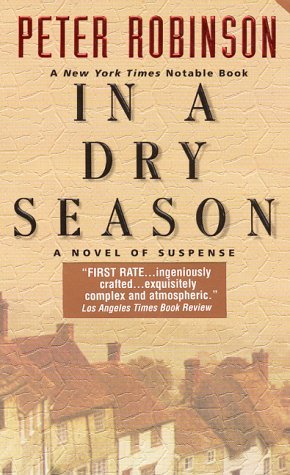 age that has lain beneath a reservoir for decades, Hobbs End, is exposed after a particularly dry season. Keen to explore the rotting ruins, a teenager stumbles upon some human bones. Banks, who has been assigned a desk job after falling into disfavor with his miserable and despicable boss, Jimmy Riddle, is sent to deal with what’s ostensibly a boring cold case. Also assigned is the young and feisty Annie Cabbot, another square peg in a constabulary round hole. Sparks fly when Banks and Cabbot meet and they start to learn the secrets the water has kept hidden for so long. suddenly, the cut and dry case from World War II becomes very interesting indeed.
Segueing between the present and the village Hobbs End pre its immersion, during World War II and the Americans presence at a nearby air base, and modern times and the investigation led by Banks, this is a terrific tale with rich and interesting characters in whom you invest. As the contemporary murder investigation unfolds, so too the older story unfurls from a kind of innocence and a desperate desire to start again to tragedy. Replete with marvellous historical details, from food, war rules and conditions, fashions, social and religious mores and cultural attitudes (and or course, the music – this is a Robinson story after all) the novel also explores Banks’ growing feelings for Annie, trying to deal with his divorce from Sandra, living alone again and the unexpected change in direction of his son, Brian.
As the novel builds towards the climax, the two main threads collide with surprising and very satisfying results. If you enjoy the Banks’ books, good crime novels or just a great read, then this is a book you’ll find hard to put down.


Book Review: Piece of my Heart by Peter Robinson
This engrossing novel commences in 1969, when a lovely young, free-spirited woman is found dead in a sleeping bag after a huge music concert and the suspects range from concert attendees to the musicians themselves.
Fast forward to the Twenty-First Century and Banks is called to investigate the quite brutal murder of a music journalist, Nick Barber, in a small village. Not only is the motive for his death unclear, so are the reasons for Barber’s presence in an unremarkable part of the UK. The list of suspects slowly grows but is unsatisfactory as while there are motives for murder, they aren’t real ly enough to sustain a murder charge. Puzzled and intrigued, Banks knows there is a mystery attached to this man and his death, a feeling confirmed when a page of numbers, some circled, is found scrawled in the back of a novel Barber purchased. But what do they mean? Are they even important?
Segueing between 1969, the era of free love, hippies and counter-culture and current times, two unrelated crimes, two different types of investigations, are explored and the plot literally thickens. The further Banks is drawn into the sometimes seedy world of famous rock stars, the more perplexing the case becomes but it’s not until Banks and his team begin to look into the past that not only do answers begin to emerge, but painful memories that some will do anything to repress also erupt…
This is a terrific Banks installment. Not only does Robinson evocatively explore the late 60s with musical references, clothing, ideology, living conditions and generational differences through the older case, in both the past and present he manages to intertwine the personal and professional imbuing the novel with layers that are at once exciting and touching. Add to that Banks and Annie Cabot dealing with an ambitious boss, and Winsome with an unpleasant sycophantic peer and the story fires on so many levels.
Intricately plotted, it’s evident that Robinson painstakingly researched this book to give accurate dates and times for which to connect his fictitious scenarios with real world events, giving the story additional verisimilitude. It is also fascinating to contrast the policing styles of the late 60s and the science available to that of present times. Also compared are two fathers who raise/are raising children within different social and cultural contexts and the challenges they face understanding and relating to their kids.
Thoroughly enjoyed this Banks book. Clever, well-written and tightly plotted, A Piece of My Heart works as a crime novel but also as a time capsule of a bygone era. My only niggle is that for all the effort Robinson put into writing a wonderful, gripping story, the kindle version I read had so many errors – typos, punctuation, syntactical, it was incredible. I have never read a professionally published work so littered with mistakes and it was really annoying. You pay for quality – even in electronic form – and expect it. I think Robinson has been let down in this regard. Fortunately, the story is so good, it didn’t detract (too much) from my reading pleasure.
Book Review: Children of the Revolution by Peter Robinson
This most recent and terrific installment in the Inspector Banks series begins when the body of a disgraced academic is found beneath a bridge in a remote area outside Eastvale. Found with five thousand pounds in his pocket and significant pre-mortem injuries, it becomes clear this isn’t a suicide – but who would want to kill this emaciated, alcoholic and sad individu al? Once Banks and his team begin to delve into the man’s past and the anarchy decades of last century, they discover that not only does he have skeletons in his closet but that some of these are shared with significant individuals who would do anything to ensure that what the academic knows is never shared. So begins a case that tests Banks, Annie, Winsome and the newest team member to the limits of their skills and professionalism.
Never one to mind allowing the lines between the professional and personal to cross (but without ever sacrificing his duty), Banks finds this case testing in all sorts of ways. What I love about the way Robinson has allowed Banks’ character to develop is regular readers know and appreciate the ethics and values which govern Banks’ every decision. This is a man who believes in justice and will see it served, even if it means breaking the rules, but without diverting from his moral compass. In this novel, Banks’s subordinates, particularly Winsome, demonstrate their talents, Winsome displaying compassion and growth as a detective. We see how influential Banks has been as a mentor and role model for his team and how the faith he puts in others is usually always rewarded. At the same time, we see Annie struggling with the injuries – physical and psychological – that she sustained on a previous case. If there is one niggle about this novel, there is a sense in which Annie’s story is shunted to one side a little. She serves little purpose except as a contrast to the other female officers and the way they deal with suspects and witnesses alike. Mind you, I love her directness and acerbic wit, as well as her tendency to act first, think later, traits that usually serve her well though there is one scene where, I feel, she acts a wee bit out of character. Only a little, but the scene didn’t ring quite true.
Overall, this is a great read and I felt sad that the R question (retirement) has been flung at Banks who, in this novel, is also forced to ponder aging and his mortality as well as his career. I hope he takes the other option he is given because a reading world without Banks would be a poorer one indeed.
August 14, 2013
Book Review: Started Early, Took My Dog by Kate Atkinson

If the quirky title to this book doesn’t grab you, then the author might. This wonderful, insightful and unexpected tale of four different lives converging is by Kate Atkinson, an author of which I knew nothing until I read her amazing and moving, Life After Life. This book, recommended to me by a dear friend, is one in the Jackson Brodie (PI) series and, as the first I read about the eponymous and clever investigator, happens to be a doozy.
It commences with former cop and now shopping centre Security Guard, Tracey Waterhouse, rushing to resolve a problem and then behaving in a way that is completely out of character. Her act of madness (driven by kindness) sets off a chain of events over which she has no control and which rapidly disintegrate into a life and death situation.
In the meantime, there is a woman who doesn’t know her past and hires Brodie to uncover it, a cop with an all-but dead daughter for whom he grieves constantly, an aging actress whosedementia is ruining her career and thus life but in understated ways. Seemingly disconnected, the further Jackson investigates the crime he’s involved in, the more these disparate tales and lives begin to converge.
Peppered with wit, irony and flashes into human nature that you want to savour and repeat to others they are so apt, as well as heart-breaking and astute observations, this is a fabulous read. Someone described it in an earlier Goodreads review as the ‘intelligent reader’s beach read.’ Add to that it’s for anyone who loves beautiful writing, great plotting and losing oneself in other people’s stories and this is that book.
Book Review: Case Histories by Kate Atkinson
This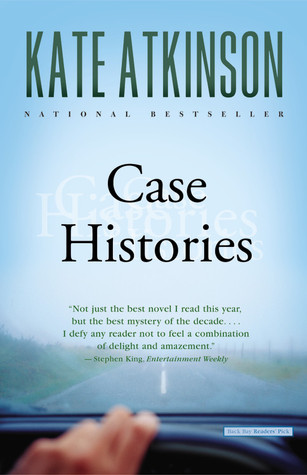 is the book that introduces readers to the wonderful and quirky Jackson Brodie, Kate Atkinson’s divorced father and Private Investigator who can’t seem to say ‘no’. Because of his inability to refuse someone in need, he finds himself investigating three seemingly disparate cases, all of which happened some time ago – a baby girl gone missing, a young mother losing control in a murderous rage and, finally, a lovely young woman who works in a busy office who finds herself in the wrong place at the wrong time with drastic consequences.
Each case is explored thoroughly and the reader accompanies Jackson as he peels back time and uncovers the contexts for each crime, the victims and perpetrators. While the cases are disturbing, there is still humour laced throughout, mainly through the character of the self-deprecating and much put upon Brodie who also has the capacity to offer great and unexpected insights into those he encounters and what he uncovers.
More than a crime or thriller novel, Case Histories is about the complexity of families, about love, trust, betrayal, but it’s also about what makes us tick and how simple it is for even the best plans and intentions to become derailed and tragedy strike. How a fuse can be lit and conflagration erupts. The writing is lovely, poetic and flowing, and the characters are fully rounded and thus easy to engage with and understand.
A terrific novel that offers so much to readers and which pushes the boundaries of crime fiction in wonderful ways.
Book Review: The Kite Runner by Khaleed Hosseini
I don’t know why I have waited so long to read this book but, having finished it in one sitting, I know I haven’t only read an amazing novel, but had an emotional experience like no other.
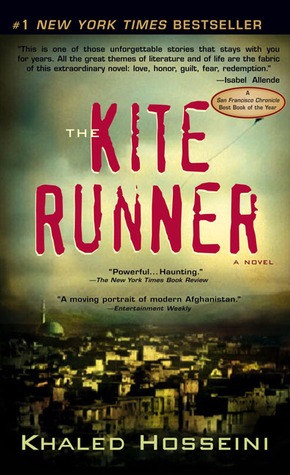
The Kite Runner tells the story of two young Afghani men who live in Kabul in quite different circumstances. One, Amir, through whose eyes the story is told, is wealthy, educated and privileged, his father being a strong, athletic and ethical man who wields power and earns respect. The other, Hassan, is the son of one of Amir’s father’s beloved servants and comes from a different ethnic group, the Hazara. Despite the differences in their social status, the boys were not only fed from the same wet-nurse’s breast (their mothers dying when they were newborns), but grow up together, sharing significant moments, triumphs and failures while also being eternally divided by their social status and ethnicity. The first half of the book fo
cuses on their childhood and adolescence and the chapters are simply exquisite in their observations, the raw honesty with which personal flaws are described and acknowledged, and the simplicity as well as complexity of Hassan and Amir’s relationship. This complexity becomes more evident as they grow older and, on Amir’s side at least, jealousy erupts.
Reading this section is like inhaling a flower’s perfume and becoming giddy with the fragrance… Yet, you know it can’t last. Already, as you revel in the joy of kite flying and running, for example, you know the seeds of destruction, of innocence lost, have been sewn. So you relish every moment in ways Amir especially does not and cannot. After all, what child can understand the consequences of their actions – even when they know they are wrong?
This is something the book explores in detail – how what we do in a rash moment, even when we know it is morally, ethically wrong, disloyal, foolish or a betrayal, can set in motion consequences that reverberate for decades. Against a backdrop of invasion and pending war, and as more characters enter their universe, the magical, insular world the boys inhabitbegins to dissolve. But no one could foresee what was to happen…
The second half of the book shows how the actions – both on the page and off stage – impact upon the present. Heart-wrenching, moving, lyrical and lovely, providing insights into the hearts and minds of a different culture and faith, this sweeping story of generations, masculinity, femininity, war, liberation, immigration, refugees, is epic in scope and elegiac in execution. The prose is sublime. Phrases and descriptions linger in the mind, trip off your tongue as you have to say them aloud. Who thinks to describe a sky as a ‘blameless blue’? Yet, I saw it, felt it, stood beneath it – or rain as ‘melting silver’ (that makes me sigh), such is the power of Hosseini’s prose.
At no point is the plot predictable and sometimes the twists and turns are shocking, a punch to the stomach, a catching of breath so sharp it hurts, yet you keep reading, you cannot stop. Exquisitely told, The Kite Runner is a magnificent novel by such a gifted story-teller whose insights and humanity leap off the pages and whose imagination, like the kites Amir and Hassan fly, soars.
August 13, 2013
Book Review: The Bookman’s Tale by Charlie Lovett

When I read the promotions for this book, I was so excited. A book about a book lover cum antiquarian book dealer, Shakespeare, forgery, England, history… What was not to love? Certainly, The Bookman‘s Tale lives up to a great deal of my expectations. It tells the tale of grieving widower, Peter Byerly, who relocates from North America to England after the death of his beloved wife, Amanda. Living in the cottage they’d bought and were renovating is bitter-sweet for Peter and he becomes a bit of a recluse, that is until one day he discovers a picture that resembles his wife in the pages of an old book in a bookstore and sets out to learn the identity of this woman. What he doesn’t expect is that unravelling the mystery of the beautiful Victorian woman and the previous owners of the book in which the picture was hidden, thrusts him into danger. There are those who have interests to protect, interests that are closely tied to the books and the image Peter loves.
Segueing between contemporary times, Peter’s immediate past and romancing of Amanda as well as how he comes to learn book restoration and the steps involved (really interesting), the novel also travels back to the streets of Southwark in Shakespeare’s times where we encounter many a famous name and their various idiosyncrasies. We also trace a folio belonging to the Bard and follow the sometimes ignominious steps of its owners throughout history. But it’s when past and present collide that threat erupts and Peter learns that being a bibliophile can cost both your fortune and your life.
I enjoyed this book very much. The prose is lovely, dancing from the page and evoking strong emotions. Characters are nicely constructed as well though there were times that Peter wasn’t the only one wondering what Amanda saw in him – he lacks the charisma of the usual protagonist, even a bookish one, and part of me felt that his portrayal – the stereotype nerd was lacking. I felt he could be so much more without sacrificing veracity. The book also has an element of the supernatural/fantasy, adding a haunting quality to some of the scenes that is nicely done and gives them a particular frisson.
The book also engages with the ongoing (and spurious) debate about whether or not Shakespeare wrote his works or whether they were simply attributed to him. I call it spurious because, while it is fascinating, the fact we are blessed with ‘his’ legacy makes the argument moot. Lovett lays the debate to rest and I like his fanciful conclusions very much.
If you can suspend your disbelief, enjoy stepping back in history and love stories about books and writers as much as reading, then this is a terrific choice.
Book Review: Inferno by Dan Brown
Dan Brown’s books come laden with so many expectations – and not all good. Savaged by many critics, and often unfairly, it is for his fans to decide whether or not one of his books deserve the kudos the sales suggest and, if you go by those alone, then his books are not only popular, but eminently readable.
Inferno, the fourth Robert Langdon book, is a strange and ofttimes predictable beast. While I have thoroughly enjoyed the previous Langdon outings (love a book that makes an academic an intellectual and action star – shades of Indiana Jones – and has as its core mystery literature, art and symbols) Inferno, for all that it presages the passionate poet Dante, flames and the burning heat of hell, left me mostly cold.
Once again, a quest features and a puzzle that’s centred on a famous work lies at the heart of the mystery, a mystery that begins when Langdon awakes in hospital in Florence with no mem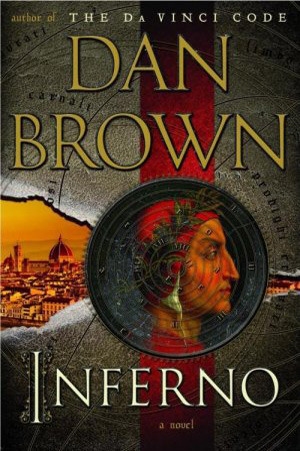 ory of how he got there or why. When strangers try to take his life and a beautiful and clever female doctor offers rescue and potentially some answers to the blanks his memory has become, Langdon jumps (literally) at the chance.
Pursued relentlessly, able to solve cryptic questions and read the stories into and behind famous and old art, Langdon moves around Europe and Turkey, discovering friends and enemies with abandon. All the while, the reason for his memory lapse and deadly pursuit starts to become clear – and, if Langdon doesn’t find the answers required of him in time, then not only is his life forfeit, but the safety of the world is at stake.
Blending very relevant and fascinating modern science conundrums and a pressing social issue (no pun intended), Langdon is once again up against an all-powerful megalomaniac who will stop at nothing to see his vision realized.
Brown has the formula for these “intellectual thrillers’ down pat now. Only, the rush of Angels and Demons, the development of plot and character that made his earlier works retrospectively well-liked, has been sacrificed to a degree for too much didacticism. In many ways, Inferno is part travelogue and part historical, literary, art, and scientific treatise, as if Brown wants to prove his research and travel credentials by packing all the information into the novel. As a result, some of the characters function as little more than mouthpieces who serve this purpose alone. We are given asides about art, buildings, and scientific research – not all immediately pertinent to the story – that could have been delivered more subtly or not at all. They tell don’t show and the story suffers as a consequence. Perhaps this is also why so many of the characters are black or white in terms of their ideologies and motivation. Even when Brown tries to paint shades of grey (and he does) they are tinged with obvious good or evil hues that makes them unsurprising and sometimes dull.
For all that, this is still a page-turner, even if sometimes I was turning them because I wanted the tale to end. Overall, however, it’s a good holiday, escapist read. I knew what I was getting and in that sense, wasn’t disappointed. I do think some critics judge Brown as if he should have written War and Peace, Mrs Dalloway, or The Dubliners or at least judge him by weighty and incomparable literary criteria, when what he does write is thriller cum potboilers that are, as sales and other evidence attest, definitely crowd pleasers.
August 12, 2013
Book Review: Past Reason Hated by Peter Robinson

For all that I adore Peter Robinson’s Inspector Banks books, this one frustrated me. In all fairness, it still had wonderful characters, Banks himself demonstrating compassion and empathy toward
s suspects and guiding, through example, a new and eager DC, Susan, as she embarks on her first case. Peripheral characters are roundly drawn and you get a marvellous sense of them with merely a few words or some dialogue – something Robinson does so well. Place and the season are also evoked with flair. What irritated me was the fact that usually the criminal and the motive behind the crime are buried beneath a mountain of clues and the reader joins Banks as he digs and sieves through the layers, each chapter bringing us closer, each page leading towards a revelation that can leave you on the edge of your seat. In this way, we delight in various discoveries; the links formed and enjoy the ‘light bulb’ moment where everything becomes clear. With this book, the murderer and the rationale for the crime are apparent within pages. It is quite obvious and while ordinarily this doesn’t detract (too much) from the pleasure of embarking on the investigation, in this instance it was annoying and spoiled the reading and investigative experience. This is because ‘knowing’ Banks as a regular reader does, there is no reason that he too wouldn’t be aware, so you become bothered by his overlooking of the apparent. Instead, a red herring is planted at the beginning and in a burst of irksome perseverance, Banks cannot let it go and it preoccupies him (and thus the reader) at the expense of clues staring him in the face.
Throughout the book, Banks expresses his exasperation with this case and the fact that he feels something is eluding him. Yes, it was and it didn’t ring true to his character and his ability to laterally think, to understand the criminal mind and, most obviously, the blatant clues strewn before him. That the new DC Susan also fails (conveniently for the author) to pass on information that would lead to identifying the killer is just hair-tearingly stupid. I won’t spoil it by revealing what was evident, but I wonder if other readers felt the same? I kept reading hoping, believing I was wrong in my assumptions… Disappointingly, I wasn’t and so ended up pissed off with Banks for being so thick-headed! But, perhaps this is also a sign of how invested I am in the books and the principal character – I know he is better than this (as is Robinson). I still adore the books, but this one wasn’t as clever or satisfying as the others.
Book Review: The Ocean at the End of the Lane by Neil Gaiman
This is a boo k like no other I have read in that it taps into something wonderful, dark and primal and managed to transport me back to both the magic and terror of childhood, a time of possibilities and when dreams and nightmares really did come true.
Finding himself back at his childhood home after attending a funeral, a middle-aged man (who is never named) recalls events that happened during his childhood – how the peace and joy of his life on the farmstead was shattered when a visitor to his house commits suicide in the family car. This act releases a darkness that threatens the young boy and his family, a darkness that his mother, father and sister seem unable or unwilling to see let alone confront. Only the bravery and chthonic magic of the girl down the road, the amazing Lettie Hempstock, who has a pond that is an ocean in her backyard and all sorts of other wondrous things, and her mother and grandmother understand and have the wherewithal to aid the boy in what becomes a life and death struggle to defeat the all-consuming and seductive powers of the darkness
Like the man remembering his childhood, the reader is transported back to ours. As the boy battles his own and some very real demons, so too we revisit and vanquish (if we’re lucky!) those that haunted our youth. What I loved about this book (and Gaiman’s work overall) is that nothing is cliched or expected. Furthermore, it’s what’s not described, but in the spaces between the words, the absences on the page and into which the reader’s imagination slips (or tumbles), that so much happens. Gaiman respects the power of our imaginations to take the story into places other writers would not dare. Thus, we fill in the gaps and the powerful but ofttimes partial descriptions with our own menacing ones. This makes the book at once eerie, wild and disturbing. Sometimes, the words and scenes howled through my mind, making we shiver and look over my shoulder. Other times, I felt warmed by its magical embrace and found great comfort – as if a warm blanket had been flung over my shoulders and a cup of something warm, sweet and strong had been placed in my hands.
There is something restorative and meaningful in peeling back the layers, in being reminded of the power of stories, of imagination, of being anchored once more to a time that while a part of us all, rarely gets dusted off and re-examined, though our childhood is what shapes us. We tend to relegate it to the attic of our minds. Stories like Gaiman’s reinstate childhood and the terrifying and wondrous interpretations children use to negotiate reality in all its great and scary glory.
Finishing the book is like awakening from a dream and I couldn’t help but grieve as I felt that the funeral the man was attending wasn’t only for a lost beloved, but a lost self. That we outgrow (or choose to ignore) the capacity to see and relate to the world through the eyes of our childhood selves is surely something that deserves mourning.
Astonishing modern fable that vividly recaptures the beauty and dread of dreams and childhood imaginings.