Karen Brooks's Blog, page 2
October 7, 2014
Book Review: Danger to Elizabeth by Alison Plowden
Danger to Elizabeth is the second volume in Alison Plowden’s engrossing quartet about Elizabeth the First’s life and times. In this book, Danger, she examines the threats that Elizabeth personally faced as well as those that beset the kingdom during her reign, all of which arose from the religious schism that divided England, particularly in the years before the defeat of the Spanish Aramda in 1588.
 While the main focus of the book is the principal plots around which the menace to Elizabeth’s person coalesced, such as the Ridolfi, Throgmorton and Babington ones and the influx of Jesuits and Catholics into England determined to succour recusants and rescue Protestant souls, it also takes into account the Papal Bulls issued from Rome that fundamentally gave permission for English Catholics to not only renounce Elizabeth as their monarch, but do harm upon her person. While describing these various perils and their outcomes, it also explores Elizabeth the queen and woman.
After reading Alison Weir’s historical novel, The Marriage Game (and enjoying it very much, even if I didn’t like the portrait it painted of Elizabeth), it was refreshing to read the queen’s tergiversations and choices around marriage and policy (especially with Mary, Queen of Scots), in the terms Plowden describes them. On page 37, she writes:
“Elizabeth was very well aware of her value in the international marriage market and zestfully exploited the advantages attached to being the most eligible spinster in Europe, turning the apparent disability of her sex into a diplomatic weapon which for the next twenty years she was to wield with deliberate, ruthless feminine guile.”
There is no doubt this powerful and intelligent queen, whom Sir Francis Walsingham, her Secretary of State from 1573 until his death in 1590, once described as the “best catch in the parish”, understood her value and, despite some evidence and arguments to the contrary, knew her mind – even when it appeared she did not.
Plowden charts the various threats to Elizabeth posed by the Catholic Church, the Catholic countries that surround England and their advances into the Low Countries, the Enterprise of conversion (or “harvesting”) of English souls, all conducted with the blessing of the “Bishop of Rome” and which was led by William Allen and his followers such as Edmund Campion and Robert Parsons. Written in wonderful, colourful and detailed prose that makes what can sometimes be dense detail easy to absorb, this book is a great read. There were times when it felt like I was reading a picaresque novel, so fast and exciting was the action. I also found, after devouring many, many books on these threats, plots and their consequences, that Plowden’s book fills in many gaps the others either skimmed over or did not bother to elucidate. Having said that, I did wonder if I hadn’t read so many other books on this era, would I have gleaned as much as I did from Plowden’s book. I also wonder if some knowledge of events and personages helped me draw from this book what I needed, meaning I’m not persuaded it would be a good book for beginners wanting to learn about the era and the dangers Elizabeth and her realm faced.
That said, it is the second volume in a four-book series, a series I will now look forward to completing very much.
Highly recommended for lovers of history and Elizabethan politics in particular.


October 1, 2014
Book Review: The King’s Curse by Philippa Gregory
The final novel in the Cousin’s War series by Philippa Gregory, The King’s Curse, is, I believe, one of her best. Set during the reign of the Tudors, it centres on Margaret Pole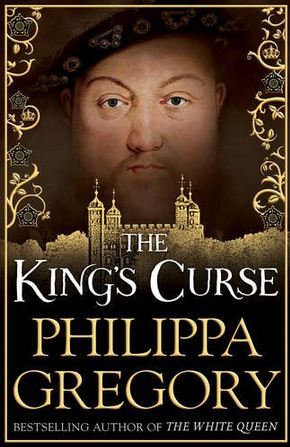 , cousin to Elizabeth of York and a Plantagenet by birth and therefore, a constant threat to Tudor supremacy as she carries the noble blood of the Yorks and the white rose. Married off to a knight, Sir Richard Pole and sent to Wales and as far away from court as possible, Margaret is content to live out her life away from intrigue and potential danger and raise her ever-growing family. But, when the young Prince Arthur and his beautiful Spanish bride, Katherine of Aragon come under her guardianship, Margaret is thrust once more into the toxic and uncertain politics of the Tudor dynasty.
The novel follows the well-known historical events that mark the rise of the cheeky young prince who will become the obese and surly Henry VIII (if you don’t know the history, then skip to the end of this review!); the tragic death of Arthur, Henry taking Katherine for his bride, the loss of many babies, (mostly boys) before young Mary survives and Henry’s growing disenchantment with his queen and his belief, real or convenient, that his union with her is cursed. Through Margaret’s eyes, it tracks his moves to sever the English church from Rome and his fickleness when it comes to women and friends. All are documented in this marvellous and utterly gripping tale.
From quietude and poverty, when Katherine becomes Henry’s queen, Margaret is placed back at the centre of the court and her riches and title restored. Basking in her role as Katherine’s companion and governess to her children, she excels and ensures her children also benefit from this largesse. Perfectly placed to observe the man Henry becomes (a narcissist and bully who cannot bear to hear or see anything negative and who remains wilfully ignorant about his own role in his failed relationships, thus becoming a brutal tyrant who lacks emotional depth) and the changes his spiritual vacillation wreak upon his court and country, devout and very Catholic Margaret is no fool. Determined to retain her position, she defies the odds and the machinations of those close to Henry who would see her and her family fall and fail. Torn between Katherine and the cruelties being inflicted upon her, and later, her daughter Mary, pulled first the Catholic way and then towards the new religion, Margaret is the ultimate dissembler. But Henry is no fool and there are those who whisper in his ear about the Poles, the Plantagenets and an old curse that will render his line extinct…
Can Margaret prevail, or will her knowledge and passion for social and religious justice and those who, in her mind and heart uphold it, see her undone?
Renown not only for her historical acumen but ability to give the silent women of history a real and powerful voice, in The King’s Curse, Gregory really earns her title as the “queen of royal fiction.” This was a compelling and very original interpretation of known events and, though I know the facts well, I couldn’t put this down. Margaret is such a strong and convincing character who, for her time especially, defies the forces working to undermine her and remains defiant to the end.
As for Gregory’s portrait of Henry VIII… what a total tool and bastard she has painted him – completely convincing and not divorced (excuse the pun) from the records and other accounts of the era. Though, this is a novel very sympathetic to the Catholic cause and has little time for those on the side of the Reformation, and its important to keep that in mind as well. Not that it stops you enjoying it!
Highly recommended for lovers of historical fiction, and just someone after a great read.
September 25, 2014
Book Review: The Marriage Game by Alison Weir
Having read many of Alison Weir’s non-fiction books and thoroughly enjoying her fictive spin on the early years of Elizabeth Ist, I was looking forward to reading The Marriage Ga me, which covers the years Elizabeth was upon the English throne.
Taking as its main focus Elizabeth’s Privy Council’s and, indeed, the entire Parliament and country’s obsession with her need to get married and produce an heir, and the queen’s attempts to fob them off through procrastination, broken promises, assurances and games as it’s premise, the novel also highlights the steamy and stormy relationship between Elizabeth and her favourite courtier, Robert Dudley.
It’s clear that Weir knows her history. As her wonderful non-fiction books attest (The Life of Elizabeth I and The Princes in the Tower are my favourites), she uses her formidable understanding of Elizabethan politics and times to infuse the novel with veritas, even using direct speech from reports and letters of the times and known events to add grist to her marriage mill. The reader is drawn into Elizabeth’s world, its male-dominated court and the religious and global politics that threaten and sustain its power. A constant balancing act is required (by the author, reader and the characters) which means the queen and her council must be both vigilant and yet warm towards the various international diplomats that populate the court – offering salves to wounded pride, playing various proposals and dignitaries off against each other and trying to second guess intentions.
Mercurial and demanding, Elizabeth is the heart and soul of this story, as indeed she was of the times (they’re not recalled as the Elizabethan period for no reason). Yet, it’s hard to like this vain queen or the men who surround her. Self-interest is paramount and weasel words are currency.
We know from history that Elizabeth was a difficult and selfish woman who would readily strike those who displeased her, send people to the tower for marrying without permission (even those without royal blood) and who saw most other women as potential competition and so banned them from court. She struggled with ageing (in that, she was very like many modern women, which reveals struggling with growing older isn’t necessarily a contemporary preoccupation) and was concerned not be redundant. Encouraging flattery, she also doled it out and was a flirt par excellence, even as an older woman – these are all facts.
While the queen’s relationship with Dudley, who she later made the Earl of Leicester, is also well documented, in this novel, Weir delves into the emotional and physical bonds that both connect the pair and drive them apart. From the first days of Elizabeth’s rule to Dudley’s death, she fictively explores their tempestuous and imbalanced relationship.
Yet, for all the veracity of this book and the fine writing, the weaving of fact and fiction, the hardest thing for the reader is the undeniable reality that the lead character, good Queen Bess, is an outright bitch. She is not sympathetic or kind, but narcissistic, wilful, a bully, and manipulative. She uses people for her own ends, is masterful with words and wields them as weapons to wound and control and contrive outcomes she desires. Though this may have been politic and Elizabeth’s only means of asserting authority and influence, it works better in non-fiction than fiction where what’s being told is essentially both a love story and an anti-love story. Likewise, Dudley is a dud who obeys his monarch at the expense of dignity, self-respect and, in the end, his family. History is kinder to these pair than this book, that’s for certes!
So, while I enjoyed Weir’s version – and for me the second half of the book was better than the first – I prefer the way history books recall Elizabeth – as a potent political force, faults and all – than this particular piece of (romantic?) fiction.
September 16, 2014
Book Review: Fool’s Assassin by Robin Hobb
Fool’s Assassin by Robin Hobb, was described by George R. R. Martin as “fantasy as it ought to be written.” Until I read the novel, I didn’t really know quite what Martin meant,  but having devoured this next episode in The Fitz and The Fool fables, I understand. This is a simply sublime book that takes the reader on an incredible emotional and psychological journey into family, love, paternity, childhood, and the difficulties of raising a child who’s deemed “different” and the immense suffering that comes with great love and loss.
This novel reintroduces Fitz, the unwilling assassin, gifted with both The Wit and The Skill, the man who’s described as The Fool’s Catalyst and a power to be reckoned with in his own right. It also plunges readers back into the hauntingly beautiful and wonderfully imagined wider world Hobb has crafted over so many books and of which Fitz is an integral part. Now a middle-aged landholder, who goes by the name of Tom Badgerlock, Fitz is living a contented existence. Hiding in the counties, happy to live out his final years with his beloved wife Molly, he resists and resents the occasional call of the Farseer rulers and his former mentor, Chade.
One cold, Winterfest night, a pale messenger seeks out Fitz. With the house of full of guests and strangers and as host, Fitz is much distracted. Too busy to see her, he sends a request she waits till morning. When she vanishes in a trail of blood before she can deliver her message, it’s a decision he lives to regret. Trying to put his perturbation behind him, Fitz cannot dismiss the messenger’s presence let alone disappearance entirely. What happened to her and what did she want? More importantly, who sent her?
Years pass and it’s not till a miracle happens in Fitz’s and Molly’s life and a series of events follow that do not augur well, that the night of the messenger comes back to haunt Fitz.
On the footsteps of great joy, tragedy must follow but it’s not until someone from Fitz’s past reappears in dire need that the king’s former assassin knows his life and that of all those he loves will never be the same again.
I really cannot say too much more without risking spoiling what is an incredible, heart-wrenching, moving, joyous, tragic and simply astonishingly beautiful tale. There is a raw honesty and truth in every page, every word that lingers long after you close the novel for the night. I found the story and those populating it were at the back of my mind most days. When I finished the book, I wanted to discuss it with my friends, not only to shed light on the characters and their choices, but so I didn’t have to leave Fitz’s world.
Each and every character in this tale is so real and raw – whether it’s a servant in the house, a distant relative, an unwelcome guest or a member of the immediate family. You live and breath each moment with them as their thoughts and thus hearts, souls and minds are laid bare. I think this is what made the book so utterly special and unputdownable. I made excuses not to work but to return to the novel over and over and felt so lost when I finished it.
The hardest thing of all is knowing how long I have to wait to read the next instalment in the series…
This isn’t just fantasy at its best – this is writing at its very finest. A story to be treasured and savoured.
September 9, 2014
Book Review: Dreamer’s Pool by Juliet Marillier
I have to say upfront, not only do I simply adore all Juliet Marillier’s books, and her lyrical writing style, but when the opportunity came to read an ARC of her latest, Dreamer’s Pool, an d review it, I quickly threw my hat in the ring, or keyboard into cyberspace, knowing I wouldn’t regret it. I was right.
Dreamer’s Pool is the first in a new series, Blackthorn and Grim, set in Ancient Ireland. While it tells the story of the terribly bitter and deeply tragic healer, Blackthorn (who is as prickly as her name), and her silent, stoic and loyal companion Grim, who due to the interference of a fey lord are released from what appears to be unjust imprisonment on terms Blackthorn at least rails against, the novel is told by three distinct voices: Blackthorn’s, Grim’s and the young Prince, Oran, who is to be wed to the woman of his dreams.
Forced to abide in a part of the country previously unknown to them and which is Prince Oran’s demesne, and hauntingly lovely, Blackthorn must heal and help any who ask. A brilliant is somewhat unwilling healer, what Blackthorn does not expect is to be called to the aid of the prince’s bride-to-be, the beautiful Flidais, when calamity strikes her party while enroute to meet the groom. Death is never a great omen for forthcoming nuptials, but when Prince Oran cannot reconcile the reality of his soon-to-be wife with the darling, sweet and learned Flidais who exchanged letters with him for months prior to her arrival, he calls upon Blackthorn and Grim to help him uncover the truth.
But Blackthorn and Grim have their own pasts and ways of dealing with those they encounter in the present and Blackthorn especially, while she always knows what to do to heal others, believes vengeance is the only panacea for what ails her. Until she recognises the truth in her purpose, and those who believe in her, she is doomed to repeat history’s mistakes and bring more disaster in her wake.
This is a simply gorgeous story with wonderful, intriguing and complex characters, some with dark, wretched pasts, who carry emotional baggage like a hair shirt and find relationships difficult. It also contains a range of naïve, wise and trusting people and those who would betray and abuse this trust. Written in exquisite and addictive prose, each voice rings emotionally true and you find yourself championing and understanding them, even when their choices don’t seem shrewd. This is a tale that will tug at your heart and, like the fable that it draws upon, linger in your head and soul for days afterwards. I cannot wait for the next instalment in this series.
September 1, 2014
Book Review: Human Croquet by Kate Atkinson
This was such an odd book. I started it a few months ago and had to put it aside as it simply didn’t engage me. Then, having finished another of Atkinson’s books (When Wil l There Be Good News) and not wanting to move away from her writing, I picked this one up again, started from the beginning once more, and couldn’t put it down.
Ostensibly the story of Isobel Fairfax, a young British woman who at an early age, along with her unattractive younger brother, Charles, “loses” her mother. Unlike Charles, Isobel appears to have the ability to slip through time, back to the Elizabethan period, and thus her life becomes this peculiar negotiation of time, space and people. Though the novel has this magic realist/mystical element it’s also a coming-of-age-story, a tale of familial and suburban dysfunction, murder, disappearances, secrets and lies, and an exploration of the ties that bind and tear us apart. The novel takes the reader on a remarkable journey through Isobel’s childhood, adolescence and that of her parents and forebears, exposing warts, flaws, mistakes, triumphs and tragedies.
Capturing the essence of the 1960s as well as war-time London, the characteristics of class, neighborhoods and the passion and heartbreak of relationships of all kind, this pseudo and quite dark fairy-tale is remarkable. Moving, haunting, at times funny, always strange and yet familiar, the novel shifts points of view from first to third person and a cocky omniscient narrator who through Isobel also functions like a Greek chorus, or a Shakespearian player setting the scene and passing commentary upon what unfolds. The book plays with reader expectations, genre, the notion of secrets, and in doing so examines the minutiae of the everyday, and explores the adult world from a child’s point of view and vice versa.
All the world and time is Atkinson’s stage, and this is certainly an ambitious and clever novel that offers alternative readings of not only scenes, but characters’ interpretations of events. What the reader accepts is up to her or him, but nothing is predictable.
The prose is simply lovely and some of the ideas expressed are timeless and erudite and have you reaching for a highlighter in order to recall them. This story won’t appeal to everyone, and it’s very different in so many ways from Atkinson’s other books, but if you cast aside expectations and go for the ride, it’s one you won’t forget in a hurry.
August 31, 2014
Book Review: Evergreen Falls by Kimberley Freeman
I started reading Evergreen Falls late one night after finishing another book, foolishly believing I would read a few pages, get a sense of the novel then fall asleep… but Kim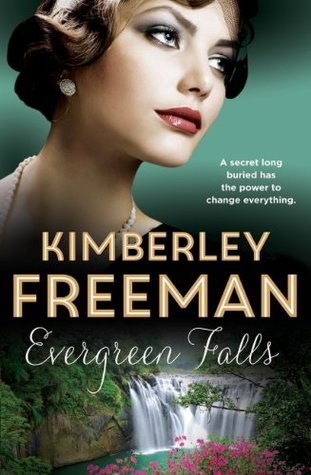 berely Freeman and her tale of the beautiful Violet and introvert Lauren had other plans that involved late nights and some anti-social behaviour as I simply had to finish this fabulous book.
Evergreen Falls is a dual narrative in that it tells the story of two different women in two different times but in the one place. It opens with a vignette of tragedy in the Blue Mountains, in 1926, setting the scene for what is about to unfold. Fast-forward to current times and we meet Lauren Beck, a 30-year-old woman who, due to heartbreaking family circumstances, has led a sheltered life in Tasmania. When her section of the novel opens, she’s working at a coffee shop in the Blue Mountains, discovering what it’s like to be independent, hold down a job and, much to her delighted surprise, attract the attention of a dashing architect, Tomas, who has come over from Denmark to head up a renovation project on the nearby resort, the hotel, Evergreen Spa.
It’s while exploring parts of the building with Tomas that Lauren happens upon a cache of extraordinarily passionate and candid love letters from someone called SHB to a young woman he so evidently adores and desires. Captivated by the romance and the story behind these, Lauren begins to investigate, all the time aware that love may be slowly blossoming for her.
The reader is then taken back to 1926 and we follow the adventures of the gorgeous and lively Violet Armstrong who, after losing her job in a department store in Sydney is offered work at the very posh Evergreen Spa. With a dependent and ailing mother, Violet leaps at the chance to work in such an exceptional place, but little does she know that her time at the resort will change not only her life, but also that of everyone she encounters that season with tragic and lasting consequences.
The novel then moves back and forth between the two women and the secrets they seek to keep and uncover, drawing parallels between their lives and their differences, exposing their strengths and flaws and how the choices of the past and present will impact upon their futures.
Evergreen Falls is such a page-turner. Freeman evokes both eras
beautifully and presents us with such rich and fully-rounded characters. Class and other differences are explored, as are the complexities of families and the bonds that bind us whether we like it or not. Bigotry and assumptions about others – made on the basis of ignorance and fear – are exposed as damaging, but in this novel they also become the lynchpin through which more generous characters facilitate forgiveness, redemption and understanding.
Setting is so important in this book and the Blue Mountains outside of Sydney are wonderfully evoked, in all their haunting misty-blue greenness
replete with majestic gums, soaring rock formations and tumbling waters as well as the views into forever. Having spent a great deal of my childhood in the Blue Mountains (picking blackberries and searching for fairies with my grandmother and swimming in isolated rock pools), I walked the paths and stood once again on the viewing platform gazing towards the horizon and breathing in that crisp, clean air alongside the characters. Evergreen Spa, to me a thinly disguised Hydro Majestic Hotel, was also a place I inhabited as I read. I sat in the dining room, felt the plush carpet beneath my feet, saw the staff in their uniforms and respected the wishes of the indomitable but kind Miss Zander. The hotel (and mountains) is as much a character as any person and it’s fitting that the novel moves from the period in which it was at its peak to the start of its restoration.
For that is what the novel is also about – restoration – not
always in ways that are anticipated or expected but for the main characters this is what is offered and it’s up to them how and with whom they find it.
This was a simply wonderful novel that kept me up for a couple of nights, meant I was lousy company during the day, and that I was completely distracted until I reached the end… then, of course, as with any great book, I was bereft I’d finished. I shed a few tears, which is testimony to the way in which I was caught up in the emotional lives of the characters.
This is fabulous escapism, and I cannot recommend it enough. For those who love mystery, romance, history, and the tangled web of relationships, as well as some fantastic story-telling, this is the book for you.
August 18, 2014
Book Review: When Will There Be Good news? Kate Atkinson
I feel a bit sad this is the last time I will have the opportunity to “hang” with Kate Atkinson’s wonderful creation, the ex-army, ex-cop and PI Jackson Brodie. It’s not that this novel is the last in the series, but because I read them out of order (and that doesn’t affect the quality of the narrative or pleasure a reader gains from the prose and overal l story arc), it’s the final one I get to enjoy until Atkinson pulls her keyboard out and gets another one written – and I wish she would tout de suite! Till them, it’s au revoir Jackson…
Just as well then that When Will There Be Good News is a fabulous, ripper of a read that incorporates a few narrative threads and some fascinating characters.
The novel opens with an idyllic scene of a mother and her three kids walking country lanes. Undercurrents involving marital discord quickly disturb this pastoral picture but not in a distressing way – more in that well, “life is like that” manner. When the chapter ends in utter tragedy and we’re catapulted thirty years hence, there’s a feeling of both horror and relief that we’re spared only, in typical and wonderful Atkinson fashion, we’re not because the past always, always infects the present and this novel is no different. Part of the sheer joy of reading is in seeing just how they are connected and what unfolds.
Enter Jackson Brodie who, hot on the heels of another failed relationship and the start of a new one is seeking proof of paternity. Travelling north to get the DNA required, it’s no surprise to those familiar with Brodie’s habits, that he ends up in the wrongest (is that a word?) of wrong places at the wrongest of wrong times with catastrophic consequences.
But it’s also his ability to do that – turn up like a good penny – that links the stories as does the wonderful character of teenage Reggie – a girl who, when all is said and done, should be morose, despondent and at the least an emo, but who is infected with both a fine mind and an indefatigable joy in life as well a loyalty that can only be found in the hound that ends up accompanying her everywhere. Oh, and in her employer who is a simply magnificent character. On reflection, Dr (call me “Jo”) Joanna is like an ice-berg… She presents a portion of herself to the world (and we discover the reasons for this), but it’s the seven-eights below the water to which we’re slowly introduced that offer threat and promise. But when you cannot see what lies below the surface, how do you know which it is? And what happens when parts float to the surface? (cue Jaws theme)…
I cannot give too much away here, but while Reggie connects the seemingly disparate threads of the novel, it’s the Dr who’s the heart of the tale – one that threatens to stop beating….
When Reggie and Jackson’s paths collide, you just know something important is going to occur. And it does and it’s brutal, soulful, and ultimately incredibly satisfying.
Add to this a mixture of amazing other characters, including the hard-nosed (but wanting love) DCI Louisa, and this is a stunning read. Sublimely written, neatly tied together, I couldn’t put this one down.
I just wish there was another JB to lose myself in again…
August 5, 2014
Book Review: Life or Death by Michael Robotham
In an earlier review o f Robotham’s works, I said they should come with a health warning as they render the reader unable to sleep. I want to correct that statement and instead recommend they be issued as a cure for narcolepsy, because I defy anyone to try and sleep while reading his latest work, Life or Death, because I sure as hell could not.
While I will read anything this man writes, I initially thought this was to be another in his Joseph O’Loughlin series and kept waiting for one of my favourite fictive characters (and his cop buddy, Vincent Ruiz) to make an entry. They don’t. This novel isn’t part of the O’Loughlin series and I initially experienced a small flash of disappointment that was swiftly staunched. That’s because this novel is a tremendous standalone with a fabulous premise: why would a man escape from prison the day before he’s due to be released?
Why indeed.
That question is enough to arouse anyone’s curiousity, and I wondered how Robotham was going to pull off the story of Audie Palmer, a young man convicted of armed robbery ten years earlier and in which four people died, who flees his jail cell the day before he’s given state-sanctioned freedom for serving time. Reviled outside the prison, hounded endlessly within, Palmer’s life has been one of misery and hardship – so why does he make it worse by escaping? Why risk adding 20-25 years to his sentence by becoming a felon once more?
Palmer’s escape sets in motion a series of events over which he appears to have no control. Hunted by the authorities and criminals alike, Palmer is on a mission, but will he succeed and what’s the nature of this mission? Why didn’t he just wait one more day and walk from behind bars a free man?
This was a simply sensational tale. Taut, fast-paced, filled with believable characters, Robotham’s cracking dialogue, and original descriptions, I couldn’t put this down. Not only do the people come to life as the present and past unfold, but the different settings, the American landscape from the borders with Mexico to Texas, also develop a life of their own. You can smell the heat, taste the brackish water or the greasy eggs in an out-of-the-way diner, feel the sand, hear the flyscreens squeaking on rusty hinges as forlorn and deadbeat extras make an appearance. Despite having a horrible headache that required codeine, I stayed up till 3am to finish the book. I had to know what happened to Audie (who you come to champion so hard it hurts!), I had to know why he did what he did. The plot doesn’t only thicken in this novel, as back-stories and flashbacks weave their way in, laying solid foundations upon which the present is built, it sets harder than concrete making the conclusion one, though you don’t see it coming until the end, marvellously strong and utterly satisfying.
The only downside is that I have finished the damn thing and now have a long wait for Robotham’s next book. But if you like crime novels, edge of your seat thrillers, character driven works that also pay homage to setting, and are just superbly written, then I cannot recommend this highly enough.
Book Review: The Book of Life, Deborah Harkness
The final book in the All Souls Trilogy, The Book of Life, had a great deal to live up to in terms of storylines, characters, plot reveals, reader expectations and, in many ways, it doesn’t disappoint. Whereas the second book, Shadow of Night, had vampire, Matthew Clairmont and witch, Diana Bishop, roaming the streets of Elizabethan London and encountering a veritable roll-call of historical icons, the third book is very much set in the present, even if it’s global in scope and enormous in execution. Characters from previous books return, new ones also appear and the tension and hostility between warring factions within families, supernatural races and members of the Congregation finally come to a head. Vengeance is either meted out or channelled into areas that are more productive and the power that we knew Diana Bishop held within and was struggling to control is finally unleashed.
Matthew and Diana’ s relationship is tested – not their faith in or love for each other, but through separation and the tasks they must undertake individually to save the family and bloodline from potential extinction. Playing on the themes of power, control, miscegenation (probably the paramount themes of the book if not the series and references to the Holocaust and the attempted genocide of the Jews underpins this), betrayal, genetics, science, knowledge, as well as love, family, understanding and tolerance, Harkness concludes this series in a mostly very gratifying way.
In terms of the writing, apart from some repetitive scenes at the beginning, it is lovely. The descriptive passages are eloquent and the ones where Diana gets to wield her power can be masterful. The more grisly scenes (and there are some really horrendous torture scenes unpacked for us) are horrible because they are so well written if somewhat graphic – but hey, this is about supernatural creatures. You can almost feel the flesh being flensed, every moment of the pain being inflicted and it physically hurts to have characters you care about rendered so impotent if not destroyed (though we don’t feel nearly the same degree of compassion or revulsion when it’s a Bishop-Clairmont enemy).
Having said that, offsetting these are scenes of utter joy – such as childbirth. But, I do think they became a bit twee and went on a bit long, especially in a book dedicated to vampires, witches and daemons. There’s also the sexual politics in the book where Matthew, as a vampire (along with other male members of his clan), impose their will upon and try to subordinate the females. Diana offers a challenge to this anachronistic patriarchal viewpoint and it’s to Harkness’s credit that she doesn’t succumb to political correctness, but both explores the animalistic nature of the vampires, their desire to protect a “mate” and also contemporary attitudes to gender roles, and has characters negotiating around these. In the end, the male vampires concede they need to change their approach and the feeling the reader is left with is that this is genuine and marks a real shift in the gender dynamics. Though, I confess, I was worried Harkness had come over all Twilight on us for a while – first with gender roles and then with cute babies that are powerful – fortunately, she hadn’t.
Harkness uses a shifting POV in this novel, including segueing from first to third person and, because this is the only novel in the series to do it, I am not sure it is as successful as it could have been had it been used throughout. It’s a wrench, occasionally, to move from one POV to the other and I generally love that kind of approach (think of Lian Hearn’s Across the Nightingale Floor etc; I also use it in some of my own novels). While it does give the reader a specific insight into Diana’s thinking, Harkness’ control of her subject and character was already so good, I am not persuaded this was necessary.
While I found the initial chapters a little confusing (often the way between books in a trilogy) once Harkness hits her stride, so does the reader and there were parts of the book I couldn’t put down. Intelligent, considered, even poetic and able to make the alternate worlds of the vampires, witches and daemons, their politics and the science they want to uncover, let alone the nature of The Book of Life, believable is a monumental task and I think Harkness more than succeeds. Certainly, it’s one of the finest trilogies involving supernatural creatures around and I thoroughly enjoyed reading it.