Karen Brooks's Blog, page 6
January 5, 2014
Book Review: Headhunters by Jo Nesbo
I adore the Harry Hole series by Jo Nesbo and, from the first books I read in translation have been struck by his slick prose, tight plotting and wonderful characterization, characterization that is so skilled it allows the reader to both experience and understand the hero’s strengths and weaknesses and thus forgive and support his actions. Headhunters, a one-off book set in corporate Oslo, did not impress nor captivate me nearly as much.
While the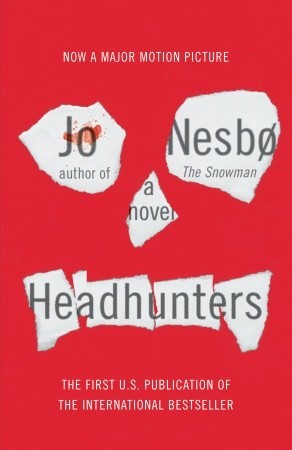 first person narrative contains the usual Nesbo flair for thrilling plots populated by ghastly villains and miscellaneous others who exit and enter, the characters in Headhunters failed to leave an impression. Part of the reason for this, I think, is because from the outset, they are quite superficial. The lead character and POV of the novel, headhunter and part-time art thief, Roger Brown, is a narcissistic prat (and unattractive - in the psychological and emotional sense – anti-hero) who boasts about not only the way he can read people, but practically every other element of his life: his outstanding reputation in his main gig as a corporate headhunter, his grasp of FBI interrogation techniques and perfection of them, his beautiful art-gallery owner wife, his hair, his manner of dress etc. etc. While he tries to suggest he is comfortable with his relatively short stature, there is also a sense in which he does protest too much and the reader cannot help but think that Roger works hard to overcompensate. This is something that, in many ways, holds true when he meets the more than capable former executive and soldier Clas Greve, and decides he might be a suitable candidate for a top job. But when Roger learns that this man also owns an original Rubens, the cocky Roger decides to risk another job on the side; only, he ends up risking more than he ever bargained for and a deadly cat and mouse game, a head-hunting of a different and very final kind, ensues.
As mentioned above, I didn’t like any of the characters in this book. While I wondered if this was social commentary on Nesbo’s part, a sort of satire about how shallow and egotistic we’ve become, and the reader wasn’t meant to like anyone, I am now, on reflection, not so sure. After all, in Nesbo’s later books – the Hole ones – one of the great strengths is the marvellous shades of grey in which characters are painted, revealing the rich canvas of what passes for morality and how even ethics have a context. In Headhunters, no such complexity exists and rather than a three-dimensional picture of human foibles and choices, we are given a very superficial portrayal indeed.
Furthermore, the plot was clichéd in parts, too far-fetched in others (the scene in the outdoor toilet was just silly) and above all, predictable. Mind you, that didn’t mean I wanted to stop reading, Nesbo is a very good storyteller after all. It just meant I didn’t really care. I didn’t care who lived, who died or what the outcome was. I didn’t invest. That made me feel a little sad.
Reading that Hollywood is making a film out of this book surprised me. It’s not that original – I would have thought the Hole stories would have offered much more complex fare – maybe that’s the rub. Still, it’s not a bad book by any stretch of the imagination and made for a quick summer read. It’s just not the Nesbo I have come to admire and look forward to so much.


Book Reviw: A Thousand Splendid Suns by Khaled Hosseini
You know you are in the hands of a masterful storyteller when you put a book down only because you have no choice – life drags you away a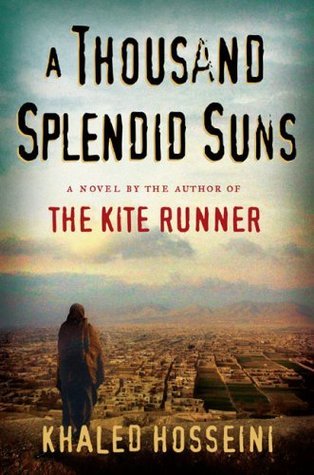 nd it’s a physical and emotional wrench to let it go, even for a moment. When all you can think as you go about compulsory tasks are the story and the characters. While you are away, you wonder what they are doing, where the narrator is going to take them and you care about their fates deeply. Such is the effect of A Thousand Splendid Suns. The characters live beyond the pages – not merely at the end, but throughout the reading experience, so realistically and gorgeously have they been drawn.
Just as the sublime The Kite Runner told the tale of doomed male friendship, ATSS tells the story of two very different Afghani women: Mariam – shy, subservient, filled with self-doubt and yet, despite what life has meted out, is also honest and possessed of an innocence that is both her greatest strength and weakness. Then there is the beautiful, smart and kind Laila. Raised under very different roofs and with different expectations of their future, fate in the form of political and sectarian upheaval throws these women together and what happens before, during and after is heart-wrenchingly bitter-sweet.
Hosseini knows not only how to capture the reader’s imagination but our hearts as well. Told without sentimentality but nonetheless with an almost unbearable sweetness and pathos, ATSS unapologetically describes what the women of Afghanistan (and many men, children, families and thus communities) were forced to endure. The rampant misogyny, sexism and horrific abuses; terror, hope, the loss, the grind, the joy in the smallest and simplest of things; their constant sacrifices. Their resilience is formidable and humbling; their strength amazing – as is their capacity to forgive. By focussing primarily on Mariam and Laila (and those who play important roles in shaping who and what they become) Hosseini gives us a searing insight into not only the plight of those who are helpless pawns in a brutal battle for control of a weakened state, but Western prejudices, sense of entitlement and misunderstanding as well as revealing the ugliness and terrible beauty of a culture so few of us understand except through snatches from sensationalized news bulletins or from foreign correspondents with a brief to fill. That there are those resistant to as well as complicit in oppression, suffer because of willful ignorance and the brutality of others; the way in which religion and culture can impose horrific restraints when reduced to power struggles while at the same time gesturing to a proud nobility is evident in the novel. Inevitably, as is the case when religion, sex and gender become politicized, there are scapegoats who pay for the hubris and cruelty of others – for more than a lifetime. The damage inflicted can last for generations.
I didn’t want this book to end. My heart soared, it plummeted; I gasped, cried, held my breath and as I read felt physically pummeled then embraced, experiencing the 30 years the tale covers as a visceral thing that left me psychologically and imaginatively battered but richer in ways that count. But, I also felt ashamed. Ashamed for thoughts I may have harboured deep down, for prejudices I may not have even realized I held until this novel exposed them to me, and for that, I am grateful.
This is a beautiful, deeply moving book that I cannot recommend highly enough. It was a privilege to read and now to share.
December 10, 2013
Book Review: Shakespeare’s Rebel by C.C. Humphreys
I wasn’t at all sure I was going to like this book though I immediately loved the setting, the language and way the two worked together to draw the reader into the intoxicating, dirty, dashing and dangerous world of late Elizabethan England. Part of the reason for my uncertainty was the lead character, John Lawley. In some ways meant to encapsulate the “renaissance man”, albeit, not a noble or an aristocratic one, Lawley is a drunkard who, above all, periodically indulges in month-long benders and consequently lets down anyone and everyone in his life. He is also an expert swordsman and brave soldier who in the past accompanied Robert Devereux, the Earl Of Essex and the Queen’s young favourite, to Spain and was by his side during other skirmishes, thus earning praise and a reputation as loyal and courageous.
Despite all this, there is something not quite loveable about Lawley. He is neither rake nor rogue, ethical or ideologically driven. In fact, for a man who has done so much and has so many strings to his bow, as well as important and influential people on his radar, he is remarkably bland and, though you don’t dislike him, I found I couldn’t really like him either and that was disappointing as I desperately wanted to.
Lawley stumbles from one bad choice to another. Wanting nothing more than to work with his beloved Will Shakespeare and the players at the globe, prevent the love of his life and mother of his son from making a disastrous marriage, Lawley tries to pick up the pieces of his life and start again. His first effort is to get sober. However, with war in Ireland looming, and the Queen and her sidekick, Robert Cecil determined to use his connections to the Earl of Essex (Devereux) for their own ends, Lawley is just a pawn in a game he has no choice but to play – and it seems lose.
As events spiral out of control, it looks as though Lawley is destined to lose everything he cares about – his love, son, and reputation – even Shakespeare, his most loyal friend, is growing tired of his inconstancy, of his disappearances without explanation or apparent motive (the reader can get annoyed with these too). But we soon learn not to underestimate this man, even when in his cups, as Lawley has resources and skills that no-one (save his closest friend) know about and if he can just suppress his desire for whiskey long enough, evade those who seek him, and rescue those who need him, he might even get the chance to prove himself and, as the blurb on the book promises, save England as well.
This is a good book that has some really exciting parts and some, for me, frankly dull ones as well. C.C. Humphreys manages to capture the period so well. His use of language, the rich dialogue and manner of the characters simply flows and captivates. The streets of London, of Southbank, the wilds of Ireland and the darkened offices of Cecil and other grisly locations are all beautifully realised. The life of the actors and theatre associates as well as the inner workings of the theatre are also fabulously woven (not surprising when you read about the author’s background which also explain his wonderful use of language and why sword fights dominate the book). What dragged a bit for me were the sword fighting scenes which I’ve no doubt someone who understands fencing would greatly appreciate, but for an ingénue, they went on far too long and were hard to imagine. They interrupted the flow of the narrative. Likewise, the descriptions of Lawley on benders or the constant refrain of his desire for alcohol were overdone to my taste (pardon the pun). Likewise, the love story resolved itself far too quickly in relation to the tensions that were set up, but I am being very picky.
Overall, I enjoyed this action-driven book and really appreciated the way a period I am growing to love very much was brought to life.
December 9, 2013
Book Review: The Elizabethans by A.N Wilson
After some quite shaky moments where I wanted to hurl this book from my sight, I ended up thoroughly enjoying and learning from A.N. Wilson’s, The Elizabethans, a rigorous and highly entertaining study of England and its people throughout the long reign of Elizabeth the First.
The book commences with a statement that rapidly needed explication: that is, that we are only now, in the Twenty-First Century, seeing the end of the Elizabethan world. Startled by this observation at first, I then understood what was meant, as in the first two chapters Wilson quickly covers Elizabeth’s disastrous campaigns in Ireland and attempt to oppress and subjugate its peoples before examining the beginnings of English expansion and colonialism in the New World. Shocking the reader with some cold, hard facts about E nglish geographical growth and plans for domination (I think one of the terms used was “Seeding” – but that may have been another book) it soon becomes clear that Wilson is being deliberately provocative in order to insist the reader suspend contemporary judgement and the sins of “isms” (racism, sexism, classism etc.): that we view the Elizabethan world through Elizabethan eyes, politics, religious upheavals and belief systems and that we, as far as possible, withhold judgement (and for the sake of better words, “politically correct” assumptions and thus criticisms about actions and decisions – though this is very, very hard) and instead seek to immerse ourselves in this rich, brutal, decadent, paranoid, artistic and amazing time.
While I initially struggled with some of Wilson’s assumptions (and though he is an historian, he makes many, liberally sprinkling the text with terms like “possibly” and “maybe” and words that, as one chapter is titled (borrowing a quote from Edmund Spenser’s The Fairie Queen), lie “twixt earnest and twixt game”, sitting somewhere between fact and writerly elaboration) – let me give you an example of one of the worst.
It happens on page 207. This is where I almost put the book down never to pick it up again. In chapter 17, when writing about Sir Philip Sidney and Ireland, Wilson discusses William of Orange and the Protestant upheavals in the Netherlands:
“English involvement in the Low Counties was something about which Queen Elizabeth nursed ambivalent feelings. In the years 1585-6 the English soldiers serving there, and the people of the Netherlands, suffered acutely from an excess display of all her worst character traits – vacillation, tight-fistedness, hysterical rages. Presumably [another one of those twixt words] the ill-fated campaigns in which thousands of Englishman, including Sir Philip Sidney, perished coincide with her menopause (my emphasis).”
Yes, you read it right. I was astounded. Elizabeth’s menopause was the reason so many men died and suffered needlessly? Good God.
After my initial shock at this blatant, frankly offensive and bold postulation, I found myself reconsidering how to read and respond to the book. The information is wonderful, the scope wide and fascinating and the characters that people this landscape so interesting. Sure, Wilson peppers the history with his observations and witticisms and, frankly, obvious adoration for as well as somewhat misogynistic attitude towards Queen Elizabeth, but it was like being in the presence of a really, really knowledgeable professor at university who discourses freely around a subject about which he knows a great deal and isn’t afraid to offer his own opinion and interpretation of people and events. I imagined him pausing or raising an eyebrow, daring a response with a twinkle in his eye (yeah, I know, I am now twixting). In other words, I felt he was challenging us to think, pushing us to move outside known historical squares and ruminate on what might have been… even menopause, I guess…
Instead of continuing to be offended or concerned, I chose to sit back and go along for the ride, enjoying the gossip, his asides, the facts, the summations and learning more about Elizabeth, Dudley, Dee, Essex, Burghley, Hawkins, Walsingham, Marlowe, Jonson, Sidney, Harrington, Lyly, Campion, Raleigh, Burbage and so many more than I might have from a more, shall we say, circumspect book or author (and I have read and enjoyed many).
The times are beautifully evoked – from the narrow dirty streets of London, the sermons at St Paul’s, the lawlessness of Bankside and the Stews, the piracy and profligacy – and not just of Drake, Raleigh et. al., to the dreadful conditions of the poor who suffered more than any others through plagues and failed harvests and the ravages of constant threat of invasion and wars offshore. The religious schism of the times, the ideological fracturing that occurred and the people that both fell into and profited from the cracks that followed are beautifully and imaginatively rendered.
By the time I finished, I found I really, really liked this book. Furthermore, I liked Wilson and his historical chutzpah – comments about women and menopause and the attribution of blame (as well as other problematic and taxing statements) aside. That he concludes the book by referring to Elizabeth as a distinguished monarch (even with all her flaws and faults) who the British can thank for the country (or, I guess, curse) they live in now reveals the esteem in which he holds this woman of history, but it’s not an esteem that is without qualification or, as I said, awareness of her very real failings. Wilson wears his little British heart on his leather-padded elbow sleeve and I admire him for it.
Wilson is the sort of bloke I wish I’d had as my history lecturer – and I had some marvellous ones. If you want to take a confronting, rollicking and always interesting ride through Elizabethan times, then this is the book for you.
November 24, 2013
Book Review: the Queen’s Head by Edward Marston

This was a fabulous, fast-paced story about the book holder (akin to a stage manager) for an Elizabethan theatre group – Lord Westfield’s men – named Nicholas Bracewell and how, after a friend is brutally murdered, he’s tasked with discovering the identity of the killer and seeking justice.
Ostensibly a murder mystery, this novel is so much more. The wonderful backdrop of the theatre is used to great effect as is the year this story is set – 1588, the year of the defeat of the Spanish Armada and the one in which Elizabeth Ist’s reputation as a sovereign not to be trifled with was cemented.
Replete with wonderful details of the era, of the workings of theatre – from the writing of plays, the commissioning of them, rehearsals, attendance, costuming, and the way in which actors were viewed (at this period in Elizabeth’s reign at least it was with a great deal more respect than even ten years earlier), The Queen’s Head (which is both the name of the inn in which the troupe do most of their performances as well as gesturing to plot) is a rollicking story that brings to life an interesting group of characters, an occupation and way of life that is both exciting, difficult and unpredictable and a period that is celebrated as much for its artistic achievements, science, political turmoil and exploration as it is violence and disease – all of which are affectionately and respectfully acknowledged in this novel.
Loved this gem and have already started the next book, The Merry Devils.
November 17, 2013
Book Review: The Tudor Secret by C.W. Gortner

This was a strange and compelling book. When I first started reading it, I almost cast it aside as I was annoyed by what I felt was being asked of the reader: that is, too great a leap of faith when it came to the historical facts upon which Gortner drew to craft his tale. But, as the story of Brendan Prescott, an orphan raised by the powerful and influential Dudley family and elevated to personal servant of none other than a young Robert Dudley just before the death of Edward VI, progressed, I became caught up in the plot and action and found it hard to put down.
Prescott, prior to his new role was a simple stable boy who yearns for the woman who raised him but died before he reached his teens, is sent to London to serve his new master and thrust into court politic. He finds himself not merely at the centre of a huge conspiracy to alter the royal succession, but also an unwitting pawn in a deadly game that’s been played between the leading noble houses for years.
Employed by Robert Cecil to spy on his behalf and for the benefit of the young Princess Elizabeth, Brendan doesn’t trust Cecil or his dark-robed henchman, the dangerous Francis Walsingham who, rather than an ally, seems more like the assassin rumours declare. Certainly, as it becomes evident that Brendan isn’t who he thinks he is, his mission becomes as much focussed on finding out his real identity – an identity others are using not only against him, but against those they would see brought down – as it is protecting the princess. Running towards trouble and finding it at every turn, Brendan also has his loyalty tested, discovers love, friendship and how the eyes and heart can deceive in extraordinarily painful ways.
Against a backdrop of religious and political upheaval, Brendan’s inculcation into Cecil’s spy network and his own story are interwoven. The story gallops and I couldn’t read fast enough to discover what would happen. My initial misgivings about what I thought was a misuse of history were laid to rest as Gortner cleverly mingles fact and fiction, but not in a way that stretches the reader’s faith (as I’d first feared), but in order to create an utterly satisfying narrative. Will be reading the rest in the series for sure.
Book Review: Nicholas Cooke by Stephanie Cowell

Never before have I so thoroughly enjoyed a book where I loathed the protagonist so much! It’s testimony to Cowell’s skills as a writer that despite her volatile, selfish, doubt-wracked hero, Nicholas Cooke, the man who is at various times an actor, soldier, physician and priest, dominating every scene and annoying the bejesus out of me, the story of his journey - from abandoned young son of a criminal father and prostitute mother - through his various occupations and callings, is gripping.
It’s not Cooke who kept me glued to the page, but Cowell’s excellent evocation of the period and the characters who populated Elizabethan London, England and even abroad. We encounter Kit Marlowe, Will Shakespeare, and other luminaries of the theatre, sciences and arts – but in Cowell’s hands they are humanised and revealed with flaws, foibles and insecurities, much like Cooke. Over the thirty year span of the novel, we see the changes wrought through Elizabeth’s reign, the constant fear of invasion, new discoveries, the way the arts were first suspiciously regarded and then flourished, how new science and knowledge changed forever the way man and the heavens were regarded and how literacy improved and self-education was not out of the question causing men (and women) to question their status and place in the universe and even their God.
The vibrancy, squalor, disease, passion and fervour are all brought to life as Cooke moves from one occupation to another, breaking hearts and having his broken in the process, learning what he can and can’t abide and selfishly pursuing a goal that is both spiritual and grounded.
I almost put this book down, so detestable at times was Cooke (he is also incredibly vulnerable and Cowell reaches deep to give readers’ access to his emotions and mental state – and while this does offer explanations for his choices, it also made me want to shake him – hard), but I am so glad I didn’t. In the end, while I never really liked Cooke (have I mentioned that?), I did come to understand him and found his story believable and refreshing. He is an anti-hero of the Elizabethan era whose weaknesses are better remembered than his strengths and yet his awareness of these is what makes him so real and ultimately memorable.
November 5, 2013
Book Review: Just One Evil Act by Elizabeth George
I was so excited when this book came out, I dropped all others I was either reading or about to in order to lose myself in the world of Inspector Thomas Lynley and his partner in crime, Sergeant Barbara Havers. And what a wonderful world it is – fraught with danger, beauty, secrets, betrayals, threats and promises – and this time against a magnificent and frustrating Italia n backdrop.
After being ever so slightly disappointed in the portrayal of the grieving Inspector Lynley in the last couple of books, it was nice to have the sleuthing Earl return to form… but, just when George brings Tommy back, Havers goes off the rails and behaves in a manner that seems out of character to the fiercely loyal, street-wise and committed detective we’ve grown to know and love.
The explanation for Haver’s erratic behaviour is quickly established. It’s due to the disappearance of her neighbour’s daughter, Hadiyyah, a child Barbara has come to know and love (and whose father she clearly harbours deep feelings for). Watching Hadiyyah’s father, Taymullah, grieve for the loss of his child breaks Haver’s heart and she does all in her power (and beyond) to help him track her whereabouts, including hiring a private detective and putting her own job under threat (nothing new there).
Never one to worry about compromising her work or other’s opinions of her in a professional sense, when Hadiyyah is eventually located with her mother, Angelina, in Lucca, Italy, but is then kidnapped from the mercato, Haver’s common sense and uncanny ability to sum up a situation and work within it, vanishes. It’s not her desperation to help Taymullah at all costs, or that she makes some silly decisions that irks, it’s the fact that she not only puts her trust in someone who clearly demonstrates they are less than worthy, but that she also fails to share important information and confidences with her partner Lynley that somehow doesn’t ring true…not after all they’ve been through together.
But I am being pernickety.
For it’s due to Havers impulsive behaviour that New Scotland Yard is put on the case of the English child missing in Italy. Instead of being the one chosen to go to Italy and thus, Taymullah Azhar’s aid to help find his daughter and deal with the Italian authorities, much to Haver’s chagrin, Inspector Lynely is sent in her stead.
Once in Lucca, Lynley deals with the Italian law with aplomb. Not only is he fluent in the language, he is masterful at putting people at ease and being able to ferret out the facts. While on the surface, it appears as if Hadiyyah’s kidnapping is the result of a shady deal gone wrong, Lynley, and his wonderful Italian counterpart, the beautifully drawn Inspector Savatore lo Bianco, soon discover that the culprit is much closer than they think.
Like the twisting, narrow roads that bisect and wind around Lucca, so too, the plot turns and angles, and more and more people are drawn into the web being woven around the missing child. Secondary characters enter and exit, their personalities rich, seedy, daring and passionate – like the place in which they live. But nothing is simply black and white. In fact, most often even seemingly honest and respectable characters are cast in unfavourable lights, shadows even, showing the depths to which even decent folk will stoop in the name of love, family and honour.
Distraught and angry at being left in London, Haver’s soon turns her fury into purpose but, as she closes in on the truth, her job and reputation don’t only go on the line, but look set to be destroyed once and for all.
I really enjoyed this book and found it very hard to put down. Even the out of character behaviour of Havers, as far-fetched as it sometimes seems (and you have to read the book to understand) made sense within the narrative, albeit with a big suspension of disbelief.
And, while I adored the evocation of Italy and Italians, I wondered how non-native speakers or anyone with no Italian language would find reading the book as it is liberally peppered with Italian words, phrases and even conversation. I can speak it quite well and found it distracting and, at times, the amount of it unnecessary. There isn’t always a translation offered either and I imagine that would be very frustrating if not off-putting as sometimes a key description is hinted at and various character traits are revealed with just a word or two of Italian. Without an English equivalent, some readers would lose the benefit of that additional piece of prose or subtle clue and fleshing out of individuals. Nonetheless, like all George’s books, the prose is beautiful, the dialogue crisp when it needs to be, languorous as well – just a wonderful read.
This is definitely a return to form for Lynley. Though, I did wonder at the end how the mess Havers created would be resolved. The denouement surprising, even if it does have someone else acting in a way that a reader would not have anticipated – but in this instance, it’s a very pleasant surprise.
Bring on the next Lynley – please!
Book Review: The Virgin’s Lover by Philippa Gregory
I hav e to say, Philippa Gregory is such a reliable author. You always know that when you pick up one of her books, not only are you in for a good read, but one imbued with historical facts without overly didactic. So it is with the wonderfully titled, the oxymoronic, The Virgin’s Lover, essentially the tale of the relationship between Robert Dudley, the future Earl of Leicester, and Queen Elizabeth the First, the woman who would later be dubbed the “Virgin Queen.”
Set in the early years of Elizabeth’s reign, when she was not only being pressured by her council and foreign powers to marry and thus secure an heir to the British throne, but was also the victim of plots to overthrow her and restore the Catholic faith (and a Catholic royal), it shows Elizabeth at her mercurial, cocky and overbearing best – at least on the surface. Confident in her youth, beauty and brains, she wields authority as though born to it, when in reality she was never intended to lead the country, let alone be a sole sovereign.
Gregory does not hesitate to expose Elizabeth’s awareness of this and thus her insecurities, and anyone raised on a diet of BBC miniseries of the Queen’s life or Cate Blanchett and other actors’ powerful portrayals (Helen Mirren’s is one of my favourites), might find reading of her indecision and constant need to reassure herself with her confidant Dudley, irksome and feel it rings false. Yet history indicates that the queen was notorious for changing her mind, seeking the advice of familiars and ignoring the counsel of those who might know best. Beset with nerves, prey to occasional bouts of hysteria, she presented a strong façade to the public. Unpredictable at best, difficult and demanding at worst, in Gregory’s interpretation, it seems no-one but Dudley could control or soothe her. Though, and this is something that drove me mad, Gregory has either read somewhere or decided to introduce in Elizabeth the habit of pushing her cuticles down as an indicator of a nervous disposition. There are far too many references to this – so much so, they detract from the story and jar whenever mentioned.
Gregory has also seen fit to take the rumours of a sexual liaison between the queen and Dudley to a logical conclusion and certainly, Dudley’s sexual power over Elizabeth does account for the authority he was able to throw about in her name and elsewhere.
Confident he would one day come to the throne, there was only one obstacle in Dudley’s way: his wife, Amy Robsart. An early marriage of convenience on his part and love on hers, the needy, clinging Amy who is abandoned for the queen, in Gregory’s book is finally given a voice.
Sometime plaintive, other times painful, it’s nonetheless fascinating to “hear” the thoughts and desires of Dudley’s wife, the “other woman” to Elizabeth, and be given an insight into her despair and the knowledge that she has lost not just her husband, but her love. Forced to seek shelter from friends, a situation that became increasingly fraught as Dudley’s favour and chances at kingship grew, Amy cuts a pathetic and tragic figure. But, if you know the history you also know that there’s a sad and twisted sense in which she finally gets her revenge upon Dudley for his betryayal and Elizabeth for seeking love where it was already taken.
Gregory takes delicious liberties but without sacrificing veracity. A good read that certainly puts a strain on the idea of Elizabeth as a “Virgin Queen.”
November 3, 2013
Book Review: Burial Rites by Hannah Kent
This is an extraordinary book that, for reasons I understand, has had a slightly mixed (but mostly very positive) reception.
An historical novel set in  Iceland during the early 1800s, it’s based on the true story of the last days of convicted murderer, Agnes Magnúsdóttir, and the times she spends interred with the family of an official, Jon Jonsson, awaiting her execution.
Arriving at the farm one day against the wishes of the Jonsson and his wife, Margaret, and two their daughters, Agnes presents as a threat to the fairly closed and private family and the community of which they’re a part. Because of the brutality of the murder she’s accused of committing (two men bludgeoned and stabbed to death in remote farmhouse), Agnes has been judged not only guilty but also monstrous and not fit to join civilisation before she even enters the house of her new captives.
However, Agnes is not what anyone expected – not the official’s wife, her daughters, or the assistant priest, Totti, who Agnes has requested tend to her spiritual needs in her last months.
As the days pass and autumn unfolds into winter, shared duties and the close confines of the living arrangements within the Jonssson home means that the cool and suspicious distance between prisoner and family/workers cannot be maintained. Facades crumble, assumptions about people are challenged and, most importantly, Agnes gets to tell her version of the events leading up to the murder.
Burial Rites is a powerful narrative that nonetheless gently captures and captivates the reader. The beautiful, haunting prose with its vivid descriptions of the stark but stunning landscape and weather is juxtaposed against the always awful reality of both approaching Agnes death and the murders that underpin the present situation. Characters are gorgeously drawn, fiction and fact interwoven through the insertion of letters, quotes from Icelandic sagas and accounts from those actually involved, melding into a story that is so affecting and yet laden with meaning as well.
I found the book impossible to put down. It was slow in parts – especially at the beginning where each member of the Jonsson family is presented and Agnes is introduced “offstage”. The peace and ordinariness that marks the Jonsson’s lives is soon to be shattered and I loved the gentle build to this point, the setting up of anxiety, tension and righteousness as well. We first “see” Agnes through the Jonssons’ eyes, having had our perceptions coloured by theirs. It’s a clever strategy and the way Kent has Agnes defy these is subtle and heart-wrenching. It makes the inevitability that the book finally tumbles towards all the more searing and difficult to contemplate let alone finally accept.
I thought this book was a masterpiece and have found Kent, in the interviews she’s given over the novel’s success, to be modest and fascinating as she explains why she wrote the book and discusses its reception.
A superb, challenging and evocative book that lives in your head and heart long after you put it down.