Karen Brooks's Blog, page 4
June 9, 2014
Book Review: Currawong Manor by Josephine Pennicott
In this atmospheric and historically detailed tale set in the Blue Mountains, Josephine Pennicott tells the story of Elizabeth Thorrington, a renown photographer, who’s invi ted to the home her famous grandfather, the artist, Rupert Partridge, Currawong Manor, in order to photograph the house and some of the people that used to live there for a new book that’s been commissioned. This book is set to celebrate the life and talents of Rupert. But Currawong Manor is a place of secrets and regrets, of lies and deceptions, of long-held suspicions and is the place where a great tragedy happened many years earlier. A tragedy for which no satisfactory explanation has ever been provided… until perhaps now…
Knowing her family’s tortured history, Elizabeth is a rather sad and quite prickly young woman, who has her own skeletons in the closet. Introduced to the current residents as well as one of her grandfather’s muses, the still vibrant and sassy Ginger, Elizabeth is keen to commence the project for which she’s been commissioned and delighted to be working with one of her grandfather’s “Flowers” as the young women were known back then.
Back in the 1940s, Ginger was one of three young women who lived with her grandfather, his wife, Doris and their lovely young daughter Shalimar, and posed for his many paintings. Whispered about, the source of much gossip and speculation as well as desire, regarded as a “fallen woman”, Ginger has risen above her origins as a “Surrey Hill rat” to become celebrated in her own right. Aware of the debt she owes Rupert and his legacy, grateful for the chance he once gave her, Ginger has agreed to be interviewed and photographed, but that doesn’t mean she has to like it.
Elizabeth also meets the former musician and journalist, Nick, who has made a living writing “true crime” stories and who has been hired to write the prose that will accompany Elizabeth’s photographs for the new book.
Curious about what happened back in the 1940s when so many lives were cruelly cut short, and determined to uncover the truth, Elizabeth quickly realises that Ginger and another resident at the Manor, Dolly, know more than they are prepared to tell.
Determined to get the heart of the matter, to clear her grandfather’s reputation and find out what really happened all those years ago, Elizabeth not only has to confront her family’s past, but the toll that years of secrets and dissembling has taken upon her and those she loves most.
Dark, the story unfolds languidly, moving the reader backwards in time before returning to the present, weaving a tapestry of mood and affect. Different points of view dominate, but mainly Elizabeth and Ginger’s and it’s through these two women that the reader, like those who study the challenging works of art and photographs that pepper the narrative, telling their own story, comes to understand the truth. We have to look closely, delve deeper, read the imagery and the meanings that accrue around people, their actions and the objects they hold dear in order to uncover the secrets. Just as Rupert used symbols to expose the brutality and callousness of war and the human wreckage it leaves behind, so too, Pennicott uses the architecture of the house and the magnificent grounds with its abundant flora as well as the haunting and dangerous Owlbone Woods (which is a character in itself), to hint at what’s to come, at what lies below the surface.
The settings are richly and beautifully drawn. You can smell the flowers, feel the cold press of the snow or the dewy warmth of a humid summer. Likewise, as the mystery unravels, you can feel the whispers of the past and the weight of guilt that hangs upon those who carry their secrets, determined to protect themselves and others. Like the birds that occasionally darken the eaves of the house, doom walks through the pages and reading Currawong Manor becomes a visceral experience – at once exciting and dramatic.
A Gothic treat for lovers of mystery, family dramas, history and suspense.


June 2, 2014
Book Review: The Lincoln Myth by Steve Berry
Yet again, with The Lincoln Myth, Steve Berry has written a book that demonstrates the depth of research and physical effort he goes into in order to write his Cotton Malone (and other) adventures. This time, Berry takes the reader to Malone’s bookstore and other environs around Copenhagen as well as Washington, Utah, Salzbu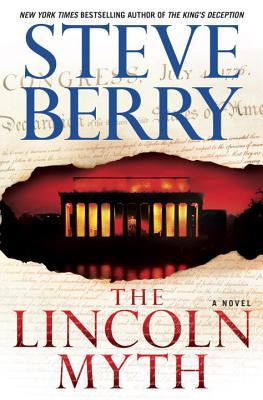 rg and Denmark. He also takes us back in time to the years when Abraham Lincoln was President of the USA and made a fraught decision that would save the fledgling nation. Lincoln’s decision remained a secret, one passed down from President to President. It’s a secret that could alter the very fabric of the Constitution, and would have terrible repercussions if it was ever divulged. This is the premise on which The Lincoln Myth is based – that, and other popular misconceptions about Lincoln – the man and his motives – as well as the early Mormons, the persecution they suffered and their efforts to escape intolerance. This great secret connects the Mormons, Lincoln and the Constitution, but if it were every divulged it could rend not just history and various iconic figures, but start a war. So why would anyone want to expose it?
Well, they do, and the clock is ticking. It’s up to supposedly retired Cotton and a new and unwilling side-kick (and in many ways, a younger version of Malone himself) to save the day. Making appearances again are his boss, Stephanie, who is more frustratingly elusive than usual, the gorgeous Cassiopeia Witt, and a seemingly naïve but likeable Master of History student. Along with the women, there’s a maniacal Spaniard, and some fairly orthodox Mormons. Let the games begin.
Divided on lines similar to the Civil War, instead of North and South, we have Pro Malone and Against Malone and Berry tries to persuade us that sometimes it’s hard to tell who is rooting for who… but it isn’t that difficult. As I’ve found with his last couple of books, Berry sacrifices story-telling and sometimes it appears, even character development in order to cram a lot of didactic information into his tale. Whereas the history of the Mormon Church is fascinating and its relationship to the Constitution unusual as is his version of the politics surrounding the Civil War, I found my eyes glazing over as long-winded conversations and explanations continued. It was like the book was taken over by a boring professor and the drama teacher was kicked out of the classroom. The action (which Berry does very well) ground to a halt and we were provided with yet another history lesson in lieu of the stuff exciting books are made on. I speed-read pages of this novel just so I could get to the part that mattered which is, after all, the interaction between the major characters, the heart of the tale, and the thickening plot. Both were thin on the ground in what could have been a rollicking story.
I also found Cassiopeia – a terrific character – to be a wee bit shallow here. How could her affections change so abruptly? And for an intelligent woman who is practiced in espionage and the duplicity of seemingly good people, she was quite ready to believe the worst of someone who has proven himself and the best of someone she hasn’t seen in years. That grated.
I never really believed in the potential of a Civil War to erupt, no matter how much history and evidence was pushed down my throat – and I think that was the main problem for me here. I so love Cotton and the other familiar characters Berry uses, but I didn’t love this adventure. It was duller than most and unconvincing almost from the beginning. Two and a half stars.
June 1, 2014
Book Review: The First Fifteen Lives of Harry August by Claire North
There has b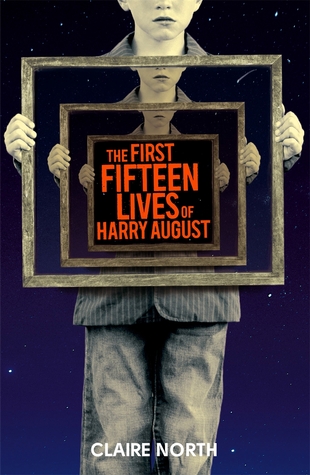 een a spate of books that deal with time travel and variations on the theme of the Bill Murray movie Groundhog Day (Life After Life by Kate Atkinson – sublime - and The Impossible Lives of Greta Wells by Andrew Sean Greer – delightful – as recent examples (see my reviews)), so I was excited to find another in this, for want of a better term, cross-over genre (literary fiction, history, science-fiction/fantasy) that I really enjoy. The First Fifteen Lives of Harry North tells the tale of a man called a kalachakra, someone who is born at the same point in time over and over but with all the knowledge of his previous lives in tact – or at least, they emerge very early in the person’s new life, meaning he or she is quite precocious and able to avoid the mistakes of the past life and build on their understanding of the present, past and future.
As the blurb says, when the novel opens, an 11-year-old girl appears to Harry as he is on his death bed, warning him that the world is coming to an end and he must act (in his next lives) to prevent this. What a fabulous premise. In fact, the entire idea is marvellous and North is at pains to underpin this speculative narrative with science and acceptable possibilities. In order to do this, North takes us back to the beginning of Harry’s lives and to and fros between different ones, the people he meets, his successes and failures when it comes to using his accumulated knowledge wisely, and also takes the reader on sometimes long tangents into other kalachakra’s lives. We also meet the elusive and mysterious Chronos Club and some of its members. And so, the reader is immersed in the lives of Harry North – sometimes, this is an unputdownable experience, but other times, the novel feels weighted by its own cleverness and need to offer explanations and back-stories to gratify the most curious. I wasn’t sure this was always necessary and sometimes dialogue and reflection suffered from a degree of pretentiousness and long-windedness. Having said that, other times it was utterly gripping.
Overall, this story of a reluctant time-traveller and the fate of the world is also about humanity. It’s very philosophical as it explores ideas around power and knowledge and the ethics that these invite and demand while managing to tell a great story of sacrifice, choices, where they take us and the consequences of these.
Really enjoyable.
Book Review: The Son by Jo Nesbo
An unabashed fan of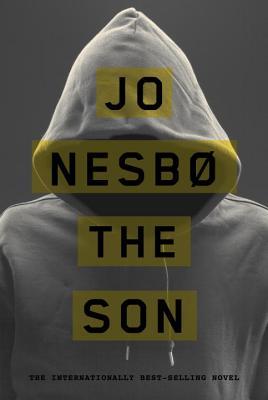 Jo Nesbo’s Harry Hole series, I approached this stand alone novel, The Son, with a degree of reluctance. Initially, I found my misgivings (that Nesbo hadn’t written another Hole book) founded as the story was a bit slow to start and, for me, difficult to engage with. Then, whoompa! The tale of Sonny Lofthus, a drug addicted but strangely charismatic prisoner (who absolves other hardened inmates of their sins), whose policeman father committed suicide many years ago after being exposed as a corrupt cop, is a high-octane and compelling read. As the story progresses, we learn that after his dad’s death, the once promising and talented Lofthus spiralled into crime and drugs and when the book opens, seems content with the bottom upon which he currently dwells. A bottom that sees him taking drugs and responsibility for all sorts of crimes – even those that occur outside the prison walls and which extend his sentence into perpetuity… As long as he is given the drugs that hasten forgetfulness and ennui, he doesn’t give a damn….
That all changes the day an inmate comes to visit him for absolution, making a confession and revealing facts about his father’s suicide he didn’t know. Suddenly, Lofthus not only has a reason to live, but a need to escape his confines, the debt he’s in to a crime lord known as “The Twin”, and redeem his father’s name and enact the revenge that’s long overdue.
Concurrent and intertwined with Lofthus’ tale is that of Chief Inspector, Simon Kefas, and his female side-kick, Kari who, after Lofthus escapes, is called upon to investigate a spate of grisly murders. There is a connection between Kefas and Lofthus that goes back years – one that sees Kefas obligated to investigate murders that seem cut and dried. A washed-up cop but with experience, Kefas refuses to accept that the perpetrator of the crimes is the person all evidence points towards. Operating against the advice of his peers and superiors, there are shades of Hole in Kefas as he fights for justice and understanding – not just for himself, but for Lofthus as well.
There are so many twists and turns in this novel and for fans of the Hole series, this is what Nesbo does so well. Just when you think you can predict a motive or foreshadow events, Nesbo turns everything on its head. There are familiar characters in the sense that Nesbo does the disillusioned, anti-hero with a complex emotional life and conflicting motives so well, but each character, even those who make brief appearances, are also complicated, fascinating and together work to resolve the intricate puzzle this novel becomes.
A knotty morality underpins this narrative as well – Lofthus’ and Kefas’ tales – that turns ethics and suppositions about right and wrong on their heads. That is what I love about Nesbo’s novels – the characters and their arcs are never black and white but many shades of grey and then some. Unpredictable, dark and after an initial slow-burn, a novel that takes off at the speed of light, this is a wonderful stand alone for those who love an exciting, roller-coaster read with head and heart.
May 25, 2014
Book Review: The Truth About the Harry Quebert Affair by Joël Dicker
What an unusual book this was. Highly acclaimed and placed within the crime genre, I admit the title and the accolades Joël Dicker has received intrigued me. Yet, when I began reading The Trut h About the Harry Quebert Affair, my initial response was “I am not going to enjoy this book.” There was something simplistic about the writing style, the repetitiveness that begins early in the novel, and it both irked me but also piqued my interest – what on earth is the writer doing? Not very far into the narrative, I became hooked and stayed captivated to the very end.
So, what’s the book about and why all the hype surrounding it? The Truth About the Harry Quebert Affair is ostensibly a murder-mystery. It tells the story of a successful young writer, Marcus Goldman who, having difficulty producing his much-anticipated second novel, seeks the reassurance and help of his mentor, Harry Quebert, a great novelist who, thirty-two years earlier, produced what’s since become an American classic, The Origin of Evil.
While staying with Harry in New Hampshire, Marcus uncovers a dreadful secret – one that could destroy Harry’s reputation – that is (this is not a spoiler, as it’s in the blurb) that thirty-three years earlier, his great mentor had an affair with a fifteen-year-old girl named Nola Kellergan – a girl who disappeared the night she and Harry were meant to elope, never to be seen again.
Uncomfortable with what he’s learnt, but determined to keep the unsavoury secret safe, Marcus returns to New York. A month later, when Nola’s body is found buried in Harry’s garden and Quebert is arrested on suspicion of murder, Marcus rushes to his mentor’s side, determined to clear Harry’s name. Launching his own investigation, Marcus discovers a town rife with secrets and versions of events, of characters practiced in dissembling, many of whom have their own motives for not only killing Nola and another woman who was shot as she tried to aid a fleeing and bloodied Nola all those years ago, but for wanting Marcus to cease his incessant probing…
Segueing from the present to the 1970s, Dicker evokes not just the past with a dreamy reality, but a town on the threshold of having its innocence destroyed, of dreams about to be shattered, and families on the brink of imploding. Atmospheric, moody and creating both a claustrophobic intensity and yet able to summon the beauty of the natural surroundings, the reader is drawn into the tale of Nola and Harry, those who come into their orbit, and all the different versions of what happened that Marcus uncovers. Through his eyes and the words of Harry’s novel and, as it starts to be born, Marcus’ new one as well, we’re given insights into the past, present and the terrible possibilities of that fateful time back in the 1970s and the consequences of what unfolded in the here and now.
The novel plays with notions of truth and fiction – something the title itself announces when it boldly asserts it’s a “truth” and yet, it’s also a work of fiction. And so, the reader is plunged into liminal space where the lines between the two – between fact and fiction, truth and lies, are constantly blurred.
As much a treatise on writing and the writer’s craft; it’s a love story that, despite the unsavoury nature of the love (older man and not yet legal girl), doesn’t have you squirming in disgust. It is also about role models and mentors, and the relationships we form with them. Above all, it’s about memory and the stories that shape our recollections – how we tell them, how we remember them, how they structure our lives and the way we understand and read each other.
All the characters are beautifully and realistically drawn – particularly young, passionate and fascinating Nola – the object of everyone’s attention. The only weakness in the novel (apart from some of the repetitiveness – but that also works to play with the reader’s and character’s heads) is Marcus’ mother. Now, I know this type of Jewish mamma – I am Jewish and there’s no doubt, my mother and many of the women of her acquaintance rang familiar as I read the dialogue and interactions between mother and son. But she also grated in a book that took pains to construct fully-rounded and realised people. In that sense, she read more like a comic foil (though why, I don’t know), a caricature rather than a character and as such belonged more in a re-run of the US sitcom The Nanny than in the pages of this wonderfully disturbing, tricksy and clever novel.
Skilfully plotted, deceptively simply written (it is very easy to read), this is a terrific book packed with twists, turns and surprises that will frustrate, shock and delight. Four and half stars (the irritating and, frankly, misplaced mother forces me to take away half a star!).
April 1, 2014
Book Review: Treachery by S.J. Parris
The fourth book in the Giordano Bruno series, Treachery, takes place in Plymouth, on the eve of Sir Francis Drake’s departure to harass Spanish ports. Accompanying his friend, Sir Phillip Sidney, who is tasked by the queen with bringing the exiled Portuguese ruler safely to London, Bruno, as readers have come to expect, stumbles into murder, conspiracies and, as the title suggests, treachery. Upon his arrival, Bruno learns that one of Drake’s officers has committed suicide, though after one look at the body, Bruno is able t[image error]o confirm Drake’s suspicions, that his man didn’t take his own life, but was brutally murdered. Sidney (who has his own selfish reasons for wanting to earn the gratitude of Drake) quickly offers Bruno’s services to track down the killer.
Amid the grubby, bustling port town of Plymouth, more than one conspiracy emerges and Bruno meets some unpleasant people from his past – as does Drake – men intent on revenge at all costs. Hounded, hunted, second-guessed, watched, Bruno works against time and the evil intentions of others, all the while keeping an amorous woman at arm’s length and trying to discovery the mysteries of yet another heretical book.
Parris’s evocation of the time and place is terrific. For regular readers of the series, Bruno is such a fully realised character and the more you see him in action, the more you appreciate his humour, learning and (mostly) abundance of common sense. Sidney is given more time in this novel and his character is given the opportunity to, well, not shine, let’s say show its strengths and weaknesses. Likewise, one of the heroes of the Renaissance, Sir Francis Drake, is well drawn.
In terms of plot, the books follow a pattern: Bruno encounters death, bodies and plots and seeks to solve the conundrums they raise and offset the danger they pose to himself and others. Risking life and limb, he moves or blunders from clue to clue, being attracted to a woman, finally uncovering the identity of the killer/plot and saving the day (but not without a body count and a few victims). I don’t mind the fact that as a reader, I sort of know what’s going to happen. There’s a particular pleasure in knowing the rhythms and cadences of a series and part of the delight, even when you pick the identity of the antagonist (as I did early in this book), is discovering how the author uncoils the story. What Parris does very well is the interior life and motivation of characters, particularly Bruno and this is never predictable except in ways that ring true with the overall narrative arc and character development.
There are many twists and wrong turns in this novel as well as sub-plots and minor characters which all work to feature Bruno’s particular skills and attractions. Far more than the other novels, in Treachery, Bruno becomes a sort of Renaissance super-hero – sans costume – as faster than a speeding bullet from a blunderbuss and more powerful than a horse drawn carriage, he risks himself physically and in astonishing and dangerous situations again and again. Being a philosopher has never been so deadly or thrilling. Be prepared to suspend your disbelief, but not your reading pleasure.
A wonderful addition to a really good series.
March 25, 2014
Book Review: The Elizabethan World Picture by E.M.W. Tillyyard
This is a gem of a book that basically explores the Elizabethan way of viewing the world by examining popular literature and philosophies o f the period.
Quoting extensively from the likes of Shakespeare, Marlowe, Spenser and Sidney (among many others) and making reference to the Greek philosophers that influenced Elizabethan thought, particularly (pun intended) Plato, Tillyard explains the way people of the 15th and 16th centuries understood their relationship to the corporeal and spiritual world and how they established hierarchies of being from oysters through to lions; from paupers to kings. How these all existed in a complex and simple relationship, a chain of being within the cosmos. How this was all regarded as functioning within very ordered vertical and horizontal planes and within a deep religiosity, is also explored. While anyone familiar with Elizabethan literature and history will not be unfamiliar with Tillyard’s ideas, it’s the way they’re explained and how literature and plays are used to both provide and support evidence that makes this book particularly delightful.
I think the most surprising thing to come out of the text for me was Tillyard’s summation that for all we think of the Elizabethan poets and dramatists as having some special relationship to their muses, the world and imagination, what they produced was quite “ordinary”. What he means by this including the music of the spheres in a poem, or likening the queen to the sun or moon and stars, linking the macrocosm and microcosm – was rather commonplace thinking for the time. He is not diminishing the accomplishments of the poets etc but rather asking us to understand that all Elizabethans read the world in that way, so the language of Shakespeare, Milton and Marlowe etc. was speaking to like-minded people who lived and breathed the allusions rather than grasping at powerful and beautiful metaphors that prove elusive to so many now. While an obvious point, I loved reading it and have subsequently tried to read Spenser with that view of the world in mind. It really does change things and make them easier to grasp. Not as easy as I’d like, but for that to happen, I’d have to step back in time awhile. Now, where’s my Tardis….?
March 19, 2014
Book Review: Sacrilege by S.J. Parris
The third book in Parris’ Giordano Bruno heretic and spy series, Sacrilege finds our philosopher hero, Bruno, at his most vulnerable yet. Still living in the French embassy it’s not until Bruno discovers the identity of the person following him through the streets of London that he’s reconnected with someone from his recent past, someone for whom he has strong feelings. When asked to  help this person clear their name of a crime they didn’t commit, Bruno is unable to refuse. Seeking the permission of his employer, the spymaster Sir Francis Walsingham to go to Canterbury, he’s also tasked with uncovering any Catholic plotters in the heart of a city once famed as a site of pilgrimage and the place where Thomas Beckett’s bones were once buried.
Travelling under a non-de plume, Bruno arrives in Canterbury and discovers plots and plans aplenty. But when the body count rises and he’s accused of terrible crimes, it’s not just his friend’s name he has to clear or Sir Francis’ suspicions he has to lay to rest. Bruno finds himself fighting for his life and the only way he can save himself and his friend is to uncover a conspiracy so dark and tightly controlled that has the potential to bring down the greatest men in Canterbury – men who will stop at nothing to protect their own hides, even if it means killing innocents.
Once again, this is a terrifically written and paced novel that allows fans of the series even more insights into the central character and the strengths and, indeed, weaknesses that make him so appealing. Whereas other books have focussed a great deal on the ideologies and philosophies that shaped the era, the laws of the cosmos, the role of magic and mathematics, divine intervention and Bruno’s opinions and studies in these areas, lending the books a historical authenticity and the demonstrating the author’s research and understanding, this novel relies more on character and plot and I think is better for that. Any references to beliefs or famous treatises and how they influence Elizabethan thought is seamlessly woven into the narrative rather than sitting apart as a dinner conversation or dialogue/debate between two learned men. It’s as if Parris is more comfortable with her material now and the reader can appreciate her considerable knowledge and she can just get on with the story. And what a story it is – treachery, sacrilege, betrayal, love, death and faith all feature as does the book for which Bruno will sacrifice anything… or will he?
Book Review: The Trip to Jerusalem by Edward Marston
The third book in the Nicholas Bracewell series by Edward Marston, The Trip the Jerusalem ups the ante by becoming darker and more twisted in terms of plot and character motivation. So much so, it was hard to put down.
 The novel opens with London in the grip of plague, so Lord Westfield’s men decide to quit London and try and earn their keep by playing at inns and country houses on the way to “Jerusalem” or York. Knowing they have to reduce the size of their company in order to make the journey viable, they make some tough decisions regarding the actors, decisions that the murder of one of the players throws into disarray.
As per usual it’s not just murder that stalks Lord Westfield’s Men, but mayhem as well as they discover that their arch rivals, Lord Banbury’s men are not only pirating their plays but managing to perform them successfully prior to their arrival at each destination. But when one of their valuable players is kidnapped, other disasters befall the troupe, and strangers join their pilgrimage, bookholder, Nicholas, requires all his intelligence and skills to outwit Banbury’s men, sort out a muddle of relationships and uncover a plot that threatens the crown.
Fast-paced, easy to read and thoroughly enjoyable (there are some laugh out loud moments) this is a terrific edition to a series that is getting better with each instalment. Part of that is because the characters are becoming more familiar and lovable (or not) but also because the language in which the tales are told and the cracking dialogue is reminiscent of Shakespeare’s plays – particularly the comedies – and there’s a richness and boldness about them that’s at once familiar, strange and lovely to read.
March 10, 2014
Book Review: Under the Wide and Starry Sky by Nancy Horan
Recommended to me by a dear friend with great taste in books (and everything else for that matter!), I was delighted when I began reading Under The Wide and Starry Sky by Nancy Horan to discover it was a fictional account of the life of Robert Louis Stevenson and his older and beloved wife, Fanny ven de Grift Osbourne.
I didn’t know anything about Fanny so discovering more about this magnificent woman, her life, strength, creativity, loyalty and endurance, was wonderful. We first meet Fanny when, with three young children, she sets off from San Francisco to study art in Belgium only to find the sch ool she intended to enroll in doesn’t accept women. Taking this in her stride, Fanny sets off to Paris, determined to pursue her dream and escape the trap her life with her unfaithful husband, Sam, has become. Once there, her life changes in ways she could never have foreseen, but it’s indicative of the era (and the mindset of various folk) that women – and especially ones like Fanny who are smart and independent – often exchange one form of imprisonment for another.
Horan does a wonderful job of presenting the reader with a fully rounded character whom you champion as much for her flaws as her warmth and formidable directness. A woman ahead of the times in many ways, Fanny does not suffer fools, especially after her early life is mostly defined by one. Experiencing great tragedy and loss, Fanny tries not to let these circumstances define her or the lives of her children, though these are a constant sad presence which mark her indelibly and make her artistic soul ache. A fish out of water as an American in France, England, Scotland and later the South Pacific, Fanny is both a survivor and someone who seeks to improve her situation in whatever way she can. Unable to tolerate injustice, this is one characteristic she shares with her husband, Robert Louis Stevenson.
RLS was also a revelation. Horan draws this ebullient, sick, witty, intelligent and oft-times difficult man with sensitivity and realism. As a child, I was introduced to the work of RLS with the beautiful Child’s Garden of Verses, which I in turn read to my own kids. I adored this book and it provided succor and delight through some dark times as did, when I was a little older, Kidnapped! and Treasure Island (Long John Silver both terrified and exhilarated me!). As a mature age Uni student, I came to appreciate Dr Jekyll and Mr Hyde so, in a sense, Stevenson’s works have been literary paving stones upon which I stepped at different parts of my life. Discovering, even in fiction, the man behind the words was lovely. Popular, generous, offended by and active against injustice, he used his gift with words to entertain, thrill and inform. Surrounded by good friends, including members of the literary elite such as Henry James, it wasn’t until RLS’s fame grew that he also encountered syncophants and the pressure that can come with professional expectations.
Dogged by illness his entire life, he and Fanny (who was as much a nurse as critic and wife) would move locations to manage his sickness. This took them to fascinating places and had them enjoying (or not) amazing encounters: from the Swiss Alps to the South Seas all of which are covered in this lovely book.
I had no idea RLS was so peripatetic and this was particularly fascinating.
You don’t have to be a fan of RLS or his work to adore this book. It is a great story, a love story that deserves to stand with better known and heralded ones, as well as a fabulous recounting of a life well-lived and well-loved. Terrific.