Karen Brooks's Blog, page 12
January 17, 2013
Book Review: The Black Box by Michael Connelly
The latest in the Harry Bosch series by Michael Connelly, The Black Box, more than delivers.
While this book is part of a series featuring the wonderfully named detective, Hieronymus (Harry) Bosch, and there are rich rewards for readers who have followed the life and adventures of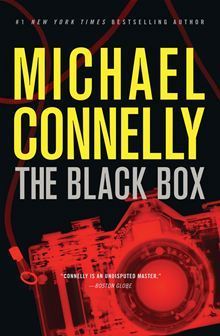 the main character, the beauty of Connelly’s books means that new readers can come to this book with no Bosch baggage and still receive so much pleasure – the type that comes from reading an author who is a master of both his craft and the genre.
Now a member of the cold case squad, Bosch, who has been given an extra five years on a special contract (DROP) so he doesn’t have to retire, finds himself reinvestigating a murder he originally encountered twenty years earlier. Back then, a young and lovely Danish reporter, Annika Jeppersen, was shot dead during the LA riots. Due to the increased crime at the time and the demands placed on the police, Bosch was forced to hand over the investigation to the Riot Crimes Task Force and the case was never solved. It was one that never really left Bosch and when it’s handed back to him two decades later, he determines to uncover the murderer, even at the expense of his reputation and his job.
The “black box” is the name Bosch gives to the one piece of evidence that, like the black box flight recorder in a plane, explains all the other clues, creates a clear context that leads to the murderer and often the motive. Working alone, Bosh is at first unable to piece the evidence together, but when he discovers the all-important “black box” everything changes. Bosch’s instincts that Jepperson’s death wasn’t simply collateral damage from a city out of control, but the result of a deliberate murder, proves right. What Bosch doesn’t expect is that this discovery will lead him to uncover a conspiracy that goes back decades and involves people at the highest levels…
While the novel contains the usual elements of suspense and the inevitable piecing together of the murder puzzle and coming to grips with suspects, what makes the Connelly books terrific is that all of the nuts and bolts of crime writing is interwoven with aspects of Bosch’s private life – the way he struggles to do the right thing by his daughter as a single dad and the growing pains of a new romantic relationship – giving him extra dimensions and humanising him in wonderful ways. Bosch is so ethical and yet, he also doesn’t suffer fools, endearing him to everyone but his superiors and the criminals who often underestimate him.
Connelly has this terrific capacity to make even the predictable (in terms of the investigation) unpredictable and when Bosch makes a few poor choices, his future in terms of career and even his life, keep the reader guessing.
If you enjoy well-written crime and great characters, then make sure you pick up Connelly. I did and my only regret is that he can’t write faster!


January 15, 2013
A Short History of Tractors in Ukrainian by Marina Lewycka
This quite extraordinary book with an even more extraordinary title was recommended to me by a good friend who neither revealed anything about the contents nor genre – she simply said, “read it, I think you’ll enjoy it.”
She was right.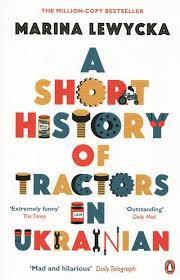
A strange book in that it’s at once both incredibly comical and tragic, A Short History of Tractors in Ukrainian basically tells the story of two estranged sisters, Vera and Nadezhda (Nadia), who are appalled to discover that their widowed and elderly father is about to remarry a luscious Ukrainian woman, Valentina, many decades his junior. Valentina also has a teenage son whom she believes is a “genius”. And so a tale of reckless marriage, love thwarted, dishonour, honour, the past, memory, family and the human capacity to survive unfolds.
The opening of the book is quite stunning and sets a deceptive tone:
“Two years after my mother died, my father fell in love with a glamorous blonde Ukrainian divorcee. He was eight-four and she was thirty-six. She exploded into our lives like a fluffy pink grenade, churning up the murky waters, bringing to the surface a sludge of sloughed-off memories, giving the family ghosts a kick up the backside.”
Enter Valentina: stage right, a ruthless, cunning and beautiful woman who seduces the old man into marriage believing that, as someone who has forged a life in a Western country, he must have money, and who intends, through wedlock to make a better life for herself and her gifted son.
Forcing the two angry sisters to co-operate in order to first prevent their father’s marriage and later, instigate his divorce, the book is told mainly from Nadia’s point of view. Filled with eccentric characters (none more so than the elderly father and Valentina), passion, purpose, and desperation, it is at once very funny and moving.
Like Nadia, we’re drawn into her father’s alternating states of misery and jubilation as his young, mercenary wife, both abuses and thrills him with her flirtatious and calculating ways. Just when you think she’s the “slut” and “gold-digger” the eldest sister, Vera, is persuaded she is, the book also exposes the pathos and hardship that faces those who are displaced – through war, politics and Otherness. Moving back in time to war-time Europe, we’re given insights into what faced inhabitants of occupied countries; the horror of camps, of having loved ones torn from your side and the constant fear that becomes a part of life – fear of loss, of dreams unfulfilled and so much more.
Having experienced this herself (indirectly – Nadia was a peace-time baby who nonetheless witnessed what the war did to her family and became an immigrant too) and through her family who suffered greatly and quietly during the war, Nadia is able to view Valentina and her actions differently to most. Seguing from anger to empathy, the sociologist in her struggles to understand, not only Valentina, but her father and sister and later, the other besotted and desperate characters who Valentina, as her marriage deteriorates, drags into their lives.
Running parallel to all the emotional and psychological chaos of the present is not only the upheavals and horror of the past, but the ordered and academic work that the father works on – the history of tractors. Functioning as analogous to the main narrative, it takes the reader through the glory of agriculture, the boons that technology offered, the abilities of humans to create and harness the power such technology and the ability to control nature offered, but also the huge dangers that lie in succumbing to progress without balance. It also offers a cautionary tale about the seductions of the West – something the Ukrainian refugees know all too well.
The book is also about families, old age, tenderness, love, the ties that bind even when we don’t want them too. It’s about loss, forgiveness and the capacity to both remember and forget. It’s about passion, compassion and human’s dreadful facility for cruelty – even the unintended kind.
Delightful, moving, funny and utterly unforgettable, A Short History is a book that will resonate with me for a long time to come.
January 13, 2013
Book Review: The Hangman’s Daughter by Oliver Pötzsch
This was a strange book, but not in a bad way. Described as an historical thriller that’s set in Germany during the late 1600s, it tells the story of the hangman in the town of Schongau, Jakob Kuisl’s, efforts to exonerate a midwife accused of witchcraft and the murder of three orphan children and other sundry crimes. Uniting with the town’s young doctor, Simon, Jakob finds himself in a race against time to prove the midwife’s innocence before he’s forced to first torture her then put her to death. With the town’s Burgers refusing to listen to reason and wilfully ignoring the dreadful witch purge of decades earlier, and with the villains one step ahead, Jakob needs all his formidable abilities to catch the real perpetrators.
Graphic in the way it discusses the torture process and careful to evoke the period in which its set in terms of sights, sounds and smells, the narrative moves fairly swiftly in the initial s tages before stalling a little in the middle and racing to the end. Though an easy and quite enjoyable read, there were elements I struggled with in the book.
Despite being titled The Hangmans’ Daughter, the daughter, Magdalena Kuisl, a feisty, smart and very beautiful young woman, is little more than a secondary character. The story very much belongs to her father, Jakob, a man with conscience and a heart who takes his job (and the requisite drink he must down before being called to execute or torture) very seriously. As if to atone for the death he delivers, Jakob is also a self-educated healer of extraordinary talent and experience. The reasons for this are made clear in the prologue which provides a context for the rather schizoid personality Jakob occasionally exhibits, whether its as a righteous father warning an amorous suitor (usually, the town’s young doctor) away from his daughter, or whispering words of compassion to an intended victim. A big man, Jakob engenders fear and grudging respect from those he encounters, even while his occupation assures he and his family will always remain outcasts.
So, while I did enjoy the story, I didn’t love it. I found it became bogged down with chases here and there and dead ends and felt padded at times. The villains were also two-dimensional and oddly portrayed. There were moments when they were mysterious and elusive, at others, they stepped from the shadows and behaved with all the skill of a keystone cop. The main villain was also never fleshed out (and pardon the pun there – which will become clear if you read it). He started off being quite scary but, by the end, was more tiresome and contradictory. Likewise with the character known as “moneybags”. Maybe it’s the translation, but when he’s revealed, there are inaccuracies in his portrayal that jarred. Ultimately, because of this and other parts of the action (which occur, rather conveniently, off-stage) the climax is turned into a bit of an anti-climax.
I also found the use of modern idiom difficult to believe. At first, it gave rather a fresh flavour to the book, brought the Middle Ages into a more contemporary setting. When I encountered metaphors like “bun in the oven” to refer to a pregnancy and increasingly more contemporary patois, I found it took away from the rather excellent scene-setting and period evocation that Pötzsch does so well.
There was also a tendency to place contemporary mores and thoughts in the minds of those who, anyone with a slight grasp of the era knows, were unlikely to exist. For example, some of the young doctor’s and hangman’s dismissal of certain medical practices in favour of what we know work now didn’t ring true. An amount of scepticism might have been accounted for, but the hangman particularly looked upon the studies of the doctors of his era with utter disdain and disregard. Admittedly, Pötzsch was able to provide the names of books and philosophers that the hangman preferred, but even so, his skills smacked more of twenty-first century hindsight than they did knowledge gained through wartime experience or seventeenth century reading.
Overall, however, the novel was a good diversion, a romp through Bavaria in the 1600s with an element of mystery and lots of gore. What I enjoyed most about it was learning that Pötzsch was inspired by his own family history – it turns out he’s a descendant of a lineage of executioners – the Kuisl’s and Jakob and his daughter were real people. To turn an element of his own past into such a interesting adventure (and there are more books in the series) shows writing and imaginative flair indeed.
January 12, 2013
Book Review: Daily Life in Chaucer’s England by Jeffrey L. Forgeng and Will McLean
For various professional reasons, I’ve been indulging in a medieval feast – the literary kind – where I’ve immersed myself in all things medieval in an attempt to get a feel for the period, the people, the material life. Reading a huge range of non-fiction and fiction books has been enlightening to say the least but, one of the most useful I found, and enjoyable, was Daily Life in Chaucer’s England (second edition) by Jeffrey L. Forgeng and Will McLean.
Ackn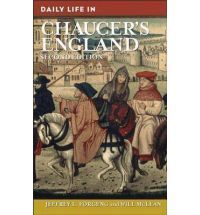 owledging the importance of daily life and material culture to any understanding of the past, Forbeng and McLean present this marvellous and detailed overview of just what it would have been like to dwell in the late Middle Ages, using Chaucer’s time on earth as rough guide. This means we get a decent glimpse of the Fourteenth Century and the fears, foibles and beliefs of those who lived and died in this period.
Setting a context for their book by discussing, albeit briefly, the various wars and the kings who waged them, they then plunge into the nuts and bolts of society, explaining each stratum and their relationship to each other. Each chapter then focuses on an aspect of daily life from time, the importance of religion, to clothing and accessories, what was consumed, general amounts and costs, and there are even some recipes should you wish to try them yourself!
Arms and armour is a fascinating chapter where they deconstruct just what it took to place a knight on the battlefield and what weaponry and protection was required. That foot soldiers and less well-equipped individuals still fought for king and country without the benefit (!) of such armoury made me wince while reading.
A chapter is devoted to entertainment – songs, dances, cards and the importance that gambling played in life in those times. There are even music sheets and lyrics to the more popular songs.
What I particularly enjoyed as well were the break-out boxes that use more contemporary sources to highlight the chapter’s theme – so we have snippets of Chaucer’s works, legal documents, letters and general accounts.
Always aware that the period they’re covering was one in which society began to change quite dramatically (the plague mid-century and different attitudes to the clergy, brought about largely by the plague, the schism in the Church (two Popes) and the growth of the Lollard movement), Forgeng and McLean segue back and forth in each chapter, keen to make the reader aware of the various forces working to alter world and social perceptions.
If you are a lover of history, fascinated by the minutiae of daily life in the past, a writer or just a fact-finder, this is a terrific book.
January 10, 2013
Book Review: Wrath of Angels by John Connolly
Having never read a John Connolly before, nor one of the Charlie Parker books, I was a bit concerned about being introduced to his work by starting on the eleventh book of a series. However, like most good authors who write extended series featuring the same character, Wrath of Angels is a novel that you can read as a stand-alone or as part of a sequence. Though, I suspect that those who have followed the trials of Parker (and I gather there have been many) will no doubt reap far more rewards than someone who is ignorant of his background, except through the hints dropped throughout WoA. I think this is why, in the end, though I enjoyed the book, it left me a little hollow – I don’t blame the writer, I blame my decision to pick up book 11!
WoA tel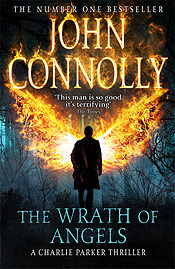 ls the story of a mysterious plane crash deep in the Maine woods and how, some time after it occurs, two older men stumble upon the wreckage and the contents of the craft. Though there are no bodies, there’s evidence of survivors, but this doesn’t interest the men. Instead, against their better moral judgment, they take some of the cargo, and it’s this decision that sets in motion a series of events and murders in the present and brings Charlie Parker into the story. Unfortunately, his involvement and the stolen cargo also alert other, less salubrious and very, very scary characters, all of whom are intent on retrieving what they believe is rightfully theirs, no matter who they have to kill, regardless of what bargains they have to strike. Some, it seems, are even prepared to sell their souls…at least, they would if they had one…
Nonetheless, WoA introduced me to new writer with a supernatural bent who has a lovely writing style. I often felt as if I was enjoying a great old yarn, as even minor characters were given really intricate and meaningful back-stories that enriched their purpose in terms of plot and added layers to the story as well – even if they only featured briefly. Connolly loves a good metaphor and simile and uses them with abandon, mostly very well, though there were times when similes were just a tad overused.
Drawing on demonology and angels and the notion of an eternal battle between those who have been graced or cursed and all states in-between, Connolly offers a very interesting spin on religion, the supernatural, contemporary matters and detective work. I really liked that the nature of his lead character remains a mystery – not just to Parker, but to those who have a vested interest in discovering which side he’s on as well.
Connolly evokes atmosphere so very well – whether it’s a diner in a small town or the tangled, night-dark woods and black, oily pools of the Maine forests. I don’t think I’ve felt quite so anxious or uncomfortable reading a book for a long time. The sense of something otherworldly, hungry, and a dark power lurking, watching, is so very realistically brought to life, hovering at the edges of the tale and occasionally bursting into the action. I found myself looking over my shoulder while I was reading a little too often for my comfort!
Overall, I thought this was a good book. I’m not certain I will read the others and this is possibly unfair upon Connolly, but horror books are not what I enjoy, the frisson created here was a little too stark for me and painful – but that shouldn’t stop anyone who enjoys a fine fright, or supernatural thrillers and crime, from reading this guy. He can write!
Book Review: The Reckoning by Sharon Kay Penman
Sometimes, it’s really difficult reading the novels of a writer whom you know takes great pains to be historically accurate while still telling a sweeping, dramatic and emotionally fraught tale. So it is with Penman who, in this last book of The Welsh Prince series, brings the story of the struggles of the Welsh prince, Llewelwyn, and the machinations of Edward Longshanks, Kin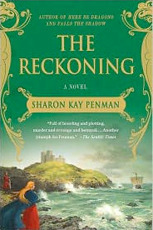 g of England, to a close.
For those who know the history, you understand the ending is not a happy one and it’s this that makes the novel difficult reading. The tale of Llewelyn’s reign, his marriage, love, triumphs and losses, his turgid and troubled relationship with is brother, the complex Davyd, are all explored in wonderful, deep and moving ways. Likewise, Edward’s motivations, the relationship he has with not only his brother and cousins, but also his conscience, which appears to conveniently massage events and consequences to suit his purpose, are all told with such emotional truth, you both delight and ache for the characters and the futures that await them.
I adored this book – as I have all the others in this series and, indeed, by Penman. She is a historical novelist par excellence – in that she manages to balance both the history and the story-telling so very well. Lost in the chaos and turmoil of the era, the bloodshed, treachery and religiosity, the story is also laced with romance, honour, adventure (including pirates!) and betrayal.
As is usual with Penman’s work, she brings the female characters (those often diminished or elided by history) particularly to life, representing them as strong, brave, fully-rounded women who while they may not be on the frontline in the physical sense as battles and politics rage around them, nonetheless form the backbone and emotional rearguard upon which their men (husbands, brothers, fathers, cousins and sons) will rely to succour them.
From Ellen to Eleanor to Nell, they are three-dimensional, amazing women who loved their men – faults and all – and in the end, it’s they who bear the heavy cost of their loyalty and love.
A superb conclusion to a tumultuous and possibly lesser known period of history, I cannot recommend this series (or any of Penman’s novels) highly enough.
January 9, 2013
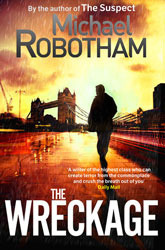
Book Review: The Wreckage by Michael Robotham
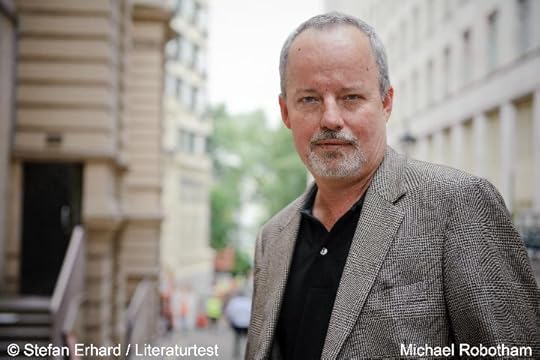
I have a complaint to make about Michael Robotham’s books, or rather, the effect they’re having on me – they have turned me into an insomniac. From the moment I pick up one of his novels until I turn the last page, I am unable to sleep. Last night, The Wreckage, proved to be no exception and, as a consequence, I feel the book’s title now applies to me J
 Seriously, last year, I spent a couple of weeks reading everything of Robotham’s I could get my hands on and loved every story, character, plot and word. I deliberately saved this book for my holidays, knowing I’d be guaranteed at least one terrific read. I was not disappointed.
Once the disturbing prologue is out of the way, The Wreckage commences by introducing us to a Pulitzer-prize winning journalist, Luca Terracini, who works and lives “outside the wire” in Iraq, hoping to file a world-changing or, at least, war-changing story. When he stumbles on a series of robberies at multinational banks in Baghdad, and uncovers shady financial deals in the process, Terracini may just have been handed either the Holy Grail of journalism or a death sentence.
Segue to London and one of my favourite characters in crime/thriller fiction, retired cop, Vincent Ruiz. On the eve of his daughter’s marriage, hard on the outside but soft-as-a-marshmallow-on-the-inside Ruiz is conned by a needy and attractive young girl in a clever grift. When her partner is found brutally tortured and dead, Ruiz understands that, not only is this young girl in danger, but also she has inadvertently exposed a conspiracy that could overturn not just the British banking system, but rock the foundations of the global economy and bring down the careers of powerful and dangerous men as well.
And so, the story is established. Larger in scope than his other novels, Robotham tackles the greedy, mystifying world of international banking, taxation fraud, funded terrorism, and uses the world as his stage.
When I first started reading this book, I was disappointed that Joe O’Loughlin and Ruiz didn’t feature that, instead, this new character, Luca, and the Middle East, took centre stage. But, as the action proceeds and the pace becomes utterly relentless, my initial misgivings were soon forgotten as Luca and the clever accountant he befriends, Daniela, start to rattle the local authorities’ nerves and become established as characters the reader loves and who possess resolve and integrity.
Enter, Ruiz, stage right (yay!) and the story, which was already moving apace, begins to accelerate, speeding through countries, characters and a growing body count without pausing for breath. Suspense builds as does the reader’s anticipation and our level of care for the characters and the situations they are placed in. I think this is Robotham’s real strength. Despite this fabulous tempo, and the complexity of the tale, never once does Robotham forget about the characters that give his story heart, that flesh out the plots and endows them and their consequences with a terrible humanity. Even the most hateful of individuals are given a context, and thus their deeds meaning – all of which makes the approaching climax the more nail-biting, the more suspenseful.
Motives and machinations are assigned to various people and organisations, from the CIA, MI6, or the huge bank, Mersey Fidelity, to a personal assistant, young jihadist, or ambitious brother, exposing the absence (or deliberate denial) of an ethical framework. Truth is absent from the commercial wheelings and dealings taking place; ambition is king. Thank goodness then for Ruiz and O’Loughlin who shine wherever and whenever they appear and yet, for all their heroics, also have feet of clay and Ruiz particularly, a knack for attracting trouble.
So does Terracini. When he and Ruiz finally encounter each other and understand they’re on the same side, the stage is set for a showdown of epic proportions.
 What I love about Robotham’s books is that amidst the large-scale crimes and their ripple effect are all-important themes. In The Wreckage, truth and lies play an important role, not simply because the main characters search and long for the truth, but because it’s absence is revealed as the first serious casualty in the breakdown of personal, professional and international relationships. Truth is not just a word or an ideal in this book, but a moral code and those who choose to live by it suffer and are rarely rewarded for their principles.
Another theme is that of family – whether it’s how we establish and keep one together, or how easily they can be torn apart. How one decision, one misjudgement can hurt so many but also, how in the end, family (the real or pseudo kind) is all, for better or worse, we have. It’s this kind of thought-provoking and beautifully rendered theme that places Robotham above the average (and even above-average) thriller writers and which give his books unexpected richness and depths.
The Wreckage is a marvellous rollercoaster of a read that I literally could not put down. Robotham has done it again. And, while I am sleep-deprived and exhausted, I can’t wait for him to write another novel – please, Michael, I want some more!
January 7, 2013
“This is true love… you think this happens everyday?”
Ten points if you can guess where that quote comes from… if you can’t, I will reveal at the end of the blog…
So, here we are, another year. Happy New Year! I really hope that whatever plans you’ve made (even not making any), come to fruition and that you have many adventures, love and laughter in 2013. And good health. We cannot forget that!
I was going to do a reflective blog about the year we’ve just had and then project forward with my plans for the next twelve months, when I had a change of heart. You see, tomorrow, January 9th, is my 20th wedding anniversary. Twenty years! Instead of writing about a year, I want to celebrate and share with you my twenty years (briefly, I promise) with the most amazing man on this earth – my true love, Stephen Ronald Brooks.
Not many people can say they met and married their true love – I can’t say with any conviction I even knew he was the day we were married in our Midsummer’s Night Marriage Ceremony on Big Hill golf course in Bendigo.
Oh, I knew I loved him – very much. I knew that fairly early on in our relationship. We met making a film, Ranko. Stephen was the leading man and I was the leading lady. The shout line was something like, “He’s going to fall in love, get married and clean up the streets” and the movie was touted as Neighbours Meets Mad Max. We had a ball making it, even if it was, as Stephen says, “highly unsuccessful”, I am so very grateful I agreed to be cast.
And, let’s face it, you have to love a man who, in order to get to know you better while dating, asks what your favourite books are so he can read them too. There were so many I could have chosen, but I told him Lord of the Rings. He read it and The Hobbit.
Proposing to me on my 30th birthday, Stephen only told one of his best friends of his intentions. This best friend (I’m looking at you, Grant), told him not to be stupid. You see, I was what’s known as “a package deal” – that is, a single mother with two kids. I was also older than Stephen. It didn’t seem the wisest of decisions for a young man to make.
Fortunately, Stephen didn’t listen to his mate (who was just looking out for him), and went down on bended knee in front of all our friends and, after giving me a pewter cup that was shaped like Galadriel’s face (from Lord of the Rings), produced a lovely little ring from his pocket (Galadriel is also the bearer of the second ring – and this was to be my second marriage – clever, hey?).
The wedding was a hoot – a dress up affair in which the kids and friends and family partook. I had a theatre background and all my wonderful theatre friends, Andrew Balnaves, Angela Rashleigh (White) and many others, helped. One of my best friends, Frances Thiele was a bridesmaid. The men wore shirts and stockings, Stephen carried a sword, and we all feasted and danced and made merry under the beautifully decorated hall, festooned with ivy and fairy lights and outside the moon glowed. Magical.
The next twenty years seem to have passed so swiftly, now I can peer back with hindsight, but what fabulous years they have been – and all because of who I’ve had the privilege to share them with. They’ve been a combination of hardship (struggling financially while I did my PhD, Stephen working to support us, the kids becoming used to a step-father, both Stephen and I to each other and married life in a new place – we shifted to Wollongong from Bendigo two weeks after we married and away from family and friends), and utterly fantastic moments. But none of them would have meant anything to me, or Adam and Caragh, if hadn’t been for one man… Stephen.
Some of the highlights of those last twenty years are:
 1993. The scary move to Wollongong where with great difficulty we left behind (it was more like tearing ourselves apart) beloved friends and family. We lived in a place called Fairy Meadow in a street called Cabbage Tree Lane – great address J – which partly compensated and had the best neighbours in the world, Trevor and Maureen, with whom we drank ourselves silly the first day we met and every other week from then on…
Meeting Kerry Doyle and Peter Goddard in Wollongong and having them enter and still be a part of our lives.
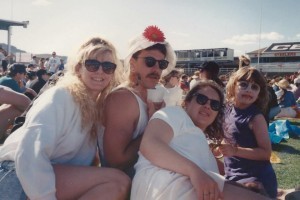 Grant (yes, the one who advised Stephen not to marry me!) moving in with us for twelve months while he and Stephen (who was also working full-time) did postgrad studies.
Stephen and Grant coaching the local winning football team.
Delayed honeymoon to Thailand – was fantastic.
Stephen’s 30th surprise party – a funeral.
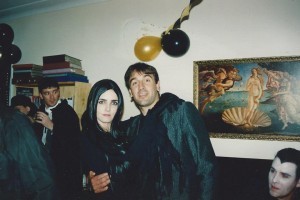 Yes, I gave him a “death to his youth” party as he was always giving me a very hard time about being older than him – Grant too, so with Grant’s girlfriend (now wife), Fiona’s help, we gave him a party he’d remember. LOL!
1996. Moving to the Sunshine Coast for my first uni position and again, being embraced by the community and meeting some terrific people (many of whom we still count among our best friends).
Buying our first house in Mountain Creek – it had a pool!
1997. Stephen and I graduating from Wollongong uni (Grad Cert and PhD)
Going on our first family holiday – a cruise in 1998
Hosting two gorgeous Japanese teens, Keizo and Ayako
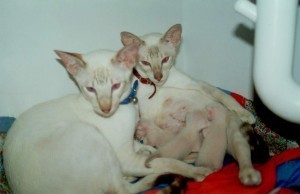
Our beautiful pets, Cupid and Psyche having kittens
My first book coming out in 2001
Adam being given his first pet snake, Morphea
Caragh illustrating her first book and being paid! She was still in primary school.
Great parties and fun Friday nights with friends
2002. My 40th and second book launch
Adam “coming out” – he and his dad just held each other. *sniff*
Trips to Bali, New York, Las Vegas, Vietnam, Thailand, NSW, and VIC
Driving the car through the garage wall and into the house and ruining two rooms – one my study.
Caragh photographing me all distressed and laughing with Lesley who was staying with us. Our friend, Chris, the psychiatrist, running down the hill when I frantically called him (Stephen was at work) and asking me if I was “having a blonde moment?”
Adam accidently burning down the kitchen while I was in the USA and Stephen and the kids going to mum and dad’s up north for a few days while the house was repaired and cleaned.
Moving to Buderim and fully renovating our first house
2004. Stephen’s 40th and first tattoo – back to the 80s night.
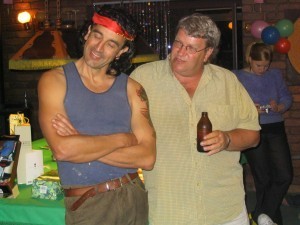
Too many Melbourne Cup and Grand Final parties to count.
Trips to China, New York, Las Vegas, Europe, England, teaching and living in Maastricht, The Netherlands – twice.
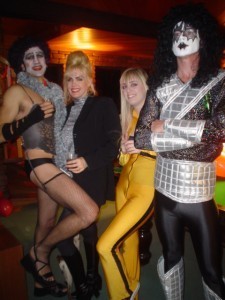 2005. Caragh’s 18th and Adam’s 21st – Caragh’s a dress up, of course!
Both kids shifting out of home and becoming fabulous, independent people
Adam moving to Sydney and joining the Oaks group.
More books released
Invited to be part of the ABC show, The Einstein Factor (for four years)
Working with Lisa on Consuming Innocence and studying Italian with the lovely Lauren.
Another trip to Las Vegas, this time to say goodbye, along with my sister, Jenny, to my dying mother.
My beloved grandmother passing away as a consequence of a house fire.
2008. Apply for job at Southern Cross University (promotion) and we move to Brooklet, NSW (three weeks after returning from three months in Europe) and Stephen starts renovating again.
Caragh graduates. I’m made an Honorary Senior Fellow of Sunshine Coast University
Caragh moves to Melbourne
Wonderful visits from friends
Caragh’s 21st
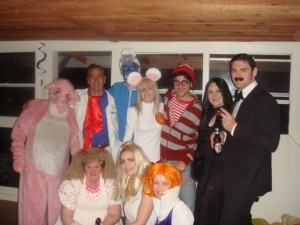
Caragh goes to the USA and a short time later is married, making world headlines.
We are given a rescue dog, the gorgeous “Tallow”
My great friend, Jim McKay becomes my boss.
2009. Receive cancer diagnosis.
Tallow is released to great success
Have big series of ops in Sydney for cancer – overwhelmed by support
Two years off work to heal. More ops. Keep writing my weekly column for Courier Mail and fiction books.
2010. Travel around South-East Asia on a cruise
While we’re away, dad dies. Unable to go to his funeral, but do write the eulogy.
Our darling Dante Primo dies from a tick
Psyche, our 15 year old cat dies of cancer
Dante Piccolo comes into our life
Adam lands a fantastic job in Sydney with a terrific company.
2010. Sell house in Brooklet
Visit Sara in Tasmania – she’s very, very sick.
Make decision to join her and care for her
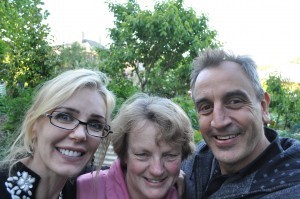
2011. Shift to Tasmania and rent seven minutes away from Sara by car.
Stephen cares for me and Sara (his two wives) while Sara and I write our books – her, The Devil’s Diadem, me, Illumination.
Loving friends visit – us and Sara.
Stephen works with the refugees at Pontville.
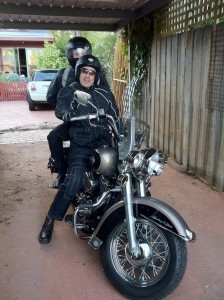 Stephen buys a Harley Davidson – a Heritage Soft-tail.
Meet fabulous people, have wonderful and very sad times.
Caragh comes back from the USA – single and very happy.
Sara dies and we grieve. For a long time.
After initially saying “no” (three times), agree to take part in TV show Location, Location, Location Australia to buy a house in Tasmania as Sara has left us her five cats.
Take a family holiday (cruise) to New Zealand.
Caragh begins a tattoo apprenticeship in Brisbane
Move to Braeside, Feb 2012.
Stephen begins to renovate
We travel to Gold Coast for the marvellous Somerset Celebration of Literature and catch up with darling cousins and friends as well.
I have a huge and horrid operation that makes me very ill for weeks.
Stephen is so caring and wonderful, as always.
Illumination comes out, I turn 50. 50!
Stephen begins plans to start a business
Make some fantastic friends here in Hobart.
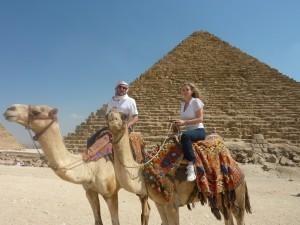
Go on amazing trip to Turkey, Israel, Egypt, Greece, Cyprus and Dubai.
Stephen becomes a tour guide at Cascade Brewery – he is brilliant!
Christmas comes and goes as does New Year and the Taste of Tasmania. Share all this with family and friends – wonderful times.
2013 is here. This is the year of a new book, a new business and the celebration of twenty wonderful years.
I know I have left stuff out… I’ll have fun recalling these times later. I know Adam and Caragh and Stephen will remember things too. But, just listing some of the highlights and lows of the last twenty years, what’s not evident but should be, is that every single moment was made all that more luminous and wonderful or bearable, because I shared it with my true love.
I cannot begin to describe or explain how utterly amazing he was and still is in his loving care, not only of me and the children over two decades, but our darling Sara as well. How he rarely loses patience with me (well, OK, sometimes!), but is always so compassionate, passionate, loving and caring. I am so very, very blessed and, as our anniversary unfurls, I remember this and every other moment I have spent with this beautiful man and wonder what it was that I did so right to deserve him. I thank his gorgeous mother every day that she raised such a magnificent man.
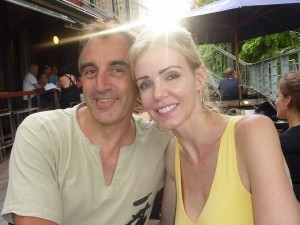
People often ask me what I wish for my children: the answer is simple. My wish for Adam and Caragh is that they too will find a love like this, like Stephen and I have. I don’t think it happens very often, nor does it occur everyday, but when it does, appreciate what you have because it’s more than rare, it’s magical.
Thank you Stephen Ronald Brooks for twenty perfectly imperfect years. Here’s to the next decades and beyond – per eternita.
PS. The quote above comes from our favourite film, The Princess Bride.
December 17, 2012
Book Review: Falls the Shadow Sharon Kay Penman
F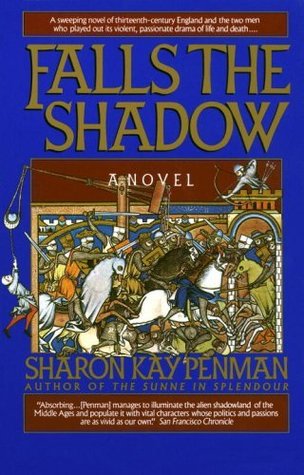 alls the Shadow is the second book in The Welsh Princes series and mainly focuses on Simon de Montfort and Henry III (father of the future Edward Longshanks) – their relationship, families and the clash of wills and subsequent terrible conflict that arises between them and sweeps England and other countries in its wake. Parallel to their story is that of Leilo – Llewelyn ap Gruffyd, a young Welsh prince who suffers the alienation of his immediate family but is rewarded with the love and trust of his grandfather, Llewelyn Fawr, the man who united Wales against the British and achieved elusive peace – but for how long?
Beautifully told, the novel segues in point of view and place, taking the reader from the Welsh highlands to Westminster, to a particular castle in England, the Tower of London, and France, as well as, later, bloody battlefields. What I adore about Penman’s writing is that she brings these well-known (and some obscure) historical figures to life, painting them in rich and vivid detail. The women particularly, often rendered absent from the pages of history, burst from the novel, their passion, intelligence and sometimes vanity, as well as their commitment to their men, children, cause and country is fabulously explored.
Simon de Montfort, arguably, the central character of this novel, is sometimes painted as a brusque and cold commander by history or as a saint. In this book, he’s revealed as a deeply religious man, devoted to his wife, Nell (sister of Henry III) and family, and even though he has a wicked sense of humour, as someone who didn’t suffer fools gladly. That Henry III is perhaps the greatest fool of all (and in this novel, not simply in de Montfort’s eyes), causes constant strain and pressure as Henry makes poor decision after poor decision, costing lives, allegiances and honour.
Characters either love or loathe de Montfort and the kingdom is pretty much divided along lines of supporters of him or the king. Betrayal lurks in every corner, bribery and corruption are currency and who to trust and when becomes much more than a deadly game.
Spanning years, the book covers de Montfort’s meeting with young Nell (a widow who, at 15 swears herself to the church), their swift courtship and wedding and then years pass as sons are born to them and grow.
Likewise, Henry also raises a family, and the cousins become close; favourites are quickly identified and relationships develop, all against a backdrop of the huge schism growing between their parents and the kingdom’s disenchantment with the liege.
In the meantime, Henry makes inroads into Wales with the help of the cunning Marcher lords (the English aristocracy who owned lands on the borders of Wales and England and who were mostly related to Henry through marriage- which caused no end of resentment) and drives a wedge between Llewlyn Farr’s sons, leaving Wales in disarray and fighting over leadership. Out of this mess, young Leilo, now a man, rises to meet his destiny.
Torn between loyalty to the king and the rights of the men and women Henry rules, de Montfort has to make an important decision – one for which he could, potentially, pay a terrible price – one that, should it go wrong, will cost his family and their future as well.
I don’t want to give away too much of the plot (though those familiar with the history already know the tale), but I am in awe of the way in which Penman not only juggles perfectly the telling of history through fiction, but keeps the plot bubbling and the characters fascinating even when “what happens next? is foretold. It’s testimony to her skill as a story-weaver that you invest so heavily in the men and women who populate this tale.
Penman also has a knack for recreating the period – her rendering of life in medieval times – from the religiosity, to the food, dress, manners and interactions is remarkable. As character rides through the snows in Wales, or listens to the bells chiming throughout London, or smells the sweet scent of heather in the breeze from a field in north England, so too do you.
The battles that are described in this book, just like the daily rhythms of the peers and royal house, are also graphic and so very real. Blood, fear, violence, ridiculous bravery; the search for honour through death is represented unflinchingly. I know some other readers found these parts a little long if not tedious – I didn’t. I felt they were an essential part of the story – the price that had to be paid, the toll that’s exacted from these remarkable people who believed in an ideal and were prepared to sacrifice anything to see it achieved.
This is where Penman completely excels. She captures the essence of humanity through her words – in all our glory and shame, our false pride and fearlessness, our courage and spirit. She also manages to show flaws in the most noble of characters and strengths (even if it’s simply through the love he or she bears for a child) in the most weak or repugnant of individuals.
I finished this book and moved straight onto the last in the series, which, so far (I am almost halfway through) is equally magnificent. “They” say “truth” is stranger than fiction. When you have both brought together in such excellent hands, the combination is intoxicating and a reader of novels’ absolute pleasure.
November 15, 2012
Book Review: The Walking Dead, Robert Kirkman, Charlie Adlard, Cliff Rathburn
After I expressed a great deal of nerdy fan-girl enthusiasm for the TV series The Walking Dead, a friend of mine asked (a little scathingly) if I’d read the Robert Kirkman, Charlie Adlard and Cliff Rathburn graphic novels. After all, if you were serious about the show, he said, then you should have at least read the source material. I did not and had not. So, being that ki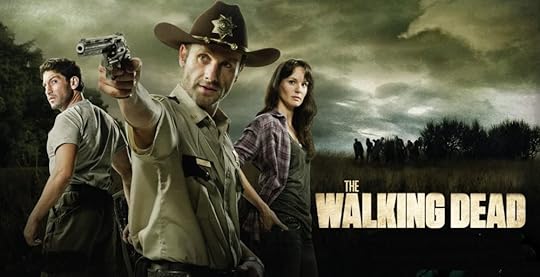 nd of guy, my friend promptly loaned me his copy of The Walking Dead Compendium – the most amazing, awful and unforgettable graphic novel that spans over 1000 pages.
It’s taken me a while to read it and that’s partly because it’s a simply astonishing piece of work and partly because I have been torn between watching the TV series and learning
what happens next through that medium and been worried about getting too far ahead in and/or of the compendium.
As it turns out, I need not have worried. The Walking Dead Compendium is as different from the TV series as the Sookie Stackhouse novels by Charlaine Harris are to the HBO series, True Blood.
The Compendium and series commence in the same world and use the same premise as the TV show: that is, after being shot, police officer Rick Grimes, a loyal, ethical man, wakes up in an Atlanta (?) hospital to find the world as he knew it irrevocably changed. The dead have risen and have not only taken over the cities and much of the country, but mindlessly seek out the living and destroy everything in their path. Life as Rick knew it is over. Escaping the hospital, Rick sets out to find his wife, Laurie and son, Karl and, in the process links up with desperate survivors who, together, face the unbelievable horrors of this post-apocalyptic zombie-dominated world where the real abomination is not necessarily the living dead, but the humans who have thus far avoided infection.
Civilisation is cast adrift from its moorings and the novel seeks to explore how and even if we can recover it. What does it take to restore, not humans, but humanity?
It turns out to be a huge, complex question…
The TV series is utterly violent, gripping and has wonderful performances from all the cast who make you believe in this gritty, terrifying world and how the most ordinary of activities such as eating, sleeping and travelling are contingent on factors never before considered: they can mean life or death. Blood is spilled regularly; bodies are ripped asunder, flayed, blown up, treated with contempt and disregard. Everything is at stake always, and no-one is spared. There’s no sentimentality in this series – root for the hero or underdog at your own peril. Loss and grief are the default position for everyone – no matter what age or sex.
OK. Imagine that (or recall the series) and then up the tension, awfulness and shocks a hundredfold and you have a sense of what’s in store for you if you read the Compendium. Soaked with nail-biting scenes, unexpected pathos and humour, and meaningful commentary about contemporary life, this harrowing take and the superb and graphic illustrations that accompany it deliver again and again.
Watching the series didn’t spoil the story for me, on the contrary, while the cast are pretty much the same and some of the settings are used in the TV show, reading the novel was a visceral and in many ways even more satisfying experience. There are different fates for some of the characters, new and old ones appear and disappear, and parts of the primary story lines differ. The characters are richly (and sometimes too briefly) depicted, the agony of death and loss, the humanity of the survivors (or lack thereof), the heart-warming moments of connectivity and celebration are all captured, as are the terrible consequences of witnessing and contributing to so much death.
At one stage, Rick Grimes asks his wife if he’s evil because he’s lost the capacity to feel, all the destruction and death he’s either witnessed or been complicit in, the fact he weighs everyone he meets on a scale of whether or not he’d be prepared to sacrifice them for the safety of his family, has him questioning his own humanity. It’s a powerful moment and question; one that underpins the entire book: what or who is evil and how do we know?
Trust is also a huge issue as is faith – not in God or some invisible being – religion has no real place in this world (but there are those who cling to it and persuasively). Trust is about each other.
Another important theme is safety. In this grave new world, it becomes the new currency and there are those who exploit and barter safety in exactly the same way but with even more ruthlessness than any modern day commodity.
The illustrations are black and white and for some reason, this adds to their terror and pathos: suffering and beauty has never been so elegantly or realistically (for a comic-style) captured.
If you enjoy dystopian narratives, zombies and what they signify, or if you love the frisson eschatological stories arouse, then I think you will more than enjoy this.
I cannot wait to get my hands on the next instalment or the next episode of season three either.
[image error]