Lee Martin's Blog, page 8
June 24, 2024
Everyone Talks about the Weather
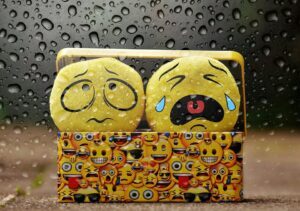 We’ve had a stretch of hot temperatures lately, which has me thinking about how writers can use weather in their work. Let’s say a narrative takes place during a time of extreme heat, cold, rain, drought, etc. What might that weather do for the story at hand, and what should the writer be aware of as they tell the tale?
Weather can create atmosphere. Heat might lead to malaise, cold might create a frostiness between characters, excessive rain might turn one’s thoughts to what’s leaking into or out of a relationship, drought might ask what’s lacking between the characters or what’s dying. Another way of thinking about the backdrop weather provides is to consider the opposite of what we might expect. Heat might set a character or a set of characters on edge to the point of always wanting to be active. Cold weather might lead to a desire to hibernate. Constant rain might make a character take steps to create a sunny atmosphere in an indoor space. Drought might lead to a feeling of being insatiable.
No matter the weather and how we decide to use it when it comes to our characters, we should always keep in mind that the characters’ actions should be in response to climate extremes, which is to say we should never use the weather to provide resolution. The characters’ actions should perform that role. So, no blizzards, floods, tornadoes, etc. that enter at a critical point unless their entry leads characters to their final choices.
We might also think about what our characters carry with them—what troubles, doubts, thoughts, fears, desires—that come to the surface because of the weather. In other words, what have our characters suppressed that can no longer stay hidden? How does the weather give the characters a reason to act on what they’ve been carrying?
Today’s writing prompt, then, asks you to create two characters. Don’t think too long about this. Write down two names, give the characters a history with each other, think about what might be at issue for them, give the setting an extreme weather event, see what one of your characters might do in response to the weather, consider what problem that action might create, follow a sequence of causally connected scenes to a climactic moment where the main character has to make a final choice that will change things forever. Somewhere along the line, you can think about how the weather is becoming a metaphor for the characters and the worlds they occupy.
You know the old saying, “Everyone talks about the weather, but no one does anything about it.” Well, writers can indeed do something about it. We can use weather to lead our characters to actions that will have significant consequences. We can make it rain when we want it to, we can turn up the heat or turn it down, we can let the parched land crack and come apart. We can make weather a part of the landscape, both physical and emotional, our characters are trying to navigate.
The post Everyone Talks about the Weather appeared first on Lee Martin.


June 17, 2024
Small Irritants and Narratives

I’m going through a time when things just seem to be out of kilter—nothing major, just little things that frustrate me. This morning, for instance, I was cleaning my glasses when the top of the little spray bottle rolled off the top of the dresser, never to be seen again. I looked under the dresser and under the rug in front of it. I even opened the top drawer just in case the top had fallen there. No dice. It’s as if that top never existed.
Little things like this irritate me, but I can put them to use in a writing prompt, so at least I’ll have some value from the annoyance. You can use this prompt with a piece of fiction, but I suppose it might work with creative nonfiction as well
Think about your main character, either in fiction or creative nonfiction. What’s one small thing that irritates them?
Put them in a situation where they can’t easily avoid this irritating thing.
Let the pressure of the irritant lead them to action.
Let that action lead to a sequence of causally connected events.
Let the climax of that causal chain have a significant impact on your main character.
Consider what’s at stake for your main character. How will their world be irrevocably changed because of the sequence of events they set into motion with their initial act.
The key with this exercise is to put so much pressure on your characters that they have to act. Once they do, you can keep increasing the pressure through the complications they create. “No pressure, no diamonds,” Thomas Carlyle once wrote. Let the irritation take your character to a place that will sparkle with the irrefutable truth of the lived life.
The post Small Irritants and Narratives appeared first on Lee Martin.
June 10, 2024
A Prompt for Writing about Troubled Times

My blog post is late this week because I came home yesterday evening from giving three craft lectures at the West Virginia Writers annual conference and couldn’t bring myself to face the blank page. I’d given what I’d had to the good folks in West Virginia, and all I wanted to do was watch a baseball game on TV.
But here I am after a good night’s sleep, a run, and brunch with my wife and a friend, ready to see what else I might be able to offer.
The conference in West Virginia was a good reminder that none of us make it on our writers’ journeys without the help of others. We throw around the term “good literary citizen” all the time. For me, that term asks me to consider what I can do to help someone else along their path. I’ve written blurbs for books, been in conversation with writers at their events, written countless letters of recommendation, taught more students than I can remember, written years of blog posts I never meant to write, and even published a book about the craft of narrative.
It would be so easy to stop, to turn my attention to only my own writing, but for some reason I can’t. I can’t stop remembering the days when I felt far removed from any sort of writing community, those days when I felt very alone on my writer’s journey. I kept writing and gradually other writers who knew much more than I began to offer their knowledge and their assistance. I try to always remember their selfless acts of generosity, and I intend to keep paying it forward as long as I’m still able to write.
So, here’s a quick writing prompt meant to help us write about subject matter that’s difficult for us to face.
Recall a troubled time from your life. (Of course, you could also do this for an invented character in a piece of fiction).
Highlight a specific object that you associate with this time of your or a character’s life. An apple, a bottle of Scotch, spittlebugs, loose change—these were some of the objects that came up when I led this writing activity in West Virginia. Let the object lead you to a memory of a specific event that happened during this troubled time.
Give some brief context of the trouble (e.g. “I was struggling with addiction,” or “On the night my father died”). Then let the story unfold with a particular emphasis on the object. Describe it and the place it had during this time. Associate it with other things. I remember a water jug I carried to my first paid job, detasseling corn, and the way my mother would fill it and have it ready for me each morning. I think of the biblical story of Rebekah at the well offering water to those in need. I remember my mother, after mowing the grass in a dress, washing grass clippings from her legs, her feet in a dishpan of water. I also recall the water bucket we kept on our kitchen counter (we had no running water) and how cold the well water was when I drank from the dipper.
Let the object and its associations take you through the story you have to tell while also taking you down through the layers of your own character, or that of an invented character, as you consider how a detail can evolve into a metaphor if you pay attention to the associations.
All forms of writing are ways of thinking out loud on a page. Sometimes we think through stories, but sometimes we think through leaps and associations as images accrete. Start with something like a water jug and see where it might take you. Lower the discomfort by absolving yourself of writing directly of the troubled time. Tell yourself you’re only writing about a water jug, or an apple, or some loose coins on a tabletop. “Tell the truth, but tell it slant,” Emily Dickinson famously wrote. Indeed.
The post A Prompt for Writing about Troubled Times appeared first on Lee Martin.
June 3, 2024
Tips for Writing Scenes
 I just returned from Louisville, Kentucky, where I presented a craft lecture at the spring residency of the Naslund-Mann Graduate School of Writing’s MFA program. I offered some tips and techniques for writing scenes in any sort of narrative with a particular emphasis on creative nonfiction. Maybe it’s just me, but I seem to notice these days a tendency to lean away from narrative essays to more lyric ones that are often segmented. The lyric essay works more the way a poem does, and I’m thrilled by all the good ones. This doesn’t keep me, though, from thinking about the work scenes do even in fragmented forms.
Here are what scenes allow readers to do:
Immerse themselves in the world the writer is creating or re-creating on the page
Participate rather than spectate
Become the characters
Note significant action
Feel the evolution of characters
Agree to the truth of the writing
When we write scenes, we invite the readers to enter our dream worlds. Even if we’re re-creating lived experiences either from our pasts or presents, we’re asking readers to be our fellow participants. Here are some techniques for scenic depiction that will help your readers stay immersed in your dream worlds:
Dramatizing action
Using relevant description and detail
Using interesting dialogue
Using a resonant setting
Scenes highlight significant moments in a narrative, but they can also emphasize a relevant detail or image. Scenes shine spotlights on what we want our readers to note. Description not only offers readers a sensory experience, it can also create an atmosphere that either reinforces the emotional content of a specific moment or stands in ironic contrast to it. Setting operates much the same way. Details of a setting can become containers for something the characters may feel but not be able to express. Sometimes dialogue works that same way. What someone says may not be as interesting as what they’re not saying. Consider this line of dialogue: “I love the way the brim of your hat shades your face.” Given the proper context, the subtext of that line could be several things. One of them might be, My god, I can barely bring myself to look at you.
We shouldn’t forget that our characters have bodies and voices, and we shouldn’t be hesitant to use them. We also shouldn’t forget that scenes occur in specific locales, the details of which can be expressive. Finally, we shouldn’t be afraid to show our characters in action, and we should utilize all our senses to make scenes come alive no matter the genre or form in which we’re working.
The post Tips for Writing Scenes appeared first on Lee Martin.
May 27, 2024
Absent Partners: A Story and a Writing Prompt
 Seven years ago, Cathy and I pointed her Mustang GT westward, our sights set on Lubbock, Texas. We were at a time in our lives when we didn’t quite know where we were going to end up. I’d just walked out of a long-term marriage. Cathy had left her own marriage five years prior. We’d reunited thirty-four years after dating when Cathy was sixteen and I was eighteen, but there was no promise that the two of us would last. All we knew the day we left Illinois and crossed the Mississippi River at St. Louis was we were going to Lubbock. The occasion? The wedding of one of my cherished former students. We were going to witness and celebrate the love she and her soon-to-be husband had for each other.
Cathy and I spent the first night of our 989-mile trip just outside Oklahoma City. The next day, somewhere in the Texas panhandle, the rain came. Torrential rain, the kind that obscures the visibility and makes you think about pulling over until the storm passes. We kept going, Cathy at the wheel. We made it to Lubbock with just enough time to change our clothes and drive to the wedding venue. The ceremony was supposed to take place outside, but the rain came again, and after a delay, the bride and groom decided to move the service inside. The ceremony, of course, turned out to be lovely—the exquisite bride, the eager groom, the this and the that. By evening’s end, we’d all been lifted by their I-do’s.
The anniversary of this marriage happens to be occurring at a time when Cathy is recovering from bronchitis. (Yes, we did indeed last; two years after the Lubbock wedding, we got married). Cathy spent the better part of this past week in bed while I carried on the best I could. I fed the cats, I watered the plants, I prepared food, I ran errands, I tended our vegetable garden. All the while, I was acutely aware of how much I missed my partner. The things we usually did together were no longer possible.
Writing Prompt: A loved one is absent due to whatever circumstances you choose. What happens for the other half of the couple? What do they miss most about their absent partner?
Today, for the first time in a week, Cathy felt like a little outing, so we drove to one of our favorite produce markets to buy locally grown strawberries, new potatoes, tomatoes, cucumbers, yellow squash, and zucchini. Nothing out of the ordinary happened, but it was an extraordinary day because once again I had Cathy by my side. I imagine we all take too much for granted—small graces like a ride in the country to buy produce, a meal shared, chores divided, the time we spend with those we love.
I’m also aware today of those whose lives have been turned upside down, either by illness or trauma, so I guess I’m sentimental about my memories of that trip to Lubbock. At one point during the reception, Cathy and I thought we were off by ourselves, dancing to the music, but a friend found us and took our photo. That photo is one of my favorites of Cathy and me. We’re in each other’s arms, and she’s looking at me with what I can only call adoration. Her eyes and her smile promise wonderful things to come.
The next day, we’re late leaving Lubbock and in the darkness of Oklahoma the rain comes again. This time, I’m driving. We’re on I-44, just east of Tulsa. A low concrete wall divides the east and west-bound traffic lanes. The spray from trucks on the other side of that wall is blinding. I’m white-knuckling it, and Cathy’s checking the weather radar on her phone. “We’re going to run out of it soon,” she says, and all I can do is trust what she’s telling me. “It won’t be long,” she says. “We’ll be in the clear.”
And eventually we are, and we keep driving, each mile moving us further into our future, bringing us closer to what will one day be our home.
The post Absent Partners: A Story and a Writing Prompt appeared first on Lee Martin.
May 20, 2024
Writing Lessons from the Garden
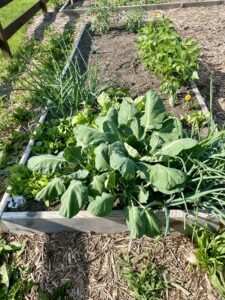 Our plot at the community garden is beginning to produce. I’m enjoying lettuce, spinach, and radishes. Blooms are about to come on our bush beans. Onions are growing. I see the beginnings of blossoms on our tomato and pepper plants. I love this 4 x 12 foot raised bed. I love working up the soil in the spring and sewing the first seeds. It thrills me to see the first hint of green—always the radishes, of course—poking through the earth. I love the watering and the tending as I wait to pick the first green beans, the first bell pepper, the first tomato. I love the fall planting and the last of the harvest. Even though there’s a hint of sadness, I even love putting the garden down for the winter.
My parents were expert gardeners. They had a large plot behind our house in town and a couple of others out in the country on our farm. They grew enough potatoes to last us through winter and enough of everything else to freeze or can. I remember my father doing battle with the racoons that came to feed on our sweet corn. He ran an extension cord from our house to a stepladder in the sweet corn patch from which he hung a heat lamp, hoping the light would deter the critters.
Sometimes at our community garden people come and pick whatever they want from the plots. Despite the warning signs—“If you didn’t plant it, don’t pick it.”—the intruders come and walk away with other people’s produce. Some of the gardeners have begun posting signs that warn intruders they’re on camera in hopes of deterring them. Cathy and I know every planting is a gamble. We know we can’t prevent the vagaries of weather, disease, and theft. We plant the seed with faith. We take the losses with the gains.
So it is with our writing. Each new piece we attempt begins with a leap of faith. We make a mark on a page or a screen, and we work to see what might grow. Sometimes the product satisfies us, and sometimes it doesn’t. We’re disappointed when what we imagined doesn’t come to fruition. What’s to be done when we realize the piece just doesn’t work? Here are a few suggestions:
We can let go of any preconceived notions of what we intended the piece to be and instead let it show us the direction it wants to go. Sometimes a volunteer tomato plant comes up in a spot you couldn’t have expected.
We can prune and reshape. A radish won’t grow unless you thin the seedlings.
We can begin again. After we planted our cool weather crops this year, park workers topped off our plot with soil, essentially burying our seeds. I replanted the lettuce which wasn’t able to come up from the depths. I kept what radishes were healthy and sowed more seed where needed. The spinach was fine. The lesson for writers? Keep what works and take another shot at anything that doesn’t.
We can turn our attention to another project while we let the other one sleep in the subconscious of our brains. When the cool weather crops are done, I’ll turn my attention to the tomatoes and okra and peppers and beans, knowing, come autumn, I’ll again sow the lettuce and the spinach and the radishes and probably some turnips as well. Everything has its season, both in the garden and in our writing rooms.
The fact is, when it comes to writing, we can only try. If it matters enough to us—if it gives us enough joy, if it shapes us in ways we didn’t even know we needed, if it expresses something we need to express or posits something we need to explore—we’ll keep trying, and in the trying we’ll have our dry seasons but we’ll also have our glorious harvests. Keep the faith. Keep going.
The post Writing Lessons from the Garden appeared first on Lee Martin.
May 13, 2024
A Writing Prompt on Mother’s Day

The writing prompt for this week is to write about a feature of someone’s body that seems contrary to the inner essence of that person. You can use this for creative nonfiction or fiction. Imagine the way that feature would be if the person had lived the life they should have lived. As an example, I share this old post:
My Mother’s Hands
Because my father lost his hands, my mother made a gift of hers. Cuticles ragged, knuckles scraped, fingernails smashed—farm work showed her no mercy.
Her hands were made for more delicate things, but she gladly sacrificed them because, really, what else was she to do? My father needed her, and she loved him, so she put her hands to work on our farm. She should have had the soft and beautiful hands more suited to her soft and beautiful heart, but life had other plans for her.
My father continued to farm after his accident, his prosthetic “hooks,” as he always called them, levied recklessly, the steel used to hammer and pry, to gouge and pull. Often, while working on machinery, his hook pinched or smashed my mother’s finger, and she took in a breath. If I were nearby, I’d hear her swallowing air. She might drop the wrench she’d been using. She might shake her finger. My father looked sheepish. Sometimes he asked her if she was all right. Sometimes he cursed. “Goddamn it,” he might say, angry with himself because he’d hurt her. Other times, he said nothing, just looked down at those hooks and maybe banged them together, angry with the fact of them as he waited for my mother to once more take up the wrench. He spoke to her gently. “Let’s try again,” he said.
I’m remembering all this today as we draw closer to the start of another school year. My mother was a grade schoolteacher for thirty-eight years. Her hands were meant for turning the pages of books, for cutting paper into lacy snowflakes to decorate her classroom in winter, for moving across a tablet page with a red marking pencil, for petting the heads of girls and boys who for whatever reasons needed her affection.
But she gave her hands to my father. I never heard her utter a single word of complaint. She put away her nail files and emery boards and fingernail polishes, and her hands became rough with the signs of her work and her love.
When my father died, she wept over his casket. She said, “I’ve taken care of him all my life. Now what am I supposed to do?”
She lived six years beyond him, spent so many hours alone, her hands resting on the arms of her chair, her fingers lifting and falling, one after the other, as if she were a young girl, playing scales on a piano. I lived away from her then. We wrote letters. She wrote to me once toward the end of summer about watching the schoolgirls pass her house. She wrote about the sound of their bright voices, the way they interlaced their fingers and skipped along the sidewalk. Oh, their bright voices, she wrote. Oh, those beautiful hands.
The post A Writing Prompt on Mother’s Day appeared first on Lee Martin.
May 6, 2024
Coming Home: A Writing Prompt

I start today with these lines from Robert Frost’s narrative poem, “The Death of the Hired Man”:
Home is the place where, when you have to go there,
They have to take you in.
We know this isn’t always true. Families turn their own away all the time, and sometimes for good reason. In a perfect world, though, it should be true because we all need a place we call home particularly in times of trouble.
I think of all the homes I’ve had and all the pleasure I’ve taken from simply walking through the door. When I was young, I loved coming home after school and putting on a pair of faded jeans and a sweatshirt or t-shirt depending on the season. In high school, I loved coming home in the late afternoon and having the house to myself, both of my parents at work. I remember winter evenings standing at our side window, my eyes on the sidewalk, waiting to see my aging father walking home from uptown. We’d learned to become friends at that point. He’d survived a first heart attack, but I feared our remaining time together would be short, so I loved knowing he was home and he was safe. Now, I love coming home to my wife, Cathy, and our cats, Stella and Stanley.
I could go on reminiscing, but that would only be nostalgia. To make a narrative memorable, we need something out of the ordinary. Someone comes home to find something unexpected. Maybe it’s good news, or maybe it’s not. Something or someone arrives that demands our attention. Whatever or whoever it is, it affects not only the protagonist, whether in fiction or in nonfiction, but also other family members, the ones who are supposed to take you in.
So, here’s your writing prompt: Coming Home. Treat it however you like and in whatever form suits you. Maybe you’re the one who’s coming home; maybe it’s a character you’ve created. Whatever the case may be, see how you can use the homecoming to create a narrative of consequence. What trouble does the prodigal carry with them, or what trouble to they create? To look at it another way, what joy do they bring? How does it go wrong? Any story of paradise only becomes interesting once trouble arrives.
The post Coming Home: A Writing Prompt appeared first on Lee Martin.
April 29, 2024
Pet Peeves: Story Starters

We all have them, our pet peeves that raise our blood pressure and put us on edge. Here are a few of mine: overpriced restaurants that crowd tables together so you actually feel like you’re dining with the people on your left and right, noisy restaurants where you have to shout to carry on a conversation, surveys, people who don’t return shopping carts to the corrals, QR codes.
Pet peeves can help us start a narrative. Think about what your characters desperately want to avoid. Make it impossible for them to do that. What action will they take to try to escape a situation they find annoying? What complication will that create for them? How will each choice they make increase the pressure on them? What will be the breaking point, and how will it change them forever?
Make a list of your own pet peeves and see if there’s something that will put a narrative into motion.
The post Pet Peeves: Story Starters appeared first on Lee Martin.
April 22, 2024
Success Comes in Many Ways: A Wish for My Students

I’m approaching the end of another school year. Right now, I’m in the midst of reading the wonderful revisions my fiction and creative nonfiction writers have done. It’s a time to celebrate the victories each writer has had as they’ve moved their original drafts further along and a time for me to make any suggestions that might help that process. I feel particularly blessed to have been able to work with these writers, and I thank them for the gift of their talents.
The end of a school year is also a chance to celebrate those who are graduating from our MFA program. This year, I had the privilege of directing two theses, one of them a short story collection and the other a novel. I’m fully aware of the vagaries of the publishing industry—good books go unpublished all the time—but I really believe in these two and look forward to the day I see them on the bookstore shelf.
We all go forward into the unknown when it comes to trying to find homes for our work, and it can be tempting to consider each rejection a comment on our worth. That vulnerability never changes no matter how long we’ve written or how successful we’ve been. That’s why we should keep our focus on why we do what we do.
When I consider my own answer to that question, I remember how years ago, my parents gave $100 to a family who was down on their luck. This happened at a time and in a place where $100 was a good deal of money. When I think of my father and his anger and all the trouble we had, I remember things like this. Someone needed help and he gave it to them because he could. I think of the remarkable nature of all of us, imperfect as we are, and yet something beats in our hearts that cries out, “Connect, connect, connect. . . .” I listen to that cry every time I sit down to write. I tap into the mysteries and contradictions of the complicated people we are. Faulkner called it, “the human heart in conflict with itself.” Exactly. How beautiful we all are because of that battle. I feel blessed that my daily work puts me in its midst, so I’ll be sure to never forget what it takes to strive, what it takes to understand, what it takes to forgive, what it takes to love.
This is what I wish for my students. No matter where their journeys happen to take them, may they never forget their writing can make them more human, more empathetic, more in touch with everyone and everything around them. Success comes to us in many ways, and none is more important than the people we become. May my students, through the inevitable highs and lows of a writing career, never forget that.
The post Success Comes in Many Ways: A Wish for My Students appeared first on Lee Martin.