Lee Martin's Blog, page 4
April 14, 2025
Can’t Never Did Nothing: What to Do When Our Stories Die

Cathy and I made a little garden today—lettuce and spinach and radishes. Each spring, when we break the crust and work up the soil, I think of my mother and father and the hours they spent in their own gardens. They had a large one behind our house in town and another one in the country at the farm we still owned. In fact, from time to time, they had three gardens going there. I remember one planted solely in potatoes to keep us supplied through the winter.
The plot Cathy and I work is a raised bed, 4 feet by 12 feet. It’s just enough so we can have a little hobby, but everything we plant reminds me of the hope that comes each spring. Like my parents before us, we set out with optimism. We plant our seeds, and we imagine this will be the year the bean beetles and the cutworms won’t come, and the tomatoes won’t have blossom rot, and the deer will leave everything alone, and the weather will be perfect for growing. We know this won’t be the case, but still, we hope.
So it is with writing. We make marks on a page or a screen, and we don’t think about all the problems that invariably may arise: flat characters, plots that peter out, stilted dialogue, confusing structures, all manner of confusion, until finally the worst thing of all happens. Our stories, which seemed so promising—which thrived as we conceived them—wither and become dead to us. What can we do to bring those dead stories back to life?
Pay attention to our main characters. Ask ourselves what we haven’t yet seen about them. Write about aspects that seem contradictory to what they’ve already shown us.
Think about setting. Make it richer and full of relevant details. Making a place come to life often resuscitates a story.
Rearrange the narrative. Try starting and ending in a different spot. An alteration of structure can make a story resonate.
Look at the dialogue. Rewrite a scene with this question in mind—what do my characters want to say to each other but can’t? How can we sharpen the dialogue by making our readers aware of what the characters are saying indirectly? Subtext can make a scene of dialogue pop.
Change the perspective. Choose a different point of view character to see what that might bring out of the narrative.
Growing a garden is a journey we take with hope. Along the way, we encounter obstacles, and we find ways around them. The same applies to our writing. We set out with excitement, but that excitement ebbs once we hit a problem. We should give thanks for those problems because each one asks us to find a fix, and before long we have a collection of strategies for improving the stories we want to tell. My father aways told me, when I complained that I couldn’t do something, “Can’t never did nothing.” He didn’t know Samuel Beckett, but I’m sure, if he had, he would have agreed with Beckett’s advice to writers: “Ever tried. Ever failed. No matter. Try again. Fail again. Fail better.”
The post Can’t Never Did Nothing: What to Do When Our Stories Die appeared first on Lee Martin.


April 7, 2025
A Sensitive Boy
 My wife Cathy and I went to a production of Mamma Mia! at the local high school today. We didn’t know what to expect, but the performance turned out to be excellent. I was a little surprised—after all, high school musicals can be uneven—but what really stunned me was how emotional I got, not only because of the play itself but also because of the sentiment it touched in my own life.
As many of you probably know, the premise of the show is a daughter’s wedding to which she’s invited three men. She believes that one of them may be her father. All three of them show up, and the songs of ABBA tell the story. There are moments of hilarity, and there are moments of joy, and there are bittersweet moments of genuine emotion such as when the bride’s mother sings to her daughter on the day of the wedding. The mother sings a song about time slipping away as the daughter grew from a schoolgirl to a woman about to be married. That one left me a little teary-eyed. It reminded me of when I was nineteen, and I got married for the first time (unlike musicals, real life often doesn’t have happy endings), and my mother told me later when she came home to a place I would no longer occupy, the house seemed so empty. My father, on the other hand, had a more practical outlook. He said he didn’t notice any difference because I’d only been there lately to eat and sleep. That song about time slipping away also made me think about what it must be like for a parent to watch a child grow into adulthood. I never had that privilege, and as I listened to the song, I mourned that fact.
I also got emotional at intermission when I looked at the ads the performers’ parents had taken out in the program—photographs of their children with expressions of love and congratulations and wishes for success in the future. It made me think of how wonderful it must be to watch a child’s talents develop, but also how parents know a time will come when a child will leave home and step into a future that holds more time ahead for that child and less for those parents. Bittersweet, as life often is, and filled with earned emotion.
So, I admit it. I had a lump in my throat several times. I could say it was because I’m just becoming more sentimental as I age, but the truth is I’ve always been emotional. I’m pretty sure those who knew me when I was young would have called me a sensitive child. I grew up in a working-class part of the country that valued manliness, often to the point of toxicity. We boys weren’t supposed to cry. Really, we weren’t supposed to feel, but I always felt deeply. I was lucky in the respect that my mother, unlike my father, never called attention to what was sometimes my overwrought states. She accepted me for who I was, a boy who felt so deeply he couldn’t help but express his emotions.
I say all this to make this point; a repression of emotion is deadly for writers. We can’t be afraid to feel what our characters feel. The only thing we need to be aware of is the fact that those characters must earn their emotions. What they feel must come organically from the worlds they occupy, the actions they commit, and the consequences they create. We writers need to let our characters get themselves into trouble, giving them agency over their own fates. Otherwise, the sentiment tips over into sentimentality. The emotions seem forced, applied from without, and used for the purpose of manipulating a reader’s response. In short, genuine emotion comes from what a character creates. At the end of James Joyce’s “The Dead,” Gabriel, through his own actions, comes to realize how insubstantial he is—how insubstantial we all are in the forward march of time—and as he watches the snow falling all over Ireland, we mourn with him. That’s sentiment. That’s why I’m thankful my mother let me know, without saying a word, it was all right to be a boy who wasn’t afraid to feel. I only wish she’d lived long enough to see the writer I became, the one she gave permission to express genuine emotion on the page. Like the parents who supported their children in today’s production of Mamma Mia!, I believe she’d be proud.
The post A Sensitive Boy appeared first on Lee Martin.
March 31, 2025
Looking Back: Revision Tips
Cathy and I were driving to our friends’ house for a meal—we were supposed to bring dessert—when it came to me that I’d better ask her if she’d remembered to bring the cake she’d made.
She said. . .well, I’ll let you imagine what she said when she realized the cake was still in its pan on our kitchen island. She was driving, and we were twenty-five minutes from our friends’ house and a good fifteen minutes from ours.
“I’m going back to get it,” she said.
And that’s what we did. We retraced our route, got the cake, and set off again, arriving about thirty minutes past the time we were supposed to get there.
But get there, we did.
When we write the first draft of any narrative, whether it be fiction or creative nonfiction, we can celebrate the fact that we made it to the end, understanding that we’ll need to go back through what we’ve written, looking for things we may have forgotten.
We can look for the following:
Pivotal moments in the plot that we need to dramatize.
Places where we need to slow down.
Opportunities to provide clear motivation for our characters’ actions.
Places where we may need to sharpen the dialogue. Maybe it needs to rely on subtext. Maybe it needs to be more concise. Maybe it needs to move the plot along in a timelier manner.
Opportunities to use metaphor and image to reinforce the thematic concerns of the narrative.
Places where we need to round our characters by seeing something in them we’ve failed to notice.
Moments that call for more interiority on our characters’ parts, so we can better understand the significance of the action.
Places where the prose breaks down. Maybe our language has become too abstract. Maybe we lack sentence variety. Maybe the tone is off. Maybe the dialogue is stilted. We should try reading our narratives aloud to see where we stumble.
Places where we feel uncomfortable because we’re rubbing up against something that’s personally difficult for us. Those are the places where we need to bear down. If we feel ourselves squirming, we need to ask ourselves why. We need to go deeper to bring out aspects of the narrative we’re afraid to expose.
Things we can cut. For instance, have we provided more backstory than we need? Have we written scenes that really don’t fit? We should ask ourselves why everything on the page is essential to where the narrative ends. If it isn’t, let it go.
I could keep adding to my list. For instance, have we added just the right number of concrete details? Have we considered the setting and how it makes the narrative possible? Have we thought about how our characters act either in accordance with, or in opposition to, the prevailing cultural values of the place where the narrative takes place?
I’ll leave it here for now, though, with these thoughts about shaping our revision strategy. We set out on a narrative path, but sometimes, like my story of Cathy and me and the cake, we forget to pay attention, and we must go back. We can return to our narratives as many times as necessary, asking ourselves whether we’ve done all we can to let the work fully realize its intentions.
The post Looking Back: Revision Tips appeared first on Lee Martin.
March 24, 2025
Higher Education under Fire

It’s MFA thesis season here at Ohio State University, which means I have eight manuscripts to read. If it sounds like a lot of reading, it’s because it is. I spent the last two days reading a student’s very good novel, and now I feel like I need a rest—well, at least my eyes could benefit from a break. Reading on a screen, as we all do these days, often leaves me, as it did yesterday, with an ocular migraine. I wish that wasn’t the case. I wish I could spend the next two weeks doing nothing but reading, but I life goes on. I have my classes to teach and meetings to attend and a new book of my own to promote. One might think I’m whining, but really I’m not. I’m just stating the facts of my professional life right now. I know how blessed I am to still be doing what I love.
So, what’s the deal, you might ask, and I would tell you most people outside academia have no idea what it takes to do what teachers do year after year. Do I teach in the summer? No, unless you count writers’ conferences where I give workshops. How many classes do I teach during the regular school year? Four. Two each semester. How many days of the week do I teach? Two. Please note each class is three hours in length, and I’m preparing commentary on 4-6 manuscripts each week. Add to that the letters of recommendation I write, the manuscripts I review for publishers, the tenure and promotion reviews I do for candidates at other universities, the books I blurb, the peer reviews I do for colleagues, the job search committees on which I serve, the one-on-one meetings I have with my students, the book conversations I facilitate, this weekly blog post. . . well, you get the idea; it makes for a very busy schedule. I’m thankful for almost all of it.
I’ve given forty-three years of my life to this profession, and like I said, I’ve been fortunate to do what I always dreamed of doing. Above all, I’ve given forty-three years to the development of writers, many of whom have gone on to teaching and writing careers of their own. And so it will be for the students whose work I’m reading now. I cherish the small role I play in whatever waits for them in the future.
These days, when higher education is under fire, I want people to know what it takes to dedicate one’s life to teaching. It often means sacrificing my time for the benefit of my students. Sometimes, like in thesis season, I find myself having to disappoint family and friends because the clock is ticking, and I have a task I must complete. Not only do I have these eight manuscripts to read, but I intend to read them thoughtfully so I can offer helpful commentary.
I know a day will eventually come when I’ll no longer have the privilege to call myself a teacher. At that time, I’ll hope I made a difference in my students’ lives. I’ll hope something I said mattered to them and to their writing and to their living. To those who want to dictate what I can and can’t teach, or how diverse our academic community can be, or several other mandates intended to support a particular political agenda, I ask you to consider the fact that lives are being made possible in our classrooms. Doors and minds and hearts are opening. Do you really want teachers to close them?
The post Higher Education under Fire appeared first on Lee Martin.
March 17, 2025
Easter Flowers
 The daffodils are in bloom. When I was a boy on our farm, we called them Easter flowers. The north side of our front yard was full of them—big, lovely, yellow, double blooms. I left them there when I sold the farm, and, with them, I thought I was leaving behind the footsteps of all the generations of my family—the fathers and sons, the mothers and daughters, the grandparents and grandchildren, the uncles and aunts.
On occasion now, I drive the countryside, and, when I see clumps of daffodils blooming in a field or along a gravel road, I know that once upon a time there was a house and a family and all the sorrows and joys that accompanied their living. When I see a daffodil these days, I see much more than a flower. I see my family and our farm and all that happened there. I imagine the day when my father, a thirty-eight-year-old bachelor, brought his bride—my mother—to take up a life with him. Four years later, quite by accident, I came along.
How many evenings, when dusk fell, did I shout my name just to hear it echo back to me? How many nights did I listen to the whippoorwills calling from our woodlands? We had a native American burial mound in those woods. I still have a few arrowheads we found in our freshly plowed fields.
One night, I stood in the dark and waited for the sound of my father’s tractor coming back from one of those fields. In the quiet, the wind rose, and I felt the presence of someone, or something, all around me. A chill came down my neck. I imagined the spirits of those who had originally claimed that land moving stealthily from the fencerows to our farmyard. I thought of my father out there in the dark, working late to get a crop in, and even though I couldn’t have articulated this then, now I see how I sensed the impermanence of us all.
Daffodils bloom for only a short time. Their beauty, then, is precious for how quickly they leave us. Eventually, we leave as well. Or do we? Each time I see daffodils in bloom, I imagine somewhere in the spirit world my father still works his land, my mother plants zinnias and marigolds in her garden, and I’m still a little boy on our farm, cupping an Easter flower, kneeling to press my nose to its yellow bloom so I can breathe in its distinctive scent. I can imagine it even now. It never leaves me. Never, never, never.
The post Easter Flowers appeared first on Lee Martin.
March 10, 2025
After the Reading: Faith Restored (Reprinted)
(Since it’s spring break here at Ohio State University, I’ve decided to take a bit of a rest. I’m reprinting this old post, and I’ll see you next week with a new one. Be well, everyone.)

Here’s a simple story. I go to an independent bookstore in a Midwestern town of around 14,000 people to talk about, read from, and sign copies of my new novel, Late One Night. The location isn’t far from where I grew up. I’m back in the part of the world I know best—those small towns and farming communities of southeastern Illinois. Reading is sometimes a tough sell here. Too many people are challenged by a lack of job opportunities. Too many people have made unwise choices that have led them to dire circumstances, or worse yet, to the wrong side of the law. Too many people are occupied with getting by day to day. Of course, not everyone falls into these categories; I’ve met plenty of folks who love a good book. Still, in general, as is the case all over the world, too much competes for people’s energies and spare time.
I’m heartened, then, to see about twenty people out for my event, an event I volunteered to do because this part of the world matters so much to me, matters so much to me that I keep trying to represent it fairly and accurately in my writing. I don’t want to be the sort of writer who lives at a distance from his native land, treating it only on the page and not in my heart. I want to be there as often as I can. I want to be a part of its measures and rhythms. I love the people there even though at times they frustrate me, and even though at times their stories bring me to tears or to rage. The point is I want to be a part of that world. I want the privilege of hearing its people’s stories.
On this night, a woman tells me that her mother taught her to love books. She tells me it’s the first time she’s been to a reading. Her boyfriend is with her. It’s the first time he’s experienced anything like this as well. They are both genuinely pleased that they came. The boyfriend hands me a copy of my novel. “I’d like you to sign this for her,” he says, and I do.
She tells me that she tried to teach her children to love books, too. Her son never had any interest, but her daughter did. In fact, her daughter is the children’s librarian at a small public library.
The woman says, “She just finished enrolling 300 children in her summer reading program.”
“That’s wonderful,” I say. “You must be very proud of her.”
“I am,” she says, and her eyes are damp. “I really, really am.”
I’ll admit I sometimes get discouraged by the apparent lack of readers in the world, and I worry about what that means for us as a people. How does it affect our level of compassion, our level of empathy, our ability to consider what the world feels like inside someone else’s skin? Then I meet someone who bolsters my faith. At this event, I’ve sold five or six books, but this woman’s story has made my trip worthwhile.
So this post is for Gina, who had a mother who loved books—Gina, who passed along that love to her own daughter, who now makes a difference in so many children’s lives.
“Take away my TV or my books?” Gina says to me. “Go ahead and take that TV. My books are here to stay. I wouldn’t know how to live without them.”
It’s a hot night. I have miles and miles to drive, and as I set out I recall what E.L. Doctorow said about writing being like driving at night. “You can only see as far as your headlights,” he said, “but you can make the whole trip that way.”
I’m thinking about the years of my life I’ve committed to this craft, wondering from time to time, what good another Lee Martin book can possibly do in the world. I’m grateful to Gina for reminding me tonight that books matter, that there are still people who love them, that they teach others to love them, too, and like that, we go on.
The post After the Reading: Faith Restored (Reprinted) appeared first on Lee Martin.
March 3, 2025
Past, Present, Future: Layering in Narrative

I recently watched the Robert Zemeckis film Here. The film’s nonlinear structure tells the story of a single plot of land and the people who lived on it over a wide span of years. From time to time, the screen subdivides into multiple panes, so we see events from different time periods seeming to occur simultaneously. I found the film to be extremely moving. I’ve always been sensitive to the empty places we leave behind us as our lives unfold. Nothing has been sadder for me than leaving various homes. As thrilled as I’ve been to be moving on to another phase of my life, I’ve also found the sight of an empty apartment or house to be a sad reminder of time passing.
We get so caught up in the present course of our days that we often forget to pay attention to the fact that the clock is running, the calendar pages are turning over, the years are going by. Here forces me to think about how our present lives also contain our past ones as well as the ones we’ll live in the future.
A simple action such as taking a shower has so much significance if we allow it. I finished watching Here while I was walking on my treadmill. I came upstairs and got in the shower. The memories of other showers came to me—the portable one I installed in my parents’ home when they were near the end of their time together; the one I gave my father a few weeks before he died, and the first one I took after being released from the hospital a few years ago. I even considered how the moment contained the showers I’ve yet to take, possibly even the last one I’ll be able to have without assistance. The older I get, the more I realize we can never separate our pasts from our presents and our futures, all three of them occurring simultaneously.
Which brings me to what I want to say about writing. We need to think more about how our characters, whether in fiction or nonfiction, contain so much of what came before them and what will follow. We can find ways to demonstrate the past’s connection to the present, and we can indicate how that present also contains the future lives our characters will live. To help with that, here are two suggestions:
We can invite a simple action or detail from the present to take our main characters’ hearts and minds into the past. We should embrace the well-selected detail from the past as a way to open the interior of a character, thereby illustrating a different aspect of the person and creating a round character rather than a flat one.We can let the events from the present reach a climax that allows our main characters to consider the days ahead of them. We shouldn’t be afraid to bring our characters to a place where they can imagine how their lives will be from thereon.A narrative shouldn’t resolve itself so fully that we can’t see what came before the climax or what’s to come. The Zemeckis film reminded me of how a good story can end by allowing a reader to look back into the past and forward into the future. The texture of such layering can make a story more resonant.
The post Past, Present, Future: Layering in Narrative appeared first on Lee Martin.
February 24, 2025
People Come and People Go: Narratives of Arrivals and Departures

Cathy and I were having breakfast this morning at one of our favorite local restaurants when a little boy’s head popped up above the partition separating our table from a booth on the other side. He was, as we would soon learn, “not three,” which we understood to mean he was two. He and Cathy carried on quite a conversation. His name was John, and he liked pancakes. He had a black and a pink crayon. Cathy pointed out the fact that the pink one was close in color to her fingernail polish. She said to John’s parents, “He makes me miss my great-grandchildren.” All in all, our encounter with John and his parents was a sweet thing—a few moments of personal contact with strangers. Of course, John will have no memory of this once he’s grown, but I feel sure Cathy and I will always remember this episode that was something different on this morning.
The arrival of a stranger can drive a narrative. My soon-to-be released novel, The Evening Shades, opens with the arrival of Henry Dees, a stranger to the small town of Mt. Gilead, Illinois. Mr. Dees, a pivotal character from my novel, The Bright Forever, is forced to leave his hometown, Tower Hill, Indiana, at the end of that book out of guilt over his indirect contribution to a horrible crime. I always wondered where he went and what happened to him after he arrived. I had to write The Evening Shades to find out.
So, here’s a brief writing assignment. Choose a character from something you’ve already written. Give them a reason to leave their home area, even if only temporarily. Are they carrying anything inside them because of their actions in another narrative you’ve written? What happens to them once they’re away from their home?
You might also choose a character from a previously written narrative whose life is about to change due to a visit from someone unexpected. Maybe that someone is a stranger, as in the case of Henry Dees, or maybe it’s an estranged family member or friend. The key is to let the visitor’s arrival jostle your main character out of their regular come-and-go.
Here are a couple of examples of first lines to help with either approach:
Lou Anne had only been to Memphis once, but that was before her daddy died and left her enough money to live on easy street the rest of her days.
He came in September just as autumn was beginning in earnest. The nights were cold and some mornings frost slicked the grass and the rooftops.
People come and go. They leave their homes and make new homes elsewhere, or they stay only to be profoundly affected by a visitor. I hope this writing activity will help you start a new piece of writing.
The post People Come and People Go: Narratives of Arrivals and Departures appeared first on Lee Martin.
February 17, 2025
Strategies for Finding Empathy for Our Characters

Last week, I posted about the importance of having empathy for our characters even those who are less that admirable. This week, I want to continue thinking about exactly how we can find that empathy. Here are a few strategies:
Be a matchmaker. When I was just beginning to work on my novel, River of Heaven, a novel about a closeted elderly gay man in a small Midwestern town, I was enough pages in to realize I was out of my depth. The prose was wooden, and the character was flat. I had to ask myself why he interested me. I had to know where I, a heterosexual man in my early forties, resided in that character. Maybe I’m just stubborn, but I believe we shouldn’t shy away from writing about characters very unlike ourselves. The trick is to find some part of me that I share with the character. So, I set out to see what I could discover. I opened a notebook, and I wrote, “When I think about Sam (the main character from my novel), I think of. . . .” Then I started jotting down anything that came to me—movies I’d watched, books I’d read, news articles I’d come across, people I’d known, memories. I censored nothing; I merely recorded what came to mind. In that process, I hit upon a moment—actually more than one—that caused my throat to constrict and stopped my pen from moving. Suddenly, I was back there in those moments, and I knew the emotions I was feeling were emotions that Sam might very well have felt. I’d matched myself with the character. He and I became one. I saw myself in him, and that opened the door to the empathy I felt, an empathy that would allow me to deepen his character in an honest and authentic way.
Imagine the child. My novel, The Bright Forever, includes a character named Raymond R. Wright, a man who ends up committing a terrible crime. After the book was published, an interviewer asked me what my biggest challenge was while writing, and I said it was having to live with some of the characters—I was thinking particularly of Raymond R. Wright—for the three years it took me to write the book. I didn’t want him to be purely evil even though what he eventually did was heinous. Looking only at that aspect of his character wasn’t interesting. I had to force myself to look for something in him that stood in opposition to his horrible act. I imagined his childhood, and, when I did, I found myself creating a moment from his past in which he was vulnerable. I could no longer see the murderer in him without also seeing the innocent, helpless child that he was.
Find the child in the adult. Imagining a moment of childhood vulnerability can lead us to being more alert for moments in what I’ll call the dramatic present of our narratives where we understand how the actions of the characters are often influenced by what they’re carrying inside them from their childhoods. Feeling what our characters felt in their childhood moments of vulnerability makes us more susceptible to similar moments in their adult lives. We should always look for oppositional qualities in their personalities because those aspects of their character make them more interesting and more difficult to define. Charles Baxter, in Burning Down the House, his collection of essays about the craft of fiction, says we should make our characters “thicker.” By that, he means to find the contrary parts of our characters that make them human beings rather than types. Our adult characters are, in part, products of their childhoods.
Rely on others. Another way of finding empathy for a character is to let another character in the narrative express it. Let that character say the things other people can’t say about themselves. “You’re not old,” one of my characters says to a grieving widower in my book, Turning Bones. “You’re just put upon right now.” When I heard the young woman say that, I immediately felt what it was like to be that widower. Her line of dialogue opened up his character for me. Sometimes it takes a village.
Empathy connects us to our characters, even those who might not seem to deserve it. It’s not my job to judge my characters, only to make them interesting and to understand what contributes to their behaviors. Of course, even though I didn’t replicate them, I find myself relying on the emotional content of moments of vulnerability from my own childhood. We are all flawed. We all have regrets. We all fall short of what we dream for ourselves when we’re still innocent. We were all children once upon a time.
The post Strategies for Finding Empathy for Our Characters appeared first on Lee Martin.
February 10, 2025
Empathy
 I grew up in a rural part of southeastern Illinois. My father was a farmer. My mother was a teacher. My childhood was racially monochromatic. I, and everyone around me, was as white as white could be.
My first memory of interaction with a Black person came when I was four years old. My aunt was dying in Washington D.C., and my parents and I rode a train so we could see her. The train took a slightly southern route, passing through West Virginia and Virginia toward its end. That’s where I began to play with a little girl, who happened to be Black. I distinctly remember we were sitting on the floor of the train car—she at her mother’s feet, and I at mine—and we were playing with a crayon and a Dixie drinking cup. I’m sure we were making up some scenarios as we played, but what they were I can’t recall. What I’ve never been able to forget is when something caused the girl’s mother to snatch her up. “Don’t you play with that white boy,” she said.
This was my first experience with the complicated layers of race relations in our country, and it’s a moment that’s stayed with me all these years. All I knew at the time was I’d been having fun playing with this little girl, and then there was some sort of tension in that train car, and I sensed, though I couldn’t have articulated this, then, that it had something to do with the fact that I was white.
I was a shy boy who knew the discomfort that came from having people stare at me because I was in some ways outside the norm. My mother was 45 when I was born; my father was 42. I was the only child of older parents, and one of those parents—my father—had lost both of his hands in a farming accident when I was barely a year old. He wore prosthetic hands, or, as he called them, his hooks—two steel prongs curved like a question mark. I remember the way people would look at us—sometimes with fear or disgust and sometimes with curiosity—when we were out in public. We weren’t the family people expected to see. We weren’t like them. My parents were old enough to be my grandparents. My father was disabled. We simply didn’t fit into what most people thought of as “normal,” and because we didn’t, we were considered suspect. I didn’t know any of that at the time, but I knew the feeling of being somehow “less than”—a feeling it took me years to overcome, to understand that being different may indeed mark us, but it need not define us.
On the train, I crawled up onto my mother’s lap, and I closed my eyes, so I wouldn’t have to look at the girl and her mother. I distinctly remember how I felt—embarrassed, ashamed, because something about my white skin in proximity to the girl’s dark skin had become problematic. I’ve had years and years to try to unpack that moment. I’ve never forgotten how much I was enjoying the company of this little girl. I still remember the conical wax Dixie cup with what looked like blue notes on a musical staff around the top, and the squiggly lines we’d drawn with our crayon. I finally fell asleep in my mother’s arms, and when I woke, the girl and her mother were gone.
I don’t remember asking my mother anything about why the girl’s mother had reacted the way she did. I don’t recall saying anything to my mother about it at all, and I never heard her telling the story to anyone. It was something that happened, and I soon put it out of my mind. At least I thought I did.
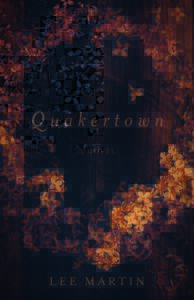
Years later, I began to write my first novel, Quakertown. The novel is based on the true story of the forced relocation of a thriving Black community in Denton, Texas, in the 1920s. Of course, my imagination intersected with the facts of that true story. I created characters and situations that occurred only in my mind. One of those situations involves a romance between a white man and a Black woman. Their relationship ultimately can’t overcome the challenges it faces from both the white and the Black communities.
I’m not sure I ever thought of the memory of my experience with the Black girl on the train while I was writing the novel, but it’s there in the final product, as is the story of the love I felt for a certain girl when I was eighteen, a girl, who like the Black girl on the train, eventually vanished from my life. That girl, Cathy, was sixteen, and, as often happens with teenagers, she ultimately turned her attention elsewhere. When I wrote the story of Kizer Bell and Camellia Jones, the interracial couple from Quakertown, I was tapping into my own story of young love. Maybe I was trying to make that story come out on the page the way I thought it should have in real life.
And oddly enough, seven years after the publication of Quakertown and nearly thirty-four years after Cathy said goodbye to me, we found our way back to each other and have been married now almost eight years. What’s even more remarkable is the fact that Cathy, who never knew the identity of her biological father, has discovered through DNA that he was a Black man. All those years ago, she and I, like Kizer and Camellia, were involved in an interracial romance, and we hadn’t even known it.
This may be too simplistic to say, but I truly believe it. Deep down, people are people. No matter our differences in ethnicity, religious or political belief, social class, sexual orientation, etc., at heart we want similar things. We want love. We want comfort. We want financial stability. We want family. We want to feel we matter. When the Black girl’s mother on the train told her to stop playing with “that white boy,” I felt I didn’t matter at all. I felt tossed away. I felt ashamed to be who I was. I don’t blame the girl’s mother for what she said, even though I have no memory of what must have happened to make her say it. I can only imagine the complications presented by a four-year-old white boy at play with a Black girl of similar age on a train traveling through southern states in 1959.
This is all to say, I believe writing is an act of empathy. No matter the identities of the characters I create, I try to understand why they do what they do. I try to feel what it must feel like to walk around in their skin. Seven years ago today, I read from Quakertown to a large audience in McKinney, Texas, as a part of Black History Month. I was nervous, but soon I found myself involved in a kind of call and response. I’d read a line, and someone from the audience would say, “Amen.” I’d read another line, and someone else would say, “Yes, Lord,” or “Oh, yes,” or “You got that right.” Afterwards, at the book signing, a Black woman said to me, “I hope you don’t mind me saying that listening to you was like listening to an old Baptist preacher.” I took that as a compliment. Something about my book had touched on some aspect of her experience, and for at least a few moments, we stood on shared ground. What more could a writer ask?
The post Empathy appeared first on Lee Martin.