Lee Martin's Blog, page 9
April 15, 2024
And Then It Happened: A Story Prompt

You know how it goes. You’re going through an ordinary day—maybe it’s a Sunday, and you’re just taking it easy—and then just like that something happens to change everything. Maybe a visitor arrives, or a phone call comes, or someone says something they’ve been repressing, or they do something they never thought they’d do. The universe has countless ways of creating narrative by changing an ordinary day into an extraordinary one. The circumstances of our lives put us into situations that change us forever.
Sometimes we read about something in the news, and we wonder about the time that separated before from after. What were people’s lives like before someone took a step, and everything changed? Sometimes we think back to our own memories of life-changing events. Maybe we recall how happy we were just before the moment we wish we could forget. Or maybe we were in distress just before joy found us. Our stories are made up of such pivotal moments.
Let’s think about starting a narrative as close to its crisis point as we can. This writing prompt might be particularly useful for flash forms, either in fiction or creative nonfiction. Here’s an example: Brenda Miller’s essay, “Swerve,” as it appeared in Brevity:
https://brevitymag.com/nonfiction/swerve/
Begin your own narrative with this sentence: And then it happened.
Take that sentence and let the narrative unfold. Lean into the urgency of the telling. Build the intensity. Find a place of no return. Then, get off the stage.
The post And Then It Happened: A Story Prompt appeared first on Lee Martin.


April 8, 2024
It Takes So Little

After I graduated from high school, I enrolled in the local community college. The girl I was dating at the time had an older sister who’d also gone there, and she gave me some of the textbooks she’d used. I remember a psychology text and a literature anthology. The latter was still in use at the time I attended. I kept those books a very long time, so long that I became a man approaching seventy, and my girlfriend became someone else’s girlfriend and eventually his wife, and her sister had a family, mourned her husband’s passing, and died herself this past week. Her death took me back to those long-ago days when I had no idea who I was, and I remembered how generous she was, not only with the gift of those books but also with her kindness. She was living at home then, and often she’d be there those nights when her sister and I would sit on the front steps, holding hands and listening to music. We were just kids, and it would have been easy to look at us with amusement and to make fun of our puppy love, but my girlfriend’s sister never did that. She let us have our space. She respected us and what we felt for each other.
I’m thinking about this in part because I’m turning the corner toward the end of another school year, and, as I always do, I take stock of the students who are about to graduate and move on to the next stages of their lives. I’m remembering people like my former girlfriend’s sister who made a difference in my own life. At the time I lived in this small town (population: 1,000), it wasn’t uncommon for everyone to be invested in the futures of its young people. It wasn’t just the teachers, the ministers, the law enforcement officers, it was also the neighbors, the store owners, the nurses, the oil field workers, and everyone who had a stake in this little town and wanted to help its young people thrive.
Maybe, when my former girlfriend’s sister gave me those books, she was only thinking she didn’t need them anymore and here was an opportunity to give herself more space by letting them go. If that’s all it was—a little tidying up—that’s fine with me, but I prefer to believe she saw something in me that told her I’d make good use of those books. I like to think she saw something about the road ahead of me that I couldn’t yet see myself.
She and I were Facebook friends, and I just now went back and looked at our direct messages over the years. There aren’t many, but the one that stands out for me is the first one, when she wrote to say, “Hi, Lee, I don’t know if you remember me as _____’s big sister. I have enjoyed reading your books for years and just wanted to say thank you for remembering our little town of Sumner and some of the characters we grew up with.” Of course, I remembered her, and, when I answered, I reminded her of the books she gave me, which, I told her, played a part in my development as a writer. I also thanked her for always being so kind to me, and I’m glad I had the opportunity to do that.
It takes so little to play a role in a young person’s life—an act of generosity, a kindness, a way of saying, “I believe in you.” That’s what my former girlfriend’s sister did for me—gave me a way to see what might be possible—and even though I now join countless others in mourning her passing, I’ll never forget her and the time she took to let me know I mattered.
The post It Takes So Little appeared first on Lee Martin.
April 1, 2024
Forgiveness
My memories of childhood Easters are mostly of coloring the eggs my mother would then hide for me to find on Sunday mornings. We lived on our farm, then, which means I’d yet to enter third grade, and we’d yet to move to Oak Forest, Illinois, a southern suburb of Chicago. Each year, while we lived in Chicagoland, we drove five hours south to our farm to spend Easter weekend there. We drove back on Sunday, and we often stopped at a smorgasbord restaurant somewhere before Kankakee to eat. I remember one year it rained, and we sat near a window in this restaurant and watched the rain come down. My mother sighed and said it meant it would rain seven consecutive Sundays thereafter, a piece of lore passed down through the generations. Back then, I never considered my mother’s happiness. Like most children, I only considered my own. Now, however, I think she had a touch of melancholy. Sometimes, like that rainy day in the restaurant, she’d sigh. I couldn’t hear the sadness in that sigh then, but I can hear it now.
She’d gone through enough in her life to merit this sadness. My grandfather’s drinking problem, his loss of the family farm when he couldn’t make the mortgage payments, his early death, the farming accident that cost my father both of his hands. From an early age, when she helped care for her five siblings, she’d been a woman of duty. She’d married late in life at the age of forty-one, and four years later, much to my parents’ surprise, I’d come along. She was a schoolteacher, a wife, a mother, a caretaker, and a farm worker. She took responsibility for the education of other women’s children, she kept our house in order, she did for my father what he couldn’t do for himself, she did her chores and helped him maintain farm equipment and manage livestock.
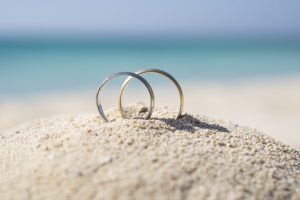
One evening, when we were still living on the farm, I had my mother’s wedding band. She was milking cows in our barn, and maybe she’d given it to me to hold. I really don’t remember why I had that band. All I remember is the fact that I dropped it in the barnyard, and we never saw it again. It was nearly dark when I dropped it, and we searched and searched as long as we had a bit of light. We searched the next morning, again with no success. It was a simple gold band, nothing fancy at all, but even now, recalling this, I get very sad because my parents never replaced it. My mother went to her grave, her fingers never again adorned. She wore no visible sign that for thirty-seven years she’d been devoted to my less than perfect father. She’d loved him as deeply as someone could love, loved him despite his temper, and had been his partner every day of their life together.
I’ve never forgotten that ring, nor the guilt I still feel for losing it. I don’t know what happened to my father’s wedding band the day of his accident, but I imagine the snapping rollers of the corn picker mangled it beyond repair just as they did his hands. Maybe it’s fitting, then, that my mother took off her ring so she and my father could wear their love modestly, no adornment at all, just the invisible bond that anchored them. Entwined. Unbreakable. Their grave marker has interlocking wedding bands etched into it and the words, “Together, forever.” In a way, the ring I lost has been restored, and what endured—my parents’ love—is now preserved in stone and proclaimed to anyone who cares to notice. I can almost forgive myself as I believe my mother must have done a long time ago.
The post Forgiveness appeared first on Lee Martin.
March 25, 2024
Memory as Resurrection: A Writing Activity
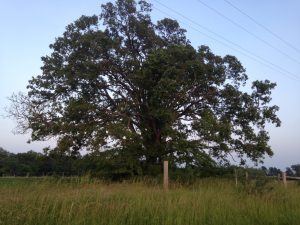 Cathy and I have had an odd feeling after selling her family home. She still tears up from time to time when she realizes our attachment to our native land has just become a bit less firm. For the past nine years, she’s been in that home four days out of each month, as she traveled to be on-site at the hospital where she worked remotely as the risk management and corporate compliance director. I went with her in the summers and over the holidays. We had dinner with our close friends and Cathy’s ever-expanding family. We placed flowers on the family graves. We drove past my family’s home in a neighboring town and on into the country to go down the gravel road past the farm I sold in 1996. A giant oak tree still stands along the mouth of the lane, but the house has long ago gone to ruin. The lives we lived there have been reduced to a pile of rubble, but in my memory the house still stands. I’m once again the little boy who loved his beagle hound, Music, and had a patch on the knee of his overalls—“Just like Dad’s!”—and hid behind my mother’s skirts when strangers came to call. In my reveries, my father still listens to St. Louis Cardinals baseball games on the radio—the play-by-play announcer, Harry Caray, still shouts his catchphrase, “Holy Cow!”—and my mother sits on the side of my bed and tells me to count my blessings before I fall asleep. Her voice is so soft, but I can still hear it. My memories preserve everything time took from us.
Memory can resurrect the dead—loved ones now gone and even former versions of ourselves. When we write memoir, we stand with one foot in the past and one foot in the present. We are both participants (actors in the stories of our experiences) and spectators, reflecting on those experiences. Here’s a writing activity to help us think about the texture we can achieve in a piece of memoir when we overlay the past with the present and bring our current perspectives to something we couldn’t fully understand at the time it was happening.
Step 1: Choose a place that mattered to you sometime in the past, a place that has been forever altered by the passing of time.
Step 2: Give us a sense of who you used to be in that place.
Step 3: Tell us what you didn’t know then.
Step 4: Let us know who you are now.
Step 5: From your current position, what do you wish you could tell the person you used to be?
When I was a boy on our farm, I was often anxious and fearful. Even though I was barely a year old when my father had the accident that cost him both of his hands, I internalized how quickly our lives could change. As I grew and became aware of how much older my parents were than those of my friends, I feared that they would die while I was still young. My father died when I was twenty-six, and six years later my mother joined him. I wish I could tell the boy I was that change comes to us all, and there’s nothing we can do to stop that from happening. Still, certain things persist. An oak tree stretches its limbs to the sky, and in my memory, the boy I was still walks through its shade to retrieve the mail the rural carrier has left in the box at the end of the lane. When I retrace my steps, I see our house atop the slight rise at the other end of the lane. The maple tree in the front yard will one day fall on that house, and the new owners of the farm will let the debris lie there, but that hasn’t happened yet. As long as I have my memory, it will never happen. The house won’t fall, and my parents won’t die, and we’ll live in an eternal present in this place we’ll always call home.
The post Memory as Resurrection: A Writing Activity appeared first on Lee Martin.
March 18, 2024
Housecleaning: Lessons for Writers
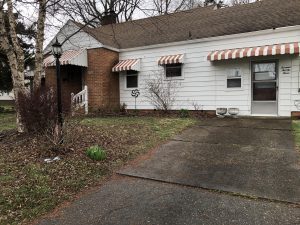 I spent last week—my spring break week—helping Cathy clean out her family home in Illinois, so she could close the sale on Friday. We arrived on Monday evening and had three days to get the job done. We had a lot of help from family members, for which we’re grateful. All the loading of furniture, the sorting and discarding of items, and the cleaning couldn’t have gotten done in the time we had without those loved ones. But it did get done before the rains came on Thursday evening, and now we’re back in Ohio, recuperating.
As is the case with most of our living, there are lessons for the writer in what we just went through. For one thing, writing requires us to make decisions on what to keep and what to eliminate. At some point in the writing or revising process, we understand our intentions, and then we have a clearer idea of what needs to be added and what needs to be subtracted.
At Cathy’s house, we filled a 25-yard dumpster. We also set a lot of furniture in the driveway with a “Free” sign. By the end of the week, it was all gone, carted away by people who saw a use for what we’d discarded. Sometimes, it’s the same way with writing. We may not be able to find a place for something in an individual piece, but that doesn’t mean we can’t use it in another piece. Writing is often a process of repurposing.
I want to give a special shout-out to Judy and Francie from a local charitable organization called Fishes and Loaves. They brought boxes to us on Tuesday. We filled those boxes, and Judy and Francie came back on Wednesday and Thursday to pick up the items for a big sale they’re having in April. Through the generosity of this organization, the items we donated will help food deprived school children in the area. The lesson for writers? We need to be generous with one another. No one makes the writing journey alone. Instead of wasting time and energy envying someone else’s success, we should open our hearts and minds to what others have to teach us.
Judy and Francie hauled away three SUV-loads of donated goods. We became experts in how to pack to maximize available space. So it is with writing. We learn how to trim, how to fit, how to streamline.
Selling a house that’s been in the family for 47 years isn’t just a physically demanding task, it’s also emotionally taxing. At one point, I found Cathy crying. She’d been sorting through bathroom cabinets and had found her mother’s hair curlers. The sight of them had made her sad because they were so connected to her memory of her mother. In writing, it’s often the small details that have the biggest impact. We live in the concrete world where the things people own have emotional resonance.
At the end, when it was all over, Cathy was relieved because she’d worried we wouldn’t be able to meet our deadline. I knew from my experience cleaning out my parents’ house, the only way to do the work is to put your head down and keep pushing ahead. That’s my best advice for writers. Keep at it. Nothing will get done if you don’t do it. You’ll meet challenges and you’ll find ways to surmount them. You’ll find yourself at times questioning if you can get through to the other side. You will. All you have to do is have faith. Day by day, you’ll get the work done. At the end, you’ll know you’ve gone through something profound. You’ll be amazed and a little weary and a little proud, and maybe a little sad because this thing you love is now ready to go out into the world. You’ve loved it as hard as you can, and now it’ll be ready for someone else to love it, too.
The post Housecleaning: Lessons for Writers appeared first on Lee Martin.
March 4, 2024
Under Pressure: A Writing Prompt

There comes a time when writers are overwhelmed either by the circumstances of their personal lives, their jobs, or the challenges of the writing itself. Today, I’m thinking particularly of those of us who teach because, as is usually the case this time of year, I’m swamped. I won’t list everything I have to do—after all, I chose this life, and I know how blessed I am to have it—but I’ll ask you to trust me when I say I barely remember what it’s like to have time for my own writing. I’m nothing special; such are the sacrifices everyone in academia makes for the sake of their students and their profession.
I may be irregular with my posts until the workload clears. I’ll leave you with one more writing prompt in case it’s a while before I’m back with you.
A heavy workload can lead to stress, and stress can lead people to say or do things they don’t intend. Or maybe they do. Maybe they have thoughts and feelings about someone they usually keep buried under the protection of civility. If you’re writing creative nonfiction, can you recall a stressful time in your life when you snapped and said or did something that shocked, and maybe hurt, someone else? Write about it. What can you see now that you couldn’t see then?
If you’re a fiction writer, shape a narrative that leads to such a moment. You can create the moment in your imagination, so you don’t have to stay true to what happened in your own life. Let the thing said or done be the climactic moment, the moment beyond which things will never be the same for your main character.
So much of writing is about applying pressure. Put your thumb on yourself or your character and press down as hard as you can. See what consequences result.
The post Under Pressure: A Writing Prompt appeared first on Lee Martin.
February 26, 2024
Bound by Books: Writing as an Act of Love
 When I was a boy, I tended to be timid, observing the world, which I didn’t trust, from a safe spot on the periphery. I imagine my mistrust came from the experience of being taken from my home and left with my aunt and uncle when I was barely a year old. Many of you know this was a temporary situation made necessary by my father’s farming accident that resulted in his hospitalization and his recovery from the amputation of both of his hands. In an instant, my life separated into before and after. I spent much of my childhood on guard against the swift harm the world could do.
I had to learn to trust people. I remember many times when I watched other children play. I desperately wanted to join them, but my shyness held me back. Gradually, as I aged, I became better at letting people get close to me. I began to enjoy my friendships. Little by little, I opened myself to the world.
For me, writing is an act of love. I write because I love people even with their missteps and flaws. I write to explore and to preserve what I’ve come to know about the way our lives intermingle. In the process, if I’m doing it right, I increase my capacity for empathy. I can’t do that without being a part of the intricacies of human relationships. I can’t do it without risking my own injury.
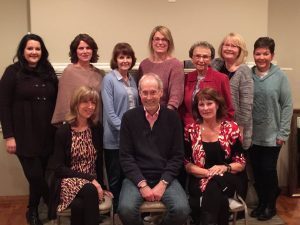
Such a wound came to me last week. One of the joys of my writing life is all the people I’ve met. My childhood self would be amazed at how much I treasure the interactions I’ve had with readers, students, and colleagues over the years. I’ve particularly enjoyed my visits to book clubs across the country. I’ve loved them all, but I confess I have a special place in my heart for a group in my native southeastern Illinois. This collection of smart, warm, funny, and generous women won me over from the first time they invited me to visit through each time I was fortunate to be in their company thereafter. One of their members passed away unexpectedly last week. I know the club mourns her absence, as do I. She was kind and gracious and witty, and I remember the lengths she went to when planning a menu to accommodate my vegan diet when she was responsible for one of my visits. She was also so welcoming, as were all the members, of my wife, Cathy. We’ve cherished each evening we’ve spent in the company of this club.
Of course, I could do on and speak of the sadness of a life lost suddenly, but I’d rather remember the fellowship of the time spent together. I know the ladies of this club have a deep-rooted history, and I’ve been fortunate to know them. I hope they know how much they’ve meant to this man who was the little boy who had to learn to trust and to love, no matter the pain to come. The name of the club is Bound by Books. What better title? Writing is never just about the process itself. It’s also about our forays into the world and our connections with its people. It’s about the ties that bind.
The post Bound by Books: Writing as an Act of Love appeared first on Lee Martin.
February 19, 2024
Trust and Betrayal

A week ago, we enjoyed a false spring here in the Midwest—sunny days and temps in the low sixties—but I knew it was only an illusion. I knew winter would return with a slap to the face. The snow came a couple of days ago, and the wind, and the frigid temperatures. Such is life.
Our flirtation with spring seems now like a cruel trick played by Mother Nature. Imagine what the flock of robins we saw yesterday huddled together in the snow and the cold must think. The birds respond to instinct. If sustained warmer temperatures tell them spring has arrived, they believe it. We believe as well that our lives are moving in a particular direction only to encounter something that turns what we expect on its ear.
Today, Cathy and I drove to a jewelry store in a mall to have the diamonds in her wedding rings checked, as she does twice a year to keep her warranty active. I go along and have my wedding band cleaned. The store was supposed to open at noon, and we arrived about twenty minutes early. We wandered through a J.C. Penney store that was open and then found a seat in front of the jewelry store to wait a few minutes for its opening.
Noon came and went, and the roll-down security gate in front of the jewelry store—the gate that resembles chain link—didn’t rise. We could see a woman in the dark store, so Cathy approached the gate and caught her attention. The woman saw the folder of paperwork in Cathy’s hand and knew she was there to have her rings inspected. She said, “Hand them to me, and I’ll take care of it for you.”
We passed our rings through the gate, and the woman disappeared into the darker reaches of the store. As Cathy and I waited, it suddenly hit me we’d just handed over our rings to a woman who was behind a locked gate. “I guess we just have to trust her,” I said to Cathy, and we laughed. It wasn’t that we really thought the woman would steal the rings, but there was a moment when we were painfully aware of what could have been our barn-sized stupidity.
Which leads me to this week’s writing prompt. Maybe you have a story of your own of a time when you trusted someone only to get stung because of that trust. Maybe you admitted something in confidence to a friend and that friend betrayed you by making it known to the public. Maybe you handed something to someone, on loan, perhaps, and never got that something back. Maybe you never returned something a friend had loaned to you. If you’re a fiction writer, put a character into a similar situation. The key is to let that character’s trust lead to a complication, one that requires the character’s further action. Look for the moment that’s going to change that character’s life forever.
Trust is an interesting element in a narrative when its betrayal creates a moment when people realize their lives are going to be different than the ones they thought they were living.
The post Trust and Betrayal appeared first on Lee Martin.
February 12, 2024
Early Riser, Quick Starter: A Writing Prompt

I’m up early this morning—one of the curses of getting older—and it has me thinking about how familiar landscapes can be defamiliarized when viewing them at a time outside our regular habits. Things just look different. It’s as if we’re tourists in our own neighborhoods.
Which leads me to this writing prompt. If you’re a fiction writer, have a character rise well before their normal time, look out through a window, and see something that catches their attention and requires their action. What complication does that action create? Where might it lead?
If you’re a nonfiction writer, recall a time when you were outside your normal routine. Maybe you were awake well before your regular time, or maybe you were in a place not typically your own. What did you see that you’ve never been able to forget? Describe it. Then see what it suggests. Maybe it leads to a narrative, or maybe it suggests some other memory or image, and just like that you’re off on a trail of associative leaps common to the lyric essay. Or maybe that original detail leads to a poem.
The key to this prompt is to step outside a comfort zone. As you do that, either in prose or poetry, you’ll find yourself, or your invented character, becoming very observant. You’ll be inviting something out of the ordinary to drive your narrative or to spark the associations that will give you the content you’ve been called to explore.
The post Early Riser, Quick Starter: A Writing Prompt appeared first on Lee Martin.
February 5, 2024
Can You Walk Away from Writing?
Our kitten, Stanley, has a jealous streak. If our older cat, Stella, is getting our attention, he wants it, too. If Stella occupies a space on a chair or the cat tree, he thinks that space must be his. Sometimes, Stella lets him have it, vacating her perch; at other times, she really lets him have it, smacking him with her paw. The other night, she hurt his feelings, and he spent quite some time under a chair trying to repair his damaged ego.
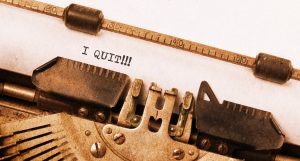
So it is with writers. We want and want. We want recognition. We want publications, we want awards. We want validation. Sometimes we get it, but lots of times we don’t. Somebody smacks us down with a big paw and we’re left to wallow in self-pity. Over the course of a career, how many books, stories, essays, poems, etc. don’t we write because we’ve wasted so many hours, days, weeks, and god forbid, even years, moaning about how unfair the publishing world has been to us? Oh, sure, it’s true that rejection can stop us cold from time to time, leading to self-doubt and often paralyzing our writing. We start to question why we’re even trying to write when we gather so many more “no’s” than “yeses.” We question our talents. We question our commitment. We question our resolve. We think about quitting. When we reach that point, here’s the question we should ask ourselves: “Will it be easy to walk away?” Of course, it’s a question about the place writing plays in our lives. Can we separate ourselves from the work and feel whole, or will not writing leave the other kind of hole, a great emptiness because we miss the activity that used to fill that space?
Remember that old saying about trying to give up smoking? I can quit; I just can’t stay quit. Or, as Mark Twain once said, Giving up smoking is the easiest thing in the world. I know because I’ve done it thousands of times. If you can walk away from writing and be happy, I wish you well. If the pain of not writing is greater than the pain of disappointment, then why stop doing what you love to do? Writing itself will be its own reward whether validation comes to you or not. I bet, though, the validation probably will come to you because repeated practice combined with persistence often creates the results we seek. And if the validation never comes, writing will always give you certain benefits. For one thing, writing will allow you to engage with the world around you in ways that will benefit you emotionally and intellectually. Writing will also increase your power of empathy; it will open you to the world and the people around you. While writing, you’ll feel joy and pain and all the other emotions people feel. Writing will usually make you more human and also more humane.
There are so many other reasons to keep practicing your craft, but chief among them is the fact that writing has become a part of your identity. We are what we do. If you can see that, I’m not sure why you’d ever want to stop. Why would you want to deny that part of who you are? Unless the act of writing has become painful for you, keep going. Writing can make us better people, and doesn’t the world always need a few more?
The post Can You Walk Away from Writing? appeared first on Lee Martin.